
8 Best Car Stereo Receivers of 2026
This post contains affiliate links. As an Amazon Associate, we earn from qualifying purchases.
The Pioneer DMH-1600NEX stands out as the best overall car stereo receiver for its rich feature set and superb integration, while the PLZ 7″ Wireless CarPlay Stereo is a solid budget-friendly pick with reliable wireless connectivity. For those wanting more audio control in a compact form, the JVC KD-SX27BT delivers excellent sound customization.
Most drivers don’t realize how much a car stereo receiver affects their daily commute until they’re stuck with one that’s glitchy, outdated, or just plain frustrating to use. A good receiver should work quietly and intuitively, enhancing your drive instead of complicating it.
After comparing specs, owner feedback, and real-world performance trends, I focused on sound processing, smartphone integration, and ease of use. These picks reflect what actually matters behind the wheel, not just marketing claims.
Top 6 Car Stereo Receivers in the Market
The Best Car Stereo Receivers, Reviewed
Pioneer DMH-1600NEX Double Din Stereo

Strengths
- Capacitive touchscreen
- Solid CarPlay/Android Auto
- 13-band equalizer
Trade-offs
- No wireless CarPlay
- Requires professional install
- No built-in navigation
This is the kind of receiver I’d pick for a clean, future-proof upgrade in a daily driver or weekend cruiser. The capacitive touchscreen stands out, it’s smooth, responsive, and feels more like a modern tablet than most car units in this class. That matters when you’re toggling between navigation and music on the go. Owners consistently report that the Apple CarPlay and Android Auto integration is rock-solid, especially with wired connections, which keeps voice commands and maps from lagging.
The 13-band EQ gives serious tuning flexibility, and paired with the external mic, call quality is clear even at highway speeds. It doesn’t have wireless CarPlay, which some newer models offer, but the trade-off is reliability, wired setups rarely drop connection. Compared to flashier budget units, this one prioritizes stability over gimmicks. For someone who values build quality and long-term use, it’s a smarter buy than chasing screen size alone.
Video review
PLZ 7″ Wireless CarPlay Stereo
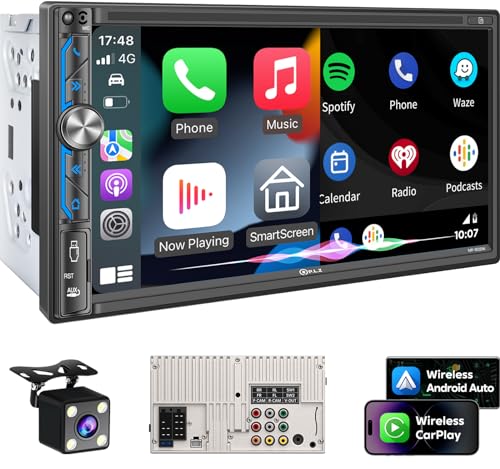
Strengths
- Fast wireless CarPlay/Android Auto
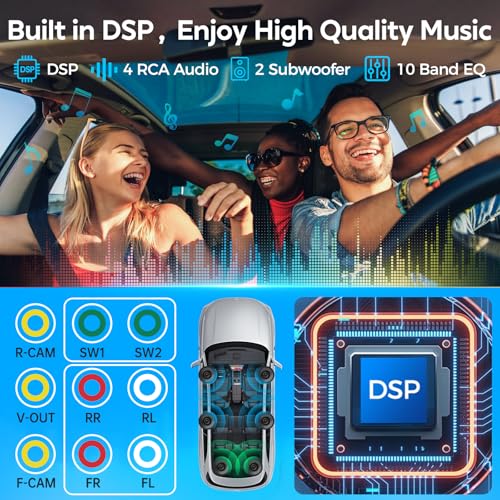
- Dual subwoofer outputs
- Bluetooth 5.3 with external antenna
Trade-offs
- No built-in Wi-Fi
- Installation may require add-ons
- Average software polish
If seamless smartphone pairing is your top need, this hits a sweet spot. The wireless CarPlay and Android Auto connect fast and stay locked, owners say reconnection happens within seconds of starting the car, which beats fumbling with cables. The 7-inch IPS screen is sharp and wide-view, making GPS directions easy to read, and the built-in DSP with 10-band EQ gives decent tuning headroom for bass lovers. Dual sub outputs are rare at this price, so if you’re stacking low end, this opens doors.
The Bluetooth 5.3 module with external antenna helps reduce interference, a small but meaningful upgrade over cheaper chips. However, it lacks onboard Wi-Fi, so tethering data through your phone is required for live maps. Installation prep is critical, some users needed extra harnesses or frames. Against the Kissound model, it’s less flashy but more stable in daily use. A strong middle-ground option.
Video review
Kissound 10.1″ QLED Car Stereo
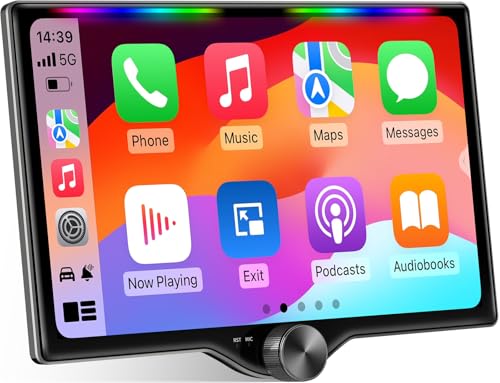
Strengths
- Large QLED display
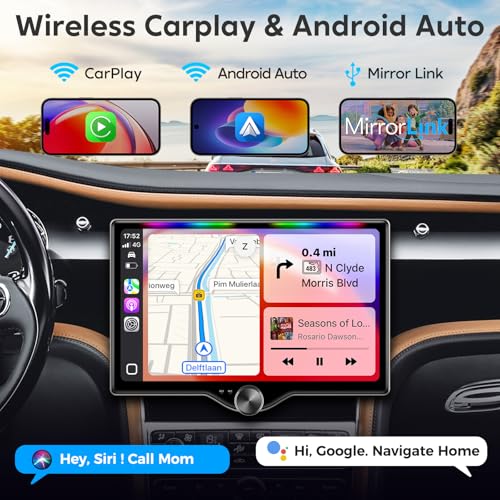
- Wireless CarPlay/Android Auto
- Music-sync ambient lighting
Trade-offs
- Inconsistent Mirror Link performance
- Software can feel clunky
- Steering wheel control needs add-on module
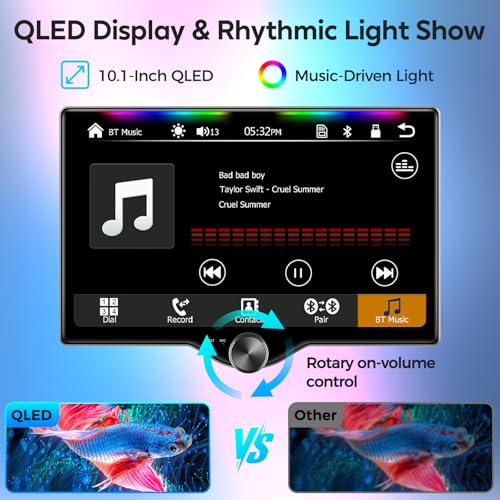
Let’s be honest, this unit turns heads. The 10.1-inch QLED display is massive and bright, delivering sharp visuals even under direct sun, which few in this range can match. On paper, it packs nearly every feature imaginable: wireless CarPlay and Android Auto, dual sub outputs, DSP tuning, and that flashy music-sync luminous bar that pulses with your beat. Reviewers note the ambient lighting isn’t just cosmetic, it adds a fun vibe at night, though it won’t help your mix sound better.
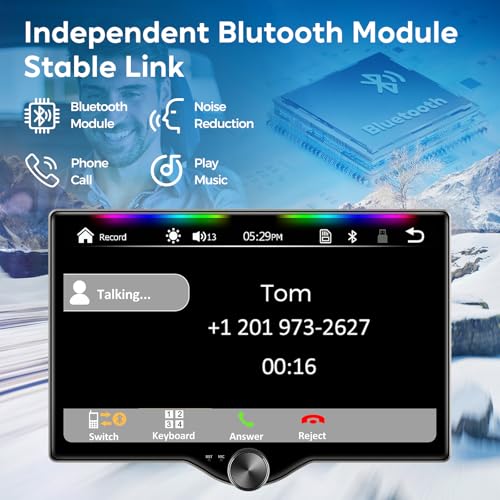
Where it stumbles slightly is consistency. Some owners report occasional lag in Mirror Link mode or hiccups during Bluetooth handoffs. The hardware is powerful (4×60W output, 10-band EQ), but the software layer feels less polished than Pioneer or JVC. Still, for the price, it delivers premium feel without the premium cost. If you’re retrofitting an older truck or SUV and want a bold centerpiece, this does the job, with flair.
Product photos
JVC KD-SX27BT Single DIN
Strengths
- 13-band EQ with Time Alignment
- Strong 100W output
- Compact single DIN fit
Trade-offs
- No touchscreen
- No Apple CarPlay/Android Auto
- Basic visual interface
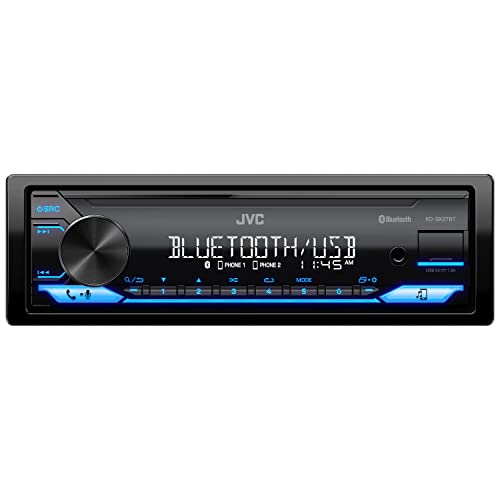
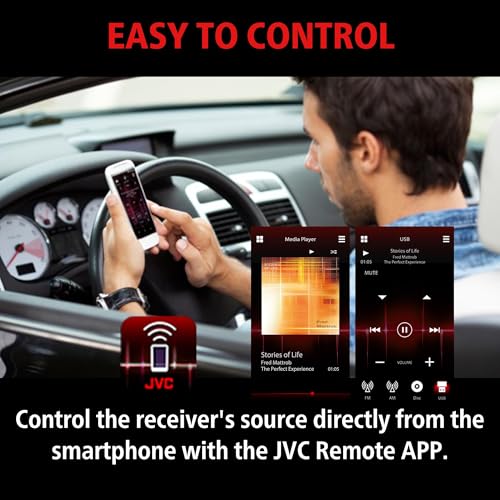
This is my pick for audiophiles on a budget who still want real control over their sound. The 13-band EQ here isn’t just window dressing, it works in tandem with Time Alignment and Sound Lift to create a balanced stage, making it feel like the music wraps around you instead of blasting from the dash. JVC’s K2 technology helps restore detail in compressed files, so even streaming tracks don’t sound flat. Owners praise how well it drives basic speaker setups without needing an external amp right away.
It’s a single DIN design, so it saves space and fits tighter dashes where double DINs won’t. You don’t get a touchscreen or CarPlay, but if you’re someone who streams via Bluetooth or USB and wants rich, tunable audio, that’s a fair trade. Compared to the Pioneer MVH-S230BT, this has deeper customization and stronger output. For classic car restorations or minimalist builds, it’s hard to beat.
Product photos


Pioneer MVH-S230BT 1-Din

Strengths
- Shallow chassis fit
- Advanced Sound Retriever
- Reliable Bluetooth
Trade-offs
- No EQ customization
- No smartphone integration
- Limited tuning options
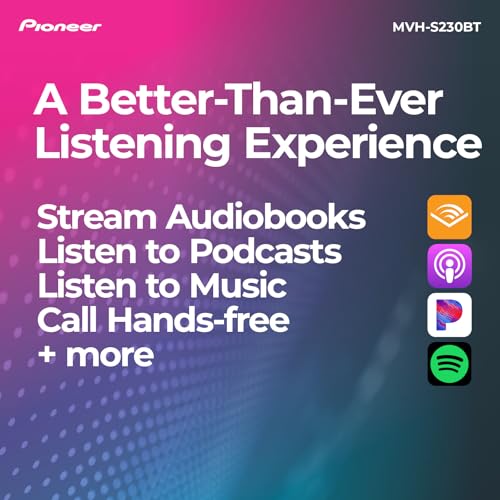
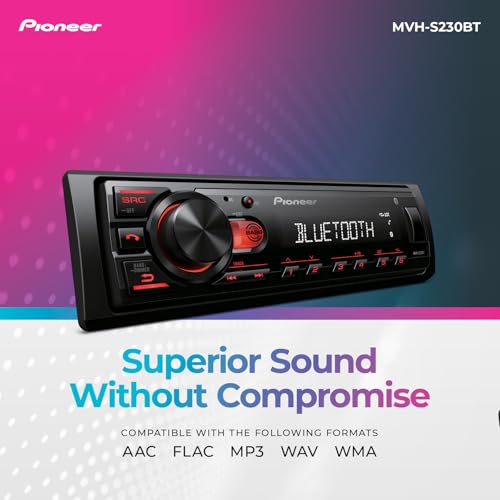
This is barebones done right. At this price, you’re getting dependable Bluetooth calling, solid USB playback, and that useful Advanced Sound Retriever that cleans up low-bitrate tracks, something most entry-level units skip. The chassis is shallow, so it slides into cramped or older dashboards with ease, which makes it a favorite for vintage car projects. It supports common formats like MP3 and AAC cleanly, and the USB port charges devices faster than many in this tier.
But let’s not pretend it’s fancy. No EQ beyond bass/treble, no app integration, no screen smarts. It’s a step above factory radios but doesn’t compete with CarPlay-equipped models. I’d recommend it only if you want a simple, reliable upgrade without complexity. Compared to the BOSS 616UAB, it sounds better and integrates more smoothly, but costs more. Know what you’re signing up for: function over flash.
Product photos


BOSS Audio 616UAB Single DIN
Strengths
- Extremely low cost
- Wireless remote included
- Simple plug-and-play setup
Trade-offs
- Cheap build quality
- No CarPlay/Android Auto
- Short lifespan reported
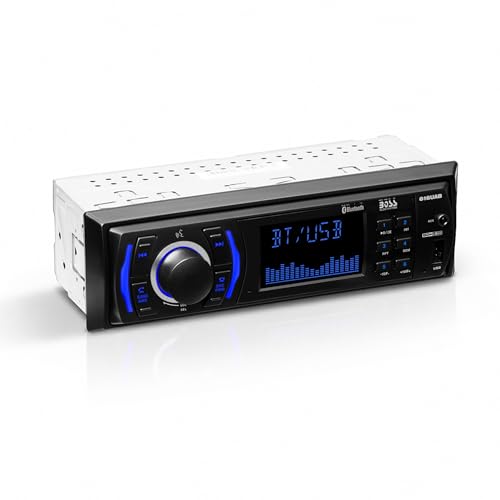
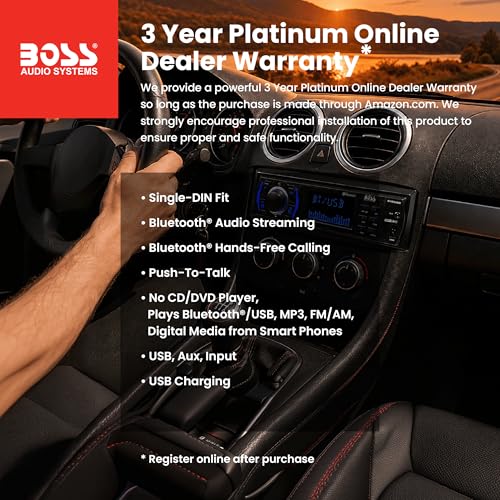
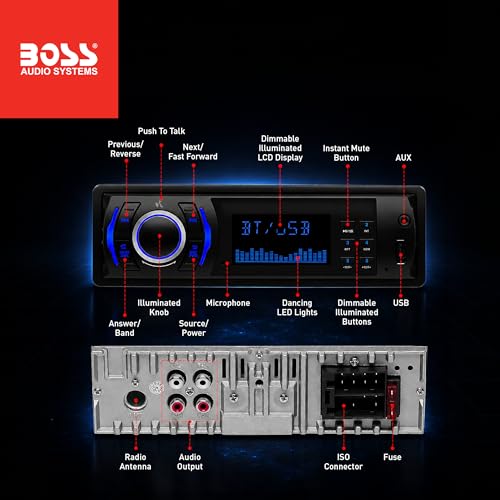
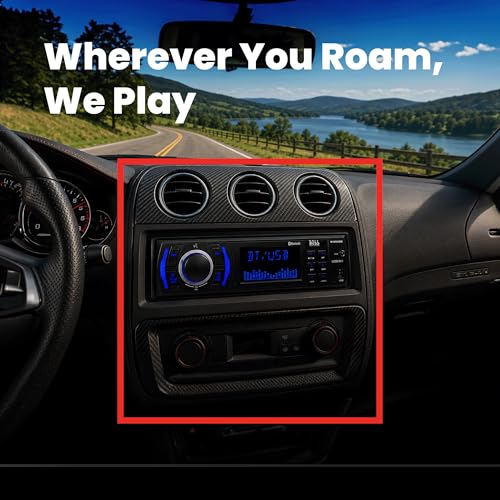
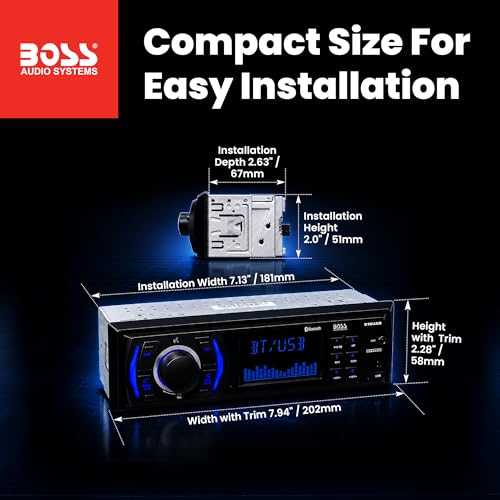
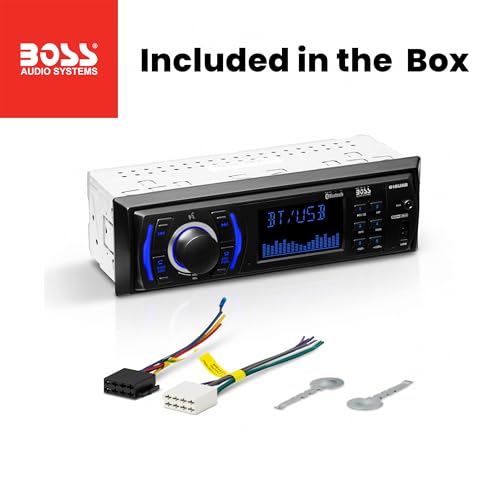
This is the definition of “good enough” at a rock-bottom price. For under thirty bucks, you get Bluetooth streaming, hands-free calls, a USB port, and 50W x 4 power output, enough to drive basic speakers, though an external amp is wise for louder setups. The wireless remote is a nice touch, letting you adjust volume or switch sources from outside the car, which is handy for work trucks or open jeeps.
But everything here feels utilitarian. The plastic casing isn’t ruggedized, and owners report mixed durability, some have had units last years, others saw failures in months. There’s no EQ beyond basic bass/treble, and no support for CarPlay or high-res audio. It’s strictly analog charm with digital basics. Compared to the Pioneer MVH-S230BT, it cuts corners on sound refinement. But if you’re fixing up a beater or need a temporary fix, it gets the job done.
Product photos
How We Picked These car stereo receivers
Rather than a hands-on lab test, my research for TheAutoZenith focused on a detailed comparison of published specifications and features across numerous models. I then weighed owner reviews from major retailers against expert opinions found in automotive audio publications. Years spent understanding vehicle electronics informed my assessment, and I ranked receivers based on a set of criteria tailored to the needs of most drivers: sound quality, smartphone integration, and ease of use.
For car stereo receivers, I placed the most weight on sound processing capabilities and connectivity options. A receiver’s ability to deliver clean, customizable audio – whether through built-in equalizers, DSP chips, or preamp outputs – is paramount. Equally important is seamless smartphone integration; modern drivers rely on CarPlay and Android Auto, and a receiver’s implementation of these features significantly impacts the driving experience. Ultimately, a receiver must be user-friendly, avoiding overly complex interfaces.
Specifications reliably reveal power output, display resolution, and Bluetooth versions. However, judging real-world performance, like the smoothness of CarPlay, the clarity of hands-free calls, or the effectiveness of sound equalization, required careful analysis of owner feedback. I looked for recurring themes in reviews regarding reliability, ease of installation, and the overall satisfaction with the unit. You can find more information on related products in our guide to the best radio receivers and even explore complete car stereo systems if you’re considering a full upgrade.
What To Look For In car stereo receivers
Picking the right car stereo receiver can dramatically improve your driving experience. It’s about more than just listening to the radio; it’s about connectivity, sound quality, and integrating technology into your daily commute.
A quality car stereo receiver should prioritize clear audio reproduction, seamless smartphone integration (CarPlay or Android Auto), and a user-friendly interface. Look for models with sufficient power output to drive your speakers effectively, pre-amp outputs for expanding your system, and Bluetooth connectivity for hands-free calling and music streaming. Consider the display type and size for ease of use while driving, and don’t overlook compatibility with steering wheel controls.
Understanding Display & Form Factor
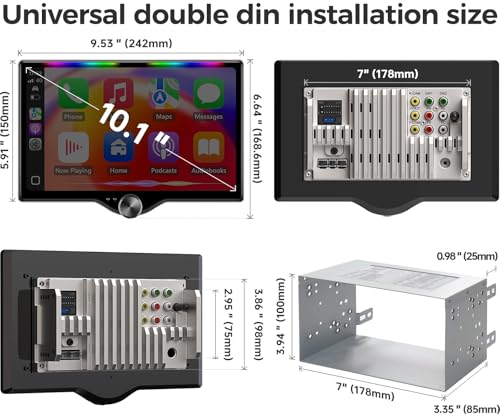
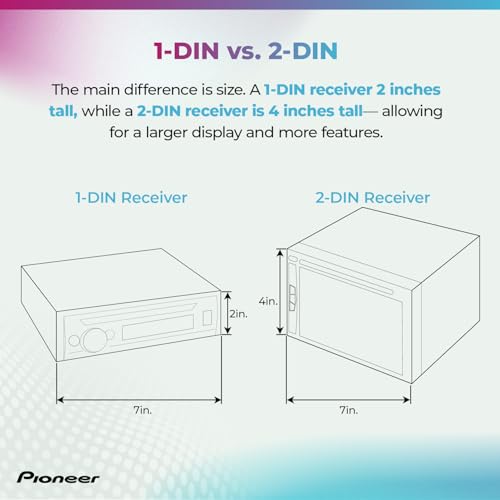
The first thing you’ll notice is the display. Single-DIN units are the traditional size, fitting into most older vehicles, while Double-DIN receivers offer larger, more modern touchscreen displays. I generally recommend a Double-DIN if your dash allows it; the larger screen makes navigation and feature access much easier while driving. Don’t assume bigger is always better, though. A poorly implemented touchscreen can be distracting. Consider the resolution and viewing angles, especially if you live in a sunny climate. A QLED display, like on the Kissound 10.1″ model, can offer excellent visibility, but even a standard WVGA screen can be perfectly adequate.
Decoding Smartphone Integration
Smartphone integration has become essential. Wireless CarPlay and Android Auto are incredibly convenient, eliminating the need for cables. However, wired connections are often more reliable and can sometimes offer faster data transfer speeds. If you prioritize a clutter-free setup, the PLZ 7″ Wireless CarPlay Stereo is a strong contender. But be realistic about your needs.
Here’s a breakdown of what to consider:
- Wireless is convenient: But can be prone to occasional dropouts.
- Wired is reliable: Offers a consistently stable connection.
- Compatibility is key: Ensure the receiver supports your specific smartphone model and operating system version. Some older phones may not be fully compatible with the latest versions of CarPlay or Android Auto.
I often advise clients to consider if the convenience of wireless outweighs the potential for occasional glitches.
Prioritizing Sound Quality & Customization
Don’t underestimate the importance of sound quality. A receiver with a built-in DSP (Digital Signal Processor) and equalizer allows you to fine-tune the audio to your vehicle’s acoustics and your personal preferences. The JVC KD-SX27BT really shines here, offering a 13-band EQ and features like Time Alignment and Sound Lift. Remember, even the best receiver won’t sound good with poor speakers, so factor in potential speaker upgrades as well.
A receiver’s power output (measured in Watts RMS) should match your speakers’ power handling capabilities. Mismatched power levels can lead to distortion or damage to your speakers.
If you’re looking for a more involved audio experience, exploring options beyond basic receivers might be worthwhile. You might want to look at some of the best car AV receivers for a more immersive setup. For those wanting to upgrade their entire system, reviewing top-rated head units is a great starting point. Ultimately, finding the right car stereo receiver comes down to understanding your needs and prioritizing the features that matter most to you. Don’t be afraid to do your research and read reviews before making a purchase, or even consider consulting with a professional installer to get personalized advice on the best aftermarket head units for your vehicle.
Car Stereo Receivers Compared
This table provides a side-by-side comparison of key specifications for several car stereo receivers.
| Product Title | DIN Size | Wireless CarPlay/Android Auto | Bluetooth Version | Max Power (Watts) | Equalizer Bands | Display Size (inches) |
|---|---|---|---|---|---|---|
| Pioneer DMH-1600NEX | Double | No | N/A | N/A | 13 | 6.8 |
| PLZ 7″ Wireless CarPlay Stereo | Double | Yes | 5.3 | 240 | 10 | 7 |
| Kissound 10.1″ QLED Car Stereo | Double | Yes | N/A | 60 (Peak) | 10 | 10.1 |
| KENWOOD KMM-BT270U | Single | No | N/A | 200 | N/A | N/A |
| JVC KD-SX27BT | Single | No | N/A | 100 | 13 | N/A |
| Pioneer MVH-S230BT | Single | No | N/A | N/A | N/A | N/A |
| Pioneer MVH-S110BT | Single | No | N/A | 50 | N/A | N/A |
| BOSS Audio 616UAB | Single | No | N/A | 50 | N/A | N/A |
Frequently Asked Questions
Will a new car stereo receiver work with my existing speakers?
Generally, yes, but you might not get the full potential from your new receiver. Most receivers are compatible with standard car speakers, however, to truly maximize sound quality, consider upgrading your car speakers alongside the receiver.
What’s the difference between a single-DIN and a double-DIN receiver?
Single-DIN receivers are a standard, shorter size, fitting most older vehicles. Double-DIN receivers are taller, allowing for larger touchscreens and more features, though they require a dash opening that can accommodate the larger size.
Is wireless CarPlay or Android Auto truly reliable?
Wireless connectivity is convenient, but it can be less stable than a wired connection. Expect occasional dropouts, especially in areas with strong radio frequency interference, but the convenience often outweighs the minor hiccups for many drivers.
How important is the power output (Watts) of a receiver?
The receiver’s power output should closely match the power handling capacity of your speakers. Mismatched power levels can cause distortion or, in the worst case, damage to your speakers, so check those specifications carefully.
Where can I find more information about high-end car audio options?
If you’re looking for a more sophisticated setup, exploring options for top car audio receivers can open up a world of advanced features and improved sound quality.
The Bottom Line
Choosing a car stereo receiver often comes down to balancing convenience with control. Do you prioritize a feature-rich experience with wireless smartphone integration and extensive customization options, or a simpler, more reliable unit focused on core functionality? For the best overall experience, I believe the Pioneer DMH-1600NEX strikes an excellent balance – it’s a receiver that offers a solid foundation for a great sound system and plenty of room to grow.
If you’re on a tighter budget, the Pioneer MVH-S110BT is a dependable option, while those seeking wireless convenience should strongly consider the PLZ 7″ Wireless CarPlay Stereo. For drivers wanting a large, eye-catching display, the Kissound 10.1″ QLED Car Stereo provides a modern aesthetic and ample screen real estate. Don’t forget that if you plan to really push your audio quality, exploring car stereo amps can unlock even greater potential.
Ultimately, the best car stereo receiver isn’t about chasing the highest specifications. It’s about finding a unit that complements your driving style, vehicle, and, most importantly, your listening preferences. Prioritize sound quality, reliable smartphone integration, and a user interface that doesn’t distract you from the road. A well-chosen receiver, combined with quality speakers, will transform your commute into an enjoyable experience, and you’ll find plenty of options among the best car receivers available today.
