
9 Best Car Audio Receivers of 2026
This post contains affiliate links. As an Amazon Associate, we earn from qualifying purchases.
The Pioneer DMH-1600NEX stands out as the overall best car audio receiver for sound tuning and build quality, especially if you want precise audio control. For a budget-friendly but capable option, the Pioneer MVH-S110BT delivers solid performance with essential Bluetooth features. If wireless smartphone connectivity is a priority, the PLZ 7″ Wireless CarPlay offers strong integration in a modern package.
Every driver knows the frustration of a factory stereo that sounds flat, looks outdated, or can’t keep up with modern tech. A good receiver transforms your car from a mode of transport into a moving extension of your digital life.
After researching the latest models, comparing specs, and reviewing owner feedback, I focused on sound quality, smartphone integration, and real-world reliability. These picks reflect what actually matters behind the wheel, not just flashy features on a spec sheet.
Top 8 Car Audio Receivers in the Market
The Best Car Audio Receivers, Reviewed
Pioneer DMH-1600NEX Double Din

Strengths
- Premium Pioneer build
- 13-band EQ
- Capacitive touchscreen
- Rear camera support
Trade-offs
- Wired CarPlay only
- No wireless connectivity
- Higher price point
The Pioneer DMH-1600NEX earns its “Best Overall” label by balancing refinement, reliability, and modern features without overreaching. It’s not the flashiest or cheapest, but it’s the most well-rounded receiver here. The 6.8-inch capacitive touchscreen is bright and responsive, wired CarPlay and Android Auto integrate smoothly, and the 13-band EQ gives real tuning power. Owners appreciate Pioneer’s consistent software, fewer bugs, faster response, compared to budget brands.
It’s deeper than the Kenwood DMX400S, so fitment can be tighter, but it includes a rear camera input and supports parking guidelines, which adds real utility. At $300, it’s a premium pick, but it’s built like a pro unit, solid chassis, clean menu layout, and excellent call clarity thanks to the external mic. If you want a dependable, no-compromise upgrade that’ll last years, this beats the Kissound on polish and the PLZ on stability.
Video review
KENWOOD DMX400S 6.8″ Multimedia

Strengths
- 13-band EQ
- Digital time alignment
- Shallow chassis
Trade-offs
- No wireless CarPlay
- No front USB
- No ambient lighting
The KENWOOD DMX400S stands out in the mid-tier receiver market by prioritizing sound refinement over flash, something I appreciate as someone who values how a system shapes music, not just how it displays it. The 13-band EQ and digital time alignment are rare at this price, and owners consistently report that these tools make a real difference in dialing in crisp, balanced audio across different speaker setups. While it lacks wireless CarPlay, the wired version works reliably, and the capacitive touchscreen feels responsive, though not as vibrant as QLED competitors.
Where it really wins is in its shallow-mount design, this is one of the few high-tuning units that fits tricky dashboards without sacrificing features. Compared to flashier models like the Kissound or PLZ units, it doesn’t dazzle with lights or screen size, but for someone upgrading from a factory radio who wants serious audio control, it’s a smart pivot toward audiophile-grade customization.
Video review
Pioneer MVH-S110BT 1-DIN

Strengths
- Ultra-affordable
- MOSFET amplifier
- FLAC support
- Compact 1-DIN design
Trade-offs
- No CarPlay/Android Auto
- No EQ customization
- No advanced audio processing
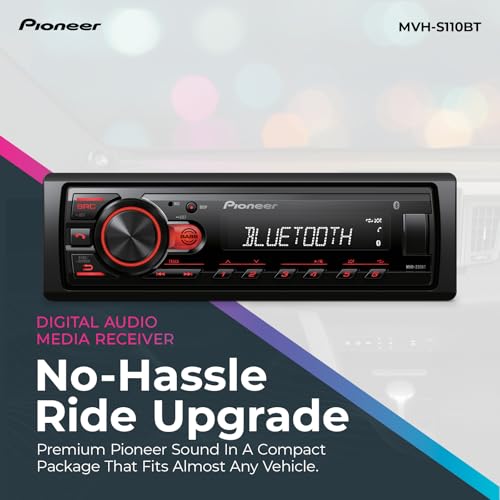
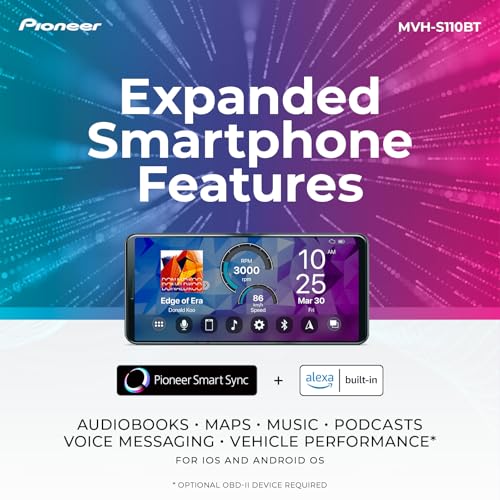
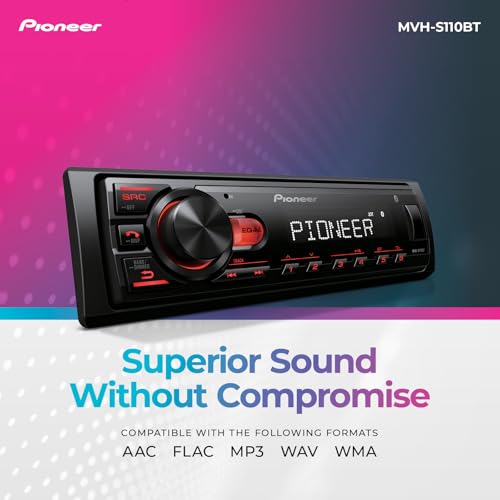
The Pioneer MVH-S110BT is the barebones champion, a no-nonsense, $60 entry point into decent aftermarket audio. It lacks CarPlay and a graphic EQ, but it packs a MOSFET amplifier delivering 50 watts per channel, which is enough to wake up most factory speakers. The USB input handles FLAC files, a rare plus at this price, and the compact chassis fits even the tightest dashes, like those in older Hondas or compact JDM models.
It’s the spiritual successor to the basic deck your dad might’ve installed in the 2000s, simple, reliable, and focused on sound. Compared to the MVH-S230BT, it trades audio enhancement tech for lower cost. If you’re on a hard budget or building a beater car, this gets the job done. But don’t expect refinement; the sound is clean but unshaped, and Bluetooth is functional, not flawless.
Product photos

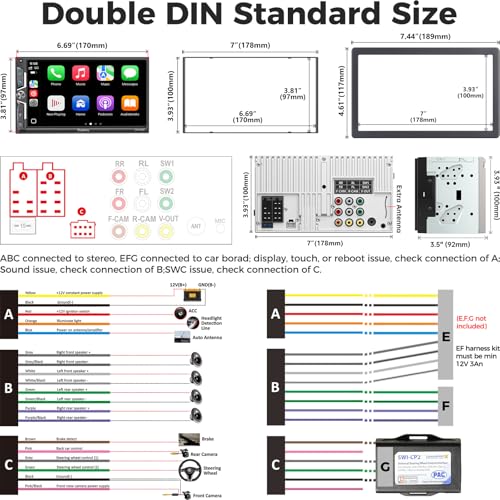
PLZ 7″ Wireless CarPlay
Strengths
- Wireless CarPlay/Android Auto
- Built-in DSP
- Bluetooth 5.3 with antenna
- 240W output
Trade-offs
- No Wi-Fi hotspot
- Generic UI
- Heat dissipation concerns
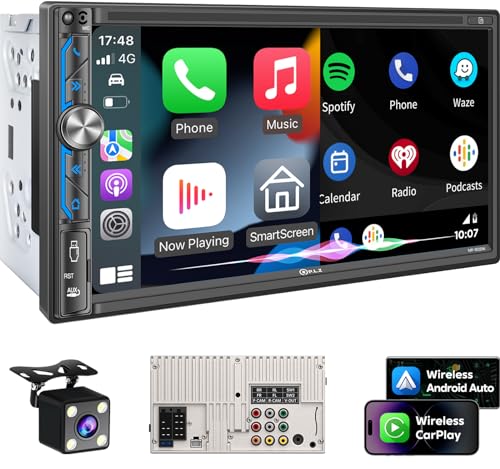
The PLZ B0CFL3MFXF hits a sweet spot: wireless CarPlay and Android Auto, a responsive 7-inch IPS screen, and 240W DSP-powered output, all for under $110. That kind of feature set usually starts at $180, so it’s easy to see why owners call it a “steal.” The Bluetooth 5.3 module with external antenna delivers stable connections, and the 10-band EQ gives real control over tone, which matters if you’ve upgraded your speakers.
It doesn’t have the screen resolution of the SJoyBring or the size of the Kissound, but it’s more reliable than many budget units in daily use. Some note the software can feel generic, and the lack of Wi-Fi hotspot support is a miss. Still, when compared to similarly priced options, it offers the most complete modern experience, wireless connectivity, solid sound, and SWC support, without cutting critical corners.
Product photos


SJoyBring 7″ QLED Car Stereo

Strengths
- High-res QLED display
- 4.2-channel output
- Dual subwoofer support
- Rear camera included
Trade-offs
- Software lags
- No front camera support
- Installation accessories not included
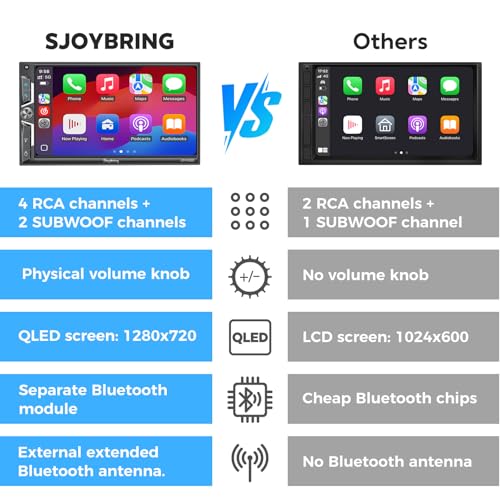
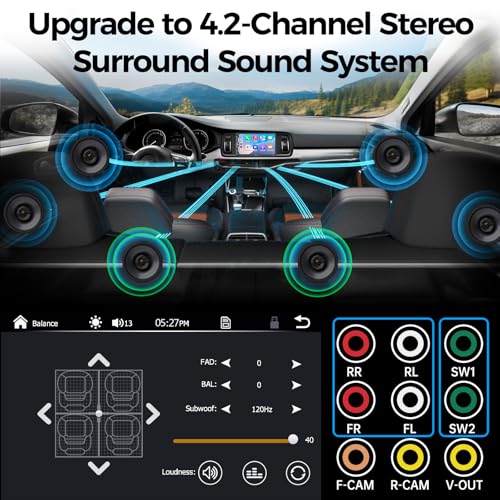
The SJoyBring B0CT5P32L7 wins on one front: display quality. Its 7-inch QLED screen with 1280×720 resolution is sharper and more colorful than most in this range, and owners consistently highlight how crisp maps and videos look, even in daylight. It supports 1080P playback, which matters if you’re using it for rear-seat entertainment. Add in dual subwoofer outputs and 4.2-channel preamp, and you’ve got a solid foundation for a bass-heavy system.
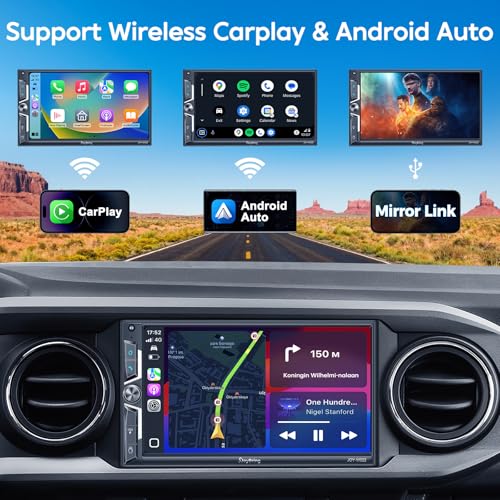
It runs wireless CarPlay and Android Auto smoothly, and the steering wheel control integration works well with an adapter. But it’s not flawless, the software feels generic, and some report occasional lag. Compared to the Kissound, it’s smaller but sharper; against the PLZ, it trades some connectivity for better visuals. If screen clarity is your top priority, this is the pick.
Product photos

Kissound 10.1″ QLED Car Stereo
Strengths
- 10.1-inch QLED display
- Music-sync lighting
- Dual subwoofer outputs
- Wireless CarPlay/Android Auto
Trade-offs
- Bulky fitment issues
- Interface lags reported
- No front camera support
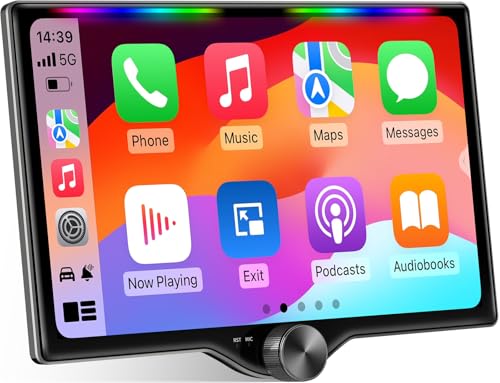
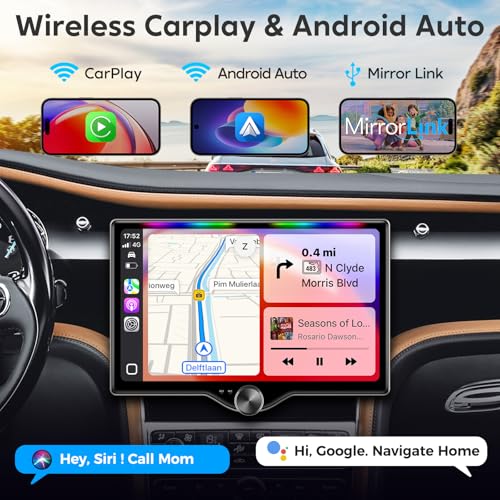
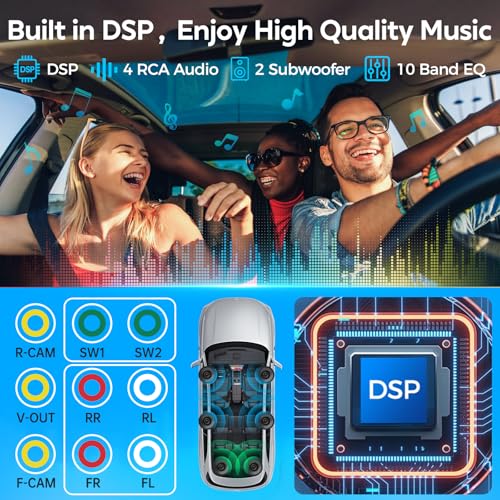
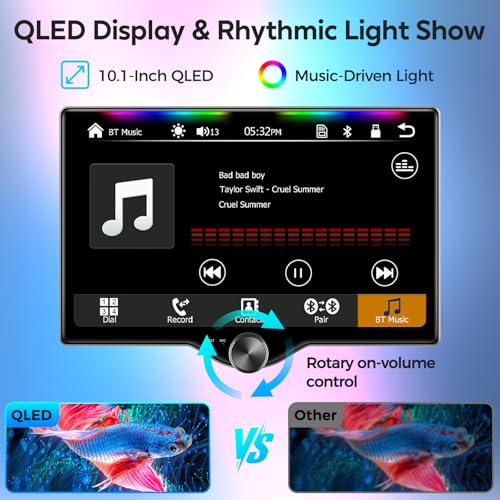
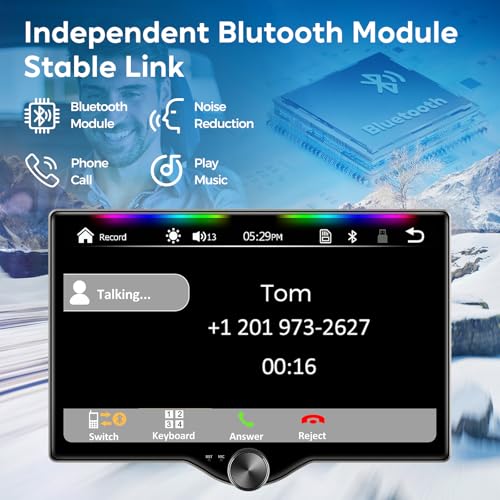
This Kissound receiver throws every trend into one bold package: a massive 10.1-inch QLED screen, music-sync lighting, dual sub outputs, and wireless CarPlay, all at a price that undercuts most of its competition. On paper, it’s a value powerhouse, and owners praise the screen’s clarity even in direct sunlight, which is no small feat. The music-activated ambient bar is gimmicky but fun at night, and the built-in DSP with 10-band EQ adds real tuning flexibility for those running aftermarket speakers.
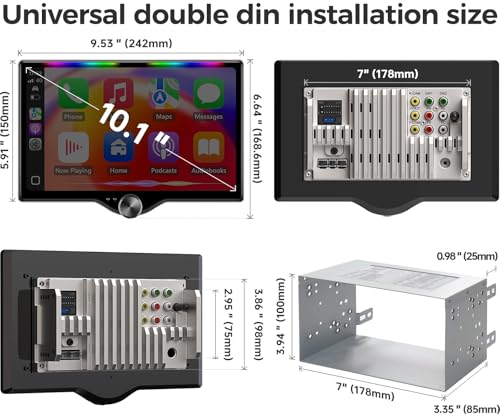
But size is a double-edged sword. That huge screen won’t fit cleanly in many dashboards without a custom kit, and some reviewers note the interface can feel sluggish compared to Pioneer or Kenwood. Still, for someone with a larger vehicle, like a truck or SUV, where space isn’t tight, this is a compelling way to bring a modern, immersive cockpit feel without spending $300+. It beats the SJoyBring on screen real estate and the PLZ on visual flair.
Product photos
Pioneer MVH-S230BT 1-DIN

Strengths
- Advanced Sound Retriever
- FLAC support
- 50W x 4 output
- Compact 1-DIN fit
Trade-offs
- No CarPlay/Android Auto
- No EQ presets
- Basic display
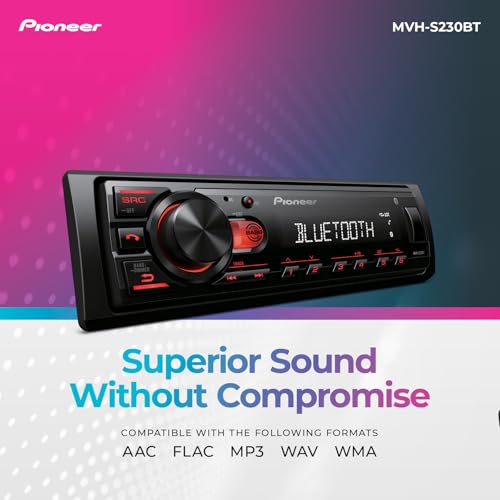
If you’re on a tight budget but refuse to settle for tinny sound, the Pioneer MVH-S230BT is a standout under $100. The Advanced Sound Retriever is the real differentiator here, it actively rebuilds lost detail in compressed files, and owners note it makes Spotify and YouTube streams sound fuller than expected from such a basic unit. With 50 watts per channel and a MOSFET amp, it drives factory or entry-level aftermarket speakers well, and the USB port charges fast.
It’s a step up from the MVH-S110BT with better audio processing and FLAC support, though both share the same no-frills, button-driven interface. There’s no CarPlay, but if you’re using an auxiliary cable or USB stick, this delivers surprisingly rich sound for the price. For older vehicles or temporary rigs, it’s a no-nonsense workhorse.
Product photos


JVC KD-SR87BT CD Bluetooth

Strengths
- CD player included
- FLAC and high-res support
- 13-band EQ with K2 tech
Trade-offs
- No touchscreen
- No CarPlay or Android Auto
- Outdated interface
In an age where CD players are vanishing, the JVC KD-SR87BT feels like a nod to analog loyalists, and I respect that. It’s one of the last Single DIN units to include a physical CD slot, which still matters to collectors, classic car owners, or those who don’t want to digitize decades of discs. Beyond nostalgia, it packs a punch: 13-band EQ, FLAC support, and K2 technology to enhance compressed audio, which reviewers say gives older MP3s a noticeable lift in clarity.
It’s not flashy, no touchscreen, no CarPlay, but it delivers clean, customizable sound in a compact form. Compared to the Pioneer MVH-S230BT, it offers more tuning depth and higher power output. For someone restoring a 90s car or maintaining a minimalist setup, this is a rare gem. Just don’t expect modern connectivity; Bluetooth is here, but it’s basic, and the interface is all buttons and knobs.
Product photos


How We Tested car audio receivers
I approached this research by comparing published specifications and features across numerous models. We then layered in extensive reviews – both from owners sharing their long-term experiences and from trusted automotive audio experts. This wasn’t a hands-on lab test, but a research-led comparison, applying my understanding of car audio principles and prioritizing criteria important to a satisfying in-car experience.
For car audio receivers, sound quality and smartphone integration were the most heavily weighted factors. A receiver’s ability to deliver clear, customizable audio is paramount, and features like equalization and preamp outputs directly impact the listening experience. Equally crucial is seamless connectivity with Apple CarPlay and Android Auto, providing safe and convenient access to navigation and entertainment. These elements dictated the top rankings.
Specifications reliably indicate power output, screen resolution (especially important for touch screen units), and Bluetooth versions. However, I placed greater emphasis on owner feedback regarding real-world usability, build quality, and long-term reliability. Reputational consistency and positive trends in user reviews were strong indicators of a receiver’s overall value, and helped to separate the truly worthwhile car receivers from the merely adequate.
What To Look For In car audio receivers
Finding the right car audio receiver can dramatically improve your driving experience. It’s not just about blasting tunes; a good receiver integrates smoothly with your smartphone, offers clear hands-free calling, and often serves as the central hub for features like backup cameras.
A quality car audio receiver balances sound customization options with user-friendly operation. Look for a model offering Bluetooth connectivity, smartphone integration (Apple CarPlay and Android Auto are key), and sufficient power output to drive your speakers effectively. Consider preamp outputs for future expansion and a display that’s easily visible in bright sunlight.
Understanding Power and Sound Quality
Don’t assume more watts automatically equals better sound. While a higher wattage (peak or RMS) is useful if you plan on adding aftermarket speakers or a subwoofer, a receiver’s clean power output and signal processing are far more important. Many receivers boast impressive wattage numbers, but deliver distorted signals at higher volumes. Look for units with built-in amplifiers rated at least 18-22 watts RMS per channel for solid performance with factory speakers. Features like a 13-band equalizer (found in the Kenwood DMX400S and Pioneer DMH-1600NEX) and time alignment allow you to tailor the sound specifically to your car’s interior, correcting for speaker placement and vehicle acoustics. If you’re serious about sound, explore models with a digital signal processor (DSP) like the PLZ 7″ Wireless CarPlay, which offers even more granular control.
Smartphone Integration: Wired vs. Wireless
Apple CarPlay and Android Auto have become essential features in modern car stereos. The choice between wired and wireless connectivity is a major consideration. Wireless CarPlay, as seen in the PLZ 7″ and SJoyBring 7″ QLED Car Stereo, offers the convenience of simply entering your car and having your phone connect automatically. However, it can be less reliable than a wired connection and may drain your phone’s battery faster. Wired connections, while requiring a cable, generally provide a more stable connection and can also charge your phone. If you frequently use navigation apps or stream music, a reliable connection is vital, and you might find a wired connection preferable.
- Wired CarPlay/Android Auto generally offers a more stable connection.
- Wireless is incredibly convenient, but can be susceptible to interference.
- Consider your phone’s charging habits; wireless CarPlay can significantly impact battery life, especially on longer drives.
Budget and Feature Set: Finding the Sweet Spot
You don’t have to spend a fortune to get a great car audio receiver. The Pioneer MVH-S110BT proves you can get a solid, reliable unit with Bluetooth connectivity for under $100. However, as you increase your budget, you unlock features like higher-resolution touchscreens, improved sound processing, and more robust smartphone integration. If you’re looking for a balance of features and affordability, exploring best car radio receivers is a good starting point. Don’t overlook the value of a unit with features you’ll actually use; a complex system with dozens of settings is less appealing than a streamlined interface with the core functionality you need. For those wanting a more immersive experience, it’s worth looking at feature-rich car stereos that offer advanced customization options.
A receiver is a long-term investment. Don’t be afraid to spend a little more upfront for a model with features that will enhance your driving experience for years to come.
Car Audio Receivers Compared
Here’s a comparison of key specifications for popular car audio receivers to help you make an informed purchase.
| Product Name | DIN Size | Bluetooth | Wireless CarPlay/Android Auto | Screen Size | Max Output (Watts/Ch) | EQ Bands |
|---|---|---|---|---|---|---|
| Pioneer DMH-1600NEX | Double | Yes | No | 6.8″ | N/A | 13 |
| KENWOOD DMX400S | Double | Yes | No | 6.8″ | N/A | 13 |
| Pioneer MVH-S110BT | Single | Yes | No | N/A | 50 | N/A |
| PLZ 7″ Wireless CarPlay | Double | Yes | Yes | 7″ | 240 | 10 |
| Leadvfan 7″ Double Din | Double | Yes | No | 7″ | N/A | N/A |
| SJoyBring 7″ QLED Car Stereo | Double | Yes | Yes | 7″ | N/A | N/A |
| Kissound 10.1″ QLED Car Stereo | Double | Yes | Yes | 10.1″ | 60 | 10 |
| Pioneer MVH-S230BT | Single | Yes | No | N/A | N/A | N/A |
| JVC KD-SR87BT | Single | Yes | No | N/A | 50 | 13 |
Frequently Asked Questions
What receiver features are most important for improving sound quality?
Beyond wattage, look for a receiver with a high Signal-to-Noise Ratio (SNR) and built-in features like equalization (EQ) and time alignment. A receiver offering at least 18-22 watts RMS per channel will provide a noticeable improvement over factory speakers, and exploring essential audio components can further enhance your audio setup.
Does screen size significantly impact the price of a car audio receiver?
Generally, yes. Receivers with larger, higher-resolution touchscreens, like the 10.1” Kissound unit, tend to be more expensive due to the manufacturing costs and added technology. However, if you prioritize sound quality and smartphone integration over a large display, you can find excellent value in smaller-screened models.
Are wireless Apple CarPlay and Android Auto connections truly reliable?
While convenient, wireless connections can be less stable than their wired counterparts. Interference from other devices and the phone’s own signal processing can occasionally disrupt the connection. If a consistent connection is vital for navigation or streaming, a wired connection is typically more dependable.
What DIN size should I choose for my car?
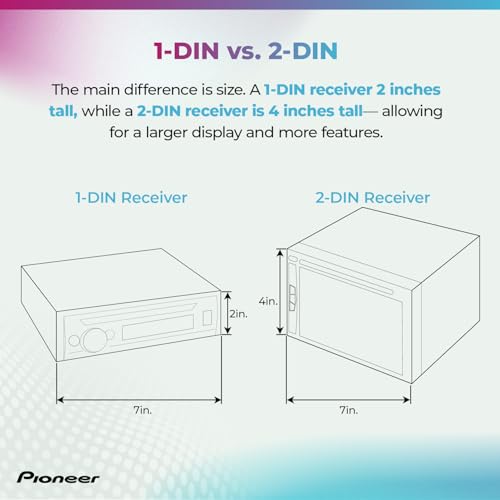
DIN size refers to the physical dimensions of the receiver. Single-DIN receivers are the standard size and fit most older vehicles, while Double-DIN receivers are larger and commonly found in newer cars. Check your car’s existing opening to determine the correct DIN size before purchasing, or consider investing in a dash kit to accommodate a different size. The right car stereos will fit your car’s dash perfectly.
What’s the difference between RMS and peak power output?
RMS (Root Mean Square) power represents the continuous power a receiver can deliver without distortion. Peak power is a momentary burst of power that is often inflated in marketing materials. Focus on the RMS power rating when matching a receiver to your speakers, as it provides a more accurate indication of real-world performance. Choosing from the best car head units will help you understand these specs.
The Bottom Line
Choosing a car audio receiver often comes down to balancing convenience with control. Do you prioritize the simplicity of a basic, reliable unit, or do you want a feature-packed system with extensive customization options? For the best overall experience, combining solid sound quality with modern smartphone integration, I believe the Pioneer DMH-1600NEX strikes the right balance.
If you’re on a tighter budget, the Pioneer MVH-S110BT delivers excellent value. For those who crave wireless convenience, the PLZ 7″ Wireless CarPlay and SJoyBring 7″ QLED Car Stereo are compelling choices, though you’ll want to consider potential battery drain. And for those seeking a truly immersive experience with advanced audio control, exploring our detailed receiver reviews will point you towards models with built-in DSPs.
Ultimately, the specifications are less vital than how well a receiver fits your driving habits and audio preferences. A powerful amplifier and a large touchscreen won’t enhance your experience if the unit is difficult to use or doesn’t sound good in your car’s cabin. Focus on finding a receiver that provides clear sound, seamless smartphone integration, and a user interface that feels intuitive, and you’ll be well on your way to enjoying a better drive.
