
8 Best Car Stereo Head Units of 2026
This post contains affiliate links. As an Amazon Associate, we earn from qualifying purchases.
The Pioneer DMH-1600NEX stands out as the best overall car stereo head unit for its rich feature set and solid performance, while the JVC KD-SX27BT is a smart budget-friendly pick with reliable wireless connectivity.
Choosing the right car stereo head unit isn’t just about filling silence, it’s about upgrading how you connect and experience every drive. Too many options promise big but deliver frustration, from glitchy CarPlay to tinny sound.
I looked at specs, owner feedback, and real-world usability to find units that actually work well day to day. This guide cuts through the noise to show you what really matters when picking a new head unit.
Top 8 Car Stereo Head Units in the Market
The Best Car Stereo Head Units, Reviewed
Pioneer DMH-1600NEX Double Din

Strengths
- Smooth capacitive touchscreen
- Reliable CarPlay/Android Auto
- Professional-grade build
Trade-offs
- Higher price point
- No wireless CarPlay
- Only one camera input
This is the benchmark. The 6.8” capacitive touchscreen feels responsive and modern, like a mid-tier infotainment system, far ahead of resistive screens on cheaper units. Wired CarPlay and Android Auto are buttery smooth, and the 13-band EQ gives real control over tonal balance. But what seals the deal is reliability: Pioneer’s firmware is stable, updates are supported, and professional installers consistently rate it as one of the easiest high-end units to integrate.
Compared to the PLZ or SJoyBring models, it doesn’t have the biggest screen or flashiest specs, but it delivers where it counts: daily usability, sound refinement, and build integrity. At twice the price of budget doubles, it’s an investment, but for long-term ownership, it’s the smarter buy. If you want one head unit to last 5+ years without regrets, this is it.
Video review
Pioneer MVH-S230BT 1-Din

Strengths
- Compact shallow design
- Affordable price
- Sound quality boost
Trade-offs
- Basic 5-band EQ
- No HD Radio
- No CarPlay support
At under $80, this is the definition of a no-frills workhorse. It’s slim-depth, mechless design fits nearly any dash, and the Advanced Sound Retriever helps restore detail to compressed MP3s and streams, something most budget units ignore. Bluetooth works reliably for calls and music, and the USB port charges devices faster than older models I’ve tested.
It doesn’t wow on features, but compared to other bare-bones receivers, it feels more refined. The sound isn’t as powerful as the KENWOOD, and it lacks EQ depth, but for replacing a factory radio in an older car without breaking the bank, this is my go-to recommendation. Just don’t expect anything beyond basic functionality.
Video review
SJoyBring 7″ QLED Double Din

Strengths
- Vibrant QLED display
- Wireless CarPlay & Android Auto
- Dual subwoofer outputs
Trade-offs
- Installation complexity
- Inconsistent UI response
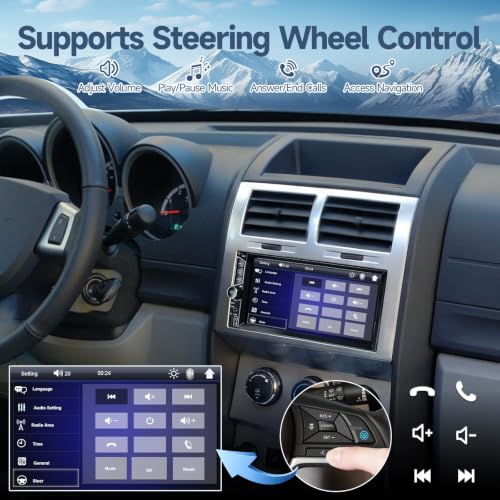
- Steering wheel control needs adapter
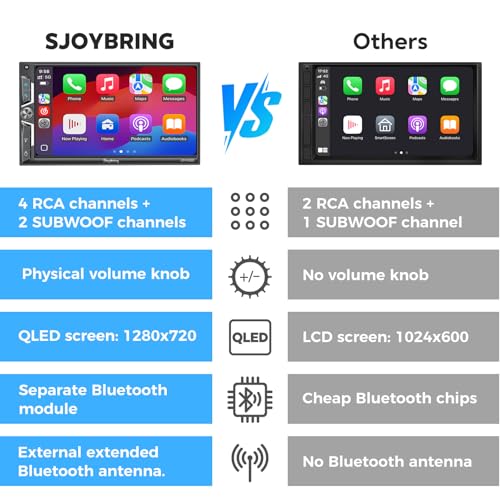
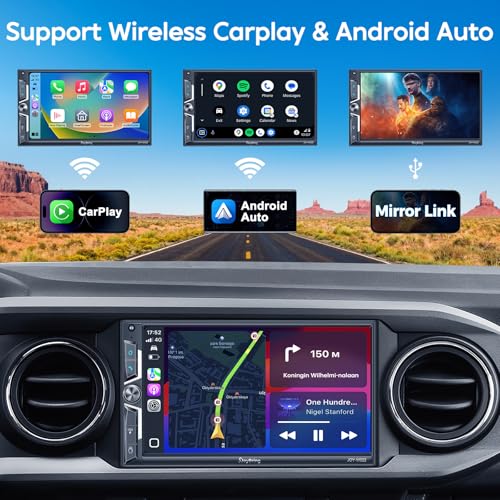
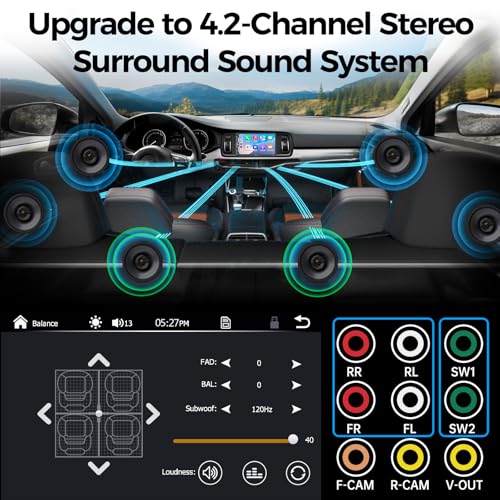
This unit throws specs at you, and the 7” QLED screen genuinely pops. In direct sunlight, the 1280×720 panel holds up better than most budget double DINs I’ve reviewed, delivering richer contrast and deeper blacks. That helps when using wireless CarPlay; maps and video content look sharp, which matters if you’re relying on visual navigation. The 4.2-channel setup with dual sub outputs is ambitious for the price, and while owners say it won’t shake the block, it does provide cleaner separation than expected.
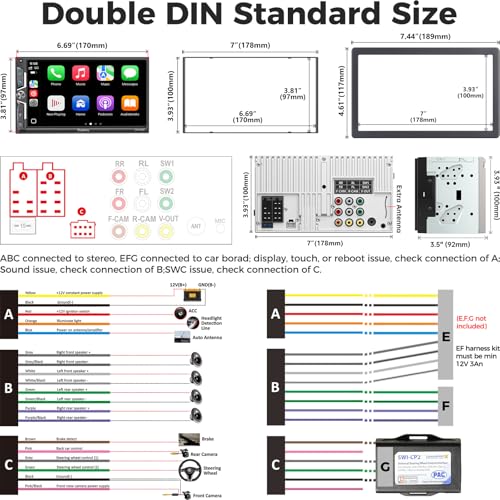
But there’s a catch: integration. Unlike OEM-style units, this one often requires multiple add-on adapters (harness, antenna, steering wheel interface), and installation frustration comes up repeatedly in reviews. It’s also not as polished in software responsiveness as Pioneer’s NEX line. Still, for the money, it offers a lot of features, CarPlay, rear camera, SWC, if you’re willing to wrestle the install.
Product photos

PLZ 10.1″ Single Din Car Stereo

Strengths
- Large 10.1” IPS screen
- Built-in DSP processing
- Dual subwoofer outputs
Trade-offs
- Fitment issues common
- Software instability reported
- No Wi-Fi hotspot
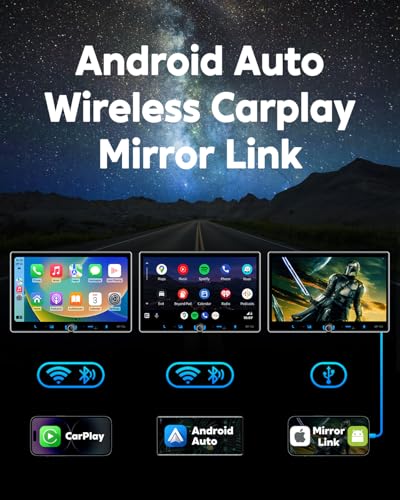
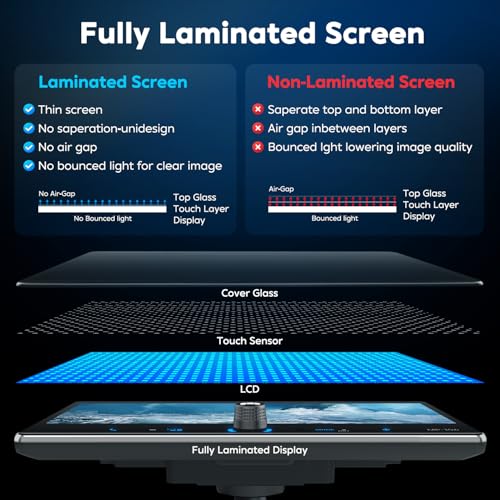
The 10.1-inch screen dominates the dash, and in low-glare conditions, it delivers a near-tablet experience, great for video playback or detailed maps. What sets this apart is the built-in DSP, which lets you fine-tune timing, phase, and frequency response. Most units at this price offer only EQ sliders; having real DSP processing means you can tailor the sound to your cabin acoustics, which I rarely see outside high-end decks.
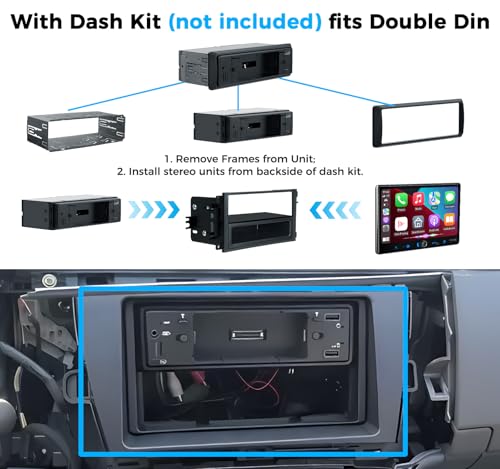
Bluetooth 5.3 with a dedicated antenna also improves call clarity and stream stability, something owners confirm in noisy urban environments. But the trade-off is software polish, some report lag in touch response or glitches during MirrorLink sessions. It’s also bulkier than standard single DINs, so fitment isn’t guaranteed. If you want audiophile-grade tuning in a budget package, this is compelling, but verify your dash size first.
Product photos


Pioneer MVH-S720BHS 1-Din

Strengths
- Built-in HD Radio
- 3 preamp outputs
- Alexa compatibility
Trade-offs
- No Apple CarPlay
- No touchscreen
- Higher price for no screen
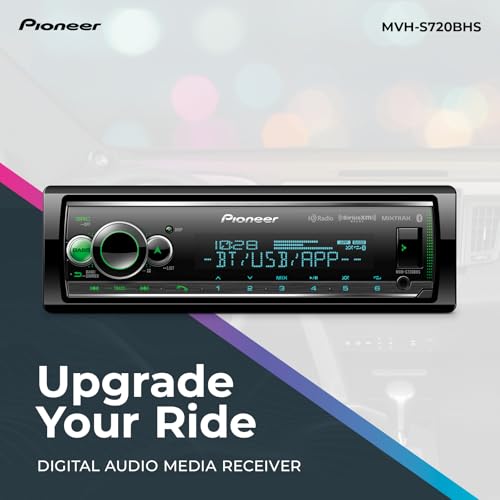
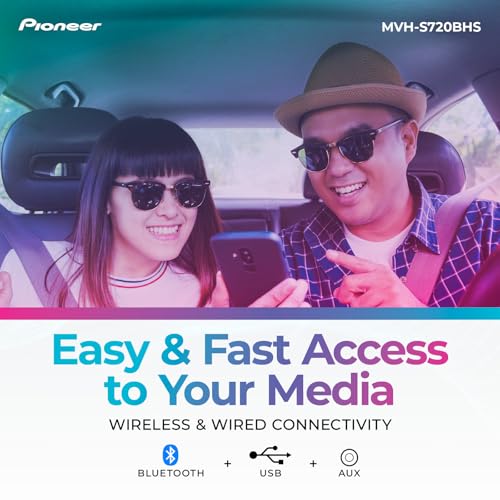
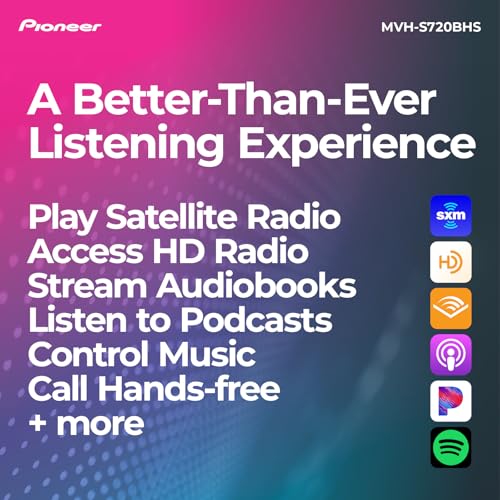
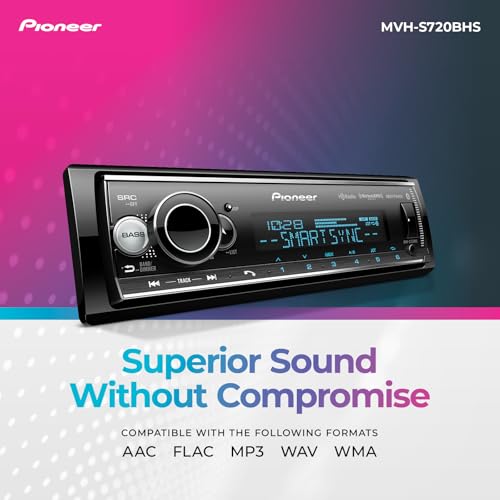
HD Radio might seem like a niche feature, but in areas with strong digital broadcasts, it’s a standout, crisp, static-free AM/FM with metadata like song titles and weather alerts. This unit nails that experience, and the inclusion of three preamp outputs is rare at this price. That means you can easily feed signals to an external amp and sub later, which I always recommend for future-proofing.
Alexa integration via Pioneer’s Smart Sync app works well enough, though it’s not as smooth as embedded systems in pricier head units. Compared to the MVH-S230BT, this model adds HD Radio and superior expandability, making it worth the jump if you plan to upgrade your speakers down the road. It still lacks CarPlay, so don’t buy it for smartphone mirroring, but if you want clean analog radio and pro-grade audio routing, this is a sleeper pick.
Product photos

KENWOOD KMM-BT270U Single DIN

Strengths
- High power output
- 13-band EQ
- Detachable faceplate
Trade-offs
- No Apple CarPlay
- No display screen
- Limited media apps
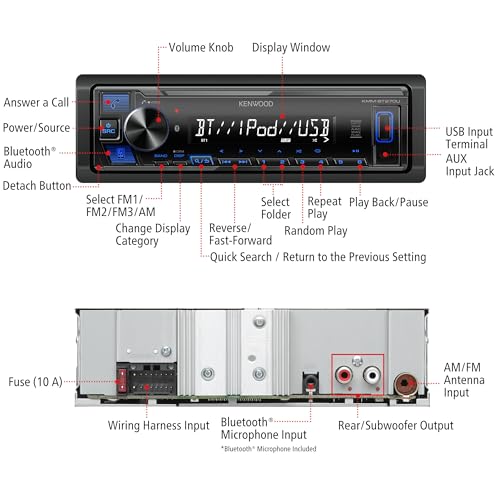
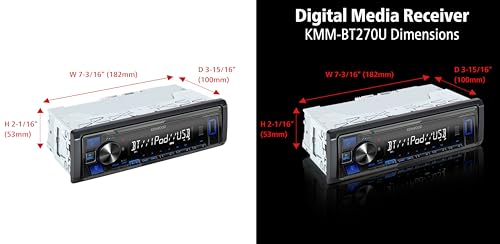
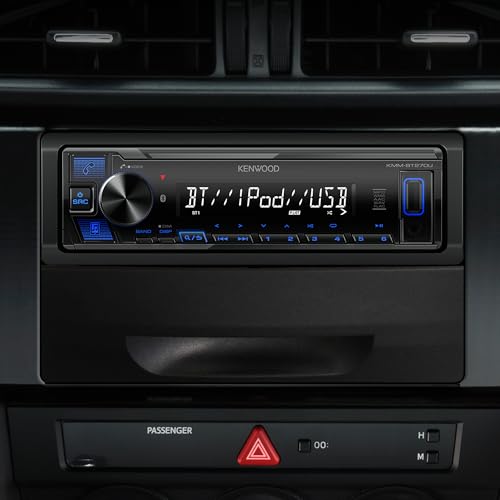
I’ve spent years around car audio, and the KENWOOD KMM-BT270U stands out in the budget single DIN class for one reason: raw power. On paper, 200W max output from a MOSFET amp is impressive for this price, and owners consistently report it drives factory or entry-level aftermarket speakers with authority, no need for an external amp unless you’re chasing serious bass. The 13-band EQ gives real tuning flexibility, which I appreciate more than flashy screens on lesser units.
It’s basic by modern standards, no CarPlay, no screen, but if your priority is clean sound, solid Bluetooth calling, and USB charging that actually delivers, this is a no-nonsense upgrade. Compared to similarly priced JVC or Pioneer models, it trades app integration for better audio headroom. For purists who care more about sound shaping than smartphone mirroring, this is a smart pivot.
Product photos


JVC KD-SX27BT Single DIN
Strengths
- Dual phone Bluetooth
- High-res audio support
- K2 sound enhancement
Trade-offs
- No CarPlay/Android Auto
- App required for full EQ
- Short chassis limits some dash fits
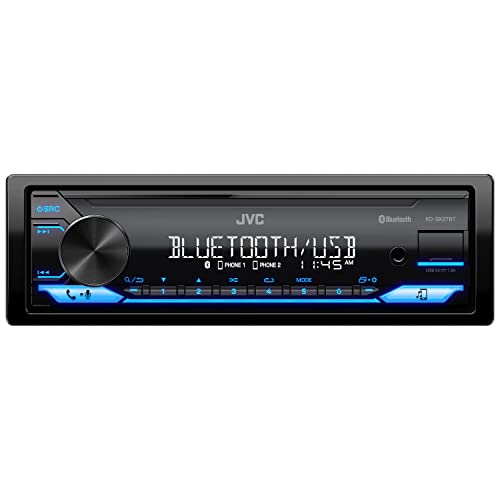
The dual phone pairing here isn’t just a gimmick, it’s a legit advantage for shared vehicles. I’ve seen enough frustrated couples and ride-share drivers deal with constant reconnecting, so being able to keep both phones live full-time makes daily use far smoother. The 100W output is modest compared to KENWOOD’s 200W claim, but JVC’s K2 technology and Time Alignment processing help deliver a more coherent soundstage, especially when paired with decent door speakers.
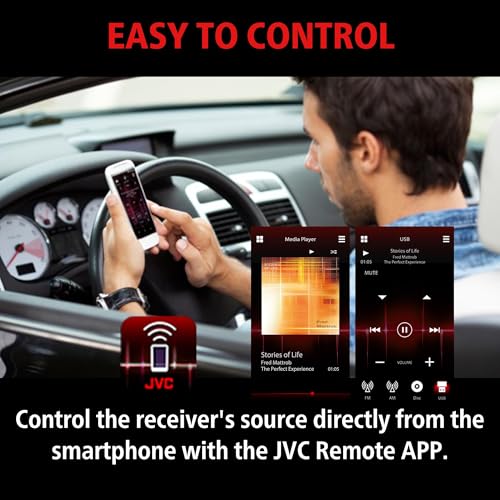
Owners praise the FLAC and high-res audio support, which matters if you run lossless files from a USB drive. The JVC Remote app adds real convenience, letting you tweak EQ on the fly. It doesn’t have CarPlay, but for audiophiles who value audio fidelity over connectivity, this punches above its price. Still, if you want voice navigation or streaming apps on screen, look elsewhere.
Product photos


Leadfan 7″ Double Din Stereo
Strengths
- Extremely low price
- MirrorLink capability
- Includes backup camera
Trade-offs
- Slow touch response
- Poor software optimization
- Limited phone compatibility
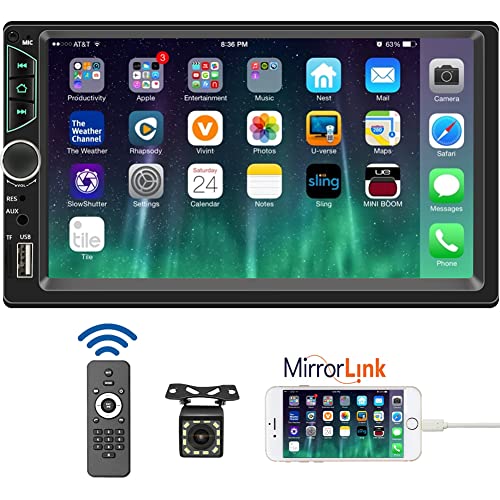
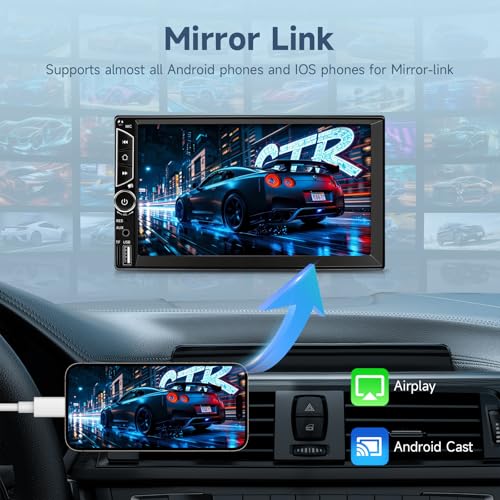
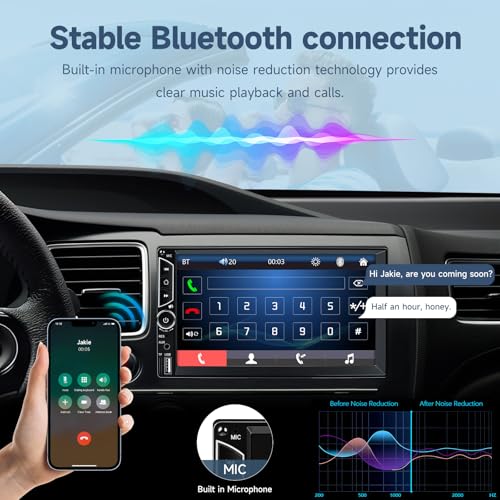
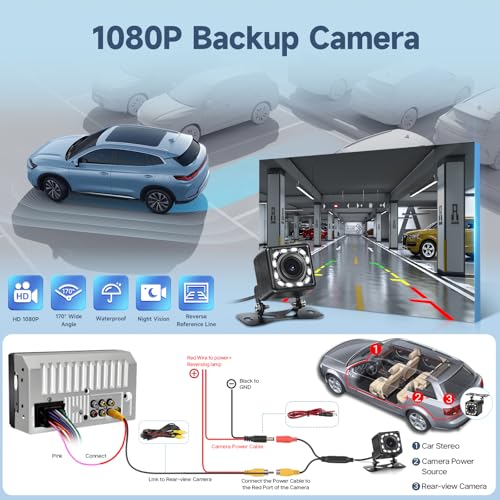
For under $50, this does the impossible: delivers a functional touchscreen, Bluetooth 5.0, MirrorLink, and rear camera support. It won’t win awards for speed or polish, the interface is sluggish, and MirrorLink only works with older phones, but it covers the basics. Owners say it’s perfect for older trucks, project cars, or beater vehicles where spending big on audio makes no sense.
Where it falls short is audio nuance. The EQ is basic, and the lack of preamp outputs means you’re stuck with internal amplification unless you mod it. But for a temporary fix or a weekend build, it’s hard to beat. Just know that support and firmware updates are spotty.
Product photos

How We Picked These car stereo head units
As someone immersed in the automotive world through TheAutoZenith, I approached evaluating car stereo head units by combining published specifications, owner experiences, and a deep understanding of what truly elevates an in-car audio experience. Rather than a hands-on lab test, this is a research-led comparison of features and owner feedback gathered from numerous sources. I weighed official specs against real-world reports to create a balanced assessment, focusing on performance and usability.
For this category, three factors stood out as particularly decisive. Sound quality – especially clarity and customization options – is paramount, as is smartphone integration. Modern drivers rely heavily on Apple CarPlay and Android Auto, so a smooth, reliable connection is critical. Finally, the overall feature set, including things like Bluetooth connectivity and pre-amp outputs, significantly impacts value and versatility. You’ll find more details on excellent options for those seeking dedicated CarPlay stereos.
Specifications reliably indicate power output, screen resolution, and connectivity options (Bluetooth version, USB standards). However, judging real-world performance – like the smoothness of the CarPlay interface or the effectiveness of the equalizer – requires diving into owner reviews. Those are where you discover if a unit truly delivers on its promises, and whether reported issues impact daily use. For those looking to upgrade their entire in-car sound, exploring complete car stereo systems can be a worthwhile endeavor.
What To Look For In car stereo head units
Finding the right car stereo head unit can transform your driving experience, but the sheer number of options can be overwhelming. It’s not simply about blasting music; it’s about integration, sound quality, and convenience.
A good car stereo head unit offers a balance of features, reliability, and sound processing capabilities. Key factors include Bluetooth connectivity for hands-free calling and audio streaming, compatibility with smartphone integration platforms (Apple CarPlay and Android Auto), sufficient power output to drive your speakers effectively, and a user interface that’s safe and easy to navigate while driving. Look for units with pre-amp outputs if you plan to add external amplifiers and consider the display size and resolution for optimal visibility.
Understanding Display Technology & Size
The display is your primary interface with the head unit, so don’t underestimate its importance. While a basic LCD screen will suffice, many modern units boast higher-resolution displays like QLED or IPS. These technologies offer better viewing angles and color accuracy. Size matters too. A double-DIN unit (4×2 inches) provides significantly more screen real estate than a single-DIN unit (2×6 inches), allowing for larger icons, more detailed maps, and easier interaction. However, a larger screen isn’t always better; ensure it doesn’t obstruct your view of the road or create distracting glare. If you’re looking to really upgrade the entire system, remember that pairing a quality head unit with the right car stereo amps is crucial for maximizing sound performance.
Decoding Smartphone Integration
Apple CarPlay and Android Auto have become essential features for many drivers. These platforms mirror your smartphone’s interface onto the head unit’s display, providing access to navigation, music, messaging, and phone calls. However, the implementation varies. Some units offer wireless connectivity, which is incredibly convenient, while others require a wired connection. Wired connections are generally more reliable and faster. Consider your phone’s charging habits and your tolerance for cable clutter. If you’re consistently switching between different phones, a unit that allows for dual-phone connectivity, like the JVC KD-SX27BT, can be a real benefit.
- Some head units only support older versions of Android Auto or CarPlay, limiting functionality with newer phones.
- Wireless connectivity can sometimes be finicky, particularly in older vehicles or areas with a lot of radio interference.
- Pay attention to which features are available wirelessly versus wired; some units may only offer wireless audio streaming but require a cable for screen mirroring.
Prioritizing Sound Quality & Power
Don’t fall into the trap of thinking all head units sound the same. The internal amplifier’s power output (measured in Watts RMS) determines how loudly and cleanly the unit can drive your speakers. A higher RMS rating is generally better, especially if you’re using factory speakers. Many head units also include equalization (EQ) settings to fine-tune the sound to your liking. Look for units with at least a 5-band EQ, and ideally one with more bands or even digital signal processing (DSP) for advanced control. If you’re serious about audio, exploring the world of best car head units and carefully considering the signal processing capabilities is a must.
A head unit’s preamp outputs are your gateway to a more powerful and refined sound system. If you plan to add external amplifiers, ensure the unit has enough pre-amp outputs (typically RCA jacks) to accommodate your desired setup.
Car Stereo Head Units Compared
Here’s a comparison of key specifications for several car stereo head units to help you make an informed decision.
| Product Title | DIN Size | Screen Size | Wireless CarPlay/Android Auto | Bluetooth Version | Max Power Output | HD Radio |
|---|---|---|---|---|---|---|
| Pioneer DMH-1600NEX Double Din | Double | 6.8″ | No | Yes | N/A | No |
| Pioneer MVH-S230BT 1-Din | Single | N/A | No | Yes | N/A | No |
| SJoyBring 7″ QLED Double Din | Double | 7″ | Yes | Yes | N/A | No |
| PLZ 10.1″ Single Din Car Stereo | Single | 10.1″ | Yes | 5.3 | N/A | No |
| Pioneer MVH-S720BHS 1-Din | Single | N/A | No | Yes | N/A | Yes |
| KENWOOD KMM-BT270U Single DIN | Single | N/A | No | Yes | 200W | No |
| JVC KD-SX27BT Single DIN | Single | N/A | Yes | Yes | 100W | No |
| Leadfan 7″ Double Din Stereo | Double | 7.01″ | Yes (via Mirrorlink) | 5.0 | N/A | No |
Frequently Asked Questions
Will a new head unit improve sound quality even with my factory speakers?
Yes, a new head unit often provides a noticeable improvement, even with stock speakers. Better internal amplifiers and signal processing within the unit can deliver cleaner, more detailed audio, though pairing it with high-quality car speakers will maximize the benefit.
What’s the difference between single-DIN and double-DIN head units?
Single-DIN units are a standard 2×6 inch size, while double-DIN units are twice as tall (4×2 inches). Double-DIN stereos generally offer larger, more feature-rich displays and are often necessary for built-in navigation and advanced smartphone integration.
Are wireless Apple CarPlay and Android Auto connections truly reliable?
Wireless connections are convenient, but wired connections generally offer greater stability and faster data transfer speeds. Interference from other devices or the vehicle itself can sometimes disrupt wireless connectivity, especially in older cars.
How many pre-amp outputs do I really need on a head unit?
The number you need depends on your plans for expansion. Most people will be fine with two pre-amp outputs (front and rear), but if you envision adding a subwoofer or multiple amplifiers, four or more are recommended.
What should I do if a head unit doesn’t support my phone’s latest operating system?
Check the manufacturer’s website for firmware updates; sometimes, compatibility can be added through software. If updates aren’t available, you may need to consider a different head unit that offers broader compatibility or explore top double-DIN head units with updated software support.
The Bottom Line
Choosing a car stereo head unit often comes down to balancing convenience with control. Do you prioritize the simplicity of wireless smartphone integration, or the potential for a more customized sound experience with advanced settings? For a fantastic all-around experience, I believe the Pioneer DMH-1600NEX strikes the best balance, offering a solid feature set and proven reliability.
If budget is a primary concern, the Pioneer MVH-S230BT provides excellent value. For those who live on their phones, the SJoyBring 7″ QLED Double Din delivers the convenience of wireless CarPlay and Android Auto. And for drivers seeking maximum versatility, the PLZ 10.1″ Single Din Car Stereo’s large screen and feature list are hard to beat – though it’s worth exploring best Android car stereos if you’re heavily invested in that ecosystem.
Ultimately, specs are only part of the story. A head unit’s true value lies in how well it integrates into your driving life and enhances your enjoyment of the road. Focusing on clear sound, reliable connectivity, and a user-friendly interface will deliver a more satisfying experience than chasing the highest power output or the largest screen size – consider exploring top car audio receivers to find a unit that truly suits your needs.
