
8 Best Car Stereo Amps of 2026
This post contains affiliate links. As an Amazon Associate, we earn from qualifying purchases.
The Skar Audio RP-1200.1D stands out as the best overall car stereo amp for its raw power and reliability, especially with subwoofers. For a budget-friendly option, the BOSS Audio R1100M delivers solid performance without breaking the bank, while the Fosi Audio CA30 is our top pick for compact, efficient builds that don’t sacrifice clarity.
Choosing the right car stereo amp isn’t just about louder sound, it’s about cleaner, fuller audio that matches your setup and driving experience. Too many buyers get caught up in peak wattage numbers and end up with an underperforming or mismatched system.
This guide cuts through the hype by focusing on real-world specs and owner feedback to find amps that deliver consistent power, efficiency, and features like proper crossovers and thermal protection. We looked at amplifier class, RMS output, build quality, and how well each model pairs with common speakers and subs.
Top 8 Car Stereo Amps in the Market
The Best Car Stereo Amps, Reviewed
Skar Audio RP-1200.1D Monoblock

Strengths
- 1-ohm stable
- Remote level control
- High RMS output
Trade-offs
- Large footprint
- No built-in crossover
If you’re chasing serious bass output without stepping into five-figure sub systems, the Skar Audio RP-1200.1D is a no-nonsense powerhouse that delivers on its bold wattage claims. On paper, 1,200 watts RMS at 1 ohm is aggressive, and owners consistently report it driving single or dual 12-inch subs hard with tight control and minimal distortion, even at high volumes. The built-in bass boost switch at 45Hz (+6dB or +12dB) is a nice touch for tuning without external gear, and the fact it’s 1-ohm stable means you can wire complex sub configurations without fear of blowing the amp.
The remote level control is a real convenience, letting you tweak bass on the fly from the driver’s seat, something higher-end systems offer but is rare at this price tier. Build quality gets strong marks in owner feedback, with the oversized heatsink and 4-gauge power terminals suggesting Skar didn’t cut corners on thermal management or current delivery. Compared to the RP-800.1D, this is the pick if you’re running larger enclosures or demand chest-thumping output.
Video review
Skar Audio RP-800.1D Monoblock

Strengths
- 1-ohm stable
- Remote level control
- Efficient Class D
Trade-offs
- No built-in crossover
- Large size
The Skar RP-800.1D is the smarter buy for most bass lovers who don’t need the full fury of the 1200-watt model. With 800 watts RMS at 1 ohm, it’s more than enough for a single high-performance 12-inch or even a pair of 10s in a sealed box. It shares the same rugged DNA as its bigger sibling: 1-ohm stability, 4-gauge power terminals, and a robust heatsink design that owners say runs cool even during extended sessions.
The remote level control and selectable bass boost (+6dB or +12dB at 45Hz) make tuning accessible without extra gear. Compared to the BOSS R1100M, it’s more efficient, more stable, and delivers tighter bass response. It’s not as feature-rich as the Fosi CA30 for full-range use, but for pure subwoofer duty, it hits the sweet spot of price, power, and reliability. If your goal is strong, clean bass without overspending, this is the value king.
Video review
Pioneer GM-A6704 4-Channel Amplifier

Strengths
- Clean audio output
- Adjustable filters
- Trusted brand
Trade-offs
- Lower RMS power
- Class AB heat
- Larger footprint
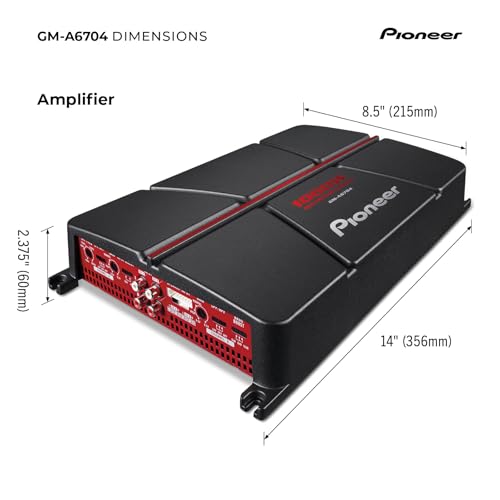
Pioneer’s GM-A6704 is a solid middle-ground 4-channel amp that balances power, clarity, and tunability without breaking the bank. With 60 watts RMS x 4 at 4 ohms, it’s not the strongest on paper, but the Class AB design delivers warm, natural sound that many prefer over clinical Class D, especially for midrange and highs. Owners consistently report it cleaning up muddled factory audio, making it a favorite for door speaker upgrades.
The variable high and low-pass filters are a big plus, letting you tailor the sound to speaker location and music type. When bridged, it puts out 190 watts RMS x 2, enough for a small sub or rear fill. It’s not as efficient or compact as the Fosi CA30, and the power output is lower, but Pioneer’s reputation for reliability and clean integration with factory systems gives it staying power. For a no-drama, all-around upgrade, it’s still a strong contender.
Product photos


Pioneer GM-A5702 2-Channel Amplifier

Strengths
- High RMS bridged output
- Adjustable bass boost
- Reliable build
Trade-offs
- Runs hot
- Heavier design
- Less efficient
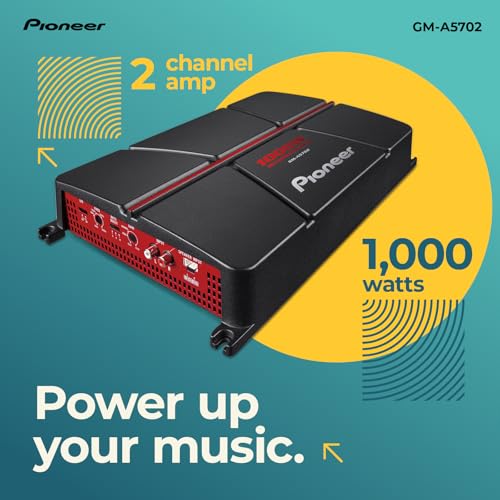
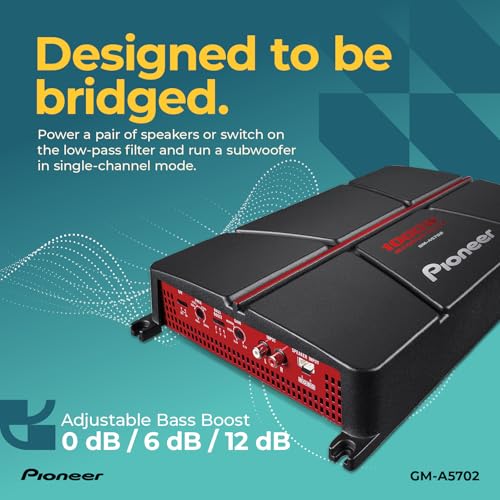
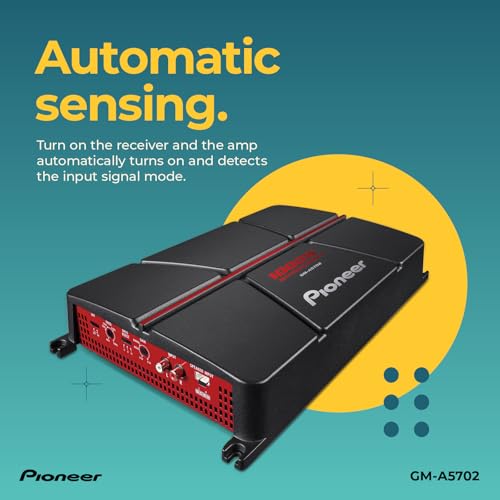
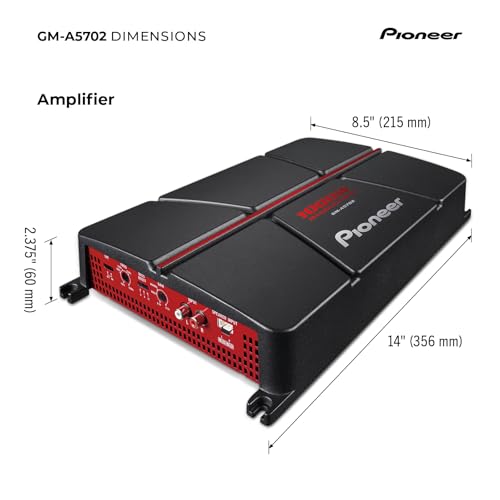
The GM-A5702 stands out as Pioneer’s most powerful 2-channel offering in this lineup, with 240 watts RMS x 2 at 2 ohms and 480 watts RMS in bridged mode. That makes it a compelling choice for driving a high-performance subwoofer while retaining the ability to run component speakers in stereo mode. The adjustable low-pass filter and bass boost give real control over low-end response, which owners appreciate when blending subs with mids.
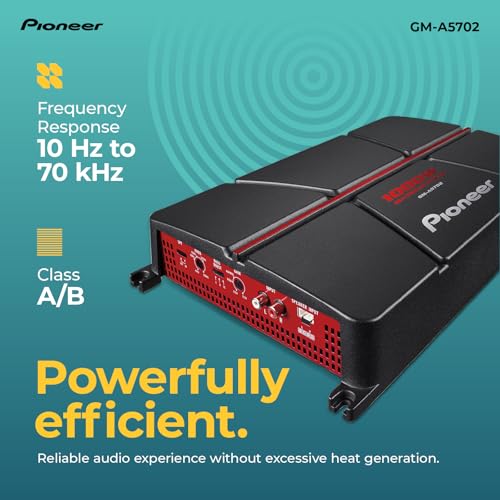
It’s a Class AB design, so it runs warmer than Class D amps, but the trade-off is a smoother, more analog-like sound signature that some enthusiasts prefer. Compared to the Crunch PDX-1000.2, it’s better built, more refined, and more reliable under load. While not as compact or efficient as modern alternatives, its combination of power, tuning options, and Pioneer’s build quality makes it the smarter pick for a dedicated 2-channel setup.
Product photos
Fosi Audio CA30 4-Channel Mini
Strengths
- Exceptional sound clarity
- Compact size
- High efficiency
Trade-offs
- Lower peak power
- Gain steps feel limited
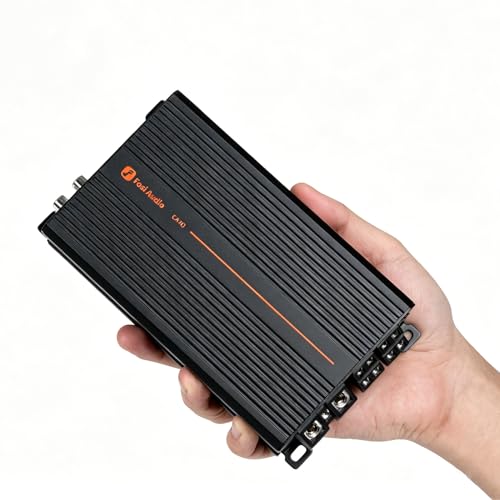
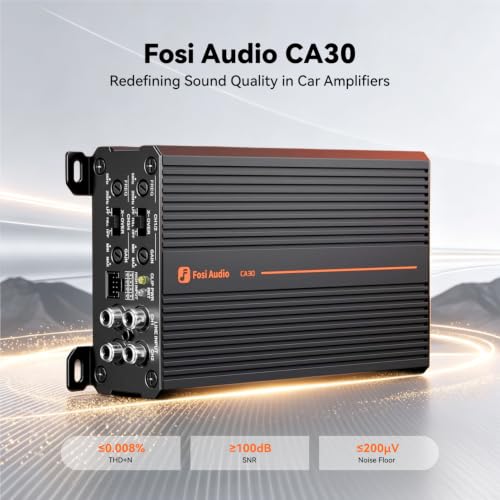
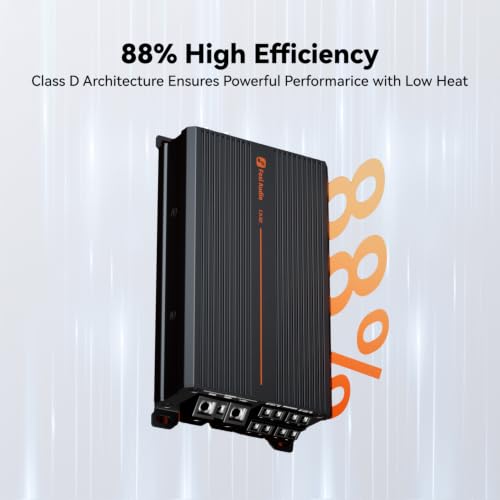
The Fosi Audio CA30 punches way above its size and price in both fidelity and flexibility. For anyone upgrading factory audio without wanting to gut their dash or trunk, this micro amp brings studio-grade specs into a package that can hide under a seat. The use of automotive-grade Infineon and JRC op-amp chips explains the ultra-low THD+N (≤0.006%) and 104dB SNR, numbers that rival amplifiers twice its cost. Owners praise its clean, detailed output, especially when powering component speakers or a small sub in bridged mode.
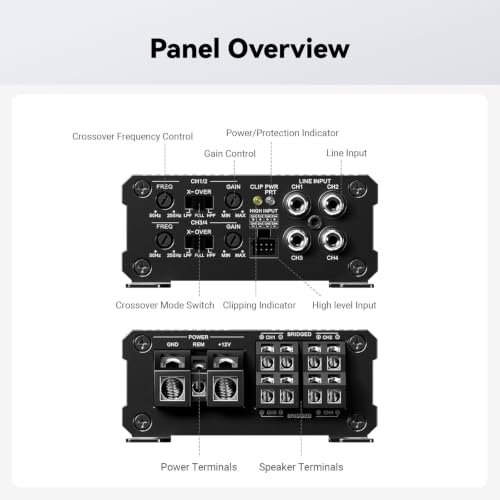
What sets it apart is the thoughtful integration of full-range usability: adjustable HPF/LPF crossovers, high-level inputs for speaker-wire hookups, and auto-on detection make it a plug-and-play solution for modern cars with amplified factory systems. It’s not the raw power king, but for balanced, high-resolution sound across doors and deck, it outperforms larger, older Class AB designs like the Pioneer GM-A6704 in clarity and efficiency. The CNC heatsink and Omron relays suggest long-term durability, which reviewers confirm after months of daily use.
Product photos

BOSS Audio R1100M Monoblock Amplifier

Strengths
- Affordable price
- Remote level control
- High-level inputs
Trade-offs
- Not 1-ohm stable
- Runs hot
- Lower true RMS output
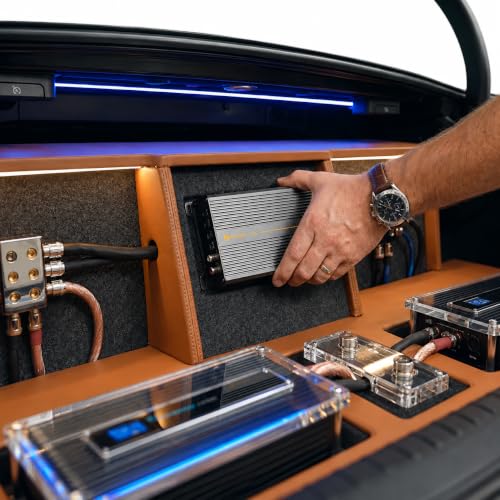
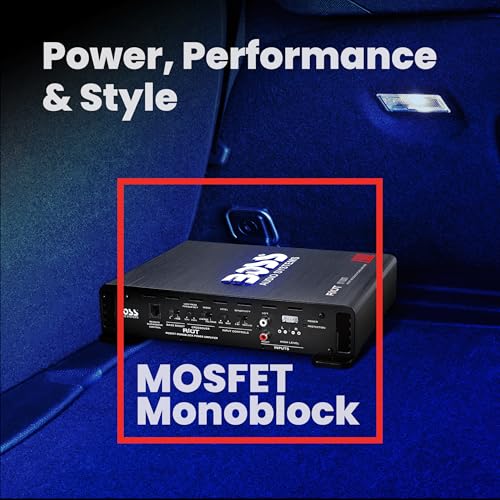
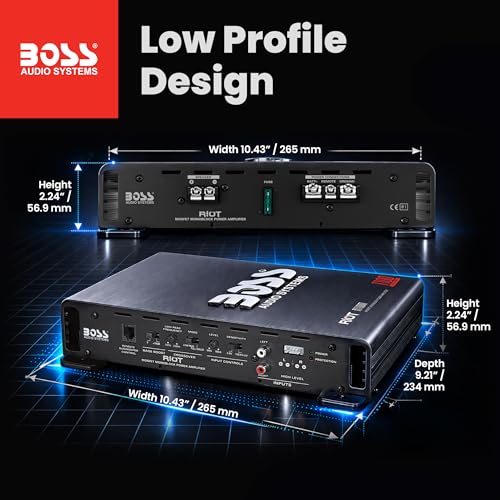
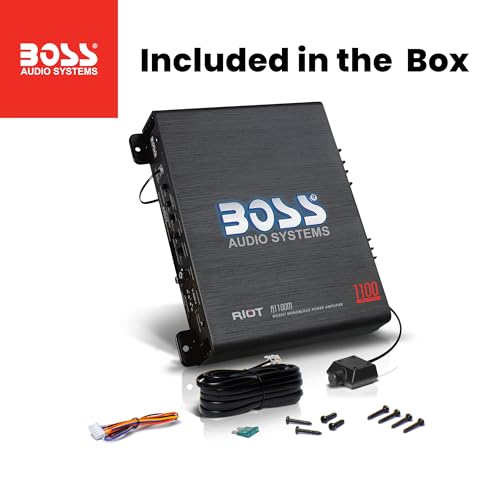
The BOSS R1100M is a budget monoblock that leans hard on big-number marketing, 1100 watts max sounds impressive, but the reality is more modest: 550 watts at 4 ohms RMS is the real benchmark, and that’s where it lands in owner testing. It’s stable at 2 ohms, which gives some flexibility, but it’s not 1-ohm stable like the Skar models, limiting subwoofer wiring options. Still, for someone on a tight budget needing a simple amp for a single 12-inch sub, it gets the job done without constant clipping or overheating.
The inclusion of a remote sub level control is a plus at this price, and the ability to accept high-level inputs means it can tap into factory head units easily. But don’t expect finesse, the bass boost is broad and can muddy the low end if overused, and the Class A/B design runs warmer than modern Class D amps. Compared to the Crunch PDX-1000.2, it’s similarly priced but less versatile, lacking full-range crossover flexibility. It’s a functional entry point, not a long-term upgrade.
Product photos


Taramps TS 400×4 4-Channel Amplifier
Strengths
- High power rating
- Compact size
- Low cost
Trade-offs
- Vague specifications
- No adjustable crossovers
- Installation warnings
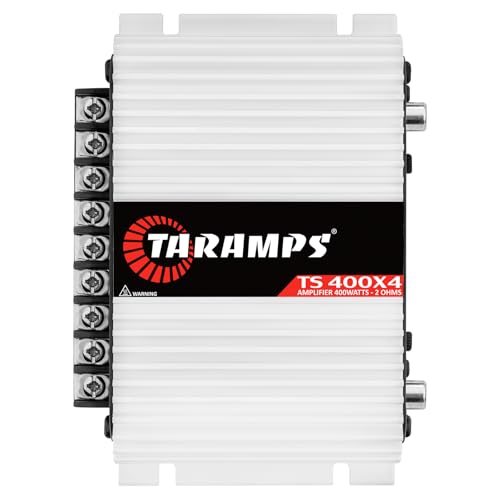
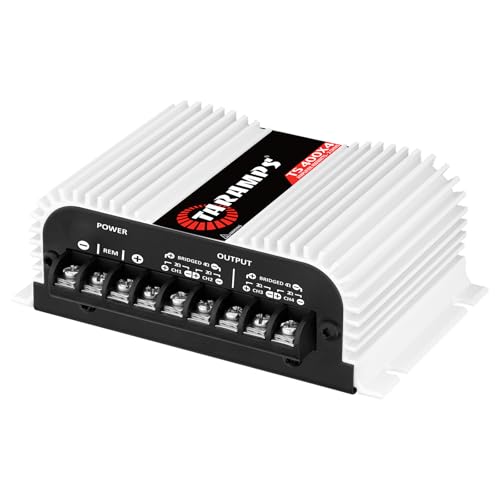
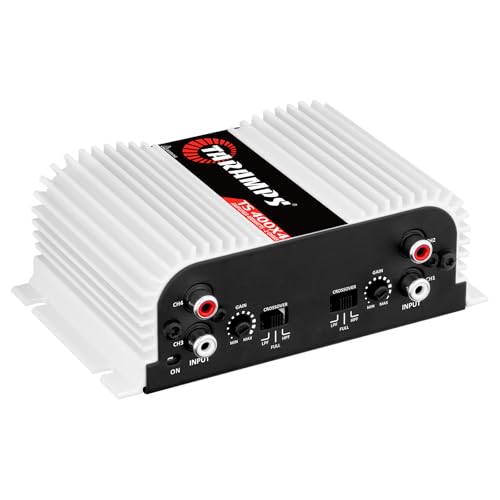
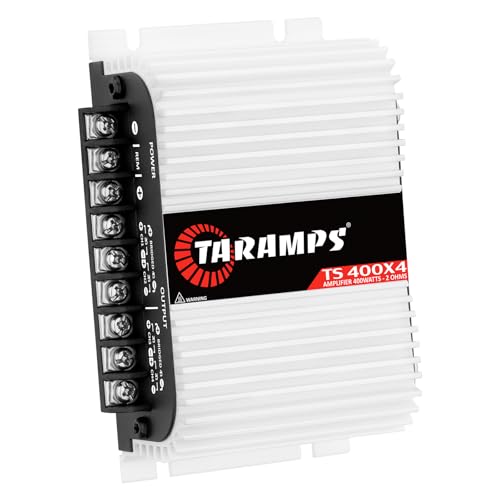
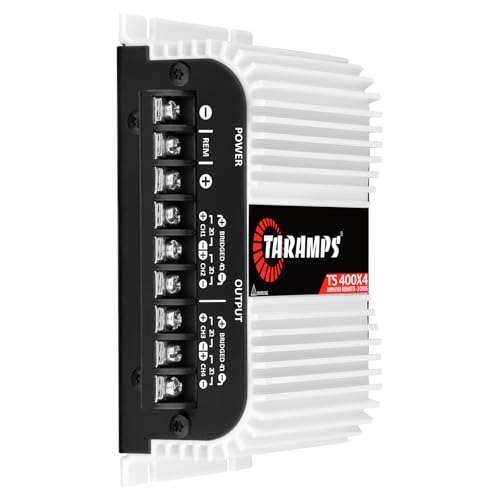
The Taramps TS400x4 is one of those no-frills, high-output workhorses that shows up in budget builds and pro installs alike. Advertised at 400 watts RMS x 4, that number feels optimistic, most owner feedback suggests it’s closer to 150-200 watts RMS per channel in real-world conditions, but still enough to drive multiple speakers hard. It’s a Class D design, so efficiency and heat management are decent, and the compact size helps in tight spaces.
The lack of detailed specs and the strong warning about professional installation raise eyebrows. There’s no mention of signal-to-noise ratio, distortion levels, or crossover controls, which makes it a black-box solution. Compared to the Fosi CA30 or Pioneer GM-A6704, it’s far less refined, but it’s also significantly cheaper. It’s a “set it and forget it” amp for those who just need power and aren’t chasing tonal nuance.
Product photos

Crunch PDX-1000.2 2-Channel Amplifier

Strengths
- Bridging capable
- Adjustable crossovers
- Dual 20A fuses
Trade-offs
- Class A/B inefficiency
- Basic heat dissipation
- Lower SNR
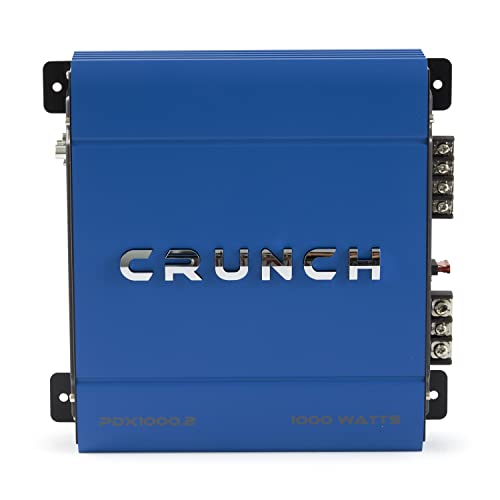
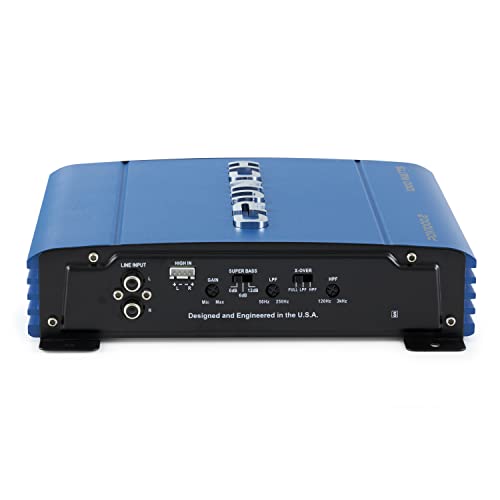
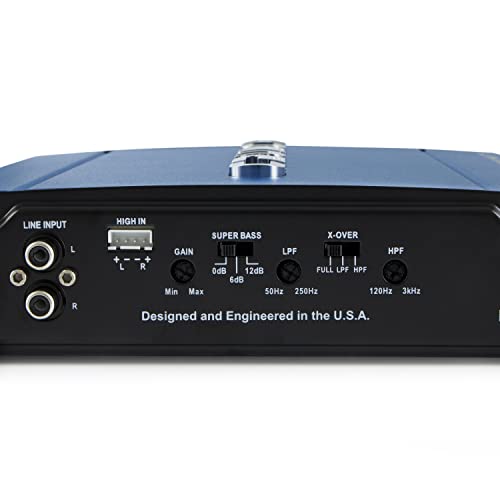
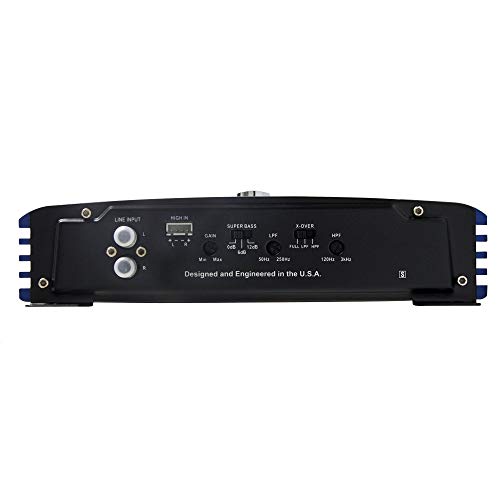
Crunch markets the PDX-1000.2 as a 1000-watt beast, but the real story is in its bridged mono capability: 1,000 watts at 4 ohms when bridged, which is solid for a single sub. In 2-channel mode, it delivers 500 watts RMS at 2 ohms per channel, making it a decent pick for driving high-sensitivity door speakers or mids. The A/B class design isn’t as efficient as Class D, but owners report it holds up well in daily driving with minimal distortion.
What stands out is the flexible crossover system, FULL/LPF/HPF switch and 24dB/octave slopes give real tuning control, which is rare at this price. The blue accent lighting is a gimmick, but the rugged MOSFET supply and dual 20A fuses suggest decent internal build. Still, compared to the Pioneer GM-A5702, it falls short in refinement and thermal management. It’s a capable workhorse if you’re building a system on a shoestring, but don’t expect audiophile-grade detail.
Product photos
How We Chose These car stereo amps
As someone who’s spent years immersed in the world of automotive audio, I approached this guide by combining detailed specification comparisons with a careful review of what actual owners are saying. Rather than a hands-on lab test – which would require a dedicated vehicle and extensive equipment – this is a research-led comparison of published specs and owner feedback. I looked at power output, signal-to-noise ratio, distortion levels, and features like equalization and protection circuitry across a range of amplifiers. To get a genuine feel for real-world performance, I weighed owner reviews from major retailers and forums alongside professional reviews.
For car stereo amps, I focused heavily on power handling and efficiency. A robust power supply is crucial for clean, distortion-free sound, particularly when driving subwoofers. Equally important is efficiency; Class D amps, for example, produce less heat, making them more reliable in the confined space of a vehicle. I also prioritized protection features, as a car’s electrical system can be unpredictable, and you don’t want an amp failing mid-drive. If you are looking for a full system upgrade, checking out our guide to the best car stereos is a good next step.
Specifications like RMS power and THD+N (Total Harmonic Distortion plus Noise) provide a baseline for comparison, but these numbers only tell part of the story. I found owner feedback invaluable for gauging an amp’s real-world performance and reliability. Specs reliably indicate potential maximum output, but user experiences reveal whether an amplifier lives up to that potential or suffers from overheating or build-quality issues. For a broader understanding of the market, you can also find our car amp reviews helpful.
How To Choose The car stereo amps
Finding the right car stereo amp can dramatically improve your listening experience, transforming a mundane commute into a concert on wheels. It’s a surprisingly nuanced purchase, though, as power isn’t the whole story.
A quality car stereo amplifier delivers clean, reliable power to your speakers, maximizing their potential. Key considerations include the amplifier’s class (A/B, D, etc.), RMS power output matching your speakers, impedance stability (ohms), signal-to-noise ratio, and built-in features like crossovers and equalization. Don’t solely focus on peak wattage; RMS is the sustained power that truly matters.
Understanding Amplifier Classes
The class of an amplifier dictates its efficiency and sound characteristics. Class A/B amps, like the Pioneer GM-A6704 and GM-A5702, are known for their excellent sound quality, offering a warm, natural tone. However, they run hotter and are less efficient than Class D amps. Class D amps, such as the Skar Audio RP-1200.1D and the Fosi Audio CA30, are incredibly efficient, minimizing heat and maximizing power output from a smaller package. While older Class D designs sometimes lacked the sonic finesse of A/B, modern implementations are closing that gap, and are a great choice if space or power draw is a concern.
Matching Power to Your Speakers
It’s absolutely crucial to pair your amplifier’s RMS power output with your car speakers’ power handling capabilities. Undersizing an amp means you’re leaving performance on the table. Oversizing, however, can lead to speaker damage if the amp delivers more power than they can safely handle. A good rule of thumb is to choose an amp that delivers roughly 75-100% of your speakers’ RMS power rating. If you’re also considering upgrading car speakers, remember that a more powerful amp will only reveal the true potential of a higher-quality set.
Don’t chase the highest wattage. A well-matched amplifier delivering clean power will always sound better than a high-powered amp that’s straining or clipping.
Features and Form Factor
Beyond power, consider the features that will enhance your listening experience. Built-in crossovers (high-pass and low-pass filters) are essential for directing the correct frequencies to your tweeters, woofers, and subwoofers. Bass boost controls allow you to tailor the low-end response to your preferences. Finally, think about the physical size of the amplifier.
Here’s how to prioritize those considerations:
- Crossovers: Absolutely essential for multi-way systems.
- Bass Boost: Useful if you enjoy emphasized bass, but can muddy the sound if overused.
- Remote Subwoofer Control: A convenience feature allowing you to adjust bass levels on the fly, particularly helpful with monoblock amps and subwoofers.
If you’re looking for a powerful yet space-saving solution, exploring compact options like the Fosi Audio CA30 is worthwhile. For those seeking a budget-friendly upgrade, the BOSS Audio R1100M offers a lot of power for the price. Ultimately, finding the right car amplifiers for your needs depends on your budget, your vehicle, and your listening preferences.
Car Stereo Amps Compared
Here’s a spec sheet comparing key features of the car stereo amplifiers described.
| Product | Max Power (Watts) | Channels | RMS Power @ 4 Ohms | Frequency Response | Class |
|---|---|---|---|---|---|
| Skar Audio RP-1200.1D | 1,600 | 1 | 1,200 | 20Hz – 250Hz | D |
| Skar Audio RP-800.1D | 1,200 | 1 | 800 | 20Hz – 250Hz | D |
| Pioneer GM-A6704 | 1,000 | 4 | 60 | N/A | A/B |
| Pioneer GM-A5702 | 1,000 | 2 | 240 | N/A | A/B |
| Fosi Audio CA30 | 400 | 4 | 200 | N/A | D |
| BOSS Audio R1100M | 1,100 | 1 | 550 | N/A | A/B |
| Taramps TS 400×4 | N/A | 4 | N/A | N/A | N/A |
| Crunch PDX-1000.2 | 1,000 | 2 | 250 | 10Hz – 45KHz | A/B |
Frequently Asked Questions
What’s the difference between max power and RMS power, and which should I focus on?
RMS power is the continuous power an amplifier can deliver, which is the crucial number for matching to your speakers. Max power is a peak value and often inflated; it doesn’t represent sustained output and shouldn’t be your primary consideration when comparing amps.
Are Class D amps really as good as Class A/B amps in terms of sound quality now?
Modern Class D amplifiers have significantly improved and now often rival Class A/B amps in sound quality, especially for typical listening levels. While some audiophiles still prefer the warmer tone of A/B, the efficiency and compact size of Class D make them a compelling choice for many car audio setups.
My factory radio doesn’t have RCA outputs. How do I connect an amplifier?
You’ll need a line output converter (LOC). These devices tap into your factory speaker wires and convert the speaker-level signal into an RCA signal that an amplifier can use. Be sure to choose a quality LOC to minimize signal degradation.
Is it possible to add a subwoofer without replacing my existing amplifier?
Yes, you can add a subwoofer using a separate monoblock amplifier if your current amplifier doesn’t have a dedicated subwoofer output. This allows you to power the sub independently and fine-tune its sound without affecting your existing speakers. For more complex systems, you might also consider looking into four-channel amplifiers to power both your speakers and a subwoofer.
How can I adjust the sound after installing a new amplifier to get the best results?
Beyond the basic gain settings on the amp, you can refine the sound with car equalizers and by carefully adjusting any crossovers or bass boost features on the amplifier itself. Fine-tuning these settings will help you achieve a balanced and personalized soundstage.
The Bottom Line
Ultimately, choosing a car stereo amp comes down to balancing your desire for sonic control with how much effort you want to put into the installation and tuning. For most drivers looking for a significant upgrade without getting lost in complex settings, the Skar Audio RP-1200.1D strikes that balance perfectly – it delivers impressive power in a relatively compact package, and owner feedback consistently praises its ability to bring a system to life.
If you’re on a tighter budget, the BOSS Audio R1100M offers a lot of bang for your buck, while the Fosi Audio CA30 is a fantastic choice for those prioritizing a small footprint and ease of installation. For those building a more sophisticated multi-speaker setup, the Pioneer GM-A6704 provides the classic A/B sound quality many enthusiasts prefer. Remember that exploring car audio amps can open up a wider range of options, but these represent strong contenders across different needs.
Don’t get too hung up on chasing the highest numbers on a spec sheet. A well-matched amplifier, properly installed and tuned, will always outperform a more powerful one that’s poorly integrated into your system. Thinking about a full overhaul? Consider looking into complete audio systems to optimize the entire listening experience, rather than just focusing on the amplifier alone.
