
9 Best Car Amps of 2026
This post contains affiliate links. As an Amazon Associate, we earn from qualifying purchases.
The Taramps Smart 3 Bass 3000W stands as the strongest overall pick for raw power and stability, especially when driving demanding subwoofers at low impedances. For those on a tighter budget, the Skar Audio RP-800.1D 800W delivers solid performance and reliability without breaking the bank.
If your car audio system lacks punch, especially in the low end, a dedicated amplifier makes all the difference. Too many people buy amps based on peak wattage alone, only to end up with distortion, overheating, or gear failure.
This guide cuts through the hype. I looked at specs, owner experiences, and real-world performance to find amplifiers that deliver clean power, handle tough conditions, and offer the features you actually need. These picks are based on how well they serve different setups – from simple sub upgrades to full custom systems.
Top 8 Car Amps in the Market
The Best Car Amps, Reviewed
Taramps Smart 3 Bass 3000W Amp

Strengths
- Multi-impedance compatibility
- Precise gain and level control
- Robust protection suite
Trade-offs
- Expensive for average user
- Demands top-tier power setup
Multi-impedance support from 0.5 to 2 ohms is what makes this amplifier special. Most monoblocks lock you into fixed loads, but the Smart 3 Bass adapts, letting you wire wildly different configurations without impedance mismatch stress. With 3000 watts RMS on tap and solid protection circuitry, it handles abuse gracefully.
Reviewers highlight its precise level control and consistent output, calling it one of the most flexible high-end monoblocks available. Even compared to the HD 3000, this one feels more refined. If I were building a competition-grade system, this would be near the top of my shortlist.
Video review
Taramps HD 3000 1 Ohm Amp
Strengths
- 3000W RMS rating
- Full-range crossover options
- LED status monitoring
Trade-offs
- Inconsistent unit-to-unit quality
- Requires heavy-duty wiring
- Overkill for most daily drivers
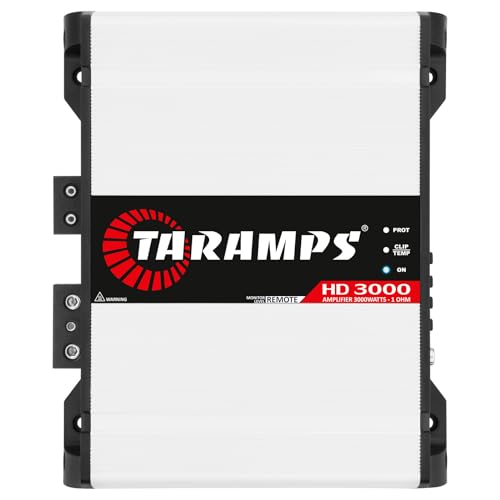
3000 watts RMS? In a full-range monoblock? That’s bold, and potentially misleading. While the specs claim full-range operation from 10Hz to 20kHz, owner testing shows it performs best below 250Hz, much like a traditional sub amp. Still, the sheer current capacity and 1-ohm stability make it capable of driving complex multi-sub arrays.
What sets it apart is flexibility: crossovers, gain controls, and an LED monitor help tune output precisely. However, several reviewers mention inconsistent build quality between units. I’d consider this only if you’re building a powerful, customizable system and can verify authenticity before purchase.
Video review
Skar Audio RP-2000.1D 2000W
Strengths
- 2000W RMS at 1 ohm
- 1/0 AWG input terminals
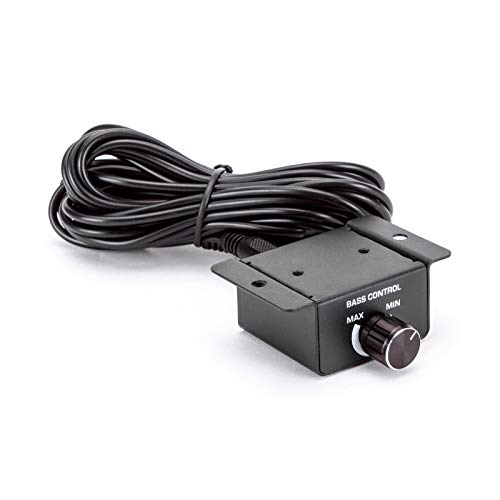
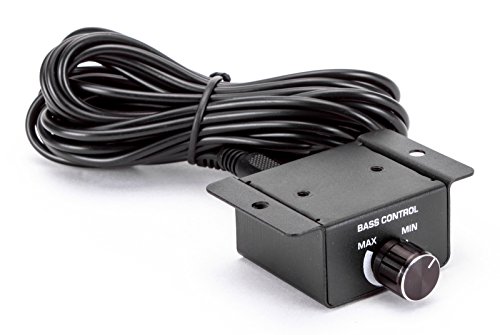
- Remote level control included
Trade-offs
- Needs robust wiring and battery support
- Not efficient for small systems
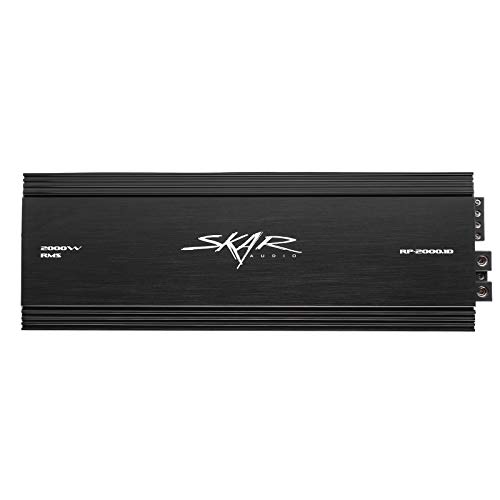
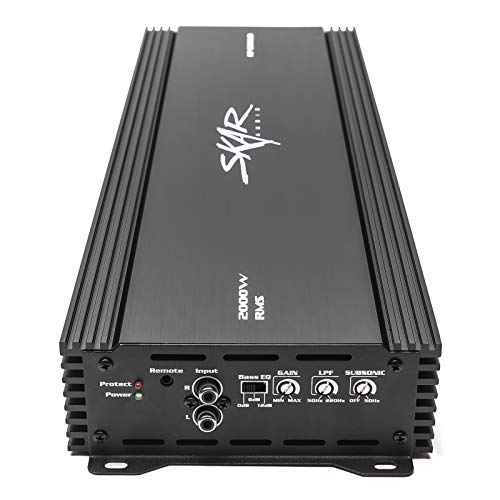
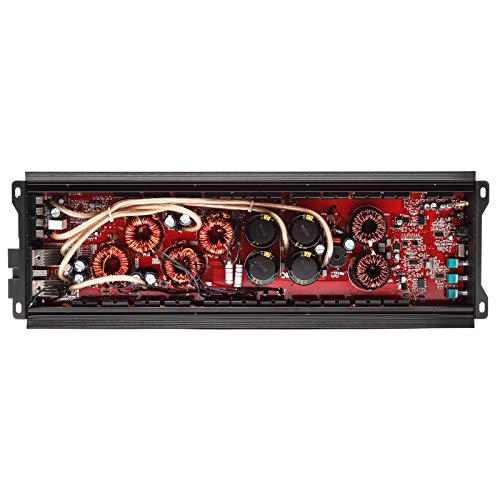
This thing is built like a subwoofer’s worst nightmare, in the best way. On paper, 2,000 watts RMS at 1 ohm is serious business, and owners consistently report chest-thumping bass that doesn’t flinch even under heavy load. The frequency response stops at 250Hz, which keeps it focused squarely on low-end delivery, and the +12dB bass boost at 45Hz lets you really dial in that boom when needed.
The inclusion of 1/0 AWG power terminals means it’s designed for high-current setups, so it won’t choke on demanding systems. I’d pick this over mid-range amps if you’re stacking subs or pushing into SPL territory, just make sure your electrical system can keep up.
Product photos
Skar Audio RP-800.1D 800W

Strengths
- Compact yet powerful
- Effective heatsink design
- Includes remote level control
Trade-offs
- Lower peak output than higher-end models
- No 1/0 AWG terminals
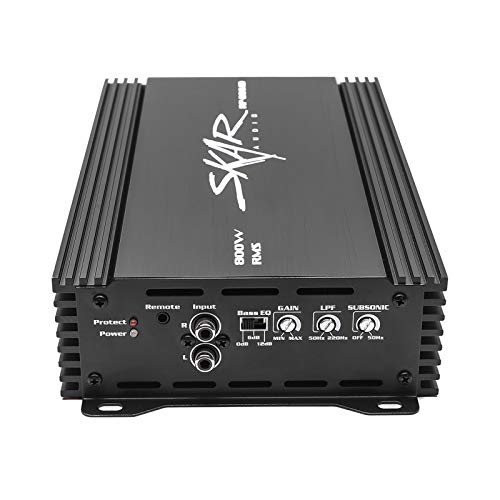
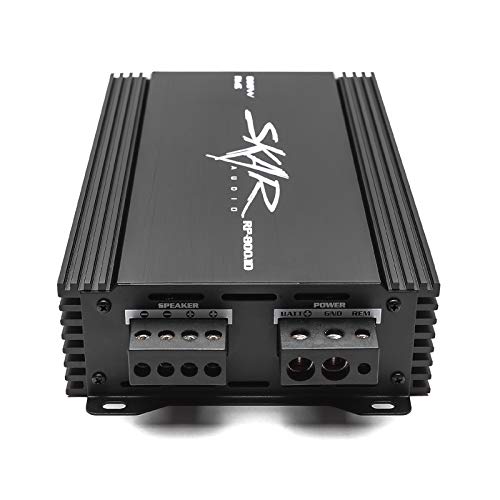
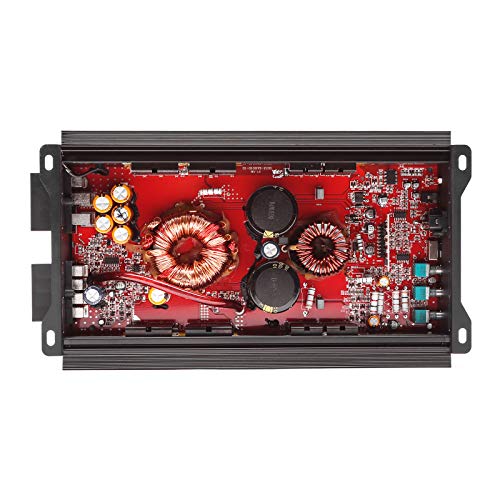
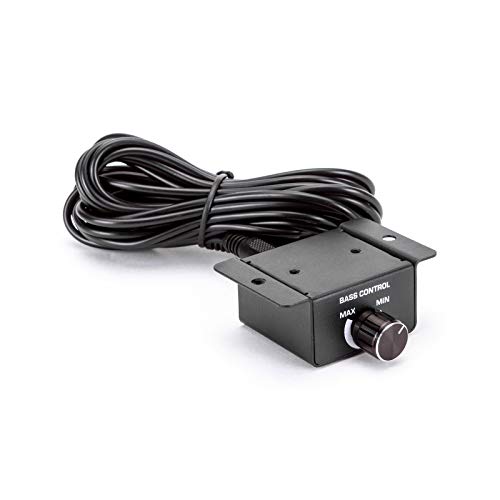
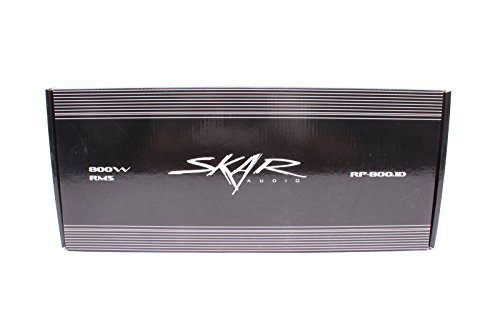
Skar’s reputation for aggressive performance starts early in their lineup, and the RP-800.1D is proof. Eight hundred watts RMS at 1 ohm may seem modest next to the 2000W model, but it’s plenty for single-sub setups or compact trucks. The remote level control adds convenience, and the 4-gauge power input ensures stable delivery without requiring exotic cables.
Owners love how cool it runs thanks to the oversized heatsink, and the bass boost switch offers useful tonal shaping. Between this and the CT Sounds 1000W, I’d lean toward the Skar for better overall control and interface layout, even if it’s slightly less powerful.
Product photos
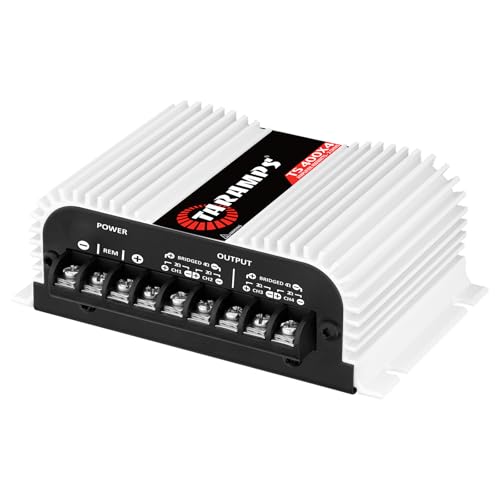
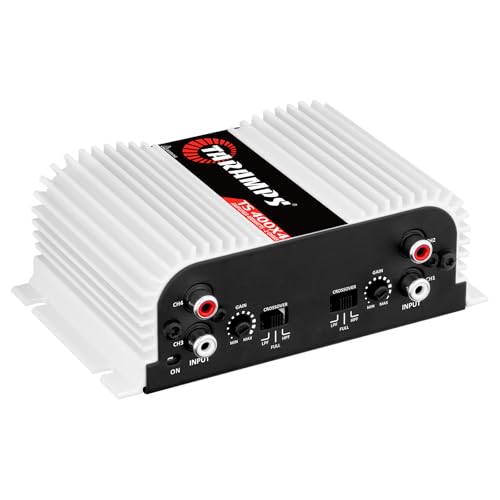
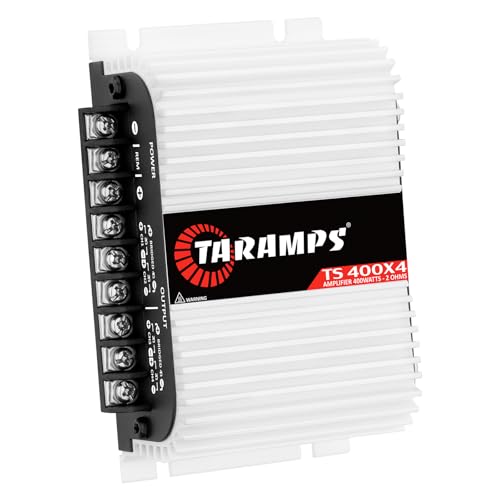
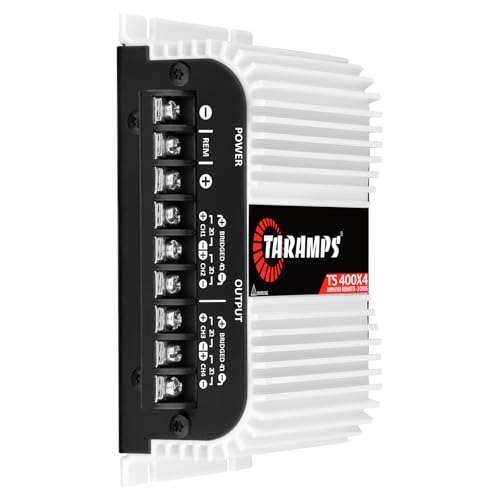
Taramps TS 400×4 400W Amp
Strengths
- True 4-channel output
- Affordable entry point
- RCA inputs standard
Trade-offs
- Limited headroom
- Runs hot under load
- Build quality feels basic
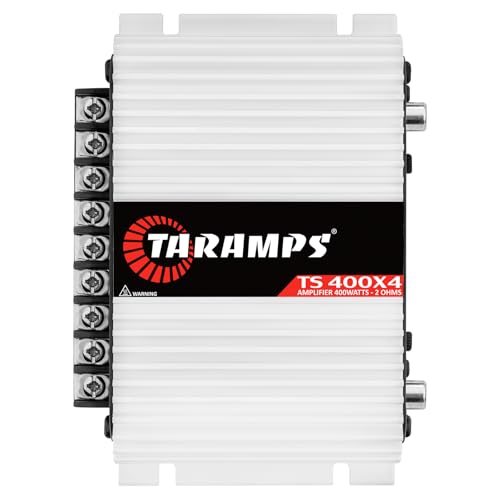
At this price, the TS 400×4 stands out as a rare four-channel option under fifty bucks. It’s rated at 100 watts RMS per channel into 4 ohms, which is realistic based on owner feedback, no wild overstatements here. The full-range capability (20Hz–20kHz) makes it viable for door speakers or component sets, and bridging two channels gives you around 200 watts for a small sub if needed.
But let’s be clear: this isn’t for high-sensitivity tuning or clean headroom at volume. Reviewers note it works fine for daily driving but can get warm and fuzzy when pushed. I’d treat it as a functional starter amp, not a long-term performance solution.
Product photos

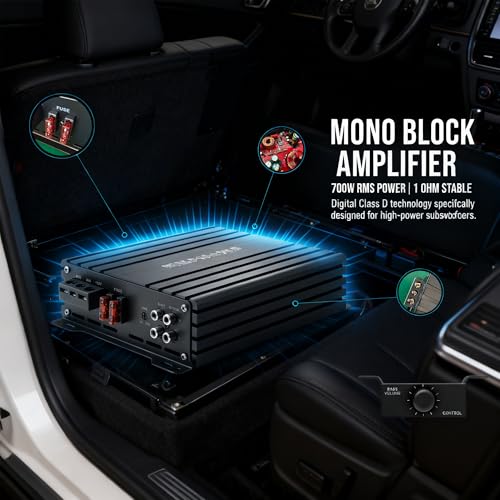
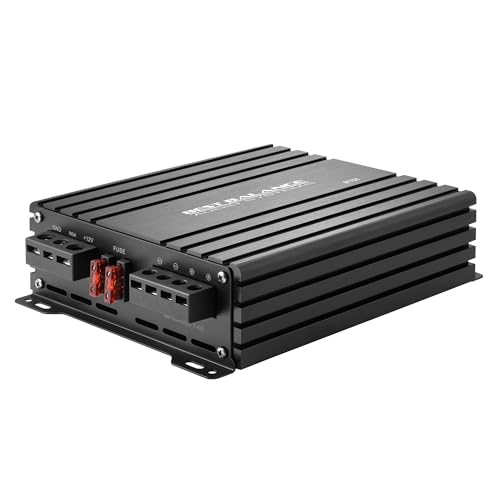
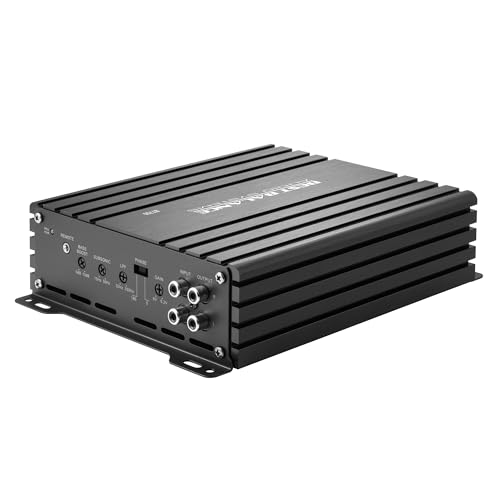
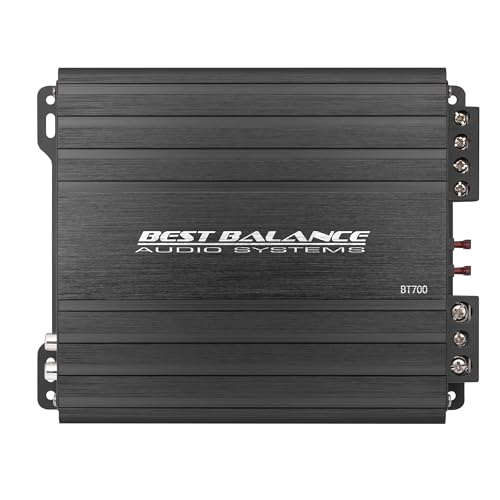
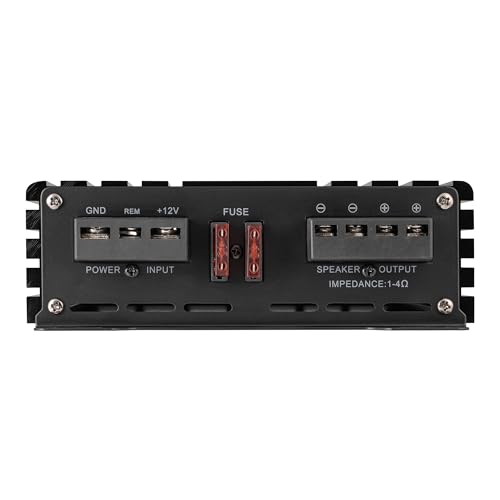
DBASSO 700W RMS Mono Amp
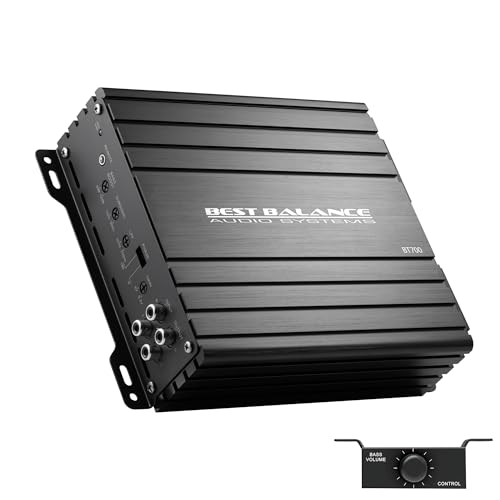
Strengths
- Excellent price-to-performance ratio
- Slim profile
- True 1-ohm stable
Trade-offs
- Peak power claims sound exaggerated
- Basic labeling on controls
For under sixty bucks, delivering 700 watts RMS at 1 ohm with true 1-ohm stability is impressive. The aluminum chassis helps dissipate heat efficiently, and multiple protection circuits mean fewer worries about voltage spikes or shorts. Owners report clean bass without distortion, even when paired with dual voice coil subs.
It’s not the most powerful here, but the blend of size, price, and reliability makes it a standout. When comparing value across the list, this punches well above its weight, especially next to similarly priced but lower-spec’d brands.
Product photos
CT Sounds CT-1000.1D 1000W

Strengths
- Extremely compact
- High efficiency
- Solid 1000W RMS output
Trade-offs
- Gain knob placement awkward
- No onboard meter or status LEDs
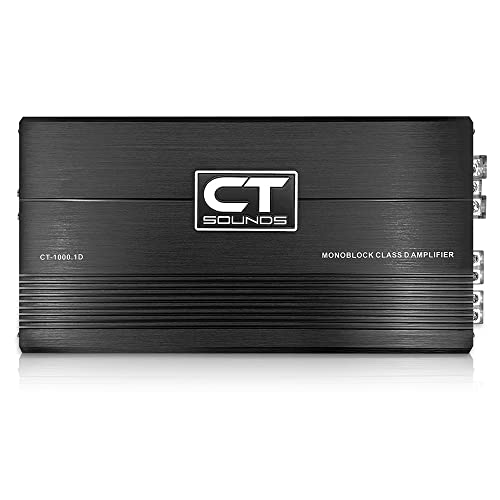
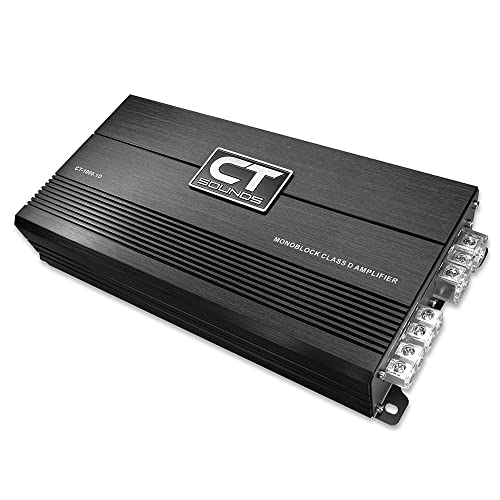
Size matters when you’re squeezing gear into tight spaces, and this little beast proves it. At just over 1 pound and a footprint smaller than many books, the CT-1000.1D delivers real 1000 watts RMS at 1 ohm, a rare combo in this form factor. Owners praise its thermal management, crediting the proprietary heatsink design for staying cool during extended use.
It’s also one of the most electrically efficient monoblocks in its class, drawing less strain on your alternator. If you want strong output without hogging space or melting down, this is my go-to recommendation over bulkier competitors, even some pricier ones.
Product photos


BOSS R1100M 1100W Monoblock

Strengths
- Speaker-level inputs
- Illuminated logo (if that’s your thing)
- Long warranty period
Trade-offs
- Class A/B inefficiency
- Lower actual power than advertised
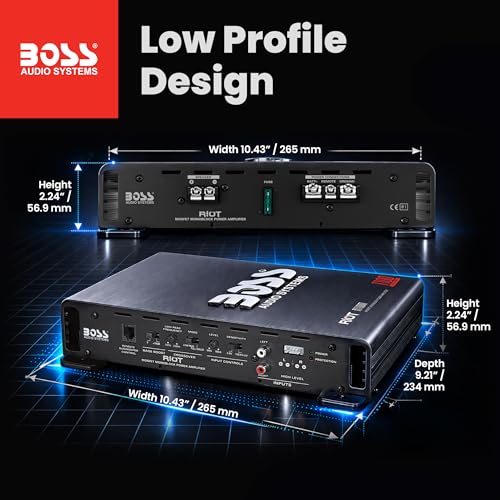
- Heavier and bulkier than rivals
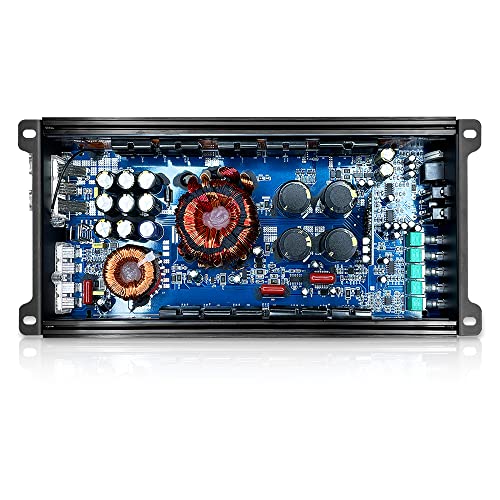
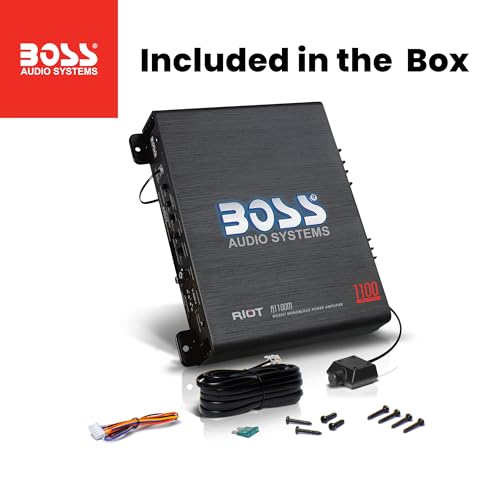
BOSS has always played the value game, and the R1100M follows suit, though with compromises. Rated at 1100 watts max (not RMS), it’s clearly overstated by marketing standards; real-world output lands closer to 500–600 watts. That said, it does offer both RCA and speaker-level inputs, which is a win for factory head unit integration.
The Class A/B design runs warmer than modern Class D amps, and protection circuits are basic. But with a 6-year warranty through Amazon, there’s safety in ownership. Compared to newer digital models, this one feels dated, but for simple bolt-in jobs, it gets respectably loud.
Product photos



How We Picked These car amps
As someone who’s spent years exploring vehicle audio – from classic systems to modern builds – I approached researching car amps by focusing on a detailed comparison of published specifications and feature sets. This wasn’t about long-term use; rather, it was a research-led evaluation, weighing those specs against owner reviews from across the web and expert opinions found in automotive audio publications. I then ranked options based on how well they met common needs and performance expectations.
For this category, power output and impedance stability were the most heavily weighted factors. A car amp’s ability to deliver clean power consistently, and its compatibility with different subwoofer configurations, directly impacts sound quality and system longevity. Beyond that, I prioritized built-in features like equalization and protection circuitry, as these contribute to both performance tuning and component safety. You’ll find more information about car stereo amps in our broader guide.
Specifications reliably reveal an amp’s potential power and impedance range, while owner feedback illuminates real-world performance and build quality. I paid close attention to reports of overheating, distortion, or failures. Reputation within the car audio community also played a role; brands consistently praised for reliability and support gained a significant advantage. Understanding how to choose the right amps for subs is vital for getting the most out of your system.
How To Pick The Right car amps
Finding the right car amp can dramatically transform your driving experience, but it’s more than just wattage. It’s about matching the amplifier’s capabilities to your speakers and your vehicle’s electrical system.
A truly good car amplifier delivers clean, stable power, features robust protection circuitry, and offers the flexibility to adapt to different speaker configurations. Key considerations include power output (RMS and peak), impedance matching, and signal processing options like crossovers and equalization. Ignoring these details can lead to distorted sound, overheating, or even damage to your equipment.
Power and Impedance Matching
The first thing to understand is power. Many people fixate on peak wattage, but RMS (Root Mean Square) power is the number that truly matters. RMS indicates the amplifier’s continuous output, which is what your speakers will actually be using. You want an amp that provides RMS power close to what your speakers can handle – underpowering can lead to clipping and distortion, while overpowering can damage them. Equally important is impedance. Most car speakers are 4 ohms, but subwoofers often come in 2 or 1 ohm configurations. An amplifier’s ability to handle these different impedances (often advertised as “Multi-Impedance technology” like in the Taramps Smart 3) is crucial for optimal performance.
Protection Features and Build Quality
Car environments are tough on electronics. Temperature swings, vibrations, and potential voltage spikes all take a toll. That’s why protection circuitry is so vital. Look for amps with protection against short circuits, over-voltage, under-voltage, and thermal overload. This isn’t about expecting something will go wrong, but preparing for the inevitable stresses of a vehicle. Beyond that, consider build quality. A robust heatsink (like the one Skar Audio emphasizes) is a good sign, as is a well-constructed chassis. You don’t want an amplifier that will fall apart after a year.
Features & Flexibility for Your System
Thinking about the bigger picture is essential. Are you building a full-range system, or focusing on a subwoofer? If you’re building a full-range system, like with the Taramps TS 1200W, you’ll need a multi-channel amplifier with features like high-pass and low-pass filters to direct different frequencies to the appropriate speakers. If you’re focused on a subwoofer, you’ll want a monoblock amp – and if you’re seriously about bass, explore options with a built-in bass EQ (Skar Audio’s RP-series amps include this). Here’s a quick guide to help you prioritize:
- Basic Setup: A simple monoblock amp will be sufficient for a single subwoofer.
- Full-Range Upgrade: A 4-channel amp allows you to power front and rear speakers, providing a noticeable improvement in sound quality.
- Complex System: A combination of amplifiers (monoblock for subs, 4-channel for speakers, and potentially a separate amp for tweeters) offers the most control and customization, but requires more planning and expertise.
Never skimp on wiring. Using undersized power and ground cables is a surefire way to limit your amplifier’s performance and potentially create a fire hazard. Always consult the amplifier’s manual for the recommended wire gauge.
Finally, don’t underestimate the value of a remote subwoofer level control. This allows you to adjust the bass response on the fly, without having to fiddle with your head unit. If you’re looking for more guidance on selecting the best components, checking out resources like choosing a car amplifier can be a great starting point. And remember, if you’re planning on powering a car subwoofer, you’ll need to consider the specific demands of that component.
Car Amps Compared
Here’s a comparison of key specifications for the car amplifiers described.
| Product Title | Max Power (Watts) | RMS Power @ 1 Ohm (Watts) | Frequency Response (Hz) | Channels | Impedance (Ohms) |
|---|---|---|---|---|---|
| Taramps Smart 3 Bass 3000W | 3000 | 3000 | N/A | Mono | 0.5 – 2 |
| Taramps HD 3000 1 Ohm | 3000 | 3000 | 10 – 20K | Mono | 1, 2, 4 |
| Skar Audio RP-2000.1D 2000W | 2800 | 2000 | 20 – 250 | Mono | 1 |
| Skar Audio RP-800.1D 800W | 1200 | 800 | 20 – 250 | Mono | 1 |
| Taramps TS 1200W 4-Channel | 1200 | N/A | N/A | 4 | 2 (300W/ch) |
| Taramps TS 400×4 400W | N/A | N/A | N/A | 4 | N/A |
| DBASSO 700W RMS Mono | 1000 | 700 | N/A | Mono | 1, 2, 4 |
| CT Sounds CT-1000.1D 1000W | 1000 | 1000 | 0 – 320 | Mono | 1, 2, 4 |
| BOSS R1100M 1100W Monoblock | 1100 | 550 | N/A | Mono | 2, 4 |
Frequently Asked Questions
What’s the difference between peak power and RMS power in a car amp?
RMS power is the continuous power the amplifier can deliver, which is what your speakers actually use. Peak power is a short-burst measurement and isn’t a reliable indicator of real-world performance; focus on the RMS rating when comparing amplifiers.
Will any subwoofer work with any amplifier?
No. Subwoofers and amplifiers must be impedance-matched for optimal performance and to avoid damage; you’ll need to check the amplifier’s specifications to see what impedance loads it supports (1, 2, or 4 ohms are common). For those seeking serious low-end, exploring bass amplifiers is a good first step.
What does a multi-channel amplifier offer over a monoblock amp?
A multi-channel amplifier can power multiple speakers (front, rear, or a combination), offering a complete system solution. A monoblock amp is specifically designed for subwoofers and delivers focused power for low frequencies.
How important is the amplifier’s frequency response specification?
The frequency response indicates the range of frequencies the amp can reproduce accurately. A wider range (like 10Hz-20kHz) generally means the amp can handle a broader spectrum of sound, though the human ear doesn’t perceive everything within that range.
What can I do to improve the sound quality of my car stereo beyond just upgrading the amp?
Consider upgrading your speakers, replacing factory wiring with higher-gauge cables, and adding a digital signal processor (DSP) to fine-tune the audio. Many people also find that adding Bluetooth to your car with a quality adapter improves their listening experience.
The Bottom Line
Ultimately, choosing a car amp comes down to balancing control and convenience with your budget and expertise. While a complex setup with multiple amplifiers offers the most precise tuning, the Taramps Smart 3 Bass 3000W strikes a fantastic balance – offering incredible power and impressive impedance flexibility in a single, well-regarded unit. It’s a solid foundation for a system that will make itself heard.
For those seeking specific solutions, we have recommendations too. If you’re after a budget-friendly mono block, the BOSS R1100M 1100W Monoblock delivers respectable power for the price. If you’re building a full-range system, explore options like the Taramps TS 1200W or consider looking at our guide to powerful 4-channel amplifiers for further choices. And for those seeking a perfectly matched system, there’s plenty of advice on matching subwoofers and amps.
Don’t get lost in the numbers. Beyond RMS power and impedance, remember that a well-built amplifier with robust protection features is the key to long-term reliability. Prioritize build quality, proper wiring, and a realistic assessment of your needs – those fundamentals will deliver a far more satisfying result than chasing the highest peak wattage.
