
9 Best Car Amps for Bass 2026
This post contains affiliate links. As an Amazon Associate, we earn from qualifying purchases.
The Taramps Smart 3 Bass is the best overall car amp for bass, delivering clean 3000-watt power with unmatched impedance flexibility. For budget-focused builds, the Taramps BASS 400 2 Ohms offers solid performance at a lower cost, while the Stinger Audio MT-1000.5 stands out if you need multi-channel versatility without sacrificing low-end punch.
Hunt for deep, distortion-free bass often leads to amps that promise big numbers but fall apart under real-world loads. Too many riders and drivers learn the hard way that cheap power can mean blown subs, overheating, or fried circuits.
This guide cuts through the hype. I compared specs and real owner feedback to find amps that deliver reliable, clean output and can handle the demands of serious bass. You’ll see what separates marketing fluff from real performance, and how to match an amp to your sub and electrical system.
Top 9 Car Amps For Bass in the Market
The Best Car Amps For Bass, Reviewed
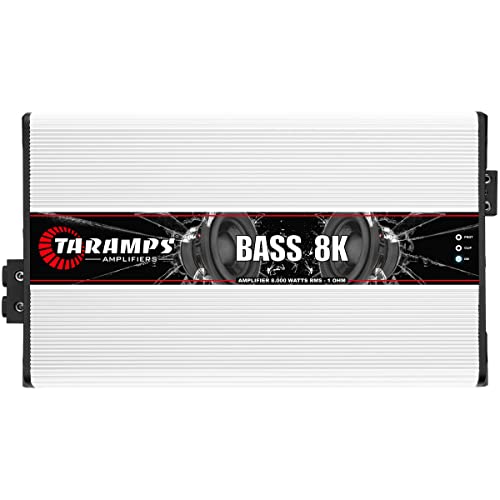
Taramps BASS 8K 1 Ohm Amplifier
Strengths
- 8000W RMS
- High SNR
- SPL-ready build
Trade-offs
- Massive power needs
- No remote control
- Overkill for daily use
The 8000W RMS rating alone makes the BASS 8K a beast, and owners confirm it delivers extreme output with clean, high-fidelity bass, thanks to its 95dB SNR and robust protection suite. It’s built for SPL dominance, with a focus on sub-bass reproduction down to 8Hz.
While pricier than the Big Boss 5, it offers more raw power and tighter control, making it the top pick for competition builds. The lack of RGB or remote tuning is a trade-off, but purists won’t care. If you’re chasing maximum decibels and depth, this is the amp to beat.
Video review
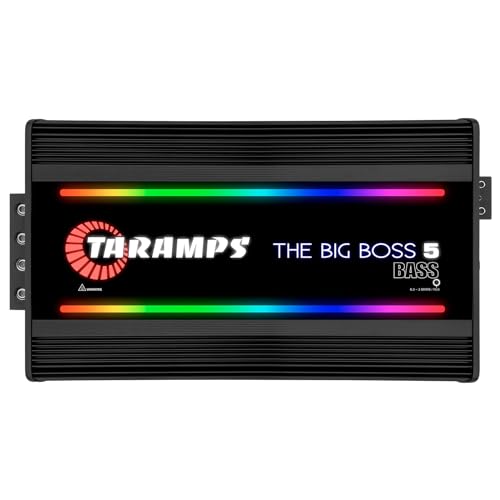
Taramps The Big Boss 5 Amplifier
Strengths
- 5000W RMS
- RGB lighting options
- Strong thermal design
Trade-offs
- Very high power draw
- Expensive
- Overkill for daily use
With 5000W RMS, this isn’t an amp, it’s a statement. The Big Boss 5 is built for SPL dominance, and owners report it delivers clean, hard-hitting bass even in competition-grade enclosures. The tuning controls are straightforward but effective, letting you shape response without overcomplicating the setup.
What sets it apart is the 108 RGB LED effects, which add a visual flair most high-power amps ignore. But make no mistake, this is serious hardware. It demands a robust electrical system and high-current wiring. Compared to the BASS 8K, it trades some peak power for better thermal management and build refinement. I’d recommend it for show cars or SPL rigs where both performance and presentation matter.
Video review
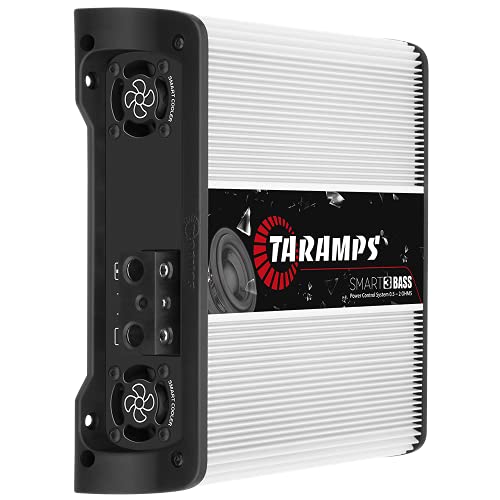
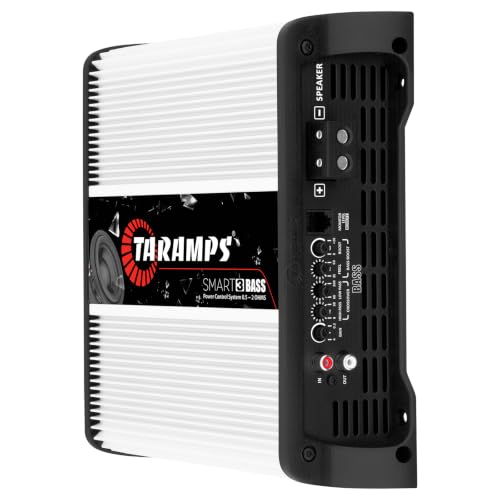
Taramps Smart 3 Bass Amplifier

Strengths
- 3000W RMS
- Multi-impedance 0.5–2Ω
- Bass boost included
Trade-offs
- Requires 200A fuse
- Large power cable needs
- Not for beginners
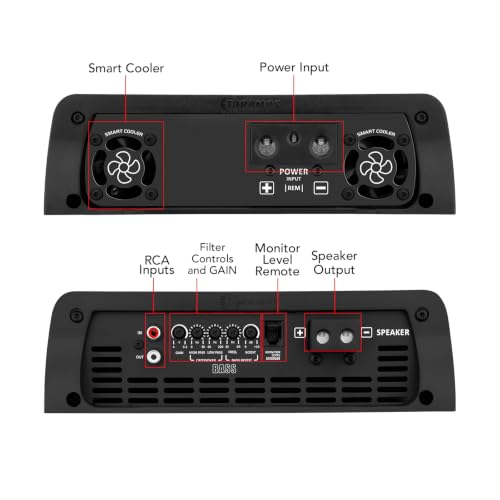
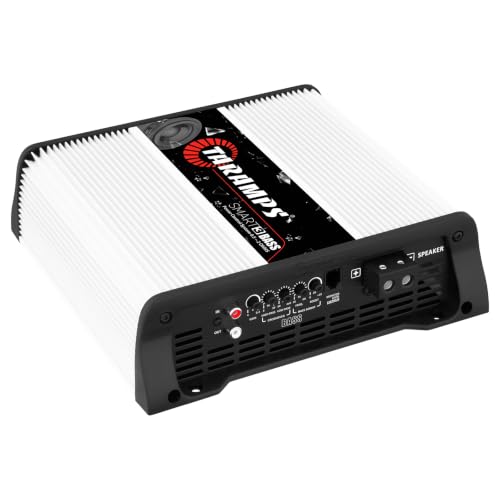
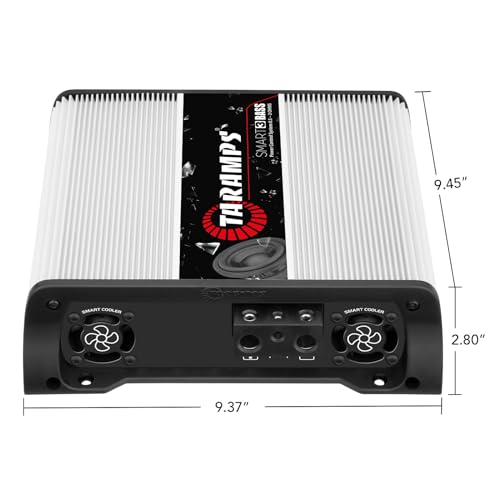
On paper, the Taramps Smart 3 Bass stands out with its 3000W RMS output and multi-impedance support from 0.5 to 2 ohms, a rare flexibility that makes it adaptable across complex subwoofer builds. Owners consistently report strong real-world performance, especially in systems where impedance fluctuates, this amp handles those shifts without strain.
The inclusion of bass boost, low-pass crossover, and precise level control gives tuners room to shape their sound, though some note the learning curve if you’re not used to dialing in high-power setups. Compared to other 3kW-class amps, this one balances adaptability and reliability, though it’s not quite as plug-and-play as lower-wattage models.
Product photos
Taramps HD 3000 1 Ohm Amplifier
Strengths
- 3000W RMS
- Full-range capable
- Supports 1–4Ω
Trade-offs
- 9 AWG output cables
- No remote level control
- Less bass focus than dedicated amps
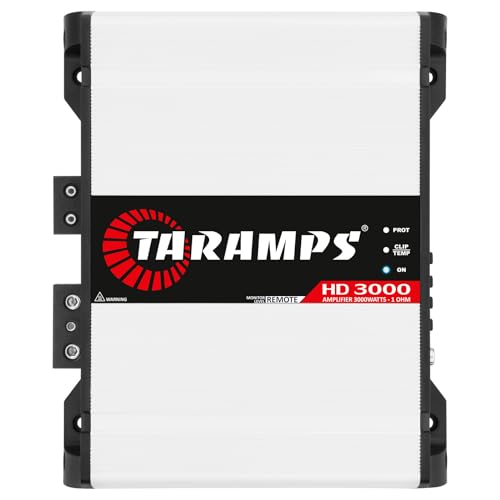
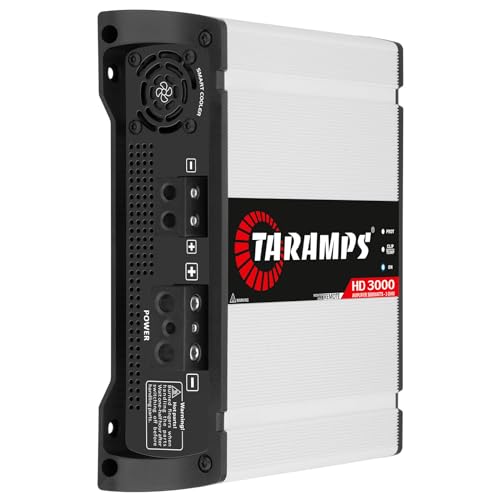
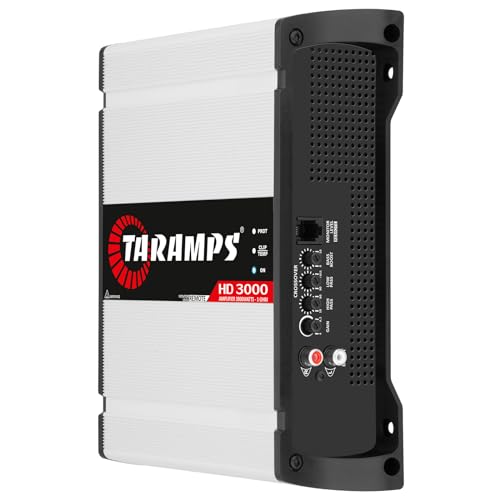
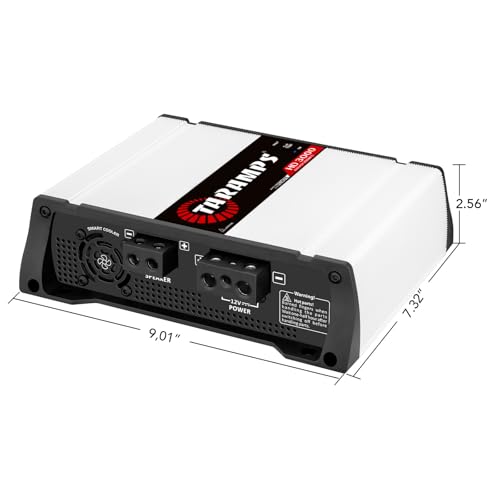
The HD 3000 is one of the few 3000W RMS monoblocks that supports 1, 2, and 4 ohms, making it unusually flexible for full-range or hybrid setups. Reviewers note it works well not just with subs but also with mid-bass drivers, thanks to its 10Hz–20kHz frequency response, a rarity in a monoblock.
It lacks the multi-impedance range of the Smart 3 Bass, but for those who want a single high-power amp to drive more than just subs, this is a smarter buy. The 150A fuse requirement and 9 AWG output cables mean it’s serious hardware, but not overkill for a high-end daily system. I’d recommend it over the BASS 8K if you value versatility over raw power.
Product photos


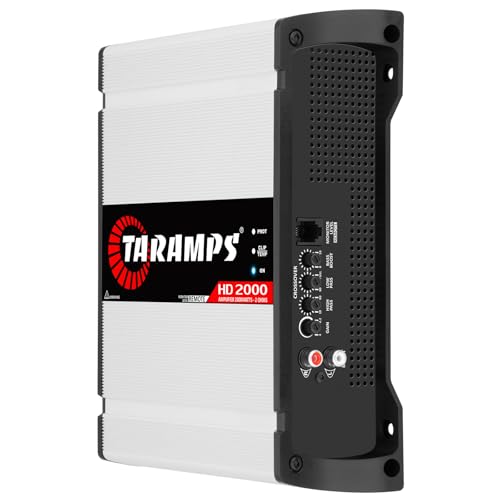
Taramps HD 2000 2 Ohms Amplifier

Strengths
- 2000W RMS
- Full-range flexibility
- Compact size
Trade-offs
- No remote bass knob
- 11 AWG output wires
- No RGB or visual flair
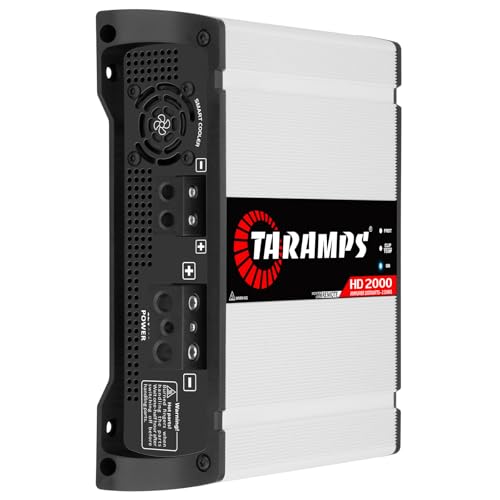
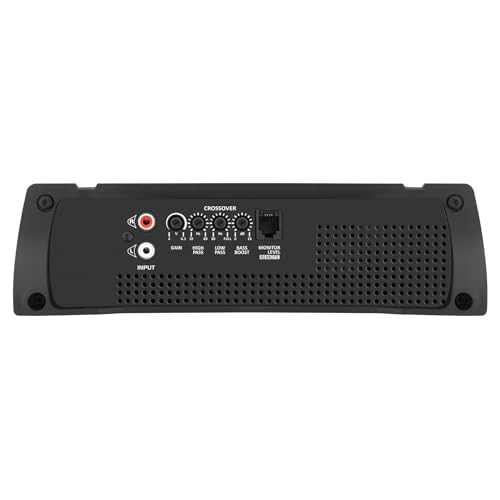
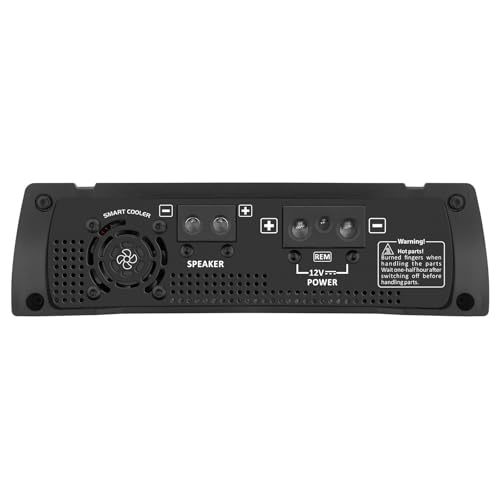
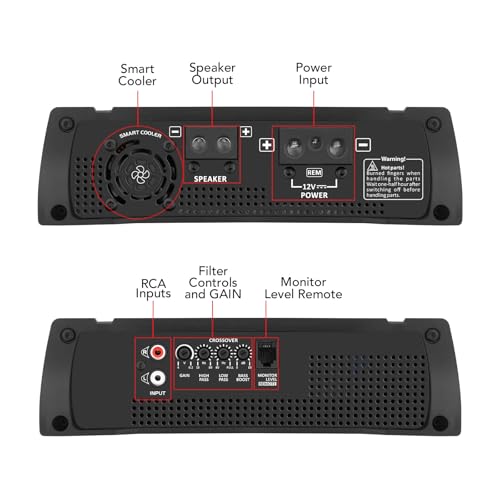
For the price, the HD 2000 punches above its class with 2000W RMS and full-range capability across 1, 2, and 4 ohms. It’s compact, efficient, and includes HPF and LPF crossovers, making it a strong contender for mid-tier builds that don’t want to sacrifice tuning.
Owners highlight its 11 AWG output cables and 115A fuse requirement as more manageable than higher-wattage Taramps models, while still delivering hard-hitting performance. Compared to the TANVSO 2000W, it has better build quality and more consistent power delivery. My pick for those who want high output without the bulk or complexity of 3kW+ systems.
Product photos
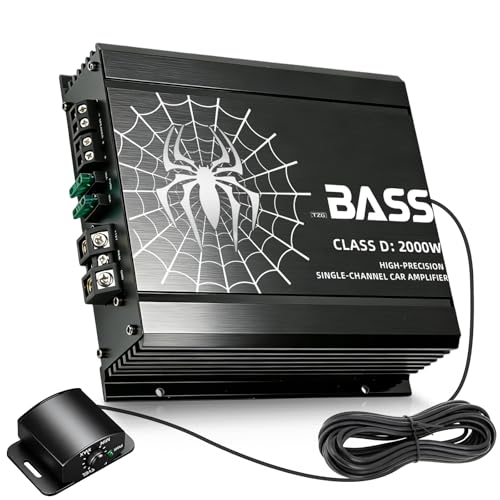
TANVSO 2000W Monoblock Amplifier
Strengths
- Remote bass knob
- 1/2/4 ohm stable
- Good price-to-power
Trade-offs
- Fan can be noisy
- Build quality average
- No subsonic filter
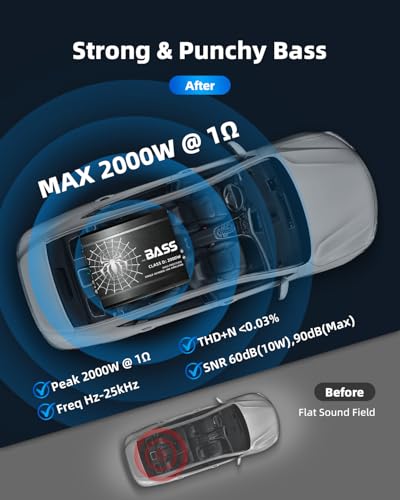
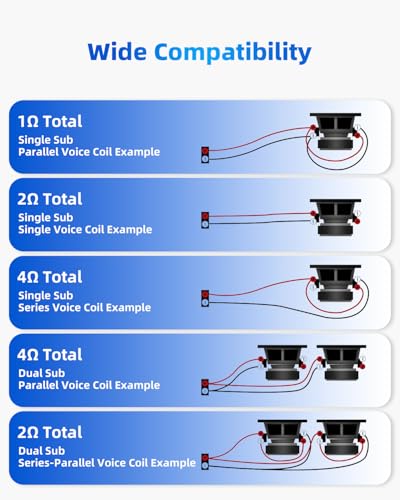
The TANVSO 2000W is a budget-friendly path to high wattage, offering 1/2/4 ohm stability and a remote bass knob, a rare combo at this price. On paper, it matches or exceeds competitors in specs, and owners report solid real-world output with minimal distortion.
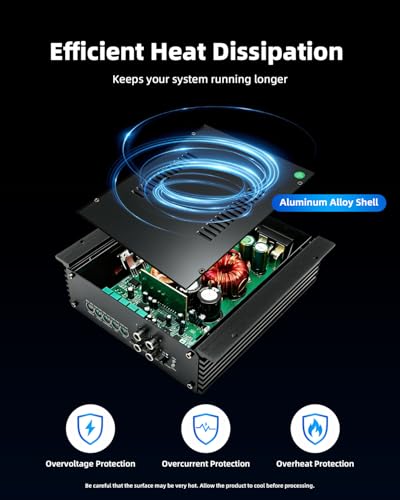
The aluminum heatsink and full protection suite help it stay reliable under load, though some note the fan noise in quiet cabins. Compared to the HD 2000, it lacks full-range tuning but makes up for it with convenience. I’d pick this for a dual-sub SUV setup where you want power and real-time bass control without breaking the bank.
Product photos


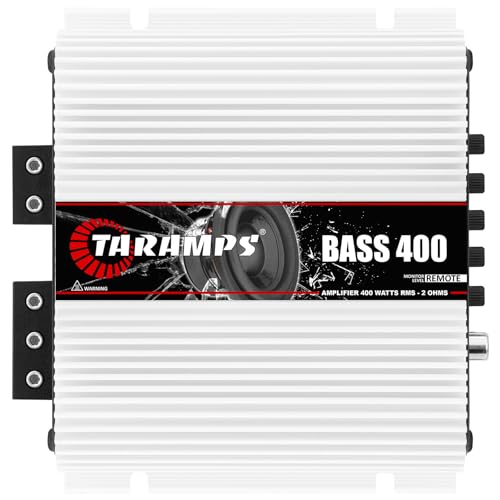
Taramps BASS 400 2 Ohms Amplifier
Strengths
- Affordable entry point
- Solid 400W RMS
- Good thermal protection
Trade-offs
- Limited to 2Ω
- Low power for large subs
- Basic tuning options
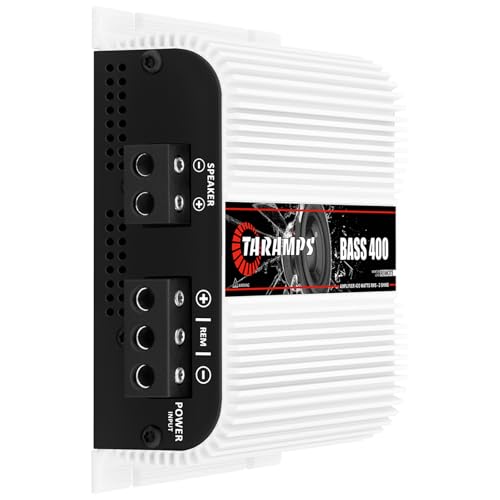
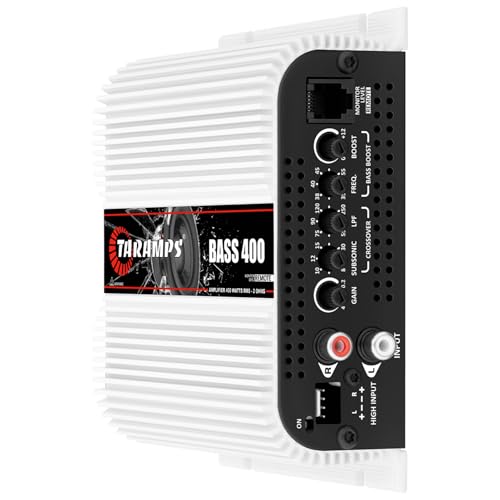
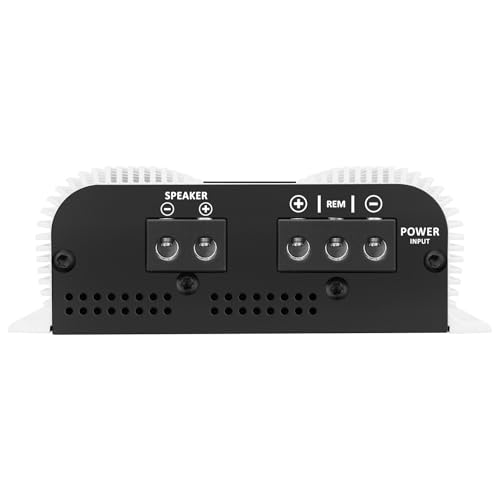
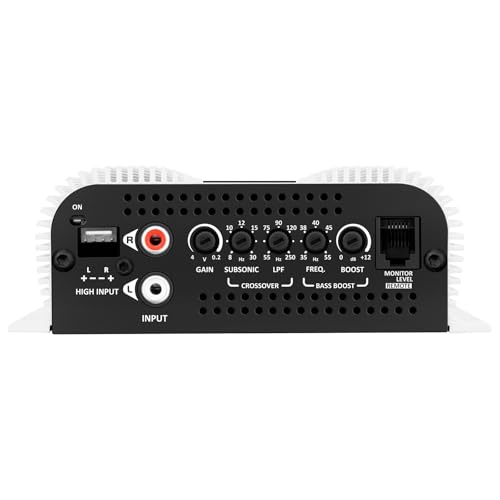
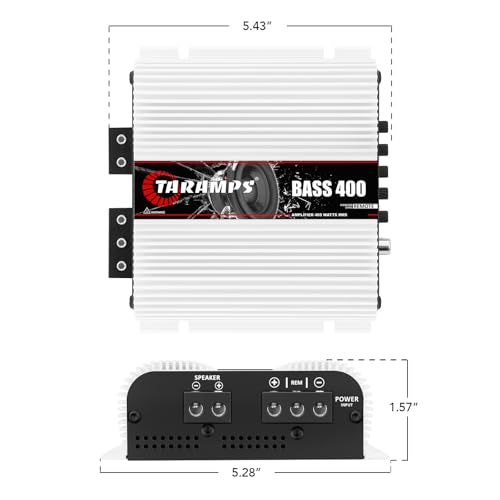
At this price, the Taramps BASS 400 delivers exactly what it promises: a no-frills, 400W RMS monoblock that brings controlled bass to daily drivers. The 8Hz–250Hz frequency range and +12dB parametric bass boost let you dial in a punchy tone without muddying the lows.
It’s not flashy, but owners praise its aluminum housing for heat dissipation and consistent performance over long drives. When compared to similarly priced amps, it holds its own, though it can’t compete with higher-wattage models in sheer output. I’d pick this for a single 10″ or 12″ sub in a sedan or hatchback where clean, modest bass matters more than SPL bragging rights.
Product photos
Timpano TPT-BASS400 Mono Amplifier
Strengths
- Extremely compact
- High-level inputs
- +15dB bass boost
Trade-offs
- Limited to 2Ω
- Lower power output
- Basic heat dissipation
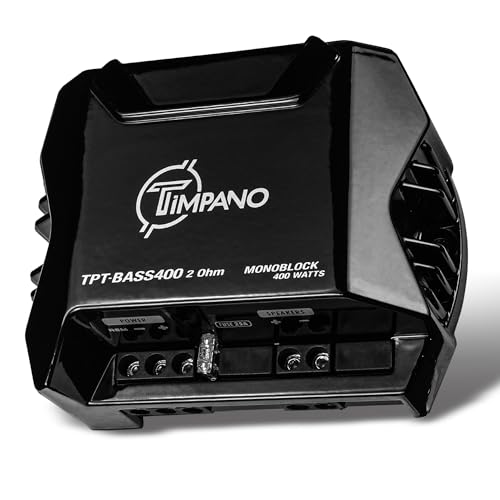
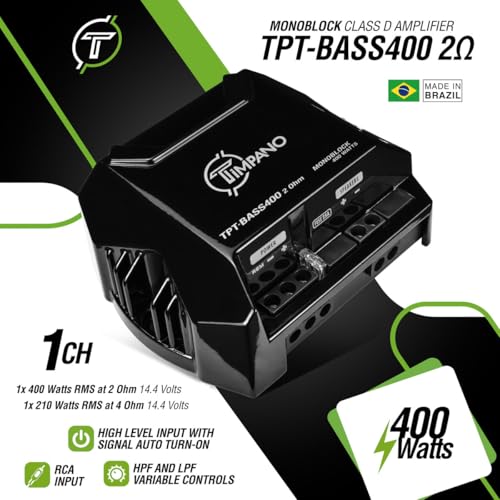
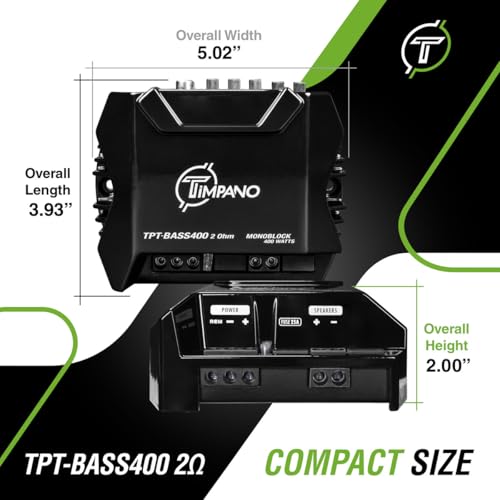
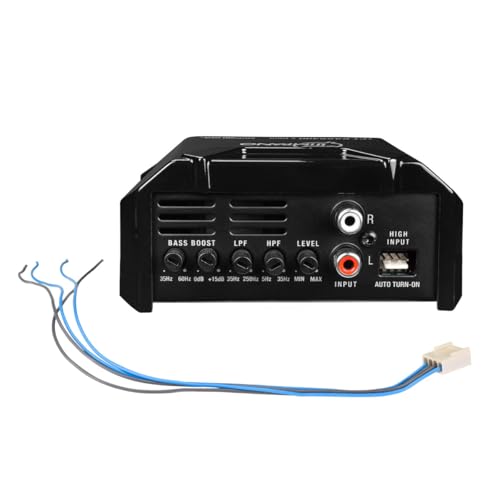
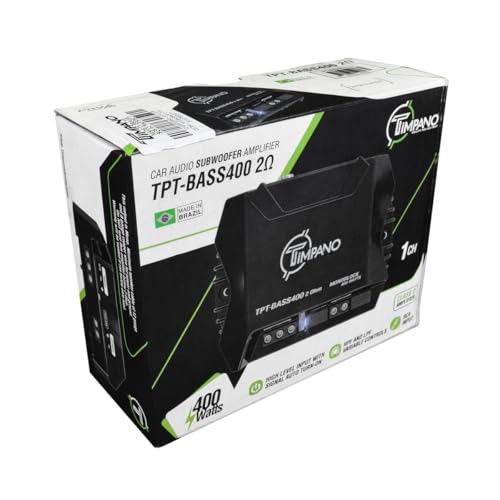
The Timpano 400 stands out for its ultra-compact size, just 2 inches tall, yet still delivers 400W RMS and full tuning controls. Its high-level inputs with auto turn-on make it ideal for factory head unit upgrades, eliminating the need for a remote wire.
Owners love how it fits in tight spaces, like under seats or behind panels, and the +15dB bass boost gives a noticeable low-end lift. Compared to the Taramps BASS 400, it’s more feature-rich and easier to install in OEM systems. If you’re adding a sub to a commuter car without sacrificing cabin space, this is the smarter pick.
Product photos

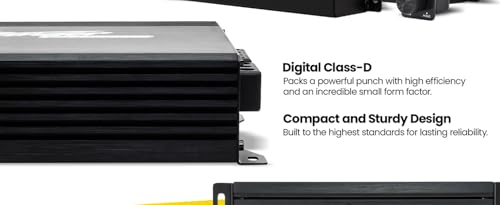
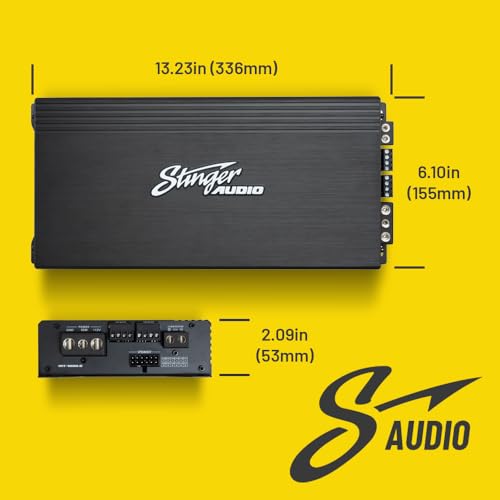
Stinger Audio MT-1000.5 Amplifier
Strengths
- 5-channel design
- Remote bass knob
- Bridging capable
Trade-offs
- Sub channel peaks at 500W
- Not for extreme bass
- Larger than mono amps
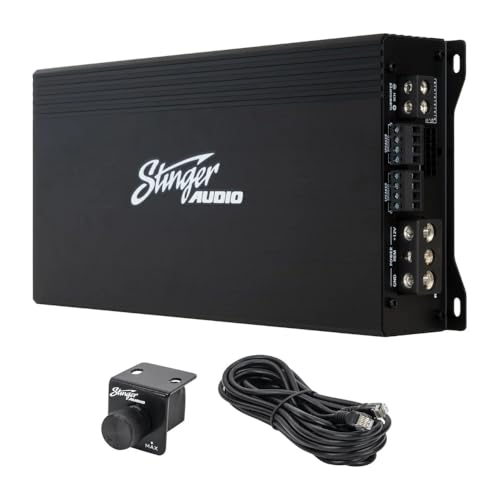
The Stinger MT-1000.5 is the only 5-channel option here, making it a standout for full-system builds. With 75W x 4 for mids/highs and 500W x 1 for subs, it powers an entire setup from one compact chassis. The remote bass knob and bridging capability add serious convenience.
Owners praise its HEXFET MOSFET design and unregulated power supply for clean, efficient output. Compared to running separate amps, this saves space and wiring hassle. While it doesn’t match the raw sub power of monoblocks, it’s the best choice if you’re upgrading speakers and subs together. I’d recommend it over any single-channel amp for holistic system integration.
Product photos


How We Chose These car amps for bass
My approach at TheAutoZenith is always rooted in understanding what truly makes a component perform. For this guide, I didn’t rely on bench testing with oscilloscopes – rather, this is a research-led comparison of published specifications and, crucially, owner and expert feedback. I compared power output, impedance ranges, signal-to-noise ratios, and protection features across numerous models. Then, I weighed that technical data against what real users are saying about long-term reliability and sound quality.
When evaluating options for powerful bass, a few factors stood out as most important. Raw power (RMS wattage) is obviously key, but it’s only valuable if the amplifier can deliver it cleanly. Equally important is impedance flexibility – offering support for various subwoofer configurations. Finally, robust protection circuitry is vital; you want an amp that will survive the demands of high-output bass without overheating or failing. Finding the right balance between these elements is where the best options shine.
Specifications give a baseline for power and features, but owner reviews reveal the real-world performance. I paid close attention to reports of distortion at high volumes, thermal throttling, and long-term durability. Reputable expert reviews helped validate those owner experiences and provided insights into the amplifier’s design and build quality. If you’re looking to upgrade your entire system, you may also want to check out our guide to car audio amps. For those focused solely on the low end, exploring dedicated subwoofer amplifiers is a smart move.
How To Choose The car amps for bass
Finding the right car amp for bass isn’t just about wattage numbers; it’s about matching power to your speakers and vehicle, and understanding what features will actually improve your listening experience.
A quality car amplifier designed for bass delivers clean, undistorted power to your subwoofers. Key considerations include RMS power output (matching your sub’s requirements), impedance compatibility (1, 2, or 4-ohm stable), signal-to-noise ratio (for clarity), and built-in protection features to safeguard against electrical issues and overheating. Look for models with adjustable crossovers and bass boost for fine-tuning.
Understanding RMS Power and Impedance
The first thing I always tell folks is to forget peak power ratings. Those are inflated marketing numbers. Focus on RMS power – that’s the continuous power the amp can actually deliver. Match the amp’s RMS output to your subwoofer’s RMS handling capability. Undersizing means you won’t get the full potential, while oversizing can damage your speakers. Equally important is impedance. Many amps are only stable at a specific impedance (usually 4 ohms), while others are “stable” at lower impedances like 2 ohms or even 1 ohm. Running a sub at an impedance the amp isn’t rated for can lead to overheating and failure. If you’re building a complex system, explore options like the Taramps Smart 3 Bass, known for its multi-impedance support that can save you headaches down the road.
Decoding Features: Crossovers and EQ
Don’t assume all amps offer the same level of control. Crossovers are essential for directing frequencies to the right speakers. A low-pass filter (LPF) is critical for subwoofers, blocking higher frequencies and letting only the bass through. Variable crossovers give you more flexibility to dial in the exact cutoff point. Beyond that, look for features like bass boost, which adds emphasis to the low end, or parametric EQ, allowing precise adjustments to specific frequencies. Some amps, like the Stinger Audio MT-1000.5, even include a remote bass knob, putting control right at your fingertips. You can find more on a wider range of options in our guide to the best car amplifiers.
Budget vs. Build Quality & Protection
You can find decent power for a reasonable price, but there’s a definite correlation between cost and quality. Cheaper amps often cut corners on components and protection circuitry. A robust amp will include protection against short circuits, overloads, and thermal issues. This is where brands like Taramps often shine; their builds are known for durability, even in demanding setups.
Here’s a quick rule of thumb:
Don’t skimp on power wire. A good rule is 4 AWG wire for amps up to 1000W RMS, 2 AWG for 1000-2000W, and 0 AWG for anything over 2000W.
Consider your long-term goals. If you’re just starting out, a budget-friendly option like the Taramps BASS 400 2 Ohms might suffice. But if you’re planning a serious system, investing in a higher-quality amp now can save you money and frustration later. For those looking to upgrade multiple speakers, exploring dedicated car stereo amps is a smart move. Ultimately, selecting the right amp is about finding the balance between power, features, and reliability for your specific needs and budget, and ensuring it’s capable of delivering the deep, clean bass you crave.
Car Amps for Bass Compared
Here’s a comparison of specifications for various car amplifiers designed for enhanced bass performance.
| Product Title | Max Power (Watts) | RMS Power (Watts) | Impedance (Ohms) | Channels | Features |
|---|---|---|---|---|---|
| Taramps BASS 8K | N/A | 8000 | 1 | Mono | 8Hz-250Hz Frequency Resp. |
| Taramps The Big Boss 5 | N/A | 5000 | N/A | Mono | RGB Lighting |
| Taramps Smart 3 Bass | 3000 | 3000 | 0.5-2 | Mono | Multi-Impedance |
| Taramps HD 3000 1 Ohm | N/A | 3000 | 1, 2, 4 | Mono | Full Range |
| Taramps HD 2000 2 Ohms | N/A | 2000 | 1, 2, 4 | Mono | Full Range |
| TANVSO 2000W | 2000 | N/A | 1, 2, 4 | Mono | Remote Bass Knob |
| Taramps BASS 400 | N/A | 400 | 2 | Mono | Bass Boost |
| Timpano TPT-BASS400 | N/A | 400 | N/A | Mono | Built-in Crossover |
| Stinger Audio MT-1000.5 | 1200 | 1200 | 2, 4, 1 | 5 | Bass Boost Q |
Frequently Asked Questions
What amp wattage do I actually need for my subwoofer?
You should match the amplifier’s RMS wattage to your subwoofer’s RMS power handling. Going significantly over can damage the sub, while underpowering means you won’t reach its full potential; a good rule of thumb is to stay within a 20% variance.
Are class D amps better for bass?
Class D amplifiers are generally preferred for high-power bass applications. They are more efficient than other classes, producing less heat and drawing less power, which is vital when you’re pushing a lot of wattage to a subwoofer.
Can I use a multi-channel amp for just a subwoofer?
Yes, you can use a multi-channel amp to power a subwoofer, but it’s generally not the most efficient approach. Though some, like the Stinger Audio MT-1000.5, are designed with this in mind, dedicated mono amps deliver power more effectively to a single subwoofer and often offer more control features.
What does impedance mean, and why is it important?
Impedance, measured in ohms, is the electrical resistance your subwoofer presents to the amplifier. Mismatched impedance can cause overheating and damage to the amplifier; always verify the amp is stable at your subwoofer’s impedance, or consider amps like the Taramps Smart 3 Bass that offer multi-impedance support.
Where can I find options for powering my whole car audio system?
If you’re looking to power more than just your bass, you may want to explore versatile car amplifiers or consider complete bass packages that include both a subwoofer and amplifier for a coordinated setup.
The Bottom Line
Choosing a car amp for bass always involves trade-offs. You’re balancing the desire for earth-shaking power with the practicalities of budget, vehicle compatibility, and long-term reliability. Based on my research, the Taramps BASS 8K emerges as the strongest overall pick, delivering immense power with a reputation for robust build quality, though it represents a significant investment.
For those on a tighter budget, the Taramps BASS 400 2 Ohms provides a solid entry point, offering respectable power and the Taramps dependability at a more accessible price. If versatility is your priority, the Stinger Audio MT-1000.5 stands out with its five channels, allowing you to power both your sub and other speakers from a single unit. And if you’re building a system designed for truly deep lows, remember to pair your amp with the best car subwoofers to unlock its full potential.
Ultimately, the wattage and features are secondary to finding an amplifier that’s correctly matched to your subwoofers and your vehicle’s electrical system. Don’t chase numbers; focus on clean power delivery, reliable protection, and a build quality that will withstand the demands of high-volume bass. Investing in quality car amps is an investment in your listening experience, and a well-chosen amplifier will deliver years of satisfying low-end performance.
