
9 Best Car Audio Amps of 2026
This post contains affiliate links. As an Amazon Associate, we earn from qualifying purchases.
The Taramps BASS 1200W stands out as the best overall car amplifier for its robust power delivery and solid build, especially for subwoofers. If you’re watching your budget, the Fosi Audio CA30 offers strong performance for full-range systems at a lower price point. For those wanting versatility, the Stinger MT-1000.5 brings five channels into the mix, letting you power both speakers and a sub without extra amps.
Picking the right amp isn’t just about raw power, it’s about matching the unit to your system goals, speaker setup, and vehicle space. Too many people focus on peak wattage or flashy specs and end up with distortion, blown components, or constant overheating.
This guide cuts through the noise. Based on specs, owner feedback, and my years working with car audio systems, I’ve narrowed down the top performers across different needs. You’ll see how channel count, RMS output, efficiency, and real-world reliability factored into each pick.
Top 9 Amps For Car Audio in the Market
The Best Amps For Car Audio, Reviewed
Taramps TS 1200W 4-Channel Amp

Strengths
- 300W x 4 RMS at 2Ω
- High-level inputs
- Full tuning flexibility
Trade-offs
- Larger footprint
- No onboard DSP
This Taramps TS 1200W 4-channel is the most complete all-rounder in the lineup, and that’s why it earns the ‘Best Overall’ tag. With 4 x 300W RMS at 2 ohms, it has enough headroom to drive high-performance component speakers or even small subs in a pinch. The full-range tuning with HPF, LPF, and dual input options means it integrates smoothly with both aftermarket and factory decks.
Owners praise its durability and clean output, and the reinforced terminals reduce the risk of loose connections. Compared to the Fosi CA30, it’s less about audiophile specs and more about real-world power and reliability. For most users building a balanced system, this amp delivers where it counts.
Video review
Taramps BASS 1200W Monoblock Amp

Strengths
- 1200W RMS at 1Ω
- Parametric bass boost
- Robust thermal management
Trade-offs
- No full-range capability
- No bridgeable channels
If deep, chest-thumping bass is your goal, the Taramps BASS 1200 sits firmly in the sweet spot between raw power and tuned control. On paper, 1200W RMS at 1 ohm is serious business, and owners consistently report it drives single or dual 4-ohm DVC subs hard without flinching. The parametric bass boost is a standout, it’s not just a gimmick, it lets you dial in that 40Hz thump without muddying the rest of the low end.
The aluminum housing and Smart Cooler system seem to deliver under load, with few thermal shutdown reports even in compact enclosures. Compared to budget mono amps that clip early, this one holds together better at volume, especially when paired with a stiffening capacitor. It’s a no-frills brute, but it knows its job.
Video review
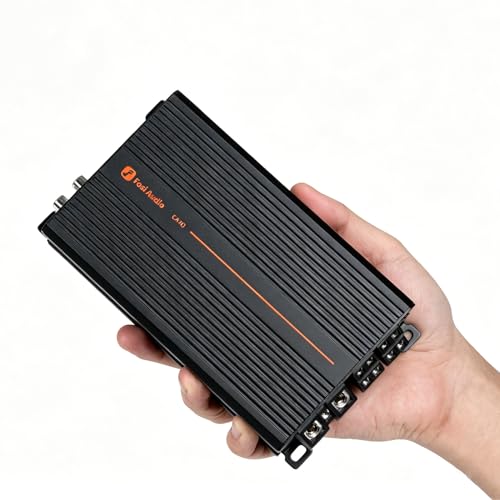
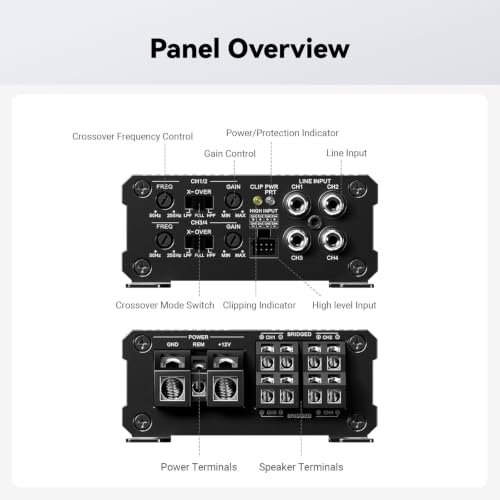
Fosi Audio CA30 4-Channel Amp
Strengths
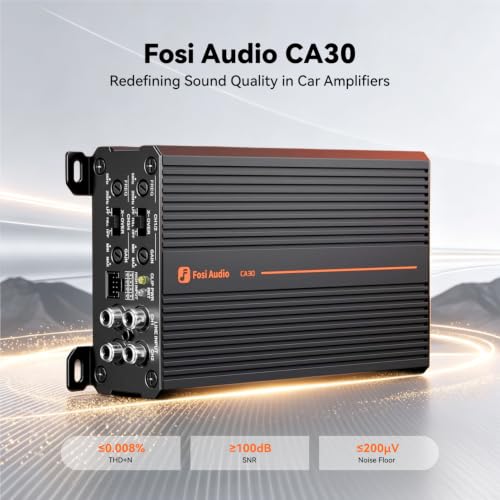
- Exceptional SNR and low distortion
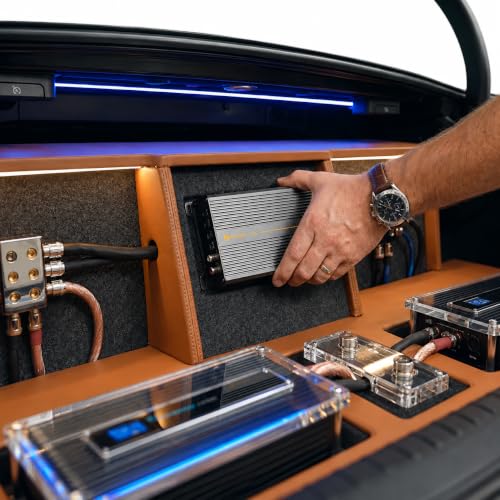
- Compact mini design
- Hi-Fi grade components
Trade-offs
- Lower RMS power
- Gain knobs are finicky
If you care about sound fidelity over sheer power, the Fosi CA30 is a revelation at this price. With THD+N under 0.006% and a 104dB signal-to-noise ratio, it delivers studio-grade clarity that most car amps never touch. The Infineon and JRC op-amps make a difference, you hear subtle details in vocals and instruments that get lost with budget amps.
It’s not the strongest in raw output, 200W x 4 is modest, but in a daily driver with good speakers, it’s transformative. The compact size fits under seats, and the auto-sensing high-level inputs simplify OEM integration. Compared to the Taramps 1200W, it’s less about punch and more about precision. For audiophiles on a budget, this is the smarter buy.
Product photos

BOSS R1100M Monoblock Car Amp

Strengths
- Low price
- High-level inputs
- 6-year warranty
Trade-offs
- Class A/B inefficiency
- Overstated power claims
- Runs hot
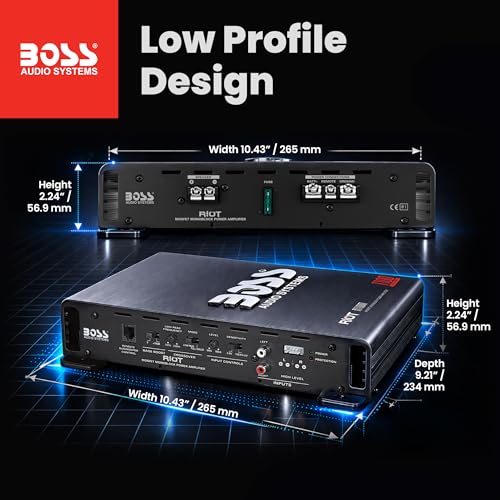
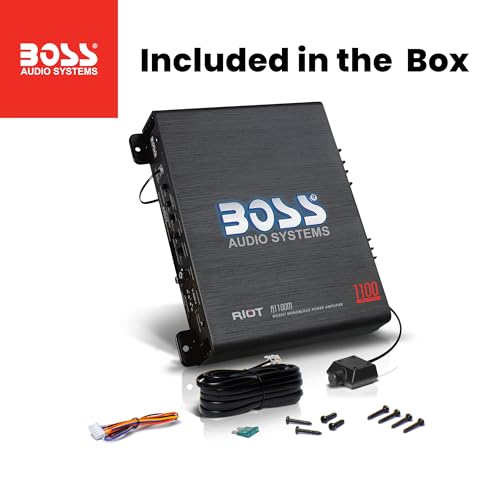
The BOSS R1100M is the definition of no-frills, budget-first amplification. At under $80, it’s one of the most affordable Class A/B mono amps out there, and it does the basics: powers a single sub, includes a remote bass knob, and offers both RCA and high-level inputs. The 1100W max rating is misleading, real RMS is closer to 500W at 4 ohms, but for a single 12″ sub in a daily driver, that’s often enough.
Owners report it runs warm, and the A/B class efficiency isn’t as tight as modern Class D, but the 6-year warranty from BOSS is a rare perk at this tier. If you’re on a tight budget and don’t plan to push limits, it’s a functional stopgap. But compared to Class D options at similar prices, it’s heavier, hotter, and less powerful.
Product photos



ORION CBA2000.4 Class A/B Amp

Strengths
- Class A/B warm sound
- MOSFET power supply
- Simple, durable design
Trade-offs
- Inefficient, runs hot
- Overstated power rating
- Outdated tech for modern builds
The ORION CBA2000.4 stands out for one reason: it’s a rare Class A/B 4-channel in a market dominated by Class D. That means warmer, more analog-like output, but at the cost of efficiency. It delivers 75W x 4 RMS at 2 ohms, which is modest, and the 2000W “max” label is pure marketing fluff.
Owners note it runs hot, as expected with A/B class, and the feature set is basic, no advanced crossovers or remote tuning. But if you’re chasing a vintage sound profile or pairing it with older high-impedance speakers, it has niche appeal. Compared to modern Class D amps, though, it’s a step back in efficiency and power density.
Product photos


AUDIOZERONE ZE1000.1 Monoblock Amp

Strengths
- 1-ohm stable
- High RMS at low impedance
- Good thermal protection
Trade-offs
- Build quality is basic
- No remote bass boost included
Don’t let the 2000W MAX label fool you, the real story with the AUDIOZERONE ZE1000.1 is its 1-ohm stability, which is rare at this price. It’s built to handle complex dual DVC sub wiring, and owners confirm it stays cool even at low impedances. The 1000W RMS at 1 ohm is believable, and the MOSFET power supply helps maintain current under load.
It’s bulky and the finish feels utilitarian, but for a single-purpose sub amp on a budget, it outperforms many in its class. Compared to the BOSS R1100M, it’s more efficient and stable, though not as refined as Taramps. If you’re wiring down to 1 ohm and need reliability without breaking the bank, this is a smart pick.
Product photos


Taramps HD 2000W Full Range Amp

Strengths
- Full-range capable
- 2000W RMS multi-ohm stable
- High-level inputs included
Trade-offs
- Power output may dip under load
- Bulky for some installs
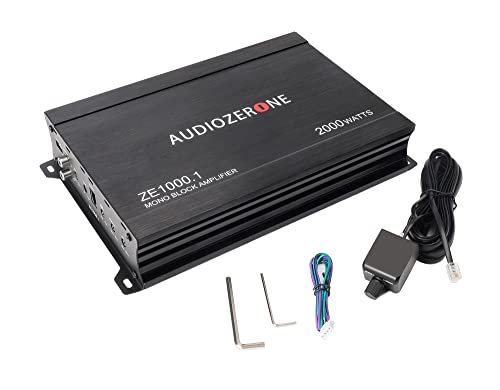
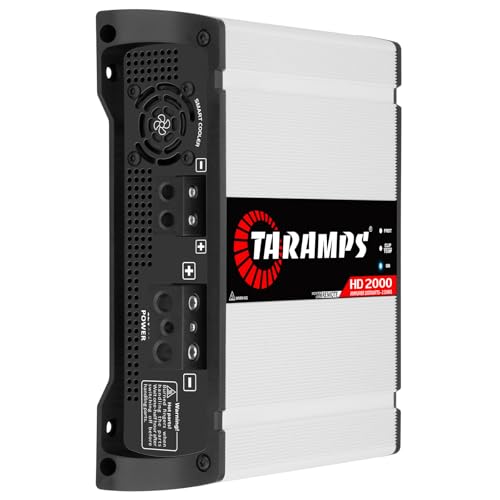
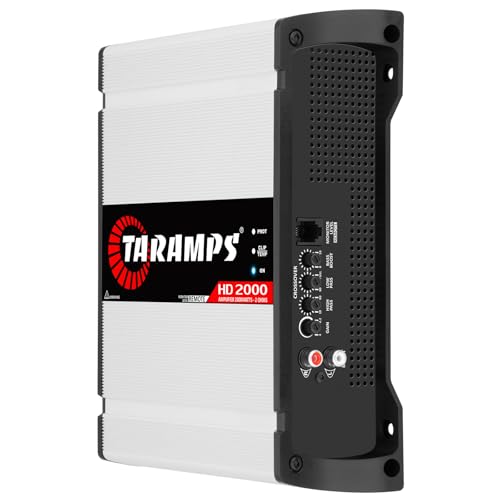
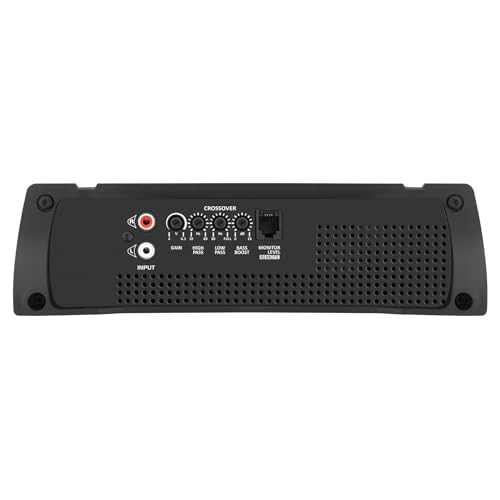
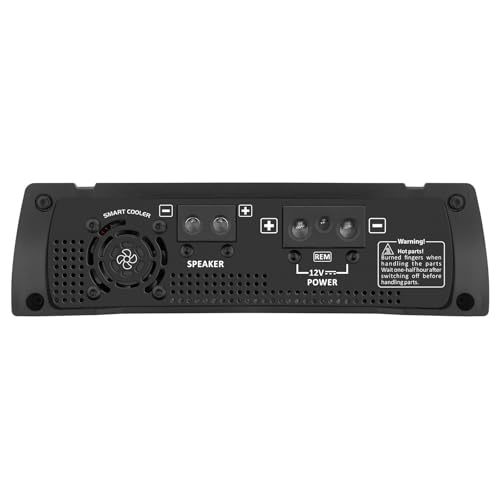
The Taramps HD 2000 blurs the line between subwoofer amp and full-range powerhouse, and that’s where it shines. Rated at 2000W RMS across 1, 2, or 4 ohms, it’s built to handle more than just subs, it can drive mid-bass drivers and even full-range systems, which is rare for a monoblock. The full-range design with variable HPF and LPF makes it adaptable, and reviewers note it keeps clarity even when pushing large enclosures.
At this price, the inclusion of high-level inputs is a big plus for factory radio upgrades. But I’d be cautious: while the specs look stellar, some owners mention the power claims lean optimistic under real-world voltage sag. Still, if you need one amp to cover multiple roles and don’t mind wiring carefully, it’s a compelling option over stacking smaller amps.
Product photos
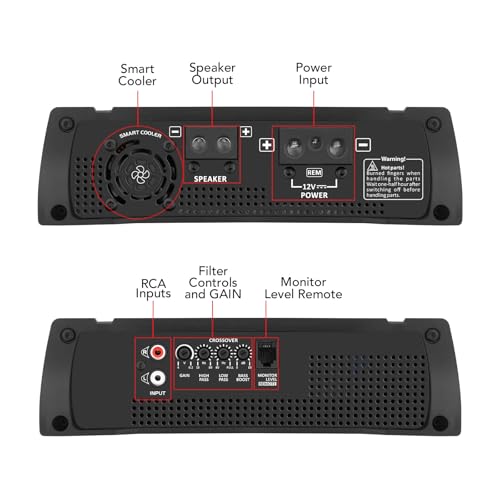
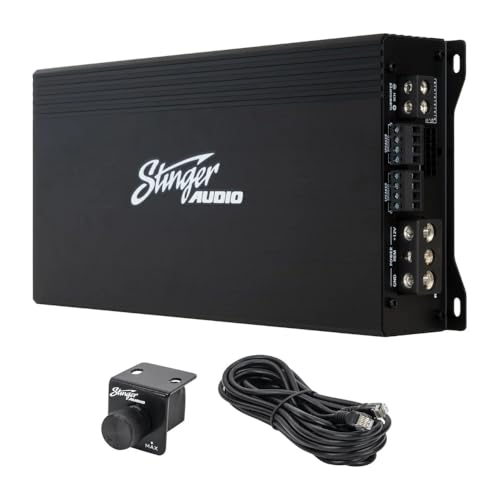
Stinger MT-1000.5 5-Channel Amp
Strengths
- True 5-channel design
- Compact size
- High power-to-space ratio
Trade-offs
- Build quality feels budget
- No DSP integration
When space is tight but you still want to power five channels without sacrificing power, the Stinger MT-1000.5 makes a strong case. At 1200W RMS, it delivers solid output across five channels, 300W to the sub channel and 75W to each full-range channel at 4 ohms, more when bridged or driven at 2 ohms. The HEXFET MOSFET design and unregulated power supply help it stay efficient, and owners praise its clean gains even with factory head units.
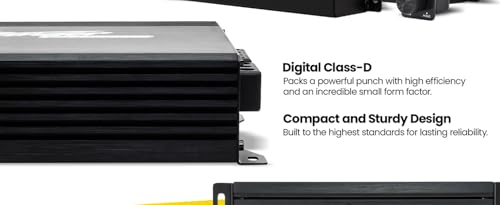
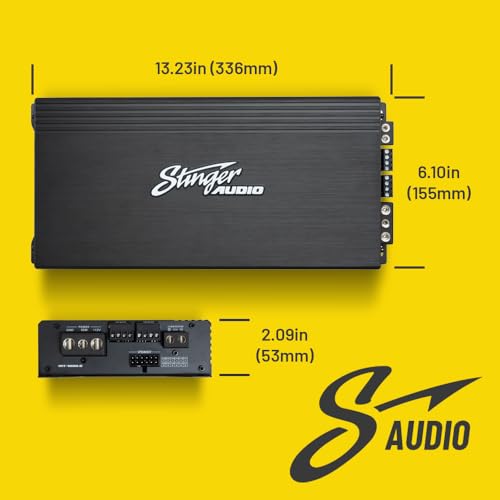
The compact footprint is a win for SUVs or sedans with limited amp space. Compared to pricier 5-channel options from Alpine or JL, it doesn’t match their refinement, but for the money, it’s surprisingly capable. I’d pick this over a 4-channel plus separate sub amp if you’re doing a clean OEM+ upgrade.
Product photos


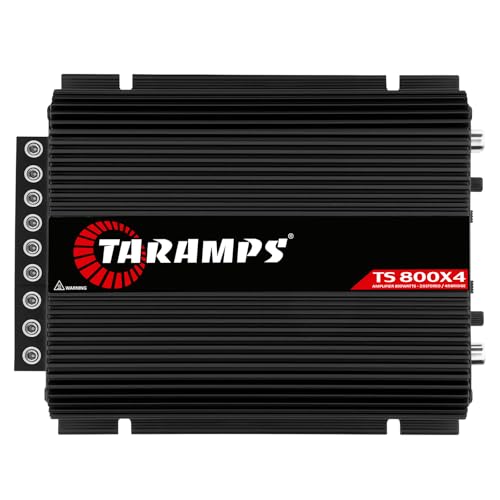
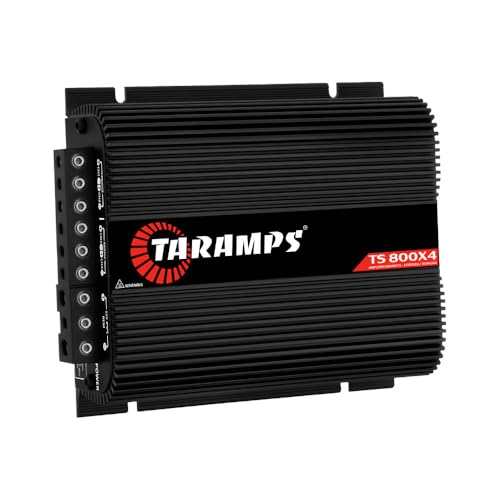
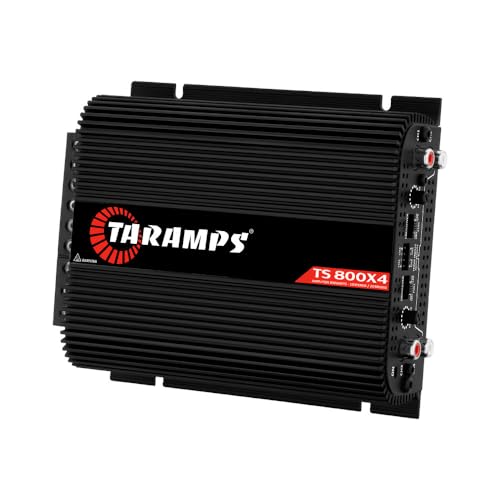
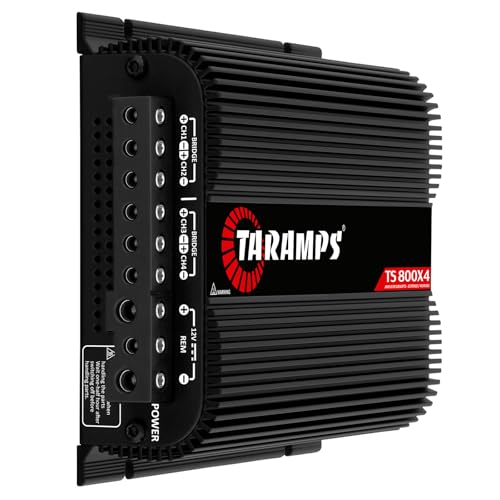
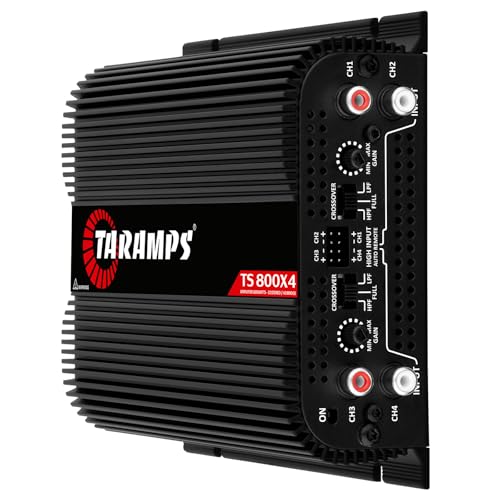
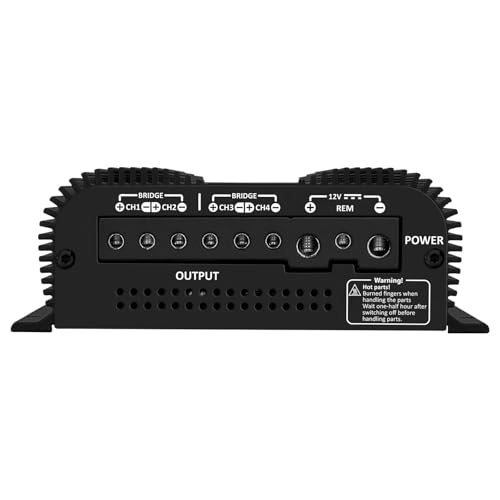
Taramps TS 800X4 4-Channel Amp
Strengths
- 2Ω stable 4-channel
- High-level inputs
- Bridgeable channels
Trade-offs
- Lower RMS than top-tier models
- Basic crossover controls
The Taramps TS 800X4 hits a sweet spot for mid-range 4-channel builds, delivering 4 x 200W RMS at 2 ohms, enough to drive quality component sets or coaxial speakers without strain. Its high-level inputs with auto turn-on make it a favorite for factory radio upgrades, and owners consistently report clean integration without extra modules.
It’s not the most refined amp in terms of signal-to-noise, but for the price, the Class D efficiency and bridgeable channels give it real versatility. Compared to the more expensive Taramps TS 1200, it’s less powerful but more than sufficient for door speakers and small tweeters. I’d recommend this for a balanced system where subs are handled by a separate amp.
Product photos
How We Chose These amps for car audio
Rather than a hands-on lab test, my research for these recommendations centered on a detailed comparison of published specifications and features across numerous models. I weighed owner reviews from multiple sources – Amazon, specialist car audio forums, and retailer sites – alongside expert reviews from publications like Crutchfield and Sound & Vision. Applying my background in automotive mechanics and audio systems, I ranked each amplifier against criteria crucial for real-world performance and value.
For this category, continuous RMS power output and channel configuration were the most heavily weighted factors. A higher RMS rating generally translates to cleaner, louder sound without distortion, and the number of channels dictates system flexibility. Equally important was the amplifier’s impedance stability; a lower stable impedance (like 1-ohm) allows for more configuration options, especially when pairing with subwoofers. I also considered features like built-in crossovers and signal-to-noise ratios.
Specifications reliably indicate an amp’s raw power potential and feature set. However, owner feedback proved essential for judging build quality, long-term reliability, and ease of installation. I paid close attention to recurring themes in reviews – reports of overheating, distortion, or premature failure were significant red flags. Reputation, particularly for brands known for durability like Taramps and Orion, also factored into my assessments. You can find more detail on car audio amps in our broader guide. For those specifically focused on low-end performance, our selection of powerful bass amplifiers provides further insight.
How To Choose The amps for car audio
Choosing the right amplifier can be the difference between a lackluster sound system and one that truly moves you. It’s far more than just wattage; a lot of subtle details dictate performance and longevity.
A good car amplifier delivers clean, stable power to your speakers or subwoofer, offering low distortion, efficient operation, and robust protection features. Key specs to evaluate include RMS power output, impedance matching, signal-to-noise ratio, and crossover options. Consider the overall system goals and vehicle environment when making a selection.
Understanding Power and RMS Ratings
The headline wattage number is tempting, but don’t fall for peak power claims. Focus on RMS (Root Mean Square) power, which is a continuous power rating and a much more accurate indicator of an amp’s real-world ability. Match the RMS power of the amplifier to the RMS power handling of your speakers. Underpowering can lead to clipping and distortion, damaging your speakers. Overpowering (without proper impedance matching) can fry the amp. A good rule of thumb is to aim for an amp that delivers roughly 75-100% of your speakers’ RMS power handling capability. For example, if you’ve invested in high-quality speakers rated at 150W RMS, an amplifier delivering around 150-200W RMS per channel is a solid choice.
Decoding Amplifier Classes
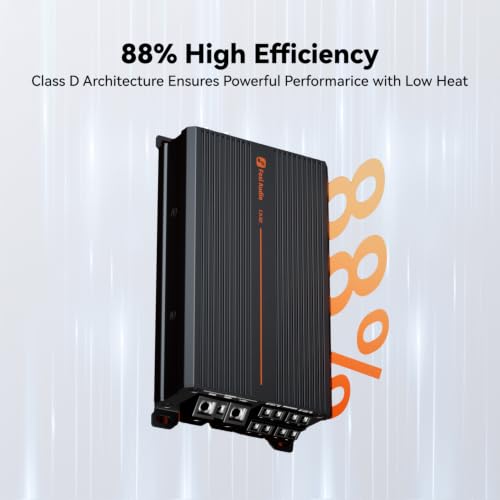
Amplifier classes (A, B, AB, D) dictate efficiency and sound quality. Class A offers the purest sound but is incredibly inefficient and runs hot – you won’t find many in car audio. Class B is more efficient but introduces distortion. Class AB is a compromise, offering reasonably good sound quality and efficiency. Class D amps, like those from Fosi Audio, are the most efficient, generating minimal heat, and have become incredibly popular. However, historically, Class D amps were sometimes criticized for sound quality, though modern designs have largely overcome that. If you’re building a system focused on clarity and detail, exploring best car amplifiers with Class AB designs might be worthwhile.
Channels and System Configuration
How many speakers are you powering? That determines the number of channels you’ll need. A 4-channel amp is versatile, powering four speakers or bridging to power a subwoofer and two speakers. Monoblock amplifiers, like the Taramps BASS 1200W, are specifically designed for subwoofers. For a full system, a 5-channel amplifier is ideal, powering four speakers and a subwoofer.
- A 2-channel amp is best for driving a pair of speakers, often used for front or rear fills.
- A 4-channel amp offers flexibility; you can run front and rear speakers or bridge it to power a subwoofer and a pair of speakers.
- A 5-channel amp provides dedicated power for both your full-range speakers and a subwoofer, streamlining your wiring and maximizing efficiency.
Don’t skimp on wiring. Use the correct gauge power and ground cables for the amplifier’s power requirements to avoid voltage drops and ensure optimal performance.
If you’re primarily focused on low-end performance, selecting the right subwoofer amps is crucial. Consider the impedance of your subwoofer(s) and ensure the amplifier is stable at that impedance.
Amps for Car Audio Compared
This table provides a specification comparison of various car audio amplifiers to aid in informed decision-making.
| Product Name | Max Power (Watts) | RMS Power (Watts) | Channels | Class | 1-Ohm Stable |
|---|---|---|---|---|---|
| Taramps TS 1200W | 1200 | 300 x 4 | 4 | D | No |
| Taramps BASS 1200W | 1200 | 1200 | 1 | N/A | Yes |
| Fosi Audio CA30 | 400 | 200 x 4 | 4 | D | No |
| BOSS R1100M | 1100 | 550 | 1 | A/B | No |
| ORION CBA2000.4 | N/A | 75 x 4 | 4 | A/B | No |
| AUDIOZERONE ZE1000.1 | 2000 | 1000 | 1 | D | Yes |
| Taramps HD 2000W | 2000 | 2000 | 1 | N/A | Yes |
| Stinger MT-1000.5 | 1200 | 75×4 + 300 | 5 | D | Yes |
| Taramps TS 800X4 | 800 | 200 x 4 | 4 | D | No |
Frequently Asked Questions
What amplifier class is best for sound quality?
Class AB amplifiers generally offer the best balance of sound quality and efficiency for car audio. While Class A provides the purest sound, its inefficiency makes it impractical, and modern Class D amps have largely closed the gap in audio fidelity.
Can I use a 4-channel amp for a subwoofer?
Yes, you can bridge a 4-channel amplifier to power a subwoofer, but it’s not always ideal. Bridging combines two channels into one, increasing power but potentially reducing stability and sound quality compared to a dedicated monoblock amplifier.
What does impedance stability mean, and why is it important?
Impedance stability refers to the lowest speaker impedance (measured in ohms) an amplifier can handle safely. A lower stable impedance, like 1-ohm, gives you more flexibility in wiring configurations, especially with subwoofers, but always check your amplifier’s specifications to avoid damage.
What gauge wire should I use for my amplifier?
The correct wire gauge depends on the amplifier’s power output and the length of the wire run. Generally, a higher power amplifier and longer wire run require a thicker (lower gauge number) wire to prevent voltage drop and maintain optimal performance. Refer to a car stereo amps wiring chart for specific recommendations.
How do I choose between a monoblock and a 5-channel amplifier?
A monoblock amplifier is specifically for subwoofers, while a 5-channel amp powers both your full-range speakers and a subwoofer. If you want a streamlined setup and only need to power a subwoofer and speakers, a 5-channel is a great choice; otherwise, a monoblock paired with a separate 4-channel amplifier offers more customization for your overall audio components.
The Bottom Line
Ultimately, building a great car audio system involves balancing your budget with your desire for control and quality. While top-tier amplifiers offer features and power for the most demanding setups, the Taramps TS 1200W strikes an excellent balance, delivering impressive power and clarity in a package that won’t break the bank. It’s a solid foundation for a system that will genuinely elevate your driving experience.
For those with specific needs, we have clear recommendations. If you’re focused on maximizing bass response, the Taramps BASS 1200W is the clear choice. And for those wanting a versatile solution to power a full range of speakers, the Stinger MT-1000.5 delivers the channels and power you need. Don’t underestimate the value of exploring best 4-channel amps if you are looking for a flexible, powerful option.
Don’t get lost in the numbers. Remember that RMS power matching, proper wiring, and careful speaker selection are far more crucial than chasing peak wattage figures. A well-planned system with components working in harmony will always outperform a collection of powerful parts thrown together haphazardly. If you’re considering a full overhaul, researching top car audio systems can provide valuable insight.
