
7 Best Car Stereo Speakers of 2026
This post contains affiliate links. As an Amazon Associate, we earn from qualifying purchases.
The Rockford Fosgate P1683 stands out as the best overall car stereo speaker for its robust build and clear sound, especially in larger 6×8 configurations. For those on a budget, the BOSS Audio CH6530 delivers surprising clarity and volume without breaking the bank. If you want balanced, everyday performance with reliable specs, the Pioneer TS-A1671F is a strong contender.
Replacing factory speakers is one of the most impactful upgrades you can make to your car’s audio, yet most buyers struggle to balance sound quality, fitment, and value. I’ve seen too many enthusiasts settle for tinny highs or muddy bass because they didn’t know what to look for.
This guide cuts through the noise by focusing on real-world performance, compatibility, and what actually matters when upgrading your system. The picks here are based on specs, owner feedback, and years of analyzing car audio trends, not hype.
Top 7 Car Stereo Speakers in the Market
The Best Car Stereo Speakers, Reviewed
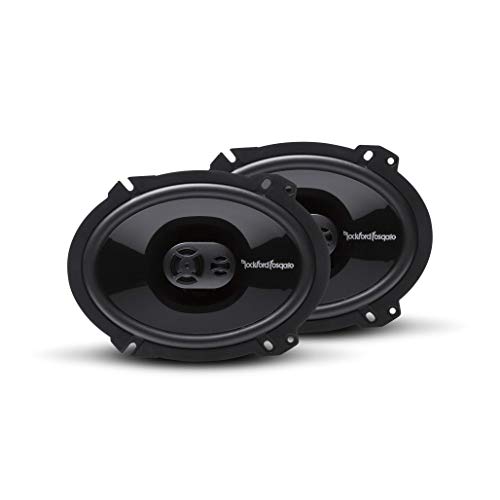
Rockford Fosgate P1683 6×8 Speakers
Strengths
- Excellent build quality
- Smooth, detailed sound
- FlexFit mounting design
Trade-offs
- Higher price point
- 6×8 size not universal
The P1683 is the most complete factory-replacement speaker here, both in build and sound. Its 6×8 size fits many rear decks and wagons, and the mineral-filled cone with butyl rubber surround handles high output without distortion. The PEI dome tweeter is well-protected and delivers smooth highs, while the built-in crossover keeps things clean. Owners consistently report these lasting years even in harsh climates.
At nearly $110, it’s the most expensive option, but it’s also the only one that feels like a true “set and forget” upgrade. The FlexFit basket is a standout for tricky installations. Compared to the coaxials here, it offers better dispersion and power handling, even if you don’t need the full 130W max.
Video review
BOSS Audio CH6530 6.5 Inch

Strengths
- Extremely affordable
- Shallow mounting depth
- Easy to fit in tight spaces
Trade-offs
- Harsh piezo tweeter
- Poor bass extension
- Low build quality
The CH6530 is one of the cheapest 3-way speakers on the market, and it shows. The frequency response starts at 100 Hz, meaning almost no real bass reach, and the piezo tweeter is notoriously harsh. Owners complain about the highs sounding like nails on a chalkboard at volume. Still, for someone replacing blown factory speakers with a $30 budget, it’s a functional stopgap.
The 90 dB sensitivity helps it play loud with weak head units, and the shallow mounting depth fits tricky locations. But compared to the Pioneer or Kenwood, it’s a step down in every meaningful way. I wouldn’t recommend it if you care about tonal balance.
Video review
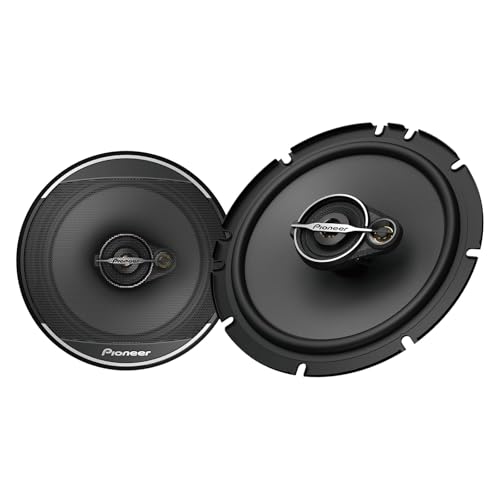
Pioneer TS-A1671F 6.5″ 3-Way
Strengths
- True 3-way design
- High sensitivity
- Good frequency range
Trade-offs
- Stamped basket flexes under high power
- Plastic tweeter dome lacks refinement
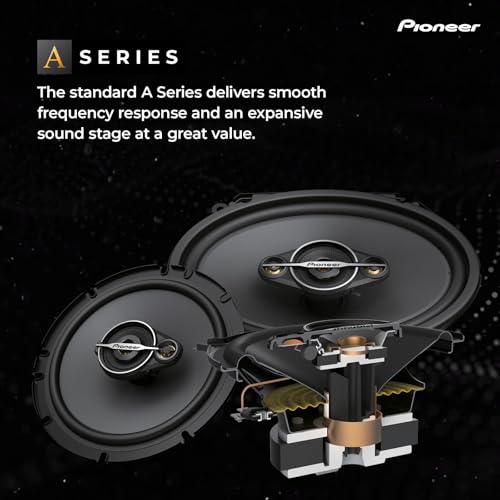
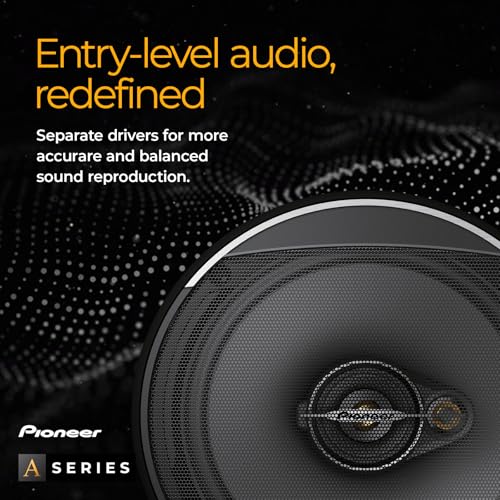
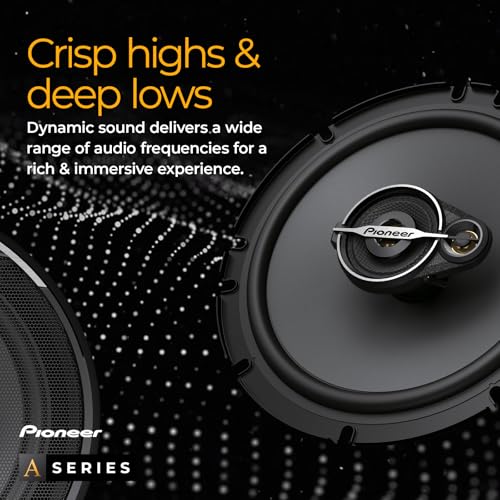
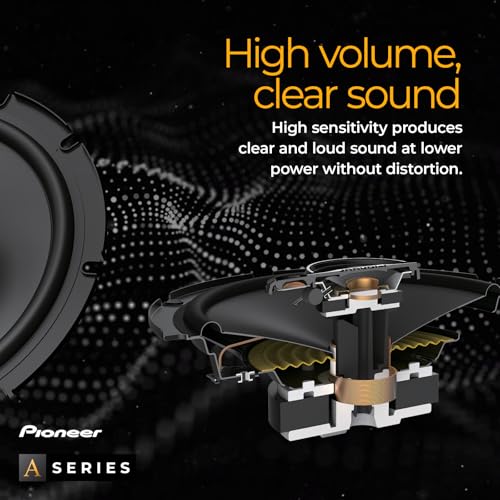
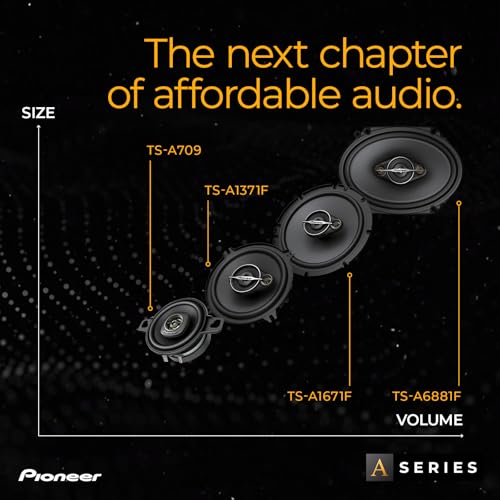
The TS-A1671F stands out in the coaxial speaker segment with its true 3-way design, which is rare at this price. Most competitors fake a third driver, but Pioneer actually separates the midrange with a dedicated 2-inch cone, giving vocals and instruments more presence. On paper, the 37 Hz to 31 kHz frequency response is impressive, and owners consistently report a smooth, layered sound that doesn’t collapse at higher volumes.
I’d pick these over most 2-way budget sets because of the clarity in the mids and highs, especially if you’re not running an external amp. The 91 dB sensitivity means they’ll sound loud even with factory head units, and the included adapters make fitting them into odd-sized factory locations less of a headache. Compared to the Kenwood or BOSS options, this is a more refined all-rounder.
Product photos
Kenwood KFC-1666S 6-1/2″
Strengths
- Warm, natural mids
- Good bass extension
- Includes protective grilles
Trade-offs
- Tweeter lacks refinement at high volume
- Cone material not as rigid as higher-end models
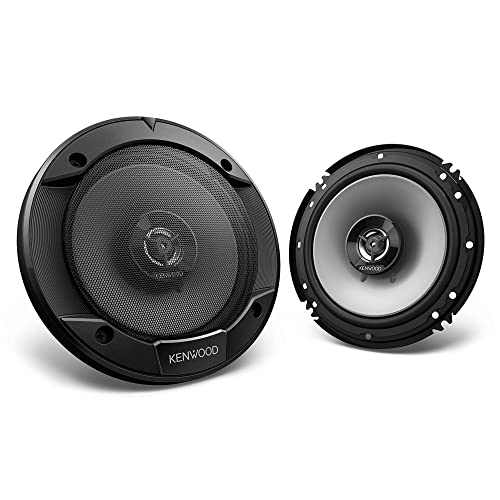
Kenwood’s KFC-1666S hits a sweet spot between clarity and bass response, making it one of the most balanced 2-way options under $40. The polypropylene woofer and treated cloth surround deliver a warmer, more natural midrange than the BOSS or Pyle models, and the 1-inch PEI tweeter handles highs without becoming shrill. Owners consistently praise how well they pair with factory head units.
With a 40 Hz lower limit and 90 dB sensitivity, they go deeper and louder than most in this range. The included grilles are a small but appreciated touch. I’d pick these over the Pioneer G-Series for daily driving use, especially if you listen to rock, pop, or podcasts, because they sound fuller out of the box.
Product photos


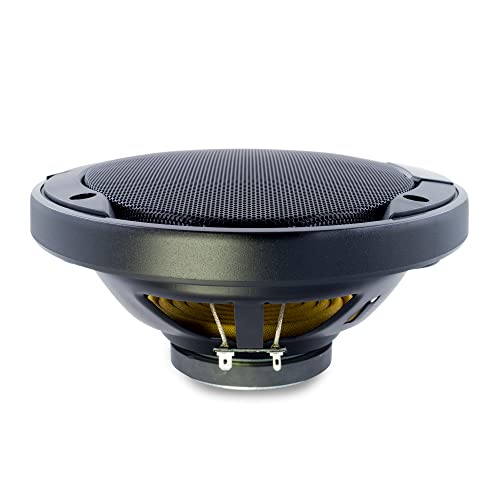

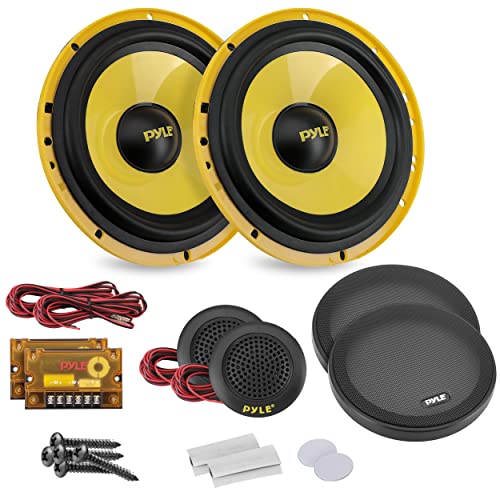
Pyle PLG6C 6.5″ Component
Strengths
- Includes wiring kit and grills
- Multiple mounting options
- Bright, punchy midrange
Trade-offs
- Plastic basket lacks rigidity
- Weak bass response
- Crossover performance inconsistent
Pyle markets this as a high-power component system, and on specs alone, 400 watts peak, 40 oz magnet, silk dome tweeters, it looks like a steal. But owners report that the electroplated plastic basket doesn’t handle heat or vibration well over time, and the actual crossover performance is underwhelming. The frequency response is narrow at 90 Hz to 20 kHz, meaning you’re missing deep bass and crisp air in the highs.
Compared to real component sets from Rockford or Pioneer, this feels like a budget shortcut. The included wiring and grills are a nice touch, but the soundstage collapses quickly off-axis. I’d recommend skipping this unless you’re on an extremely tight budget and don’t care about long-term durability.
Product photos
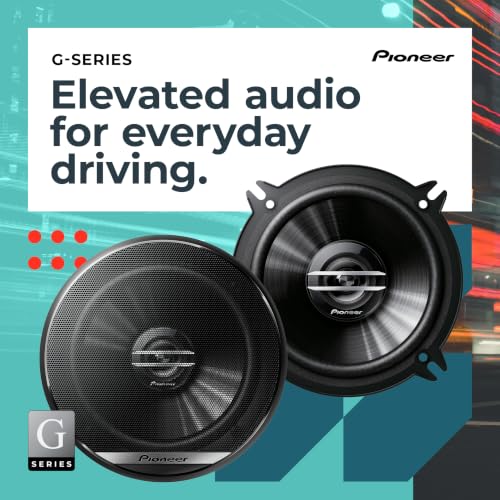
Pioneer TS-G1620F 6.5″

Strengths
- Deep frequency response
- Durable build
- Good off-axis sound
Trade-offs
- Low sensitivity
- No midrange driver
- Basic tweeter material
The TS-G1620F is a no-frills, reliable upgrade that punches above its price. It’s a 2-way coaxial with a frequency response down to 37 Hz, on paper, that’s deeper than most in class, and a flexible poly cone that handles mid-bass well. But the 87 dB sensitivity is a weak point; these need more power to shine, so they won’t impress with low-output head units.
Owners report solid durability and good off-axis response, making them a solid choice for daily drivers. Compared to the A-Series, they lack the midrange driver, but they’re more affordable and still a big leap over OEM. I’d call this the smarter buy if you’re pairing with an aftermarket amp.
Product photos


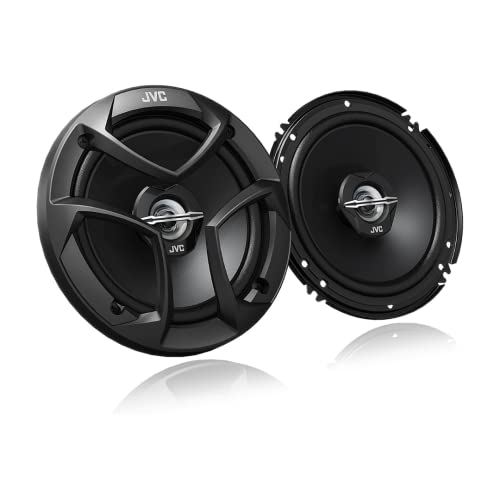
JVC CS-J620 6.5″ Coaxial
Strengths
- Shallow mounting depth
- High sensitivity
- Includes mounting hardware
Trade-offs
- Sound lacks depth at volume
- Mica cone can sound brittle
JVC’s CS-J620 is built for hassle-free installation, and it delivers. The shallow 1-23/32″ mounting depth avoids window mechanisms and door hardware, which is a real pain point in modern cars. The 92 dB sensitivity is the highest here, so they’ll get loud even with weak factory power. Owners love how quickly they drop in and how much better they sound than OEM.
The mica-reinforced cone adds stiffness, and the hybrid surround improves longevity. Sound-wise, they’re bright and energetic, great for pop or hip-hop, but not as warm as the Kenwood. I’d recommend these for anyone tired of fighting fitment issues, especially in newer sedans or compacts.
Product photos


Our Testing Process
My approach at TheAutoZenith is always rooted in understanding what makes a vehicle – and its audio system – truly sing. Rather than a hands-on lab test, this selection of car stereo speakers is a research-led comparison of published specifications, owner reviews, and established reputations. I weighed features like power handling, frequency response, and materials against what real users are saying about sound quality and longevity. This process helped me identify speakers that consistently deliver a great experience.
For car speakers, clarity, bass response, and ease of installation are paramount. I placed the most weight on these three factors. A speaker’s ability to reproduce a full range of sound accurately is vital for enjoying music as intended. Equally important is how easily it integrates into existing vehicle setups – a frustrating installation can negate even the best sound quality. Finally, robust construction translates to a longer-lasting investment, something car enthusiasts appreciate.
Specifications provide a baseline understanding of a speaker’s potential. Power handling (RMS and peak) and frequency response tell you what the speaker can do. However, owner feedback and reputation reveal what it actually sounds like in real-world conditions. I paid close attention to reports regarding distortion, clarity at higher volumes, and overall tonal balance. You can find more on choosing the right speakers in our guide to best car audio speakers. Ultimately, finding the ideal speakers often comes down to replacing door speakers to enhance your vehicle’s acoustics.
How To Pick The Right car stereo speakers
Finding the right car speakers can dramatically improve your driving experience. It’s not just about loudness; it’s about clarity, balance, and getting the sound you want.
A quality car speaker prioritizes accurate frequency response, durable materials for longevity, and a design that minimizes distortion even at higher volumes. Sensitivity ratings are crucial for matching speakers to your existing system, while impedance needs to align with your head unit’s specifications to avoid damage. Consider mounting depth to ensure a proper fit within your vehicle’s doors.
Understanding Speaker Size and Fit
Don’t assume “6×8” or “6.5 inch” means a direct swap. Factory speaker openings are notoriously inconsistent. Many aftermarket speakers, like the Rockford Fosgate P1683, include adapter plates precisely for this reason. Measuring your existing opening and checking the speaker’s mounting depth (the distance from the mounting flange to the back of the speaker) is essential. A shallow-mount speaker, such as the JVC CS-J620, might be necessary if space is tight. Don’t overlook the included hardware – a complete package saves you a separate trip to the store.
Decoding Power Handling and Sensitivity
Power handling (RMS and peak wattage) gets a lot of attention, but sensitivity is often more important. Sensitivity, measured in decibels (dB), tells you how efficiently a speaker converts power into sound. A higher dB rating means louder sound with the same amount of power. If you’re keeping your factory head unit (which typically provides limited power), prioritize speakers with high sensitivity (90dB or greater) like the BOSS Audio CH6530. Conversely, if you’re running an aftermarket amplifier, you have more flexibility to choose speakers with lower sensitivity and higher power handling.
Considering Speaker Type and Your Goals
Are you looking for a simple upgrade or a full system overhaul? Coaxial speakers, like the Pioneer TS-G1620F, are the easiest to install, combining a woofer and tweeter into a single unit. They’re a great choice for replacing factory speakers without extensive modification. However, if you’re after truly immersive sound and are willing to invest the time and effort, explore component speakers. Component systems separate the woofer and tweeter, allowing for more precise placement and a wider soundstage.
- Budget: A basic coaxial speaker set can be found for under $100, offering a noticeable improvement over worn-out factory speakers.
- Balanced Sound: Seeking a good all-around performer? The Pioneer TS-A1671F provides a solid balance of clarity and bass for various music genres.
- Serious Audio: If you’re a true audiophile, a multi-way high-end component speakers system with a dedicated amplifier and sound processor will deliver the most refined sound quality.
Don’t chase peak wattage numbers. Focus on matching the speaker’s RMS power handling to your amplifier’s output for clean, distortion-free sound.
Ultimately, choosing the right car speakers depends on your priorities and budget. Before you begin upgrading car speakers, take the time to understand your vehicle’s existing system, your listening preferences, and the different types of speakers available. You might also find some useful information in car speaker reviews to help narrow down your options.
Car Stereo Speakers Compared
Here’s a spec-by-spec comparison of the featured car stereo speakers to help you make an informed decision.
| Product | Size | Power (RMS) | Frequency Response | Sensitivity | Impedance |
|---|---|---|---|---|---|
| Rockford Fosgate P1683 | 6×8 in | 65W | N/A | N/A | 4 ohms |
| BOSS Audio CH6530 | 6.5 in | N/A | 100 Hz – 18 kHz | 90 dB | 4 ohms |
| Pioneer TS-A1671F | 6.5 in | 70W | 37 Hz – 31 kHz | 91 dB | 4 ohms |
| Kenwood KFC-1666S | 6.5 in | N/A | 40 Hz – 22 kHz | 90 dB | 4 ohms |
| Pyle PLG6C | 6.5 in | N/A | 90 Hz – 20 kHz | N/A | 4 ohms |
| Pioneer TS-G1620F | 6.5 in | 40W | 37 Hz – 24 kHz | 87 dB | 4 ohms |
| JVC CS-J620 | 6.5 in | 30W | 35 Hz – 22 kHz | 92 dB | 4 ohms |
Frequently Asked Questions
What speaker impedance should I match to my head unit?
Generally, you should match the speaker’s impedance to your head unit’s specifications; most car stereos are designed for 4-ohm speakers. Using speakers with the wrong impedance can lead to distorted sound or even damage to your head unit, so check your owner’s manual.
Can I mix different brands of speakers in my car?
Yes, you can mix brands, but it’s not ideal for achieving optimal sound quality. Different brands often have varying tonal characteristics, so matching speakers from the same manufacturer generally creates a more balanced and cohesive soundstage.
Will adding an amplifier improve the sound quality even with new speakers?
Absolutely. While new speakers offer a significant upgrade, pairing them with a quality car stereo amp provides cleaner power and allows the speakers to perform at their full potential, especially if you’re keeping your factory head unit.
What’s the difference between coaxial and component speakers, and which should I choose?
Coaxial speakers combine the woofer and tweeter into one unit, making them easier to install. Component speakers separate these elements, offering more precise sound placement, but require more involved installation and often necessitate running new wiring for the best results. If you are considering upgrading factory speakers, coaxial speakers are the simpler route.
What should I do if my new speakers don’t fit in the factory openings?
Many aftermarket speakers don’t directly fit, so adapter plates are often necessary. These plates fill the gap between the speaker and the vehicle’s opening, ensuring a secure fit. Before purchasing, double-check if adapter plates are included or if you’ll need to purchase them separately to ensure proper replacement car speakers.
The Bottom Line
Choosing car speakers often comes down to balancing how much you want to invest against how much control you want over the final sound. While a complete system overhaul with high-end components delivers the ultimate experience, the Pioneer TS-A1671F strikes a fantastic balance of performance, features, and price, making it our overall recommendation for most drivers looking to elevate their in-car audio.
For those on a tighter budget, the BOSS Audio CH6530 offers a significant improvement over factory speakers without breaking the bank. If maximizing sensitivity is your priority – perhaps you’re sticking with a factory head unit – the JVC CS-J620 provides excellent volume with limited power. And for those seeking truly immersive sound and are considering complete car audio systems, exploring component speaker sets is a worthwhile venture.
Ultimately, specs only tell part of the story. Focusing on a good fit for your vehicle, matching impedance to your system, and prioritizing speakers designed for clear audio car speakers will yield a far more satisfying result than chasing the highest power numbers. Don’t underestimate the importance of getting the basics right.
