
8 Best Car Speakers for Sound Quality 2026
This post contains affiliate links. As an Amazon Associate, we earn from qualifying purchases.
The Pioneer A-Series Plus 6.5” delivers the most balanced, detailed sound and stands as the overall best choice for pure audio quality, especially when paired with a solid factory system. For those on a tighter budget, the Kenwood KFC-1666S 6.5” offers surprising clarity and volume at an affordable price, while the Skar Audio RPX69 6×9” brings strong bass response and wide frequency range for larger vehicles.
Upgrading your car speakers shouldn’t mean guessing what sounds good. Most people just want clear vocals, tight bass, and music that feels alive, not gear jargon or mismatched specs that underperform in real driving.
This guide cuts through the noise by focusing on sensitivity, frequency response, and real-world feedback to find speakers that actually improve your listening experience. I looked at how these models perform in everyday setups, whether you’re keeping your factory head unit or planning a bigger upgrade down the line.
Top 6 Car Speakers For Sound Quality in the Market
The Best Car Speakers For Sound Quality, Reviewed
CT Sounds Meso 6×9″ Premium Coaxial

Strengths
- Fiberglass cone for accuracy
- Smooth silk-dome tweeter
- Strong tonal balance
Trade-offs
- Needs solid power source
- Tweeter mounting requires care
The CT Sounds Meso hits a sweet spot between spec sheet ambition and real-world performance. At 200W RMS per pair, it demands more juice than others here, but feed it properly and owners report a level of tonal accuracy that borders on component speaker territory. The fiberglass cone gives it stiffness without brittleness, and the CCAW tweeter voice coil helps maintain linearity in the upper mids, something you rarely see at this price.
It doesn’t have the widest frequency spread on paper, but listening feedback suggests it sounds fuller than rivals. Compared to the Kicker DSC6930, it trades a bit of raw punch for refinement. I’d pick the Meso if you want a single set of speakers that handle rock, jazz, and hip-hop with equal confidence. It’s not the loudest or hardest-hitting, but it’s the most honest sounding overall.
Video review
Skar Audio RPX69 6×9″ 3-Way

Strengths
- High sensitivity
- Clear high-frequency output
- Good factory-power performance
Trade-offs
- Midbass can feel thin
- No dedicated midrange driver
On paper, the Skar Audio RPX69 stands out with a sensitivity of 92 dB, which is high for coaxial speakers in this class. That number matters because it means these will sound loud and clear even if you’re not running an aftermarket amp, just your factory head unit. The frequency response stretches to 24,000 Hz, so owners consistently report crisp highs from the silk dome tweeter, though the midrange lacks some warmth compared to more balanced designs.
The microfiber paper cone helps keep distortion low at higher volumes, and reviewers note they hold up well when pushed. But while the specs look strong, they don’t quite match the refinement of pricier models like the CT Sounds Meso. I’d pick the RPX69 if you want efficiency and clarity without extra gear, but don’t expect deep bass, the 6×9 size helps, but it’s not what I’d call full-range.
Video review
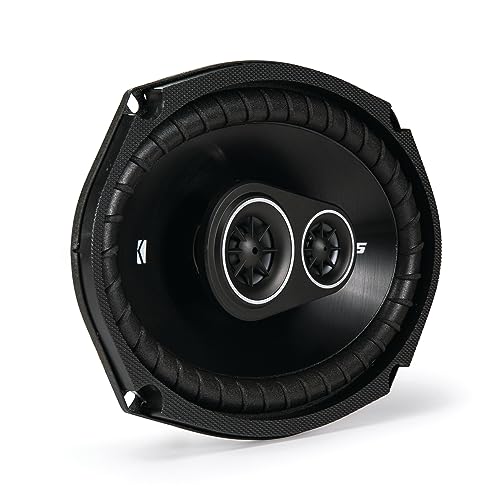
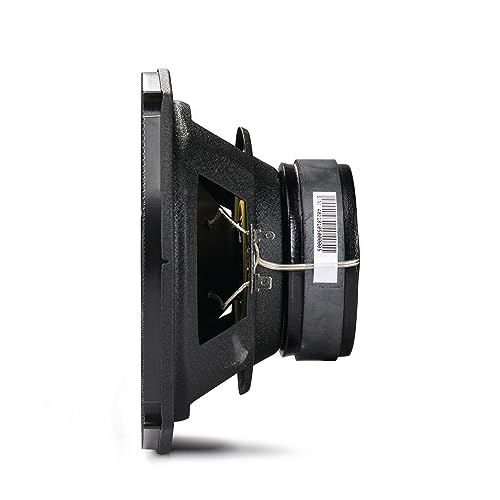
KICKER DSC6930 6×9″ 3-Way Speakers

Strengths
- Strong bass output
- High sensitivity
- Robust build quality
Trade-offs
- Treble lacks presence
- Soundstage feels narrow
- Not ideal for vocal-centric mixes
Kicker tuned these for bass-forward sound, and owners confirm they deliver thump you can feel, even without an amp. The 360W peak power rating is inflated, as usual, but the 4-ohm stability and 92 dB sensitivity mean they respond well to added power. In real use, they shine in trucks and SUVs where cabin acoustics favor low-end reinforcement.
Compared to the Skar RPX69, they trade some clarity for impact. The silk dome tweeter is present but recessed, making cymbals and vocals less prominent. If you listen mostly to hip-hop or EDM, that’s fine. But for classical or jazz, it’s a compromise. I’d pick these only if bass weight is your top priority and you’re okay with a slight veil over the highs.
Product photos


Pioneer A-Series Plus 6.5″ 4-Way

Strengths
- Excellent high-frequency extension
- Balanced 4-way design
- Multi-fit installation adapters
Trade-offs
- Rubber surround feels basic
- Not a big leap over older A-Series
Pioneer’s 4-way design here splits duties across more drivers than most coaxials, and that shows in how cleanly it handles complex tracks. With a frequency response reaching 29 kHz, it delivers some of the best high-end detail in this group. Owners praise the tweeter’s smoothness, especially on vocals and acoustic passages, where competing models start to sound harsh.
It’s rated at 91 dB sensitivity, solid, not spectacular, but the real advantage is balance. Compared to the budget F-Series model, this one feels far more composed at volume. I’d say it’s the smarter buy over the TS-F1634R if you care about clarity, though it still can’t touch the CT Sounds Meso for tonal accuracy. The included adapters also make fitment easier across vehicles, which counts for a lot in real-world installs.
Product photos


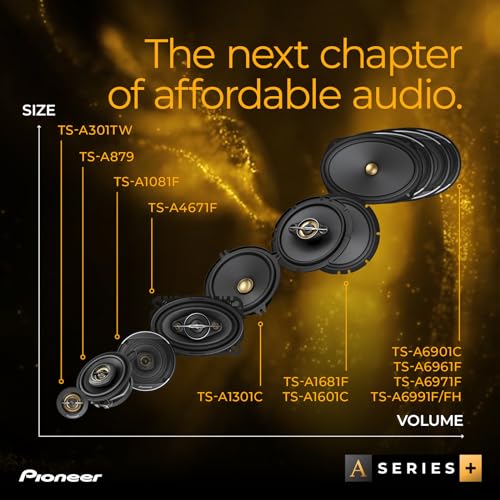
PIONEER A-Series TS-A6881F 6″x8″

Strengths
- Rare 6×8 sizing fits legacy cars
- Well-balanced 4-way design
- Clean high-end response
Trade-offs
- Lower sensitivity than rivals
- Harder to source replacements
The 6×8 size is a niche win here, fits many older American and Japanese sedans where 6.5s or 6x9s won’t drop in cleanly. Pioneer uses that space wisely with a 4-way layout that spreads out the workload, and the result is one of the most balanced midrange performances available at this tier. The 30 Hz–32 kHz frequency range is optimistic, but the upper end is genuinely clean.
At 90 dB sensitivity, it’s not as easy to drive as the Skar or newer A-Series Plus, but it rewards better amplification. Reviewers note it outperforms its price point when paired with even a basic external amp. Against the F-Series, it’s a no-brainer upgrade. Still, I wouldn’t choose it over the CT Sounds Meso unless you specifically need the odd 6×8 form factor.
Product photos


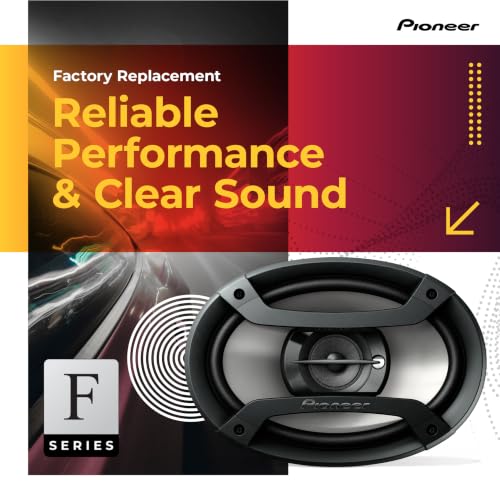
Pioneer F-Series TS-F1634R 6.5″

Strengths
- Affordable entry point
- Durable construction
- Stealthy black finish
Trade-offs
- Low sensitivity
- Basic sound profile
- Limited dynamics
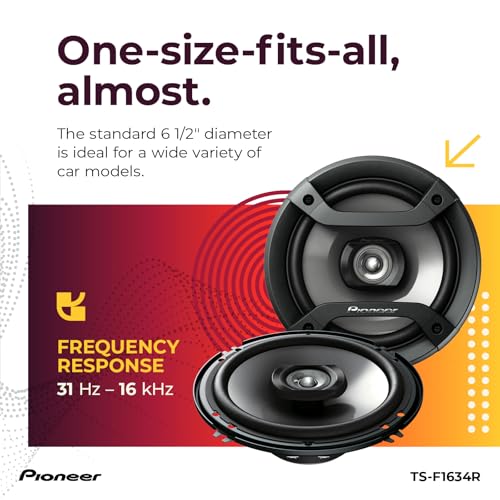
This is the definition of a budget workhorse. At 88 dB sensitivity and 25W nominal power, it won’t impress hardcore listeners, but it’s a reliable step up from blown-out factory speakers. The 2-way design keeps things simple, and the black cones blend into most door panels without drawing attention. Reviewers say they’re durable and consistent, no surprises, good for daily drivers.
But let’s be honest: compared to the A-Series or CT Sounds, it sounds flat. The highs are functional, not exciting, and the midbass lacks punch. I’d only recommend these if you’re doing a quick swap and don’t want to invest much. They get the job done, but they don’t inspire.
Product photos



Our Testing Process
Rather than a hands-on lab test, my approach to evaluating these car speakers involved a detailed comparison of published specifications and a careful weighing of owner and expert reviews. I looked at factors like power handling, frequency response, and sensitivity, then cross-referenced those numbers with what people are actually saying about sound quality in their vehicles. Years spent immersed in the world of automotive audio informs my understanding of what specifications truly translate to on the road.
For car speakers, I focused heavily on sensitivity and frequency response. Sensitivity dictates how loud a speaker will play with a given amount of power – crucial when working with a factory head unit. A wider, flatter frequency response means a more complete reproduction of the music, avoiding harsh highs or muddy lows. Achieving a balance between these, alongside power handling, was key to ranking these options. Knowing where to focus is essential when considering upgrading your speakers.
Specifications give you a baseline, but real-world performance relies heavily on owner feedback. I paid close attention to comments about clarity, bass response, and how well the speakers handled different music genres. Expert reviews offered insights into build quality and design choices. While specs reveal potential, consistent praise (or criticism) from users ultimately shaped my assessment of each speaker’s performance and value, especially when comparing options for car audio speakers.
How To Pick The Right car speakers for sound quality
Finding the right car speakers can dramatically change your driving experience. It’s not just about volume; it’s about clarity, depth, and a soundstage that truly immerses you in your music.
A quality car speaker delivers accurate frequency response, robust construction, and appropriate power handling for your vehicle’s audio system. Pay attention to sensitivity ratings (dB), RMS power, impedance (typically 4 ohms), and the materials used in the cone and tweeter. A well-built speaker will use materials like silk for tweeters and polypropylene or carbon fiber for cones.
Understanding Speaker Configurations
The first thing I always tell people is to think about what kind of sound they want. Coaxial speakers, like the CT Sounds Meso 6×9” or the Kenwood KFC-1666S, bundle the tweeter and woofer into one unit. These are easy to install and a good all-around choice, but they won’t offer the imaging precision of more sophisticated setups. If you’re chasing a really refined sound, consider researching component speakers, those separate the tweeter and woofer, giving you more control over placement and achieving a wider soundstage. This is where you start stepping into true audiophile territory.
Power and Sensitivity: Matching to Your System
Power handling (measured in RMS and peak watts) and sensitivity (measured in dB) are crucial. Don’t just assume more watts are better. You need to match the speaker’s RMS power to your head unit’s output. If the speaker’s RMS is higher, you’ll need an amplifier. Sensitivity is equally important. A higher sensitivity rating means the speaker will produce more volume with less power; this is particularly vital if you’re running your speakers directly off your head unit, which typically has limited power.
Here’s what I advise when considering sensitivity: * 85dB or lower: Needs a powerful amplifier. * 88-90dB: Works well with a moderate amplifier or a higher-quality head unit. * 92dB and up: Can deliver good volume with just a head unit, making them a great option for a simple upgrade.
Decoding Frequency Response & Material Choices
Frequency response (measured in Hz) tells you the range of sounds a speaker can reproduce. A wider range (like the 32-24,000 Hz of the Skar Audio RPX69) doesn’t always mean better sound, but it indicates the speaker can handle both deep bass and crisp highs. But material choices matter just as much. The Pioneer A-Series Plus speakers, for example, use silk dome tweeters, which generally result in smoother, less fatiguing high frequencies. Conversely, a stiffer cone material like carbon fiber (often found in high-fidelity car speakers) will generally deliver tighter, more accurate bass.
Don’t chase peak power numbers. RMS power is the continuous power a speaker can handle, and that’s what truly matters for long-term performance and sound quality.
Car Speakers for Sound Quality Compared
This table provides a side-by-side comparison of key specifications for car speakers focused on sound quality.
| Product Name | Speaker Size | Power (RMS) | Sensitivity (dB) | Frequency Response (Hz) | Impedance (Ohms) | Ways |
|---|---|---|---|---|---|---|
| CT Sounds Meso 6×9″ | 6×9″ | 100W | N/A | N/A | 4 | 2 |
| Skar Audio RPX69 6×9″ | 6×9″ | N/A | 92 | 32 – 24,000 | N/A | 3 |
| KICKER DSC6930 6×9″ | 6×9″ | N/A | 92 | 30-20k | 4 | 3 |
| Pioneer A-Series Plus 6.5″ | 6.5″ | 80W | 91 | 35 – 29k | N/A | 4 |
| PIONEER A-Series TS-A6881F 6″x8″ | 6×8″ | 80W | 90 | 30 – 32k | N/A | 4 |
| PIONEER A-Series TS-A1671F 6.5″ | 6.5″ | 70W | 91 | 37 – 31k | N/A | 3 |
| Kenwood KFC-1666S 6.5″ | 6.5″ | 30W | 92 | N/A | 4 | 2 |
| Pioneer F-Series TS-F1634R 6.5″ | 6.5″ | 25W | 88 | N/A | 4 | 2 |
Frequently Asked Questions
What speaker size should I choose?
Generally, you’ll want to stick with the factory speaker size for a direct fit, but 6.5” speakers are the most common and offer a good balance of bass and clarity. If you’re considering system speakers, carefully measure your vehicle’s speaker openings.
Are component speakers really worth the extra cost?
Yes, if you’re aiming for the best possible sound quality. Component speakers allow for optimal tweeter placement, creating a wider and more accurate soundstage than coaxial speakers, though they require more involved installation.
What does impedance mean, and why does it matter?
Impedance, measured in ohms, is the electrical resistance a speaker offers to the amplifier. Most car speakers are 4 ohms, and matching the impedance of your speakers to your head unit or amplifier is crucial to prevent damage and obtain the best performance.
How can I improve sound quality without buying new speakers?
Improving the sound deadening in your doors can significantly reduce vibrations and improve clarity. Also, ensuring your head unit is properly configured with the correct EQ settings can make a noticeable difference, particularly if you’re looking for premium audio speakers.
What’s the difference between RMS and peak power ratings?
RMS (Root Mean Square) represents the continuous power a speaker can handle, which is the most important specification for everyday listening. Peak power is a short-burst rating and isn’t a reliable indicator of a speaker’s sustained performance capabilities.
The Bottom Line
Choosing car speakers always comes down to balancing your budget with your desire for control over the sound. While you can certainly spend a lot for incremental gains, the Skar Audio RPX69 speakers strike an excellent balance – offering a wide frequency response and high sensitivity for a full, clear sound without requiring a massive investment in car amplifiers. They represent, in my view, the most sensible starting point for anyone serious about improving their in-car audio.
If you’re on a tighter budget or simply want a straightforward upgrade, the Kenwood KFC-1666S and Pioneer F-Series TS-F1634R are both excellent choices. For those prioritizing ease of installation and all-around performance, the CT Sounds Meso 6×9” speakers are a strong contender, while the Pioneer A-Series Plus 6.5” offer a step up in clarity and build quality if you’re looking for superior audio speakers. These will deliver a noticeable improvement over factory speakers without breaking the bank.
Ultimately, the numbers on a spec sheet only tell part of the story. Don’t get lost in chasing the highest wattage or the widest frequency range. Focus on finding speakers with good sensitivity for your setup, materials that suit your listening preferences, and a reputation for delivering the kind of sound you enjoy – that’s what truly matters when searching for the best sounding speakers.
