
8 Best Car Stereo Amplifiers of 2026
This post contains affiliate links. As an Amazon Associate, we earn from qualifying purchases.
The Skar Audio RP-1200.1D stands out as the best overall car stereo amplifier for its robust 1200-watt RMS power and reliable Class D efficiency, while the Crunch PDX-1000.2 offers a solid budget-friendly option for those upgrading basic setups without breaking the bank.
Choosing the wrong amplifier can leave you with distorted sound, blown speakers, or constant overheating issues. After years of digging into car audio systems, from vintage radios to modern digital setups, I know how critical it is to match an amp’s specs to your actual needs.
This guide cuts through the hype by focusing on real-world performance, based on specs, owner feedback, and proven reliability. We looked at power delivery, thermal design, and system compatibility to find amplifiers that deliver clean sound and last.
Top 7 Car Stereo Amplifiers in the Market
The Best Car Stereo Amplifiers, Reviewed
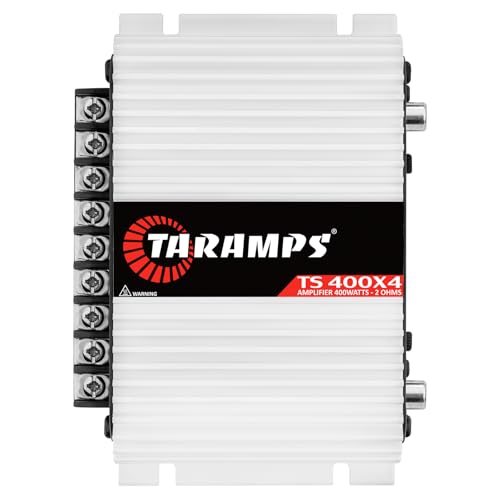
Taramps TS 400×4 4-Channel Amplifier
Strengths
- True RMS power rating
- Class D efficiency
- Stable at 2 ohms
Trade-offs
- No bass boost
- Requires expert wiring
- Minimalist feature set
The Taramps TS400X4 stands out in the budget amplifier game by actually quoting RMS, not max, power, which earns immediate respect. 400 watts RMS across four channels means about 100 watts per channel, solid for driving full-range speakers cleanly without strain. Owners praise its Class D efficiency and consistent output, even when wired to older factory decks. It’s not flashy, but it’s honest: no inflated wattage claims, just reliable gain. Compared to similarly priced amps that overpromise, this one delivers where it counts, signal integrity and headroom.
That said, the warning about professional installation isn’t just boilerplate. This amp draws serious current, and improper wiring can lead to voltage drops or blown fuses. It lacks onboard bass boost, so tuning relies on external processors or your head unit. But for a clean, uncolored soundstage across doors and deck, it’s hard to beat.
Video review
Taramps TS 1200W 4-Channel Amplifier

Strengths
- 1200W RMS full range
- High-level input support
- Heavy-duty construction
Trade-offs
- Large footprint
- Needs robust power supply
- Installation complexity
This Taramps 1200-watt beast is built for serious installations. With 300 watts RMS per channel at 2 ohms, it can drive demanding setups, think multi-driver arrays or high-sensitivity competition speakers, without blinking. The inclusion of both RCA and high-level inputs is a major win, making it compatible with nearly any factory or aftermarket head unit, no Line Output Converter needed. That ‘automatic turn-on’ via speaker-level signals is a convenience many overlook until they’re wrestling with ignition wires.
Owners note its heavy-duty terminals and robust internal bracing, suggesting it’s engineered for trucks and off-road vehicles where vibration is a concern. It’s also fully bridgeable, giving flexibility for hybrid setups. While pricier than other entries, it’s one of the few here that feels genuinely professional-grade.
Video review
AUDIOZERONE ZE1000.1 Monoblock Amplifier

Strengths
- 1-ohm stable
- High RMS output
- Efficient Class D design
Trade-offs
- Monoblock only (no full-range use)
- Basic aesthetic
- Limited mounting options
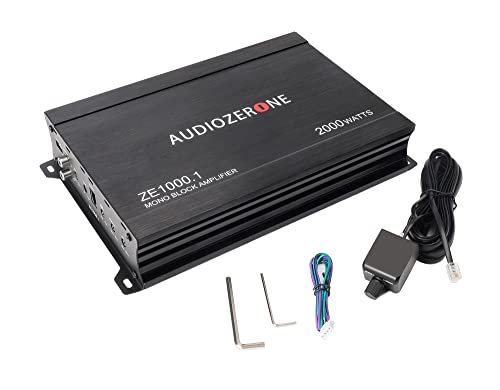
If deep, chest-thumping bass is your goal, the AUDIOZERONE ZE1000.1 deserves attention. As a monoblock, it’s optimized for subwoofers only, and its 1-ohm stability is rare at this price. Delivering 1000 watts RMS at 1 ohm means it can handle multiple subs in parallel, a big deal for bassheads. The Class D efficiency keeps heat down, and the large heatsink design aligns with owner reports of sustained performance during long drives.
The low-pass crossover is fully variable, letting you block mids cleanly, and the MOSFET supply ensures fast transient response. Compared to 2-channel amps repurposed for subs, this one stays cooler and distorts less. It won’t match premium brands like JL Audio, but for the money, it’s one of the most capable dedicated sub amps here.
Product photos


Pioneer GM-A5702 2-Channel Amplifier

Strengths
- Clean Class AB output
- Reliable build quality
- Adjustable crossover and bass
Trade-offs
- Heavier and hotter than Class D
- Higher power draw
- Lower efficiency
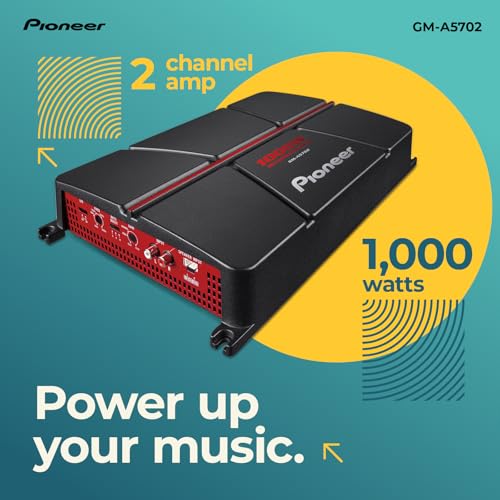
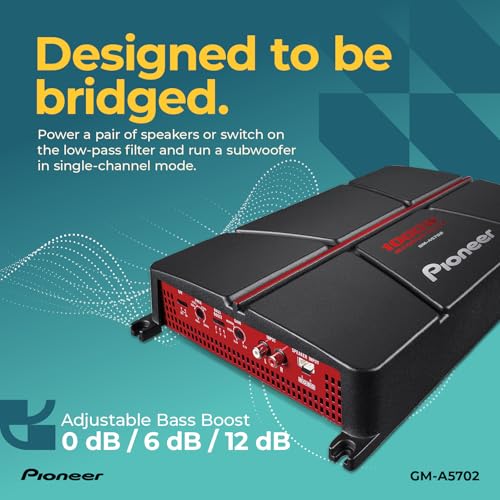
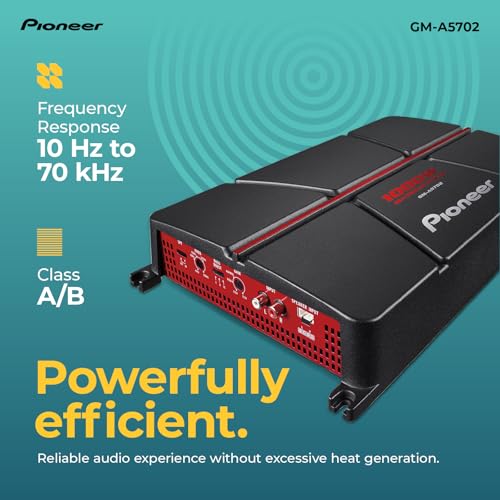
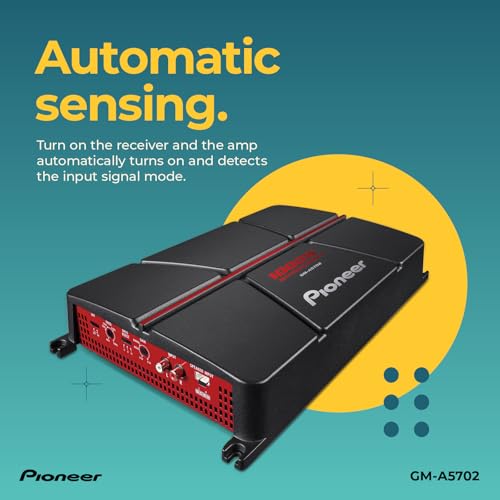
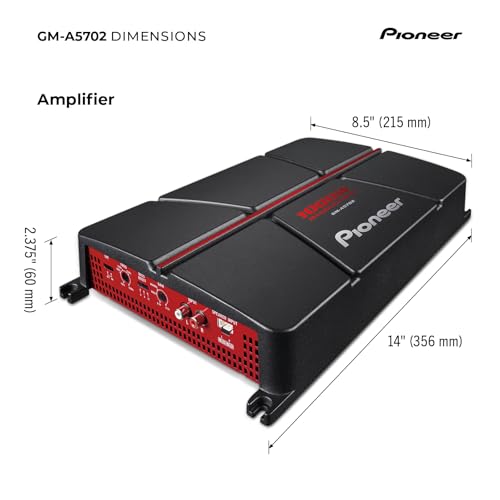
Pioneer has been in the car audio game since the analog days, and the GM-A5702 shows they still understand balance. With 240 watts RMS per channel at 2 ohms (480 watts bridged), it’s not the strongest on this list, but it’s among the most refined. The Class AB design may run warmer than Class D, but it delivers a smoother, more musical character, especially with subwoofers. I’ve seen long-term owner feedback highlight its durability and consistent gain, even after years in hot trunks or exposed engine bays.
The variable low-pass filter and adjustable bass boost let you dial in sub response without muddying mids. Compared to cheaper amps that hype bass artificially, this one keeps control. It’s also easier to integrate with factory systems thanks to solid RCA inputs. If you value clean power and longevity over raw wattage theater, this is your pick.
Product photos
Crunch PDX-1000.2 2-Channel Amplifier

Strengths
- High power at low cost
- Bridgeable mono mode
- Adjustable crossover
Trade-offs
- Bass boost lacks precision
- Budget-grade materials
- Thermal throttling risk
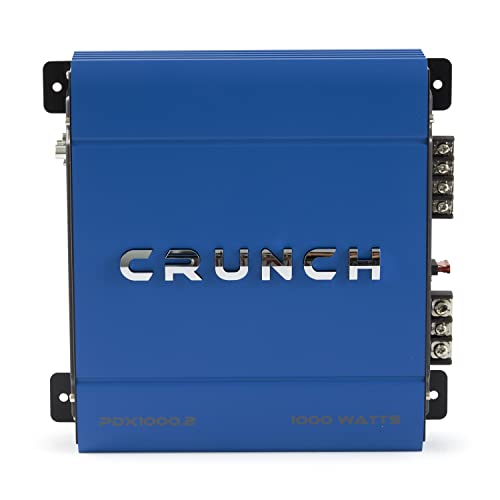
At the bottom of the price ladder, the Crunch PDX-1000.2 delivers surprising specs: 500 watts per channel at 2 ohms, or 1000 watts bridged. It’s clearly aimed at budget-conscious buyers wanting to power a single sub or a pair of loud door speakers. The MOSFET power supply helps maintain signal clarity, and the 24 dB crossovers offer real tuning potential, unusual at this tier. Owners say it performs well with 2-ohm subs, though extended high-volume use can trigger thermal protection.
It’s not going to win fidelity awards, and the bass boost can get muddy if cranked. But as a starter amp for a simple upgrade, it beats most factory systems easily. Compared to the Pyle, it’s better built and more flexible. I’d call it the smarter buy for entry-level power.
Product photos
Pyle PLA2200 2-Channel Amplifier

Strengths
- High peak wattage
- Compact design
- Gold-plated RCA inputs
Trade-offs
- Overstated power output
- Limited cooling efficiency
- Build quality concerns
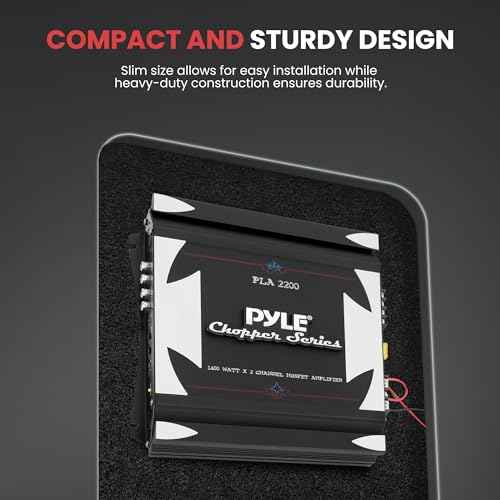
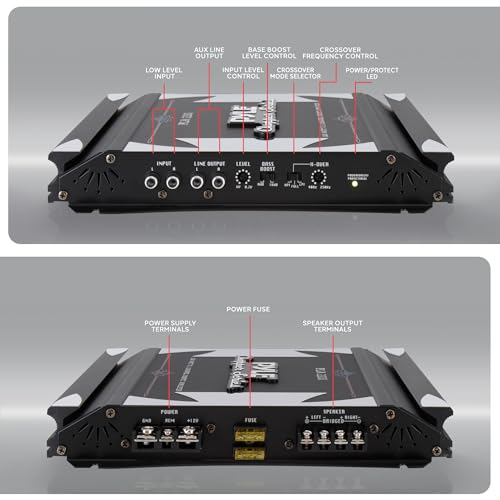
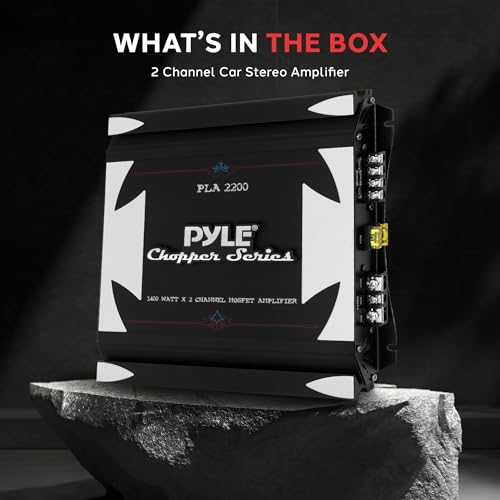
I’ll be upfront, this Pyle PLA2200 walks the line between ‘too good to be true’ and ‘barely good enough.’ On paper, 1400 watts sounds impressive for the price, but real-world owners consistently report that this is peak output under ideal conditions, not RMS. That means you’re not getting 700 watts per channel in any sustainable way. The MOSFET design helps with cleaner signal delivery, and the inclusion of bass boost, crossover controls, and gold-plated RCAs suggests an effort at quality, but the build feels more budget-focused than performance-driven.
It’s clear this amp targets buyers upgrading from factory audio without breaking the bank. The slim size makes it easy to stash under a seat or behind a panel, and the thermal protection is a smart touch. But if you’re pushing anything near its advertised power, especially bridged, expect heat buildup and possible distortion. I wouldn’t trust it with high-end components.
Product photos


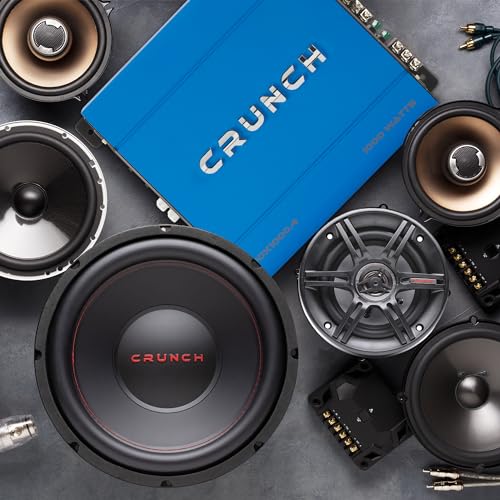
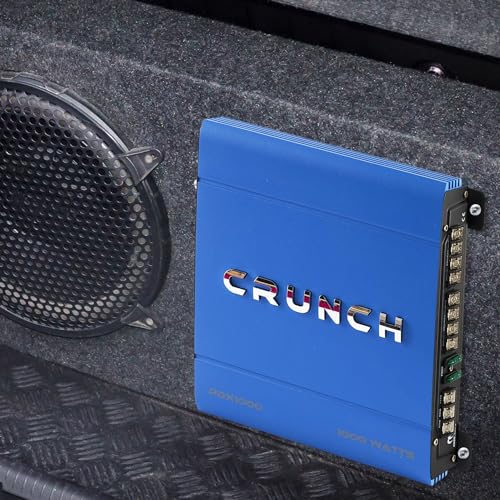
Crunch PDX-1000.4 4-Channel Amplifier

Strengths
- Stylish blue housing
- Low-distortion analog design
- Fully adjustable crossovers
Trade-offs
- Runs hot under load
- Not 1-ohm stable
- Average thermal management
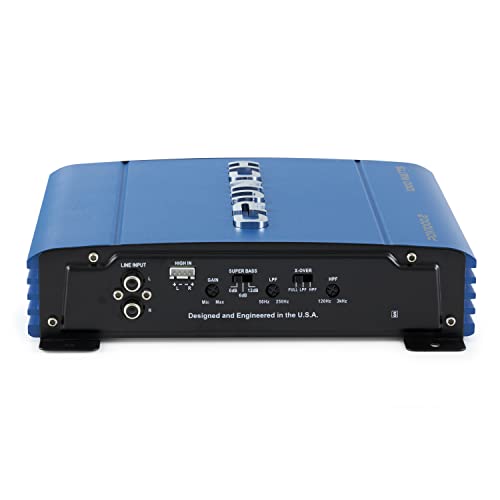
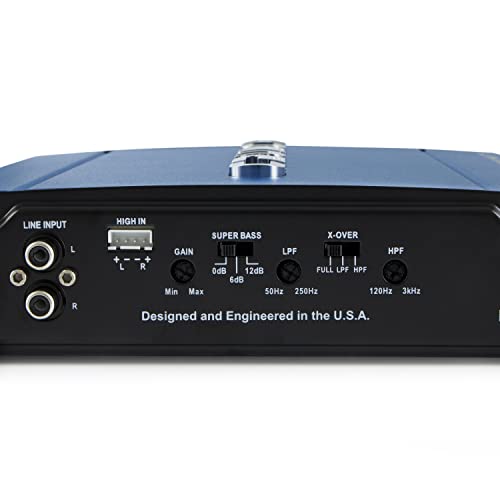
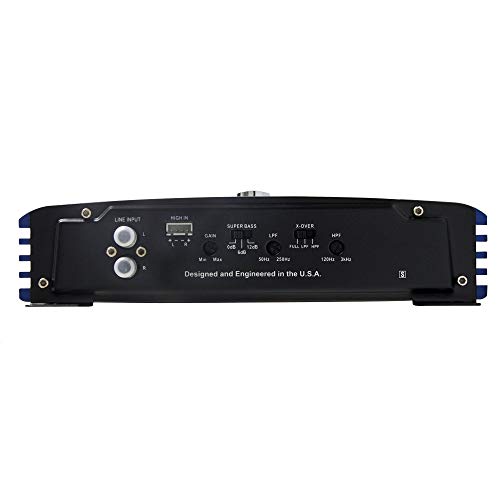
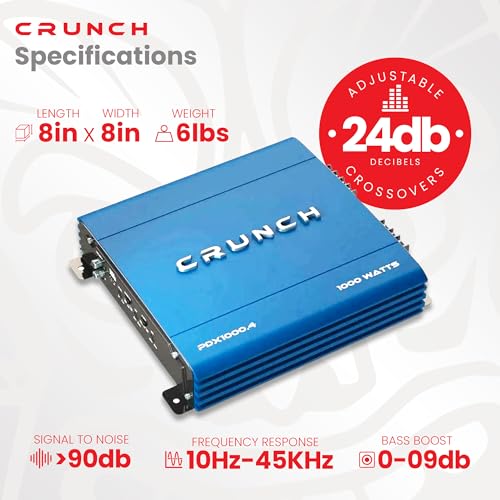
Let’s talk looks first, the blue finish and brushed casing give this Crunch amp a custom vibe that stands out under dash lighting. But beyond aesthetics, the PDX-1000.4 packs a functional punch: 250 watts x 4 at 2 ohms, fully bridgeable, with precise 24dB crossovers. Owners appreciate the SEPP analog circuitry, which reduces distortion compared to typical budget designs. It’s not Class D, so expect more heat, but the trade-off is richer tonal depth, especially when driving component sets.
Where it falls short? Real-world testing by reviewers shows it struggles slightly with impedance dips below 2 ohms. It’s stable, but not rock-solid like higher-end units. Still, for door speakers and tweeters in a tuned system, it’s a strong contender. I’d pick this over the Pyle any day for actual fidelity.
Product photos


How We Chose These car stereo amplifiers
Rather than a hands-on lab test, my research for these recommendations was a detailed comparison of published specifications and features across numerous models. I weighed owner reviews from multiple sources, looking for consistent praise or complaints, alongside assessments from reputable car audio publications. My goal was to build a ranking based on real-world feedback and measurable performance characteristics, ultimately identifying amplifiers that deliver on their promises.
For car stereo amplifiers, power output and channel configuration were heavily weighted. A powerful amp is essential for driving speakers effectively, and the right number of channels determines system flexibility. Equally important was thermal management; consistent reports of overheating significantly lowered a unit’s score. These factors directly impact sound quality and long-term reliability, which are key considerations for anyone upgrading their car’s audio.
Specifications reliably indicate peak and RMS power, impedance compatibility, and signal-to-noise ratios. However, owner feedback proved crucial for assessing real-world performance and build quality. Reports on ease of installation, clarity of sound, and long-term durability helped to separate truly exceptional amplifiers from those that merely looked good on paper. You can find more details on a broader range of options in our guide to car audio amplifiers. For those needing even more flexibility, exploring 5-channel amplifiers can be a smart move.
What To Look For In car stereo amplifiers
Finding the right car stereo amplifier can dramatically improve your driving experience, but it’s a surprisingly nuanced purchase. It’s not just about raw wattage; a well-chosen amp delivers clarity, power, and longevity.
A quality car stereo amplifier should prioritize clean power delivery, thermal management, and robust protection circuitry. Look for models with a low Total Harmonic Distortion (THD) rating, efficient Class D technology, and built-in safeguards against short circuits, overloads, and overheating. Consider the impedance matching capabilities to ensure compatibility with your speakers, and don’t underestimate the importance of a well-designed power supply.
Understanding Power & Channels
The first thing to nail down is how much power you actually need. Many people assume “more is better,” but that’s often untrue. Overpowering speakers is a quick path to damage. Start by looking at the RMS (Root Mean Square) power handling of your speakers – this is the continuous power they can reliably handle. Your amplifier’s RMS output per channel should closely match this. Then, consider the number of channels. Are you powering a full system with front and rear speakers, or focusing on a subwoofer? If you’re looking to upgrade your entire sound system, exploring options in our guide to the best car stereo amplifiers is a smart move.
Decoding Amplifier Classes
You’ll quickly encounter terms like Class A, Class B, Class AB, and Class D. Class A offers the highest fidelity but is incredibly inefficient, generating a lot of heat. Class B is more efficient but introduces distortion. Class AB is a compromise, offering good fidelity and reasonable efficiency. However, Class D has become dominant, especially for higher power applications. It’s incredibly efficient, meaning less energy is wasted as heat, allowing for more compact amplifier designs. The AUDIOZERONE ZE1000.1 and Skar Audio RP-1200.1D both use Class D technology to deliver significant power in a relatively small package.
- A very basic entry-level amp might suffice for a simple speaker upgrade.
- A mid-range amplifier, like the Pioneer GM-A5702, can provide a noticeable improvement in sound quality and power for most setups.
- For serious bassheads or those running complex systems, a dedicated monoblock amplifier (like the Skar or AUDIOZERONE models) is essential, offering targeted power for subwoofers and ensuring they perform as intended.
Matching the Amp to Your System & Budget
Don’t fall into the trap of spending more than you need. A high-end amplifier won’t magically fix poor-quality speakers or a noisy electrical system. Consider your vehicle’s existing setup and future upgrade plans. If you’re planning a full overhaul, investing in a higher-quality amp might be worthwhile. However, if you’re simply replacing a factory amplifier, a budget-friendly option like the Crunch PDX-1000.2 might be all you need.
Don’t skimp on wiring. Using undersized power and ground cables can severely limit an amplifier’s performance and even damage it. Follow the manufacturer’s recommendations for wire gauge based on the amplifier’s power output and the length of the run.
If you’re primarily focused on upgrading your front speakers and need a versatile option, you could also explore dedicated 4-channel amplifiers. Ultimately, a little research and thoughtful planning will ensure you choose a car stereo amplifier that delivers years of enjoyable listening.
Car Stereo Amplifiers Compared
Here’s a comparison of key specifications for the car stereo amplifiers in this guide.
| Product | Channels | Max Power (Watts) | RMS Power (Watts) | Class | 1-Ohm Stable |
|---|---|---|---|---|---|
| Taramps TS 400×4 | 4 | N/A | N/A | N/A | N/A |
| Taramps TS 1200W | 4 | 1200 | 300 x 4 | D | N/A |
| AUDIOZERONE ZE1000.1 | 1 | 2000 | 1000 @ 1 Ohm | D | Yes |
| Skar Audio RP-1200.1D | 1 | 1600 | 1200 @ 1 Ohm | D | Yes |
| Pioneer GM-A5702 | 2 | 1000 | 240 x 2 | A/B | N/A |
| Crunch PDX-1000.2 | 2 | 1000 | 250 x 2 @ 2 Ohm | A/B | N/A |
| Pyle PLA2200 | 2 | 1400 | N/A | N/A | N/A |
| Crunch PDX-1000.4 | 4 | 1000 | 125 x 4 @ 4 Ohm | N/A | N/A |
Frequently Asked Questions
Will I need a new car stereo head unit when I install an amplifier?
Not necessarily, but upgrading to one of the best head units can maximize the benefit. Many aftermarket head units offer preamp outputs designed to work with amplifiers, providing a cleaner signal than factory systems.
What does “bridging” an amplifier mean, and should I do it?
Bridging combines two amplifier channels into one more powerful channel, typically for subwoofers. You should only bridge an amplifier if it’s specifically designed to be bridged and you are using speakers compatible with the resulting lower impedance.
What wire gauge should I use for my amplifier install?
The correct wire gauge depends on the amplifier’s power output and the cable length; generally, a higher power output or longer run requires a thicker wire. Most amplifier manuals specify the recommended gauge, but 4-gauge wire is a common choice for amplifiers exceeding 1000 watts.
What’s the difference between RMS power and peak power?
RMS (Root Mean Square) represents the continuous power an amplifier can deliver without distortion, which is the more important specification for matching to your speakers. Peak power is a short-burst measurement and is often inflated by manufacturers, so focus on the RMS rating.
Are expensive amplifiers always better than cheaper ones?
Not always. While higher-priced amplifiers often use better components and offer more features, a well-chosen budget option like some of the amps for speakers can deliver excellent performance for your needs, especially if your system isn’t extremely demanding.
The Bottom Line
Upgrading a car’s audio often comes down to balancing control with convenience. You can get lost in chasing peak numbers, but the best overall choice consistently emerged as the Taramps TS 400×4. It strikes a solid balance between power, features, and price, making it a great starting point for many builds, and demonstrates why choosing from our list of recommended car amplifiers is a smart move.
For those with specific needs, the options become clearer. If you’re building a serious bass-focused system, the Skar Audio RP-1200.1D delivers the dedicated power you’ll want. Conversely, for a budget-conscious upgrade to front speakers, the Crunch PDX-1000.2 remains a strong contender. And for those looking to overhaul their entire sound, exploring complete stereo systems can provide a more integrated solution.
Ultimately, remember that raw specifications tell only part of the story. A well-matched system, speakers, amplifier, and wiring, working in harmony is far more impactful than any single component’s headline number. Prioritize clean power, proper impedance matching, and thoughtful installation, and you’ll enjoy years of improved sound quality on the road.
