
9 Best Car Head Units of 2026
This post contains affiliate links. As an Amazon Associate, we earn from qualifying purchases.
The Dasaita 11.6″ Tundra Head Unit stands out as the overall best, delivering premium features, a massive 2K screen, and advanced audio tuning. For budget-conscious buyers, the PLZ 7″ Wireless CarPlay Stereo offers solid smartphone integration and reliability without breaking the bank. If you want versatility and a perfect factory fit, the 9″ Android 13 Subaru Car Radio is a strong choice for compatible vehicles.
Choosing the right car head unit isn’t just about bigger screens or more features, it’s about finding what actually works well day after day. Too many units promise the world but deliver frustrating interfaces or spotty connectivity.
This guide cuts through the noise by focusing on real-world performance, based on specs, owner feedback, and what actually matters behind the wheel. We looked at screen clarity, how smoothly CarPlay and Android Auto work, audio customization, and long-term reliability to find the ones worth your hard-earned cash.
Top 8 Car Head Units in the Market
The Best Car Head Units, Reviewed
Pioneer DMH-1600NEX 6.8″ Car Stereo

Strengths
- High-quality capacitive touchscreen
- 13-band EQ for sound tuning
- Reliable CarPlay/Android Auto
Trade-offs
- Wired CarPlay only
- No wireless connectivity
- Higher price point
This is Pioneer’s sweet spot, refined, dependable, and built for real-world use. The 6.8” capacitive touchscreen feels responsive, more like a smartphone than the resistive panels on budget units. It supports wired CarPlay and Android Auto, which is a slight step down from wireless, but the trade-off is rock-solid reliability. Pioneer’s reputation for clean software and minimal lag shows here.
The 13-band equalizer gives serious control over sound, and owners consistently praise the clarity and balance, especially when paired with aftermarket speakers. It’s not flashy, but everything from the menu layout to the mic quality for calls feels engineered with care. At twice the price of some competitors, it’s not the cheapest, but it’s the one I’d trust in a daily driver where stability matters more than bells and whistles.
Video review
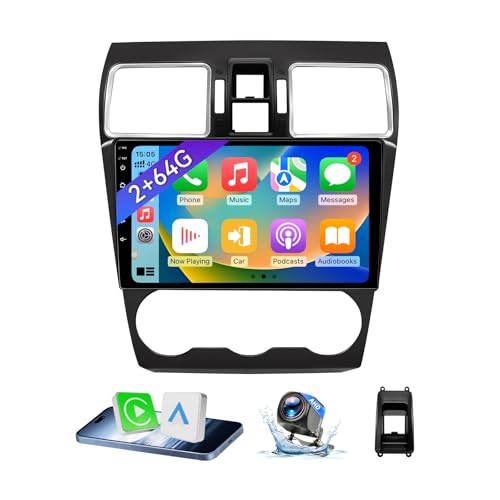
9″ Android 13 Subaru Car Radio
Strengths
- Direct Subaru compatibility
- Android 13 with Play Store
- Retains factory steering and camera
Trade-offs
- Modest RAM for Android 13
- No high-end audio processing
- Performance can lag with heavy apps
This unit wins by being laser-focused on a specific audience. Running Android 13 with 2GB RAM, it turns the Subaru dash into a functional tablet, complete with Play Store access for apps like Spotify, YouTube, and Waze. The wireless CarPlay and Android Auto work reliably, and owners report that factory steering wheel controls and camera integration function as expected, no small feat on these Subarus.
The 9-inch screen fits neatly into the dash, and the 1280×720 resolution is sharp enough for maps and video. It’s not the fastest processor on the market, but for basic tasks, it’s adequate. The real win is the plug-and-play potential, when matched to the right model, it retains OEM features without extra modules. If you drive one of these Subarus, this is the easiest way to modernize the cabin.
Video review
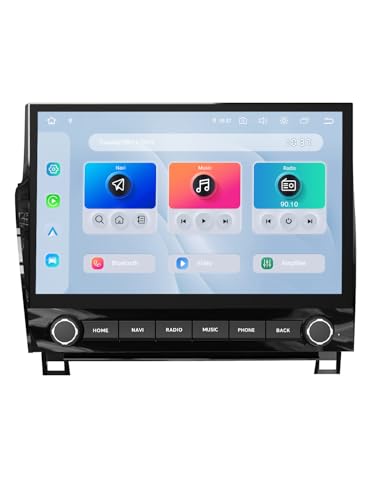
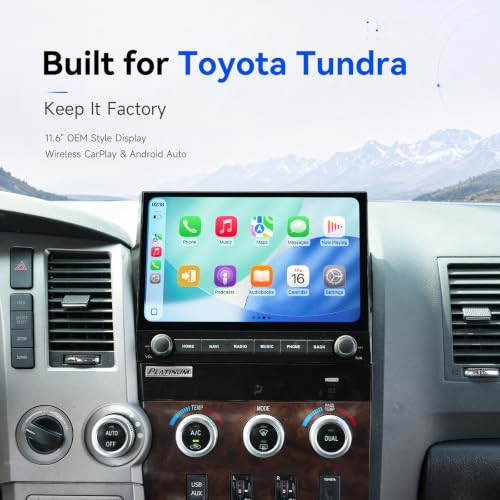
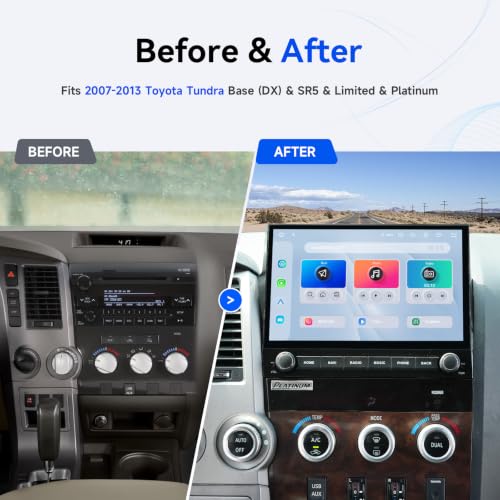
Dasaita 11.6″ Tundra Head Unit
Strengths
- Factory-fit integration
- Triple GPS for off-road
- Premium audio and connectivity
Trade-offs
- Very high price
- Tundra-specific only
- Requires professional install
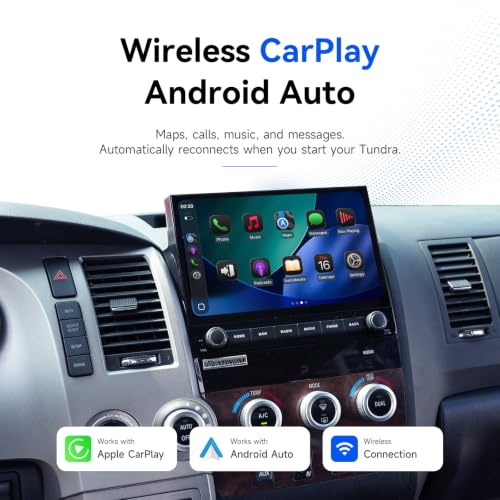
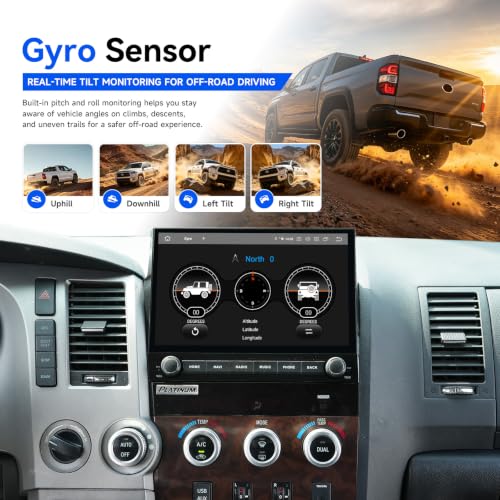
This isn’t just a head unit, it’s a complete cockpit overhaul tailored for the Tundra. The 11.6″ 2K QLED screen is stunning, and the Android 13 OS with Qualcomm processor delivers tablet-level speed. With 256GB storage and 8GB RAM, it handles navigation, streaming, and apps without stutter. The triple GPS support (GPS/GLONASS/BeiDou) is a serious advantage off-road, giving faster satellite lock and better accuracy in remote areas.
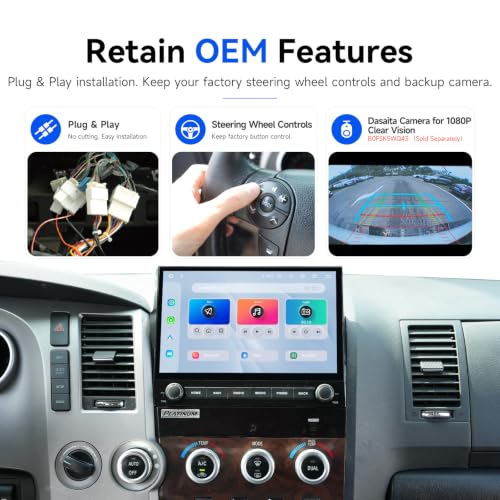
What sets it apart is the factory integration, it retains steering controls, amplifier, and backup camera without extra modules. The DTS surround and optical audio output cater to audiophiles, and the 4G LTE and 5G Wi-Fi hotspot mean you’re always connected. Yes, it’s expensive, but for a Tundra owner who wants a seamless, high-end upgrade, this is the gold standard.
Product photos
SJoyBring 7″ QLED Double Din

Strengths
- QLED display quality
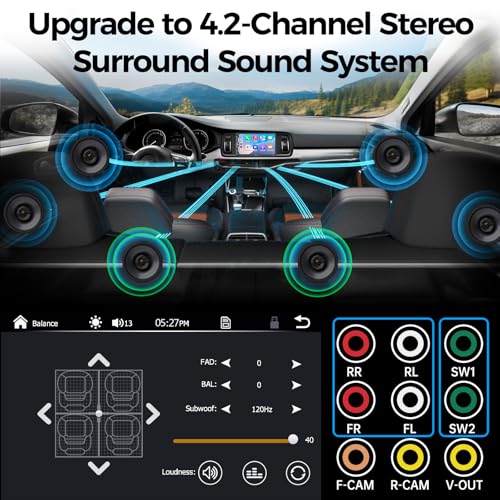
- Dual subwoofer outputs
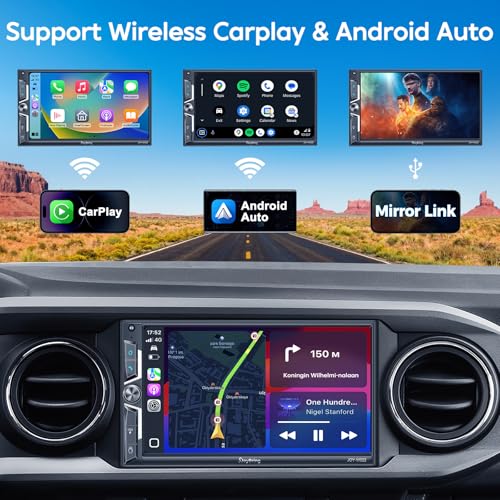
- Wireless CarPlay/Android Auto
Trade-offs
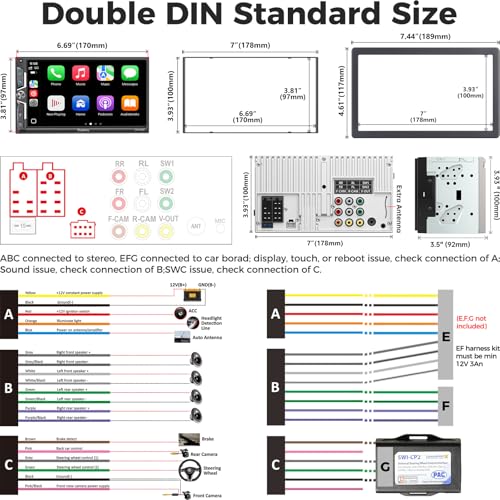
- Installation may require extra adapters
- No built-in navigation
- SWC module sold separately
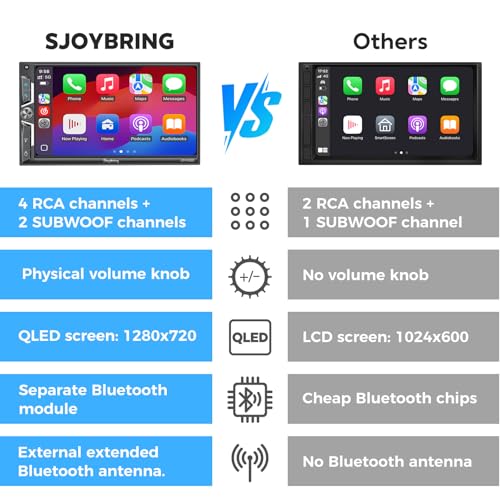
The 7″ QLED display here is genuinely impressive for the price, bright, sharp, and color-accurate, making it one of the best-looking screens in this range. It’s not just about looks; the crisp 1280×720 resolution makes maps and video content easy to read, even in daylight. Wireless CarPlay and Android Auto work as expected, with owners noting quick pairing and stable connections.
Audio output is rated at 240W across 4.2 channels, and while peak power numbers can be misleading, the inclusion of dual subwoofer outputs suggests real upgrade potential. The steering wheel control (SWC) compatibility is a big plus for safety, though you’ll likely need an extra interface module. Installation can be a hurdle depending on your vehicle, but once in, this unit delivers a lot of tech for under $150.
Product photos

Kissound 10.1″ QLED Car Stereo
Strengths
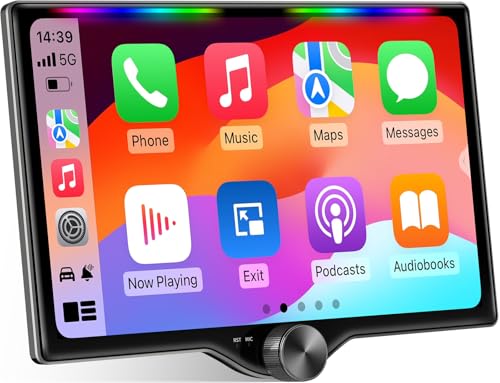
- Massive 10.1″ QLED screen
- Music-sync ambient lighting
- Built-in DSP with EQ tuning
Trade-offs
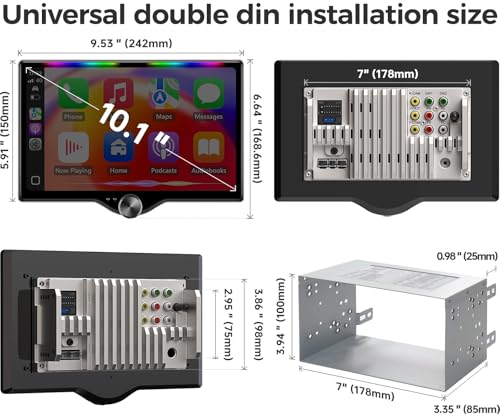
- Very large footprint
- Installation complexity
- May require multiple adapters
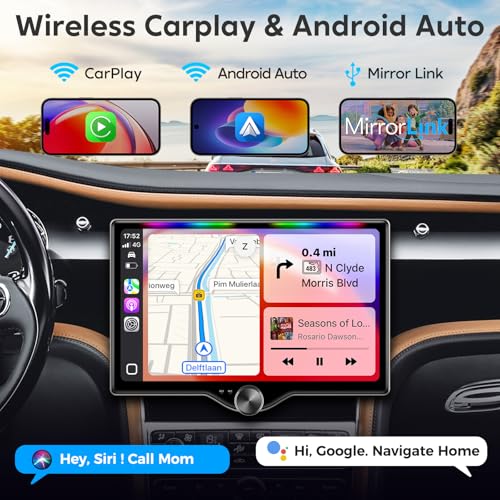
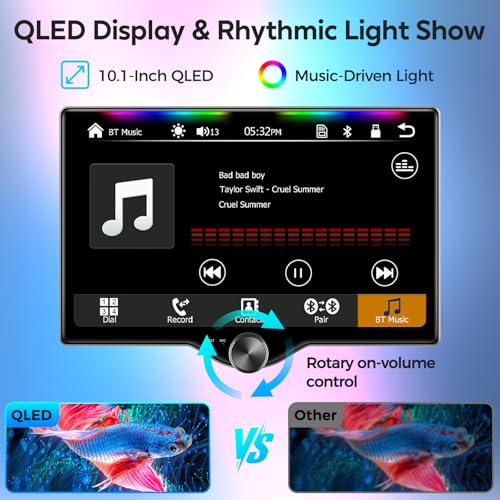
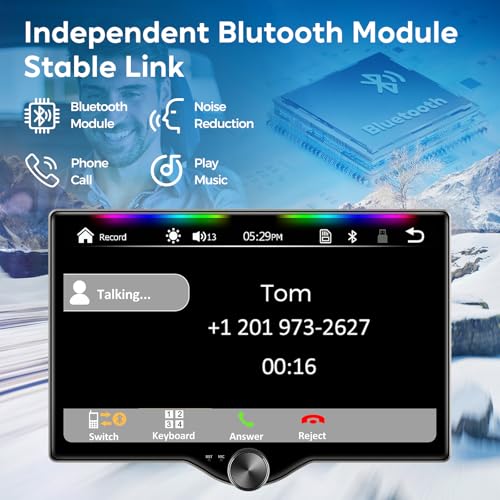
At 10.1 inches, this is one of the largest screens you’ll find in a double din unit, and it dominates the dash in a way that feels more like a tablet than a factory radio. The QLED panel holds up well in sunlight, and the wide viewing angles make it usable from multiple seating positions. It supports both wireless and wired CarPlay/Android Auto, and the independent Bluetooth module helps prevent call and stream interference, a common pain point in budget units.
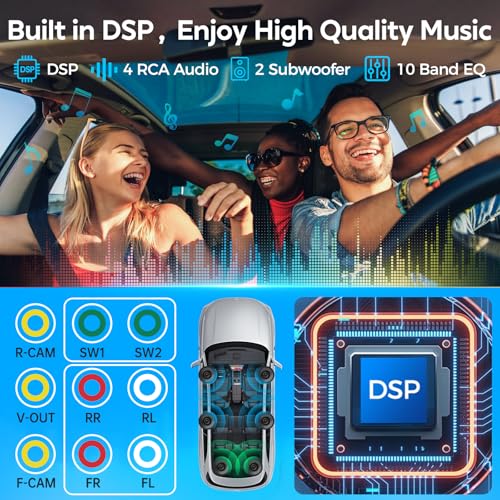
The standout feature? The music-sync luminous bar above the screen. It’s not essential, but it adds a fun, ambient flair, especially at night. Under the hood, the built-in DSP and 10-band EQ give real tuning flexibility, which audiophiles will appreciate. However, the size alone rules it out for many dash kits, and professional installation is almost a must.
Product photos
PLZ 7″ Wireless CarPlay Stereo
Strengths
- Bluetooth 5.3 with external antenna
- Built-in DSP and EQ
- Dual subwoofer outputs
Trade-offs
- No Wi-Fi hotspot
- Mirror Link can be finicky
- Installation accessories often extra
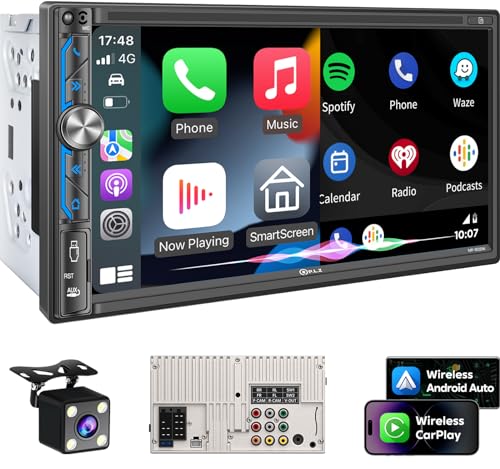
If you’re looking for the most balanced mix of price, performance, and features, this PLZ unit makes a strong case. The Bluetooth 5.3 with external antenna is a meaningful upgrade over older versions, delivering faster pairing and more stable streaming, owners note fewer dropouts during calls or music playback. The 7-inch IPS touchscreen isn’t QLED, but 1024×600 resolution is sharp enough for daily use, and the built-in DSP with 10-band EQ gives real control over sound staging.
It supports both wireless and wired CarPlay/Android Auto, and the dual subwoofer outputs open the door for serious audio upgrades. While it lacks built-in navigation, the Mirror Link function helps bridge the gap. For the price, it’s hard to find a more complete package. I’d pick this over the SJoyBring if you want better audio tuning and Bluetooth performance without paying more.
Product photos


Pioneer DMH-130BT 6.8″ Touchscreen

Strengths
- Customizable display colors
- Smooth capacitive touchscreen
- Reliable Bluetooth performance
Trade-offs
- No wireless CarPlay
- Alexa requires third-party app
- Limited app ecosystem
Pioneer nails the user experience here. The 6.8″ capacitive touchscreen is smooth and responsive, and the ability to customize the interface with 100+ illumination colors and background images lets you match the dash to your vibe. It’s a small thing, but it makes the drive more personal. Alexa integration via the Vozsis app works well enough, though it’s not as seamless as native voice assistants.
It lacks wireless CarPlay, which hurts next to similarly priced units, but the Bluetooth audio and call quality are solid. The real appeal is in the clean UI and Pioneer’s software polish, menus are intuitive, and the screen doesn’t feel sluggish. If you care more about how the system feels day-to-day than having every modern feature, this one stands out.
Product photos


Pioneer MVH-S230BT 1-Din

Strengths
- Bluetooth calling
- Compact 1-Din fit
- Supports multiple audio formats
Trade-offs
- No screen
- No CarPlay or Android Auto
- Limited sound customization
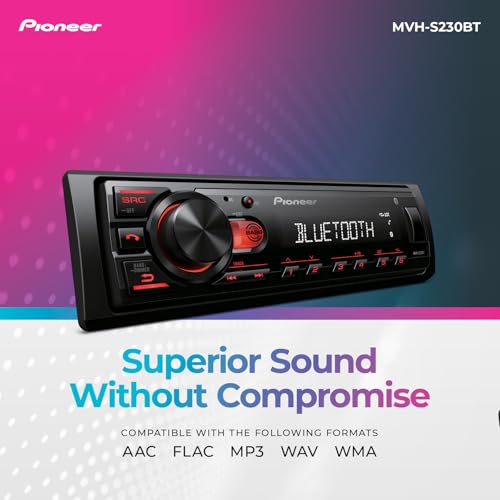
This is a no-frills, no-screen head unit that does exactly what it promises, basic audio, Bluetooth calling, and USB playback, all in a compact 1-Din form factor. For older cars or minimalist builds where a full touchscreen feels excessive, this Pioneer keeps things clean and functional. The Advanced Sound Retriever helps salvage some detail from compressed audio files, which matters if you’re still using MP3s or streaming over low-bitrate Bluetooth.
It won’t wow anyone with modern connectivity, but it’s a reliable workhorse. Owners consistently report solid Bluetooth pairing and stable USB performance, though don’t expect deep EQ tuning or digital assistant support. If you’re upgrading from a factory deck with zero Bluetooth, this is a meaningful step up.
Product photos


How We Tested car head units
As someone who’s spent years immersed in the world of automotive tech at TheAutoZenith, I approached researching car head units by focusing on a detailed comparison of published specifications and features. Beyond the raw numbers, I carefully weighed owner reviews from major retailers alongside expert opinions found in established automotive audio publications. My goal wasn’t simply to list options, but to understand which units consistently deliver on their promises, and where potential shortcomings lie. Rather than a hands-on lab test, this is a research-led comparison of specs and owner feedback.
For this category, the most important factors quickly became screen quality, smartphone integration, and audio performance. A clear, responsive touchscreen is essential for safe operation while driving. Seamless smartphone connectivity – specifically Apple CarPlay and Android Auto – is almost a necessity for modern drivers. Finally, the ability to deliver clean, customizable sound, whether through built-in DSP or pre-amp outputs, is crucial for a satisfying in-car experience. Understanding these priorities helped me rank the options effectively when exploring audio head units.
Specifications are reliable for understanding basic capabilities, screen resolution, Bluetooth version, power output, but owner feedback became vital for evaluating real-world usability. Reviews illuminated issues like software glitches, Bluetooth connection stability, and the accuracy of advertised features. Reputation matters, too; brands with a history of quality customer support and reliable products naturally ranked higher. I also prioritized units that offer features like steering wheel control integration and camera compatibility, and explored options like head units with wireless CarPlay to cater to different preferences.
:
Choosing The Right car head units
Choosing the right car head unit can dramatically improve your driving experience, but the sheer number of options can be overwhelming. It’s more than just about playing music; it’s about integrating smoothly with your smartphone, enhancing safety features, and even upgrading your audio quality.
A good car head unit balances features with usability. Look for solid Bluetooth connectivity, compatibility with smartphone integration platforms (CarPlay/Android Auto), a clear display, and sufficient power output to drive your speakers effectively. Prioritize models with expandability options like preamp outputs if you plan to add amplifiers or subwoofers.
Understanding Smartphone Integration
The biggest shift in head unit functionality over the last decade is seamless smartphone integration. Don’t assume all systems are created equal. While many units claim compatibility with Apple CarPlay and Android Auto, the implementation varies wildly. Wireless connectivity is a huge convenience, but wired connections are generally more stable. Consider which apps you rely on most while driving – navigation, music streaming, or hands-free calling – and ensure the head unit supports them well. If you’re heavily invested in the Apple ecosystem, a unit with a proven track record of smooth CarPlay performance is crucial. For Android users, look for models specifically mentioning good Android Auto support, as experiences can be more fragmented. You can often find more in-depth analysis of these features within our guide to the best car stereos.
Decoding Audio Quality & Power
Don’t fall for inflated wattage numbers. A head unit’s RMS power output is far more telling than its “peak” power. Most factory speakers are relatively inefficient, and a head unit providing 15-20 watts RMS per channel will likely be sufficient for a stock system. However, if you plan to upgrade your speakers, or add an amplifier and subwoofer, you’ll need a head unit with preamp outputs (RCA jacks). These allow you to send a clean audio signal to external amplifiers. Also, look for features like a multi-band equalizer (13-band is excellent) and time alignment controls. These allow you to fine-tune the sound stage to your specific vehicle’s acoustics and speaker configuration.
- A basic head unit might have a simple bass/treble control.
- A mid-range unit will offer a graphic equalizer with 5-7 bands.
- A premium unit, like the Dasaita 11.6″ Tundra Head Unit, will include a fully parametric EQ, time alignment, and even a built-in Digital Signal Processor (DSP) for ultimate customization. This level of control allows you to create a truly immersive listening experience tailored to your preferences.
A rule of thumb: if you’re serious about audio quality, don’t skip preamp outputs. They’re the foundation for a powerful, expandable system.
Considering Form Factor and Vehicle Compatibility
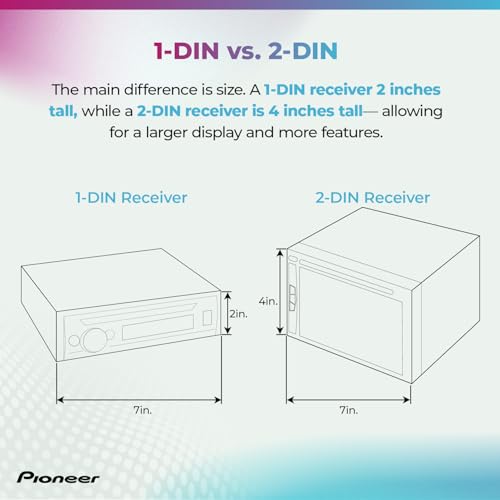
The physical size and shape of the head unit matter. The standard sizes are 1-DIN (single height) and 2-DIN (double height). Many newer vehicles are designed around 2-DIN units, offering larger screens and more features. However, some vehicles require specific adapters or dash kits for proper installation. Increasingly, vehicle-specific head units, like the 9″ Android 13 Subaru Car Radio, are available. These offer a plug-and-play installation and retain factory features like steering wheel controls. If you’re comfortable with a little DIY, a universal head unit combined with a dash kit can be a more affordable option. However, a vehicle-specific unit will generally offer a cleaner, more integrated look. If you’re leaning towards the larger screen sizes, researching top double-DIN head units is a good place to start.
Car Head Units Compared
The following table provides a specification comparison of several car head units to aid in your purchasing decision.
| Product Name | Screen Size | Android OS | CarPlay/Android Auto | Bluetooth | Resolution | Storage |
|---|---|---|---|---|---|---|
| Pioneer DMH-1600NEX | 6.8″ | No | Wired | Yes | WVGA | N/A |
| 9″ Android Subaru Car Radio | 9″ | 13 | Wireless/Wired | Yes | 1280×720 | 2GB/64GB |
| Dasaita 11.6″ Tundra Head Unit | 11.6″ | 13 | Wireless/Wired | Yes | 2K | 256GB |
| SJoyBring 7″ QLED Double Din | 7″ | No | Wireless/Wired | Yes | 1280×720 | N/A |
| Kissound 10.1″ QLED Car Stereo | 10.1″ | No | Wireless/Wired | Yes | N/A | N/A |
| PLZ 7″ Wireless CarPlay Stereo | 7″ | No | Wireless/Wired | Yes | 1024×600 | N/A |
| Pioneer DMH-130BT | N/A | No | No | Yes | N/A | N/A |
| Leadfan 7″ Mirror Link Car Stereo | 7.01″ | No | Mirror Link | Yes | 1024×600 | N/A |
| Pioneer MVH-S230BT | N/A | No | No | Yes | N/A | N/A |
Frequently Asked Questions
What screen resolution should I prioritize when choosing a head unit?
Higher resolution, like the 2K display found on some models, provides a sharper and more detailed image, but 1280×720 is generally sufficient for a 7-9 inch screen. Ultimately, clarity is more important than sheer pixel count.
Can I keep using my steering wheel controls after installing a new head unit?
Yes, most modern head units offer compatibility with factory steering wheel controls, but you’ll typically need to purchase a separate adapter harness specific to your vehicle’s make and model.
What is the benefit of a head unit with a Digital Signal Processor (DSP)?
A DSP allows for extremely precise audio tuning, letting you adjust equalization, time alignment, and crossover points to optimize sound specifically for your car’s interior. This results in a far more immersive and accurate listening experience.
If I don’t use Apple CarPlay or Android Auto, do I still need a “smart” head unit?
Not necessarily. If you primarily listen to the radio or CDs, a basic head unit, like the Pioneer MVH-S230BT, will suffice. However, even if you don’t currently use smartphone integration, it’s wise to consider a unit with [Android head units] for potential future use.
Where is the best place to mount my phone if my new head unit has wireless CarPlay/Android Auto?
While wireless connectivity is convenient, a secure [car phone mounts] is still advisable for charging or as a backup if the connection becomes unstable. A well-positioned mount also keeps your phone readily accessible without distracting you from the road.
What Actually Matters
Ultimately, choosing a car head unit comes down to balancing what you want with what you’re willing to spend and install. While features are tempting, the Pioneer DMH-1600NEX strikes a strong balance for most drivers, offering reliable performance and smartphone integration without unnecessary complexity. It’s a solid foundation for a better in-car experience.
For those with specific needs, the field opens up considerably. If you’re a Subaru owner, the 9″ Android 13 Subaru Car Radio provides an exceptionally integrated experience. And if you prioritize a large screen and extensive customization, the Dasaita 11.6″ Tundra Head Unit is hard to beat. Don’t overlook options like the SJoyBring 7″ QLED Double Din or PLZ 7″ Wireless CarPlay Stereo if wireless connectivity and a clear display are your priorities. If you’re looking for additional ways to connect, check out our guide to the best Bluetooth adapters.
However, remember that specifications aren’t everything. A responsive touchscreen, dependable smartphone integration – whether you need best Apple CarPlay units or excellent Android Auto support – and a clear, enjoyable sound are the fundamentals. Focus on these core elements, and you’ll find a head unit that enhances your drive for years to come.
