
How to Increase Electric Scooter Range for Maximum Mileage
This post contains affiliate links. As an Amazon Associate, we earn from qualifying purchases.
To increase electric scooter range, you must manage three physics levers: reduce electrical load, maximize battery efficiency, and minimize mechanical drag. This means keeping tire pressure at the spec, riding in a lower speed mode, using smooth acceleration, and storing the battery between 50% and 80% charge in a cool place. The manufacturer’s advertised range is a best-case lab number; real-world mileage is a game of energy conservation.
That gap between the lab test and your commute is where the whole game is played. Your scooter’s manual lists a “theoretical range” tested at 77°F with a 165-pound rider on flat pavement at 70% of max speed. Your world has hills, wind, stoplights, and temperature swings. Each one pulls from the same finite battery budget.
What follows is the owner’s manual the OEMs don’t write: the physics of where your watts go, the maintenance that stops them from leaking, and the riding habits that stretch a charge from frustrating to functional.
Key Takeaways
- Tire pressure is the single biggest free win. Under-inflated tires can cut your range by 20% or more. Check them weekly with a gauge, not your thumb.
- Speed is a cubic cost. Riding at 15 mph uses dramatically more energy than riding at 12 mph. Use a lower assist mode whenever you can afford the time.
- Batteries hate the cold. A lithium-ion pack can lose 50% of its capacity at 0°F (-18°C). Store and charge indoors whenever possible.
- Smooth is fast. Jackrabbit starts and hard braking waste huge amounts of energy. Anticipate stops and accelerate gradually.
- Charge for storage, not for perfection. Leaving a battery at 100% or 0% for weeks strains its chemistry. For long-term health, store it around 50-80% charge.
The 3 Physics Levers That Control Your Range
Your scooter’s range isn’t magic. It’s simple accounting. The battery holds a fixed amount of energy, measured in watt-hours (Wh). Every action during your ride, spinning the motor, overcoming tire friction, fighting a headwind, withdraws watts from that account. The ride ends when the balance hits zero.
The Vectrix VX-1 manual frames it like EPA mileage for a car: “your mileage may vary.” Range is a direct reflection of riding habits, with factors including speed, acceleration, elevation changes, temperature, tire pressure, and payload.
You control the withdrawal rate through three levers.
1. Electrical Load. This is the power demanded by the motor. It’s governed by a brutal law of physics: aerodynamic drag increases with the cube of speed. Going 20% faster doesn’t cost 20% more energy; it can demand 70% more. This is why the Ninebot E2 manual lists two range figures: 15.5 miles at 70% max speed, and only 12.4 miles at full throttle. The speed lever is the heaviest.
2. Battery Efficiency. A battery doesn’t deliver its rated energy equally in all conditions. Cold temperatures slow the internal chemical reactions, reducing available capacity. The Kaabo Mantis manual states capacity can drop by 50% at 0°F (-18°C). High temperatures during charging can damage cells. The battery’s age and how it’s been charged also matter.
3. Mechanical Drag. This is the energy lost to friction before it even reaches the motor. Under-inflated tires create a huge rolling resistance. A dragging brake pad turns motion into heat. A dirty, dry bearing adds friction. These are silent thieves, and they’re entirely within your control to fix.
The rest of this guide shows you how to pull each lever.
Master Your Riding Style: The Art of Smooth Efficiency
You can’t change your route’s hills overnight. But you can change how you ride them. This is the lowest-cost, highest-impact adjustment you can make today.
Forget drag races. Hard acceleration is a massive energy sink. The Vectrix manual is blunt: “Hard Acceleration = Reduced Range.” The motor pulls maximum current to get you moving, which generates heat and drains the battery disproportionately. Think of easing the throttle on like you’re pulling a rope, not yanking it.
Embrace the coast. Your scooter’s momentum is free energy. Anticipate red lights and stop signs early. Ease off the throttle and coast the last hundred feet. This simple habit recaptures distance that would have been burned by maintaining speed only to brake.
Use regenerative braking smartly. If your scooter has regenerative braking, it can put some energy back. But it’s not a free recharge, it recaptures a fraction of what you spent to accelerate. Use it for controlled slowing, not as a primary stop button. The best strategy is to coast to a near-stop, then use the regen or physical brake to finish.
Shift your mindset. Are you riding for fun or for transportation? If you need to maximize electric scooter range, treat the throttle like a dimmer switch, not an on/off button. The difference between arriving with 20% battery and 5% battery is the difference between confidence and a long walk.
The Maintenance That Actually Adds Miles
A neglected scooter is an inefficient scooter. This isn’t about polish; it’s about removing the hidden friction that steals your range. Follow the intervals in your manual, they exist for a reason.
Tire Pressure is Non-Negotiable. This is the number one item owners ignore with the highest cost. Soft tires create a larger contact patch, dramatically increasing rolling resistance.
| Tire Pressure Status | Effect on Rolling Resistance | Estimated Range Impact |
|---|---|---|
| At Spec (e.g., 50 PSI) | Optimal, minimal deformation. | Baseline (100% range). |
| 25% Under-inflated (38 PSI) | Significant sidewall flex, increased surface contact. | Can reduce range by 15–20%. |
| 50% Under-inflated (25 PSI) | Severe flexing, high risk of pinch flats. | Can reduce range by 30% or more. |
Check pressure every week with a digital gauge. The “thumb test” is worthless. Inflate to the PSI stamped on the tire sidewall, not the maximum on the rim.
Brake and Bearing Drag. A slightly engaged brake pad creates constant friction. Lift each wheel and spin it by hand. It should rotate freely for several revolutions with only a gentle whisper of sound. If it stops quickly or grinds, you’ve found a problem. The Ninebot E2 manual specifies a 5.5 N·m torque for stem screws, overtightening can distort components and create drag.
Keep it Clean. Mud and grime packed around the motor hub or wheel bearings adds weight and can trap heat. A periodic wipe-down with a damp cloth (never a hose!) prevents buildup. Dirt on the deck and stem is just weight you’re carrying for no reason.
This routine battery maintenance is what separates a scooter that dies early from one that delivers consistent mileage for years.
Battery Care: Treat the Pack Like a Living Thing
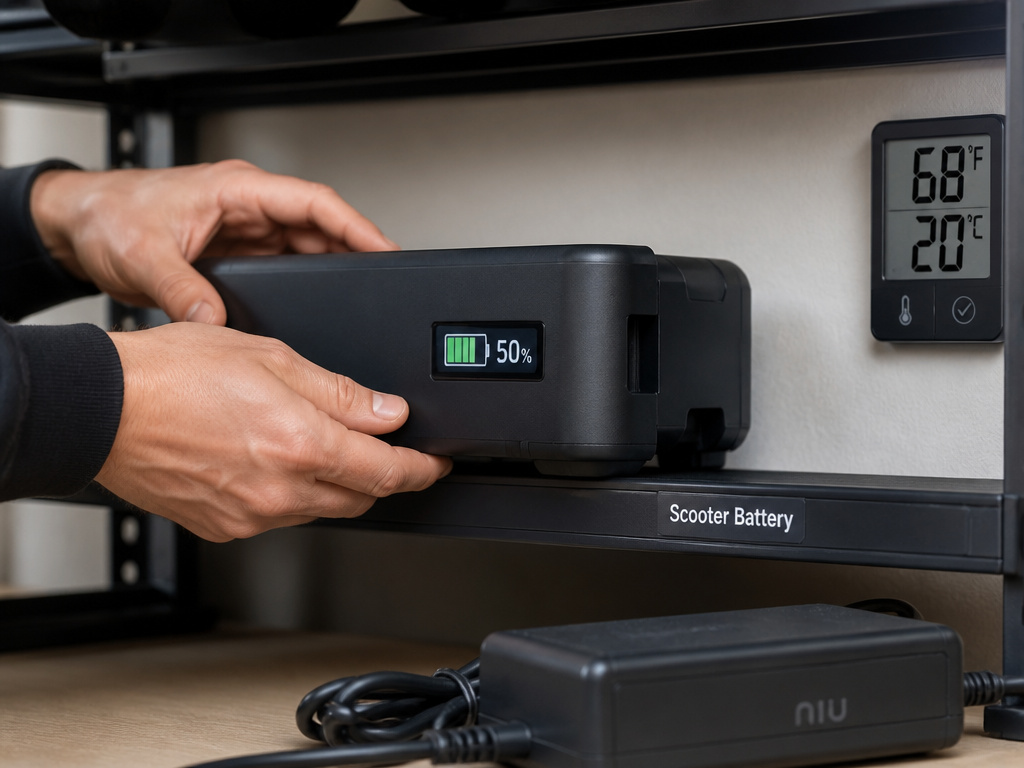
The battery is the fuel tank. Mistreat it, and its capacity, its effective size, shrinks. Your goal is to slow that aging process as much as possible.
Charge Smart, Not Often. You don’t need to top off to 100% after every short ride. Lithium-ion chemistry is happiest between 20% and 80% charge. For daily use, charging to 80-90% is gentler on the cells. Always use the manufacturer’s charger. The Mantis manual warns that using a non-approved charger risks damage, fire, or injury.
Temperature is Everything. Never charge a battery that is below freezing (32°F/0°C). The chemical reactions can plate lithium metal inside the cell, causing permanent damage and a fire hazard. Let a cold battery warm to room temperature first. Similarly, avoid charging in direct sun or a hot garage.
Store It Right. If you won’t ride for a month, don’t leave the battery full or empty. The Ausom Leopard manual recommends storing at 50% charge for maximum durability. The Ninebot E2 manual says to give it a maintenance charge every 60 days during storage. This prevents the voltage from dropping too low due to slow self-discharge, which can kill a battery permanently.
Where this goes sideways: Storing a scooter in an unheated shed over winter. By spring, the frozen, deeply discharged battery is dead. A proper winter storage routine takes 20 minutes and saves a $300 battery pack.
This disciplined approach is the core of extending battery life. It turns a consumable part into a long-term asset.
The Hardware Upgrades: When to Spend Money
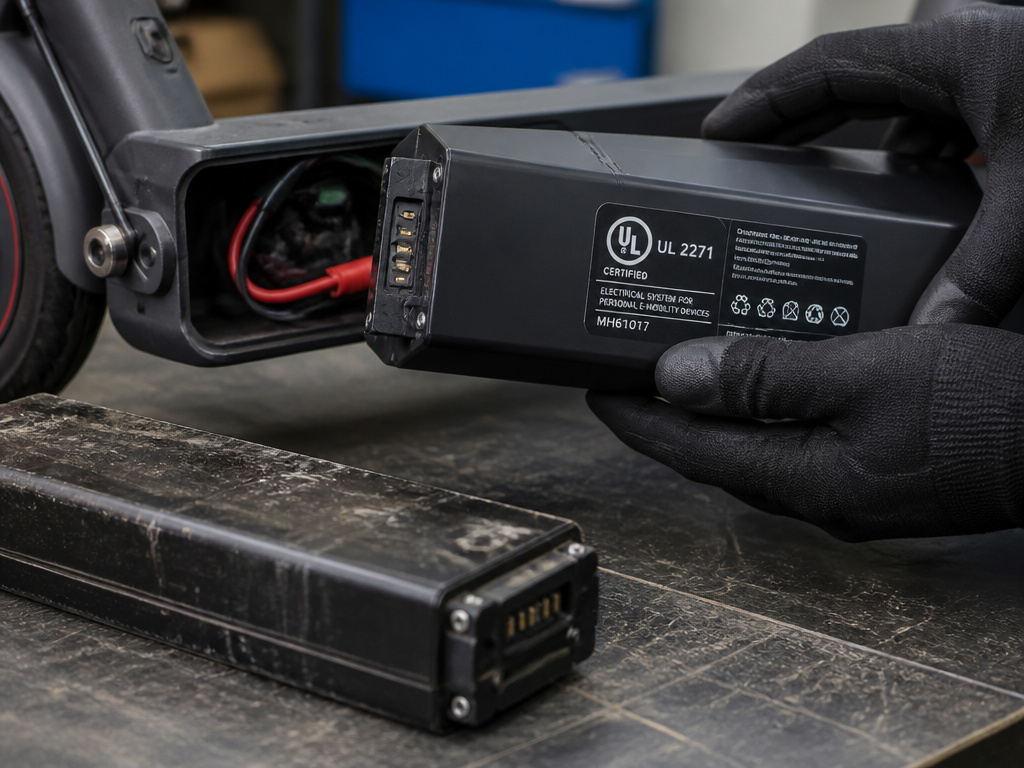
Can you buy more range? Sometimes. But these upgrades have real trade-offs in cost, weight, and legality.
A Larger Battery. This is the most direct method: a bigger fuel tank. Some scooter models allow for battery swaps or upgrades. However, this is often expensive, voids warranties, and adds significant weight, which can affect handling and acceleration. It’s also critical that any new battery pack has the proper safety certifications like ANSI/CAN/UL-2271.
More Efficient Tires. Swapping stock pneumatic tires for high-quality, low-rolling-resistance models can yield a small but measurable gain. Look for tires with a smooth center rib rather than aggressive knobs, unless you’re exclusively off-road. The trade-off is often less wet-weather traction.
Aerodynamic Modifications. For higher-speed scooters, adding a small windshield can reduce the wind load on your body. It’s a minor effect at sub-20 mph speeds but becomes more relevant on long-range scooters built for 30+ mph cruising.
The Verdict: For most riders, investing in a better scooter from the start is smarter than upgrading a basic one. If range is your primary concern, research adult long-range scooters designed with larger batteries and efficient motors from the factory. Throwing money at a platform not designed for it often leads to disappointment.
The Environmental Factors You Can’t Control (And How to Adapt)
You can’t change the weather, but you can plan for it. Knowing how these external factors hit your range lets you avoid getting stranded.
Cold is a Capacity Killer. We’ve mentioned the 50% loss at extreme cold. But even at 40°F (4°C), you might see a 20-30% reduction. The battery’s chemical soup simply gets sluggish. Plan for it. On a cold day, reduce your expected range accordingly and use a lower assist mode to conserve power. Store the scooter indoors overnight so you start with a warm pack.
Hills Are Energy Mountains. Climbing a hill requires work against gravity. The steeper and longer the hill, the more watts it consumes. There’s no trick here, only awareness. If your commute has a big climb, know that it will consume a disproportionate chunk of your battery. Conserve energy on the flats beforehand.
Wind is an Invisible Hill. A 10 mph headwind forces your scooter to push through thicker air, increasing drag significantly. It feels like riding up a slight incline. Tucking your body can help a little. The main tactic is, again, to slow down. Reducing your riding speed is the most effective way to combat wind resistance.
Payload is Physics. The manual’s range is tested at a specific weight, often 165 lbs. Every extra pound you, your backpack, or your groceries add requires more energy to move. It’s a linear relationship: more weight equals less range. Be mindful of your scooter’s weight limit and pack light for long trips.
Before You Go
Increasing your electric scooter range isn’t about a single secret. It’s the compound interest of a dozen small, smart habits. Inflate your tires. Ride smoothly. Charge intelligently. Respect the cold.
Start with the free stuff: check your tire pressure this afternoon and try one commute in a lower speed mode. That alone will show you a difference. The rest is about building the discipline of an efficient rider, someone who sees the battery gauge not as a limit, but as a resource to be managed.
The real range was inside you all along. Or at least, in your tire pump and your right wrist.
Frequently Asked Questions
Does regenerative braking really add significant range?
Not really. It’s an efficiency tool, not a range extender. Good regenerative braking might recapture 5-10% of the energy you used for acceleration, putting it back for later use. Its greater benefit is saving wear on your physical brake pads. Don’t buy a scooter solely for its regen claims; focus on battery size and motor efficiency first.
Is it bad to charge my scooter after every ride, even if it’s only down 10%?
For long-term battery lifespan, it’s gentler to avoid topping off from a high state of charge. If you’re at 70% and done for the day, it’s okay to leave it. Frequent shallow discharges are better than constant 100%-to-90% cycles. The main rule is to never leave it fully discharged.
Can I use a fast charger to get more range quicker?
Only if it’s specifically approved by your scooter’s manufacturer. Using an unofficial fast charger can overheat the battery, damaging its cells and reducing overall capacity permanently. Faster charging always creates more heat, which stresses the battery chemistry. Stick with the OEM charger for daily proper charging.
How much range do I lose by carrying a backpack?
It depends on the weight. As a rough estimate, every extra 10 pounds of payload (including your backpack itself) can reduce your range by 2-5%, depending on hills and acceleration. A heavy, loaded backpack can easily cut several miles off a typical commute. Pack only what you need.
My range has dropped dramatically. Is the battery dead?
Not necessarily. First, rule out the simple things: tire pressure, brake drag, and cold weather. If those are fine, your battery may be aging. A battery typically reaches its end of useful life when it holds less than 60-70% of its original capacity. If your scooter is older and you’ve ruled out other factors, a capacity test at a service center can confirm it.
