
What Is the Difference Between 2WD and 4WD ATV? | The Core
This post contains affiliate links. As an Amazon Associate, we earn from qualifying purchases.
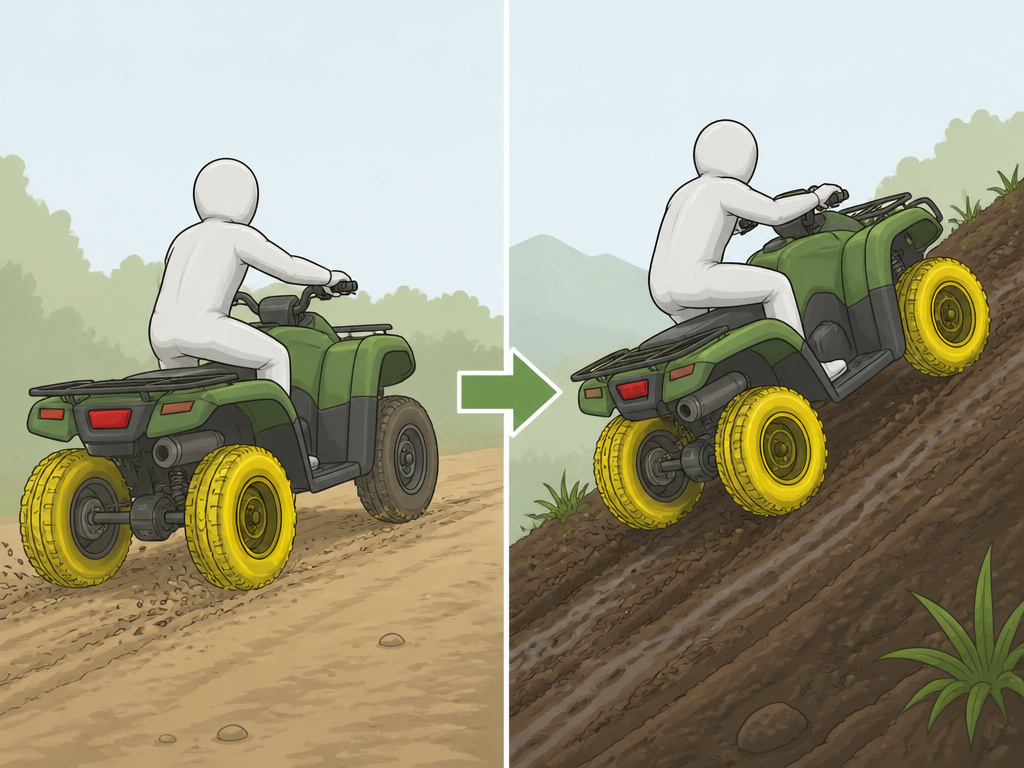
The difference between a 2WD and 4WD ATV is which wheels receive engine power. A 2WD (two-wheel drive) ATV powers only the rear wheels, prioritizing lightweight handling for sport and trail riding. A 4WD (four-wheel drive) ATV can send power to all four wheels, providing maximum traction for utility work, mud, snow, and steep, loose terrain. Modern systems like Polaris AWD engage automatically, while selectable 4WD lets you choose between modes.
That power split dictates everything else — weight, cost, maintenance, and where the machine will and won’t go. Getting it wrong means buying a machine that fights you every time you turn the key.
What follows: the mechanical guts of each system, the specific features that change the game (like turf mode and diff locks), and the straight-talk on which type of rider each one is built for. By the end, you’ll know whether your next ride needs two driven wheels or four.
Key Takeaways
- 4WD is for pulling, not just going. The extra traction is for moving heavy loads uphill, plowing snow, and crawling out of holes. If you aren’t doing those things, you’re hauling around 75-100 lbs of unused hardware.
- Modern AWD isn’t old-school 4WD. Systems like Polaris AWD engage the front wheels automatically when rear slip is detected and disengage when it’s not needed. You don’t switch it; it switches for you.
- 2WD forces skill, 4WD forgives mistakes. On a sport quad, you learn to use momentum and body weight to clear obstacles. On a 4WD utility machine, you just point and throttle through.
- The maintenance bill tells the story. A 4WD system adds a front differential, CV joints, and often electronic actuators. Each is a potential failure point and a service item that a 2WD machine simply doesn’t have.
- Your terrain decides. Hard-packed desert trails and managed MX tracks are 2WD territory. The back forty after a rainstorm, a rocky creek bed, or a snowy driveway demands 4WD.
2WD vs 4WD: The Mechanical Split
The core difference is in the driveline. A 2WD ATV has a driveshaft running from the transmission to a differential at the rear axle. That differential splits power between the two rear wheels. The front wheels are just along for the ride, free-rolling on their spindles. This setup is simple, light, and cheap to build and fix.
A 4WD ATV adds a second driveline. Power runs from the transmission to a transfer case, which then splits it to both a rear differential and a front differential. This requires extra gears, a second driveshaft (or chains), and a mechanism to engage the front system — either a mechanical lever, an electronic switch, or an automatic clutch pack.
A 2WD ATV’s drivetrain has roughly half the moving parts of a 4WD system. There is no front differential, no CV axles, and no engagement mechanism beyond the transmission itself. This translates directly to lower weight, less parasitic drag on the engine, and fewer components that can wear out or break.
The complexity penalty is real. Every 2-stroke and 4-stroke engine debate touches on simplicity versus power; the 2WD vs 4WD choice is the chassis version of that argument. More parts mean more potential failures.
The Three Flavors of Four-Wheel Drive
Not all 4WD systems are the same. The method of engagement changes how you use the machine.
| System Type | How It Works | Best For | The Catch |
|---|---|---|---|
| Selectable 4WD | Driver manually switches between 2WD and 4WD via a lever or switch. | Riders who encounter mixed terrain. | Forgetting to disengage on hard surfaces causes “driveline bind” and wear. |
| Full-Time 4WD/AWD | All four wheels are powered all the time (often with a center differential). | Constant traction needs, like towing. | Increased fuel consumption and tire wear on paved surfaces. Rare on ATVs. |
| Automatic AWD | System (e.g., Polaris AWD) monitors rear wheel slip and engages front wheels automatically. | Unpredictable terrain where conditions change fast. | Driver has less direct control; system can be slow to react or disengage. |
Automatic systems, like Polaris’s branded AWD, use sensors or mechanical governors. The Polaris system engages the front gearcase when rear wheel speed exceeds front wheel speed (indicating slip) and the engine is below 3,100 RPM. It’s a “set it and forget it” mode for riders who can’t be bothered with a switch.
Where this goes sideways: Trying to force a selectable system from 4WD back to 2WD while the fronts are still pulling. On some designs, the front hubs won’t disengage until the rear wheels find solid traction. You’ll feel the steering get heavy and the machine might crab-walk until you stop, reverse slightly, and let the system unlock.
The 2WD vs 4WD Decision Matrix
 This isn’t about good and bad. It’s about matching a tool to a job. Ask these two questions.
What is your primary riding style?
- Sport / Recreation: You ride for adrenaline on trails, dunes, or closed courses. You want to slide, jump, and feel the machine rotate beneath you. Get a 2WD sport ATV. The lighter weight and rear-drive dynamics are part of the fun.
- Utility / Work: You haul firewood, pull a sprayer, clear snow, or navigate a muddy homestead. You need the machine to go where you point it, regardless of the ground. Get a 4WD utility ATV. Traction is non-negotiable.
- Mixed-Use / Exploration: Your weekends involve trail riding that might suddenly turn into a muddy hill climb or a rocky stream crossing. Get a selectable 4WD ATV. It’s the Swiss Army knife.
What is your terrain’s worst common condition?
- Hard-packed dirt, sand, groomed trails: 2WD.
- Deep mud, snow deeper than 6 inches, loose rocky climbs: 4WD.
- A mix, with occasional nasty sections: Selectable 4WD.
If you’re still stuck, here’s the blunt take: for the vast majority of people who aren’t track racing, a selectable 4WD machine is the rational choice. It covers your bases. The modern versions are reliable, and the weight penalty is a fair trade for never getting stuck a mile from the truck. Understanding this fundamental choice also helps when comparing an ATV vs UTV for similar tasks.
The Hidden Features That Change Everything
 The basic 2WD/4WD switch is just the start. Manufacturers add layers that redefine capability.
Turf Mode: Found on many 4WD utility quads, this is a special 2WD setting that locks the rear differential. Normally, a differential lets the outside wheel turn faster in a corner. A locked differential forces both rear wheels to turn at the same speed. This prevents tire scrubbing on delicate surfaces like lawns, but makes the ATV harder to turn on dirt. It’s a niche setting for landowners.
Front Differential Lock: This is the “get unstuck” button. On Honda Foreman and similar models, engaging the diff lock forces both front wheels to turn at the same speed, giving maximum bite in mud or rocks. The trade-off is brutal.
The part nobody mentions: Activating the front differential lock on a Honda triggers a 20 mph (32 km/h) speed limiter. The system knows that driving with a locked front diff at speed will destroy CV joints and make steering nearly impossible. You can momentarily override it to 40 mph by holding the start/override button, but that’s for a quick dash across a field, not a trail ride.
Electronic Power Steering (EPS): This isn’t a drivetrain feature, but it’s often bundled with premium 4WD models. The extra weight of the front driveline makes steering heavier, especially at low speeds. EPS cancels that weight out. If you’re looking at a heavy utility machine, consider EPS a mandatory upgrade, not a luxury.
What You Give Up (The Trade-Offs Are Real)
Choosing 4WD isn’t free. You pay in three concrete currencies.
- Weight: A 4WD system adds 75 to 150 pounds, mounted high and forward on the chassis. This raises the center of gravity and makes the ATV feel more cumbersome. That weight also means more inertia in a crash, a consideration if you’re choosing ATV helmets for young riders.
- Cost: The MSRP difference between a base 2WD model and its 4WD counterpart is typically $1,500 to $2,500. The maintenance costs are also higher.
- Maintenance & Complexity: The list of added failure points is long:
- Front differential: Requires periodic fluid changes.
- CV axles & boots: These constant-velocity joints allow the front wheels to steer and articulate. The rubber boots tear, grease leaks out, dirt gets in, and the joint fails. Inspect them every wash.
- Engagement actuator: Whether vacuum-operated, electric, or mechanical, this part can fail, leaving you stuck in or out of 4WD.
The maintenance schedule tells the story. Following the factory plan for fluid changes in the front diff is critical for longevity, just as following a proper ATV engine break-in procedure is critical from day one.
Frequently Asked Questions
Can you switch from 2WD to 4WD while moving?
On most modern selectable systems, yes — but only at low speeds (under 10 mph is the typical rule). Consult your owner’s manual. For systems with a manual front differential lock, like some Hondas, you must be stopped or moving very slowly to engage it without damage.
Is AWD the same as 4WD on an ATV?
Not quite. “4WD” typically implies a driver-selectable system with a locked or limited-slip transfer case, often used for severe conditions. “AWD” (like Polaris’s system) usually describes an automatically engaging system that provides on-demand traction without driver input. Marketing blurs the lines, but the automatic/manual distinction is the key.
Do I need 4WD for snow?
For light snow on flat ground, aggressive tires on a 2WD machine might suffice. For plowing, climbing hills, or navigating deep snow, 4WD is essential. The added traction is what allows you to push a snow plow for ATV without spinning out. For extreme winter use, some riders opt for ATV tracks, which make 4WD even more effective.
What’s better for mud: 2WD or 4WD?
4WD, unequivocally. Mud requires flotation and pulling power from all four corners. A 2WD machine will bury its rear end and spin. The best ATV for mud riding will have selectable 4WD, a front differential lock, and high-clearance suspension. A 2WD sport quad in deep mud is a recovery operation waiting to happen, which is why an ATV winch is a mandatory accessory for serious riders.
Does 4WD use more fuel?
Yes. Even when not engaged, the extra rotating mass (front driveshaft, differential gears) creates parasitic drag. When engaged, the engine works harder to turn all four wheels, especially if there’s any driveline bind on hard surfaces. The fuel penalty is usually 10-15% in mixed use.
Before You Go
Your riding defines your drivetrain. If your goal is to feel the slide and master the weight transfer, a lightweight 2WD sport quad is your machine. Embrace the simplicity. If your goal is to get work done or explore without limits, a 4WD utility ATV is the only sane choice. Pay the price in weight and complexity, and gain the capability.
For the rider in the middle, the one who sees a bit of both worlds, the selectable 4WD machine is the default answer. It’s the one that sits ready in the garage, knowing the trail might be dry today but could be a swamp tomorrow. That flexibility, more than any spec sheet, is what ends the debate.
