
How to Break in a New ATV: The Essential 25-Hour Engine Rule
This post contains affiliate links. As an Amazon Associate, we earn from qualifying purchases.
To break in a new ATV, follow the manufacturer’s specified break-in period, typically the first 25 hours of operation or the first two full tanks of gasoline. Change the engine oil and filter at 25 hours or one month. Avoid full-throttle operation, vary your speed, and pull only light loads to properly seat the piston rings, gears, and clutch components.
That 25-hour window is non-negotiable. It’s the only time the engine’s internal parts are wearing themselves into a perfect, sealed fit. The piston rings, cylinder walls, transmission gears, and clutch sheaves are all machining themselves to each other. Run it hard now and you create microscopic hot spots and grooves that leak compression and burn oil for the rest of the machine’s life.
What follows is the breakdown of that process: the 25-hour engine rule, the initial fluid changes most people delay, and the separate break-in cycles for your brakes and drive belt that prevent early failure.
Key Takeaways
- The break-in period is the first 25 hours or two tanks of gas for most adult Polaris ATVs; youth models use 10 hours, and diesel Rangers use 50.
- Change the engine oil and filter at 25 hours or one month, whichever comes first, to remove metal particulates from initial wear.
- Perform a dedicated brake bedding procedure: 10-20 moderate stops from 30 mph to 5 mph without coming to a complete halt.
- Break in the clutch and drive belt by operating at slower speeds for the first 50 miles, avoiding aggressive acceleration and high-speed runs.
- Using TOP TIER DETERGENT GASOLINE® from the first tank prevents carbon deposit buildup on new, sensitive valve seats.
The 25-Hour Engine & Drivetrain Break-In
Check your owner’s manual first. The golden rule for most new Polaris ATVs, like the Sportsman 850 or 570, is 25 hours of operation or the first two full tanks of gasoline. Some older Sportsman 500 models specify a 10-hour period. Youth models like the ACE 150 or RZR 170 use a 10-hour break-in. If you have a Polaris Ranger Diesel, the period stretches to 50 hours.
The goal is controlled, varied operation. You want the engine to experience a wide range of RPMs without sustained high load or high heat.
For gas-powered Polaris vehicles, the break-in period is the first 25 hours of operation, or the time it takes to use the first two tanks full of gasoline. During this period, change both the oil and the filter at 25 hours or one month.
Vary your speed constantly. Don’t putter around at one throttle setting for an hour. Don’t hold it at wide-open throttle down a long trail. The ideal ride mixes slow crawling, moderate cruising at half-throttle, and short, gentle accelerations. This varying load helps the piston rings seat evenly against the cylinder walls. Consistent high RPMs glaze the cylinder surface, which can lead to oil consumption later.
Heat is the enemy. The manufacturer warns against excessive heat build-up during the first three hours. That means no hill climbs, no towing, and no working the engine hard before the cooling system has cycled fully. Let everything warm up gradually.
The first ATV oil change is the most important one you will ever do. Metal shavings from initial gear and bearing wear circulate in that oil. Leaving them in for hundreds of miles acts like lapping compound, accelerating wear. The manual says 25 hours or one month, whichever comes first. Do not skip it to save fifty bucks. This is the cornerstone of a proper ATV winterization mindset, starting the machine’s life with clean internals.
| ATV Model Type | Break-In Period | First Oil/Filter Change | Key Restriction |
|---|---|---|---|
| Polaris Adult Gas ATV/UTV | 25 hours or 2 tanks | 25 hours or 1 month | Avoid full throttle, vary speed |
| Polaris Youth Model (ACE 150) | 10 hours or 2 tanks | 10 hours | Light use only |
| Polaris Ranger Diesel | 50 hours | 50 hours | No heavy towing |
| Honda Foreman (Example) | 20 hours or 100 miles | 20 hours or 1 month | Avoid prolonged high RPM |
Initial Fluid Changes: More Than Just Oil
When you do that first oil change, two other fluids need attention. The front gearcase and the transmission. These components contain gears and bearings that are also wearing in during the first 25 hours.
The Polaris manual specifies changing the front gearcase fluid and checking the transmission fluid level at 25 hours or 500 miles. Metal fines settle in these fluids too. Neglecting them is a common mistake. The gearcase is often a simple drain-and-fill plug at the bottom of the front differential. Use the manufacturer-recommended fluid, usually Polaris Premium 4 Synthetic Oil for 4-cycle engines or a specific gear oil.
Where this goes sideways: Skipping the first gearcase fluid change. The metal particles from new gear meshing stay suspended, accelerating wear on the ring and pinion. You might not hear the whine until 200 hours in, and by then the damage is done.
For the transmission, simply check the level and top it off if needed. It’s a quick check that ensures the unit is properly lubricated from the start. After this initial service, you can extend the interval to every 100 hours for routine checks.
This proactive fluid care is as critical as regular ATV brake maintenance. It’s all about preventing small, abrasive wear from becoming a major failure.
Breaking in Brakes, Belts, and Clutches
Your engine isn’t the only system that needs a gentle start. The brakes, drive belt, and primary clutch (PVT system) have their own break-in requirements. These are separate from the 25-hour engine rule and are often completely overlooked.
Brakes need bedding. New brake pads and rotors require a specific procedure to transfer a thin, even layer of pad material onto the rotor. This maximizes stopping power and prevents pulsation.
The Polaris procedure is specific: safely slow the vehicle with moderate (about 70%) braking force from 30 mph down to 5 mph. Repeat this 10-20 times. Do not come to a complete stop during the cycles. Stopping traps heat in one spot on the rotor and can warp it. After the cycles, ride for a few minutes to let the brakes cool down evenly. This process is a key part of knowing how to maintain ATV brakes for the long term.
The belt and clutch demand patience. A proper break-in of the clutches and drive belt ensures longer life and consistent performance. The rule is simple: operate at slower speeds for the first 50 miles. Pull only light loads. Avoid aggressive acceleration and high-speed operation.
The why-layer matters here. A new drive belt is stiff. The fibers and adhesives need heat cycles to become pliable. Running it hard immediately can cause glazing or localized overheating, which leads to premature cracking. The clutch sheaves are also wearing in; aggressive engagement can cause belt slippage and burning.
| System | Break-In Procedure | Consequence If Skipped |
|---|---|---|
| Brakes | 10-20 moderate stops (30mph→5mph) | Glazed pads, warped rotors, reduced stopping power |
| Drive Belt & Clutch (PVT) | Slower speeds for first 50 miles, light loads | Belt glazing, premature cracking, poor shifting |
| Sand/Dune Belt | Drive in LOW GEAR for first 5 miles | Instant belt overheating and failure |
Sand and dune riding is a special case. If your first ride is in deep sand, the standard 50-mile rule is too vague. Polaris specifies a “Sand/Dune Belt Break-In”: drive in low gear for the first 5 miles. Avoid prolonged low-speed operation at high throttle. The constant high load and wheel spin in sand generates immense belt heat fast. Low gear reduces the load on the belt, allowing it to break in without self-destructing.
Fuel, Filters, and First Rides
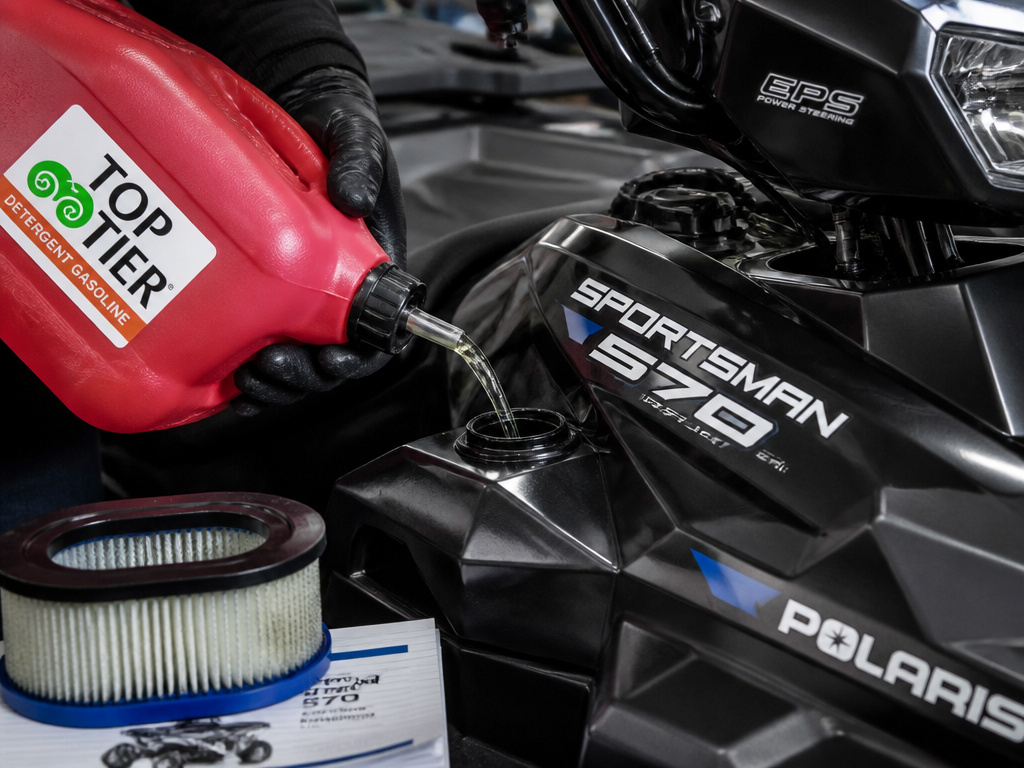
What you put into the machine is as important as how you run it. From the very first tank, use a quality fuel. Polaris explicitly recommends TOP TIER DETERGENT GASOLINE®. These fuels have a higher concentration of detergents that keep intake valves and fuel injectors clean.
A new engine is particularly sensitive to deposits. Using low-tier gas from the start can allow carbon to build up on new valve seats, subtly affecting compression and performance over time. It’s a cheap insurance policy.
Your ATV air filter is also critical during break-in. A clean filter ensures the engine is breathing only clean air. Any dirt ingested now will score the fresh cylinder walls. Before your first ride, check that the filter is properly seated and clean. If you’re riding in dusty conditions, check it again after the first few hours. This is not the time for a clogged filter to lean out the air-fuel mixture and cause overheating.
Finally, manage your expectations on that first ride. Your brand-new ATV might not feel as peppy as you hoped. That’s normal. The engine is tight, the drivetrain has friction, and the computer may be in a learning mode. The power will free up after the first oil change. Focus on varying the RPM, enjoying the trail, and listening for any unusual noises. The reward for this patience is an engine that stays strong for thousands of hours.
Frequently Asked Questions
How many hours is the break-in period for a Polaris ATV?
For most adult Polaris gas ATVs and side-by-sides, the break-in period is the first 25 hours of operation or the first two full tanks of gasoline. Always confirm in your specific model’s owner’s manual, as some older Sportsman models specify 10 hours.
Can I drive my new ATV hard after the first oil change?
No. The break-in period encompasses the entire first 25 hours, not just the time until the first oil change. The oil change removes initial wear metals, but components like piston rings and transmission gears continue to seat beyond that point. Continue to avoid full-throttle operation and heavy loads until the full break-in duration is complete.
What happens if you don’t break in an ATV?
Skipping break-in risks permanent engine damage. The most common result is increased oil consumption because the piston rings never seat properly against the cylinder walls. You can also cause glazing on the cylinder walls, premature clutch and belt wear, and scoring of transmission gears from concentrated metal particles left in the fluid.
Do I need to break in a used ATV?
Generally, no. The break-in process is a one-time event for a new engine. However, if the engine has been recently rebuilt with new pistons, rings, or cylinders, it will require a fresh break-in period as specified by the mechanic or rebuilder. Treat it like a new engine.
Is the break-in period the same for all ATV brands?
No, intervals differ by manufacturer. While Polaris often uses 25 hours, a Honda Foreman‘s initial service is at 20 hours or 100 miles. Yamaha and Can-Am have their own schedules. The principles, varying RPM, avoiding extreme load, and doing an early fluid change, are universal, but the exact timeline is not.
The Bottom Line
Break-in isn’t a suggestion. It’s a mandatory procedure that defines your ATV’s long-term health, reliability, and resale value. The 25-hour clock starts the moment you turn the key. Spend those hours varying your speed, avoiding heat, and planning for that first oil change. Your brakes, belt, and clutch need their own gentle introduction.
Do it right once. The alternative is an engine that burns oil, a belt that snaps prematurely, and a machine that never lives up to its potential. The first tanks of gas and the first few rides set the trajectory for everything that follows.
