
Comparing Cost: Annual Car Insurance vs Monthly Payments
This post contains affiliate links. As an Amazon Associate, we earn from qualifying purchases.
Annual car insurance payments are cheaper than monthly payments, typically costing 8-11% less according to the UK’s Financial Conduct Authority (FCA). The gap can reach 46%, as seen in 2026 data where the average annual premium was £496 versus £912 monthly. You avoid installment fees and often unlock a pay-in-full discount.
That 46% difference isn’t a rounding error. It’s the predictable outcome of a system that treats monthly payments not as a budgeting convenience, but as a regulated credit agreement. The insurer fronts the annual premium, and you repay it with interest.
What follows: the exact APRs insurers charge, the named fees from GEICO and Allstate, the one billing trick that beats their finance charge, and the real cost of a missed payment that most gloss over.
Key Takeaways
- Paying annually avoids installment fees ($5-$10 per month at major insurers) and often triggers a pay-in-full discount (up to 20% at American Family).
- Monthly payments involve premium finance, with APRs averaging 19.2% (FCA, 2026) and advertised rates as high as 30% (Which?).
- A coverage lapse of more than 30 days can increase your future premium by an average of 35%.
- Using a 0% purchase credit card to pay the annual premium upfront can replicate monthly cash flow without the finance charge.
- Your credit score directly affects your eligibility for monthly payment plans and the APR you’re offered.
The 46% Price Gap Between Monthly and Annual Payments
Look at the raw numbers first. A 2026 analysis by Uswitch found the average annual median price for comprehensive coverage was £496.18. The average for monthly payers was £911.84. That’s a 46% premium for the privilege of spreading payments.
The difference between monthly and annual car insurance payments reached £302 on average in November 2022, a 39% increase from the £217 gap recorded in November 2019, according to data from GoCompare shared with consumer group Which?.
The gap is widening, and it hits the drivers who can least afford it hardest. Younger drivers and low-income households are more likely to need monthly plans, yet they already face higher base premiums. The FCA has noted this creates a fairness issue within the market.
The math is simple but brutal. It’s not just about a “small admin fee.” It’s about interest.
| Payment Method | Average Cost (UK, Feb-Apr 2026) | Key Driver of Cost |
|---|---|---|
| Annual (Paid Upfront) | £496.18 | Base premium only. |
| Monthly (Instalments) | £911.84 | Base premium + finance charges (APR). |
| Typical Extra Cost for Monthly | £58–£186 | Varies by base premium and insurer APR. |
The Hidden APR in Your Monthly Payment Plan
When you click “pay monthly,” you aren’t just choosing a billing frequency. You’re entering a credit agreement, often called premium finance. Your insurer or its finance partner pays the annual premium for you. You then repay that loan in monthly instalments, with interest.
The FCA’s 2026 Premium Finance Market Study final report put the average APR on these plans at 19.2%. Which? Research from the same period found advertised APRs averaging 23%, with 20 of 48 surveyed insurers charging at least 25%. On a £719 policy, an 8-11% finance charge adds £58-£79. For a 17-year-old facing a £1,695 premium, the extra cost is £136-£186.
This is why multiplying the advertised monthly price by 12 never matches the annual quote. The monthly figure already has the interest baked in.
Common mistake: Assuming a 0% APR is standard. In Which?’s 2026 survey, only two car insurers—Hiscox and NFU Mutual—offered genuine interest-free monthly instalments. Always check the credit agreement terms.
The mechanism is key. The insurer’s risk is lower with an annual payment—they have their money upfront. Monthly payments represent a credit risk and an administrative cost, which they offset through the APR. This is also why your credit score matters when setting up a monthly plan; a soft credit check is standard.
Installment Fees vs. Pay-in-Full Discounts: The Insurer Playbook
In the US, the structure is slightly different but the outcome is identical. Instead of a bundled APR, many insurers charge a per-installment fee and offer a separate discount for paying in full.
GEICO charges around $5 per month in installment fees. Allstate and Farmers charge between $5 and $10. On a $1,200 annual premium, that’s an extra $60 to $120 vanishing into administrative ether.
Flip the script, and you get discounts. American Family offers a 20% pay-in-full discount. Progressive and State Farm offer 15%. These are applied to your base premium before any installment fees would be tacked on.
| Insurer | Typical Installment Fee (Monthly) | Pay-in-Full Discount |
|---|---|---|
| GEICO | ~$5 | ~10% (varies) |
| American Family | Varies | 20% |
| Progressive | Varies | 15% |
| State Farm | Varies | 15% |
| Allstate | $5-$10 | 5% |
The double whammy is what makes the annual savings so significant. You simultaneously erase the fees and clip a percentage off the top. This is a core part of the strategies to lower car insurance costs, yet it’s often overlooked in favor of more complex deductions.
The Real Cost of a Missed Payment and Coverage Lapse
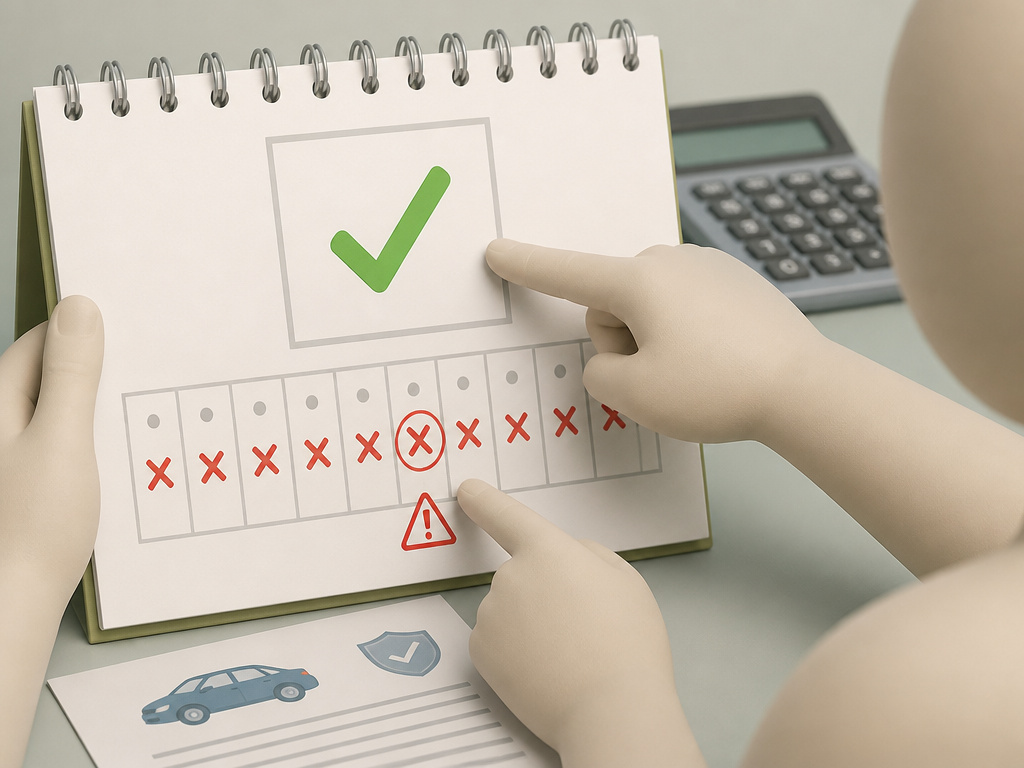
Monthly payments give you twelve chances to make a mistake instead of one. The consequences are not equal.
Most insurers offer a grace period of 10-20 days for a missed car insurance payment. If you pay within that window, coverage continues uninterrupted. Miss the window, and your policy lapses.
A coverage gap of 30 days or less leads to an average future rate increase of roughly 8%. Let the lapse stretch beyond 30 days, and the average increase jumps to around 35%.
That future hike is a penalty for perceived higher risk. A lapse signals you might be a less reliable customer. The increase applies when you seek new coverage, compounding the original problem. This makes understanding how to switch car insurance without a lapse a critical financial skill.
For drivers with a car loan, a lapse triggers “force-placed” insurance from the lender. This coverage protects their asset, not you, and costs significantly more than your standard policy. Avoiding a lapse isn’t just about keeping your current rate; it’s about preventing a chain reaction of new expenses.
Annual vs. Monthly: Which Payment Plan Wins for Your Situation?
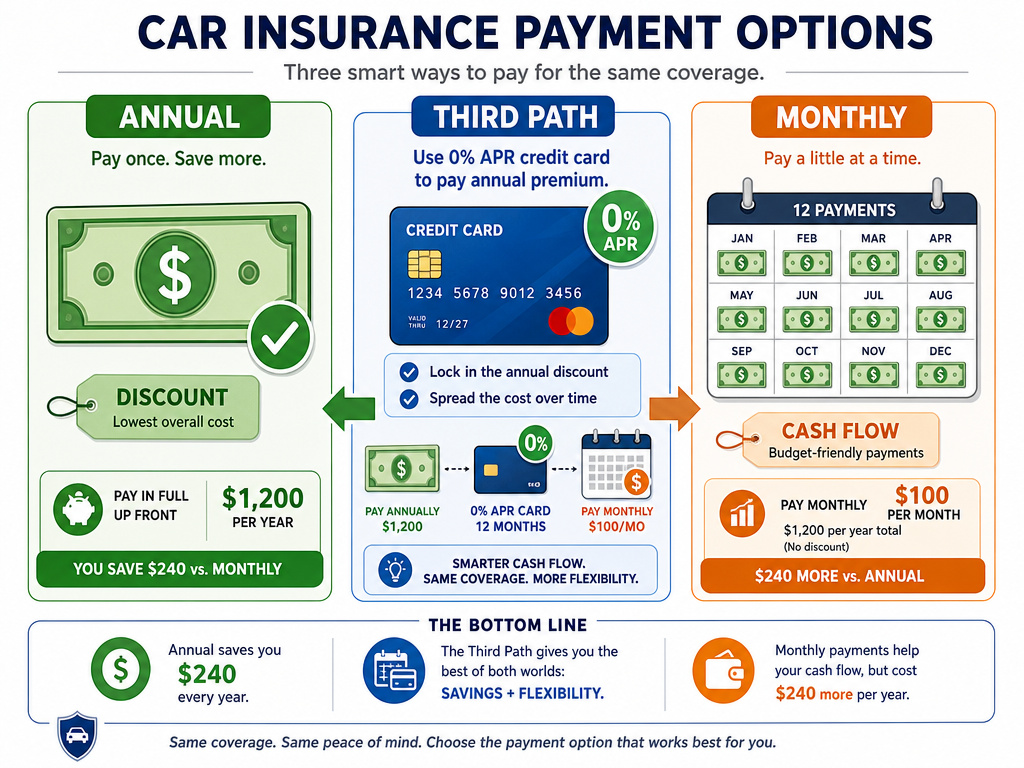
The raw math says annual wins. But your bank account has the final vote. The decision hinges on cash flow, financial discipline, and one clever workaround.
Choose Annual Payments If:
- You have the lump sum available without straining other finances.
- You want to minimize total cost and eliminate billing hassles.
- You’re prone to forgetting due dates (one date vs. Twelve).
- You can stack the pay-in-full discount with other savings like bundling different types of auto insurance.
Choose Monthly Payments If:
- The lump sum would cause genuine financial hardship.
- You are confident in your ability to manage twelve automatic payments.
- You might need to cancel mid-term and cannot wait for a prorated refund.
There is a third path that splits the difference: use a 0% purchase credit card.
Pay the entire annual premium on the card. Then, set up automatic payments to pay off the card balance over the following months. You get the insurer’s annual rate, avoid their finance charge, and maintain monthly cash flow. The catch is discipline—you must clear the balance before the card’s promotional period ends, or standard interest rates (often 25%+) will wipe out your savings.
Frequently Asked Questions
Does paying car insurance monthly build credit?
It can. Since monthly plans are credit agreements, many insurers report your payment history to credit bureaus. Consistent on-time payments can modestly help your score. A missed payment that leads to a default will damage it. Paying annually involves no credit agreement, so it has no direct impact on your credit report.
Can I switch from monthly to annual payments mid-policy?
Yes, at most insurers. You’ll typically need to pay the remaining premium balance upfront. Contact your insurer directly to request the change and confirm if any pro-rata refund or adjustment applies. This is a straightforward way to stop the installment fee bleed if your financial situation improves.
Are online quotes accurate for both payment methods?
Yes, reputable online insurance quotes should display the total cost for both annual and monthly options side-by-side. The monthly quote will include all finance charges. Always verify the final total before purchasing, as the breakdown of fees and APR should be clearly stated in your policy documents.
Why is my monthly quote so much higher than dividing the annual price by 12?
Because you’re not just dividing the price. You’re adding the cost of credit. The monthly price is the annual premium, plus interest and fees, divided by twelve. This is the premium finance mechanism in action. Always compare the total payable over the year, not the monthly installment amount.
Before You Go
Annual payments win on cost, every time. The win comes from dodging installment fees and claiming pay-in-full discounts. Monthly payments win on accessibility, offering a necessary path to coverage for those who can’t front the lump sum.
If you can pay annually, do it. The savings are real and documented. If you can’t, see if the 0% credit card workaround fits your discipline. And whatever you choose, set a calendar reminder three weeks before your renewal date. That’s when shopping for fresh accurate quotes yields the lowest prices, letting you lock in the best possible rate for the next year’s debate.
