
A Guide to Switching Car Insurance Companies With No Lapse
This post contains affiliate links. As an Amazon Associate, we earn from qualifying purchases.
To switch car insurance companies without a lapse, buy and confirm your new policy first, then cancel the old one with an overlap of at least one day. Set your new policy start date for the day before your old one ends. If your car is financed, you must notify your lender within their 14 to 30-day window or they can place force-placed coverage costing $200 to $500 a month.
The overlap is not a suggestion. It is the only mechanical guarantee against a gap. A gap of even one day is illegal in most states, spikes your future rates, and leaves you fully liable for any accident.
What follows: the five-step sequence, the lender trap that costs hundreds per month, the three times you should wait before switching, and the paperwork that actually matters.
Key Takeaways
- Set your new policy to start before your old one ends. Paying for two days of double coverage is cheaper than a single-day lapse.
- Notify your lender within 14-30 days. Miss this window and they can buy force-placed insurance at $200-$500/month that only protects their loan.
- A mid-term cancellation might trigger a short-rate penalty, where the insurer keeps an extra 10% of your unused premium as a fee.
- Always cancel by calling and getting written confirmation. Letting a policy lapse for non-payment damages your insurance score.
- If you have an open at-fault claim or an unpaid balance, resolve it before switching. Most new insurers will check the CLUE database.
The 5-Step Sequence for a Seamless Switch
Getting this order wrong is how people end up uninsured. The process is simple, but it relies on strict timing.
The Technical Snippet: A standard car insurance policy term is 6 or 12 months, with coverage beginning at 12:01 AM on the effective date. When switching mid-term, insurers typically refund the unused premium pro-rata, though some apply a short-rate penalty that reduces the refund amount. The new policy must be fully bound, with a policy number and proof of insurance issued, before the old policy is terminated.
Step 1: Pull Your Current Declarations Page
Do not shop without this document. Your declarations page lists your exact liability limits, deductibles for collision and comprehensive, and any add-ons like rental reimbursement.
You need these numbers to get accurate quotes. Comparing a full-coverage policy to a liability-only quote is useless. This page also has your policy number and agent contact info for the cancellation call later.
Step 2: Get Quotes with Matched Coverage
Get at least three quotes. Use your current coverage specs as the baseline for each one.
This is where most online quotes shine for speed, but their final price can shift after the carrier runs your full motor vehicle and credit reports. The quote from Progressive or GEICO is an estimate until you complete the application.
| Coverage to Match | What It Means | Risk of Under-Matching |
|---|---|---|
| Bodily Injury/Property Damage Liability | Your state’s minimum is the floor, not the recommendation. | A severe at-fault accident can exceed minimum limits, leaving your personal assets exposed. |
| Collision & Comprehensive Deductibles | Your out-of-pocket cost before insurance pays for damage. | A lower deductible raises your premium; a higher one saves money but must be affordable. |
| Uninsured/Underinsured Motorist | Covers you if the at-fault driver has no or insufficient insurance. | Skipping this leaves you paying for injuries caused by someone else’s lack of coverage. |
Step 3: Buy the New Policy and Set the Start Date
This is the critical move. When you purchase the new policy, choose a start date that is at least one day before your old policy expires.
If your old policy ends on June 15, set the new one to start June 14. You will pay for one day of double coverage. That cost is trivial, often a few dollars, compared to the financial and legal risk of a gap.
Common mistake: Assuming a policy is active after an online payment. Wait for the official confirmation email with your policy number and digital insurance card. A billing glitch on day one can drop coverage without warning.
Step 4: Cancel the Old Policy in Writing
Now you can cancel. Call your old insurer. Provide your new policy start date as your cancellation date.
Request a written confirmation email. If you paid in advance, ask about your refund and if any short-rate penalty applies. Some companies charge a small fee for mid-term cancellations.
Never just stop paying. A non-payment lapse gets reported to the CLUE database and makes you a high-risk customer for years.
Step 5: Notify Your Lender and Update Your Documents
If your car is leased or financed, your loan agreement requires this. Send your new proof of insurance to your lender immediately, certainly within their stated window (usually 14-30 days).
Place your new insurance card in your glove box and save the digital copy to your phone. Update any automatic payment plans.
The Lender Trap and Force-Placed Insurance
This is the single most expensive mistake you can make during a switch. It has nothing to do with your driving and everything to do with paperwork.
When you finance a car, the lender is a lienholder on the title. Their asset, the car, must be protected. Your insurance policy lists them. If they get a notice that your policy lapsed and don’t receive new proof of insurance, they will act.
They buy force-placed insurance. This policy protects their financial interest in the car, not you. It does not cover your liability if you cause an accident. It only pays the lender if the car is totaled.
And it costs between $200 and $500 per month. You will be billed for it. Getting it removed takes days of faxing documents and phone calls.
Where this goes sideways: Missing the lender notification window. The lender’s system automatically triggers force-placed coverage after the grace period. You won’t find out until the charge appears on your loan statement.
The fix is procedural. Give your new insurer your lender’s contact information when you buy the policy. Companies like Liberty Mutual often handle the notification automatically. Follow up in three days to confirm they received it.
When to Time Your Switch (And When to Wait)
You can switch any day. But picking the right moment saves money and avoids complications.
Switch at these natural breaks:
- 7-30 days before your renewal. This is the sweet spot. You’re not cancelling mid-term, so no short-rate fees. You have your current declarations page handy.
- After a major life event. Marriage, a move to a new zip code, or buying a home can change your risk profile and unlock new discounts.
- After improving your credit score. In most states where it’s allowed, a better credit score can significantly lower your premium. Get fresh quotes.
- Following an unjustified rate hike. If your premium jumped without tickets or accidents, shop immediately.
Wait if any of these are true:
- You have an open at-fault claim. Switch after it’s settled. A pending claim can inflate your new quote or cause underwriting issues.
- You recently switched insurers. Jumping companies every six months flags you as unstable. Insurers may withhold their best discounts.
- You owe your current insurer money. An unpaid balance gets reported to CLUE. Pay it off before applying elsewhere.
- You’re bundling with a deep discount. The savings from a home-and-auto bundle might outweigh a slightly cheaper standalone car policy.
The Paperwork That Actually Matters
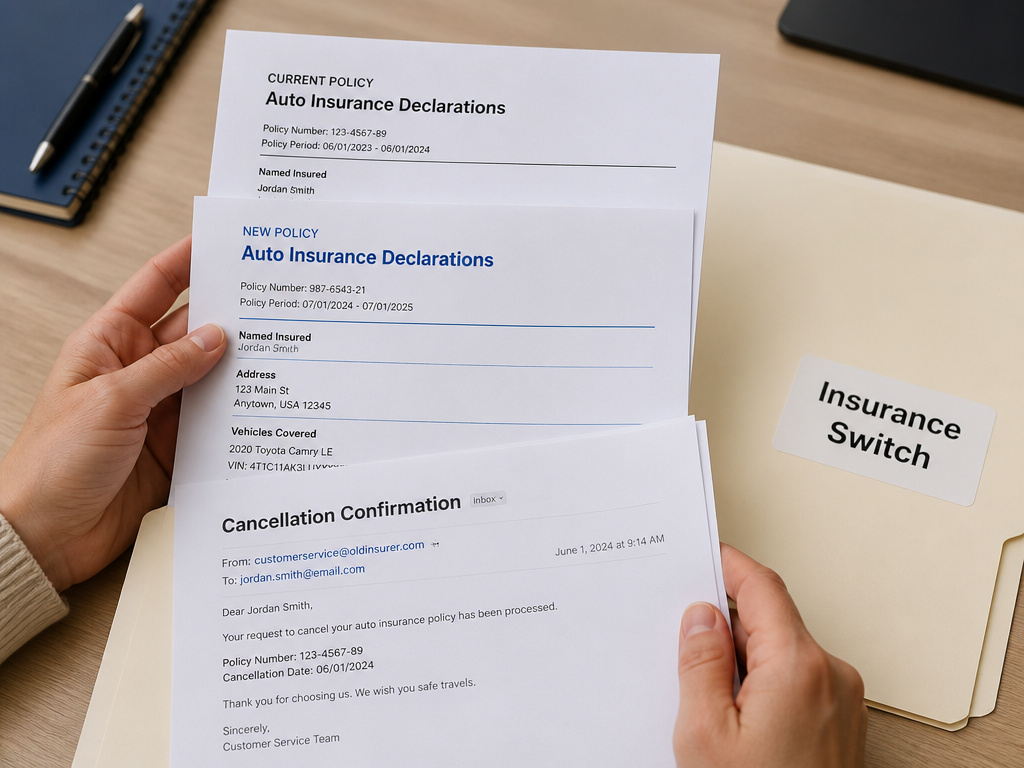 You need three documents. Without them, you’re operating on hope.
- Current Declarations Page: Your baseline for comparison.
- New Policy Declarations Page: Proof your coverage is active and matches what you bought. Verify every line before you cancel the old policy.
- Cancellation Confirmation: Written proof from your old insurer with the stop date. This is your shield if they later claim you owe for a lapse.
Keep these in a dedicated folder for at least the first full term of your new policy.
How a Lapse Affects Your Wallet and Record
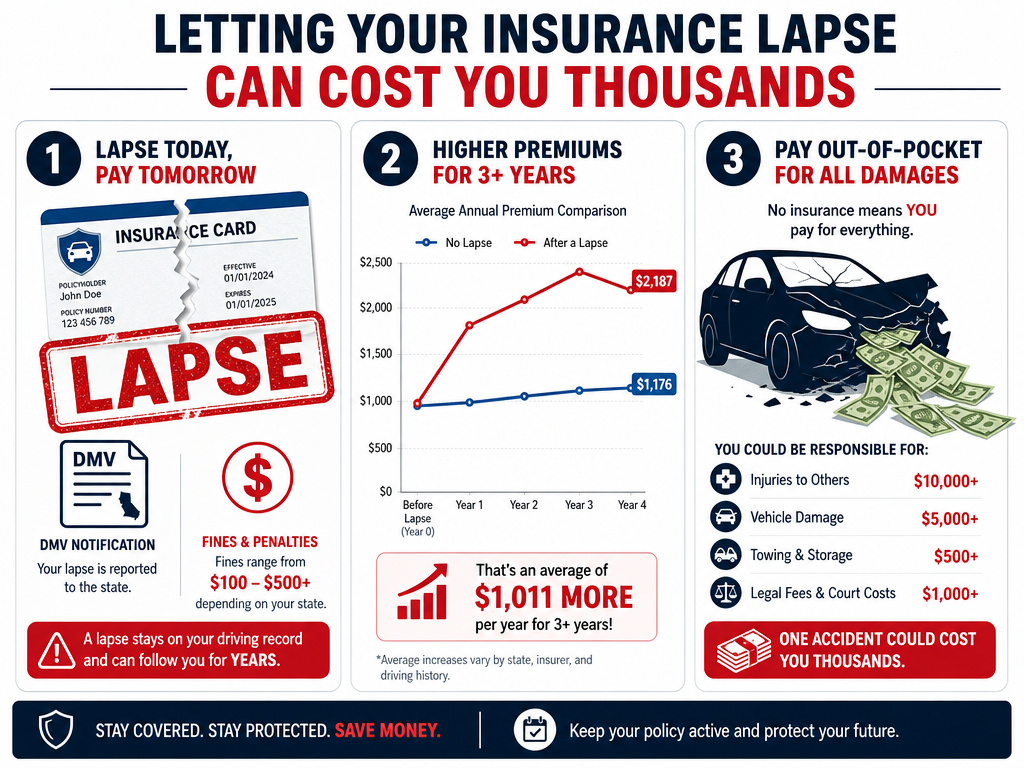 A lapse is not a quiet administrative error. It has immediate and long-term teeth.
First, it’s illegal. You’ll get a letter from your state’s DMV demanding proof of insurance, often with a fine and license suspension threat.
Second, insurers see a lapse as a major risk indicator. When you next apply for car insurance companies, you will pay a higher premium. This surcharge can last for three years.
Third, if you cause an accident during the gap, you pay for everything. The other driver’s repairs, their medical bills, your own car, all of it comes from your savings.
The part nobody mentions: A one-day lapse and a six-month lapse are often penalized the same way in insurer risk models. The system just sees “lapse.”
Frequently Asked Questions
Can I switch car insurance with an open claim?
You can, but you shouldn’t if you’re at fault. Your current insurer is obligated to handle the claim. However, a new insurer will see the open claim and may delay binding your policy or quote a higher rate. It is cleaner to wait until the claim is closed and settled.
Will switching car insurance affect my credit score?
No. Insurers perform a “soft pull” to get your credit-based insurance score for quoting. This does not affect your consumer credit score. However, if you have an unpaid balance with your old insurer that goes to collections, that will hurt your credit.
How does my deductible work when I switch?
Your deductible is specific to each policy and each claim. If you have an accident the day after your new policy starts, you pay your new policy’s deductible. Any deductible from your old policy is irrelevant unless the claim occurred while that policy was active.
Do I need to tell the DMV I switched?
In many states, your insurer electronically reports your coverage to the state DMV. However, some states require you to submit proof directly. Check your state DMV website. Failing to notify when required can lead to fines and registration suspension.
What is a short-rate cancellation penalty?
It’s a fee some insurers charge for cancelling mid-term. Instead of a pure pro-rata refund for unused days, they keep an extra percentage (often around 10%) as an administrative fee. Ask your outgoing insurer about their policy before you cancel.
Before You Go
Switching insurers is a leverage move. It keeps the market competitive and can save you real money. The mechanics are straightforward: overlap the policies, notify the lender, and get everything in writing.
The default pick for most people is to start shopping three weeks before renewal. Use your current declarations page, match the coverage, and set the new start date for the day before the old one ends. That sequence works every time.
Ignore the loyalty myths. Your insurer is not your friend. They are a service provider. Your job is to get the service you need at a rational price. This process is how you do that without rolling the dice on a coverage gap.
