
Essential Guide: How to Ride a Motorcycle with a Passenger
This post contains affiliate links. As an Amazon Associate, we earn from qualifying purchases.
To ride a motorcycle with a passenger safely, you need three things beyond your own skill: a bike legally equipped for two, a passenger wearing full protective gear, and a deliberate plan to adjust your riding for the added weight and independent motion. The Motorcycle Safety Foundation states that carrying a passenger will change your motorcycle’s handling characteristics, requiring more throttle and clutch finesse, earlier braking, and greater caution in corners.
That passenger weight shifts the bike’s center of mass higher and rearward. This changes the geometry the front suspension and steering head were designed for, making the bike feel slower to turn and more prone to weave under acceleration. The rear shock absorbs the bulk of the load, which is why the Indian Scout and FTR manuals specifically direct you to adjust the rear shock preload—not for comfort, but to maintain proper ride height and ground clearance.
What follows is the setup, the talk, and the ride. You will need to check your bike’s Gross Vehicle Weight Rating sticker, run through a parking-lot practice session, and learn the specific hand signals that prevent panic. This is not about going slower; it is about riding differently.
Key Takeaways
- Your motorcycle must have a permanent passenger seat and passenger footrests by law in most states. Carrying a passenger on a bike not equipped for it voids insurance and is dangerously unstable.
- Exceeding the Gross Vehicle Weight Rating (GVWR) printed on your bike’s VIN sticker overloads the frame, suspension, and brakes. Do the math: bike wet weight + your weight + passenger weight + gear.
- A full-face helmet, a protective motorcycle jacket, riding gloves, and over-the-ankle boots are non-negotiable for your passenger. Denim and sneakers offer zero protection in a slide.
- Practice low-speed maneuvers and emergency stops in a parking lot with your passenger before hitting the road. Their instinct to put a foot down at a stop can tip you both over.
- Adjust your riding style dramatically: brake earlier, accelerate smoother, take corners wider, and leave double the following distance. A passenger’s unexpected lean affects your balance instantly.
The Gear and Setup Your Bike Needs
You cannot safely carry a passenger on a motorcycle built for one. This sounds obvious, but people try it on sport bikes with a hump seat or vintage bikes with a “sissy bar” but no pegs. The law and physics are clear.
First, the legal minimums. States require a motorcycle to have a permanent, separate seating area for the passenger and dedicated passenger footrests. The Oregon Department of Transportation manual explicitly lists these as equipment requirements. Your passenger must be tall enough to place both feet flat on those footrests. If they are dangling, they cannot brace against sudden movement, and their erratic shifting can cause a loss of control. This rule alone disqualifies many children.
Second, check your bike’s weight capacity. On the frame, near the steering head or on the swingarm, you’ll find a manufacturing information label. Look for the Gross Vehicle Weight Rating. This is the maximum your bike can weigh fully loaded—fuel, oil, you, your passenger, and all gear. The 2022 Indian Rider’s Manual defines maximum load capacity as GVWR minus the motorcycle’s wet weight. Exceeding the GVWR stresses the frame, overheats the brakes, and overwhelms the suspension. Do the math.
Before you start: Never exceed your motorcycle’s Gross Vehicle Weight Rating (GVWR). An overloaded bike’s steering becomes sluggish, its braking distance lengthens by over 30%, and the suspension can bottom out on a bump, causing a loss of control. Check the VIN sticker on the frame.
Third, prepare the machine. Tire pressure may need a 2-4 psi increase to support the extra load. The critical adjustment is rear shock preload. This does not make the ride softer; it raises the rear of the bike to compensate for the weight squat and restore proper cornering clearance. Refer to your owner’s manual, like the one for the Indian FTR which details the Rear Shock Preload (Ride Height) Inspection and Adjustment. A bike with a sagging rear end will steer poorly and can scrape hard parts in a turn.
Your passenger needs their own kit. A proper motorcycle helmet is essential. A protective motorcycle jacket, riding gloves, and sturdy boots are not optional. Jeans and sneakers disintegrate on pavement. For longer comfort, consider adding passenger seat cushions. The right gear makes the passenger feel secure and reduces their movement.
| Equipment Check | Purpose | Consequence If Missing |
|---|---|---|
| Passenger Footrests | Allows passenger to brace and stay balanced. | Passenger legs dangle; involuntary weight shifts destabilize the bike at low speed. |
| Rear Shock Preload Adjustment | Maintains correct ride height and ground clearance under load. | Rear suspension bottoms out, handling becomes vague, exhaust or frame scrapes in corners. |
| Passenger Helmet & Gear | Provides protection in a crash and reduces distraction from discomfort. | Passenger focuses on fear/cold/wind instead of riding safely; injury severity multiplies. |
| GVWR Compliance | Ensures frame, brakes, and suspension operate within design limits. | Brakes fade, handling degrades unpredictably, structural fatigue can lead to component failure. |
The Pre-Ride Passenger Briefing Most People Skip
You are not just giving a ride. You are conducting a safety briefing. Your passenger is a second active rider, as the Motorcycle Safety Foundation puts it. Their cooperation is mandatory.
Start with the mount and dismount sequence. The engine is off. You are straddling the bike, holding it upright with both feet on the ground and the front brake engaged. The passenger mounts only after the side stand is up. They approach from the left side, put their left hand on your shoulder, place their left foot on the left footpeg, and swing their right leg over. To dismount, they wait until you are fully stopped and stable, then reverse the process. This prevents the bike from tipping over.
Now, the rules for the ride: * Feet on the pegs, always. Even at a stoplight. Putting a foot down is your job. Their job is to keep both feet planted on the footrests. * Hands on your waist or the hand-holds. They should hold firmly onto your waist or the designated passenger hand-holds. No waving, no taking photos. Sudden arm movements transfer directly to the handlebars. * Look over your shoulder in turns. In a corner, they should look over your inside shoulder, in the direction of the turn. This naturally aligns their body with yours and the bike’s lean angle. Fighting the lean is how you both end up in the oncoming lane. * Brace for stops. Explain that under hard braking, they will slide forward and may bump helmets with you. They should press their feet into the pegs and their torso against your back. Do not resist the slide. * Stay still during low-speed maneuvers. When you are filtering through traffic or making a tight U-turn, their absolute stillness is critical. A sudden head turn or leg shift at 5 mph can be enough to drop the bike.
Establish simple, clear hand signals. A tap on the left shoulder means “I need to adjust my position.” A tap on the right shoulder might mean “pull over, I feel sick.” Agree on them before you start.
Your First Ride: The Parking Lot Protocol
Do not go straight onto the highway. Your first ride with a passenger is a dedicated practice session in an empty parking lot. The goal is to acclimate both of you to the new sensations and dynamics.
Begin with the passenger just sitting on the stationary bike. Feel their weight. Feel how it settles the suspension. Have them practice looking over your shoulders left and right. Then, start the engine.
- Walking the Bike. With the passenger on, walk the bike forward using your legs, getting a feel for the increased weight and balance point. This builds their confidence in your stability.
- Friction Zone and Throttle. Practice moving off from a stop. You will need more throttle and slower clutch release. The added weight demands more engine torque to get rolling. Stalling with a passenger on board is embarrassing and risky.
- Slow-Speed Turns. Make a series of gradual left and right turns. Feel how the bike wants to stand up and go wide. The passenger’s weight makes the bike less flickable. Input more counter-steering pressure.
- Straight-Line Braking. Ride in a straight line at 15 mph and brake smoothly to a stop. Let your passenger feel the deceleration and the forward slide. Repeat, progressively braking harder until you reach a firm, controlled stop. This teaches them the sensation and builds trust.
- Emergency Stop Drill. At 20 mph, perform a simulated emergency stop, using both brakes firmly but without locking the wheels. This is where having ABS brakes proves its worth, preventing a skid that could easily low-side the bike with the extra top-heavy weight.
Where this goes sideways: Skipping the parking lot practice. A passenger’s first experience with the clutch, throttle, and brakes should not be at a busy intersection. Their startled gasp or involuntary lean as you pull away can upset the bike enough to cause a tip-over.
After 30 minutes of this, take a break. Ask your passenger what felt strange or scary. Adjust your plan. Only when you both feel relaxed and coordinated should you consider venturing onto quiet residential streets.
How Passenger Weight Changes Your Riding Physics
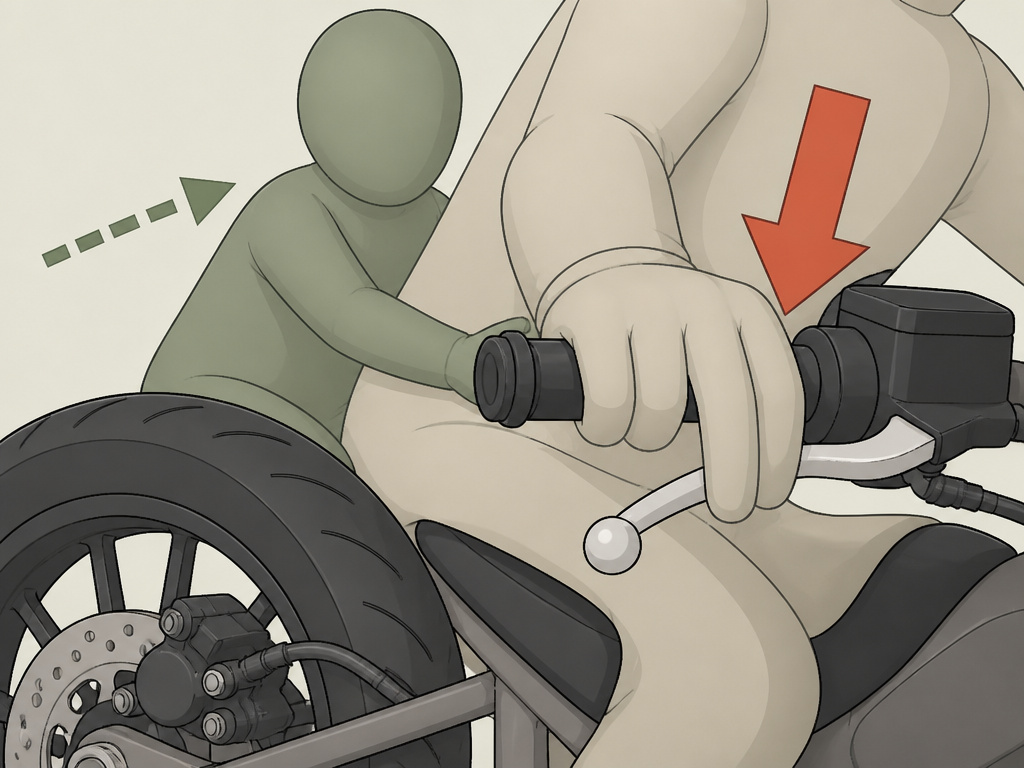
You are no longer riding a solo motorcycle. You are piloting a longer, taller, heavier vehicle with a movable top section. The adjustments are not subtle.
Braking: You must brake earlier and with more pressure. The kinetic energy you must dissipate increases with mass. The MSF tip sheet notes that braking distance increases on a downgrade. The extra weight over the rear tire can make the rear brake more effective, but the front brake still does 70-80% of the work. Smoother, progressive input is key to avoid unsettling the chassis.
Acceleration: The bike will feel sluggish. You need more throttle to achieve the same acceleration, but you must apply it smoothly. A jerky throttle input can cause the passenger to slam back into the sissy bar or seat, then rebound forward. This rocking motion induces a speed wobble at higher speeds.
Cornering: This is the biggest change. You must take corners slower and wider. The combined center of mass is higher and farther back, increasing the bike’s moment of inertia. It resists leaning. You will need more positive counter-steering push to initiate the turn. Mid-corner corrections are harder. Your passenger looking the wrong way can literally pull you out of your line. Clearance is reduced; that center stand or exhaust pipe you never scraped solo might now drag.
Wind & Stability: Crosswinds will push you around more. The larger profile acts like a sail. Be prepared for a steady pressure on the bars. Passing large trucks requires a firmer grip and more deliberate steering input to counter the buffeting.
The Passenger “Bump”: During moderate to hard braking, your passenger will slide forward. Their helmet may tap yours. This is normal. If you are not expecting it, you might instinctively ease off the brakes, lengthening your stopping distance dangerously. Brace for it.
| Maneuver (Solo) | Adjustment (With Passenger) | Physical Reason |
|---|---|---|
| Normal braking point | Brake 20-30% earlier | Increased mass = greater kinetic energy to dissipate. |
| Throttle application | Smoother, more gradual roll-on | Jerky torque rocks passenger, inducing chassis oscillation. |
| Cornering speed | Reduce speed by 15-20% | Higher center of mass reduces maximum safe lean angle. |
| Following distance | Double the distance | Longer stopping distance and reduced evasion agility. |
| Lane position | Take more dominant position | Larger vehicle profile; need more space for stability. |
Advanced Considerations and When to Say No
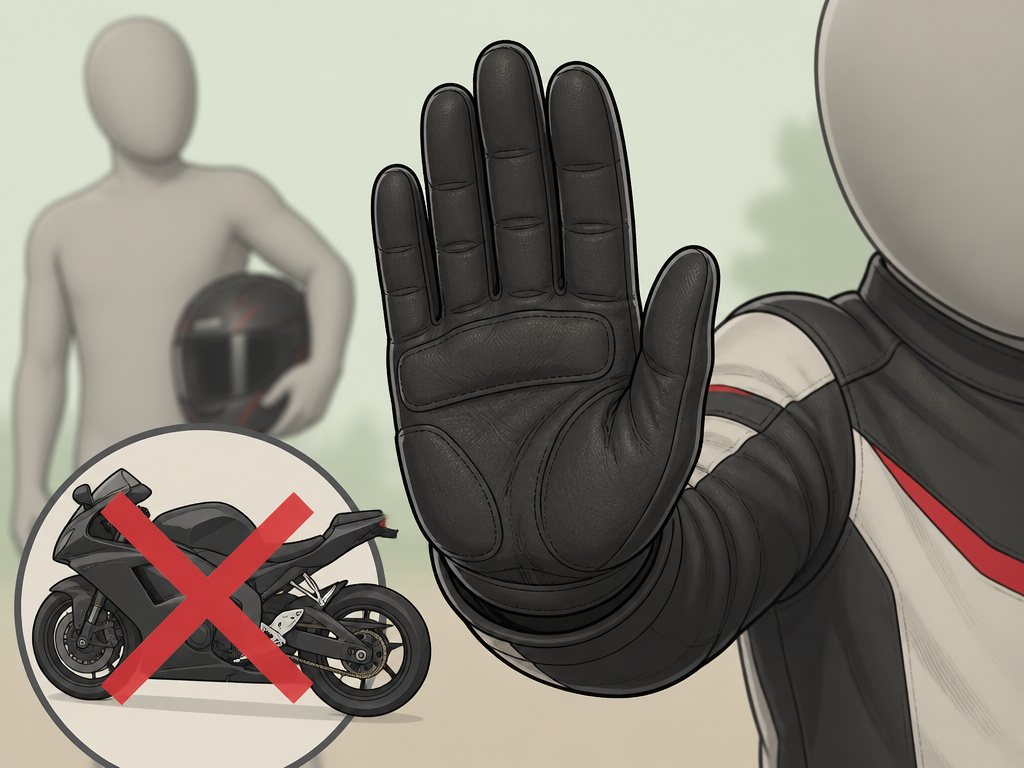
Not every bike, not every rider, and not every situation is suitable for two-up riding.
The Bike: Sport bikes with rearset pegs and aggressive ergonomics are miserable for passengers. Cruisers and touring bikes are designed for it. A beginner motorcycle is almost never a good two-up platform; its limited power and soft suspension are overwhelmed. If you’ve just figured out how to choose the right motorcycle size for yourself, adding a passenger is the next level of fit.
The Route: Avoid unfamiliar, technical roads. No canyon carving on a first outing. Stick to routes you know well. If the forecast calls for rain, postpone. Riding in the rain is a skill multiplier; adding a passenger to that equation is for experts only. Rough pavement, gravel roads, or any off-road situation, as warned in the Indian manual, drastically increase the risk of loss of control with a passenger.
The Passenger: You must be able to say no. A passenger who refuses to wear a motorcycle jacket and motorcycle boots does not get a ride. A passenger who is intoxicated, overly anxious, or unable to follow instructions is a danger. Your responsibility is absolute.
Your Skill: If you are still working on smooth low-speed control, perfecting your emergency braking, or building cornering confidence, you are not ready. The MSF recommends taking a Basic RiderCourse 2 – Skills Practice with your passenger to build these competencies in a controlled environment.
Frequently Asked Questions
Is it illegal to ride with a passenger without footpegs?
Yes, in virtually every state. The motorcycle must be equipped with permanent passenger footrests. Riding with a passenger whose feet cannot reach the pegs is also illegal and dangerously unstable. The passenger cannot brace, leading to uncontrolled weight shifts.
How much does a passenger change motorcycle handling?
Profoundly. The bike feels heavier, slower to turn, and slower to stop. The rear suspension sags, affecting steering geometry. Crosswinds have a greater effect. Every input—throttle, brake, steering—must be smoother and more deliberate. It is a different vehicle.
What is the safest way for a passenger to hold on?
The passenger should hold the operator’s waist or hips, or the motorcycle’s built-in passenger hand-holds or straps. Holding onto the rider’s shoulders or the bike’s frame can lead to awkward leaning and reduced control. The key is a firm, secure grip that allows the passenger to move in sync with the rider.
Can my passenger wear a bicycle helmet?
No. A motorcycle passenger needs a proper, DOT-certified motorcycle helmet. Bicycle helmets are not designed for the impacts and abrasion of a motorcycle crash. Full-face coverage offers the best protection for the jaw and face.
Do I need to adjust my tire pressure with a passenger?
Yes. Consult your owner’s manual, but a typical adjustment is to increase both front and rear tire pressures by 2-4 psi when carrying a passenger and luggage. This helps the tire carcass support the extra load and maintain proper footprint and handling. Always check tire pressure when the tires are cold.
Should I use a different motorcycle oil when riding two-up?
No, you use the oil specified in your owner’s manual. However, riding with a passenger places a higher thermal load on the engine, especially in stop-and-go traffic or on hills. Ensure your oil level is correct and consider more frequent oil changes if you frequently ride two-up under heavy load.
The Bottom Line
Carrying a passenger transforms riding from a solo act into a partnered discipline. It exposes the limits of your bike’s design and the depth of your own skill. The checklist is non-negotiable: legal equipment, verified weight limits, full protective gear, and a dedicated practice session.
The real skill is not in the mechanics, but in the communication and the mutual respect for the risks. Your passenger’s safety is welded to your competence. Their enjoyment depends on your smoothness. Master the parking lot drills, adjust your suspension, and double your margins. When you both get it right, there are few better ways to share the road.
