
Are Motorcycle Jackets Necessary? The Revealing Test Results
This post contains affiliate links. As an Amazon Associate, we earn from qualifying purchases.
Yes. A certified motorcycle jacket is necessary if your goal is to avoid severe road rash, broken bones, and preventable soft-tissue injuries. The evidence isn’t abstract, it’s measured in seconds of abrasion resistance, Zone 1 impact ratings, and peer-reviewed studies of actual crash damage. Denim lasts 0.6 seconds on asphalt; a certified jacket’s outer shell must last a minimum of 4 seconds in high-risk zones.
That 0.6-second figure is from a SATRA 2002 test. It means standard clothing shreds in the time it takes to blink twice. Motorcycle jackets are engineered to create a time buffer between hitting the pavement and the pavement hitting you. That buffer is built from abrasion-resistant materials, layered construction, and most critically, seams that don’t burst on impact. The question is whether the jacket you choose is built to the EN 17092 standard or is just streetwear with a motorcycle brand tag.
This guide unpacks the standards most manufacturers don’t explain: what AAA, AA, and A ratings actually test, why the 2003 MCN leather-suit failures still matter today, and how to spot a jacket that protects versus one that just looks the part.
Key Takeaways
- A certified motorcycle jacket provides two distinct protections: abrasion resistance (the outer shell delaying road rash) and impact absorption (CE armor dispersing force to prevent fractures).
- The EN 17092 rating (AAA, AA, A) certifies the entire garment, not just its material. A brand claiming its “fabric passes AAA” is misleading you, seam strength, zipper security, and sleeve restraint are equally tested.
- Leather is not inherently superior. Independent 2003 tests found only 4 of 18 major-brand leather suits passed all European Standard tests; most failed seam burst strength.
- Fit is a safety feature. A jacket that rides up your arms in a slide exposes skin. EN 17092 tests sleeve restraint under simulated slide conditions.
- Armor placement is everything. Shoulders and elbows are Zone 1 (highest risk). Back protectors are often optional but critical for spine protection.
The Function: Abrasion vs Impact
A motorcycle jacket comprises two separate systems working together: the outer shell fights abrasion, and the internal armor fights impact force. Confusing them is the first mistake riders make.
The outer shell, whether leather, textile, or protected denim, is your primary barrier against the road surface. Its job is to dissipate friction heat and wear slowly enough that you stop sliding before it wears through. The European EN 17092 standard quantifies this with a timed abrasion test. Zone 1 and Zone 2 areas (shoulders, elbows, hips, knees) require a minimum of 4 seconds of resistance.
A single layer of 1.4mm cowhide provides 5.8 seconds of abrasion resistance. Standard 200gsm denim provides 0.6 seconds. The difference between a road rash that needs skin grafts and one that doesn’t is literally those four seconds.
The armor inside the pockets is a separate system. It doesn’t stop abrasion; it absorbs and spreads out the concentrated force of hitting the ground or an object. CE-certified armor comes in Level 1 and Level 2, with Level 2 absorbing roughly twice the impact energy. This armor is tested to the EN 1621 standard. A jacket can have an AAA-rated shell, but if it’s fitted with cheap, non-certified foam pads, your elbows and shoulders get no meaningful impact protection.
| Protection Type | What It Fights | How It’s Measured | Consequence If Missing |
|---|---|---|---|
| Abrasion Resistance | Friction from sliding on pavement | EN 17092 timed test (seconds) | Deep road rash, muscle/tendon exposure, long-term skin grafts |
| Impact Absorption | Force from hitting ground/object | EN 1621-1/2 (Level 1 or 2) | Broken bones (elbow, shoulder, collarbone), internal trauma |
| Seam & Closure Strength | Garment bursting open | EN 17092 tensile/burst test | Jacket disintegrates, exposes unprotected skin immediately |
Seam failure is the silent killer. The strongest material is useless if the stitches holding it together burst. The 2003 MCN test failures happened here.
The MCN and Ride Magazine Reality Checks
In 2003, Motorcycle News in the UK tested 18 leather suits from major European manufacturers. The results weren’t a gentle warning. They were a condemnation. Only four suits passed all requirements of the then-current European Standard. Twelve failed the burst test due to thread or leather failure. Impact protectors failed in eight suits.
A similar review by Ride magazine in January 2003 looked at 51 textile jackets. Price was no guarantee. Of jackets costing between $160 and $1,050, 46 scored above average for impact resistance. Only 36 scored above average for abrasion resistance. The worst result was for seam strength, just 10 of the 51 jackets were judged to have adequate burst resistance. The most expensive jacket in the test was among those ten, but many high-price options were not.
Where this goes sideways: Assuming price equals protection. The 2003 data shows a direct, expensive jacket can fail basic seam tests, while a mid-priced one might pass. You must look for the label, not the logo.
These studies are two decades old, but their lesson is current: manufacturing quality and rigorous certification matter more than brand reputation or material type. Today’s EN 17092 standard was designed to address these gaps by making full-garment testing mandatory for CE certification as Personal Protective Equipment (PPE), a status achieved in April 2018.
Decoding EN 17092: AAA, AA, A, and the Zone System
The EN 17092 label is your cheat sheet. It represents a battery of tests on the specific jacket model you’re holding. The rating (AAA, AA, A, B, C) reflects the garment’s overall performance across all risk zones.
The zones, developed from analysis of crash-damaged gear by researcher Woods in 1996, map injury risk probability: – Zone 1: Shoulders, elbows, hips, knees. Highest impact and abrasion risk. Requires fitted impact protectors and the highest abrasion resistance (4+ seconds). – Zone 2: Areas surrounding Zone 1. High abrasion risk, moderate impact risk. Requires high abrasion resistance. – Zone 3: Chest, upper back, thighs. Moderate abrasion risk. Lower minimum abrasion requirement (1.8 seconds). – Zone 4: Forearms, lower back, calves. Lowest risk. Minimum abrasion requirement (1 second).
A garment’s final class is determined by its performance in the highest-risk zone it’s designed to cover. A full-featured riding jacket targeting Zones 1-3 will be rated on its Zone 1 performance.
| EN 17092 Class | Protection Level | Best For | Key Requirement Met |
|---|---|---|---|
| AAA | Highest | Track, fast road, high-risk riding | Passes Zone 1 & 2 abrasion (≥4s), includes Level 1/2 armor |
| AA | High | All-season road riding | Passes Zone 1 & 2 abrasion (≥4s), may have lighter armor |
| A | Basic | Urban, commuting, lower-speed riding | Passes Zone 3 abrasion (≥1.8s), includes some armor |
| B | Impact Only | Urban (abrasion risk lower) | No abrasion requirement, includes impact protectors |
| C | Non-Protective | Not for crash protection | Fails or skips key tests; style-only |
Common mistake: Choosing a jacket with only an A rating for aggressive riding. It’s certified, but only for moderate-risk zones. For shoulder and elbow protection, AA or AAA is the target.
Leather vs. Textile: The Real Trade-Offs
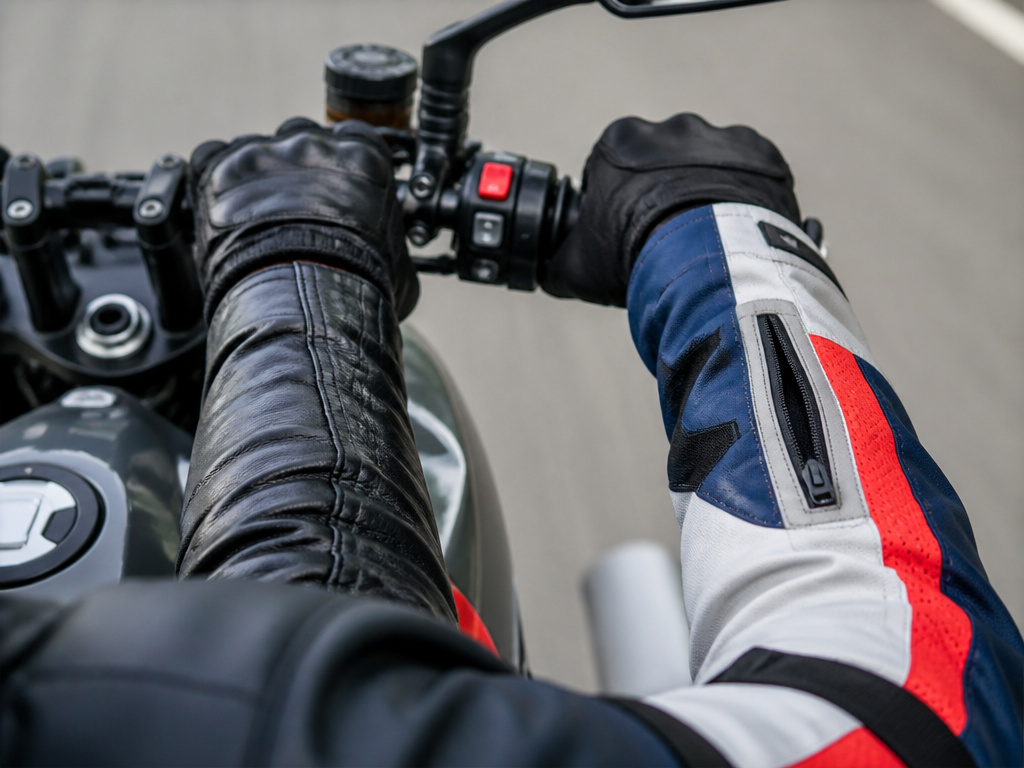
The leather-versus-textile debate is mostly noise. Both can achieve AAA ratings. The choice is about performance characteristics, not inherent safety.
Leather offers superior abrasion resistance per millimeter of thickness and a smooth slide. Its drawbacks are significant: minimal breathability, terrible wet-weather performance (it absorbs water and becomes heavy), and poor temperature regulation. A leather motorcycle jacket is ideal for dry, warm-weather sport riding where its slide performance is an asset.
Textile (typically nylon or polyester blends) is where modern engineering shines. Advanced fabrics like Cordura, Dyneema, or Kevlar blends offer extreme abrasion resistance at lighter weights. Modern textile motorcycle jackets are almost always laminated or drop-liner constructions with waterproof, breathable membranes (like Gore-Tex). They manage temperature through vent zips and layered insulation. For all-season, all-weather riding, a laminated textile jacket is the pragmatic choice.
Mesh is a subtype of textile. A mesh motorcycle jacket prioritizes airflow above all else, often at the expense of abrasion resistance. They are excellent for hot climates but should be paired with a protective armored jacket or worn only in low-risk urban environments.
The rule: match the material to your primary riding environment. Don’t buy a ventless leather jacket for year-round commuting in a rainy climate.
The Critical Details Most Riders Miss
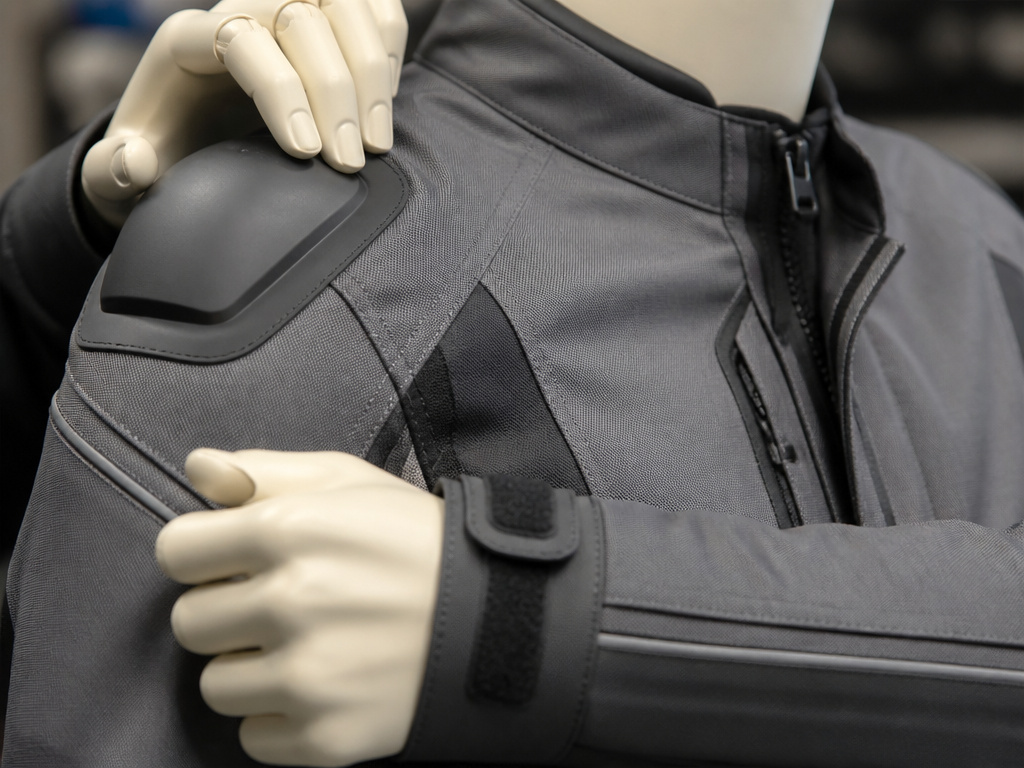
Certification tells you the jacket can protect. Proper use and fit ensure it will protect.
Fit in the riding position is non-negotiable. A jacket that fits standing in a shop might pull up at the sleeves and waist when you’re hunched over the bars. EN 17092 tests sleeve restraint, the cuffs shouldn’t ride up and expose your wrists in a slide. Always test fit while simulating your riding posture.
Armor placement is everything. Shoulder armor should sit directly on the bony protrusion of your shoulder, not sag toward your bicep. Elbow armor should cup your elbow joint when your arms are bent in a riding position. Many jackets allow you to upgrade from included foam to CE Level 2 protectors; for serious riding, this upgrade is the first modification you should make.
Seam construction is invisible but vital. Look for double- or triple-stitching in high-stress areas. Better jackets use bonded or taped seams in critical zones to prevent unraveling. Seams in Zones 1-3 should have at least one row of concealed stitching.
Zippers and closures are weak points. Main zippers should be substantial and backed by a draft flap. Storm flaps over zippers add another layer of security against bursting open.
The part nobody mentions: A jacket’s warmth layer can be a crumple zone. Some insulated liners add a slight buffer between you and the armor, potentially dispersing force over a wider area. It’s a minor effect, but it exists.
Frequently Asked Questions
What’s the difference between CE armor and an EN 17092 rating?
CE armor (like shoulder or elbow pads) is certified to the EN 1621 standard for impact absorption. An EN 17092 rating certifies the entire garment, its abrasion resistance, seam strength, zipper security, fit, and that its armor (if included) is correctly placed and compliant. A jacket can have CE armor but fail EN 17092 certification if its seams or shell are weak.
Can I just wear a thick hoodie or a denim jacket?
No. A 2002 SATRA test showed standard 200gsm denim offers 0.6 seconds of abrasion resistance. A certified jacket’s high-risk zones require at least 4 seconds. A hoodie vaporizes on contact, offers zero abrasion resistance, and its fluffy texture can increase friction burns. They provide no impact protection whatsoever.
Are motorcycle vests protective?
Most motorcycle vests are style and identity garments, often sleeveless denim or leather cuts for patches. They provide minimal abrasion protection and no armor and are not EN 17092 certified.A vest is not a substitute for a jacket for protection. Some riders wear a vest over a certified jacket for style.
Is AAA-rated gear uncomfortable and bulky?
Not necessarily. Modern materials like Dyneema are incredibly strong yet thin and flexible. CE Level 1 armor has become slim and pliable. The comfort gap between low-rated and high-rated gear has narrowed dramatically. The bulk often comes from insulation and weatherproofing layers, not the protective shell itself.
Do I need a back protector?
The back is a Zone 2/3 area, vulnerable to both abrasion and impact. While not always included, a CE Level 2 back protector is a critical upgrade. Spine impacts are life-altering. Many jackets with integrated armor have a pocket for one; using it is a simple, high-reward decision.
The Bottom Line
Are motorcycle jackets really necessary? For any rider who values their skin, bones, and long-term health, the answer is a documented yes. The necessity concerns measurable, testable performance gaps that ordinary clothing cannot bridge. The data from 2003 still echoes: without certification, you are relying on marketing, not materials science.
Your next step is to find a jacket with a legitimate EN 17092 AA or AAA rating that fits your climate and riding style. Check our guides on the best motorcycle jackets for protection, summer motorcycle jackets for ventilation, and winter motorcycle jackets for insulation.Look for the label, test the fit, and trust the standard over the sales pitch. Your future self on the pavement will know the difference.
