
Are Motorcycle Boots Necessary? Decoding the EN 13634 Standard
This post contains affiliate links. As an Amazon Associate, we earn from qualifying purchases.
Motorcycle boots are necessary protective equipment if you plan to ride on paved roads at any speed, because the European EN 13634:2017 standard demonstrates certified boots provide verified protection against abrasion, crush, and impact that regular footwear cannot match. They are not an accessory; they are personal protective equipment (PPE) tested to survive a road slide and manage forces that break bones. The necessity hinges on accepting that a low-speed fall generates injury-level forces before your body even hits the ground.
The four-digit label inside any CE-certified boot quantifies that necessity. Each number corresponds to a tested performance level for shaft height, abrasion resistance, transverse rigidity, and ankle energy absorption. A 1 1 1 1 rating (CE Level 1) means the upper lasts at least five seconds against a 60-grit belt moving at 8 m/s, the sole withstands at least 1.0 kN of sideways crush, and the ankle armor transmits less than 5.0 kN to the bone. A regular sneaker fails the abrasion test in under 0.2 seconds and offers zero transverse rigidity or ankle protection. The standard exists because those specific failures map directly to documented motorcycle crash outcomes.
What follows is a breakdown of the CE standard’s test results, what the performance levels mean for different riding styles, and the one line of fine print that changes the entire discussion. By the end, you will be able to read any boot’s certification label and know whether it fits the risks you actually face.
Key Takeaways
- CE EN 13634:2017 certification is mandatory in the EU and the benchmark elsewhere; look for the four-zone label (e.g., 1 1 1 1) inside the boot’s tongue.
- Level 1 (minimum) certification provides about 20 meters of slide protection at 50 km/h before the upper fails; regular footwear fails in under 3 meters.
- The standard does not test or certify protection against ankle torsion (twisting injuries), which is why some high-end boots include untested but relevant armor.
- Urban commuting under 70 km/h is adequately served by CE Level 1 boots or shoes; highway speeds above 120 km/h demand the higher crush and slide resistance of CE Level 2.
- Manufacturers like Leatt state their boots should be replaced every three years under normal use due to material degradation, protection has an expiration date.
What Does CE EN 13634:2017 Certification Actually Guarantee?
Under EU PPE Regulation 2016/425, any footwear sold as protective motorcycle gear in Europe must carry CE EN 13634 certification. This is not a suggestion. The standard defines four protection zones, each tested to one of two performance levels. The label inside the boot is your contract.
The first number is shaft height. Level 1 requires at least 45mm of coverage above the heel; Level 2 demands 100mm. This is the most visible difference and directly correlates to protecting more of your lower leg from abrasion and debris. Think of it as the first line of defense.
Zone B, the abrasion resistance test, uses a 60-grit sandpaper belt moving at 8 meters per second. A Level 1 certified sample must last at least 5 seconds before failure; Level 2 must last at least 12 seconds. Regular shoe materials fail in under 0.2 seconds. This translates to roughly 20 meters of slide distance at 50 km/h for a Level 1 boot, versus under 3 meters for a sneaker.
Zone C is transverse rigidity. It measures how much force the sole can resist before buckling sideways, which mimics a bike landing on your foot. Level 1 must withstand at least 1.0 kN; Level 2, at least 1.5 kN. A regular work boot or sneaker offers near-zero resistance here. This is pure crush protection.
Zone D tests ankle energy absorption. An impact hammer strikes a simulated ankle bone protected by the boot’s armor, measuring how much force transmits through. Level 1 transmits less than 5.0 kN; Level 2 transmits less than 2.5 kN. At common urban crash speeds, an unprotected ankle can see 3-5 kN, enough to fracture the malleolus. Level 2 transmits half that force.
Here is what those zones mean in a head-to-head comparison.
| Protection Zone (EN 13634:2017) | CE Level 1 | CE Level 2 | Regular Footwear |
|---|---|---|---|
| Shaft Height (Zone A) | ≥45 mm | ≥100 mm | Varies, often low |
| Abrasion Resistance (Zone B) | ≥5 seconds (60-grit @ 8 m/s) | ≥12 seconds (60-grit @ 8 m/s) | <0.2 seconds |
| Transverse Rigidity (Zone C) | ≥1.0 kN side crush resistance | ≥1.5 kN side crush resistance | ~0 kN |
| Ankle Energy Absorption (Zone D) | <5.0 kN transmitted | <2.5 kN transmitted | Full impact (3-5+ kN) |
The standard is a floor, not a ceiling. A boot can score Level 2 in abrasion but Level 1 in rigidity. That is why you must read the full label, not just look for a CE mark. The Dainese explanation of motorcycle boot certification notes each test is evaluated individually. A single number tells only part of the story.
The Critical Gap CE Certification Doesn’t Cover
The label guarantees nothing about preventing your ankle from twisting. This is the single biggest misunderstanding riders have about boot safety.
The EN 13634 standard tests for impact from the front and sides, and for abrasion. It does not include a standardized test for torsion, the rotational force that violently twists your ankle when your foot gets trapped under a sliding bike or plants awkwardly in a low-side fall. Many boots have prominent plastic ankle cups and internal hinges, but their ability to limit that rotation is not part of the certification. Brands can design for it, but they cannot claim a certified rating for it.
This is not a secret. Analysis from sources like Peak Moto Gear points out that ankle torsion protection is a known gap in the standard. It is why serious off-road and adventure boots often look massively overbuilt compared to street models; they are trying to manage a force the law does not require them to test for.
Common mistake: Assuming a CE Level 2 rating means your ankle is safe from all injury. It means the boot meets a high standard for impact, abrasion, and crush. It says nothing about the ligaments that keep your ankle stable.
So what good is certification then? It gives you a verified baseline for the most common and severe injury mechanisms in documented crashes, abrasion down to bone, crushed metatarsals, and shattered ankle bones from direct impact. It separates real motorcycle PPE from fashion products that look the part. For the vast majority of road crashes, managing those three hazards is the difference between walking away and facing permanent disability. Torsion is a secondary, though serious, concern that higher-end boot design addresses outside the standard.
The Urban vs. Highway Boot Split That Decides Your Footwear
Your riding context dictates whether CE Level 1 or Level 2 is the right answer. This is not a matter of “more protection is always better.” It is a trade-off between verified performance and the practicality of actually wearing the gear.
For urban commuting and riding under 70 km/h, filtering through traffic, navigating city streets. CE Level 1 boots or even certified shoes provide meaningful, verified protection. The abrasion resistance (5+ seconds) covers the slide distances typical of low-speed spills. The transverse rigidity (1.0 kN) protects against a bike tipping over onto your foot. The Castiron Ride Europe safety guide notes that most European foot and ankle injuries happen on short urban routes, exactly where riders are most likely to skip bulky gear. A Level 1 shoe worn every ride is a better risk management decision than a Level 2 boot left in the closet.
For highway riding, touring, or any speeds consistently above 120 km/h, the calculus shifts. The energy involved in a crash multiplies. CE Level 2 certification becomes necessary. The doubled abrasion time (12+ seconds) and higher crush resistance (1.5 kN) are not luxuries; they are the minimum for managing the increased forces. Taller shaft height (100mm) protects more of your leg from debris and road rash.
| Riding Scenario | Recommended CE Level | Why It Fits | Example Boot Type |
|---|---|---|---|
| Urban Commuting (<70 km/h) | Level 1 | Adequate slide/crush protection for low-speed falls; easier to walk in, increasing wear compliance. | Street shoes, short ankle boots |
| Highway/Touring (>120 km/h) | Level 2 | Manages higher crash energies; taller shaft protects lower leg. | Touring boots, sport-touring boots |
| Adventure/Off-Road | Level 2 (with torsion focus) | Adds untested but crucial torsion protection for uneven terrain and bike drops. | ADV boots, enduro boots |
| Track/Racing | Level 2 (often with additional standards) | Maximum abrasion and impact protection for high-speed crashes. | Race boots |
The Iowa State University research repository on motorcycle protective gear reinforces that context is everything. A boot designed for the track will be miserable on a walking tour of a city, and you will stop wearing it. Gear that you do not wear provides zero protection. This is the core of the necessity argument: the right boot for your actual riding is necessary. The wrong boot, even if it has a high rating, is not.
Boot Materials and Why They Degrade
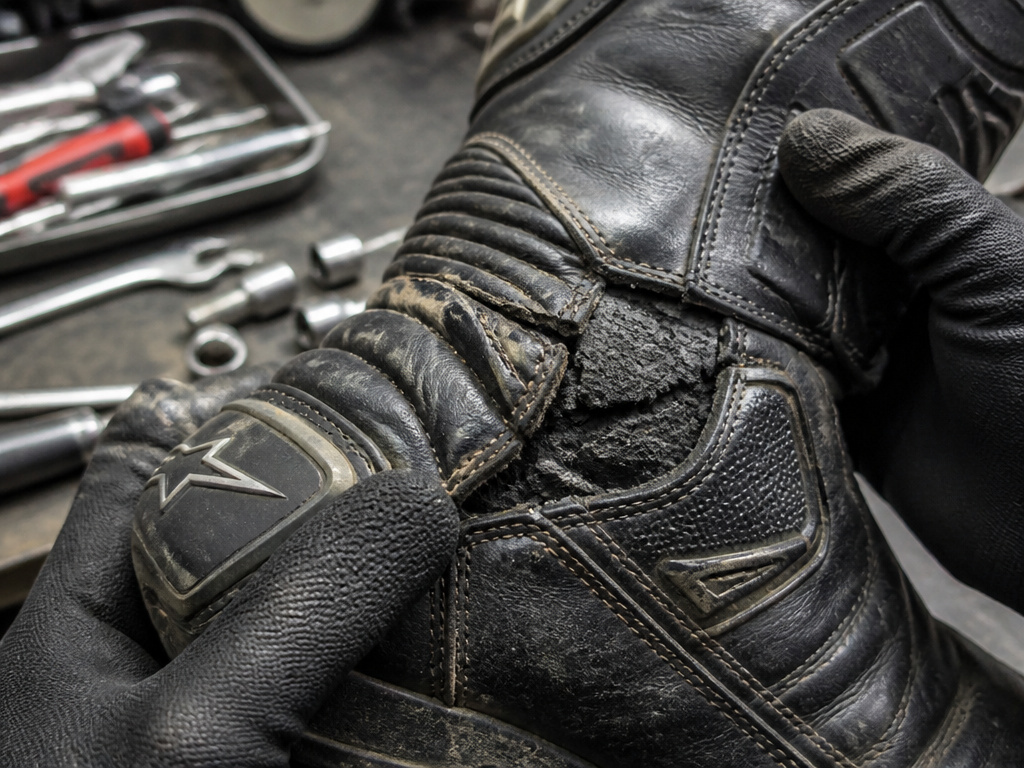
Certification tests new boots. Materials age. Leather dries out and loses tensile strength. Synthetic fabrics break down from UV exposure and repeated flexing. Plastics and foams in armor can compress or become brittle. This is not theoretical wear; it directly affects the boot’s ability to perform to its certified standard.
Manufacturers know this. Leatt Corporation, in the manual for its 5.5 Hydradri boots, explicitly recommends replacing their product every three years under normal use conditions. That manual is a primary source document. The three-year mark is not about the sole wearing out; it is about the protective materials, the ones tested for abrasion and impact, degrading past a reliable point. Ignoring this turns your certified PPE into fashion footwear with a false sense of security.
Leather, the traditional king of boot materials, is breathable and durable but requires maintenance to prevent drying and cracking. Modern synthetic textiles and membranes like Gore-Tex offer waterproofing but can delaminate. Abrasion-resistant panels made of TPU or similar plastics can become less flexible and more prone to cracking over time.
Where this goes sideways: Storing boots in a garage or shed where they face temperature extremes and humidity. The Leatt manual warns against storage below -20°C or above 60°C, and specifically says not to leave boots in direct sunlight before use. Heat and UV radiation accelerate the chemical breakdown of virtually every material in a boot.
Your inspection routine matters more as the boots age. Before each season, and every few rides, check for: – Cracks or deep creases in leather or synthetic uppers, especially around flex points like the ankle. – Stitching that is fraying or coming undone, this is a primary structural failure point. – Hardened, compressed, or crumbling foam in the ankle protectors or liner. – A sole that has detached or shows signs of severe wear altering your footing on the pegs.
A boot that passes certification when new is a snapshot. Keeping it necessary requires acknowledging it has a shelf life.
The Default Pick: One Boot That Covers Most Riders

If you ride primarily on paved roads and want one answer: start with a CE Level 1 certified touring boot. This category, like the SIDI Adventure 2 Gore-Tex or the Alpinestars Belize Drystar, typically hits Level 2 in abrasion and ankle protection but may be Level 1 in rigidity, a solid mix for varied conditions. They are tall enough for highway use, often waterproof, and walkable enough for a gas station or lunch stop. They are the compromise that actually gets worn.
For pure urban riders who refuse to wear a tall boot, the non-negotiable minimum is a CE Level 1 certified shoe, like the TCX Street Ace or the Rev’it Metro. They look like high-top sneakers but carry the formal certification for abrasion and impact. They are necessary because they are the only verified protection you will consistently wear for a short commute.
The adventure rider logging off-road miles needs a dedicated ADV boot like the Forma Terra Evo or the Alpinestars Tech 7. These prioritize the untested torsion protection and extreme crush resistance the standard misses, while still carrying CE Level 2 ratings for the basics.
Check the label. Match the numbers to your riding. And replace them when the manufacturer says to, or when the materials tell you they are done.
Frequently Asked Questions
Are motorcycle boots necessary for short rides around town?
Yes, they are arguably more necessary for short urban rides. Most motorcycle accidents happen at low speeds close to home. A CE-certified boot provides abrasion and crush protection that regular shoes lack entirely. A low-speed tip-over can still fracture bones in your foot; a certified boot manages that force.
Can I just wear sturdy work boots instead?
No. Work boots are designed for different hazards, puncture resistance, toe protection from falling objects. They are not tested for motorcycle-specific risks like high-speed abrasion or sideways crush from a 200+ kilogram machine. They offer zero verified ankle impact protection and will fail an abrasion test in a fraction of a second.
What’s the difference between CE Level 1 and Level 2?
Level 2 offers higher performance thresholds in all four tested zones: taller shaft height, longer abrasion resistance, greater sideways crush resistance, and better ankle impact absorption. Level 1 is the legal minimum for certification; Level 2 is the higher standard for increased risk, like highway speeds or more aggressive riding.
How long do motorcycle boots last?
Material degradation, not just wear, dictates lifespan. Manufacturers like Leatt recommend replacement every three years under normal use. Inspect them annually for cracked materials, compromised stitching, and hardened armor. A boot that is falling apart is no longer performing to its certified standard.
Do all motorcycle boots have CE certification?
No. Many fashion-oriented “motorcycle-style” boots and shoes lack any certification. In the EU, it is illegal to sell uncertified footwear as protective motorcycle gear. Always look for the CE mark and the four-zone EN 13634:2017 label inside the tongue. If it is not there, it is not certified PPE.
Before You Go
Motorcycle boots are necessary because physics is unforgiving. The EN 13634:2017 standard exists to quantify that necessity, turning vague claims about “protection” into testable seconds and kiloNewtons. A CE Level 1 boot provides a verified, meaningful defense against the most common crash injuries. A regular shoe does not.
The necessity question finally resolves to this: are the risks of abrasion, crush, and impact present when you ride? If yes, then footwear tested to mitigate those specific risks is not optional. Your foot has over two dozen bones and a network of tendons with poor blood supply. Healing is slow and often imperfect. The right boot is the single most effective piece of gear for preventing life-altering lower-leg injuries.
Read the label. Understand the levels. Buy for your actual riding, not an imagined scenario. And wear them, every time. A boot left in the garage is just a piece of history.
