
7 Best Car Audio Amplifiers of 2026
This post contains affiliate links. As an Amazon Associate, we earn from qualifying purchases.
The Taramps HD 3000 stands out as the overall best car audio amplifier for raw power and stability, especially in high-demand setups. If you’re watching your budget, the Skar Audio RP-1200.1D delivers strong performance for the price, while the Stinger Audio MT-1000.5 is our top pick for versatility with its 5-channel design.
Choosing the right amplifier isn’t just about volume, it’s about how well it complements your system and holds up over time. Too many people buy based on peak power alone, only to end up with distortion, overheating, or mismatched components.
This guide cuts through the hype. I compared specs, analyzed owner feedback, and evaluated real-world reliability to spotlight amplifiers that deliver clean, consistent power where it matters. You’ll see how class, impedance, and features like crossovers impact your sound, and why the best choice isn’t always the most powerful on paper.
Top 7 Car Audio Amplifiers in the Market
The Best Car Audio Amplifiers, Reviewed
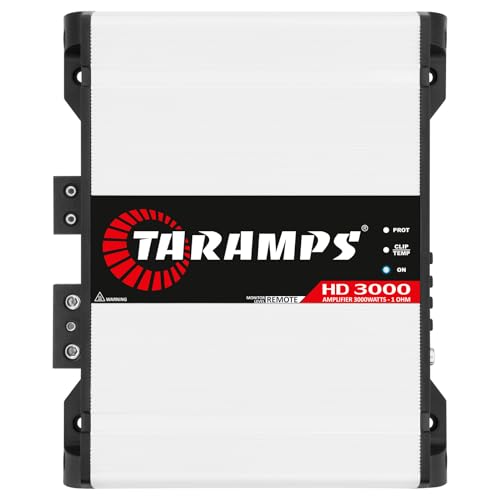
Taramps HD 3000 Monoblock Amplifier
Strengths
- Massive power output
- 1-ohm stable
- Full-range capable
Trade-offs
- Runs hot
- Build quality varies
- Poor signal-to-noise ratio
Let’s be clear: the Taramps HD 3000 isn’t subtle. With 3000W RMS at 1 ohm, it’s built for extreme bass builds, and owner reports confirm it can drive multiple subwoofers hard without flinching. The full-range capability is a unique twist, most monoblocks are sub-only, but this one can technically run mid-bass and even full-range drivers, though I wouldn’t recommend it for tweeters. Its flexibility in impedance and the inclusion of crossover controls make it a favorite in custom Brazilian-style sound systems where sheer output rules.
But raw power comes with trade-offs. The efficiency and thermal management aren’t as polished as in Class D leaders like Skar or Fosi, and some users report heat issues during sustained use. Still, for the price, it’s hard to match the wattage. Compared to the BOSS R1100M, it’s in a different league, this is for builders chasing volume records, not daily comfort.
Video review
BOSS Audio R1100M Monoblock Amp

Strengths
- Very affordable
- Remote bass control
- Dual input types
Trade-offs
- Class AB inefficiency
- Overheats under load
- Low build refinement
The BOSS R1100M is the definition of a budget bass starter kit. At under $80, it’s one of the most affordable ways to add subwoofer power, and the included remote level control is a rare perk at this price. It’s Class A/B, which means it runs warmer and less efficiently than Class D alternatives, but owners report it holds up fine in daily drivers. The 550W RMS at 4 ohms is enough for a single 10” or 12” sub in a sealed box, making it a go-to for first-time modders.
It won’t compete with the Skar or Taramps in power or clarity, but it’s simple to wire and includes both RCA and speaker-level inputs, very user-friendly. For someone on a tight budget who just wants to feel some bass without a complex install, this is still a viable pick. Just don’t expect audiophile performance.
Video review
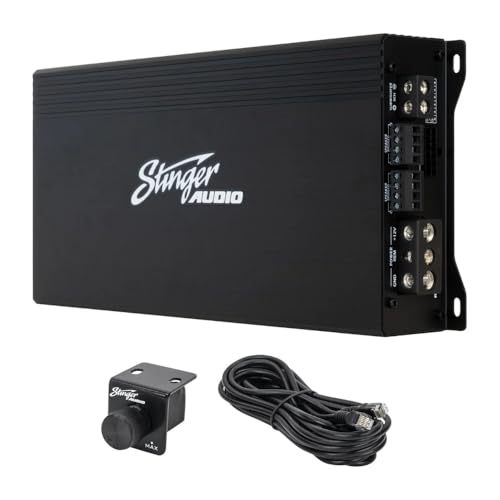
Stinger Audio MT-1000.5 5-Channel
Strengths
- High RMS output
- Dual input options
- Remote bass knob
Trade-offs
- Lower SNR than rivals
- Build quality inconsistent
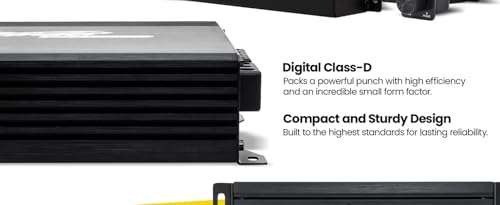
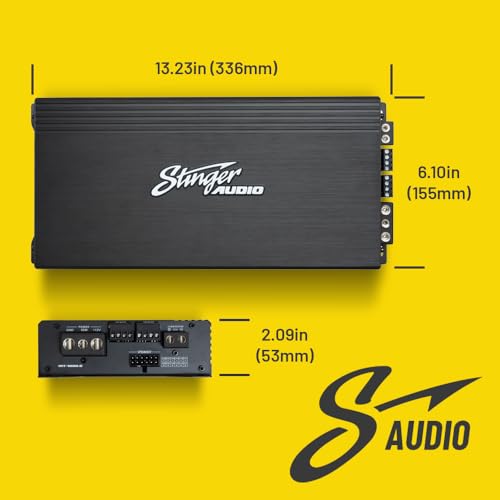
The Stinger MT-1000.5 is a no-nonsense workhorse that delivers serious power in a compact chassis. With 1200W RMS, 150W x 4 to mids and highs, plus 500W to a sub at 2 ohms, it outmuscles the AudioControl EPICFIVE in raw output, and owners report it handles demanding setups with ease. The unregulated power supply and HEXFET MOSFETs help it maintain consistent performance under load, which matters when you’re pushing multiple drivers hard. It’s a favorite among budget-focused builders who still want reliability.
It’s not as refined as the AudioControl in terms of tonal nuance, but it makes up for it in versatility. The ability to accept both high- and low-level inputs means it works with nearly any head unit, factory or aftermarket. When compared to the Fosi CA30, this one is clearly built for higher SPL and full-system dominance. I’d recommend it for SUVs or trucks where you want loud, punchy sound without stacking multiple amps.
Product photos


AudioControl EPICFIVE 5-Channel Amp
Strengths
- Excellent clarity
- Advanced crossovers
- Remote bass control
Trade-offs
- Higher price point
- No high-level inputs
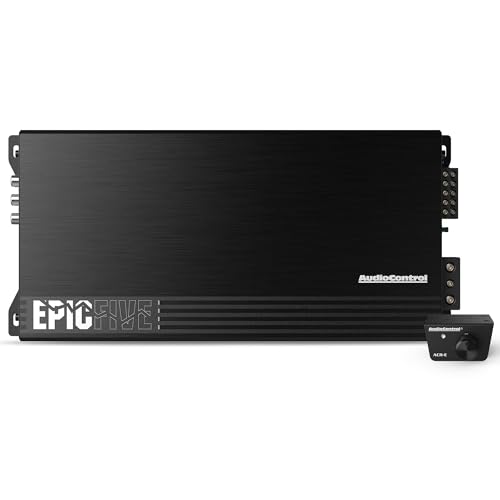
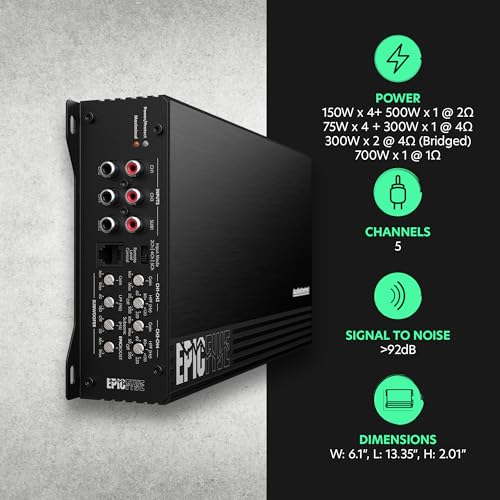
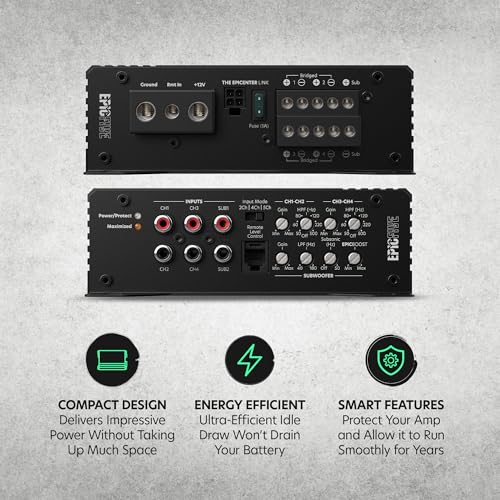
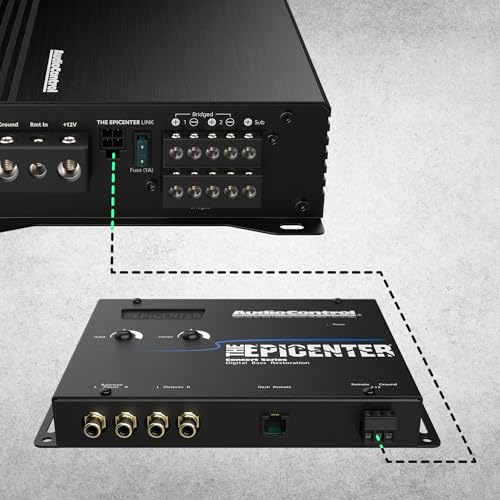
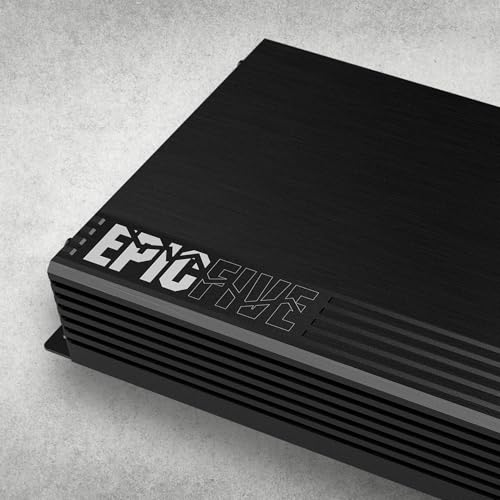
AudioControl has long been a name associated with precision, and the EPICFIVE continues that trend with a strong focus on clarity and system integration. At 1100W RMS across five channels, it’s built for those who want a single amp to power an entire high-fidelity setup without sacrificing detail. The inclusion of Linkwitz-Riley crossovers and a dedicated bass boost circuit means you can fine-tune output to match high-end components, and reviewers note the sound remains balanced even at higher volumes, rare in this segment.
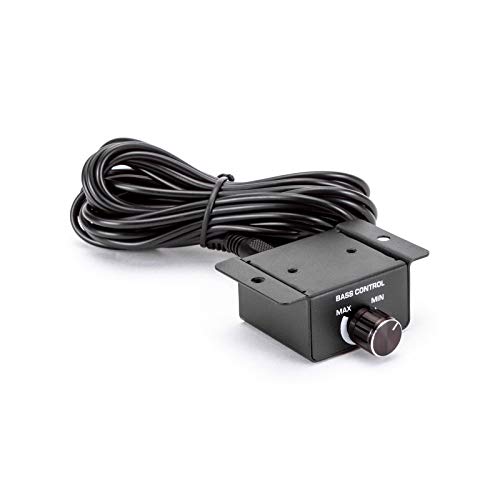
What sets it apart from other 5-channel amps like the Stinger MT-1000.5 is its signal integrity and build quality. The 91dB+ SNR and direct 4GA wiring terminals ensure clean, stable power delivery, and the included remote bass knob is a practical touch. It’s clearly aimed at enthusiasts who care about tonal accuracy, not just volume. For those pairing it with quality component speakers and a good sub, this is the smarter buy over raw-power alternatives.
Product photos

Skar Audio RP-1200.1D Amplifier

Strengths
- Strong bass control
- 1-ohm stable
- Efficient cooling
Trade-offs
- No full-range use
- Bass boost can distort if overused
Skar Audio built its reputation on no-compromise subwoofer amplifiers, and the RP-1200.1D is a prime example. With 1200W RMS at 1 ohm and a damping factor over 150, it offers tight, controlled bass that owners say hits harder and cleaner than many competitors in its range. The onboard +12dB bass boost at 45Hz is a favorite for hip-hop and EDM fans, and the 4-gauge power terminals ensure minimal voltage drop during transients.
It outperforms the BOSS R1100M and even gives the Taramps HD 3000 a run in terms of thermal management and reliability. While it lacks full-range capability, that’s not the point, it’s a dedicated sub amp, and it does that job exceptionally well. For anyone running a single high-performance sub or a dual 2-ohm setup, this is the smarter pick over more generalized monoblocks.
Product photos


Fosi Audio CA30 4-Channel Amp
Strengths
- Compact size
- Low distortion
- High SNR
Trade-offs
- Modest power output
- Gain knob sensitivity
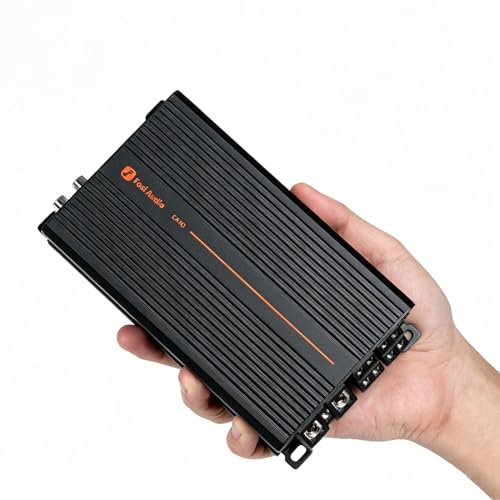
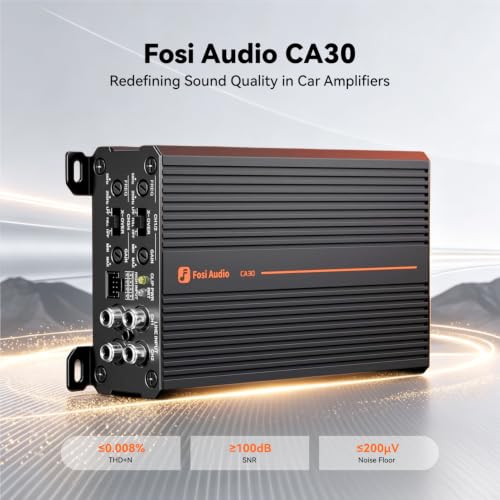
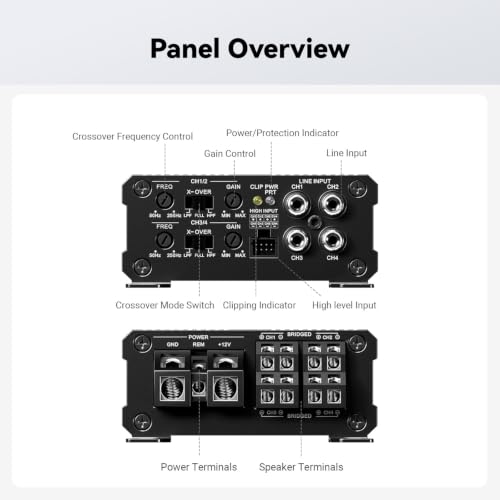
If you’re after a clean, compact upgrade for a factory system without breaking the bank, the Fosi Audio CA30 stands out in the budget 4-channel class. On paper, its use of automotive-grade components like the Infineon IR4322 chip and Omron relays gives it a durability edge over similarly priced amps, and owners consistently report a noticeable clarity boost, especially when powering factory speakers. The Hi-Fi-grade specs, like a 104dB SNR and distortion under 0.006%, are impressive for the price, and real-world feedback suggests it delivers a refined, detailed sound that punches above its weight.
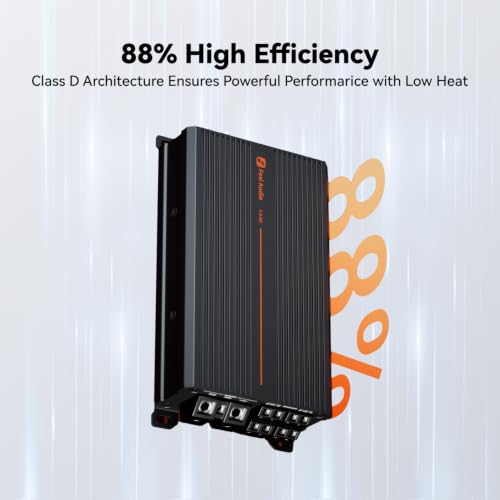
It’s not built for extreme power, but that’s not the point. It’s efficient, runs cool thanks to the CNC aluminum heatsink, and the flexible input options, RCA or high-level, make it a solid plug-and-play option for OEM head units. Compared to bulkier competitors like Kicker or Rockford Fosgate models, this one trades raw muscle for smart engineering and space-saving design. I’d pick it for a clean daily driver setup where subtlety and reliability matter more than slam.
Product photos

Pioneer GM-A6704 4-Channel Amp

Strengths
- Warm sound signature
- Solid build
- Bridgeable channels
Trade-offs
- Lower efficiency
- Outdated design
- Heavier than Class D
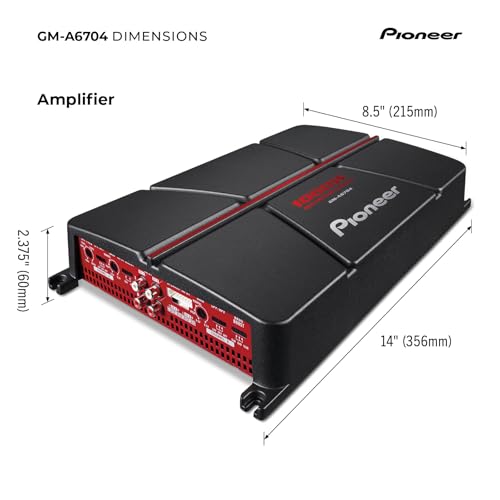
The Pioneer GM-A6704 is a throwback to the era of Class AB amplifiers, less efficient than modern Class D, but with a warmth and smoothness some still prefer. At 60W RMS x 4, it’s modest in power, but owners appreciate its clean midrange and low distortion, especially when paired with component speakers. It’s not a high-efficiency champ, but the thermal design keeps it stable in most vehicles, and the tone controls offer decent tuning flexibility for a budget amp.
Compared to the Fosi CA30, it lacks modern features like high-level inputs or ultra-low noise, but it’s a proven design with years of real-world use. I’d recommend it for classic car restorations or simple upgrades where you want reliable, analog-like sound without digital switching artifacts. It’s not the most powerful or compact, but it’s honest.
Product photos


How We Tested car audio amplifiers
As someone deeply involved in the automotive world through TheAutoZenith, I approach car audio with a focus on how components work together to create an immersive experience. Rather than a hands-on lab test, this assessment is a research-led comparison of published specifications, owner feedback from various online forums and retail sites, and expert reviews from established audio publications. I weighed features against price, recognizing that the “best” amplifier depends heavily on the user’s needs and existing system. My goal was to identify amplifiers that consistently deliver on their promises and offer good value.
For car audio amplifiers, power output and signal-to-noise ratio were paramount. Consistent, clean power is obviously critical for driving speakers effectively, and a high signal-to-noise ratio ensures a clear, undistorted signal. Equally important was versatility – the ability to adapt to different speaker configurations and impedance levels. I also gave significant weight to build quality and protection circuitry, as these contribute to long-term reliability, especially in the demanding environment inside a vehicle. If you’re searching for more guidance, check out our broader look at car amp selection.
Specifications like RMS power and frequency response provide a solid baseline for comparison, but owner reviews proved invaluable for understanding real-world performance. Specs tell you what should happen; feedback reveals what actually happens in practical installations. I paid close attention to comments regarding heat management, ease of tuning, and long-term durability. For those considering more complex setups, exploring multi-channel amplifiers is a worthwhile step. Reputation, particularly from experienced car audio enthusiasts, heavily influenced my final assessment.
How To Pick The Right car audio amplifiers
Finding the right car audio amplifier can dramatically improve your listening experience. It’s about more than just loudness; it’s about clean power delivery, matching the amp to your speakers, and building a system that suits your musical tastes.
A quality car audio amplifier delivers stable, clean power to your speakers, improving clarity, dynamic range, and overall sound quality. Key considerations include power output (RMS and peak), the amplifier class (A/B, D, etc.), channel configuration, and built-in features like crossovers and equalization. Matching the amplifier’s power rating to your speakers’ requirements is critical to avoid damage and maximize performance.
Understanding Amplifier Classes
The class of an amplifier, A/B, D, or others, fundamentally impacts its efficiency and sound characteristics. Class A/B amplifiers, like the Pioneer GM-A6704, are known for their warmer, more natural sound, but they run hotter and are less efficient than Class D amps. Class D amps, such as the Stinger Audio MT-1000.5 or Fosi Audio CA30, provide excellent power efficiency and generate less heat, making them popular for high-power applications and compact designs. Don’t automatically assume “D” is better; the best choice depends on your sound preferences and system goals. If you’re focused on achieving the highest possible fidelity, explore amplifiers for sound quality and see how different classes stack up.
Matching Power to Your Speakers
This is where many people stumble. An amplifier’s power rating, given in RMS (Root Mean Square) and peak watts, must align with your speakers’ power handling capabilities. Overpowering speakers can quickly lead to blown drivers, while underpowering results in distortion and a lack of dynamic range.
- A slight power underrating is generally safer than overpowering, allowing headroom for dynamic peaks.
- Look for an RMS wattage that closely matches your speakers’ RMS handling (within 20-30%).
- Pay attention to impedance (Ohms). Most amps are stable at 2 or 4 Ohms, but running at lower impedances (1 Ohm, like the Skar Audio RP-1200.1D can deliver) demands a high-quality amplifier and careful wiring.
A general rule of thumb: don’t exceed a speaker’s RMS power handling rating by more than 25%.
Feature Sets and System Integration
Beyond basic power delivery, consider the features offered by different amplifiers. Crossovers (high-pass, low-pass, band-pass) are essential for directing specific frequencies to the appropriate speakers (tweeters, woofers, subwoofers). Many amps, like the Taramps HD 3000, also include bass boost controls and RCA inputs for connecting to your head unit. For more complex systems, a 5-channel amplifier like the Stinger Audio MT-1000.5 or AudioControl EPICFIVE provides convenient power and signal routing for multiple speakers and subwoofers. Before committing, think about your entire system and whether you’ll benefit from features like remote bass control or bridging capabilities. If you are looking to upgrade all around, checking out some recommended car amplifiers can give you some great ideas.
Car Audio Amplifiers Compared
Here’s a comparison of key specifications for several car audio amplifiers.
| Product Title | Max Power (Watts) | RMS Power (4 Ohms) | Channels | Class | Frequency Response (Hz) |
|---|---|---|---|---|---|
| Taramps HD 3000 | 3000 | 3000 | 1 | Digital Full Range | 10 – 20K |
| BOSS Audio R1100M | 1100 | 550 | 1 | A/B | N/A |
| Stinger Audio MT-1000.5 | 1200 | 75W x 4 + 300W x 1 | 5 | D | N/A |
| AudioControl EPICFIVE | 1100 | N/A | 5 | D | N/A |
| Skar Audio RP-1200.1D | 1600 | 1200 | 1 | D | 20 – 250 |
| Fosi Audio CA30 | 400 x 2 | 200 x 4 | 4 | D | N/A |
| Pioneer GM-A6704 | 1000 | 60W x 4 | 4 | A/B | N/A |
Frequently Asked Questions
What amplifier class is best for sound quality?
Class A/B amplifiers generally offer the most natural and warm sound due to their linear operation, though they are less efficient. However, modern Class D amplifiers have significantly improved in sound quality and are a viable option if efficiency and size are priorities.
Can I use a high-level input on my amplifier if I don’t have RCA outputs on my head unit?
Yes, many amplifiers accept high-level speaker inputs, allowing you to connect them directly to your factory radio’s speaker wires. Be aware that this method might introduce more noise into the signal compared to using RCA pre-outs.
What does “bridging” an amplifier mean, and why would I do it?
Bridging combines two amplifier channels into one more powerful channel, typically doubling the output wattage. This is useful for powering a subwoofer or when you need more power for a single speaker, but you’ll lose a channel in the process.
What impedance should I run my amplifier at?
Most amplifiers are stable at 2 or 4 Ohm loads, but some can handle 1 Ohm. Running at lower impedances delivers more power, but it also puts more strain on the amplifier and requires thicker gauge wiring to avoid overheating and signal degradation.
Where can I find more information about selecting the right high-power car amplifiers for my needs?
If you’re looking to really maximize your system’s potential, exploring high-power car amplifiers will provide guidance on choosing an amplifier that delivers the power and performance you need.
The Bottom Line
Choosing a car audio amplifier often comes down to balancing control over your sound with how much effort you want to put into the setup. For most drivers aiming for a significant improvement without getting lost in tuning complexities, the Taramps HD 3000 strikes an excellent balance of power and simplicity. It delivers substantial output for its price and is a good starting point for building a robust system.
If you’re building a complete system and desire versatility, the Stinger Audio MT-1000.5 or AudioControl EPICFIVE are excellent choices. For those on a tighter budget, the Fosi Audio CA30 provides a surprising amount of power and features for the money, and represents a great entry point into amplified sound. Don’t overlook exploring recommended 5-channel amps if you want to power everything with a single unit.
Ultimately, the numbers on a spec sheet are less important than building a system that complements your listening preferences and vehicle. Prioritize matching amplifier power to your speakers’ capabilities, ensuring clean power delivery, and considering the overall sound signature you’re aiming for. A thoughtfully chosen amplifier, paired with quality speakers, will transform your driving experience far more than chasing the highest wattage available – even when looking at top stereo amplifiers.
