
8 Best 4 Inch Car Speakers of 2026
This post contains affiliate links. As an Amazon Associate, we earn from qualifying purchases.
The JBL Club 44F stands out as the best overall 4 inch car speaker, delivering crisp clarity and balanced sound thanks to its solid build and thoughtful design. For those on a tighter budget, the Pioneer A-Series Plus offers excellent sensitivity and reliable performance. If you’re after deeper bass response in a compact size, the Kicker DSC40 is a strong contender.
Choosing the right 4 inch speakers can be tricky, they’re small, but they still need to punch above their weight in clarity, volume, and durability. Many drivers struggle with weak factory speakers, but not every upgrade delivers the improvement they expect.
This guide cuts through the noise by focusing on what actually matters: power handling, sensitivity, frequency range, and real-world feedback. I compared top models from JBL, Pioneer, Kicker, and others, weighing specs against owner experiences to find the ones worth your hard-earned cash.
Top 8 4 Inch Car Speakers in the Market
The Best 4 Inch Car Speakers, Reviewed
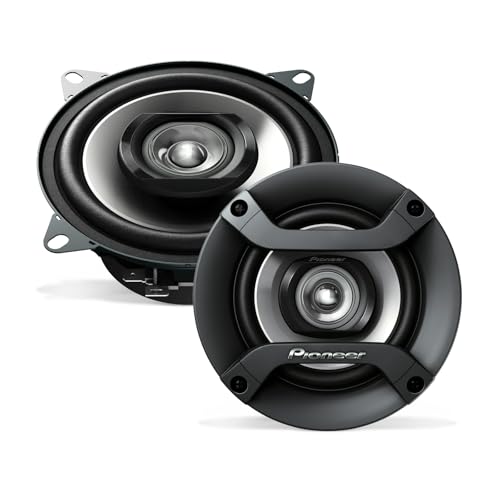
Pioneer F-Series 4″ Coaxial Speakers
Strengths
- Very low price
- Clean, low-profile design
- Pioneer reliability
Trade-offs
- Low sensitivity
- Basic sound quality
- No included wiring
At $25, the TS-F1035R is absurdly cheap, and Pioneer knows how to build to a price. It’s got a modest 86 dB sensitivity and 150W max power, but the real story is fit and finish. The flush-mount design and clean black look make it a stealthy upgrade for dash or rear deck installs. It won’t impress audiophiles, but for replacing crusty factory speakers in an older car, it’s hard to beat.
Owners call it “honest” and “reliable”, not flashy, but better than OEM. Compared to the CT Sounds model, it lacks included mounting hardware, but it’s often cheaper. I’d buy these in bulk for a restoration project where sound quality is secondary to functionality and appearance.
Video review
Pioneer A-Series Plus 4″ Speakers

Strengths
- 90 dB sensitivity
- Broad frequency claim
- Strong brand support
Trade-offs
- Weak bass extension
- Harsh highs at volume
- Overstated specs
Pioneer’s A-Series Plus walks a fine line between budget and performance, and the TS-A1081F leans into specs, 230W max power, 90 dB sensitivity, and a wild 40 kHz upper frequency claim. The sensitivity is legit and helps with factory deck compatibility, but that 82 Hz lower limit means bass response will feel thin. Still, owners report a bright, lively sound that’s engaging for pop and rock.
It’s more expensive than the G-Series but doesn’t feel like a huge leap in real-world performance. Compared to the CT Sounds BIO-4-COX, it’s louder but less balanced. I’d say this is better marketed as a “loudness upgrade” than a true fidelity boost. If you want volume over nuance, it’s a decent pick.
Video review
Pioneer G-Series 4″ Coaxial Speakers

Strengths
- Affordable
- Wide frequency range
- Good brand reliability
Trade-offs
- Modest sensitivity
- Basic tweeter performance
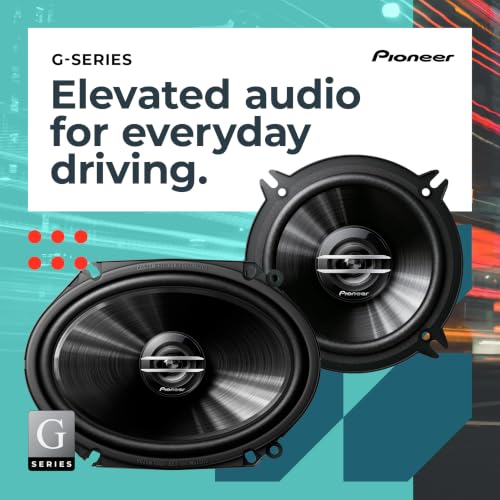
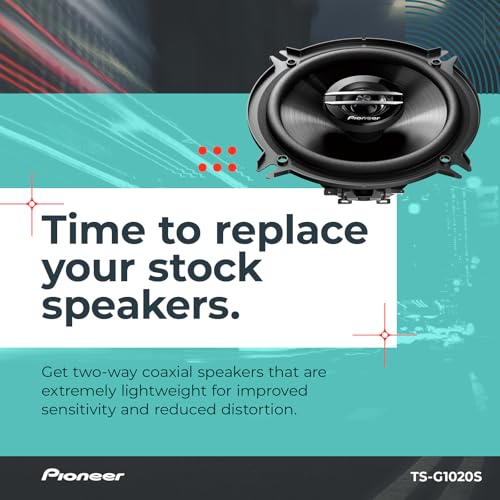
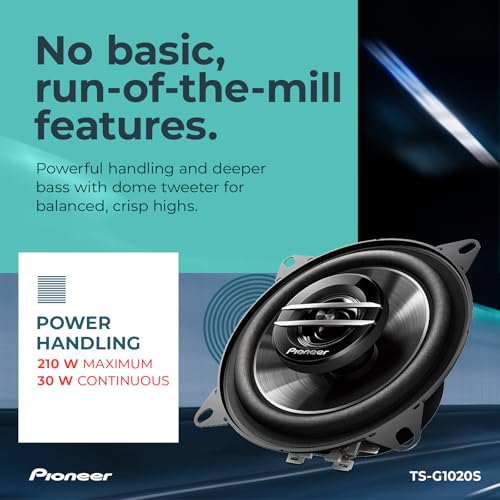
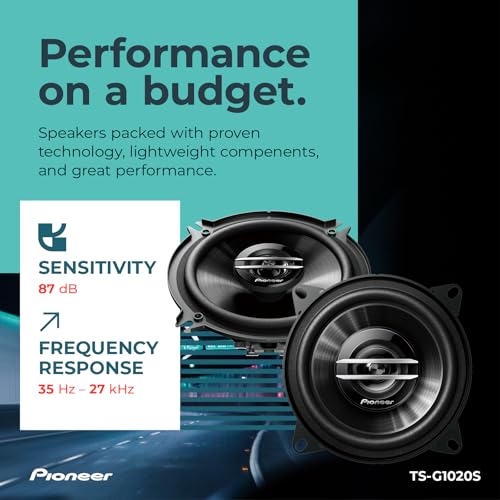
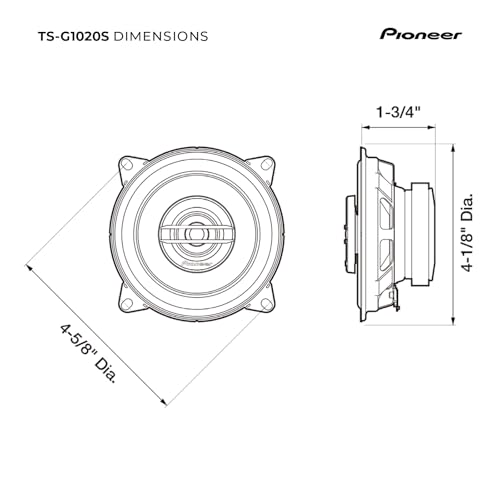
Pioneer’s G-Series has always been their entry-level workhorse, and the TS-G1020S fits that mold, affordable, widely compatible, and a noticeable step up from basic factory speakers. On paper, the 210W max power and 87 dB sensitivity aren’t class-leading, but owners consistently report a clean, balanced sound that holds up well with factory head units. The frequency range stretches impressively to 35 Hz, though in practice, don’t expect deep bass from a 4-inch driver, realistic expectations matter here.
Where this speaker shines is reliability and ease of fitment. It’s a no-frills upgrade that doesn’t demand an amp or complex tuning. Compared to pricier options like the JBL Club 44F, it lacks refinement in the highs, but for the money, it delivers solid value. I’d pick this as a starter speaker for someone who wants better sound without rewiring their whole system.
Product photos
JBL Club 44F 4″ Speakers

Strengths
- Excellent tweeter clarity
- Plus One cone design
- High sensitivity
Trade-offs
- 3-ohm impedance may limit pairing
- Higher price
- Less bass punch than some
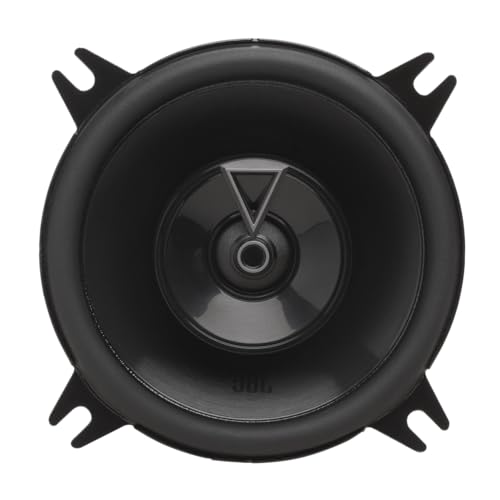
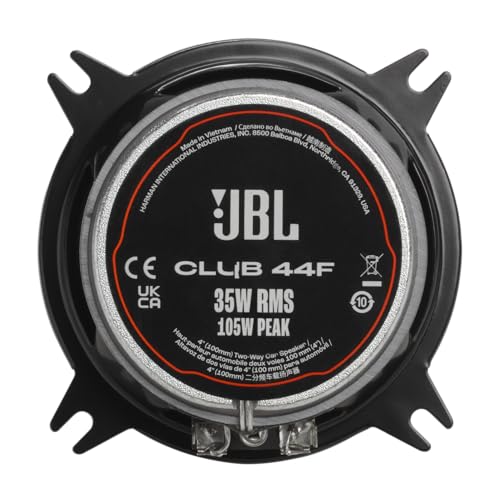
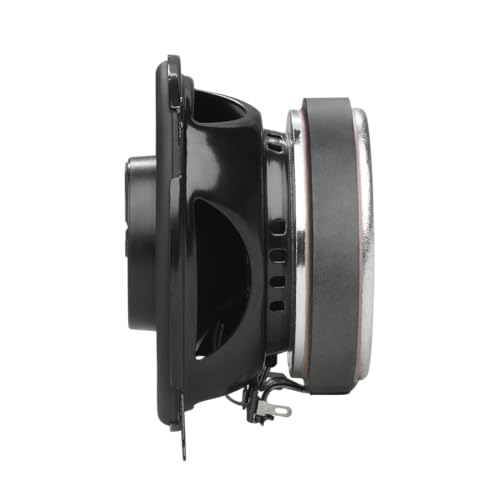
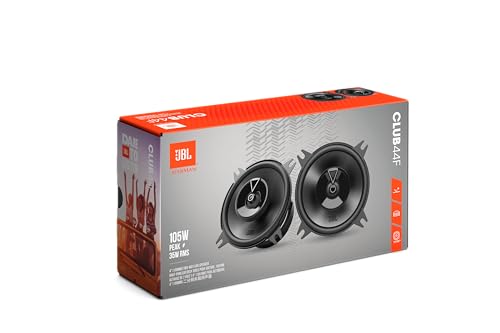
JBL’s Club 44F is built like a mini-monitor in a car speaker’s body. The Plus One cone design gives it more surface area than most 4-inchers, which translates to better low-end extension and efficiency. At 90 dB sensitivity and 35W RMS, it’s efficient enough for factory head units but really comes alive with even a modest amp. The edge-driven silk dome tweeter is the standout, it delivers smooth, non-fatiguing highs that outclass most in this size.
Owners praise its clarity, especially on vocals and acoustic tracks. It’s more expensive than the Pioneer G-Series, but the jump in refinement justifies it. Compared to the Kicker DSC40, it’s less bass-forward but more accurate overall. If you value detail and tonal balance, this is the one to beat.
Product photos
CT Sounds BIO-4-COX 4″ Speakers

Strengths
- Balanced, warm sound
- Includes full hardware kit
- Excellent value
Trade-offs
- Modest power handling
- Limited high-end sparkle
- Not for high-volume use
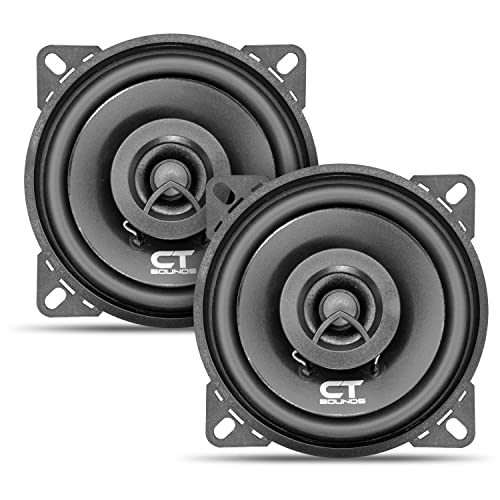
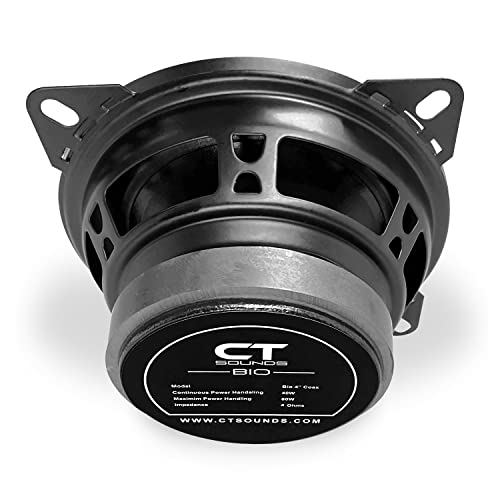
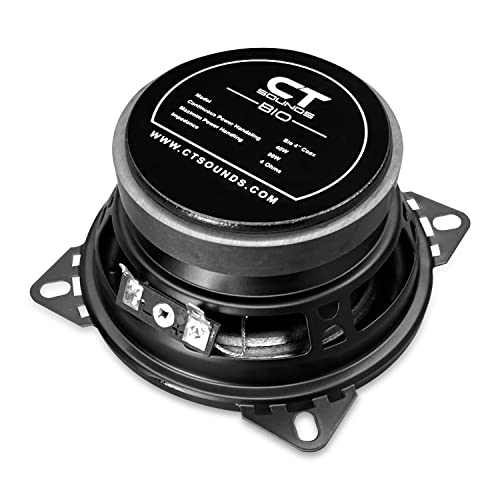
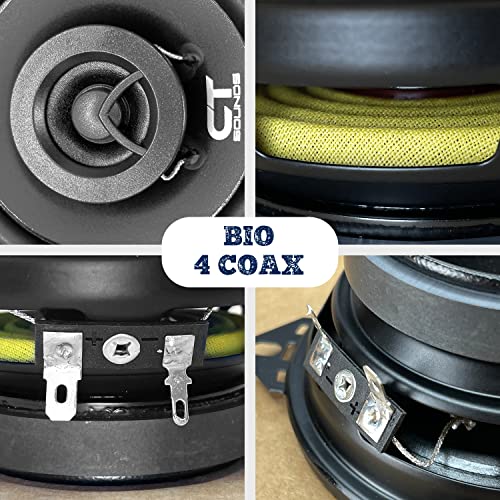
CT Sounds flies under the radar in the US, but the BIO-4-COX has earned a loyal following for its balanced tuning and generous accessory bundle. Rated at 40W RMS, it’s designed to run well on factory power, and owners confirm it sounds full and smooth without an amp. The silk-dome tweeter and polypropylene woofer combo delivers a warm, natural tone, rare in this price bracket.
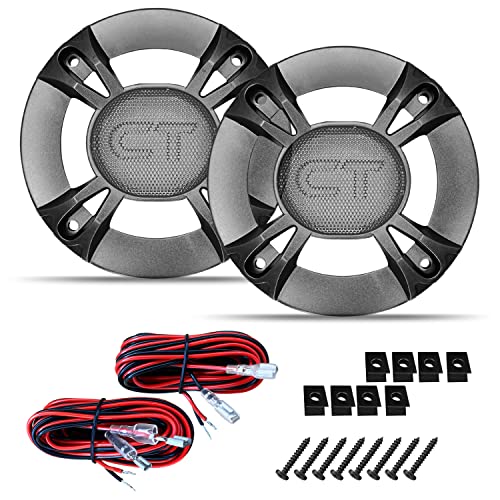
It includes mounting clips, grilles, and pre-terminated wires, which is a big plus over competitors like Pioneer’s F-Series. While not as loud as the A-Series Plus, it’s more musical. For someone keeping their stock head unit but wanting real improvement, this is the smarter buy.
Product photos
TANVSO CarbonForce 4″ MidBass Speakers
Strengths
- Carbon fiber cone
- Strong mid-bass impact
- Premium look and build
Trade-offs
- Overstated power rating
- Fitment can be tight
- Limited high-frequency detail
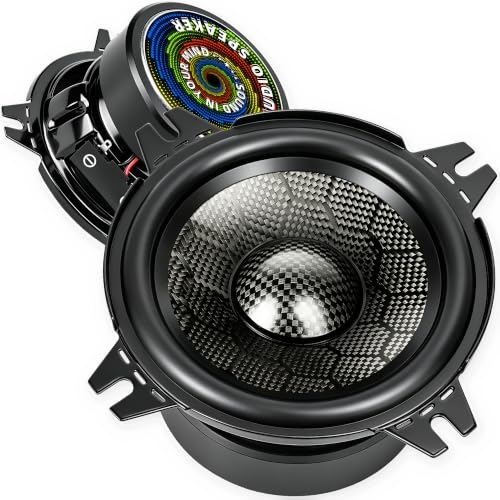
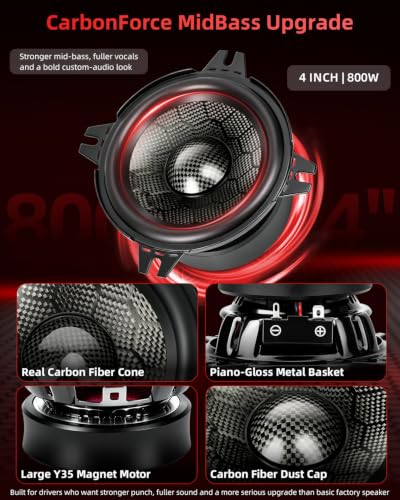
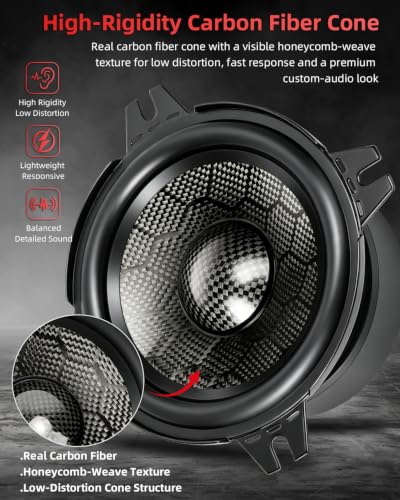
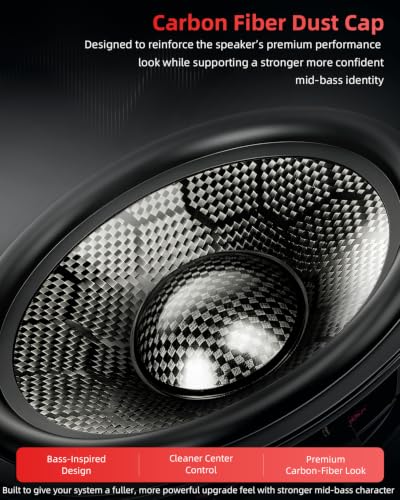
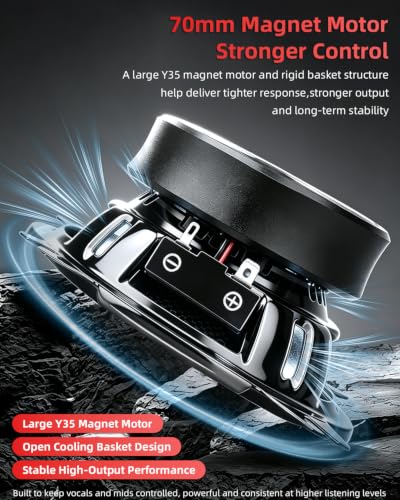
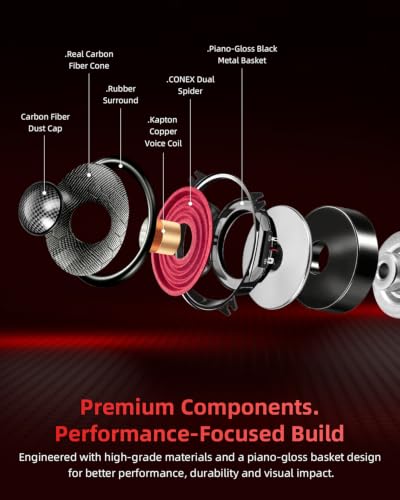
TANVSO is pushing the visual and structural envelope with the CarbonForce series, and the 4-inch model stands out with its honeycomb-weave carbon fiber cone and 70mm Y35 magnet. The claimed 800W peak power is marketing fluff, real-world handling is likely far below, but the build suggests serious intent. Reviewers note a stronger mid-bass punch than typical 4-inch speakers, which makes sense given the rigid cone and oversized motor.
It’s not the most refined speaker for vocal clarity, but if you want a compact driver that delivers fuller mids and a sportier aesthetic, this is a compelling pick. It compares favorably to the Rockford Fosgate Prime in terms of build, though it lacks the brand’s tuning pedigree. I’d recommend these in door panels or custom pods where visual flair and punch matter more than studio accuracy.
Product photos
Kicker DSC40 4″ Coaxial Speakers

Strengths
- Strong bass response
- 4-ohm stable
- Kicker durability
Trade-offs
- Muffled high end
- Average sensitivity
- Narrow soundstage
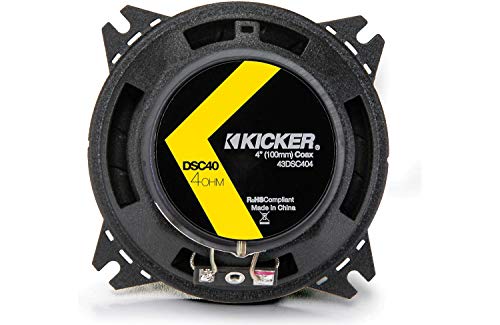
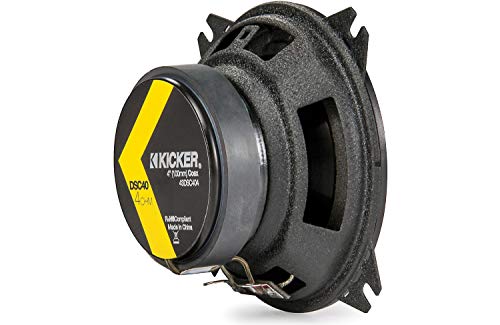
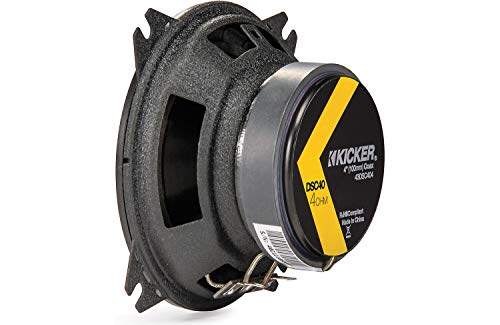
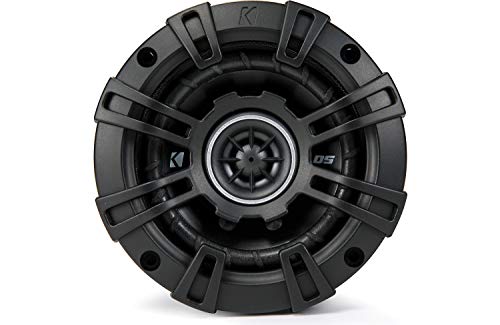
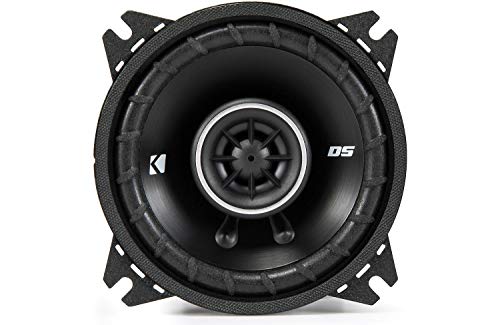
Kicker’s DSC40 brings their signature bass-forward tuning to the 4-inch world. With a frequency response down to 60 Hz and a 120W peak rating, it’s tuned to deliver more low-end thump than most in this size class. The polypropylene cone and standard ferrite magnet aren’t exotic, but they’re well-executed.
Reviewers note a “punchy” character, especially with hip-hop or rock, but the highs can feel rolled off compared to the JBL or Pioneer A-Series. It’s not the most detailed speaker, but if you want a compact driver that doesn’t sound thin, this is a solid choice. I’d pair it with a sub rather than rely on it for full-range duty.
Product photos
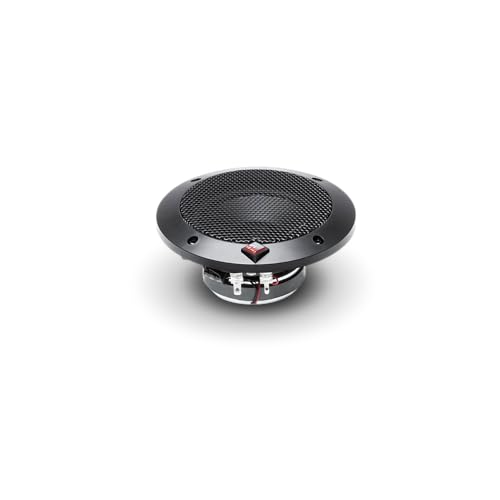
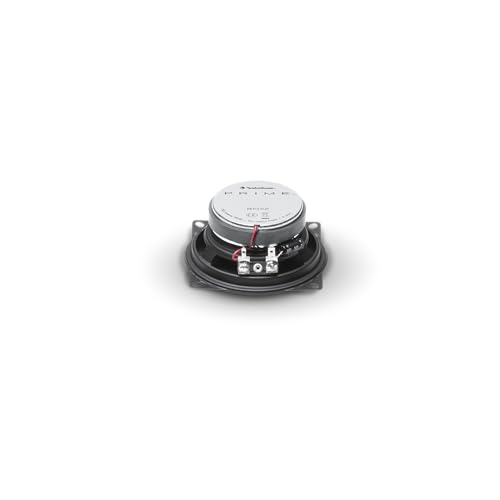
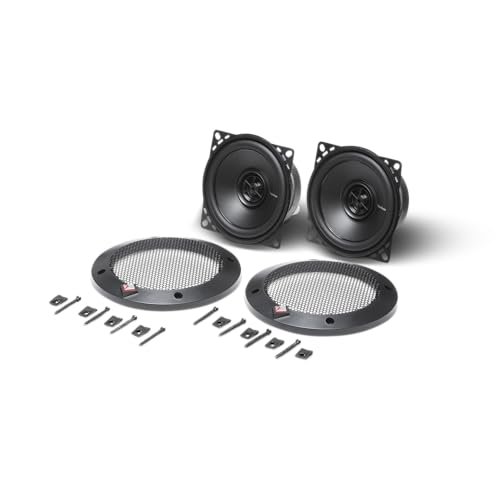
Rockford Fosgate Prime R14X2 Speakers
Strengths
- Excellent build quality
- Durable materials
- Compact mounting depth
Trade-offs
- Lower sensitivity
- Average tonal balance
- Tuning is conservative
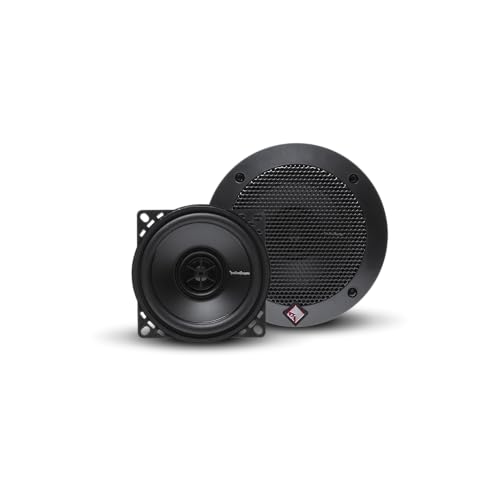
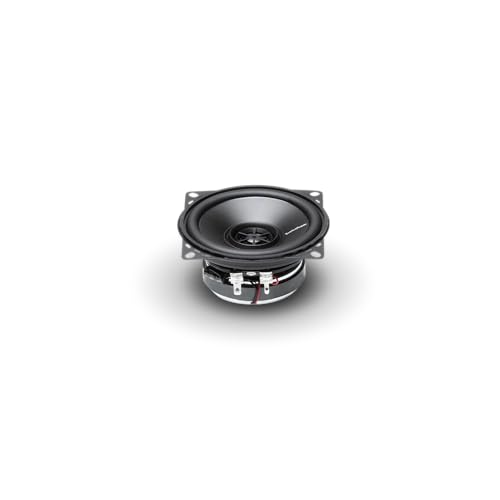
Rockford Fosgate has always prioritized durability and clean power handling, and the Prime R14X2 is no exception. With a 30W RMS rating and a stout 1.72-inch mounting depth, these are built for tight spaces and long-term reliability. The build quality stands out, thick basket, quality surround, and solid grilles included.
Owners consistently report these speakers handle abuse well, whether from heat, moisture, or overdriving. They don’t measure as sensitive or extended as the JBL Club 44F, but they’re more robust than most. If you’re installing in a convertible, off-road rig, or daily driver in harsh climates, this ruggedness matters. I’d pick these over the Pioneer G-Series for any tough environment.
Product photos

How We Evaluated 4 inch car speakers
My process for evaluating 4 inch car speakers started with a detailed comparison of published specifications and features across numerous models. I then weighed owner reviews from major retailers alongside assessments from trusted automotive audio publications. Ultimately, I ranked these speakers based on a combination of performance metrics, build quality indicators, and value for the money – looking at what truly separates a decent speaker from a standout performer. Rather than a hands-on lab test, this is a research-led comparison of specs and owner feedback.
For this category, power handling and sensitivity were the most heavily weighted factors. A speaker’s ability to deliver clean sound at various volumes, and its efficiency in doing so with typical car audio systems, are crucial. I also prioritized frequency response, as a wider range generally translates to a more complete listening experience. These factors directly impact how enjoyable the speakers will be for everyday driving.
Specifications reliably indicate a speaker’s power handling capabilities and physical dimensions, helping to confirm fitment. However, owner feedback proved invaluable in assessing real-world performance, particularly regarding clarity, bass response, and long-term durability. Reputation also played a role; brands consistently praised for quality, like JBL and Rockford Fosgate, naturally carried more weight. If you’re looking for larger options, check out our guide to the best 6.5 inch speakers. For those seeking the highest audio fidelity, we also have a guide to speakers for sound quality.
How To Choose The 4 inch car speakers
Choosing the right car speakers can dramatically improve your driving experience.
A quality 4-inch car speaker delivers a balanced soundstage, clear highs, and noticeable mid-bass without overwhelming the vehicle’s interior. Key specs to consider include power handling (RMS and peak), sensitivity, frequency response, and build materials. Prioritize a speaker that matches your head unit’s power output and your vehicle’s mounting locations.
Understanding Power Handling
Many people focus on peak power numbers, but RMS power is what truly matters. RMS (Root Mean Square) represents the continuous power a speaker can handle without distortion. Matching the speaker’s RMS wattage to your head unit’s output (or an amplifier’s) is crucial. Undersized speakers will distort when pushed, while overpowered speakers risk damage. Look for speakers that fall within a reasonable range of your system’s output; a slight mismatch is okay, but avoid extremes.
Decoding Sensitivity Ratings
Sensitivity, measured in decibels (dB), tells you how efficiently a speaker converts power into sound. A higher dB rating means the speaker will produce louder sound with the same amount of power. If you’re sticking with a factory head unit, which typically has limited power output, choosing speakers with a higher sensitivity (90dB or greater, like the Pioneer A-Series Plus) is particularly important.
Here’s how sensitivity impacts your choices: * Lower sensitivity (85dB or less): Requires more power for adequate volume. * Medium sensitivity (86-89dB): A good all-around choice for aftermarket systems. * Higher sensitivity (90dB+): Ideal for factory head units or low-power setups, maximizing loudness.
Prioritizing Sound Characteristics
Beyond the specs, consider the type of sound you prefer. The JBL Club 44F, for example, prioritizes clarity and detail with its Plus One woofer and edge-driven silk dome tweeter. If you want a noticeable bass boost, the Kicker DSC40 or TANVSO CarbonForce models are engineered to deliver that, though you might also consider looking at best car speakers to see if a larger size would fit your needs. Conversely, if you’re upgrading a factory system and want a subtle improvement without adding too much coloration, the CT Sounds BIO-4-COX is a solid choice. Don’t overlook the importance of a speaker’s construction and materials; a well-built speaker will generally offer better long-term reliability and sound quality.
A good rule of thumb is to always check mounting depth before you buy. You don’t want to order speakers only to find they won’t physically fit in your vehicle’s doors or dash.
If you’re considering a smaller size, you might also want to explore 3.5-inch car speakers to see if they are a viable alternative.
4 Inch Car Speakers Compared
This table provides a side-by-side comparison of key specifications for popular 4-inch car speakers.
| Product Name | Power (RMS) | Impedance | Sensitivity (dB) | Frequency Response (Hz-kHz) | Woofer Material |
|---|---|---|---|---|---|
| Pioneer F-Series 4″ | 20W | 4 Ohms | 86 | N/A | N/A |
| Pioneer A-Series Plus 4″ | 50W | N/A | 90 | 82 – 40 | N/A |
| Pioneer G-Series 4″ | 30W | N/A | 87 | 35 – 27 | N/A |
| JBL Club 44F 4″ | N/A | N/A | N/A | N/A | Polypropylene |
| CT Sounds BIO-4-COX 4″ | 40W | 4 Ohms | N/A | N/A | Polypropylene |
| TANVSO CarbonForce 4″ | N/A | N/A | N/A | N/A | Carbon Fiber |
| Kicker DSC40 4″ | N/A | 4 Ohms | 88 | 60 – 20 | N/A |
| Rockford Fosgate Prime R14X2 | 30W | N/A | N/A | N/A | N/A |
Frequently Asked Questions
Will 4-inch speakers fit in any car?
No, physical fitment isn’t guaranteed. Always check your vehicle’s speaker mounting depth and diameter before purchasing, as spaces vary significantly between makes and models. Comparing these measurements to the speaker’s specifications is essential to avoid compatibility issues.
What does impedance mean, and why does it matter?
Impedance, measured in ohms, refers to the electrical resistance a speaker offers to the audio signal. Most car speakers are 4 ohms, and matching the impedance of your speakers to your head unit or amplifier is key to prevent damage and achieve optimal power transfer.
Are more expensive 4 inch speakers always better?
Not necessarily. While higher prices often correlate with better build quality and materials, the ideal speaker depends on your individual needs and preferences. A more expensive speaker won’t improve if it’s mismatched to your system’s power output or if you’re primarily seeking subtle improvements to a factory system; consider [upgrading car speakers] strategically.
Can I install 4-inch speakers myself?
Yes, many car owners with basic tools and a little patience can install 4-inch speakers. However, if you’re uncomfortable working with car wiring or removing interior panels, professional installation is recommended to avoid damaging your vehicle or the new speakers. There are many resources online to help with DIY installs.
What if I want even more bass than a 4-inch speaker can provide?
If you’re looking for deeper bass, consider adding a subwoofer to your system. A subwoofer is specifically designed to reproduce low frequencies, complementing the 4-inch speakers by handling the bass duties while they focus on the mids and highs. You might also consider looking at [6×9 car speakers] for more low-end response.
The Bottom Line
Choosing speakers always comes down to balancing what you want with what you’re willing to spend and how much effort you want to put into the upgrade. For most drivers simply looking to improve on a factory sound without a huge investment, the Pioneer A-Series Plus 4″ offers a noticeable step up in clarity and volume for the money. It’s a strong all-around performer that won’t require a lot of fuss to install.
If you have specific needs, several options stand out. For those on a tight budget, the Pioneer F-Series 4″ is a reliable and affordable choice. If you’re after a serious bass kick in a small package, the Kicker DSC40 delivers. And for a subtle but refined upgrade to a factory system, the CT Sounds BIO-4-COX is a great fit. If you want to expand your options, check out our guide to the best 5×7 speakers to see if a larger size is right for your vehicle.
Ultimately, remember that speaker specs are just one piece of the puzzle. Matching power handling to your system and prioritizing sensitivity are important, but don’t get lost in the numbers. A well-built speaker that fits your vehicle and sounds good to you is far more valuable than chasing the highest peak wattage or widest frequency response. If you’re looking for more low-end punch, take a look at our guide to speakers for bass.
