
9 Best 6×9 Car Speakers for 2026
This post contains affiliate links. As an Amazon Associate, we earn from qualifying purchases.
The Pioneer TS-A6991F stands out as the best overall 6×9 car speaker, delivering powerful, detailed sound that surpasses most factory systems. For those on a tighter budget, the Pioneer TS-A6971F offers excellent value without sacrificing core performance, while the KICKER DSC6930 brings strong bass response and rugged build quality for listeners who want more low-end punch.
If your car’s audio lacks clarity, depth, or volume, upgrading to a quality set of 6×9 speakers makes one of the most noticeable differences you can make without overhauling the entire system. I’ve spent years immersed in automotive audio, and I know how specs, materials, and real-world feedback shape performance.
This guide cuts through the noise by focusing on what actually matters, power handling, sensitivity, build quality, and owner experiences, to help you choose speakers that sound great and last.
Top 9 6X9 Car Speakers in the Market
The Best 6X9 Car Speakers, Reviewed
Pioneer A-Series Plus TS-A6991F

Strengths
- 5-way driver separation
- Excellent sensitivity
- Wide frequency range
Trade-offs
- Not for bass-heavy genres without sub support
- Build quality slightly lighter than Kicker
Pioneer’s 5-way design here is the real differentiator, few coaxial speakers go this far in separating frequency duties. The inclusion of dedicated midrange drivers and a tweeter helps spread the load, which translates to less distortion and a more open soundstage. With a 92 dB sensitivity and a 29 Hz–33 kHz response range, these speakers do a convincing job of filling a car cabin with balanced audio, even with a factory head unit.
Reviewers note the bass isn’t as deep as dedicated subwoofer territory, but for a coaxial, it’s impressively articulate. Compared to the lower-tier A-Series models, the TS-A6991F delivers a clear upgrade in clarity and headroom. If you’re not running an amp but still want premium sound, this is one of the few 6x9s that justifies the ‘best overall’ tag without hype.
Video review
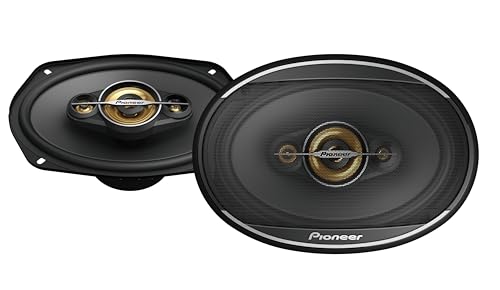
Pioneer A-Series Plus TS-A6971F
Strengths
- Excellent sensitivity
- Balanced sound
- Multi-fit adapters included
Trade-offs
- Not as detailed as 5-way model
- Tweeter lacks high-end air
This is where Pioneer’s value argument gets strong. The TS-A6971F splits the difference between price and performance better than almost any other 6×9 on the list. With 600 watts max, 100-watt RMS, and that consistent 92 dB sensitivity, it plays loud and clean with minimal power. The 4-way design keeps mids and highs distinct, and the frequency range matches the top-tier TS-A6991F almost exactly.
It doesn’t have the 5-way driver array, but for most listeners, the difference is subtle. Owners report it outperforms more expensive options when paired with even a modest amp. If you’re building a solid system without overspending, this should be your default pick.
Video review
KICKER DSC6930 6×9-Inch

Strengths
- Strong bass output
- High sensitivity
- Amp-ready impedance
Trade-offs
- Tweeter harshness at high volume
- Less refined mids
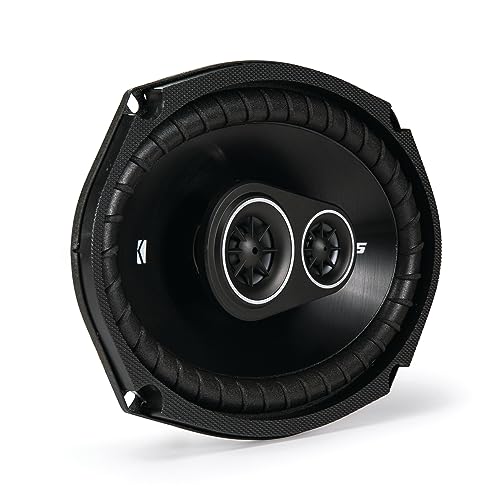
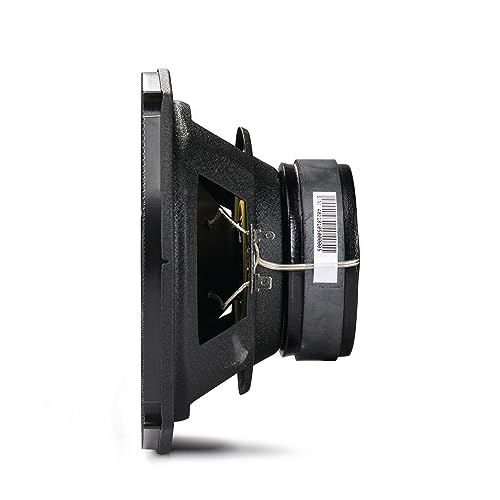
Kicker’s DSC6930 leans hard into bass performance, and it shows. With a 360-watt peak rating and a 92 dB sensitivity, these speakers move air well and respond to power with authority. The frequency response starts at 30 Hz, which suggests solid low-end reach, and owners confirm they deliver a warm, punchy tone that works well with hip-hop and rock. The 4-ohm impedance makes them amp-friendly, so if you’re adding an external source, they’ll reward it.
They’re not as detailed in the upper mids as the Pioneer 5-way, and the tweeter can get shouty if overdriven. But if your main goal is to feel the beat without adding a sub, the DSC6930 is one of the few coaxials that can credibly stretch into sub-like territory.
Product photos


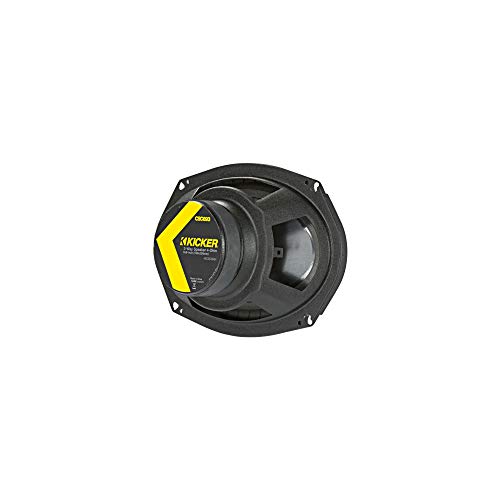
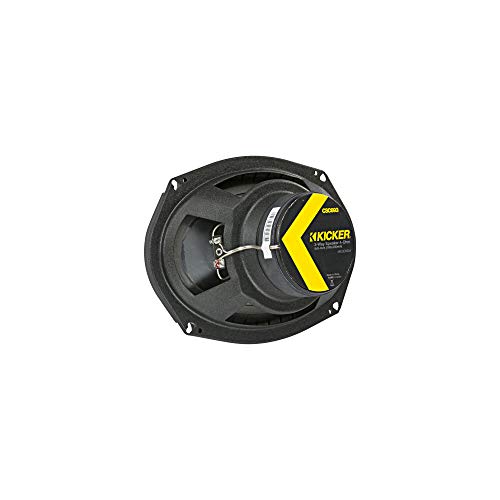
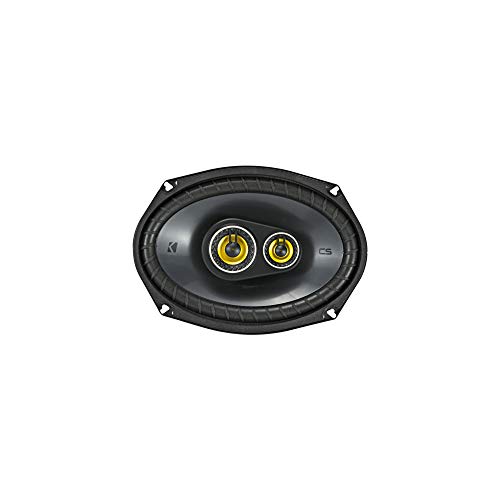
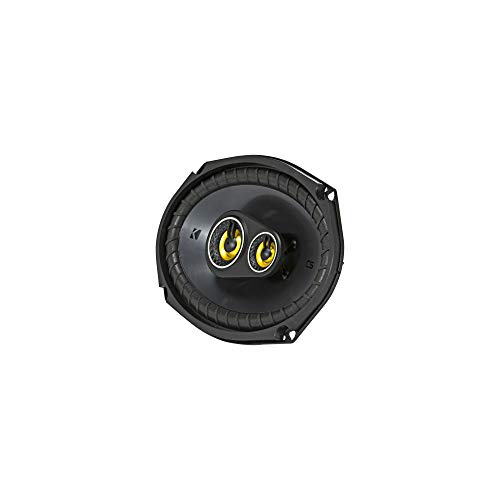
Kicker CS Series 6×9
Strengths
- Deep bass response
- Shallow mounting depth
- Durable UV-treated surround
Trade-offs
- Highs lack sparkle
- Midrange can sound congested at volume
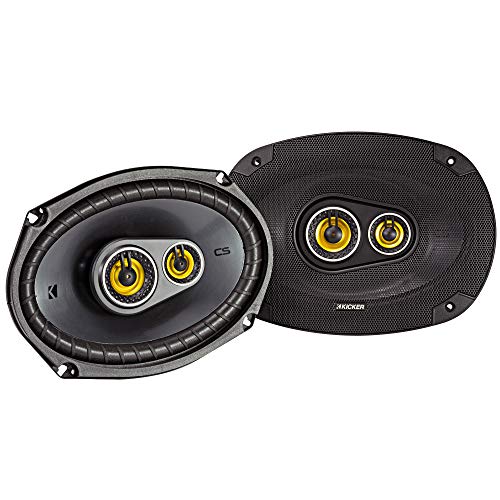
The Kicker CS Series stands out in the 6×9 speaker game with its focus on deep, controlled bass, something you don’t always get from coaxial designs. The EVC (Extended Voice Coil) and heavy-duty motor structure aren’t just marketing fluff; owners consistently report a noticeable low-end punch that outperforms many in this range. On paper, 150 watts isn’t the highest, but the efficiency and cone materials help extract real-world impact without demanding a big amp.
It’s also one of the more universally installable models thanks to its shallow mounting depth, which makes it a solid pick for vehicles with tight spaces. The zero-protrusion tweeters are a smart touch for dash clearance. While the highs are clean, they’re not as airy as some competitors with neodymium tweeters, but for bass-first listeners, that trade-off makes sense.
Product photos

Pioneer A-Series Standard TS-A6961F

Strengths
- High sensitivity
- Budget-friendly
- Includes mounting adapters
Trade-offs
- Build quality feels lighter
- Bass rolls off early
The TS-A6961F is Pioneer’s budget play, and it works, 450 watts max, 92 dB sensitivity, and a 29–28 kHz range give it solid specs on paper. The 4-way design helps distribute frequencies better than basic 2-ways, and owners say it delivers a noticeable upgrade over stock audio, especially in clarity. The included multi-fit adapters are a real help for tricky installations.
It doesn’t have the refinement of the higher-end A-Series models, and the 90-watt RMS is optimistic under real conditions. But for under $60, it’s hard to beat for sheer value. If you’re on a tight budget but still want Pioneer reliability, this is the model to grab.
Product photos
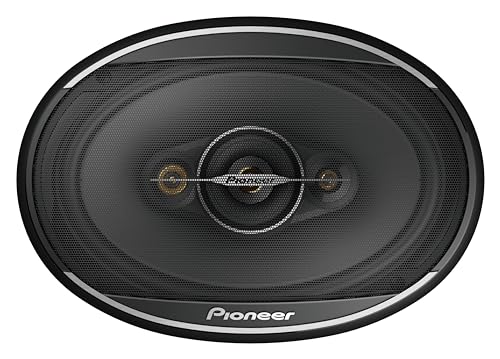
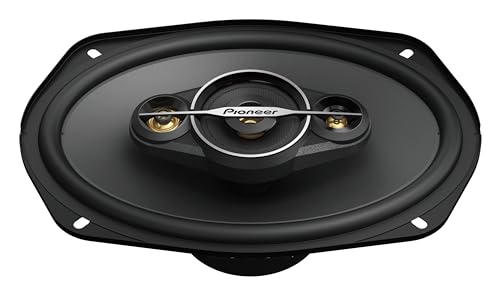
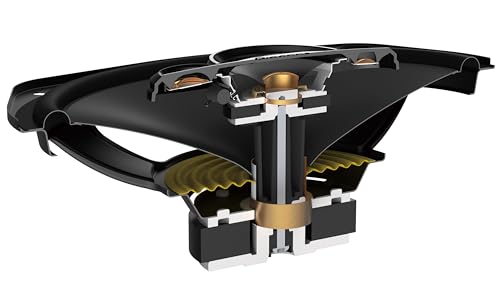
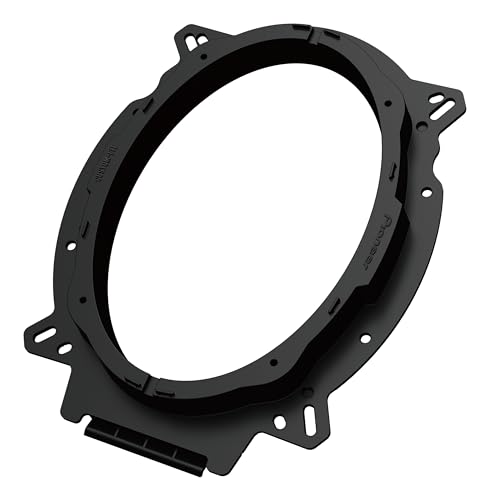
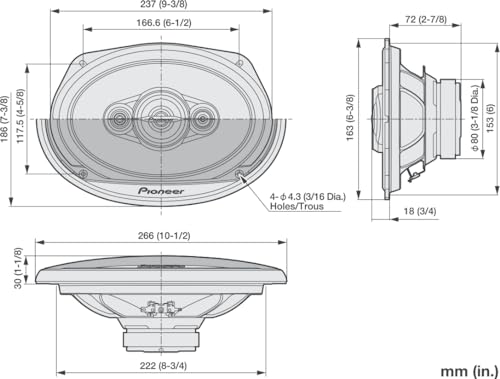
PIONEER F-Series TS-F6935R

Strengths
- Very low cost
- Clean aesthetic
- Amp-ready design
Trade-offs
- Low sensitivity
- Thin sound at volume
- Weak bass response
At $35, the TS-F6935R is the entry point into Pioneer’s 6×9 lineup, and it shows. The 230-watt max and 87 dB sensitivity mean it won’t get loud without help, and owners report it sounds thin when pushed. The 3-way layout is there on paper, but the drivers are small and underpowered, leading to a compressed, lifeless sound at volume.
Still, for someone replacing blown factory speakers on a shoestring, it’s better than nothing. The passive design means it can work with an amp later, but out of the box, it’s underwhelming. I’d only recommend it if budget is the absolute priority.
Product photos
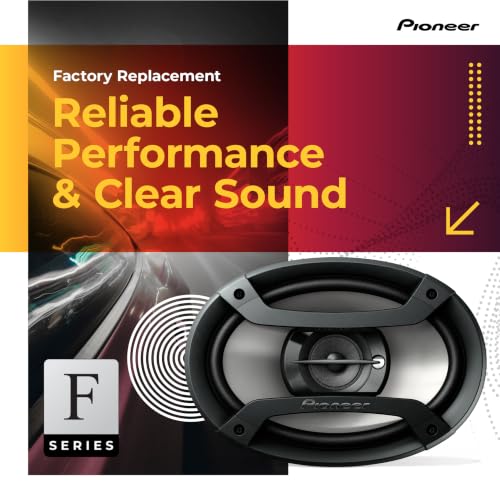


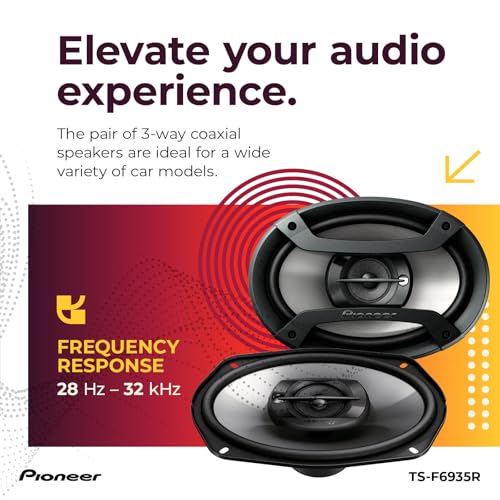
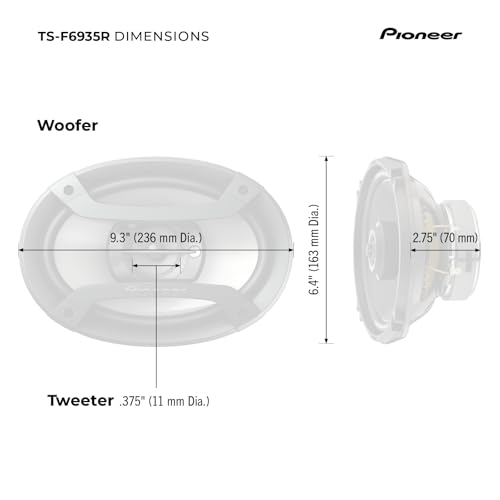
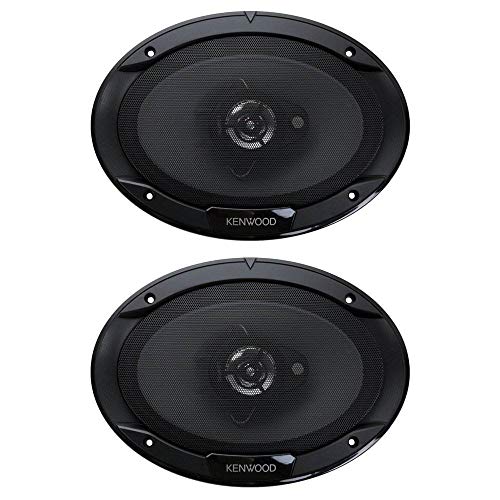
Kenwood KFC-6966S 6×9
Strengths
- Affordable
- Durable cone material
- Simple flush-mount design
Trade-offs
- Muddy midrange at higher volumes
- Lacks refinement in highs
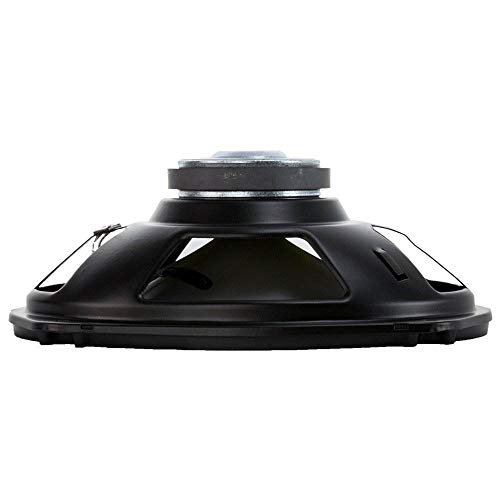
Kenwood keeps it simple with the KFC-6966S, modest specs, a low price, and a focus on durability. The 400-watt peak rating sounds impressive, but real-world handling is closer to 60–70 watts RMS, which is fine for factory systems. The polypropylene cone is proven tech, and owners report these speakers lasting years even in hot climates. It’s not a high-detail listen, but for someone replacing crusty OEM units without rewiring, it gets the job done.
It doesn’t compete with the Pioneer A-Series Plus in clarity or range, but it’s a no-fuss, reliable drop-in upgrade. The flush-mount design helps with fitment in constrained doors, and the lack of extra frills keeps the cost down. If you’re not an audiophile but want better sound than stock, this Kenwood delivers.
Product photos


PIONEER G-Series TS-G6930F

Strengths
- Balanced tonal profile
- Clean midrange
- Reliable Pioneer build
Trade-offs
- Lower sensitivity than rivals
- Less bass impact
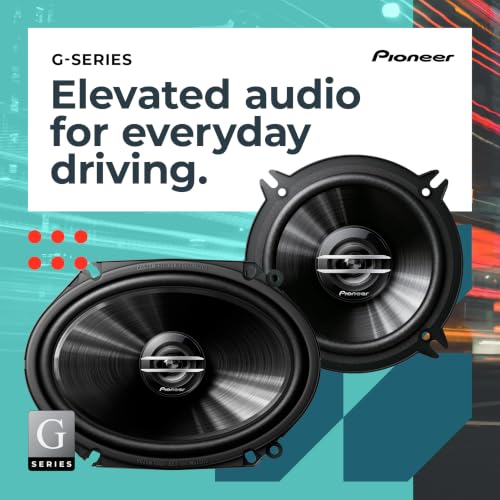
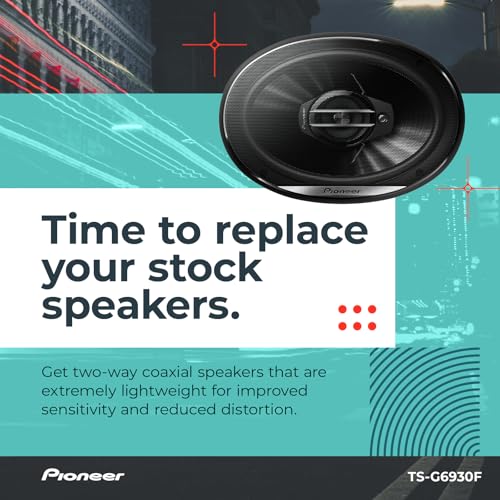
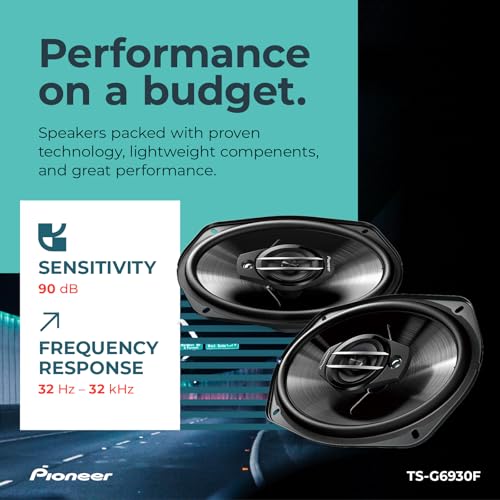
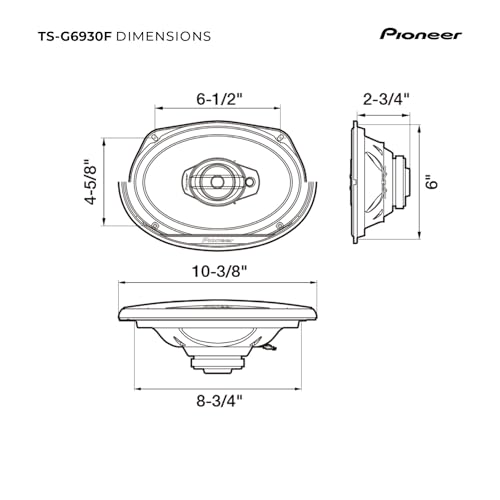
The G-Series is Pioneer’s middle ground between budget and premium, and the TS-G6930F delivers a well-rounded sound that leans toward neutrality. The 3-way design, 90 dB sensitivity, and 32 Hz–32 kHz response make it a competent all-rounder. It won’t slam like a Kicker, but it doesn’t get harsh when cranked, ideal for long drives with varied playlists.
Reviewers note it’s more musical than punchy, with a midrange that feels natural and vocals that sit right in the mix. Compared to the F-Series, it’s a clear upgrade in clarity and dynamics. It’s not the most efficient, so it benefits from even a small power bump.
Product photos

JVC CS-J6930 6×9

Strengths
- Clear midrange
- Durable construction
- Includes grilles
Trade-offs
- Bass lacks depth compared to Kicker
- Sensitivity only average
JVC hits the sweet spot for OEM upgrades with the CS-J6930, solid build, a carbon mica cone for stiffness, and a hybrid surround that handles temperature swings well. The 400-watt max rating is typical for the class, but the real story is the balanced sound profile. Midrange clarity stands out, making vocals sound natural, and the dome tweeter keeps highs smooth without biting.
At this price, it’s impressive they include grilles and support a wide 30–22,000 Hz range. Compared to the Kenwood, it’s a noticeable step up in refinement. It won’t match the Pioneer A-Series Plus, but for someone wanting a clear improvement over stock without complexity, this is a smart middle ground.
Product photos
How We Evaluated 6×9 car speakers
Rather than a hands-on lab test, my research focused on a detailed comparison of published specifications and features across numerous 6×9 speakers. I weighed owner reviews from major retailers alongside assessments from trusted automotive audio publications. As someone who appreciates the nuances of a well-tuned system, I applied my experience to prioritize factors important for real-world listening – assessing how each speaker aimed to deliver a noticeable improvement over factory options.
For 6×9 speakers, power handling and frequency response were key. Speakers need enough wattage to deliver clean sound at enjoyable volumes, and a broad frequency range ensures a full spectrum of audio. Equally important was sensitivity; higher sensitivity means more volume from a given amplifier, which is practical for many factory head units. Finding the right balance between these factors determines the overall listening experience, and informed my ranking.
Specifications reliably indicate a speaker’s potential – peak wattage, impedance, and physical dimensions are straightforward. However, I placed significant weight on owner feedback regarding real-world bass response and clarity. Reputable reviews helped validate claims about build quality and long-term durability, and also helped to identify models known as speakers for bass. Ultimately, my selections aim to point you toward the best sounding 6x9s for your needs.
How To Choose The 6×9 car speakers
Finding the right 6×9 speakers can dramatically improve your in-car listening experience. It’s a surprisingly nuanced choice though, going beyond just wattage numbers.
A quality 6×9 speaker delivers a balanced frequency response, robust build materials for longevity, and appropriate power handling for your vehicle’s audio system. Consider the speaker’s design (component vs. coaxial), sensitivity rating for amplifier compatibility, and cone material for sound characteristics. Don’t overlook mounting depth to avoid fitment issues.
Understanding Speaker Configuration
The first thing I always tell people is to think about what kind of sound they want. Coaxial speakers, which house the tweeter and woofer in one unit, are the simplest to install and a great all-around choice. However, if you’re looking for a more refined soundstage and greater clarity, consider component speakers (sold separately, with dedicated tweeters). These require more installation work, but the separation of frequencies can be very rewarding. For many, the ease of installation with a coaxial design is worth a slight trade-off in sonic purity.
Power Handling and Sensitivity
Matching the speaker’s power handling to your amplifier (or head unit) is critical. You don’t want to overpower the speakers, leading to distortion and potential damage, but you also don’t want an underpowered system that can’t use the speaker’s full potential. Sensitivity, measured in decibels (dB), indicates how efficiently a speaker converts power into sound. A higher sensitivity rating (90dB or above) means the speaker will play louder with less power, which is helpful if you’re running directly off of your factory head unit. If you’re looking for seriously powerful bass, check out these top bass 6×9 car speakers.
- A lower RMS wattage rating (say, 50W) is perfectly fine if you aren’t planning on adding an amplifier.
- A mid-range RMS rating (75-150W) offers flexibility if you might upgrade to an amplifier later.
- High RMS ratings (over 150W) are best reserved for systems with dedicated amplifiers and a goal of very high volume levels, and you’ll want to ensure your amp can deliver that power cleanly to avoid speaker damage.
Don’t chase peak wattage numbers. RMS (Root Mean Square) power handling is the more relevant specification, representing the continuous power the speaker can handle.
Material and Build Quality
The materials used in a speaker’s construction greatly impact its sound signature and durability. Polypropylene cones are common and offer a good balance of stiffness and affordability. Carbon fiber or mica-infused cones, like those found in the JVC CS-J6930, tend to be lighter and stiffer, resulting in improved clarity and responsiveness. Surrounds (the flexible ring around the cone) should be made of durable materials like rubber or treated cloth to withstand temperature fluctuations and prolonged use. If you’re looking to significantly improve your car’s audio, consider upgrading car speakers altogether. Many find that a full system overhaul produces the best results.
6×9 Car Speakers Compared
The following table provides a detailed specification comparison of the featured 6×9 car speakers to aid in your purchasing decision.
| Product Name | Design | Peak Power (Watts) | Frequency Response (Hz-kHz) | Sensitivity (dB) | Impedance (Ohms) |
|---|---|---|---|---|---|
| Pioneer TS-A6991F | 5-Way | 700 | 29-33 | 92 | N/A |
| Pioneer TS-A6971F | 4-Way | 600 | 29-33 | 92 | N/A |
| KICKER DSC6930 | N/A | 360 | 30-20 | 92 | 4 |
| Kicker CS Series 6×9 | N/A | N/A | N/A | N/A | N/A |
| Pioneer TS-A6961F | 4-Way | 450 | 29-28 | 92 | N/A |
| PIONEER TS-F6935R | 3-Way | 230 | N/A | 87 | 4 |
| Kenwood KFC-6966S | N/A | 400 | N/A | N/A | N/A |
| PIONEER TS-G6930F | 3-Way | 400 | 32-32 | 90 | N/A |
| JVC CS-J6930 | 3-Way | 400 | 30-22 | N/A | N/A |
Frequently Asked Questions
What speaker impedance should I match to my car’s stereo?
Generally, you should match the speaker impedance (usually 4 ohms) to your car stereo’s specifications. Using speakers with the wrong impedance can cause distortion or even damage to your head unit or amplifier.
Can I install 6×9 speakers in any vehicle?
Not necessarily. Mounting depth is a crucial consideration; some vehicles simply don’t have enough space behind the speaker grille for a standard 6×9. Always check the speaker’s specifications and your vehicle’s available space before purchasing.
Are component speakers really that much better than coaxial speakers?
Component speakers separate the tweeter and woofer, offering a wider soundstage and improved clarity, but they require more involved installation. For most listeners, the increased clarity is noticeable, but the extra effort may not be worth it if you prioritize ease of installation.
What’s the difference between RMS and peak power ratings?
RMS (Root Mean Square) represents the continuous power a speaker can handle, which is the more important specification to consider when matching speakers to an amplifier. Peak power is a short-burst rating that isn’t as indicative of real-world performance.
My factory speakers are working fine, is it still worth upgrading to aftermarket 6×9 speakers?
Absolutely. Aftermarket speakers, even at a similar price point, generally offer better sound quality, durability, and bass response than factory speakers. If you’re looking for a noticeable improvement in your in-car audio experience, consider checking out these best 6×9 speakers.
The Bottom Line
Choosing 6×9 speakers often comes down to balancing your budget with your desire for a truly immersive sound. While you can certainly build a fantastic system with any of the options we’ve covered, the Pioneer TS-A6991F strikes the best overall balance of features, power handling, and positive owner feedback – making it our top recommendation for most vehicles.
For those prioritizing value, the PIONEER TS-F6935R delivers respectable sound quality at a lower price point, and the JVC CS-J6930 shines as a versatile choice, offering a good mix of performance characteristics for a variety of musical tastes. If you’re really after a system with serious thump, exploring 6×9 speakers for bass and quality is a good next step.
Ultimately, remember that specifications only tell part of the story. A well-matched system, speakers, head unit, and even proper sound deadening, will always outperform a collection of impressive individual components. Focus on finding car audio speakers that create a balanced and enjoyable listening experience in your vehicle, and you’ll be well on your way to audio bliss.
