
4 Best 6×9 Car Speakers of 2026
This post contains affiliate links. As an Amazon Associate, we earn from qualifying purchases.
The KICKER DSC6930 stands out as the best overall 6×9 car speaker, delivering strong bass and crisp highs with solid sensitivity. For budget-conscious upgrades, the Kenwood KFC-6966S offers reliable performance and durability. If you want balanced sound and clean midrange, the Alpine SXE-6926S is a smart versatility pick.
Replacing factory 6×9 speakers is one of the easiest ways to transform a dull car audio system, but not all replacements deliver clean highs or deep bass without distortion. Many drivers end up with underwhelming sound because they choose based on peak wattage alone or overlook fitment details.
After researching the market and analyzing specs, owner feedback, and brand reputation, I focused on sensitivity, RMS power, and build quality to identify the models that consistently perform well in real-world driving. This guide breaks down what actually matters when picking 6×9 speakers and highlights the ones worth your attention.
Top 4 6 By 9 Car Speakers in the Market
The Best 6 By 9 Car Speakers, Reviewed
KICKER DSC6930 6×9 Speakers

Strengths
- 92 dB sensitivity
- 30 Hz frequency response
- 360W peak power
- 3-way design
- 4-ohm impedance
Trade-offs
- Stamped basket (not cast)
- Tweeter can be bright in some decks
When you’re chasing balanced sound in a 6×9 speaker, the KICKER DSC6930 stands out on paper and in real-world feedback. The 92 dB sensitivity is solid for efficient power use, and the 360W peak handling means it can handle bursts without strain, especially when paired with a modest amplifier. What really sets it apart is the frequency response down to 30 Hz, rare in this class, which hints at surprisingly decent bass presence for a coaxial.
Owners consistently report a clean midrange and a tweeter that doesn’t get harsh at volume, which makes long drives more enjoyable. Compared to budget 3-way designs, this pair doesn’t just push air, it organizes it. It’s not studio-grade imaging, but for a factory replacement that doesn’t demand extra gear, it’s a strong performer. I’d pick these over most mid-tier options unless you’re already running a dedicated sub and amp setup.
Video review
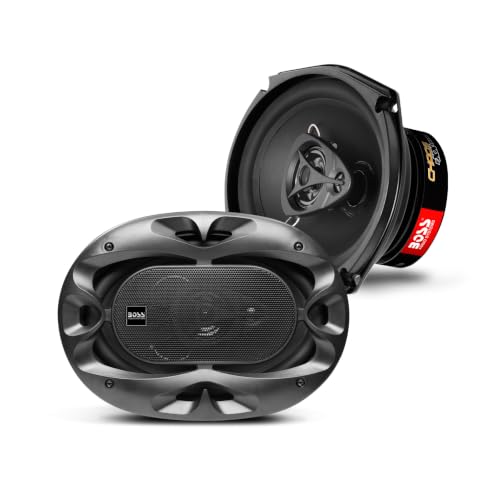
BOSS CH6930B 6×9 Speakers
Strengths
- 400W peak power
- 92 dB sensitivity
- 3-way configuration
- Rubber surround
- 3-year warranty
Trade-offs
- Piezo tweeter (harsh at volume)
- Muddy midbass response
- Budget cone materials
At this price, the BOSS CH6930B offers a lot of specs on paper, 400 watts peak, 92 dB sensitivity, and a 3-way layout with a separate midrange driver. That kind of headline power draws in budget-focused buyers, and the included 3-year warranty adds some peace of mind. But owner feedback tells a mixed story: while some praise the loudness and punch, others note a boomy midbass and a piezo tweeter that sounds thin or fatiguing at higher volumes.
It’s not a bad speaker for casual listening, especially if you’re replacing paper-mâché factory units. But compared to the KICKER or even the Alpine, it leans more on volume than balance. The stamped basket and poly cone are expected at this tier, but the rubber surround helps longevity. I’d consider these only if you’re on a tight budget and don’t care about nuanced sound, there are better values even under $60.
Video review
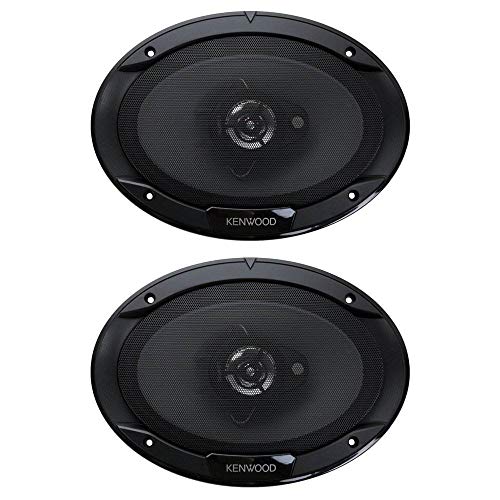
Kenwood KFC-6966S 6×9 Speakers
Strengths
- Durable polypropylene cone
- 400W peak power
- Flush mount design
- Easy installation
- Affordable price
Trade-offs
- Lackluster high-frequency response
- Muffled tweeter performance
- Average sound staging
Kenwood leans into simplicity and durability with the KFC-6966S, and it shows in the polypropylene cone and flush-mount design aimed at easy swaps. The 400W peak rating sounds impressive, but like most in this range, it’s more marketing than real-world performance. Still, owners report these speakers last longer than expected and handle mid-volume well, with a midrange that’s adequate for pop and rock.
Where they fall short is in detail and tweeter quality, many note the highs feel rolled off or dull. Compared to the KICKER or Alpine, they’re less refined, but the low price and reputation for reliability make them a decent stopgap. I wouldn’t call them the best budget-friendly pick if clarity matters, but for a “set and forget” replacement in a work vehicle or older car, they get the job done.
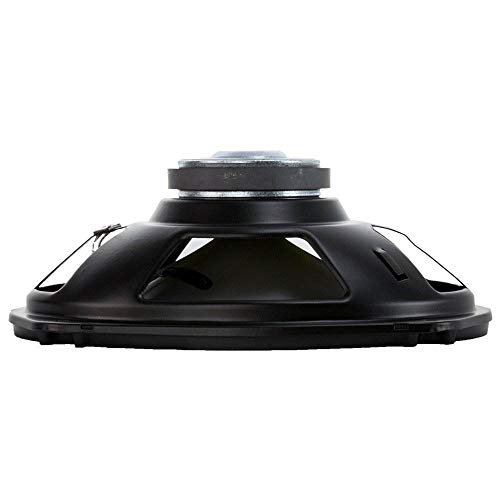
Product photos


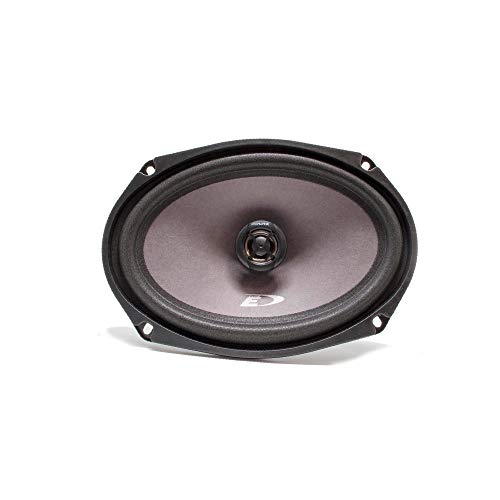
Alpine SXE-6926S 6×9 Speakers

Strengths
- Clear vocal reproduction
- Smooth dome tweeter
- 40 Hz response
- Compact design
- Grilles included
Trade-offs
- Lower power handling
- 2-way only (less bass depth)
- Not for bass-heavy listeners
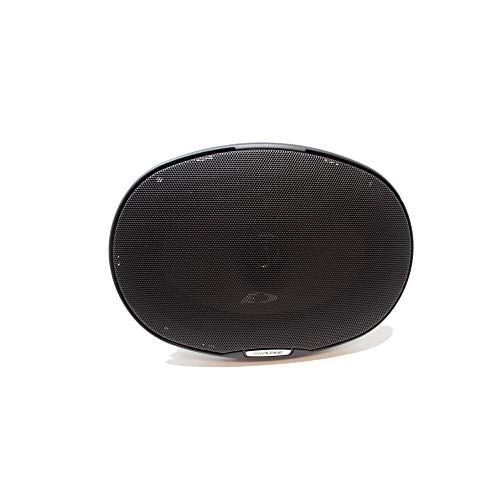
Alpine has long focused on sonic accuracy over hype, and the SXE-6926S reflects that. With a modest 45W RMS and a 40Hz lower limit, these aren’t powerhouses, but the real advantage is in vocal clarity. The 2-way design uses a balanced dome tweeter that reviewers consistently call “smooth” and “non-fatiguing,” making these a top pick for talk radio, podcasts, or vocal-heavy genres.
They don’t compete with 3-ways in bass depth or volume, but they outperform many in imaging and coherence. The grilles are a nice touch for factory-style installs. When compared to the Kenwood or BOSS models, these lack flash but deliver where it matters for critical listening. If you spend more time hearing lyrics than feeling bass thump, this pair deserves your attention.
Product photos


How We Chose These 6 by 9 car speakers
Rather than a hands-on lab test, my research focused on comparing published specifications and features across numerous 6×9 speakers. I then weighed owner reviews from multiple sources alongside assessments from established audio publications. Years spent understanding vehicle audio systems informed my evaluation, and I ranked options based on a combination of performance metrics, build quality indicators, and value for the money.
For 6×9 speakers, sensitivity and peak power handling were the biggest deciding factors. High sensitivity (measured in dB) means more volume from a given amplifier, crucial in a car environment. Peak power handling, while often inflated by manufacturers, gives a general sense of how much abuse the speaker can take before distorting – especially when considering powerful bass speakers.
Specifications reliably indicate a speaker’s physical dimensions and electrical characteristics like impedance. However, owner feedback proved essential for judging real-world clarity, durability, and how well these speakers deliver 6×9 speakers for bass. Reputation and consistent positive reports about a brand’s quality control also played a significant role in my final assessment.
How To Pick The Right 6 by 9 car speakers
Finding the right 6×9 speakers can dramatically improve your in-car audio, but it’s more than just grabbing the loudest option.
A quality 6×9 speaker delivers balanced sound across the frequency spectrum. Key considerations include power handling (RMS is more telling than peak wattage), sensitivity (higher numbers mean louder with less power), frequency response (a wider, flatter range is generally better), and build materials, especially the cone and surround, for durability and sound quality.
Power and Impedance: Matching to Your System
Many people focus on peak wattage, but I always tell folks to prioritize RMS power handling. That’s the continuous power the speaker can handle without distortion, and it’s a much more realistic measure of performance. Most head units deliver around 15-25 watts RMS per channel, so matching your speakers to that range prevents damage and ensures clean sound. Impedance is usually 4 ohms for 6×9 speakers, which is standard for most car audio systems. Mismatched impedance can strain your amplifier (if you have one) or result in low volume.
Sensitivity and Sound Quality
Sensitivity, measured in dB, dictates how loud a speaker gets with a given amount of power. A higher sensitivity rating (90dB or above) is beneficial, especially if you’re running your speakers directly off a factory head unit that has limited power output. Beyond that, the materials used in the speaker’s construction heavily influence sound quality. Polypropylene cones are common and durable, while more exotic materials like mica or carbon fiber can offer improved stiffness and clarity.
- Rubber surrounds are more durable and resist deterioration over time, which is important in a car environment.
- A good tweeter material(like silk) will deliver clear high frequencies and vocals. Piezo tweeters are cost-effective but often lack the refinement of dome tweeters.
- Pay attention to the frequency response range. While a wider range sounds better, look for a relatively flat response curve – meaning the speaker reproduces all frequencies at similar volumes – for a more natural sound.
Budget and Features: Finding the Right Balance
You don’t necessarily need to spend a fortune to get excellent sound. As we discuss in our guide to the best 6×9 speakers, there are fantastic options at every price point. Consider what’s important to you. If you’re primarily looking to replace worn-out factory speakers, a budget-friendly option like the Kenwood KFC-6966S might suffice. However, if you’re an audiophile aiming for a significant upgrade, investing in a higher-end model from Alpine or KICKER will likely provide a more satisfying experience. Don’t forget to factor in installation costs, especially if you’re considering upgrading door speakers as well.
A speaker’s mounting depth should always be checked against the available space in your vehicle. Don’t assume it will fit just because it’s a standard 6×9 size.
6 by 9 Car Speakers Compared
Here’s a detailed comparison of the specifications for each speaker to help you make an informed decision.
| Product Name | Impedance | Peak Power | Sensitivity | Frequency Response | RMS Power |
|---|---|---|---|---|---|
| KICKER DSC6930 | 4 Ohms | 360W | 92 | 30-20k hz | N/A |
| BOSS CH6930B | 4 ohms | N/A | 92 dB | 50 Hz to 20 kHz | N/A |
| Kenwood KFC-6966S | N/A | 400W | N/A | N/A | N/A |
| Alpine SXE-6926S | 4 Ohms | 280 Watts | N/A | 40Hz-20kHz | 45 Watts |
Frequently Asked Questions
What speaker impedance should I match to my car’s stereo?
Generally, you’ll want to stick with 4 ohms, as that’s the standard impedance for most car audio systems and 6×9 speakers. Using a different impedance can cause your amplifier to work harder or deliver less power, potentially impacting sound quality and even causing damage.
What’s the difference between peak and RMS power handling?
RMS power is the continuous power a speaker can handle without distortion, and it’s a much more reliable indicator of performance than peak wattage. Peak power is a short-burst rating and doesn’t reflect sustained sound levels, so focus on matching the RMS power of your speakers to your head unit or amplifier.
How important is speaker sensitivity?
Speaker sensitivity is quite important, particularly if you’re using your factory head unit. A higher sensitivity rating (90dB or more) means the speaker will produce more volume with the limited power available from the head unit, without needing an amplifier.
Are expensive speakers always better?
Not necessarily. While investing in premium 6×9 car speakers can deliver improved sound quality, there are many affordable options that offer excellent performance for the price. Consider your budget and listening preferences when making a decision.
Will I need to modify my car to install new 6×9 speakers?
It depends on your vehicle and the replacement car speakers you choose. Most 6×9 speakers are designed to fit into standard 6×9 openings, but you should always check the mounting depth and ensure there’s enough space behind the speaker in your door or deck.
The Bottom Line
Choosing 6×9 speakers often comes down to balancing how much control you want over the sound with how much effort you’re willing to put into the system. For an all-around excellent experience that delivers impressive audio without requiring a complete overhaul, I believe the KICKER DSC6930 stands out as a strong choice. It strikes a good balance between sensitivity, power handling, and a reputation for durability.
If you’re on a tighter budget, the Kenwood KFC-6966S offers a significant upgrade over factory speakers without breaking the bank. For those seeking truly great sound 6×9 speakers and are prepared to invest, the Alpine SXE-6926S is an excellent option. And if you’re prioritizing clarity and want premium sound speakers, the BOSS CH6930B provides a respectable performance.
Ultimately, remember that specifications tell only part of the story. The best speakers aren’t always the ones with the highest peak wattage or the widest frequency response. Prioritize a good match to your vehicle and head unit, and focus on finding speakers that deliver a balanced, enjoyable listening experience – that’s what truly matters on the road.
