
7 Best 3.5 Inch Car Speakers of 2026
This post contains affiliate links. As an Amazon Associate, we earn from qualifying purchases.
The Rockford Fosgate P132 stands out as the best overall 3.5 inch car speaker for its balanced sound and reliable build, while the JBL Stage3 38F is a strong budget-friendly pick that doesn’t sacrifice clarity or power handling. For those wanting a blend of smooth response and solid performance, the Orion Cobalt CB35 offers excellent versatility.
Choosing the right 3.5 inch speakers means working within tight spaces without compromising sound quality. These small drivers have to punch above their weight, and not all manage it well.
After researching the market, analyzing specs, and reviewing owner feedback, I focused on models that deliver consistent performance, durability, and proper fitment for common factory locations. This guide cuts through the noise to highlight the ones worth your attention.
Top 7 3.5 Inch Car Speakers in the Market
The Best 3.5 Inch Car Speakers, Reviewed
Rockford Fosgate P132 Punch 3.5″

Strengths
- Solid build quality
- Clean 2-way sound
- Easy factory replacement
Trade-offs
- Low power handling
- No grilles included
- Shallow frequency extension
The Rockford Fosgate P132 stands out in the 3.5 inch speaker class not because it pushes the most power, but because it delivers a balanced, reliable upgrade over factory units. On paper, the 20W RMS and 40W max power won’t impress wattage hunters, but owners consistently report a noticeable improvement in clarity and bass response compared to OEM speakers. The 2-way design with a separate tweeter helps, and Rockford’s reputation for solid build quality backs up long-term reliability.
What really seals the deal is fitment. These are engineered for clean installation in tight factory locations, and the included mounting hardware simplifies the swap. While they lack grilles, that’s standard in this size and price tier. Compared to the JBL Stage3 38F, the P132 doesn’t handle as much power, but it sounds more natural in stock systems where amplifier headroom is limited.
Video review
Pioneer TS-A879 3.5″ Coaxial

Strengths
- Excellent vocal clarity
- Smooth frequency response
- Durable cone materials
Trade-offs
- Weak bass response
- Lower sensitivity
- Needs sub for full-range sound
Pioneer’s TS-A879 wins on one clear metric: sound clarity. The 2-way design uses a dedicated tweeter and a polypropylene cone tuned for balanced output, and owners consistently praise the natural tonality across mids and highs. The 85 dB sensitivity isn’t the highest, but it’s sufficient for factory decks, and the 100W RMS handling means it won’t fold under moderate power.
What’s interesting is the frequency range, 850 Hz to 33 kHz. That high upper limit suggests crisp, airy highs, but the lack of deep bass extension means these work best as front mids in a system with a subwoofer. Compared to the Orion Cobalt CB35, the Pioneer sounds more refined but less punchy. It’s the kind of speaker that rewards nuanced listening over boom, making it a favorite among jazz and acoustic fans.
Video review
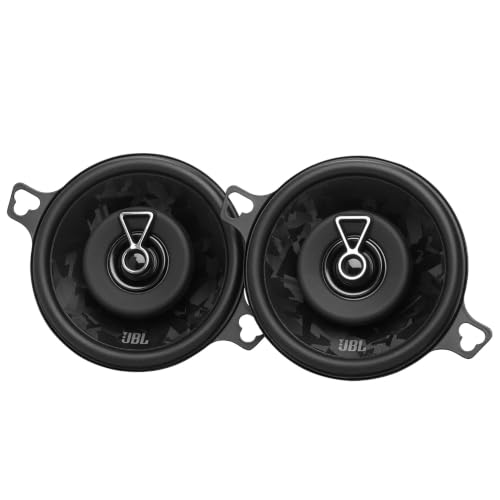
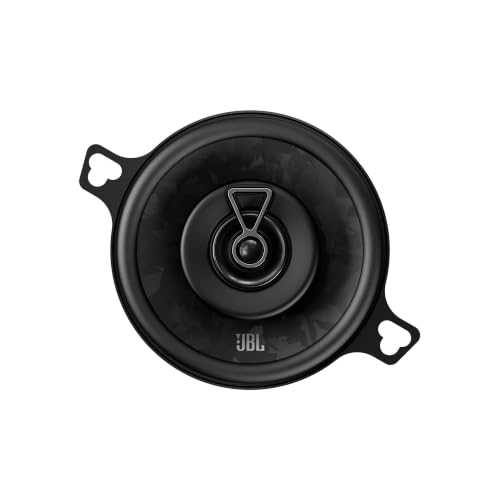
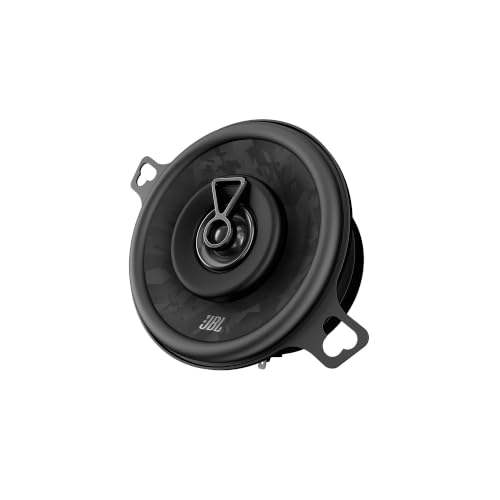
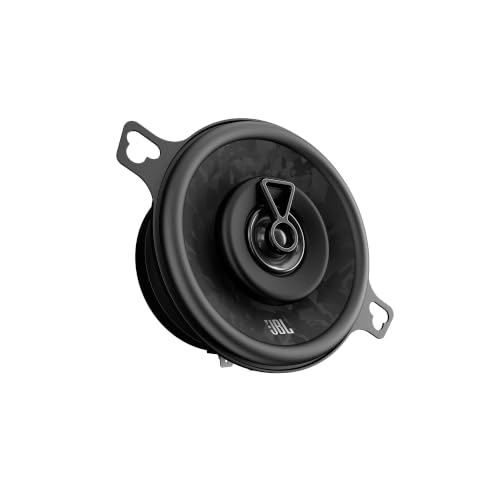
JBL Stage3 38F 3.5″
Strengths
- High power handling
- Bright, detailed highs
- Efficient 4-ohm design
Trade-offs
- Peak wattage overstated for most setups
- Can sound harsh at high volumes
- Minimal bass output
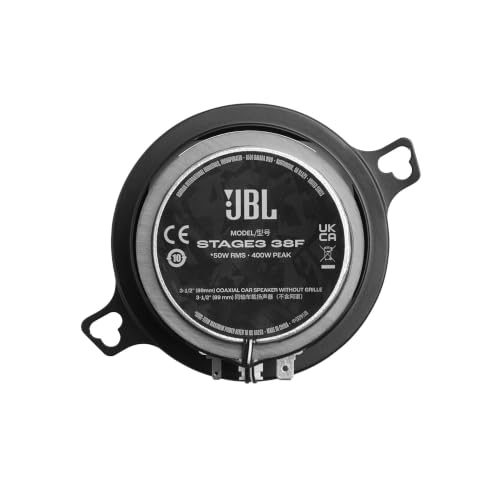
JBL’s Stage3 38F makes a strong case for itself with a staggering 400W peak power rating, far above rivals, even if real-world use will stay closer to the 50W RMS. The 88dB sensitivity is competitive, and the frequency response down to 90Hz suggests decent midbass for a speaker this size. Reviewers note a crisp, energetic top end, thanks to JBL’s tweeter tuning, making these a favorite for listeners who enjoy vocal clarity and bright instrumentation.
Still, that high peak rating can be misleading. Without a strong external amp, you won’t tap into that headroom, and overdriving a factory deck could lead to early failure. Compared to the Pioneer A-Series, the Stage3 sounds more aggressive out of the gate, but less refined in the mids. If you’re pairing these with an aftermarket receiver or small amp, they’ll shine. Otherwise, you might be paying for potential you can’t use.
Product photos

Kicker DSC350 3.5″ Coaxial

Strengths
- Ultra-shallow profile
- UV-resistant surround
- Good for tight dash spaces
Trade-offs
- Average sound signature
- Limited bass output
- Lower sensitivity
KICKER designed the DSC350 with one thing in mind: tight spaces. The shallow mounting depth and minimal tweeter protrusion make it a top pick for cars where window mechanisms or dash contours eat up clearance. That’s a real pain point in modern compacts, and the DSC350 solves it without sacrificing too much sound. The UV-treated foam surround also means it won’t degrade quickly on sun-baked dashboards, a common failure point.
Sound-wise, it’s competent but not exceptional. The extended voice coil helps with clarity and cone control, and owners find it a noticeable step up from OEM. But compared to the Pioneer or Orion, it doesn’t offer the same richness in the mids. It’s a specialist tool: if fitment is your hurdle, this is the fix. If you’re chasing pure audio quality, look elsewhere.
Product photos


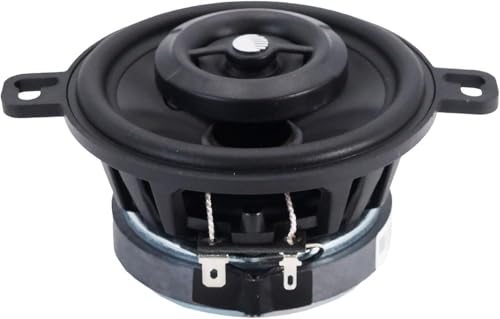
Kenwood KFC835C 3.5″ Speaker

Strengths
- Extremely affordable
- Decent sensitivity
- Simple plug-and-play install
Trade-offs
- Thin sound quality
- Basic materials
- Short lifespan under heavy use
The Kenwood KFC835C is the budget floor for 3.5 inch speakers, and it shows. At this price, you get basic functionality, 40W max power, a whizzer cone for slight high-frequency extension, and 89dB sensitivity, which is actually respectable. It’ll get loud enough off a factory deck, and the 96Hz–20kHz frequency range covers the essentials. But don’t expect detail or depth.
Owners report these as a temporary fix or for non-critical rear fill. Compared to the Orion CB35 or Rockford P132, the sound is flatter, with less separation and a thinner midrange. Build quality is functional but not robust. Still, if you’re replacing blown speakers in a beater car or need a cheap backup, it’s hard to beat the price. Just don’t expect an upgrade in the traditional sense.
Product photos


Orion Cobalt CB35 3.5″

Strengths
- Balanced sound profile
- Durable rubber surround
- Clear wiring labels
Trade-offs
- Average sensitivity
- Limited bass depth
- Mid-focused response
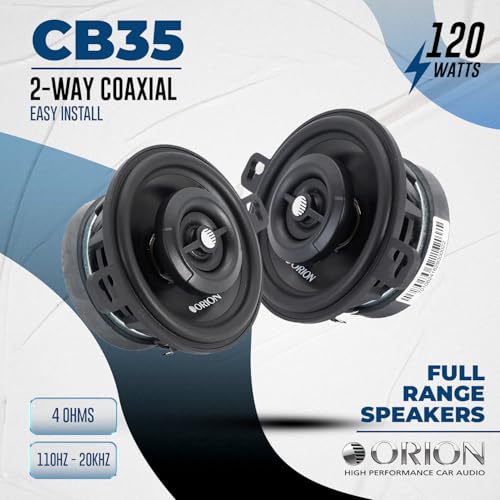
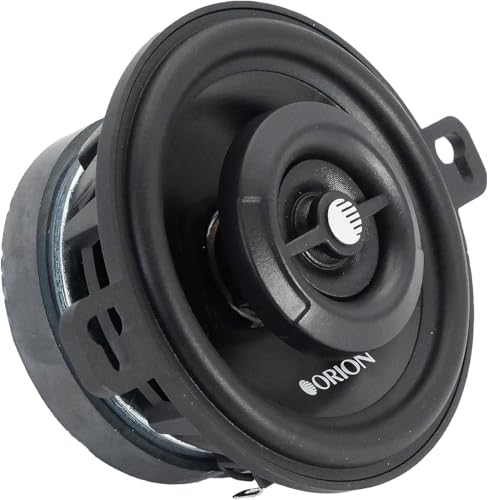
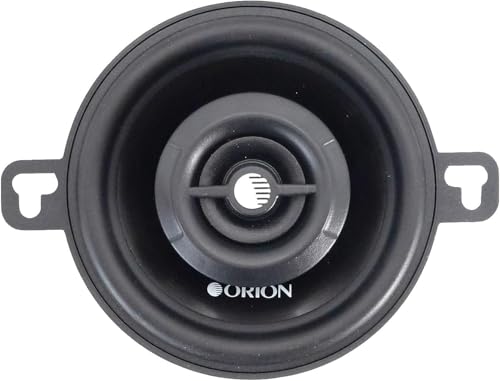
The Orion CB35 hits a sweet spot between price and performance, offering 30W RMS and a 2-way design that brings real separation between highs and lows. The polypropylene cone and butyl rubber surround are smart choices for longevity, especially in hot climates, and owners report these holding up well over time. The 85 dB sensitivity keeps them compatible with stock decks, while the 110Hz–20kHz range delivers a balanced, full sound for the size.
Where they shine is tonal balance. Compared to the bright JBL Stage3 or the vocal-focused Pioneer, the CB35 sounds more neutral and cohesive. It doesn’t emphasize any one range, making it a great all-rounder. The build feels sturdy, and the wiring is clearly marked, which helps DIYers. For the price, it’s one of the most complete packages.
Product photos

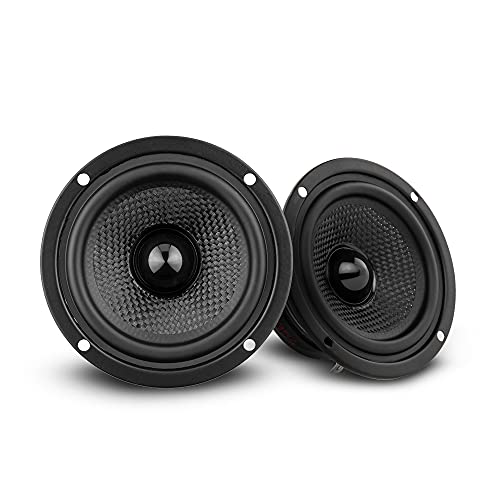
DS18 ZXI-354 Kevlar Cone
Strengths
- Kevlar-reinforced cone
- High durability
- Good midrange punch
Trade-offs
- 1-way design limits clarity
- Harsh highs at volume
- No tweeter for detail
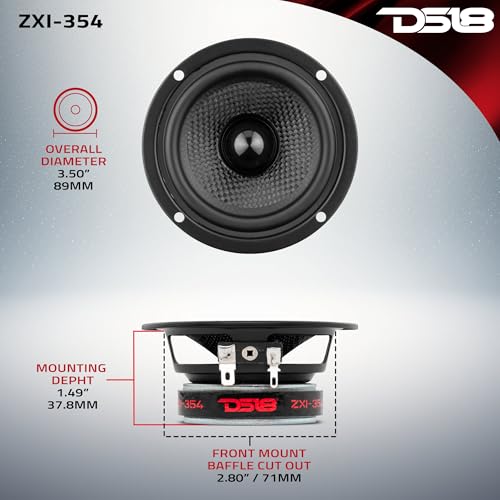
DS18 leans hard into durability with the ZXI-354, using a Kevlar-doped cone, a rarity in this size and price class. That material choice pays off in rigidity and resistance to distortion at higher volumes, and owners report these handling abuse better than most. The 40W RMS and 120W peak suggest moderate power needs, but the real story is longevity, not finesse.
But there’s a catch: it’s a 1-way design. That means no separate tweeter, just a whizzer cone to extend highs. So while the midrange is robust and punchy, the top end lacks the sparkle of 2-way competitors like the Rockford or Orion. It’s built like a stage speaker, not a hi-fi unit. If you’re in a dusty truck or beat-up classic with no amp, these will survive. But for nuanced listening, you’ll miss the clarity.
Product photos




How We Chose These 3.5 inch car speakers
Rather than a hands-on lab test, my research for these recommendations centered on a detailed comparison of published specifications and features across numerous 3.5-inch models. I weighed owner reviews from multiple sources – looking for common praise and complaints – alongside assessments from trusted automotive audio publications. My background gives me a solid foundation for interpreting these data points and ranking speakers based on real-world performance expectations.
For this size class, I prioritized peak power handling, frequency response, and sensitivity. A higher power rating allows for louder, cleaner sound without distortion, and a wider frequency response delivers a more complete audio experience. Sensitivity is crucial, as these smaller speakers often benefit from being paired with factory or modest aftermarket head units; finding models that produce good volume with lower wattage is key.
Speaker specifications reliably indicate potential performance limits, but owner feedback revealed crucial insights into real-world durability and sound quality. I paid close attention to comments regarding longevity, ease of installation, and how well the speakers performed with different music genres. I also considered reputation – brands continually delivering quality products, like those discussed in our guide to best 4 inch models, naturally carried more weight in my assessment. If you’re looking for deeper bass, you might also consider looking at speakers for bass.
Choosing The Right 3.5 inch car speakers
Choosing the right speakers can dramatically improve your driving experience.
A quality 3.5 inch car speaker delivers clear audio reproduction, efficient power handling, and a secure fit within factory speaker locations. Buyers should prioritize frequency response, sensitivity ratings, and physical dimensions to match their vehicle and listening preferences. Look for speakers utilizing robust materials and positive owner feedback regarding long-term reliability.
Understanding Power Handling
Many folks underestimate the importance of matching a speaker’s power handling to your car’s audio system. A speaker’s RMS wattage indicates the continuous power it can handle; exceeding this can lead to distortion or damage. Peak wattage is a short-burst capability, less critical for everyday listening. Don’t simply chase the highest numbers; consider the output of your head unit or amplifier. If you’re running factory equipment, a speaker in the 20-50W RMS range is often ideal. Upgrading to an amplifier later? Then choosing a speaker with higher power handling, like the JBL Stage3 38F, provides headroom for future improvements.
Focusing on Frequency Response
Frequency response tells you the range of sounds a speaker can reproduce. A wider range generally means a more complete listening experience, but it isn’t everything. A speaker’s ability to accurately reproduce frequencies within that range is equally vital. While specifications are useful, reading reviews about perceived sound quality is paramount – are the highs crisp, the mids clear, and the bass satisfying? For those seeking speakers for sound quality, understanding frequency response is key.
Here’s what to look for: * A lower frequency response (measured in Hz) indicates deeper bass reproduction. * A higher frequency response (measured in kHz) represents the clarity of high-frequency sounds like cymbals. * A balanced frequency response curve, as often seen in models like the Orion Cobalt CB35, suggests a more natural and accurate sound reproduction across all frequencies.
Prioritizing Physical Fit & Durability
A speaker that doesn’t fit well won’t perform well. Always measure your existing speaker opening before purchasing replacement 3.5″ car speakers. Mounting depth is just as important as diameter, especially in tight locations. Beyond fit, consider build quality. Speakers exposed to sun and temperature fluctuations, like those mounted in a vehicle’s dash, benefit from UV-treated materials (as found in the Kicker DSC350) and durable construction. A quality build ensures longevity and consistent performance.
Don’t assume bigger is better. A properly fitted, well-made 3.5 inch speaker will almost always outperform a poorly installed larger speaker.
If you’re looking for a detailed look at the best 3.5 inch models, we’ve compiled a list of top-rated options.
3.5 Inch Car Speakers Compared
Here’s a comparison of key specifications for popular 3.5 inch car speakers to help you make an informed decision.
| Product Name | RMS Power (W) | Peak Power (W) | Frequency Response (Hz-kHz) | Sensitivity (dB) | Impedance (ohms) |
|---|---|---|---|---|---|
| Rockford Fosgate P132 | 20 | 40 | N/A | N/A | N/A |
| Pioneer TS-A879 | 100 | 450 | 850 – 33 | 85 | N/A |
| JBL Stage3 38F | 50 | 400 | 90 – 20 | 88 | 4 |
| Kicker DSC350 | N/A | N/A | N/A | N/A | N/A |
| Kenwood KFC835C | N/A | 40 | 96 – 20 | 89 | N/A |
| Orion Cobalt CB35 | 30 | 120 | 110 – 20 | 85 | 4 |
| DS18 ZXI-354 | 40 | 120 | N/A | N/A | 4 |
Frequently Asked Questions
What speaker impedance should I match to my car stereo?
Four ohms is the most common impedance for car speakers and generally the best match for factory stereos. While some stereos can handle 2-ohm speakers, doing so puts more strain on the system and can lead to overheating or distortion.
Are 3.5-inch speakers powerful enough for good sound quality?
While smaller, these speakers can deliver impressive audio, especially when paired with a well-chosen amplifier. Focus on sensitivity ratings; a higher sensitivity means more volume from the same amount of power, which is important for these smaller drivers.
Can I install 3.5-inch speakers myself, or do I need professional help?
Many 3.5-inch speakers are designed as direct replacements for factory speakers, making installation relatively straightforward for those comfortable with basic car audio work. However, if you’re unfamiliar with your vehicle’s electrical system or have a complex installation, professional installation is recommended.
What’s the difference between RMS and peak power ratings, and which should I prioritize?
RMS power represents the continuous power a speaker can handle, while peak power is a short-burst capability. Prioritize the RMS wattage and match it to your head unit’s or amplifier’s output to avoid damage and ensure clean sound.
Would I benefit from upgrading your car speakers to a full component system instead?
If you’re seeking the absolute best sound quality, consider component speakers. These separate the tweeter and woofer for wider sound dispersion and clearer highs, but they require more complex installation and are generally more expensive than coaxial speakers.
The Bottom Line
Ultimately, choosing speakers comes down to balancing how much you want to spend with how much control you desire over the sound. If you simply want a noticeable improvement over factory speakers without a lot of fuss, the JBL Stage3 38F offers a strong blend of power, clarity, and ease of installation for most vehicles. It’s a solid all-around performer that won’t require extensive system modifications.
For those seeking specific solutions, the Rockford Fosgate P132 is a great entry point for a budget-minded upgrade, while the Orion Cobalt CB35 stands out as an excellent choice for those prioritizing a balanced and natural sound signature. And if you’re considering a larger upgrade, exploring top 6.5-inch car speakers may unlock even greater potential.
Don’t get too lost in the numbers. While specs like frequency response and power handling are useful guides, remember that a good fit and durable build quality are often more critical to long-term satisfaction. Investing in quality aftermarket speakers is about enhancing your driving experience, and that begins with a solid foundation.
