
9 Best 5×7 Car Speakers of 2026
This post contains affiliate links. As an Amazon Associate, we earn from qualifying purchases.
The JBL STAGE3 stands out as the overall best 5×7 car speaker for its balanced sound and solid build, while the CT Sounds Tropo is a strong budget pick that doesn’t sacrifice much clarity. For those wanting deeper bass response, the Pyle PL573BL offers high power handling at a low cost.
Most drivers start with factory speakers that sound thin and lack punch, especially at higher volumes. Upgrading to a quality 5×7” speaker makes a real difference, but with so many options, it’s easy to get lost in specs that don’t matter.
This guide cuts through the noise. I compared power handling, sensitivity, fitment, and materials across top models, using verified specs and owner feedback to highlight the ones that deliver the best real-world performance for different needs and budgets.
Top 9 5X7 Car Speakers in the Market
The Best 5X7 Car Speakers, Reviewed
BOSS CH5730 5×7 Car Speakers
Strengths
- Extremely affordable
- 3-year warranty
- Loud output for price
Trade-offs
- Piezoelectric tweeter harshness
- Limited frequency range
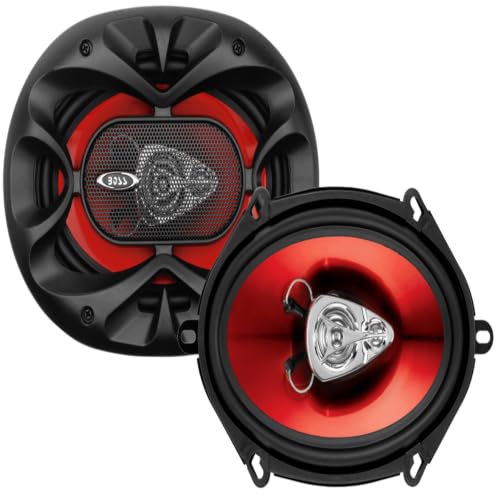
The BOSS CH5730 is the cheapest 3-way option here, and it shows in the materials, stamped basket, poly injection cone, and a piezoelectric tweeter. But it also has a 3-year warranty and a 90dB sensitivity, meaning it gets loud and stays functional longer than expected for the price. Owners consistently call it a “surprisingly decent” upgrade over factory speakers, especially in older sedans or beater cars.
It won’t impress an audiophile, the frequency response is narrow, and the tweeter lacks refinement, but for $25, it’s hard to fault. Compared to the SoundXtreme, it’s less powerful but more durable. If you’re on a tight budget and just want something better than stock, this is the pragmatic pick.
Video review
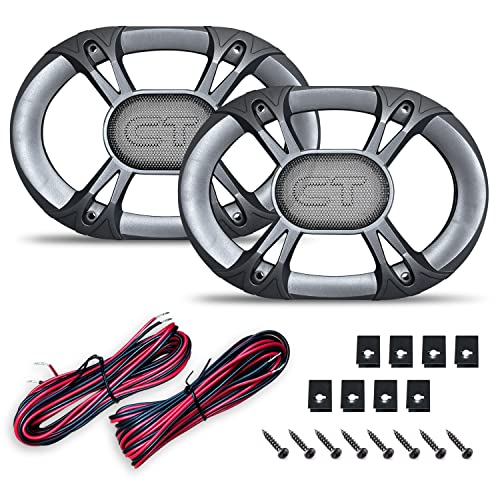
CT Sounds Tropo 5×7 Shallow Speakers
Strengths
- Ultra-shallow depth
- Factory head unit friendly
- Silk tweeter for smooth highs
Trade-offs
- Low RMS power
- Limited bass extension
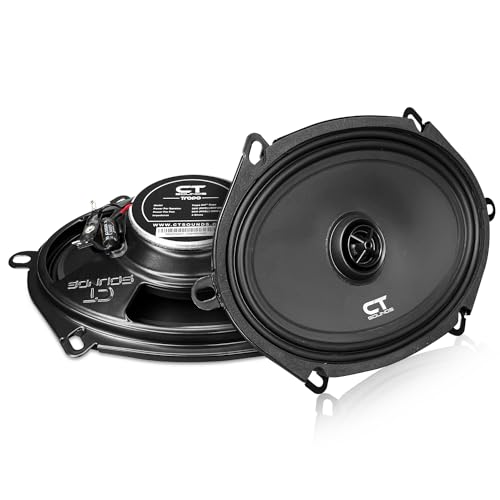
The Tropo 5x7s solve a real-world problem: shallow mounting depth. At just 1.57 inches deep, these speakers clear window mechanisms in most vehicles where deeper models would interfere. That alone makes them a no-brainer for certain cars, especially newer sedans with cramped door cavities. Power specs are modest, 30W RMS per speaker, but they’re designed to run efficiently off factory decks, and owners confirm they don’t strain when driven stock.
They won’t deliver the punch of the Meso or the detail of the JBL Stage, but for someone upgrading from paper-thin OEM speakers in a Honda or Toyota, the Tropo brings a noticeable lift in fullness. Compared to other shallow-mount options, it’s rare to find one this affordable with a silk dome tweeter.
Video review
SoundXtreme 5×7/6×8 Coaxial Speakers

Strengths
- Multi-size fitment
- Low frequency extension
- High peak power
Trade-offs
- Brittle highs at volume
- Foam surround longevity concerns
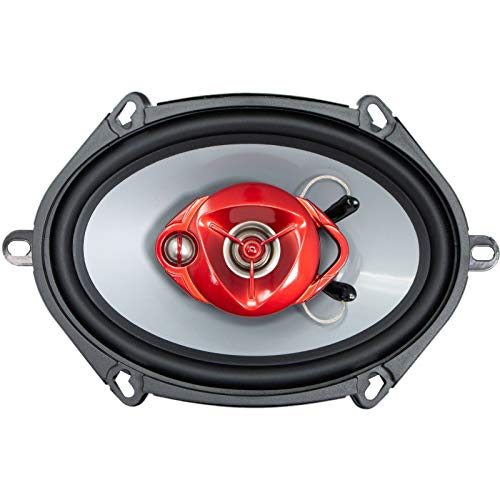
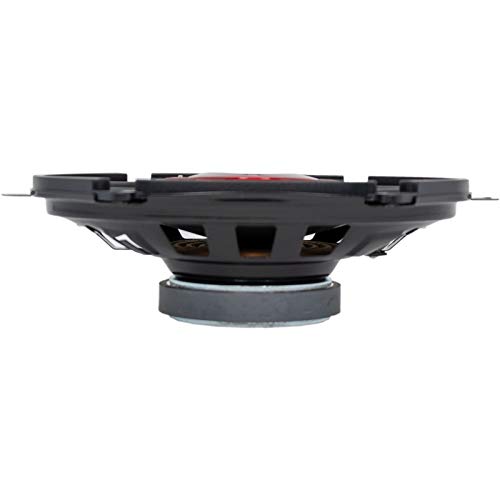
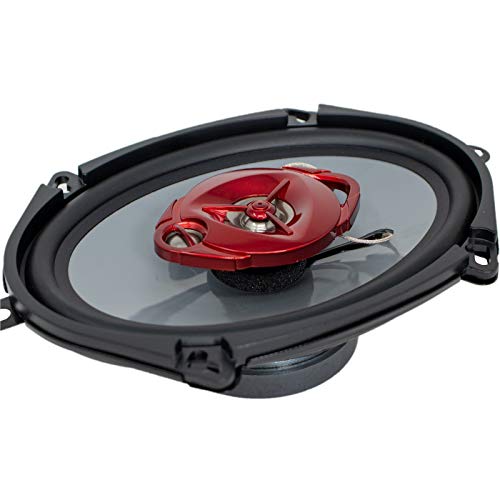
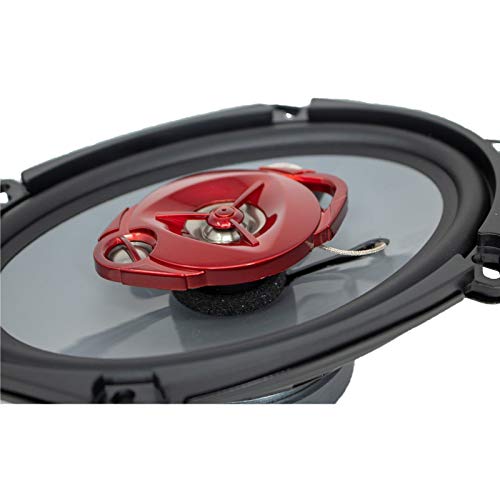
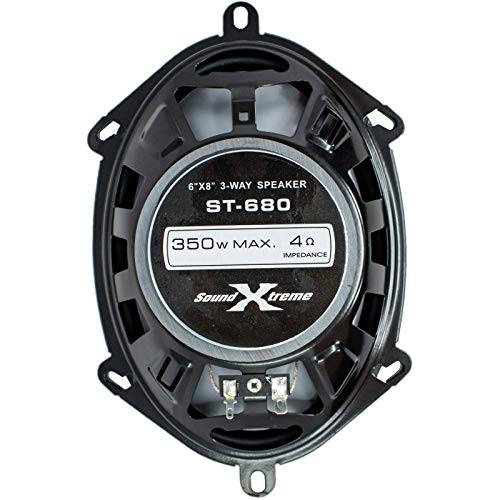
The SoundXtreme SX-ST-680 is a spec-sheet standout, 350W peak, 45Hz frequency response, and dual compatibility with 5×7 and 6×8 openings. On paper, it looks like a steal. In practice, owners report decent output and surprising bass extension, likely due to the polyester foam surround allowing more excursion. The 90dB sensitivity means it plays loud with minimal power.
But there’s a catch: the tweeter can get brittle at volume, and the stamped basket isn’t as rigid as JBL or DS18 builds. It’s best seen as a budget-conscious multi-size option for older cars where exact fitment is hard to find. Compared to the BOSS CH5730, it’s better built and more versatile.
Product photos
CT Sounds Meso 5×7 Coaxial Speakers

Strengths
- Fiberglass cone for rigidity
- High RMS power
- Smooth silk tweeter
Trade-offs
- Expensive for coaxial
- No 3-way separation
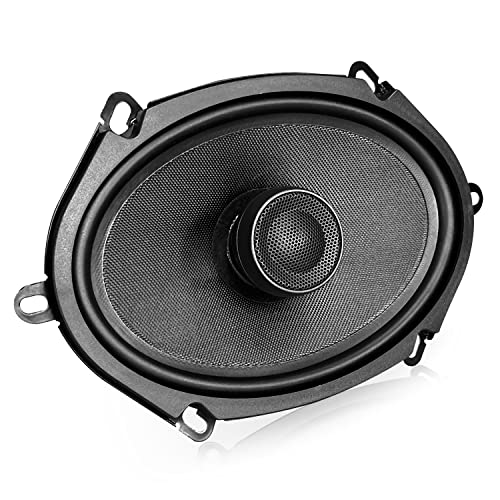
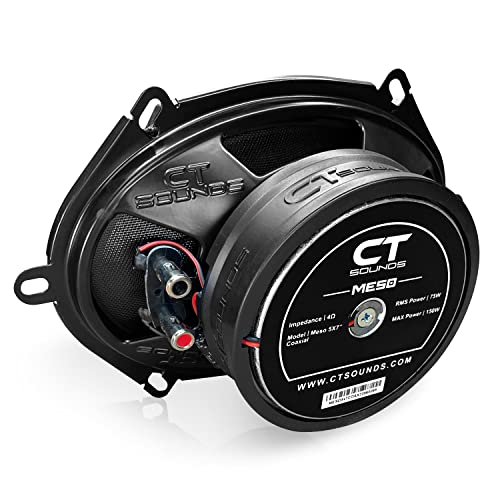
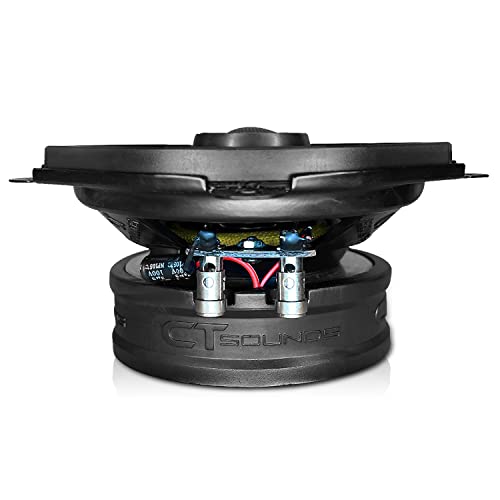
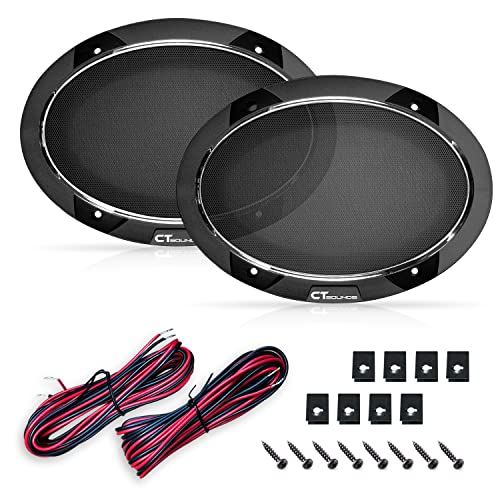
At nearly $110, the Meso sits at the top end of this list, but it justifies the cost with premium materials, fiberglass cone, nitrile butadiene rubber surround, and a silk-dome tweeter with CCAW voice coil. These aren’t just specs on a sheet; owners report a tighter, more controlled sound than most in this class, especially in the lower mids. It handles amplification well, which makes it a solid bridge between factory and high-end aftermarket systems.
Compared to the JBL STAGE3, it lacks the same brand-tuned consistency across pairs, but it offers better value for the power and materials. I’d recommend it over the STAGE3 if you’re on a tighter budget but still want near-premium performance.
Product photos

Pyle PL573BL 3-Way Car Speakers

Strengths
- Heavy-duty construction
- High RMS power
- Butyl rubber surround
Trade-offs
- Harsh high-end response
- Overstated frequency claims
Pyle’s PL573BL throws big numbers, 150W RMS and a hefty 20 oz magnet, but the real story is in its rugged build. The butyl rubber surround and ASV voice coil are designed to endure heat and constant flex, making this a favorite among users in high-vibration environments or extreme climates. It’s one of the few models in this list built to last longer than the car itself, assuming you don’t push it beyond its limits.
The trade-off? Sound quality is functional, not refined. The neodymium midrange driver adds presence, but the overall tuning skews bright and can fatigue over long drives. Compared to the JBL or CT Sounds Meso, it’s less accurate, but for a work truck or a daily driver exposed to rough conditions, durability wins.
Product photos


JBL Stage 38627 5×7 Speakers
Strengths
- Superior high-frequency response
- Plus One woofer design
- Engineered for precise fit
Trade-offs
- Higher price than basic models
- 2-way design limits detail
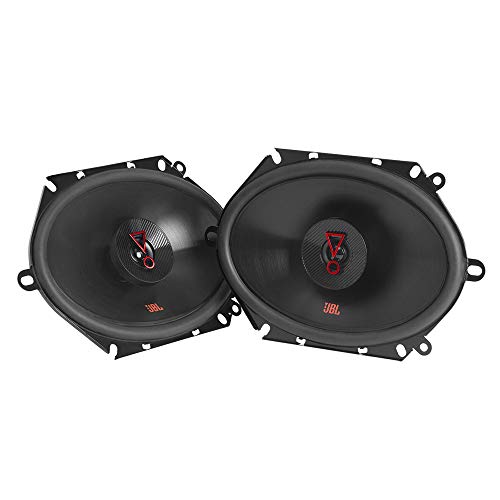
JBL has long been a benchmark in factory upgrades, and the Stage 38627 continues that trend with a focus on crisp, fatigue-free clarity across the frequency range. The Plus One woofer design isn’t just marketing, it gives you more cone area than typical 5x7s, which translates to stronger mid-bass response without bloating the mids. Reviewers note the edge-driven dome tweeter produces smooth highs, a rare win at this price point where many competitors lean shrill.
It’s not the most powerful speaker here, but when it comes to tonal accuracy and fitment reliability, it outperforms several pricier options. Compared to the CT Sounds Meso, it doesn’t have the same RMS rating, but the real-world listening experience feels more refined. If you listen to podcasts, acoustic sets, or classic rock, this should be on your shortlist.
Product photos
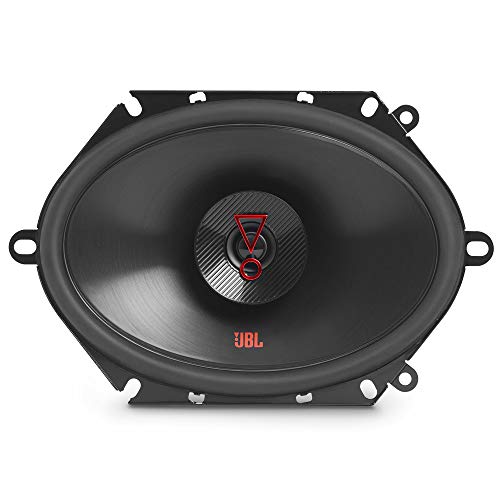


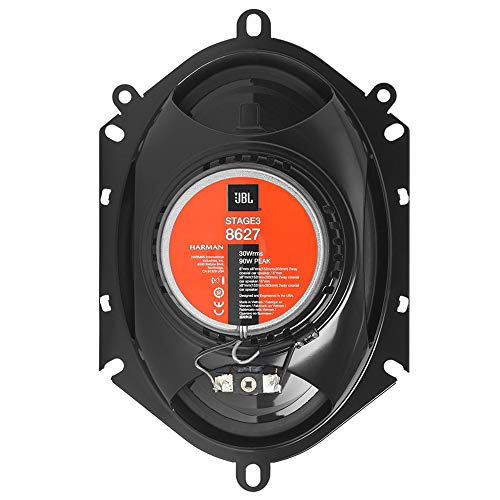
JBL STAGE3 5×7 Coaxial Speakers

Strengths
- Matched voicing across pairs
- Vented basket for cooling
- Full car upgrade package
Trade-offs
- Very high price
- No 3-way drivers
Selling two pairs in one box, the JBL STAGE3 8627AM is built for full-vehicle upgrades. The vented basket design isn’t just structural, it actively reduces heat buildup, letting these speakers handle long sessions at high volume without distortion. Plus One woofers offer real-world efficiency gains, and the matched voicing across all four speakers ensures consistent tonality front and rear.
This isn’t the cheapest route, but if you’re replacing all four factory 5x7s, buying this bundle often works out cheaper than two separate pairs of the single STAGE38627. Owners note it’s one of the few sets that truly sound like a system rather than mismatched components. For a premium OEM-style overhaul, this is hard to beat.
Product photos

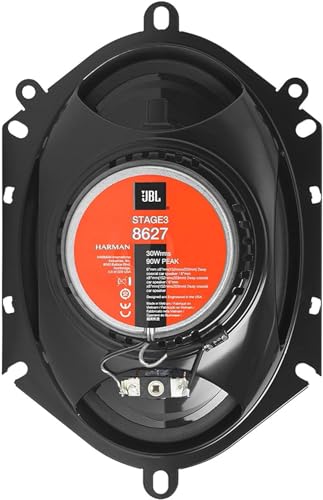

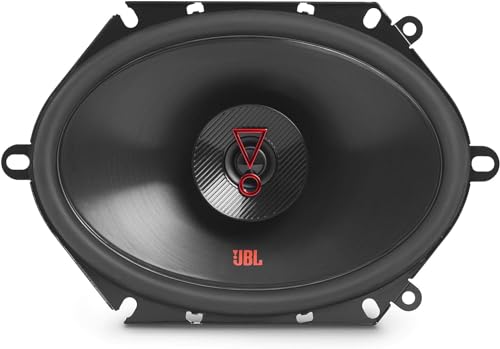
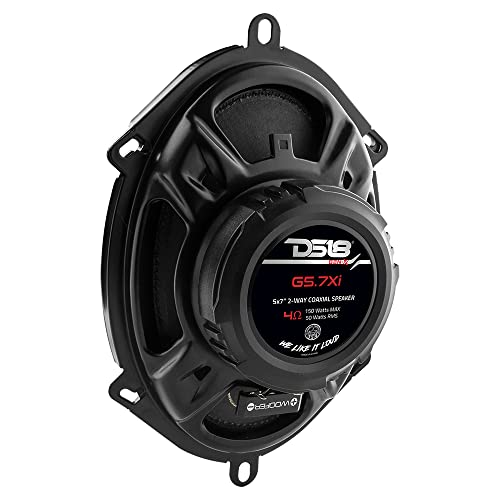
DS18 GEN-X5.7 3-Way Speakers

Strengths
- True 3-way design
- Dual tweeter setup
- Good midrange clarity
Trade-offs
- Fitment can be tight
- Mid-bass lacks punch
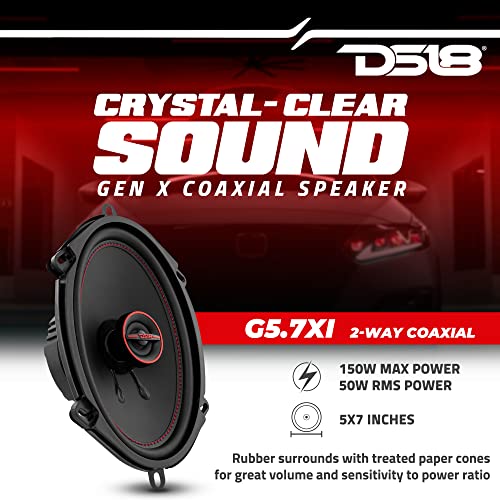
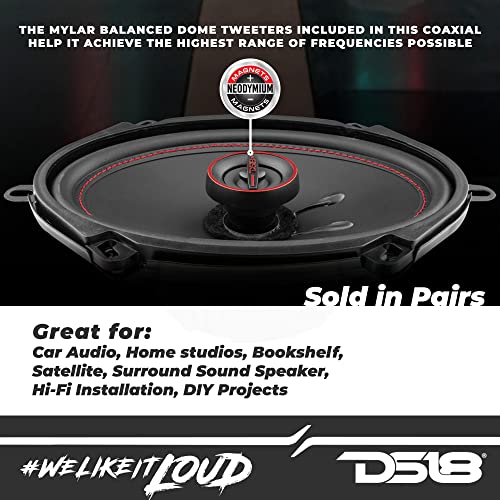
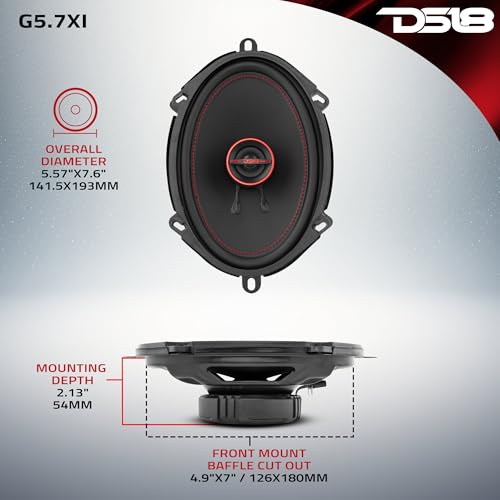
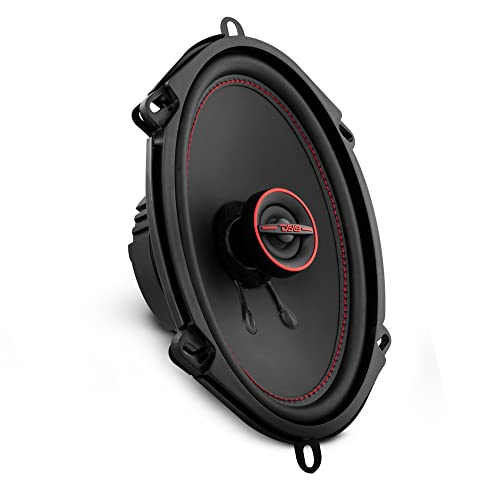
What makes the DS18 GEN-X5.7 compelling is its true 3-way layout in a 5×7 coaxial form, featuring separate 25mm midrange and dual mylar tweeters. That kind of layered driver setup is uncommon at this price, and owners report a noticeable lift in vocal definition and instrument separation. The 28mm and 9mm tweeters handle different high-frequency bands, which helps avoid the “one-note” brightness common in cheaper coaxials.
It doesn’t match the raw output of the Pyle PL573BL, but it sounds more articulate. Where it stumbles is fitment, some users note interference with grilles or mounting depth issues in older vehicles. Still, for the wired-in enthusiast who wants more sonic detail without stepping up to separates, this is a strong contender.
Product photos
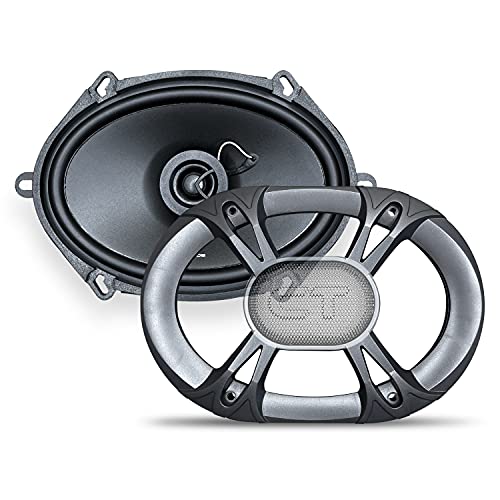
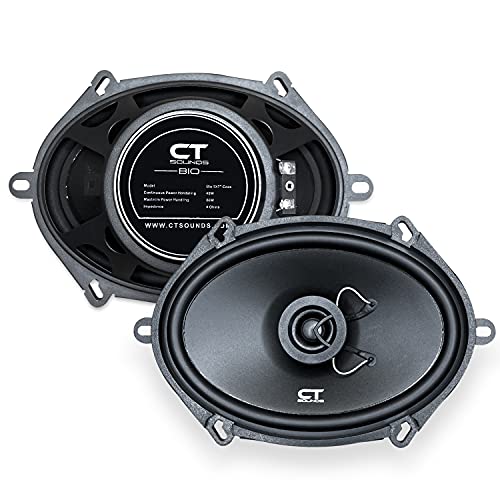
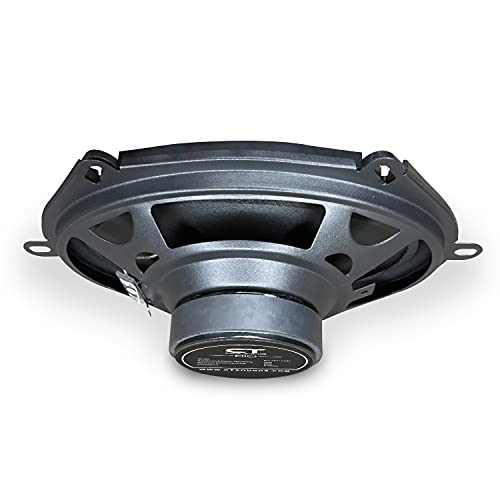
CT Sounds BIO-5X7 Coaxial Speakers

Strengths
- Balanced tonality
- Silk dome tweeter
- Easy factory integration
Trade-offs
- Modest power handling
- No midrange driver
The CT Sounds BIO-5X7-COX stands out in the mid-tier coaxial speaker segment by delivering a surprisingly well-balanced sound without leaning too hard into bass or brightness. On paper, the 40W RMS per speaker isn’t groundbreaking, but owners consistently report that these speakers handle factory head units with ease and scale decently with modest amplification. The silk dome tweeter paired with a polypropylene woofer avoids the harshness that plagues many budget builds, making this a smart choice for listeners who value clarity over raw volume.
Compared to similarly priced 3-way models, it doesn’t offer the same level of frequency separation, but the simpler 2-way design translates to more cohesive staging. I’d pick this over flashier options if your main goal is natural-sounding vocals and midrange presence.
Product photos

How We Evaluated 5×7 car speakers
My approach to evaluating 5×7 car speakers centered on a detailed comparison of published specifications and features, combined with a careful review of owner experiences and expert opinions. Rather than a hands-on lab test, this is a research-led comparison, ranking models against criteria important to car audio enthusiasts. I weighed information from manufacturer data sheets, online retailers, and audio-focused publications to build a clear picture of each speaker’s capabilities.
For 5×7 speakers, several factors stand out as most crucial. Power handling (RMS and peak wattage) directly impacts how loud and cleanly a speaker can play, especially when paired with an amplifier. Equally important is sensitivity – a higher dB rating means the speaker requires less power to achieve a given volume. Finally, the materials used in the cone and surround significantly influence sound quality and durability.
Specifications reliably indicate a speaker’s potential, offering concrete data on power, impedance, and frequency response. However, owner feedback provides invaluable insight into real-world performance, particularly regarding clarity, bass response, and long-term reliability. I also considered reputation; brands consistently praised for quality, like JBL, often deliver on their promises, and finding a good set of speakers for bass is key for many drivers. If you’re considering smaller sizes, check out our guide to 6.5 inch car speakers.
What To Look For In 5×7 car speakers
Selecting the right car speakers can dramatically improve your driving experience.
A quality 5×7” car speaker delivers clear, balanced audio with good frequency response and durability. Key considerations include power handling (RMS and peak), sensitivity, impedance matching to your head unit, and build materials. Look for speakers designed to fit your vehicle’s specific mounting depth to avoid interference.
Understanding Power and Sensitivity
Many buyers fixate on peak wattage, but RMS power is far more important. RMS (Root Mean Square) represents the continuous power a speaker can handle without distortion, and it should align with your amplifier’s output if you’re using one. If you’re running speakers directly from your head unit, lower RMS values (around 30-50W) are generally sufficient. Sensitivity, measured in decibels (dB), tells you how efficiently a speaker converts power into sound. Higher sensitivity means louder sound with less power, useful if you’re sticking with a factory radio.
Mounting Depth and Vehicle Fit
One of the biggest headaches with car speakers is fitment. A speaker that sounds amazing on paper is useless if it won’t physically install in your door. Measure your vehicle’s existing speaker mounting depth before you buy. Shallow-mount speakers, like those from CT Sounds, are specifically designed for tight spaces. Here’s what to keep in mind:
- A slight difference in mounting depth (a few millimeters) might be okay with minor adjustments.
- Consider window clearance. Deeper speakers can interfere with window operation.
- Larger magnets and more robust construction often mean greater mounting depth, so a trade-off often exists between sound quality and ease of installation.
Material Quality and Sound Signature
Speaker materials heavily influence the sound. Polypropylene cones are common and offer a good balance of stiffness and affordability. Silk dome tweeters generally provide smoother, more refined high frequencies compared to metal tweeters, which can be brighter but sometimes harsher. If you’re looking for a more detailed and immersive listening experience, exploring component speakers is a good step up from coaxial designs. Ultimately, the “best” sound signature is subjective. Some prefer a warmer, bass-heavy sound, while others prioritize clarity and detail. If you’re upgrading from factory speakers, even a modest improvement in materials will be noticeable. Don’t underestimate the value of a robust build, like the ones found in the Pyle PL573BL, for long-term durability.
Don’t chase peak wattage; focus on matching RMS power to your system and prioritizing speaker sensitivity for optimal performance.
5×7 Car Speakers Compared
Here’s a specification comparison of several 5×7 car speakers to help you evaluate your options.
| Product Name | RMS Power (W) | Peak Power (W) | Impedance (Ohms) | Frequency Response (Hz-kHz) | Mounting Depth (inches) |
|---|---|---|---|---|---|
| BOSS CH5730 | N/A | N/A | 4 | 100 – 18 | 1.8 |
| CT Sounds Tropo | 30 | 60 | 4 | N/A | 1.57 |
| SoundXtreme | 75 | 350 | 4 | 45 – 20,000 | 3/8 |
| CT Sounds Meso | 75 | 150 | 4 | N/A | N/A |
| Pyle PL573BL | 150 | 300 | 4 | 80 – 20 | N/A |
| JBL Stage 38627 | N/A | N/A | 4 | N/A | N/A |
| JBL STAGE3 | N/A | N/A | 4 | N/A | N/A |
| DS18 GEN-X5.7 | 50 | 165 | 4 | N/A | N/A |
| CT Sounds BIO-5X7 | 40 | 80 | 4 | N/A | N/A |
Frequently Asked Questions
Will 5×7 speakers fit in any car?
No, not all cars accept 5×7 speakers. While 5×7 is a common size, mounting depth and physical space vary significantly between vehicles. Always measure your existing speaker opening and compare it to the speaker’s specifications before purchasing, or consult resources for best door speaker models for your specific make and model.
What does speaker impedance mean, and why is it important?
Speaker impedance, measured in ohms, represents the electrical resistance the speaker offers to the amplifier. Most car stereos and amplifiers are designed for 4-ohm speakers, and mismatching impedance can reduce power output or even damage your equipment.
Are component speakers better than coaxial 5x7s?
Generally, yes, component speakers deliver superior sound quality. They separate the tweeter and woofer, allowing for optimized placement and better soundstage imaging, but they require more installation work. If you’re looking for a simple upgrade, coaxial speakers remain a great option, and you can find excellent car speaker reviews for both types.
What’s the difference between RMS and peak power?
RMS (Root Mean Square) power is the continuous power a speaker can handle, while peak power is the maximum short-burst power it can withstand. RMS is the more important specification to consider when matching speakers to your amplifier, as it reflects sustained performance without distortion.
How can I tell if a speaker will have good bass response?
While frequency response specifications offer a clue, cone material and speaker design are more telling. Look for speakers with polypropylene or mica-filled polypropylene cones, and consider models specifically designed for enhanced bass like those often found when searching for top car speakers. Owner feedback is also invaluable for gauging real-world bass performance.
The Bottom Line
Choosing 5×7 speakers always comes down to balancing what you want to spend with the level of improvement you’re after. If you’re simply looking to replace factory speakers and get noticeably better sound without breaking the bank, the BOSS CH5730 provides a solid starting point. However, if you’re serious about audio quality and want a truly immersive listening experience, the CT Sounds Meso delivers a superior soundstage and power handling for the money.
For those needing a specific solution, the CT Sounds Tropo shines as the best shallow-mount option, fitting easily into tighter spaces. If you want something versatile that can handle a bit more power, the DS18 GEN-X5.7 is a good choice. And for owners looking to explore aftermarket speakers beyond the 5×7 size, our guide to 6 1/2-inch speakers covers a wide range of alternatives.
Ultimately, remember that raw specifications only tell part of the story. The best 5×7 speakers aren’t necessarily the ones with the highest wattage or the widest frequency response. Prioritize a speaker that matches your power source, fits your vehicle, and delivers a sound signature you enjoy – that’s where the real value lies.
