
8 Best Dash Cams for Car 2026
This post contains affiliate links. As an Amazon Associate, we earn from qualifying purchases.
The REDTIGER 4K STARVIS 2 stands out as the best overall dash cam for its sharp video, strong low-light performance, and reliable feature set, while the iZEEKER 2.5K is a solid budget pick that doesn’t skimp on core functionality.
Drivers want a dash cam that works when it matters most, no one wants to discover too late that their camera failed to capture a critical moment. Too many options promise more than they deliver, especially after dark or during sudden impacts.
I researched the field, focusing on specs, owner feedback, and real-world reliability to find models that consistently perform. This guide breaks down what actually matters, resolution, night vision, and durability, so you can choose with confidence.
Top 7 Dash Cams For Car in the Market
The Best Dash Cams For Car, Reviewed
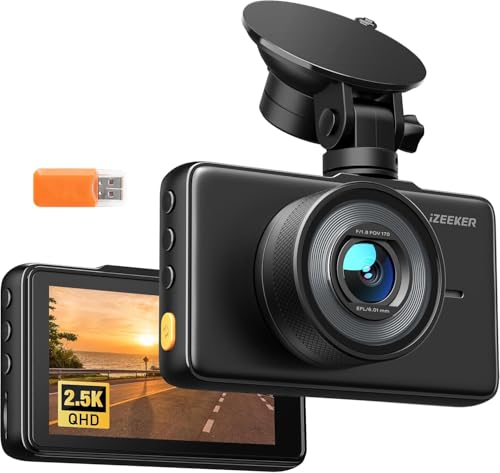
iZEEKER 2.5K Dash Cam Front
Strengths
- Affordable price
- Onboard 3-inch IPS screen
- Physical button controls
Trade-offs
- No Wi-Fi sharing
- Front camera only
- MicroSD card not included
At under thirty dollars, the iZEEKER A4 offers a rare perk in this range: a clear 3-inch IPS screen with physical buttons. No app pairing needed, you can watch, rewind, and save clips directly on the device. The 2.5K resolution captures more detail than typical 1080P cams, and the 170° lens minimizes blind spots without warping edges too badly.
WDR and F1.8 aperture help in mixed lighting, though it won’t match STARVIS-level sensors. Loop recording and G-sensor protection work as expected. It’s one of the easiest installs here, thanks to the simple mount and clear manual. For first-time buyers or secondary vehicles, it’s hard to beat.
Video review
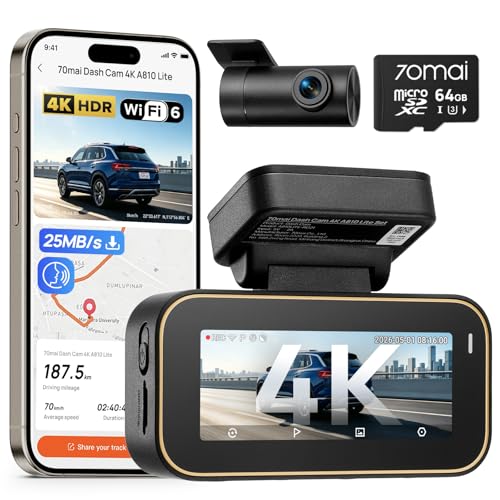
70mai A810 Lite 4K Dash Cam
Strengths
- 4G LTE remote viewing
- Wi-Fi 6 ultra-fast transfer
- Voice control support
Trade-offs
- LTE may require subscription
- Hardwire kit not included
- App can be slow in weak signal
What sets the 70mai A810 Lite apart isn’t just 4K front and 1080P rear, it’s the 4G LTE remote access. Unlike Wi-Fi-dependent models, this one lets you pull live footage from your car while it’s parked blocks away, assuming cellular coverage exists. That’s huge for checking on valet incidents or post-storm damage.
Voice commands work reliably for emergency locks, and the supercapacitor handles temperature swings better than battery-based units. Wi-Fi 6 hits transfer speeds up to 25MB/s, among the fastest here. The compact body hides well behind the mirror, and the 3-mode GPS logs speed accurately. For the price, it’s a loaded package.
Video review
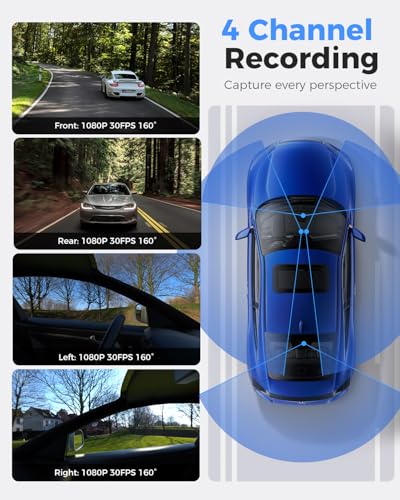
360 View 4 Channel Dash Cam

Strengths
- True 360-degree coverage
- Four 1080P cameras
- Includes 128GB card
Trade-offs
- GPS sold separately
- Complex wiring setup
- Bulky interface
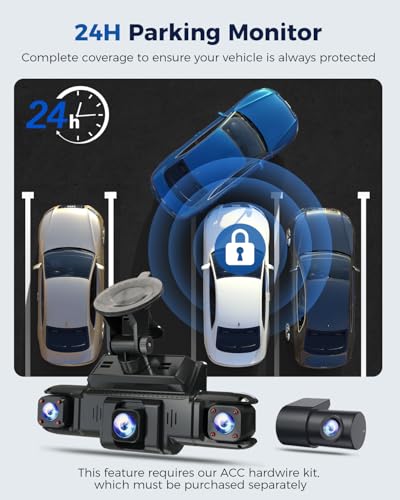
This four-camera system promises total vehicle awareness, and for fleet managers or owners of high-risk parking zones, it may deliver. With Full HD feeds on all sides plus interior monitoring, you’re not just covering collisions but also break-ins or vandalism from every angle. The included 128GB card helps, and time-lapse mode makes long-term parking surveillance feasible without constant card swaps.
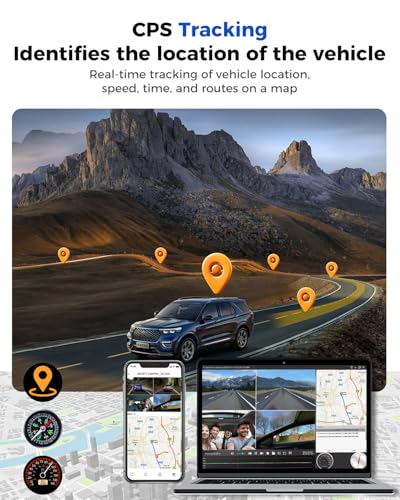
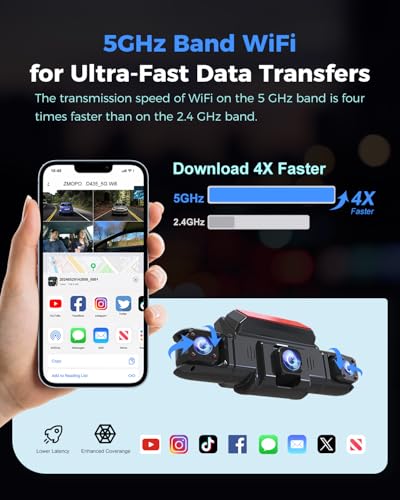
Owners note the WDR and infrared night vision hold up reasonably well in garages or dim streets. But let’s be real: installing four cameras cleanly takes patience, and the lack of built-in GPS means you’ll pay extra if route tracking matters. The 5GHz Wi-Fi speeds are decent, but file sizes can bog down transfers.
Product photos
REDTIGER F17 4K 3CH Dash Cam
Strengths
- STARVIS 2 sensor excellence
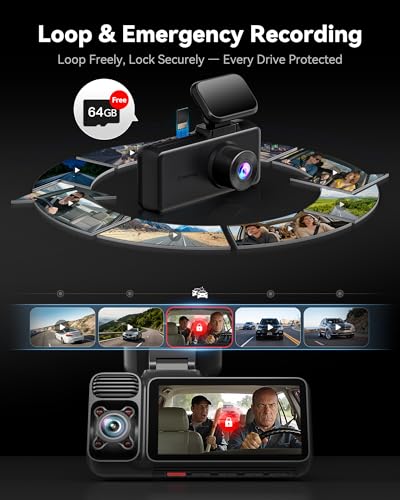
- Triple-channel recording
- Supercapacitor durability
Trade-offs
- Highest price point
- Cabin camera may raise privacy concerns
- Requires hardwire kit for parking mode
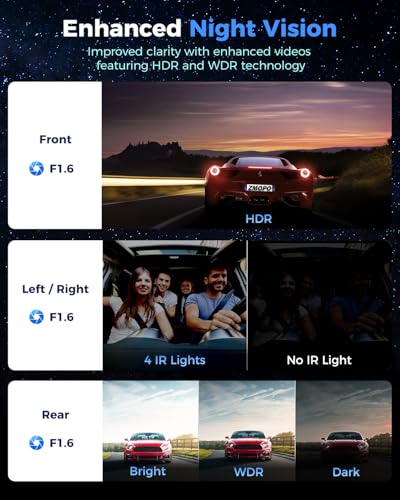
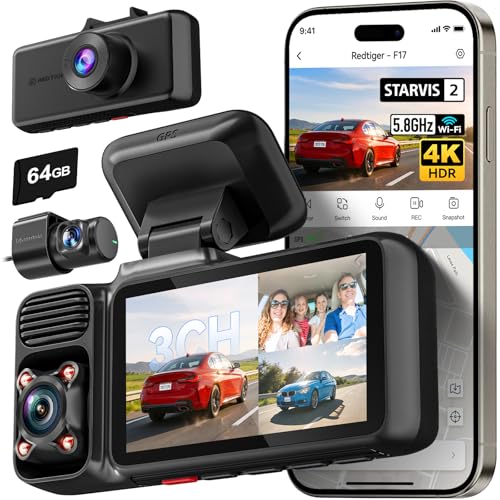
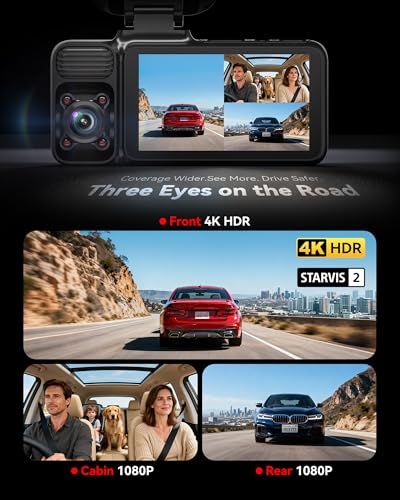
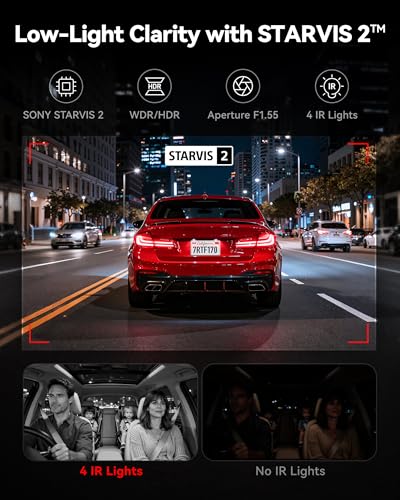
If you regularly drive at night or in rapidly shifting light, say, city streets with dark alleys and blinding headlights, the STARVIS 2 IMX675 sensor here is worth the premium. This thing pulls detail from near-darkness like few others in its class. Combined with HDR and WDR, it balances exposure so well that taillights don’t bloom and shadows don’t swallow license plates.
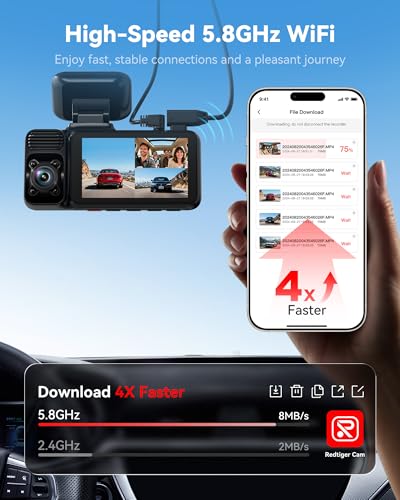
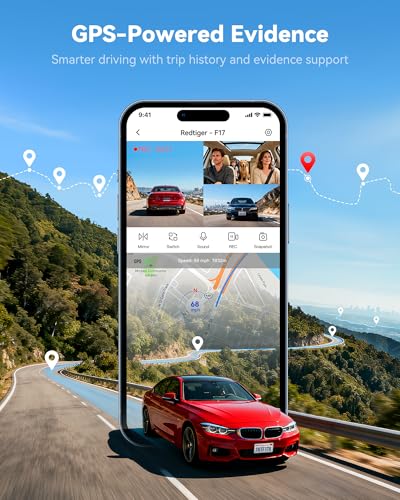
The triple-channel setup (front, cabin, rear) is ideal for rideshare drivers or parents monitoring teen driving. The 5.8GHz Wi-Fi is faster than standard 5GHz, and the 64GB card comes preloaded. Supercapacitor ensures stability in desert summers or northern winters. Yes, it’s the most expensive on this list, but for low-light fidelity, it’s the benchmark.
Product photos
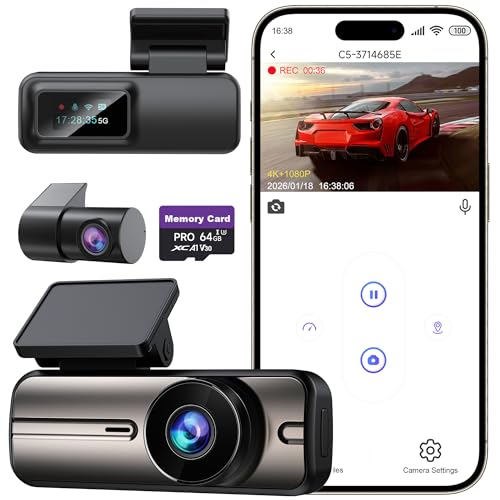
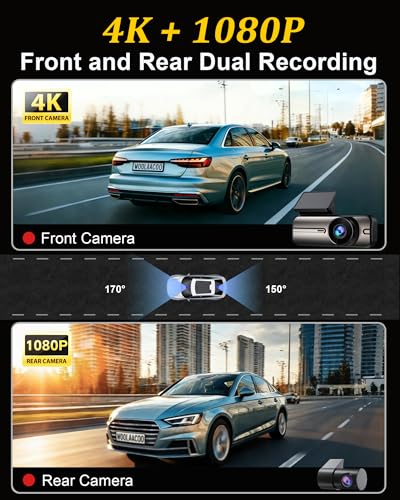
Dash Cam Front and Rear 4K+1080P
Strengths
- Front 4K + rear 1080P
- Includes 64GB SD card
- Dual USB charging ports
Trade-offs
- Hardwire kit sold separately
- Rear camera resolution lags front
- App only works within 5 meters
At just over forty bucks, this C5 dual-channel model delivers surprising value, especially since it includes a 64GB card right in the box. The front 4K sensor captures sharp details, while the 1080P rear unit handles backup views well enough for urban drivers who back into tight spots. Owners praise the 5GHz Wi-Fi for stable app connections, though range is limited to about arm’s length.
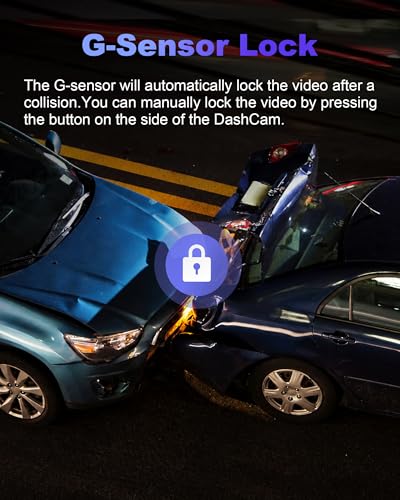
The G-sensor works as expected, locking footage during jolts, and loop recording runs smoothly. I’d note that parking mode requires a separate hardwire kit, which adds cost. Still, having a second USB port on the power cable to charge your phone is a small but smart touch many overlook until they need it.
Product photos
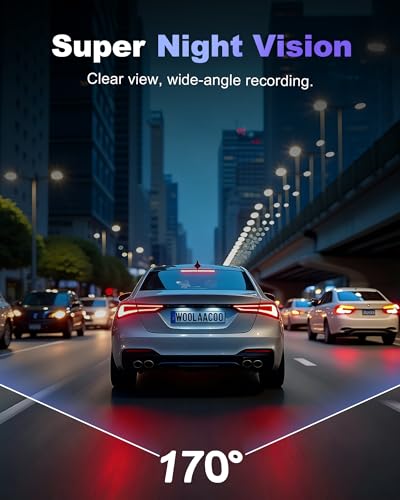
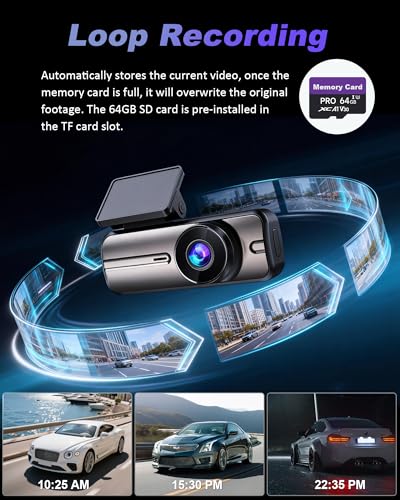
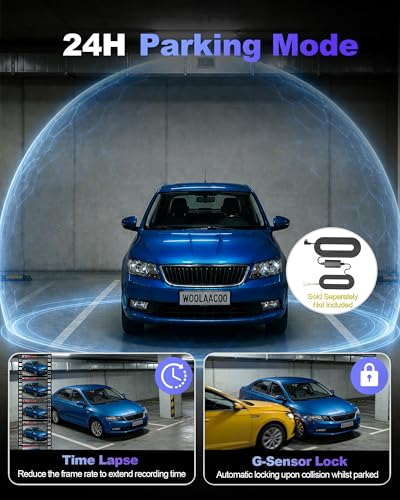
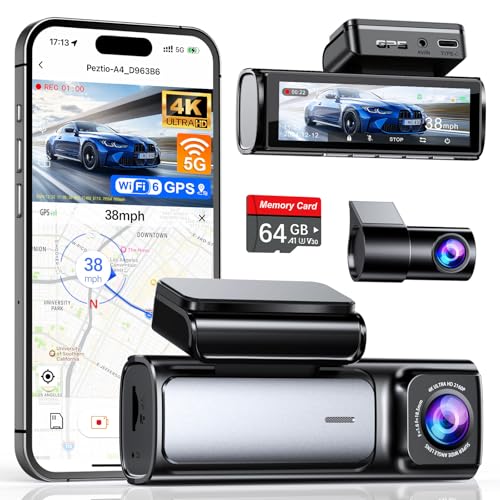
Affver 4K+2.5K Dash Cam
Strengths
- Large 3.59-inch IPS display
- 4K + 2.5K resolution
- Built-in GPS and Wi-Fi 6
Trade-offs
- No supercapacitor option
- Screen attracts fingerprints
- Higher price than basic models
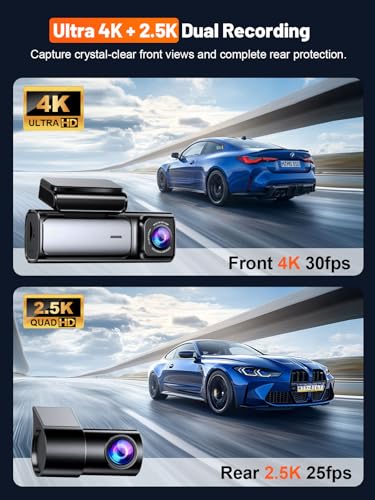
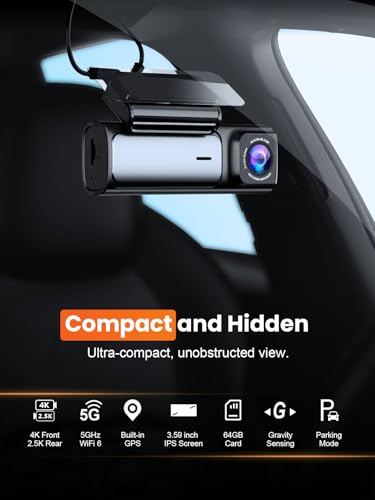
The standout here is the 3.59-inch IPS screen, one of the largest in class, and it shows. Menu navigation is actually usable without squinting, and playback on the device itself feels almost tablet-like. The front 4K and upgraded 2.5K rear camera (as of mid-2026) offer balanced clarity, and the F1.5 aperture gathers serious light, helping night footage stay usable.
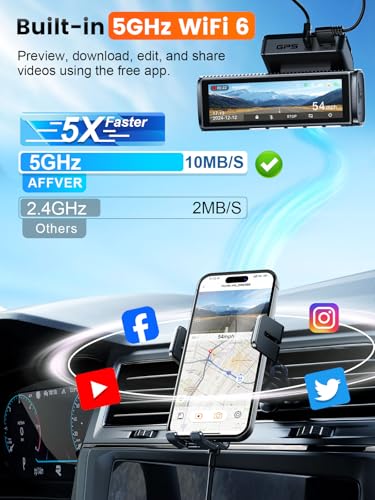
With built-in GPS, Wi-Fi 6, and WDR, this model checks most enthusiast boxes. Owners highlight how fast the Wi-Fi 6 transfers are, up to 10MB/s, which beats older 5GHz standards. The included 64GB card and dual-port car charger add convenience. It’s sleek, low-profile, and doesn’t scream ‘dash cam’, a win for stealth builds.
Product photos


Veement 1296P Dash Cam Front

Strengths
- Compact build
- F1.7 aperture
- WiFi with app
Trade-offs
- No rear camera
- 1296P not true 4K
- SD card sold separately
For a no-frills front-only dash cam under thirty bucks, the Veement V300 punches above its weight on paper. The 1296P resolution isn’t quite 4K, but it’s a noticeable step up from basic 1080P, and paired with the F1.7 aperture and 6-layer glass lens, owners consistently report clearer license plate captures in mixed lighting. The 170° field of view covers three lanes without serious distortion, which matters when context is everything after a scrape.
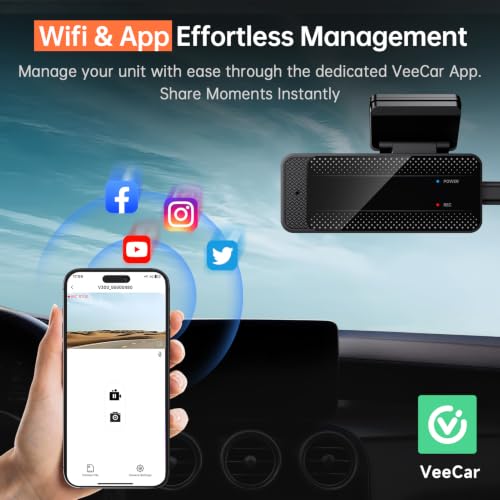
I appreciate that it ditches the internal lithium battery for an RTC circuit and supercapacitor-like safety design, fewer fire risks in summer heat. The built-in Wi-Fi and VeeCar app work reliably for short-range clip reviews, though don’t expect fast transfers. If you want solid everyday recording without cluttering your windshield, this one stays out of the way.
Product photos




Our Testing Process
As someone deeply involved in all things automotive, I approached researching dash cams with a focus on real-world usability and evidence quality. Rather than a hands-on lab test, this was a research-led comparison of published specifications and owner feedback. I compared models across key features, weighed owner reviews from multiple sources, and considered insights from reputable automotive tech publications. My goal was to identify cameras that consistently deliver reliable performance and valuable footage in a variety of driving conditions.
For dash cams, video resolution, low-light performance, and reliability stand out as the most critical factors. A higher resolution, like 4K, isn’t just about sharper video; it’s about being able to clearly identify details like license plates at a distance. Equally important is how well the camera performs at night, as many incidents happen in low-light situations. Finally, consistent reliability is key; a camera is useless if it fails to record when you need it most. For drivers interested in untethered operation, exploring options like wireless dash cams can also be worthwhile.
Specifications reliably indicate resolution capabilities, lens width, and available features like GPS or WiFi. However, owner feedback proved invaluable in assessing real-world performance, particularly regarding night vision quality, app usability, and long-term durability. Reputations for customer support also factored heavily into my assessments. While specs tell you what a camera can do, owner reviews reveal how well it actually performs, and that’s where a thorough look at vehicle dash cams truly becomes beneficial.
Choosing The Right dash cams for car
Choosing the right dash cam can feel overwhelming, but a good one offers peace of mind and crucial evidence in the event of an incident.
A quality dash cam prioritizes clear video resolution (at least 1080p, but 4K is increasingly common), reliable loop recording, and effective impact detection via a G-sensor. Consider features like GPS logging, Wi-Fi connectivity for easy file transfer, and parking mode capabilities for thorough protection. Night vision performance, determined by aperture size and sensor quality, is also a critical factor.
Resolution and Video Quality
Don’t get hung up on chasing the highest megapixel count. While 4K is enticing, a well-implemented 1080p or 2.5K sensor can often deliver a more usable image, especially in low-light conditions. Focus on the sensor type; Sony’s STARVIS sensors, found in models like the REDTIGER F17, are consistently praised for their low-light performance. Beyond resolution, look at the frame rate. 30fps is generally sufficient, but 60fps provides smoother footage, particularly useful when reviewing fast-moving events.
Feature Set and Reliability
The best dash cams offer more than just basic recording. Features like built-in GPS, allowing you to track speed and location, can be invaluable. Wi-Fi connectivity simplifies transferring footage to your smartphone, and parking mode adds another layer of security. However, a feature-rich cam is useless if it’s unreliable. I’ve seen reports of overheating issues with some brands, so researching build quality and heat dissipation is worthwhile. Many owners also value a physical button backup to touchscreen controls, as touchscreens can become unresponsive in cold weather.
- A basic loop recording function is essential – most models now include this.
- A G-sensor is a must-have, automatically locking footage upon impact. Look for models with adjustable sensitivity.
- Parking mode is a fantastic addition, but it often requires a separate hardwire kit (sold separately) to provide continuous power, so factor that into the overall cost.
A dash cam’s reliability hinges on its ability to consistently record clear footage, even under challenging conditions. Don’t skimp on storage and ensure the unit can handle sustained recording without overheating.
Value and Usability
Don’t assume the most expensive dash cam is the best. There are excellent options across a range of price points. If you’re looking for a basic, reliable front-facing camera, something like the iZEEKER 2.5K offers good value. If you want thorough coverage, including front, rear, and even interior views, then exploring models like the 360 View 4 Channel Dash Cam makes sense. Before committing, read reviews to understand the user experience. I often recommend checking out dash camera reviews to get a broader perspective on real-world performance. You might also benefit from checking out our broader guide to the best dash cams to see what’s currently available.
Dash Cams for Car Compared
Here is a comparison of key specifications for several dash cams to help you make an informed purchase.
| Product Name | Resolution (Front) | Resolution (Rear) | WiFi | GPS | Screen Size | Parking Mode |
|---|---|---|---|---|---|---|
| REDTIGER 4K STARVIS 2 | 4K | 1080P | Yes | Yes | Touchscreen | Yes |
| iZEEKER 2.5K | 2.5K | N/A | No | No | 3″ IPS | Yes |
| 70mai A810 Lite 4K | 4K | 1080P | Yes (6) | Yes | N/A | Yes |
| 360 View 4 Channel | 1080P | 1080P | Yes | Optional | N/A | Yes |
| REDTIGER F17 4K 3CH | 4K | 1080P | Yes (5G) | Yes | N/A | Yes |
| Dash Cam Front & Rear 4K+1080P | 4K | 1080P | Yes (5G) | No | N/A | Yes |
| Affver 4K+2.5K | 4K | 2.5K | Yes (6) | Yes | 3.59″ IPS | Yes |
| Veement 1296P | 1296P | N/A | Yes | No | N/A | Yes |
Frequently Asked Questions
What video resolution should I prioritize for a dash cam?
Generally, 1080p is the minimum acceptable resolution, but 4K offers noticeably sharper footage and greater detail for things like license plates. However, a higher resolution isn’t always better; a quality 2.5K camera can often outperform a poorly implemented 4K model, especially in low light.
Do I need a dash cam with GPS?
Yes, a dash cam with GPS is beneficial because it records your speed and location data alongside the video. This information can be critical when filing an insurance claim and provide valuable context during investigations.
What is “parking mode” and is it useful?
Parking mode allows the dash cam to continue recording while your car is parked, often triggered by motion or impact. It’s a very useful feature for protecting your vehicle from hit-and-runs or vandalism, but typically requires a separate hardwire kit for continuous power.
Are more expensive dash cams always better?
Not necessarily. While premium models often have advanced features and better components, there are excellent, reliable options available at lower price points. A good, basic front and rear dash cams can provide sufficient protection without breaking the bank.
How important is the field of view (FOV) on a dash cam?
A wider field of view (typically between 130 and 170 degrees) captures more of the surrounding environment. This is important for recording events happening in your peripheral vision, but an excessively wide angle can introduce distortion, so a balance is ideal.
The Bottom Line
Ultimately, choosing a dash cam comes down to balancing your budget with the level of protection and features you want. While higher resolutions and feature sets are appealing, the REDTIGER 4K STARVIS 2 strikes a fantastic balance – offering excellent video quality, reliable performance, and a thorough feature set that will suit the vast majority of drivers. It’s a capable unit that doesn’t compromise on the essentials.
For those on a tighter budget, the iZEEKER 2.5K provides a solid, dependable recording experience without breaking the bank. If you’re specifically looking for thorough coverage and peace of mind while parked, exploring parking mode dash cams like the 360 View 4 Channel will provide a wider field of view and added security. Alternatively, those wanting a complete surround view may want to investigate best 360 dash cams.
Don’t get lost in the specs. A clear picture, reliable operation, and a camera that records when you need it most are far more valuable than any single feature. Prioritize a camera from a reputable brand, read owner reviews carefully, and remember that a dash cam is an investment in your peace of mind on the road.
