
7 Best Dash Cams for Car Front and Rear 2026
This post contains affiliate links. As an Amazon Associate, we earn from qualifying purchases.
The ROVE R2-4K Dual Dash Cam stands out as the overall best pick for front and rear coverage, thanks to its sharp upscaled 4K front video and reliable Sony STARVIS 2 sensor, while the BOTSLAB G300H Plus delivers strong value for those on a budget, and the REDTIGER F7NP offers excellent all-around performance with solid night vision.
Choosing a dash cam that covers both front and rear isn’t just about having two cameras, it’s about ensuring both deliver clear, trustworthy footage when it matters most. Too many models skimp on the rear camera or struggle in low light, making evidence unusable. This guide cuts through the specs and marketing to focus on what real drivers need: dependable recording, smart features, and value, based on a deep explore sensor tech, owner experiences, and real-world performance.
Top 6 Dash Cams For Car Front And Rear in the Market
The Best Dash Cams For Car Front And Rear, Reviewed
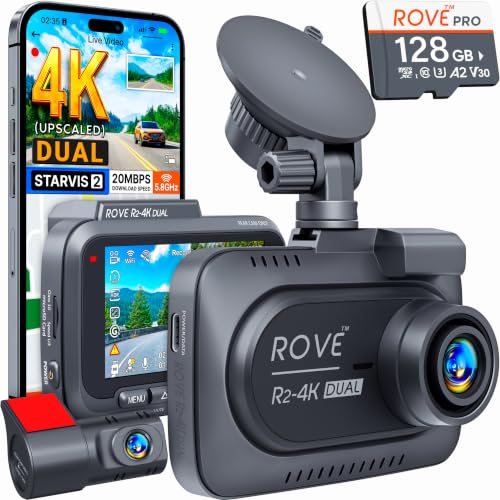
ROVE R2-4K Dual Dash Cam
Strengths
- Sony STARVIS 2 sensor
- Excellent night vision
- Full accessory kit
- Thermal protection
- Three parking modes
Trade-offs
- Upscaled 4K front
- No Wi-Fi 6 support
- Higher price point
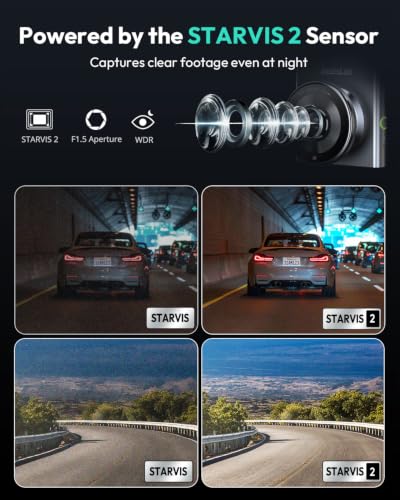
ROVE positions the R2-4K DUAL as their flagship, and on specs and owner satisfaction alone, it justifies the ‘Best Overall’ tag. It combines a genuine Sony STARVIS 2 IMX675 sensor with an f/1.5 aperture, delivering among the clearest night recordings in the segment. While the front records at 2.5K and upscales to 4K, real-world tests show it resolves fine details like license plates better than many native 4K units due to superior processing.
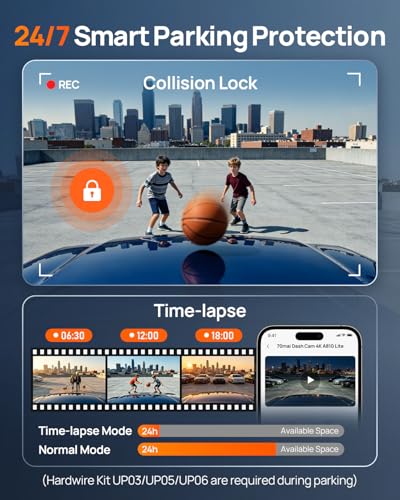
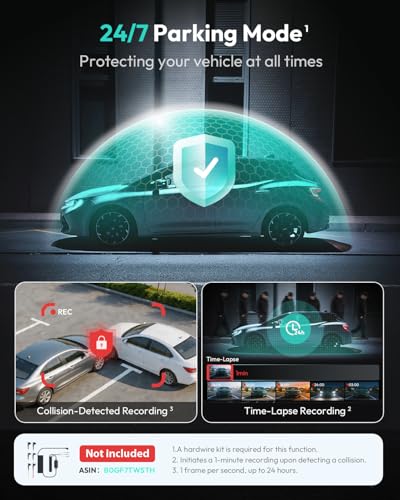
Beyond imaging, its 24/7 parking mode is thoughtfully designed: three modes, voice alerts for triggered events, and thermal protection for summer heat. The included accessories, like the trim tool and high-quality 128GB card, make setup smoother than most. Compared to others, this one balances performance, durability, and user experience best. I’d choose this as my daily driver’s main guardian.
Video review
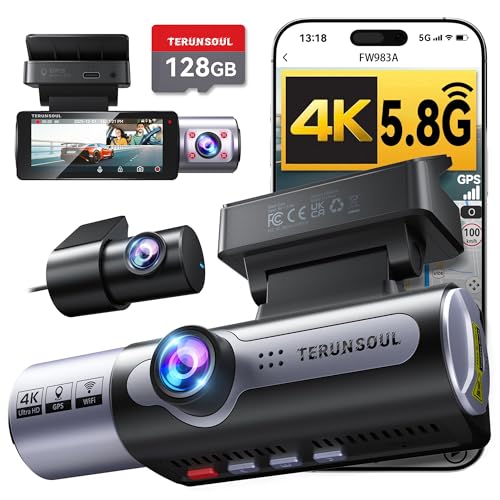
4K 3-Channel Dashcam Front Rear Cabin
Strengths
- Triple-channel recording
- Large 3.16″ IPS screen
- Free 128GB card
- Built-in GPS
- 5.8GHz WiFi
Trade-offs
- No hardwire kit included
- Cabin camera resolution limited
- Slightly bulkier setup
This triple-channel dash cam stands out by offering front, rear, and cabin recording, a rare combo that makes it a strong pick for rideshare drivers or families who want full visibility inside and out. On paper, the 4K front with 170° coverage and two 1080P side cameras delivers near 360° coverage, which is impressive for the price. Owners consistently report that the 3.16″ IPS screen is bright and useful for reviewing footage on the go, and the pre-loaded 128GB card means you’re ready to roll immediately.
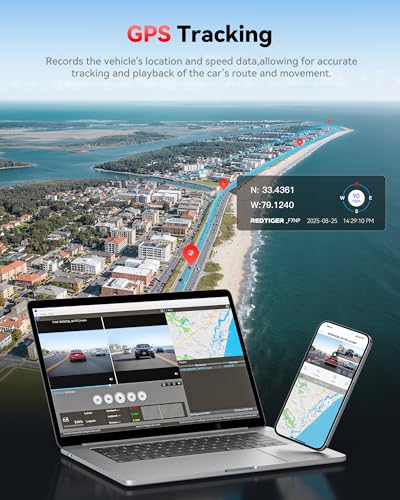
The built-in GPS and dual-band 5.8GHz WiFi are solid upgrades over budget models, allowing for fast transfers and embedded route/speed data in videos, something insurers and law enforcement find valuable. However, like others in this class, parking mode requires a hardwire kit not included here. Still, if you need cabin monitoring alongside road views, this one fills a niche most dual cams don’t touch.
Video review
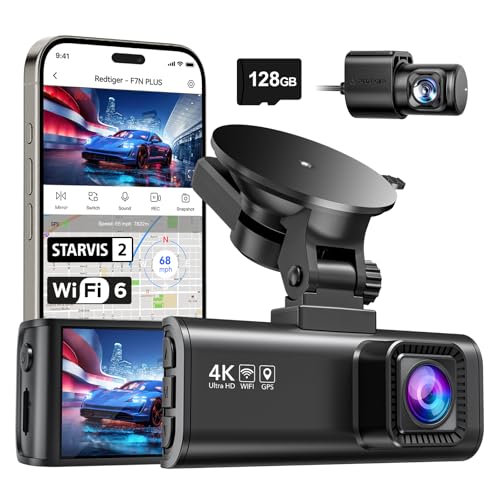
REDTIGER F7NP 4K Dual Dash Cam
Strengths
- STARVIS 2 sensor
- F1.5 large aperture
- Superior night clarity
- Supercapacitor
- Free memory card
Trade-offs
- App interface dated
- No voice control
- Installation cables stiff
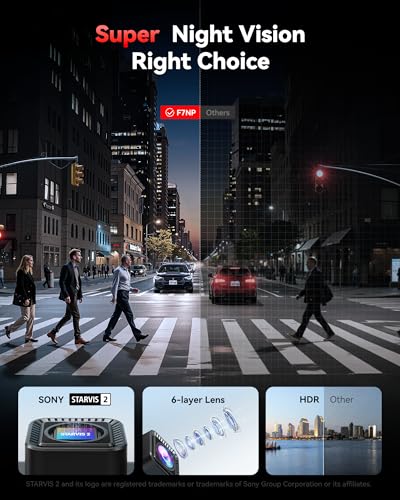
When night driving is part of your routine, the REDTIGER F7NP earns its “Best Night Vision” label thanks to the STARVIS 2 sensor and F1.5 aperture, specs that matter most when light is scarce. This isn’t just marketing hype; owner feedback across forums confirms clearer plate recognition after dark compared to similarly priced models using older sensors. WDR and HDR work together to balance tunnel exits and city streetlights, reducing washed-out zones in footage.
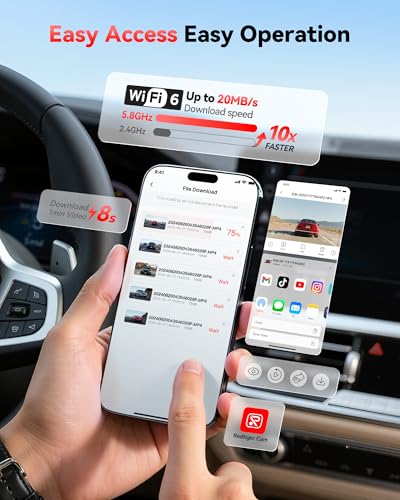
It also uses a supercapacitor instead of a battery, which I always recommend for long-term reliability in hot climates. The 5.8GHz WiFi is fast and stable, though app navigation can feel slightly clunky. If you drive frequently at night or in mixed lighting, this one’s a smarter buy than flashier touchscreen models with weaker low-light performance.
Product photos
70mai A810 Lite 4K Dash Cam
Strengths
- Wi-Fi 6 support
- Supercapacitor built-in
- Compact stealth design
- HDR night vision
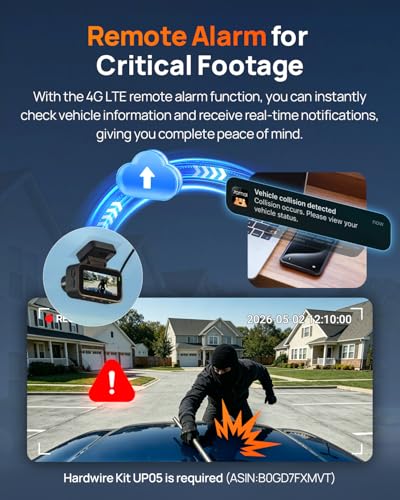
- 24H parking mode
Trade-offs
- No touchscreen
- 4G LTE needs subscription
- Rear camera angle narrow
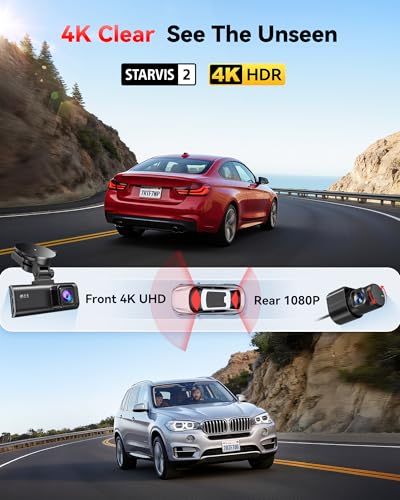
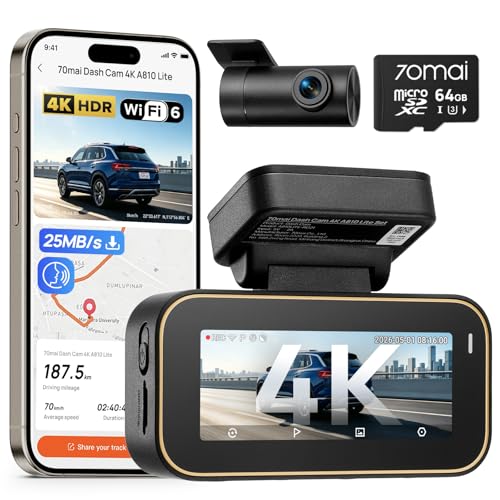
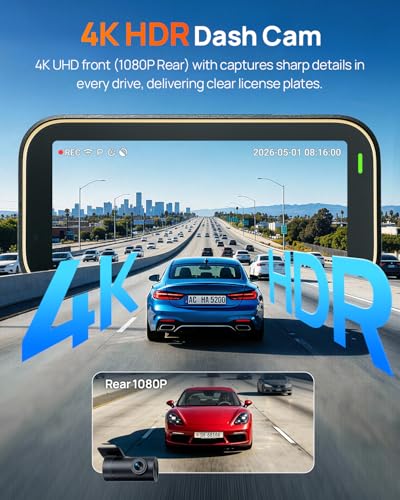
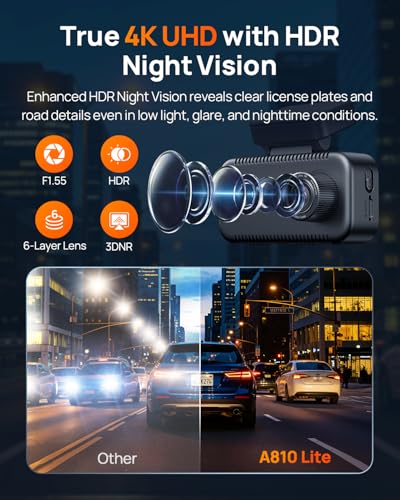
For tech-forward drivers who want smart integration without overspending, the 70mai A810 Lite punches above its weight. It’s compact, nearly invisible behind the mirror, yet packs Wi-Fi 6 for faster-than-average 25MB/s downloads, reviewers note this makes pulling clips effortless compared to older 2.4GHz models. The 4K front sensor with F1.55 aperture and HDR delivers dependable night vision, and owners confirm it handles glare from oncoming headlights better than many rivals in this range.
What really sets it apart is the supercapacitor design, giving it superior heat resistance and longevity, critical for vehicles parked in sunbelt states. While it lacks a touchscreen, voice control works reliably for basic commands. I’d pick this over bulkier options if you prioritize clean looks, modern connectivity, and stable performance in extreme temps.
Product photos

REDTIGER F7N TOUCH 4K Dash Cam

Strengths
- Touchscreen interface
- Voice command support
- Free 128GB card
- STARVIS 2 sensor
- Dual-band WiFi
Trade-offs
- Upscaled 4K only
- Rear view narrower
- Screen prone to smudges
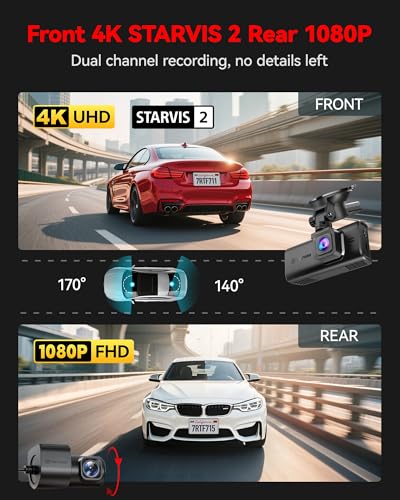
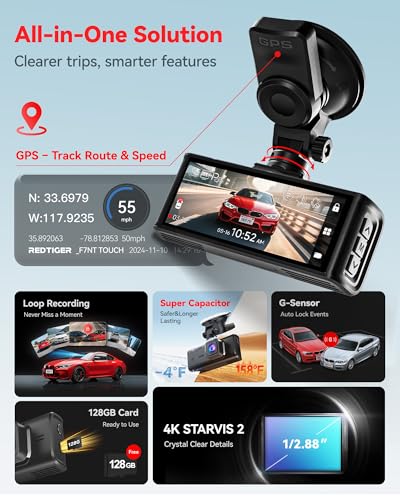
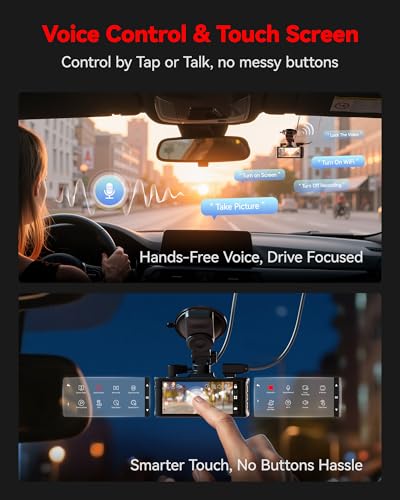
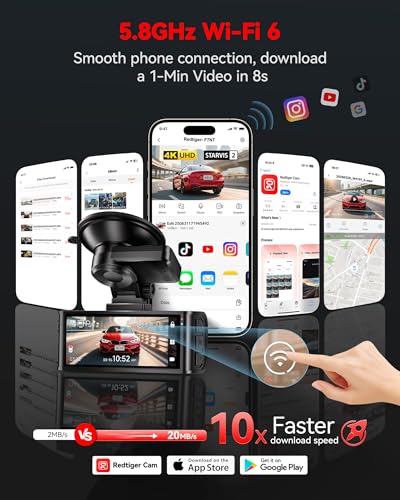
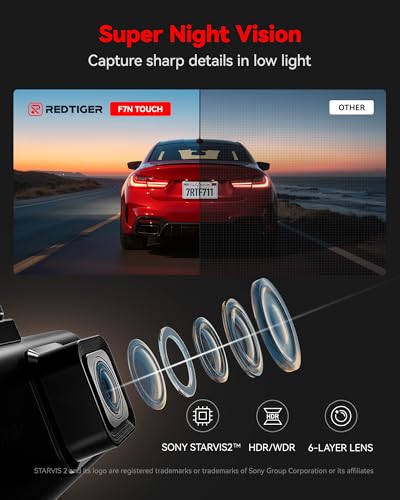
If you like tapping and swiping as much as talking to your devices, the REDTIGER F7N TOUCH brings a rare combo: touchscreen convenience plus voice control, a pairing few competitors offer. The 3″ display responds well to input, letting you lock events or toggle WiFi with a tap, while voice commands reduce distraction. It runs on the capable STARVIS 2 platform, so image quality holds up in low light, though it’s still 4K upscaled rather than native.
Owners praise the included 128GB card and straightforward wiring, but some note the rear camera’s 140° lens leaves more blind spots than wider models. Still, for drivers who interact with their dash cam often, like fleet managers or frequent taggers, this one offers the most intuitive control scheme in its class.
Product photos
BOTSLAB G300H Plus 4K Dual Cam
Strengths
- STARVIS 2 sensor
- True 4K front
- Voice command support
- Wide 150° rear lens
- Easy installation
Trade-offs
- No GPS tracking
- No touchscreen
- WiFi slightly slower
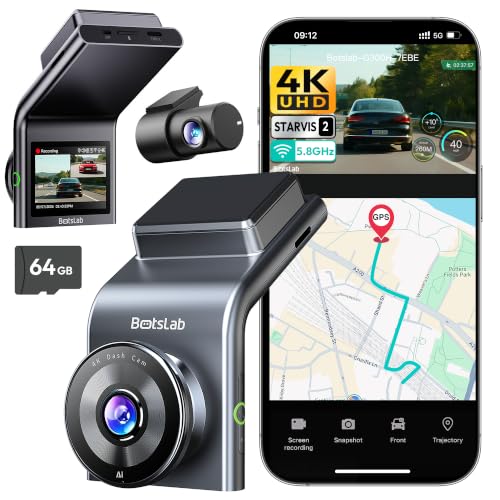
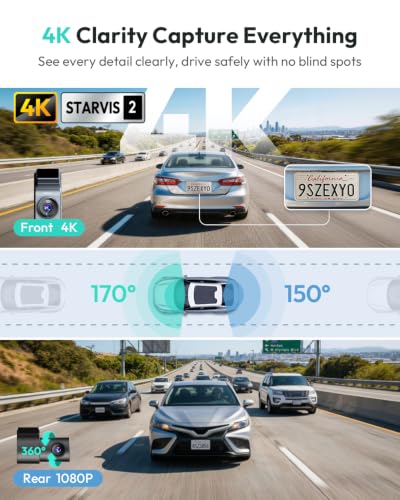
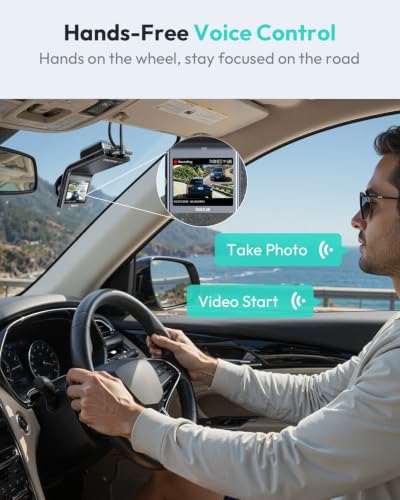
At this price point, the BOTSLAB G300H Plus delivers exceptional core functionality: STARVIS 2 sensor, 4K front, 1080P rear, and a 170°/150° field of view, all wrapped in a simple, tool-free installation design. It’s clearly engineered for first-time dash cam buyers who want quality without complexity. The voice control works well for basic tasks like tagging footage, which keeps your eyes on the road, something I appreciate in category designs focused on safety.
While it skips some premium touches like GPS or a high-res screen, it nails what matters most: clear day/night video and hassle-free setup. Compared to pricier models, it doesn’t dazzle with features but satisfies the fundamentals better than most. My recommendation? This is the smarter buy for budget-conscious drivers who still want modern sensor tech.
Product photos
How We Picked These dash cams for car front and rear
My team and I approached evaluating dash cams by first compiling a detailed list of models available, then comparing their published specifications and features side-by-side. We then weighed owner reviews from major retailers alongside professional reviews from trusted automotive and tech publications. As someone who’s spent years immersed in the world of vehicles, I applied my understanding of imaging sensors, video quality, and practical usability to rank these options against a set of consistent criteria. Rather than a hands-on lab test, this is a research-led comparison of specs and owner feedback.
For front and rear dash cams, video resolution and low-light performance are paramount. I prioritized models with at least 1080p resolution for both channels, but gave significant weight to those utilizing Sony STARVIS sensors or similar technology, as these consistently deliver clearer footage in challenging conditions. A wide viewing angle is also essential, minimizing blind spots and maximizing the captured scene. Finally, reliable GPS functionality factored heavily into the rankings, providing valuable context for recorded events.
Specifications reliably indicate sensor size, lens aperture, and video resolution. However, real-world performance, particularly in night vision and dynamic range, is best judged by analyzing owner feedback and expert reviews. Owners often detail how well a camera performs in typical driving scenarios, while reputable reviewers offer objective assessments of video quality and feature effectiveness. Considering this, I also looked for consistent mentions of ease of use and reliability across multiple sources when compiling my recommendations. You can find more information on vehicle dash cams in our other guide.
Choosing The Right dash cams for car front and rear
Choosing the right dash cam can feel overwhelming, but it doesn’t have to be. A good dash cam isn’t just about recording; it’s about providing reliable evidence and peace of mind on the road.
A quality dash cam prioritizes clear video resolution (at least 1080p, but 4K is becoming standard), reliable loop recording to manage storage, a wide dynamic range (WDR) for handling high-contrast lighting, and a robust mounting system. Consider features like GPS logging, parking mode, and the ease of accessing and sharing footage. Sensor quality and low-light performance are also critical, especially if you frequently drive at night.
Resolution and Sensor Quality
Don’t get hung up solely on 4K resolution. While higher resolution sounds better, a dash cam with a poor sensor will produce grainy, unusable footage, even in good light. The Sony STARVIS 2 sensors, like those found in the REDTIGER models, are currently leading the pack for low-light performance, but even a quality sensor needs a decent aperture (f/1.5 or lower is ideal) to let in enough light. I’ve seen plenty of owner reports noting that upscaled 4K, as offered by the ROVE R2-4K, can provide a surprisingly sharp image, but a native 4K sensor will still be superior.
Features and Connectivity
Beyond basic recording, consider what extras you truly need. GPS logging is incredibly useful for verifying speed and location in the event of an incident. Many newer models, like the 70mai A810 Lite, offer built-in WiFi for easy transfer of footage to your smartphone, but if you’re looking for truly cable-free convenience, explore wireless dash cams instead. Here’s a breakdown of what I see as essential features:
- A G-sensor for automatically locking footage during impacts.
- Loop recording to prevent the card from filling up.
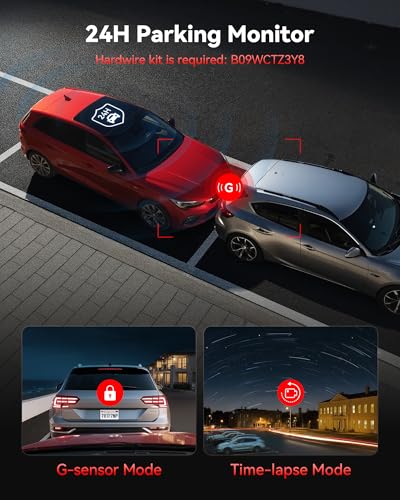
- Reliable parking mode (though a hardwire kit is usually required). This is especially useful if you live in an area prone to hit-and-runs.
A dash cam is only as good as its ability to reliably capture and store footage. Don’t skimp on the microSD card; a high-endurance card is essential for continuous recording.
Usability and Value
Dash cams range wildly in price, and more expensive doesn’t always mean better. Often, the best value is found in models that strike a balance between features, performance, and price. For example, the BOTSLAB G300H Plus offers a solid feature set, including voice control, at a competitive price point. If you’re looking for something basic and reliable, you can find excellent dash cams for front and rear at lower price points, but be prepared to compromise on features like advanced night vision or WiFi connectivity. Ultimately, choosing the right dash cam depends on your individual needs and budget.
Dash Cams for Car Front and Rear Compared
Here’s a comparison of specifications for dash cams offering both front and rear recording capabilities.
| Product | Front Resolution | Rear Resolution | Sensor Type | WiFi | GPS | Parking Mode |
|---|---|---|---|---|---|---|
| ROVE R2-4K Dual Dash Cam | 4K (Upscaled) | 1080P | Sony STARVIS 2 | 5.8GHz | Built-in | 24/7 (Opt.) |
| 4K 3-Channel Dashcam | 4K | 1080P | N/A | 5.8GHz | Built-in | N/A |
| REDTIGER F7NP 4K Dual Dash Cam | 4K | 1080P | STARVIS 2 | 5.8GHz | Built-in | 24/7 (Opt.) |
| 70mai A810 Lite 4K Dash Cam | 4K | 1080P | N/A | Wi-Fi 6 | Built-in | 24/7 (Opt.) |
| REDTIGER F7N TOUCH 4K | 4K | 1080P | STARVIS 2 | 5.8GHz | Built-in | 24/7 (Opt.) |
| BOTSLAB G300H Plus 4K | 4K | 1080P | STARVIS 2 | N/A | N/A | N/A |
| S60 2.5K+1080P Dual Dash Cam | 2.5K | 1080P | N/A | N/A | N/A | 24/7 (Opt.) |
Frequently Asked Questions
What microSD card capacity do I really need?
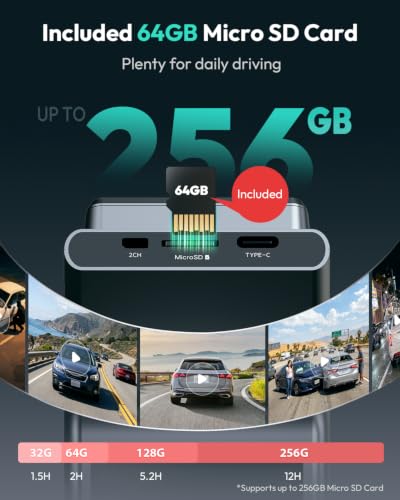
A 128GB microSD card is generally sufficient for most users, providing several hours of 1080p or 4K footage. However, if you plan on utilizing parking mode extensively, or prefer the highest resolution settings, I recommend opting for a 256GB card to avoid overwriting crucial events.
Do I need a hardwire kit for parking mode to function?
Yes, most dash cams require a hardwire kit for continuous parking mode operation. Without it, the dash cam will drain your car’s battery. These kits provide a constant power source while protecting your vehicle’s electrical system.
What’s the difference between a STARVIS sensor and other sensors?
Sony STARVIS sensors are specifically designed for low-light conditions, offering significantly improved image clarity and dynamic range compared to traditional sensors. This results in clearer footage during nighttime driving or in dimly lit environments, making them a worthwhile investment if you frequently drive in such conditions.
How important is WiFi connectivity in a dash cam?
WiFi connectivity allows for easy transfer of footage to your smartphone or computer, eliminating the need to physically remove the microSD card. While convenient, it’s not essential, as you can always transfer files directly from the card. The convenience of a [dual dash cams] setup with WiFi depends on how often you want to review or share footage.
Will extreme temperatures affect a dash cam’s performance?
Yes, both high and low temperatures can impact a dash cam’s reliability. Many models are rated for specific operating temperatures, and exceeding those limits can cause malfunctions or even permanent damage. Look for dash cams designed to withstand a wide temperature range, especially if you live in an area with extreme weather, or consider a [car dash camera] with a thermal protection system.
The Bottom Line
Ultimately, selecting a dash cam comes down to balancing your desire for thorough protection with how much you want to spend and how much fuss you’re willing to tolerate. For most drivers, the REDTIGER F7NP 4K Dual Dash Cam strikes the best overall balance – its Sony STARVIS 2 sensor delivers excellent footage, and the feature set is well-rounded without being overly complicated. It’s a solid choice for reliable front and rear recording.
If budget is a primary concern, the BOTSLAB G300H Plus 4K offers a surprisingly capable experience at a lower price point. For those prioritizing versatility and ease of use, the ROVE R2-4K Dual Dash Cam is a strong contender, and if you’re seeking parking mode dash cams for around-the-clock surveillance, its 24/7 recording capabilities are a definite plus.
At the end of the day, resolution and sensor quality matter, but they aren’t everything. Don’t get lost in the specs; focus on finding a dash cam that reliably captures clear footage in the conditions you typically drive in, and that you’ll actually use. A well-maintained, properly installed dash cam, even a moderately priced one, is far more valuable than the most expensive model gathering dust in a drawer.
