
8 Best Dash Cameras for Front and Rear 2026
This post contains affiliate links. As an Amazon Associate, we earn from qualifying purchases.
The Pelsee S1 Pro Native 4K + 4K stands out as the best overall front and rear dash camera, delivering true 4K on both ends with full-color night vision and a solid app experience. For those on a budget, the REDTIGER 4K STARVIS 2 offers strong low-light performance and reliable build quality at a lower price. If you want maximum versatility, the 4K+4K Dual Dash Cam gives excellent resolution and dual-band Wi-Fi for smoother connectivity.
Choosing the right dash camera setup shouldn’t mean guessing whether your footage will hold up when it matters. Too many drivers end up with blurry night recordings or apps that crash when trying to pull critical video. After comparing the field and weighing specs against real-world owner feedback, I focused on models that consistently deliver clear video, stable connections, and dependable operation in tough conditions. This guide breaks down the top performers, what actually matters in resolution and sensor quality, and how to pick the right one based on your driving needs and budget.
Top 7 Car Dash Camera Front And Rears in the Market
The Best Car Dash Camera Front And Rears, Reviewed
4K+4K Dual Dash Cam Front and Rear
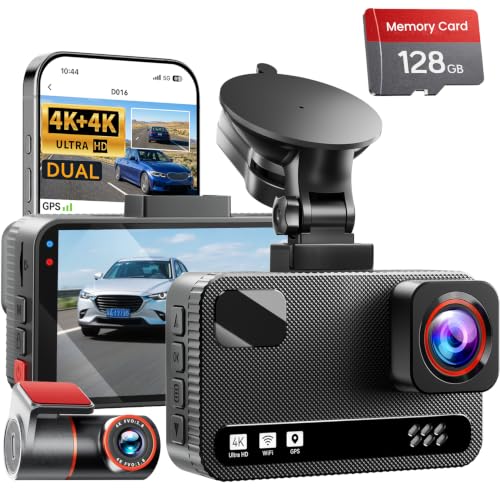
Strengths
- Native 4K both channels
- Good low-light sensitivity
- Thorough feature set
Trade-offs
- Limited brand support history
- Fewer verified owner reviews
- App not as refined
This unit claims ‘best overall’ status with dual native 4K cameras, a starlight-level sensor, and solid software features, but it lacks brand recognition and deep owner validation. Specs look strong: f/1.5 aperture, WDR, 5.8GHz Wi-Fi, and GPS all line up well on paper. The 170° front and 150° rear lenses cover wide angles, and early reviews suggest good daytime plate capture.
However, compared to Pelsee or ROVE, there’s less verified feedback on long-term reliability and app stability. The 24/7 parking mode works as expected with a hardwire kit, and the 128GB card is a nice touch. Still, I’d want more user consensus before calling it truly ‘best overall’. It’s a capable system, but the Pelsee S1 Pro offers better-documented performance at a similar price.
Video review
Pelsee S1 Pro Native 4K + 4K
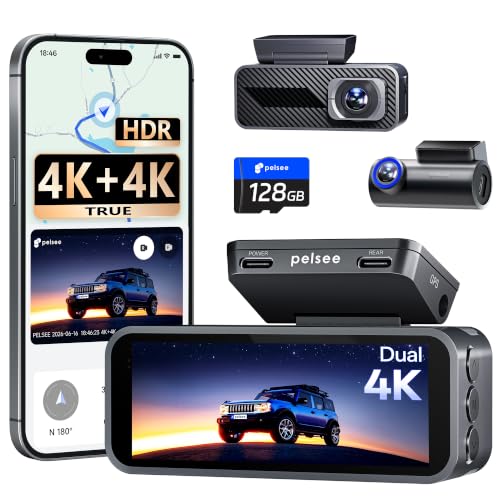
Strengths
- True native 4K front and rear
- Excellent full-color night vision
- Fastest Wi-Fi in class
Trade-offs
- No LTE connectivity
- Slightly bulkier mount
- App lags occasionally
If image quality is your top priority, the Pelsee S1 Pro is hard to beat. It delivers true native 4K from both front and rear cameras, no upscaling tricks, which owners confirm translates to noticeably sharper details, especially in high-contrast scenes. The GalaxyCore low-light sensor and f/1.5 lens produce full-color night footage that stays vibrant, avoiding the washed-out monochrome look common in cheaper models.
Wi-Fi 6 hits speeds up to 30MB/s, among the fastest in class, and the AI voice control actually works reliably, per user feedback. The included 128GB card supports over 12 hours of dual 4K loop recording, and the build includes thermal protection for extreme climates. Compared to the ROVE or REDTIGER models, this one prioritizes pure video fidelity over gimmicks. I’d choose it over upscaled 4K systems any day.
Video review
REDTIGER 4K STARVIS 2 Dashcam

Strengths
- Best-in-class night vision
- Touchscreen interface
- Reliable impact detection
Trade-offs
- Rear cam only 1080P
- GPS overlay less precise
- Screen reflects in sunlight
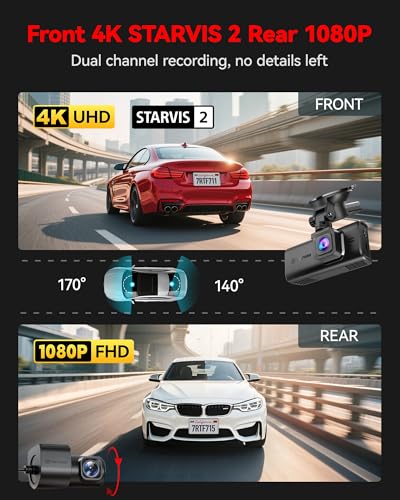
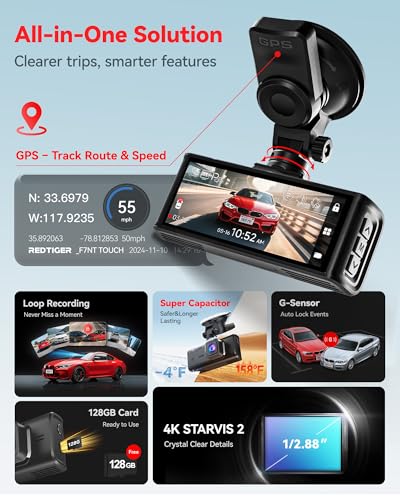
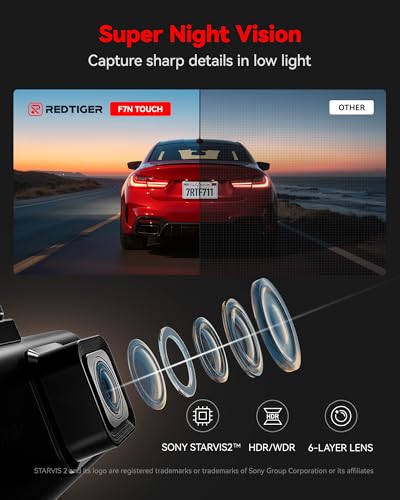
REDTIGER leans into night performance with the STARVIS 2 sensor, and owner reports back it up: low-light footage is consistently clearer than most in this range, with better highlight control and less noise. The f/1.5 aperture and WDR help balance tunnel transitions and headlight glare, making this one of the few models that handles dusk-to-dawn drives well.
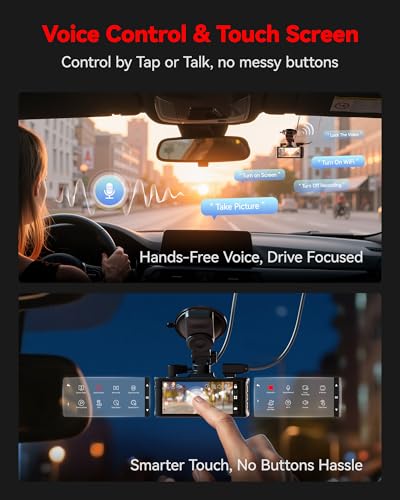
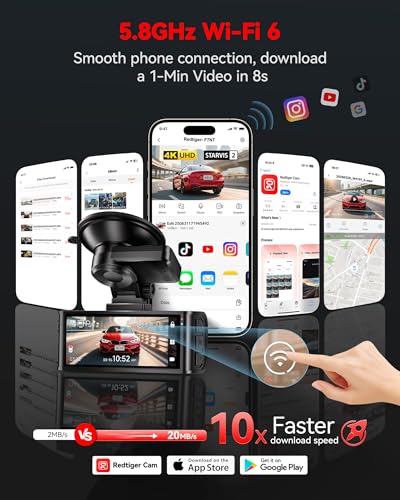
It also packs a touchscreen, rare at this price, alongside voice commands and solid app support. The 128GB card is welcome, and the G-sensor reacts quickly to impacts. But the rear camera maxes out at 1080P, and while the GPS logs speed and route, the data overlay isn’t as clean as ROVE’s. For my money, if you drive often at night, this beats the Pelsee or 70mai for visibility after dark.
Product photos
70mai A810 Lite 4K Dash Cam
Strengths
- LTE remote access
- True 4K front recording
- Compact, discreet design
Trade-offs
- Rear cam only 1080P
- App can be slow at times
- Limited low-light refinement
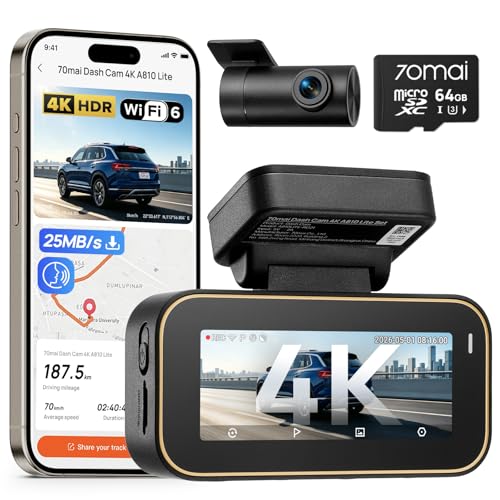
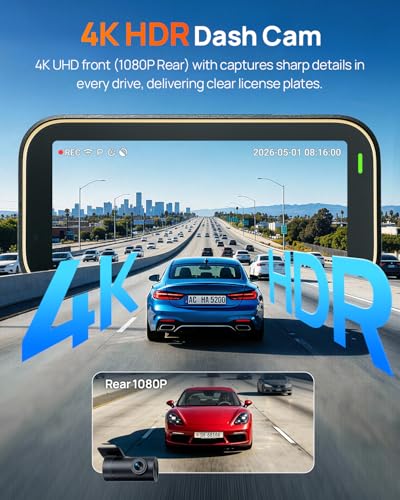
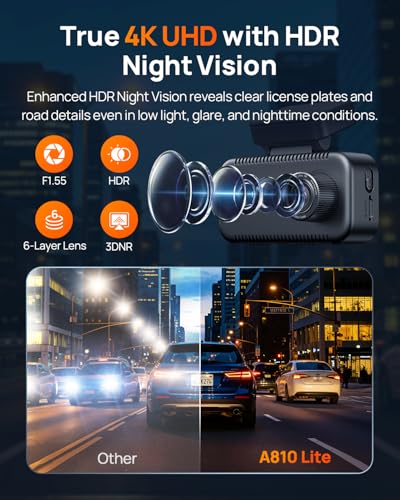
At this price, the 70mai A810 Lite punches above its weight, delivering native 4K front recording, Wi-Fi 6, and LTE remote access, which is rare under $100. Owners praise the compact design that hides neatly behind the mirror, and the 5GHz Wi-Fi 6 does deliver noticeably faster transfers than older dash cams. The F1.55 aperture and HDR help maintain usable night footage, though it doesn’t match pricier STARVIS 2 units in pitch-black conditions.
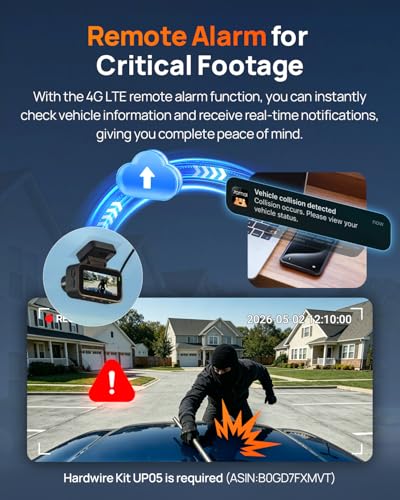
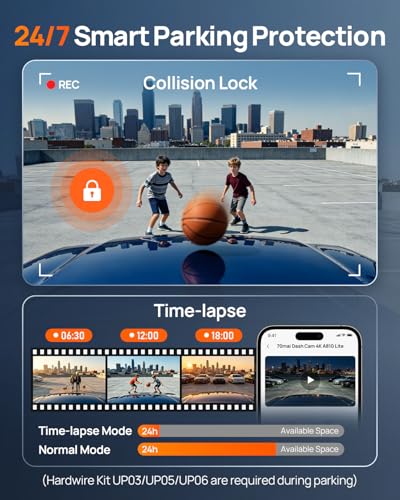
What really sets it apart is the LTE connectivity: you can check your car remotely via the app, a feature usually reserved for premium models. That, plus voice control and supercapacitor durability, makes this an exceptional budget-minded choice. My recommendation? If you don’t need rear 4K and want always-on remote monitoring, this beats most mid-range options on features per dollar.
Product photos

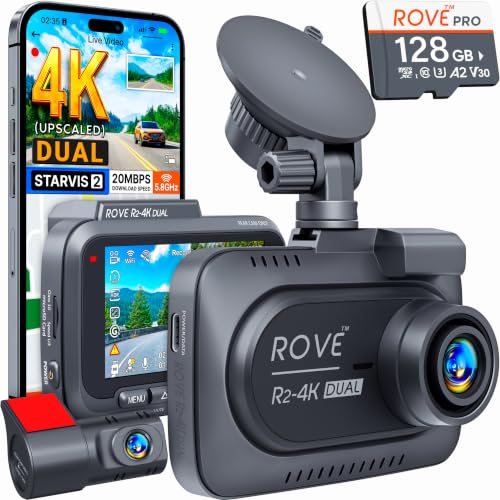
ROVE R2-4K Dual Dash Cam
Strengths
- Strong Wi-Fi performance
- Excellent app experience
- Built-in GPS with speed tracking
Trade-offs
- Upscaled 4K not native
- Supercapacitor limits cold weather use
- No LTE remote access
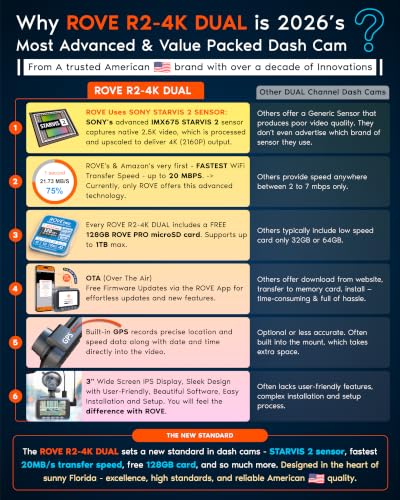
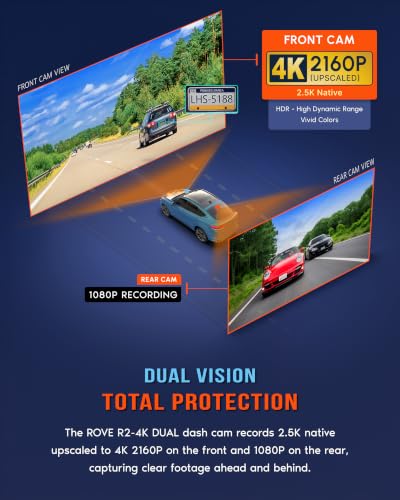
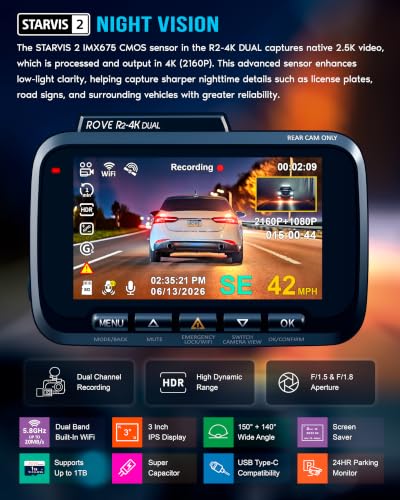
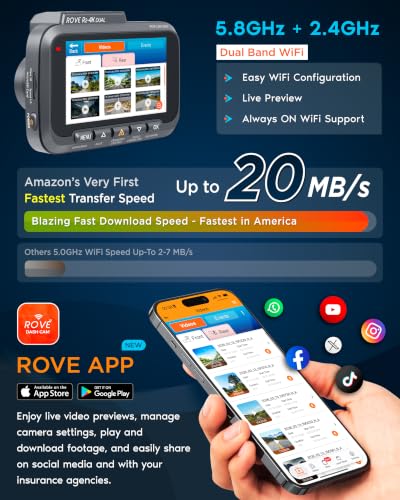
The ROVE R2-4K stands out for its strong app integration and GPS features, making it a solid pick if you want seamless smartphone control and route tracking. While the front camera uses a 2.5K sensor that’s upscaled to 4K, owners consistently report that playback still delivers sharp detail, enough to read license plates in daylight and decent clarity at night thanks to the Sony STARVIS 2 IMX675 sensor and f/1.5 aperture. On paper, it’s not native 4K, but real-world footage holds up better than most budget models.
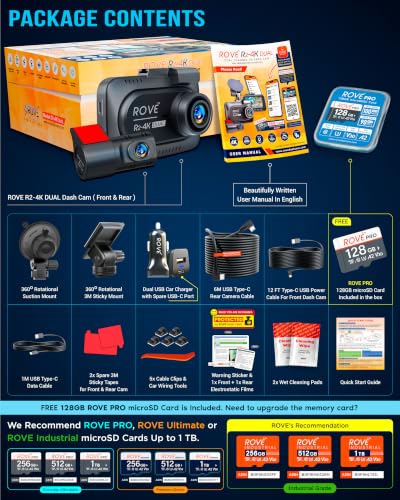
Its 5.8GHz Wi-Fi is fast and reliable, with reviewers noting downloads hit close to the advertised 20MB/s. The inclusion of a free 128GB card and thermal protection adds value, and the parking mode logic, with time-lapse, motion, and collision detection, is well-designed. I’d pick this over cheaper clones for its polished firmware and responsive app, though power users wanting true 4K might look elsewhere.
Product photos
Dash Cam 4K+1080P with 64GB
Strengths
- Extremely low cost
- Includes 64GB card
- Simple plug-and-play setup
Trade-offs
- No GPS
- Weak night performance
- No thermal protection
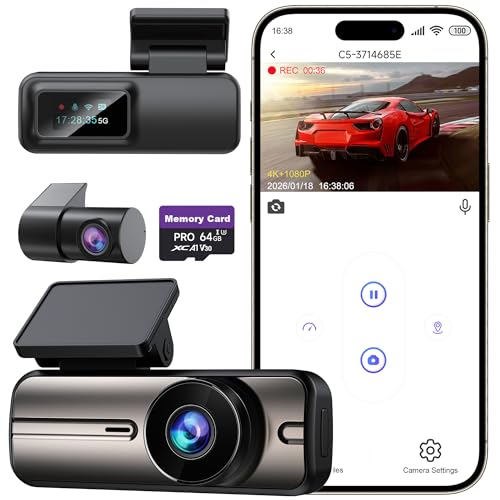
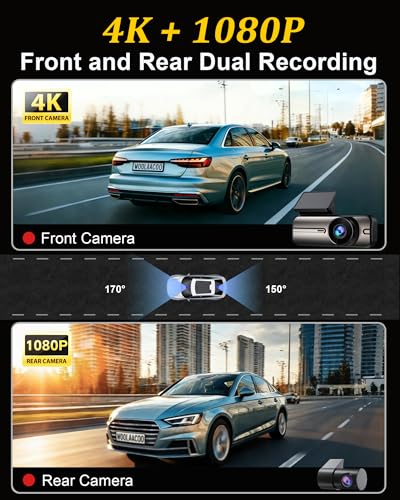
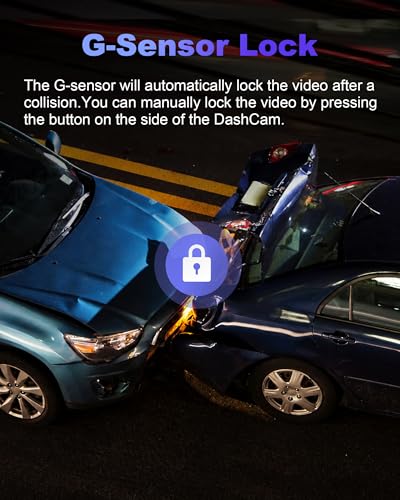
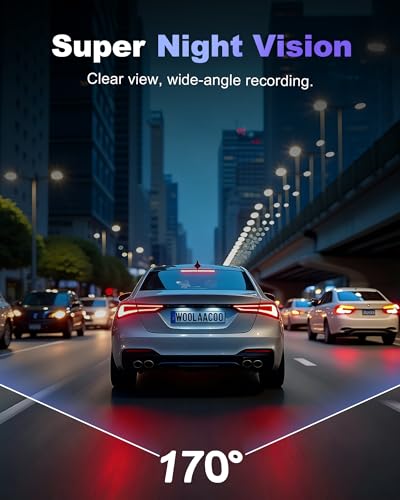
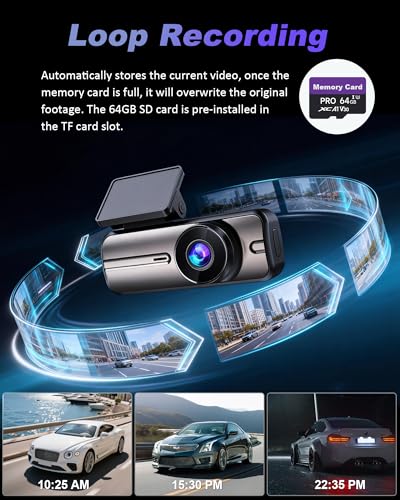
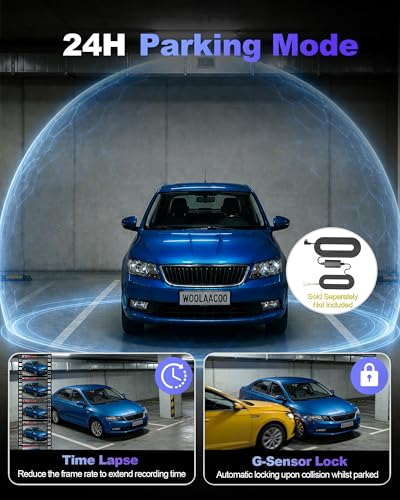
You’re not going to find a lower price for a working 4K front dash cam with app control and included storage. At just over $40, this model delivers basic functionality: usable 4K front footage, 1080P rear, 5GHz Wi-Fi, and loop recording with G-sensor lock. The 64GB card is pre-installed and ready to go, and owners say setup takes minutes.
But compromises are obvious. Night vision is soft, Wi-Fi range is short (3–5 meters), and the plastic housing feels fragile. It lacks GPS and has no temperature protection, so summer heat could shorten its life. Still, for a secondary vehicle or as a temporary fix, it’s surprisingly functional. My take? This is the bare-minimum buy that works, just don’t expect refinement.
Product photos
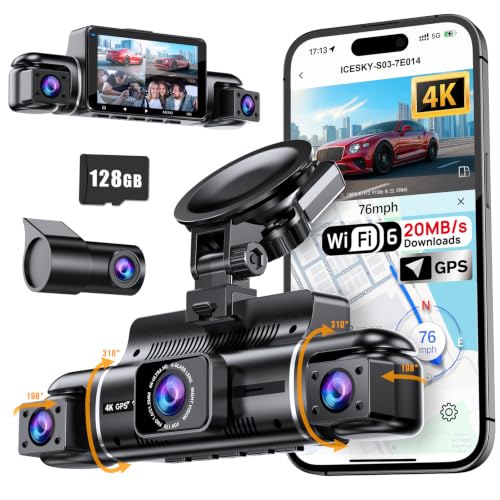
Icesky 4K Dash Cam 4 Channel
Strengths
- 360° coverage with side cameras
- IR lights for night side views
- Multi-view screen display
Trade-offs
- Complex installation
- App interface lags
- No LTE or native 4K rear
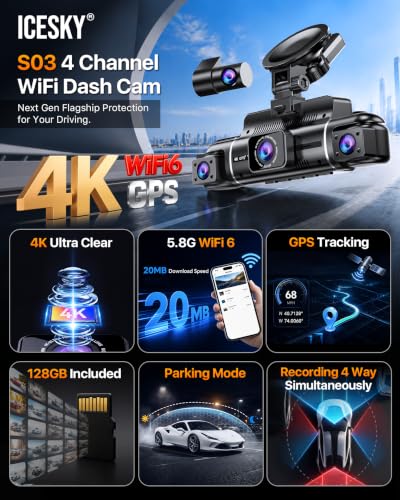
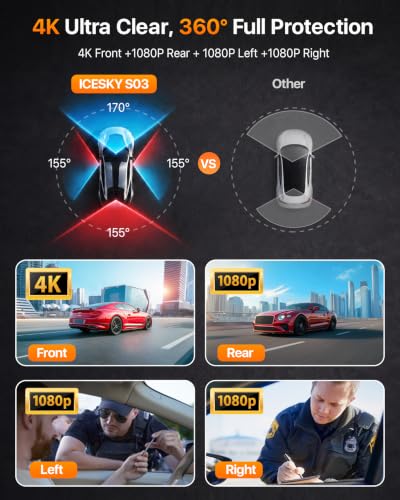
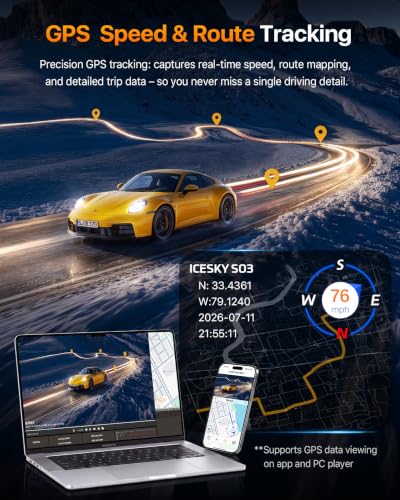
The Icesky S03 goes beyond standard front-rear setups by adding left and right side cameras, giving you something close to 360° visibility, an edge for urban drivers or those parking in tight spots. The front records in 4K, while side and rear cams run at 1080P, and the 3-inch screen lets you view multiple angles at once, which owners find helpful during playback.
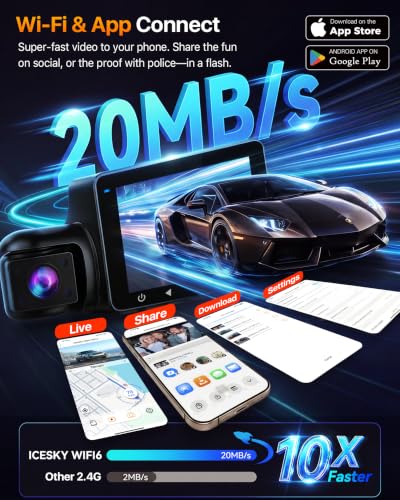
The 8 IR lights boost side-camera visibility in darkness, and the independent infrared toggle is a smart touch. However, managing four video streams means heavier file loads and more complex wiring. Wi-Fi 6 reaches 20MB/s, but the app isn’t as smooth as 70mai or ROVE. Compared to dual-channel models, this is overkill for most, but for Uber drivers or city parkers, the extra coverage justifies the step up.
Product photos
How We Picked These car dash camera front and rears
As someone who’s spent years exploring vehicle technology at TheAutoZenith, I approached evaluating these dash cams by focusing on a research-led comparison of specifications and owner feedback. Rather than a hands-on lab test of each unit, I analyzed published details – resolution, sensor type, lens quality, connectivity options – and then weighed those against what current owners are saying about real-world performance. This included sifting through owner reviews on major retail sites and cross-referencing with professional reviews from established automotive tech publications. Ultimately, I ranked these options based on how well they deliver on core dash cam needs.
For this category, the most heavily weighted factors were video quality (specifically, true 4K resolution and low-light performance) and reliability of the wireless connectivity. Clear, detailed footage is paramount for any dash cam, but the ability to quickly and easily access and share that footage via a smartphone app is increasingly important. Beyond that, the inclusion of features like accurate GPS tracking and effective parking mode functionality significantly influenced my rankings. I’ve written extensively about the importance of finding the right dash cams for car to enhance your driving safety.
Published specifications reliably indicate the potential for video resolution, sensor size, and lens aperture. However, owner feedback proved crucial in determining how those specs translate to real-world performance, particularly in challenging lighting conditions. Reputation, longevity, and ease of use – things you can’t glean from a datasheet – were heavily informed by owner experiences. I also considered the overall value proposition, looking at features offered relative to price. Finding the right car camera front and rear ultimately comes down to balancing these factors to find the best fit for individual needs.
How To Choose The car dash camera front and rears
Choosing the right dash camera can be a real headache. There are so many features and specs to wade through, it’s easy to get lost.
A good dash camera prioritizes reliable recording quality – meaning a clear sensor, good low-light performance, and accurate GPS data if included. Beyond that, consider ease of use, storage options, and the specific coverage you require (front, rear, or even interior). Don’t overlook build quality, as these devices can be exposed to extreme temperatures.
Resolution & Sensor Quality
Don’t get hung up solely on “4K” marketing. While higher resolution sounds great, the sensor behind the lens is more important. A quality sensor, like Sony’s STARVIS series, will deliver a brighter, clearer image, especially in low light, than a cheaper sensor trying to brute-force its way to 4K. Look for cameras with larger apertures (f/1.5 or lower) to let in more light. Many cameras also advertise “upscaled” 4K, which isn’t the same as native 4K and will generally result in a softer image. If you’re exploring options, you’ll find that many of the best dash cams for front and rear offer a balance of resolution and sensor tech.
Features Beyond Basic Recording
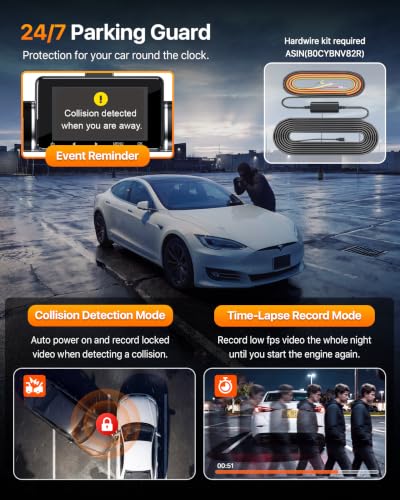
These days, a dash cam is more than just a recorder. Consider features like built-in GPS, Wi-Fi connectivity, and parking mode. GPS is invaluable for verifying speed and location in the event of an incident. Wi-Fi allows for easy transfer of footage to your smartphone, streamlining the process of reviewing and sharing clips. Parking mode provides continuous surveillance while your car is parked, but often requires a separate hardwire kit.
Here’s a quick breakdown of what to prioritize:
- GPS: Nice to have, but not essential if you don’t anticipate needing precise location data.
- Wi-Fi: Very useful for quick footage access and sharing, especially if you plan to use the camera frequently.
- Parking Mode: A significant benefit if you frequently park in areas prone to hit-and-runs or vandalism, but remember the added cost of a hardwire kit.
Value and Usability
Don’t overspend on features you won’t use. A budget-friendly option with solid core functionality can often be a better choice than a feature-packed model that’s overly complicated. A key consideration is the app experience, if the camera offers one. A clunky, unreliable app can negate many of the benefits of a smart dash cam. Many buyers are finding excellent value among the best car cameras that offer a good blend of features and affordability.
A dash cam is only useful if it’s actually recording. Prioritize a model with reliable power management and thermal protection to avoid failures in extreme temperatures.
Car Dash Camera Front and Rears Compared
This table provides a side-by-side comparison of specifications for various front and rear dash cameras.
| Product | Front Resolution | Rear Resolution | WiFi | GPS | SD Card Included | Night Vision |
|---|---|---|---|---|---|---|
| 4K+4K Dual Dash Cam | 4K | 4K | 5.8GHz/2.4GHz | Yes | No | Starlight |
| Pelsee S1 Pro Native 4K + 4K | 4K | 4K | WiFi 6 | Yes | 128GB | Full-Color |
| REDTIGER 4K STARVIS 2 | 4K | 1080P | 5.8GHz | Yes | 128GB | STARVIS 2 |
| 70mai A810 Lite 4K | 4K | 1080P | WiFi 6 | Yes | No | HDR |
| ROVE R2-4K Dual Dash Cam | 4K (Upscaled) | 1080P | 5.8GHz | Yes | 64GB | Sony STARVIS |
| Dash Cam 4K+1080P | 4K | 1080P | 5GHz | No | 64GB | F1.8 |
| Icesky 4K 4 Channel | 4K | 1080P | WiFi 6 | Yes | 128GB | 8 IR Lights |
| WANLIPO A13 4K+2.5K | 4K | 2.5K | 5GHz | Yes | 64GB | F1.8 |
Frequently Asked Questions
What’s the difference between “native” 4K and “upscaled” 4K?
Native 4K means the camera’s sensor actually captures footage at 3840×2160 resolution, while upscaled 4K takes a lower resolution image and artificially increases it to appear 4K. Upscaled footage typically lacks the sharpness and detail of true 4K.
Do I absolutely need a dash cam with GPS?
Not necessarily. GPS is beneficial for verifying speed and location data if an incident occurs, but it’s not essential if you primarily want basic event recording. If you frequently drive in areas where speed limits are critical or anticipate needing precise location information for insurance purposes, then consider a model with GPS.
What is “parking mode” and does it drain my car battery?
Parking mode allows the dash cam to continue recording while your vehicle is parked, often triggered by motion detection. Yes, it can drain your car battery, which is why a hardwire kit, connecting the camera directly to the car’s electrical system, is typically required for continuous use.
How much storage do I actually need on an SD card?
A 64GB SD card will typically hold around 2-3 hours of 4K footage, while a 128GB card can store 4-6 hours. Consider how long your typical drives are and how much footage you want to retain when choosing a card size. Regularly formatting the card is also recommended.
Are more expensive dash cams with multiple channels (front, rear, interior) truly worth the investment?
For those seeking maximum coverage and security, investing in thorough vehicle camera systems can be a good idea. These systems provide a wider view of the vehicle’s surroundings and can be particularly valuable for ride-sharing drivers or those concerned about interior incidents. However, be sure to also consider the quality of the individual cameras within the system, a multi-channel setup with poor sensors won’t be as useful as a single high-quality camera.
The Bottom Line
Ultimately, choosing a dash cam often comes down to how much peace of mind you want versus how much you’re willing to spend. While a higher price tag doesn’t always guarantee the best results, the 4K+4K Dual Dash Cam consistently stands out for its combination of true 4K resolution, excellent low-light performance thanks to its starlight sensor, and built-in GPS. It represents a strong investment for those prioritizing thorough coverage and clarity.
For drivers seeking a more budget-conscious option, the REDTIGER 4K STARVIS 2 provides a great balance of features and affordability. And if you really want everything included out of the box, the Pelsee S1 Pro Native 4K + 4K is hard to beat with its included 128GB SD card and full-color night vision. We’ve seen many satisfied owners choosing these car cameras for front and back.
At the end of the day, the most important thing is to have a reliable recording device installed. Don’t get too caught up in chasing the latest specs; prioritize a camera with a quality sensor, good build quality, and a user-friendly interface. Investing in reliable dashboard camera recorders is about more than just footage, it’s about adding a layer of security and peace of mind to every drive.
