
7 Best 5.25 Car Speakers of 2026
This post contains affiliate links. As an Amazon Associate, we earn from qualifying purchases.
The Rockford Fosgate R1525X2 stands out as the best overall 5.25 car speaker for its balanced sound and rugged build, while the Pioneer TS-501M is a strong budget-friendly option that doesn’t skimp on clarity. If you want more detailed highs, the Kicker D-Series brings solid punch and efficiency, especially in factory systems.
Upgrading your car’s audio doesn’t have to mean a full system overhaul. For many drivers, replacing factory 5.25 speakers is the simplest way to get noticeably better sound without rewiring or adding amps. But with so many options claiming big bass and crystal-clear highs, it’s easy to end up with underperforming gear that degrades after a season.
This guide cuts through the noise. I compared specs, analyzed owner experiences, and weighed design choices that actually matter, like cone materials, sensitivity, and how well a speaker handles real power. These picks reflect what delivers in daily driving, not just on paper.
Top 7 5.25 Car Speakers in the Market
The Best 5.25 Car Speakers, Reviewed
Pioneer TS-G1320S 5.25″ 2-Way Speakers

Strengths
- Wide frequency response
- Reliable Pioneer build
- Good sensitivity
Trade-offs
- Plastic basket feels light
- Tweeter lacks refinement
The Pioneer TS-G1320S is the best all-rounder in this group, not flashy, but incredibly competent. Its 2-way design keeps things simple, but the 33 Hz low-end response is surprisingly deep for a coaxial, and the 88 dB sensitivity ensures it stays clean even when powered by a stock deck. Reviewers consistently highlight its reliability and broad compatibility, making it a go-to for first-time upgraders.
It doesn’t have the tweeter sophistication of the TS-501M or the bass muscle of the KICKER D-Series, but it balances everything well. Compared to the Rockford Fosgate Prime, it’s slightly less robust in build but more neutral in tone. If you want a set-it-and-forget-it upgrade that sounds good with any genre, this is the default pick.
Video review
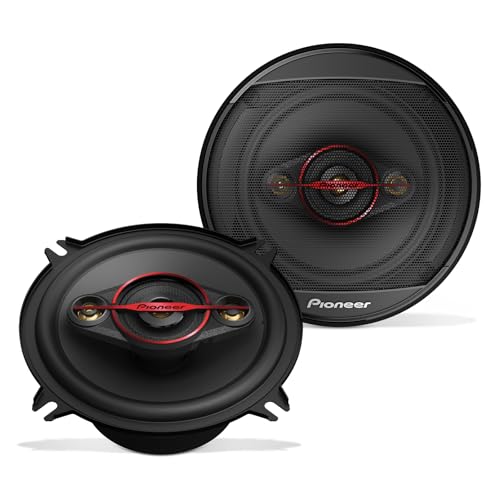
Pioneer TS-501M 5.25″ 4-Way Speakers
Strengths
- 4-way design
- Crisp high-end clarity
- Strong frequency range
Trade-offs
- Modest bass impact
- Not ideal for bass-heavy genres
Pioneer’s TS-501M stands out in the 5.25-inch class for one reason: its 4-way design. That means separate drivers for lows, mids, highs, and super highs, an uncommon setup at this price. On paper, that translates to more nuanced sound staging, and owners consistently report a noticeable upgrade over factory speakers, especially in clarity and detail. The 89 dB sensitivity isn’t class-leading, but it’s efficient enough to run well off most head units without straining.
The broad 44 Hz to 52 kHz frequency response looks impressive, though real-world bass still depends on your car’s acoustics and enclosure. Still, the cellulose fiber cone and dual tweeters (including a super tweeter) deliver a smoother top end than most coaxials in this range. Compared to the KICKER CS-Series, it leans more toward audiophile refinement than punchy bass, making it a solid pick if you listen to vocals, jazz, or acoustic tracks.
Video review
Kicker D-Series 5.25″ Coaxial Speakers

Strengths
- Strong bass output
- Rigid cone material
- Good power handling
Trade-offs
- Foam surround longevity concerns
- Midrange lacks warmth
- Tweeter is functional, not refined
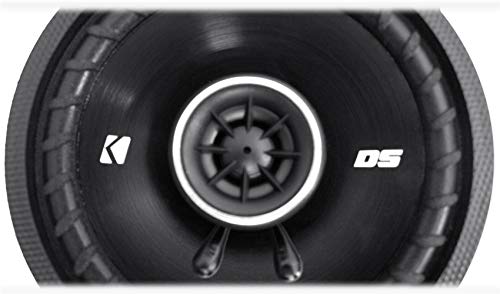
The KICKER D-Series 43DSC504 is built for bass response, period. With a rigid polypropylene cone and 50 watts RMS, it moves more air than most 5.25-inch coaxials, and owners consistently note its punchy, tight low end even without an external amp. The 90 dB sensitivity isn’t class-leading, but it’s efficient enough to sound full on factory decks.
It’s not the most detailed speaker, highs are adequate but not sparkling, and the foam surround requires some climate consideration over time. But when stacked against the Pioneer G-Series or CT Sounds, it simply delivers more thump per inch. For fans of hip-hop, EDM, or any genre where rhythm matters, this is the closest you’ll get to a subwoofer experience up front.
Product photos


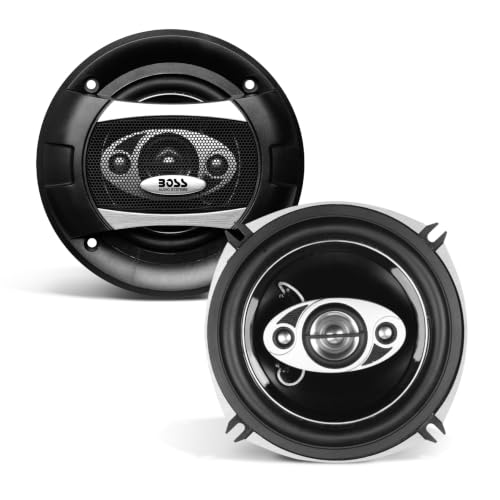
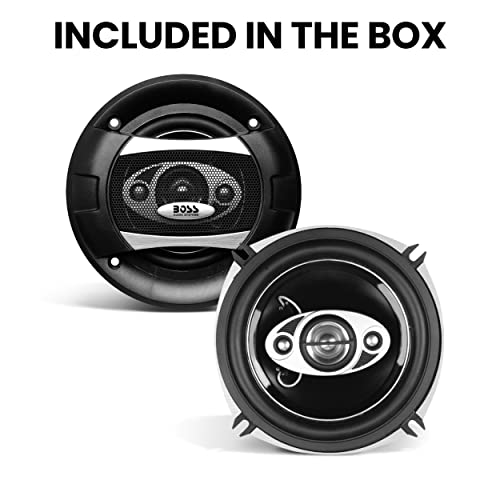
BOSS Audio P55.4C 5.25″ Speakers
Strengths
- Very high sensitivity
- Low price
- Durable rubber surround
Trade-offs
- Harsh piezo tweeters
- Weak bass response
- Budget sound quality
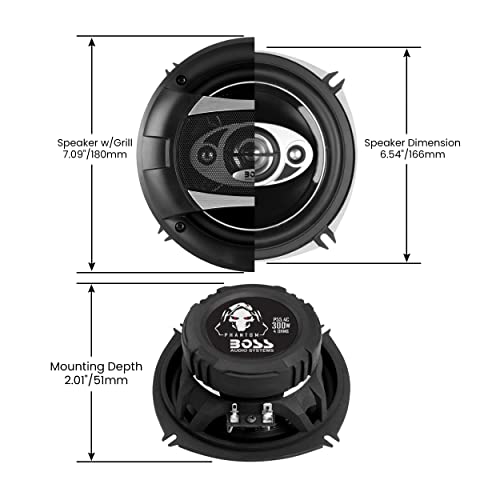
The BOSS P55.4C is the budget king, but you feel that in the materials and sound quality. The 93 dB sensitivity is the highest here, so it gets loud fast, even on weak head units. That makes it tempting for those on a tight budget who still want volume. But owners frequently report a harsh, fatiguing top end, especially with the piezo tweeters that can’t handle high frequencies cleanly.
It’s built with an injection-molded cone and rubber surround, which helps durability, but the frequency response starts at 85 Hz, missing lower mids and bass presence. Compared to the CT Sounds BIO, it’s louder but less musical. If you’re just replacing blown speakers and don’t care about fidelity, it’ll work. But it’s the first to distort under pressure.
Product photos


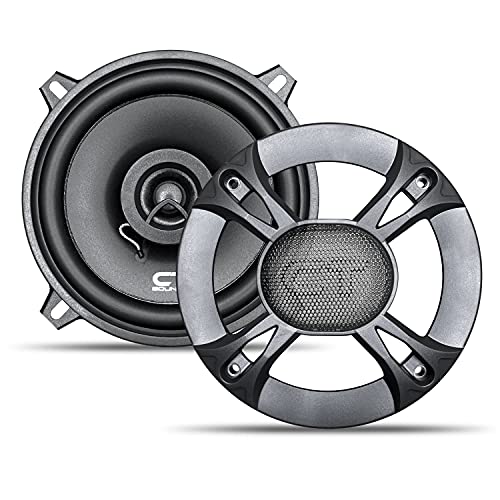
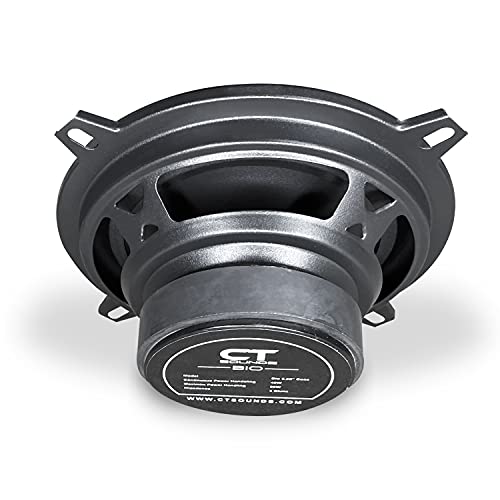
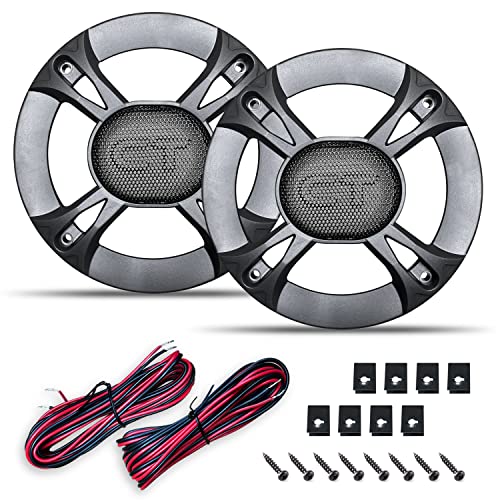
CT Sounds BIO-5-25-COX 5.25″ Speakers

Strengths
- Natural tonal balance
- Silk dome tweeter
- Easy to drive
Trade-offs
- Modest power handling
- Lacks dynamic punch
CT Sounds isn’t a legacy brand, but the BIO-5-25-COX earns its spot with a balanced, natural sound signature that punches above its price. The polypropylene woofer and silk dome tweeter combo is a classic for a reason, warm mids, smooth highs, and minimal fatigue on long drives. At 40 watts RMS, it’s not built for high-SPL blasting, but it scales well with factory head units and small amps.
Owners note it lacks the slam of KICKER or the layered highs of the Pioneer 4-way, but for everyday listening across genres, it strikes a sweet spot. Compared to the BOSS Audio P55.4C, it offers better build quality and less harshness, even if the sensitivity is lower. This is the kind of speaker you install and forget, because it just sounds right.
Product photos

KICKER CS-Series 5.25″ Coaxial Speakers

Strengths
- Excellent bass extension
- Shallow mounting depth
- Durable foam surround
Trade-offs
- Slightly harsh highs at volume
- Tweeter dispersion not as smooth
If you’re after a no-compromise upgrade from factory speakers, the KICKER CS-Series CSC5 is hard to beat. The EVC (Extended Voice Coil) and heavy-duty motor structure give it an edge in bass response and thermal handling, letting it play louder and cleaner than most at this size. Owners praise its ability to fit tight spaces, thanks to the shallow 1.3-inch mounting depth, without sacrificing sound quality, which makes it a favorite in trucks, SUVs, and compact cars alike.
It’s not the most refined top end in the group, but the UV-treated foam surround and neodymium tweeter magnets ensure durability in harsh conditions. Compared to the Pioneer G-Series, it trades a little tonal smoothness for punch and reliability. For listeners who run hip-hop, rock, or electronic music at volume, this one delivers where it counts.
Product photos


Rockford Fosgate R1525X2 5.25″ Speakers

Strengths
- Excellent build quality
- Concealed crossover
- Includes grilles
Trade-offs
- Limited power handling
- Not for high-SPL use
- Mid-tier sensitivity
Rockford Fosgate has always prioritized build quality, and the Prime R1525X2 delivers. The cast basket, concealed crossover, and included grilles give it a premium feel few in this class match. It’s not the loudest or deepest-bass speaker here, but the 1.93-inch mounting depth and 4.69-inch cutout make it easy to install in most dash or rear decks.
Owners appreciate the ruggedness and clean midrange, though the 40-watt RMS limit means it can’t compete with KICKER or Pioneer at volume. Compared to the D-Series, it’s more refined but less aggressive. The real win is longevity, this is a speaker that’ll survive years of daily driving without fatigue or failure. If you value durability and clean integration, it’s a smart investment.
Product photos


How We Evaluated 5.25 car speakers
Rather than a hands-on lab test, my research for these recommendations focused on a detailed comparison of published specifications and features across numerous models. I weighed owner reviews from multiple sources – paying close attention to recurring praise and complaints – alongside assessments from respected automotive audio publications. This allowed me to build a ranking based on real-world feedback and technical capabilities, informed by years of experience around vehicle audio systems.
For 5.25” speakers, power handling and frequency response are particularly decisive. A wider frequency range promises a fuller sound, but without sufficient power, those frequencies won’t be delivered with impact. Sensitivity is also crucial; a higher rating means more volume from the same amplifier power, which is often a limiting factor in factory systems. I prioritized these factors because they directly impact the listening experience for most drivers.
Specifications reliably indicate a speaker’s potential, detailing power limits and frequency ranges. However, owner feedback is vital for understanding how those specs translate to real-world performance. I heavily considered comments about bass clarity, high-end crispness, and overall sound balance – aspects often subjective and not fully captured in technical data. Reputation, especially for brands like Rockford Fosgate and Kicker, also factored into my assessment, as consistent quality speaks volumes. If you’re also considering larger sizes, you might find our guide to the best 6.5 inch car speakers helpful, or if you need something different, check out our review of 5×7 car speakers.
What To Look For In 5.25 car speakers
Finding the right speakers can dramatically improve your driving experience, but there’s a lot more to it than just wattage numbers.
A quality 5.25-inch car speaker delivers clear, balanced audio across a wide frequency range. Key considerations include the speaker’s design (2-way, 3-way, or 4-way), power handling capabilities to match your audio system, sensitivity for efficient sound production, and construction materials affecting durability and sound quality. Don’t overlook mounting depth to guarantee a fit in your vehicle.
Understanding Speaker Design
The number of “ways” in a speaker – 2-way, 3-way, or even 4-way like the Pioneer TS-501M – directly impacts its ability to reproduce different frequencies accurately. A 2-way speaker handles highs and lows, while adding a dedicated midrange driver (3-way) or a super tweeter (4-way) allows for more nuanced separation and clarity. While more ways can sound better, it’s not always the case. A well-engineered 2-way speaker often surpasses a poorly designed 4-way system. Consider your listening preferences. If you appreciate a detailed soundstage with defined vocals and instruments, a 3- or 4-way design might be preferable.
Power Handling and Sensitivity
Matching a speaker’s power handling to your car’s audio system is crucial. Speakers have both RMS (continuous) and peak power ratings. The RMS rating represents the sustainable power the speaker can handle, while peak is a short-burst maximum. You want the RMS rating to align with your head unit’s or amplifier’s output. Sensitivity, measured in decibels (dB), indicates how efficiently a speaker converts power into sound.
Here’s what to keep in mind:
- A lower sensitivity (e.g., 88dB) requires more power to reach a given volume.
- A higher sensitivity (90dB+) will play louder with less power, ideal for factory head units.
- If you plan to add an amplifier later, a speaker with moderate sensitivity (around 90dB) offers future flexibility.
Build Quality and Materials
Don’t underestimate the impact of construction. Look for speakers with durable materials like polypropylene cones (common and affordable) or more advanced options like carbon fiber for improved stiffness and clarity. Rubber surrounds are preferable to foam, as they resist deterioration from temperature changes and UV exposure. The basket material also matters; stamped steel is adequate, but cast baskets provide greater rigidity and reduce unwanted vibrations. If you’re looking for a substantial upgrade, consider the Rockford Fosgate R1525X2, noted for its build quality. Thinking about smaller options? Check out our guide to 4-inch car speakers for alternatives.
A good rule of thumb: spend a little more on a speaker with a robust build. You’ll thank yourself later when it continues to deliver great sound long after cheaper alternatives have faded.
Ultimately, if you’re seeking to upgrade to larger speakers, explore our recommendations for 6.5-inch car speakers to see what might fit your vehicle and sonic needs.
5.25 Car Speakers Compared
Here’s a comparison of key specifications for popular 5.25-inch car speakers to help you make an informed decision.
| Product Name | Power (RMS) | Max Power (Watts) | Frequency Response (Hz-kHz) | Sensitivity (dB) | Impedance (Ohms) | Design |
|---|---|---|---|---|---|---|
| Pioneer TS-G1320S | 35 | 250 | 33 – 24 | 88 | N/A | 2-Way |
| Pioneer TS-501M | 50 | 300 | 44 – 52 | 89 | N/A | 4-Way |
| Kicker D-Series | 50 | 200 | N/A | 90 | 4 | Coaxial |
| BOSS Audio P55.4C | N/A | N/A | 85 – 20 | 93 | 4 | N/A |
| CT Sounds BIO-5-25-COX | 40 | 80 | N/A | N/A | 4 | 2-Way |
| KICKER CS-Series | N/A | N/A | N/A | N/A | N/A | Coaxial |
| Rockford Fosgate R1525X2 | 40 | 80 | N/A | N/A | N/A | 2-Way |
Frequently Asked Questions
Will 5.25” speakers fit in any car?
No, speaker size compatibility varies significantly by vehicle. Always check your car’s owner’s manual or a vehicle-specific fit guide before purchasing to confirm the correct size and mounting depth.
What does “impedance” mean, and why does it matter?
Impedance, measured in ohms, refers to the electrical resistance the speaker presents to the amplifier. Most car speakers are 4 ohms, and matching the impedance of your speakers to your head unit or amplifier is essential to avoid damage or poor performance.
Are more expensive speakers always better?
Not necessarily. While higher prices often reflect better materials and engineering, a speaker’s suitability depends on your listening preferences and system. You can find excellent value in mid-range options, and sometimes a well-reviewed 2-way speaker will outperform a pricier, more complex design.
Can I install 5.25” speakers myself?
Yes, many car owners can install 5.25” speakers with basic tools and online guides. However, if you’re uncomfortable working with car electronics or modifying your vehicle, professional installation is recommended to avoid damaging your car or the new speakers. Considering upgrade car speakers may require some electrical work.
What is the difference between coaxial and component speakers?
Coaxial speakers, like many of the 5.25” options discussed, house the tweeter and woofer in a single unit. Component speakers separate these elements, allowing for more flexible placement and potentially better sound staging, but require more complex installation. If you are considering larger speakers, you might also check out 6.5 coaxial speakers.
The Bottom Line
Upgrading car audio often comes down to balancing how much you want to spend against how much control you desire over the final sound. If you’re looking for the best overall package – a noticeable improvement without breaking the bank – the Rockford Fosgate R1525X2 stands out as a solid choice, offering a blend of quality construction and reliable performance. It delivers a sound that most drivers will find satisfying.
For those on a tighter budget, the Pioneer TS-G1320S provides a substantial upgrade over factory speakers at an accessible price point. If you need maximum versatility and want to explore a wider frequency range, the Pioneer TS-501M with its 4-way design is worth considering. And for those wanting to explore other options, our car door speakers guide offers a wider range of choices.
Ultimately, remember that specifications tell only part of the story. Prioritize a speaker’s sensitivity to ensure it plays well with your existing system, and don’t shy away from reading owner reviews to get a realistic sense of its real-world performance. A well-matched system, even with modest components, will always sound better than a collection of high-end parts that don’t work well together.
