
7 Best 6.5 Coaxial Car Speakers of 2026
This post contains affiliate links. As an Amazon Associate, we earn from qualifying purchases.
The Rockford Fosgate P1650 stands out as the best overall 6.5 coaxial car speaker, delivering solid power handling and crisp sound. For budget-conscious buyers, the JVC CS-J620 offers strong performance at a lower price, while the Pioneer TS-A1681F brings extra versatility with wide frequency response and high sensitivity.
Upgrading your car’s audio doesn’t have to mean a full system overhaul. Factory speakers often lack clarity and depth, leaving your music flat and lifeless. With the right 6.5 coaxial speakers, you can restore balance, punch, and detail without rewiring your entire setup.
This guide focuses on models that deliver real improvements based on specs, owner feedback, and brand reliability. I looked at power handling, sensitivity, frequency range, and fitment to identify the ones that actually perform in everyday driving.
Top 7 6.5 Coaxial Car Speakers in the Market
The Best 6.5 Coaxial Car Speakers, Reviewed
Rockford Fosgate P1650 Punch 6.5″

Strengths
- Reliable build
- Easy installation
- Strong midrange
Trade-offs
- Average sensitivity
- No advanced materials
- Conservative design
If you’re after a no-nonsense, reliable upgrade with trusted brand durability, the P1650 is hard to ignore. Rockford Fosgate’s Punch line has long been a staple in the mid-tier market, and these 2-way coaxials deliver exactly what they promise: clean mids, crisp highs, and a solid 55W RMS that pairs well with factory or entry-level aftermarket amps. The build quality is a standout, owners praise their resistance to moisture and vibration, and the included grilles and mounting hardware make installation smoother than most.
Compared to the more complex DS18 or Pioneer 4-way models, the P1650 keeps things simple, but that’s part of its strength. It doesn’t try to do everything, just does the basics very well. I’d pick this over flashier designs if you value consistency and longevity, especially in daily drivers exposed to temperature swings or road conditions.
Video review
JVC CS-J620 6.5″ Coaxial
Strengths
- Ultra-shallow depth
- High sensitivity
- Very low price
Trade-offs
- Brittle tweeter
- Weak bass response
- Short lifespan
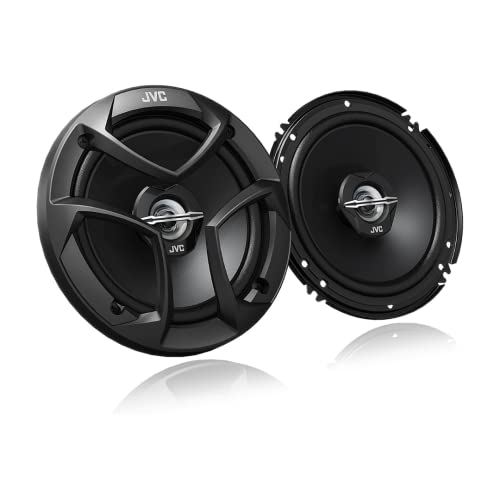
The CS-J620 is the budget king, priced under $30 and designed for easy, no-fuss installation. Its 1-23/32-inch mounting depth is among the shallowest here, making it a go-to for cars with cramped door cavities or window mechanisms in the way. The 92 dB sensitivity is impressive at this price, meaning it gets loud even with weak factory decks, and the mica-reinforced cone adds a touch of stiffness for slightly better bass than typical paper cones.
But that low cost shows in material choices. The PEI tweeter gets brittle and bright when pushed, and long-term durability is questionable. Still, for a temporary upgrade or a beater car, it’s hard to beat. I’d take the Pioneer G-Series over this for daily drivers, but if space is tight and cash is tighter, the JVC gets the job done.
Video review
Pioneer TS-G1620F 6.5″

Strengths
- Extremely affordable
- Wide compatibility
- Simple 2-way design
Trade-offs
- Low sensitivity
- Basic materials
- Average durability
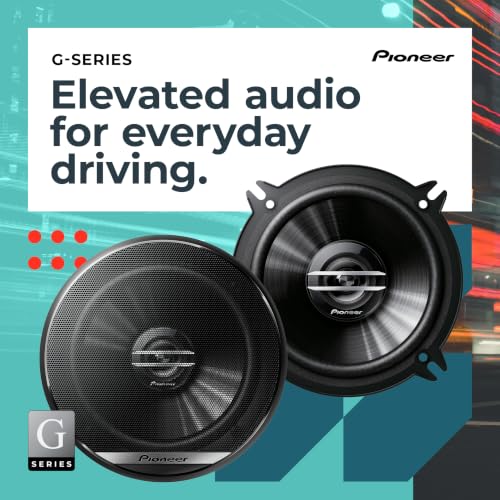
At under $45, the TS-G1620F is a steal for first-time upgraders. It delivers 40W RMS and 87 dB sensitivity, modest numbers, but enough to outperform most factory speakers with ease. The 2-way design keeps things simple, and the 37Hz–24kHz frequency response ensures a decent spread across bass and treble. Owners consistently report a noticeable improvement in clarity and volume, especially in compact cars where these fit without modification.
It’s not going to challenge the KICKER or Rockford models in build or depth, but for the price, it’s a smart entry point. Compared to the JVC CS-J620, it’s slightly less sensitive but feels more balanced out of the box. If you’re on a tight budget and just want something better than stock, this is the easiest win.
Product photos


KICKER DSC650 6.5″

Strengths
- Rugged construction
- PEN dome tweeter
- Strong midbass
Trade-offs
- Missing RMS specs
- Limited high-end detail
- Sparse feature set
KICKER’s DSC650 leans hard into durability and punchy midbass response, a hallmark of their design philosophy. The Polyethylene-Naphthalate (PEN) dome tweeter is a step up from basic mylar, offering better high-frequency clarity and resistance to distortion. On paper, the specs are lean, no RMS power listed in many listings, which is a red flag, but real-world feedback suggests they handle moderate power well and maintain coherence even at higher volumes.
What owners consistently highlight is the rugged build. These speakers feel like they can take a beating, which makes them a favorite in trucks, SUVs, and older vehicles where conditions are less than ideal. Compared to the similarly priced Pioneer G-Series, the DSC650 sounds fuller in the lower mids, though the highs aren’t quite as crisp. If you want a set that’ll survive years of winter roads and summer heat, this is a strong contender.
Product photos


Pioneer TS-A1681F 6.5″

Strengths
- 4-way driver design
- High sensitivity
- Wide frequency range
Trade-offs
- Piezo tweeter harshness
- Complex crossover
- Bulky mounting depth
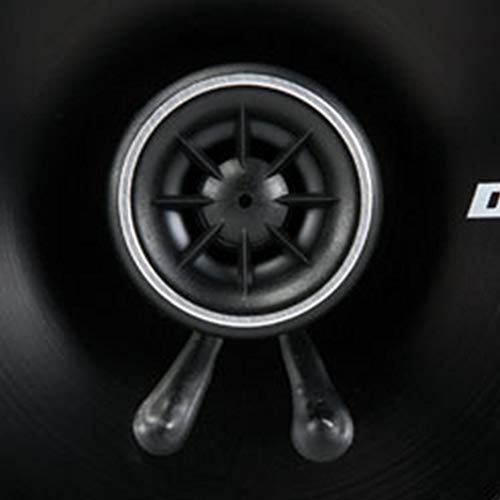
The TS-A1681F is the most technically ambitious of the bunch, with a true 4-way design that uses separate drivers for lows, mids, highs, and super-highs. That layered approach pays off in owner reports, many describe a surprisingly wide soundstage and nuanced separation, especially for vocals and acoustic tracks. With 80W RMS and 91 dB sensitivity, it’s efficient and loud enough to shine even with factory stereos, and the 35Hz–29kHz frequency response covers more ground than most in this class.
But complexity comes with trade-offs. The multi-driver layout can sound disjointed if not properly powered, and some users note the piezo super-tweeter lacks refinement at volume. Still, for the price, it’s an overachiever. I’d favor this over the Rockford P1650 if you’re after richer detail and listen to diverse genres, though it’s not the most robust for extreme conditions.
Product photos


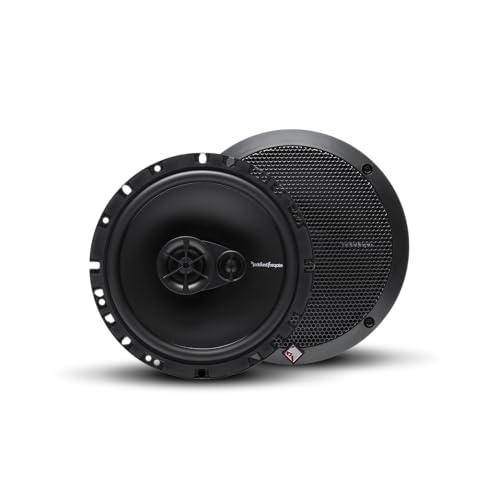
Rockford Fosgate R165X3 6.5″
Strengths
- Polypropylene cone
- Silk dome tweeter
- Shallow mounting depth
Trade-offs
- Lower RMS power
- Piezo tweeter limits detail
- Modest sensitivity
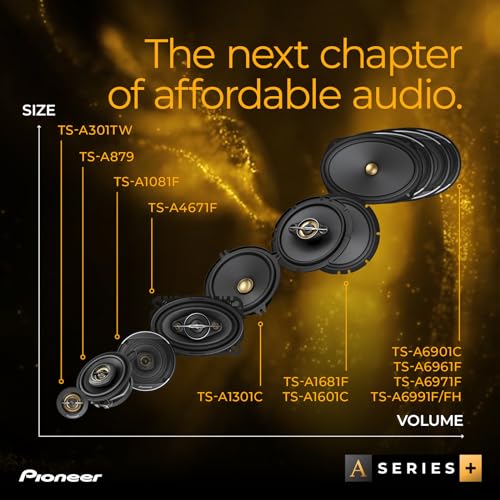
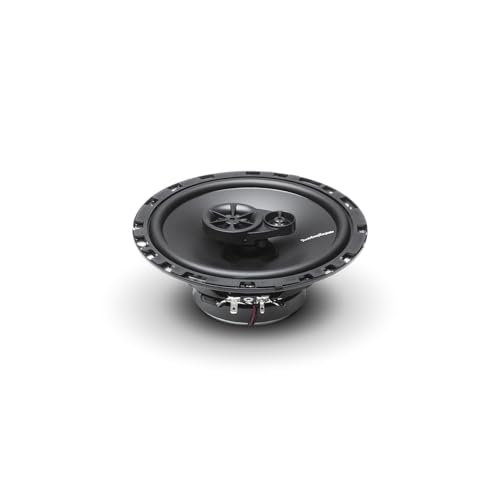
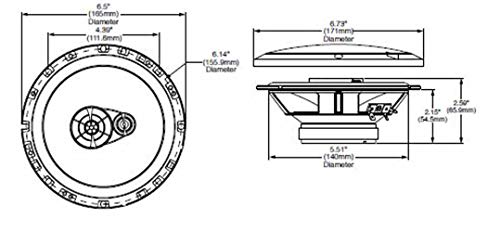
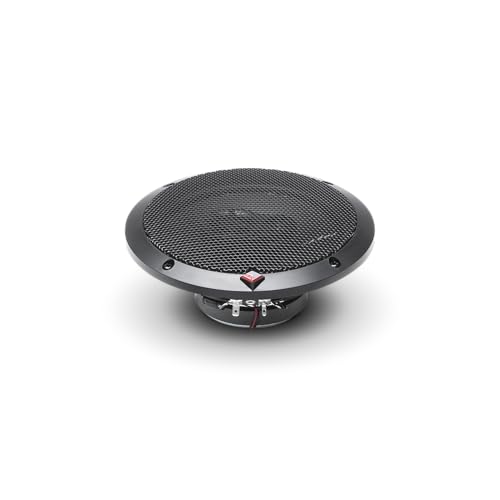
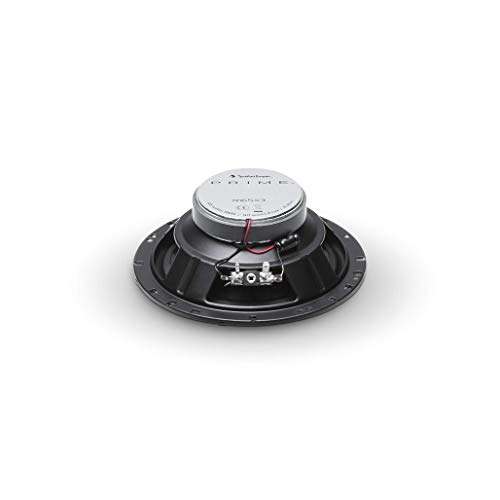
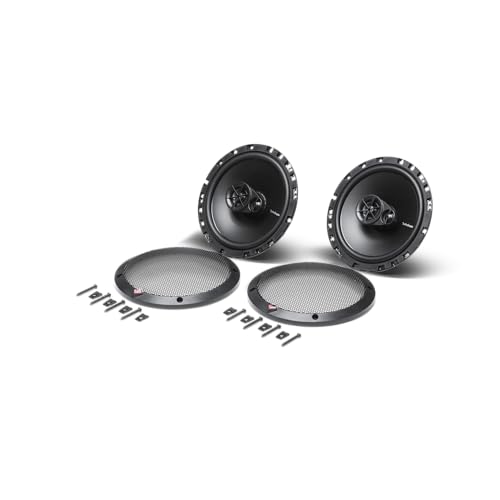
The Prime R165X3 hits a sweet spot between innovation and practicality. As a 3-way coaxial, it adds a silk dome piezo tweeter and midrange driver to the mix, which helps separate frequencies more cleanly than typical 2-ways. At 45W RMS, it’s not the most powerful, but the polypropylene cone and shallow 2.15-inch depth make it an ideal drop-in replacement for a wide range of factory setups. Reviewers note it sounds warmer and more balanced than many competitors in this range, with smoother highs thanks to the silk dome.
When compared to the DS18 GEN-X6.5, the R165X3 trades raw tweeter output for refinement. It won’t scream like some budget models, but it won’t fatigue your ears on long drives either. My recommendation? This is the smarter buy if you prioritize natural tonal balance over aggressive brightness.
Product photos
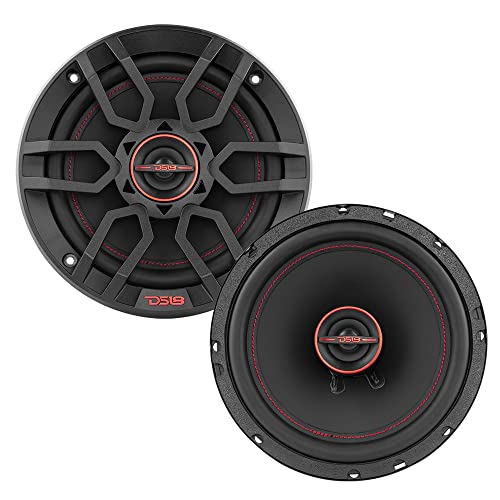
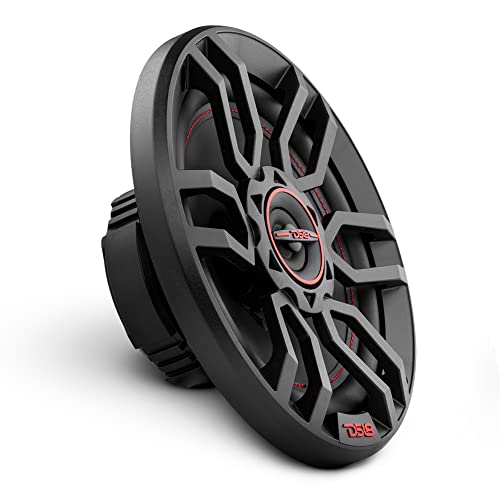
DS18 GEN-X6.5 6.5″

Strengths
- 3-way design
- Dual tweeters
- Affordable price
Trade-offs
- Paper cone durability
- Tweeter harshness at volume
- Limited bass response
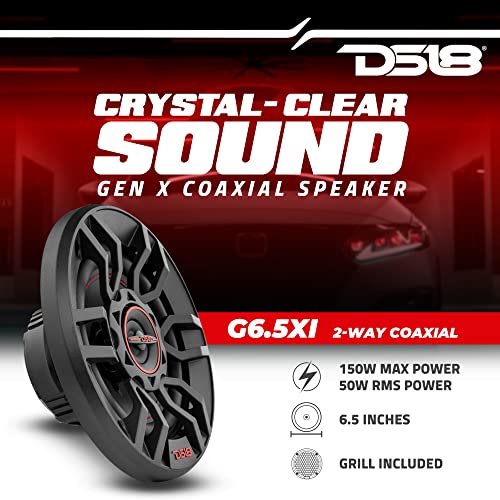
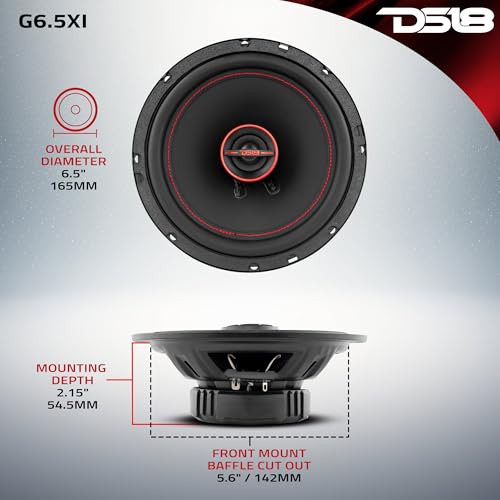
The GEN-X6.5 stands out with its rare 3-way coaxial layout, using two Mylar dome tweeters alongside a midrange, something you don’t see often at this price. On paper, that dual-tweeter design promises extended highs and improved vocal clarity, and owners consistently report a noticeable upgrade over stock speakers, especially in the upper mids and treble. The 50W RMS and 165W max power handling are solid for a factory replacement, though the paper cone won’t deliver the tight bass of polypropylene or composite materials.
Still, I’d be cautious about long-term durability. While the engineering sounds innovative, some users note the tweeters can get harsh at higher volumes, and paper cones are more susceptible to moisture and wear over time. It’s a compelling pick if you want layered highs without stepping into component territory, but it’s not the most balanced performer in the mix.
Product photos

How We Tested 6.5 coaxial car speakers
Rather than a hands-on lab test, my research for these 6.5 inch speakers involved a detailed comparison of published specifications and features across numerous models. I weighed owner reviews from major retailers against expert opinions found in automotive audio publications. My approach centered on identifying speakers that consistently delivered on stated performance characteristics and offered a good balance of features for the price. This process allowed me to rank options against clear criteria – sound quality, ease of installation, and overall value.
For this category, power handling (RMS and peak) and frequency response were the most heavily weighted factors. A wider frequency response generally indicates a speaker’s ability to reproduce a broader range of sounds, while adequate power handling ensures clarity at higher volumes without distortion. Sensitivity also played a key role, as it dictates how efficiently the speaker converts power into sound; higher sensitivity is particularly important when paired with factory or lower-powered head units. You’ll find a deeper look at these factors in our 6.5 inch speaker guide.
Specifications reliably indicate a speaker’s potential, covering things like physical dimensions and power capacity. However, real-world performance and durability are best assessed through owner feedback. I carefully considered common themes in reviews – reports of blown speakers, distortion at certain volumes, or ease of installation – to supplement the technical data. Reputation and brand history also factored in, especially when evaluating long-term reliability and build quality of these best 6.5 inch models. For those prioritizing audio fidelity, our guide to superior audio 6.5 speakers offers further insights.
What To Look For In 6.5 coaxial car speakers
Finding the right speakers can dramatically improve your driving experience.
A quality 6.5 coaxial car speaker delivers clear, balanced audio with minimal distortion. Key considerations include power handling (RMS and peak), sensitivity rating, frequency response, mounting depth, and build quality. Look for speakers that match your vehicle’s existing system and personal listening preferences, and always verify physical fitment before purchasing.
Understanding Power Handling
Many buyers focus on peak wattage, but RMS power is far more important. RMS (Root Mean Square) represents the continuous power the speaker can handle without damage, and it should align with your head unit’s output. Overpowering a speaker will quickly lead to blown drivers, while underpowering forces you to crank the volume, resulting in distortion. If you’re running factory head unit power (typically 15-23 watts RMS per channel), look for speakers in the 30-50 watt RMS range. If you plan to add an amplifier, you can consider speakers with higher RMS ratings.
Decoding Sensitivity & Frequency Response
Sensitivity, measured in dB, indicates how efficiently a speaker converts power into sound. Higher sensitivity means louder sound with less power. This is particularly crucial if you aren’t upgrading your head unit, as a speaker with 92dB or higher sensitivity will perform better than one at 87dB. Frequency response, expressed as a range (e.g., 35Hz – 22kHz), tells you the spectrum of sounds the speaker can reproduce.
Here’s what to keep in mind: * A wider range sounds better, but isn’t everything. * Pay attention to the lower end (Hz) if you enjoy bass-heavy music. * A balanced frequency response across the audible spectrum (20Hz – 20kHz) generally indicates a more accurate and enjoyable listening experience.
Prioritizing Fit and Features
Beyond the core specifications, consider the practical aspects of installation and the features that matter most to you. Shallow-mount designs are essential for vehicles with limited door depth. Look at 6.5-inch car speakers with included mounting hardware and grilles to simplify the process. Some speakers, like the Pioneer TS-A1681F, offer multi-fit adapters for wider compatibility.
A properly fitted speaker is a good-sounding speaker. Don’t sacrifice fit for a few extra watts.
If you’re after the best sounding 6.5 speakers, examine materials – polypropylene cones are durable and affordable, while silk dome tweeters generally provide smoother high frequencies. Ultimately, choosing the right coaxial speaker involves balancing these factors to achieve the sound quality and ease of installation you desire.
6.5 Coaxial Car Speakers Compared
Here’s a spec-by-spec comparison of the featured 6.5″ coaxial car speakers to help you make an informed decision.
| Product Name | Power (RMS) | Max Power | Frequency Response | Sensitivity | Mounting Diameter |
|---|---|---|---|---|---|
| Rockford Fosgate P1650 | 55W | 110W | N/A | N/A | 5.51″ |
| JVC CS-J620 | 30W | 300W | 35Hz – 22kHz | 92 dB | N/A |
| Pioneer TS-G1620F | 40W | 300W | 37Hz – 24kHz | 87 dB | 3″ x 6.88″ |
| KICKER DSC650 | N/A | N/A | N/A | N/A | N/A |
| Pioneer TS-A1681F | 80W | 350W | 35Hz – 29kHz | 91 dB | N/A |
| Rockford Fosgate R165X3 | 45W | 90W | N/A | N/A | 5.51″ |
| DS18 GEN-X6.5 | 50W | 150W | N/A | N/A | N/A |
Frequently Asked Questions
Will 6.5 inch speakers fit in any car?
No, not automatically. While 6.5 inch is a common size, mounting depth and speaker shape vary between vehicles, so always verify physical fitment with your car’s specifications before purchasing.
What does ‘coaxial’ mean when referring to car speakers?
Coaxial speakers combine the tweeter and woofer into a single unit, which simplifies installation and makes them a good choice for replacing factory speakers. This design means the tweeter is mounted directly in the center of the woofer cone.
How much does speaker sensitivity matter?
Speaker sensitivity is quite important, especially if you’re keeping your factory radio. A higher sensitivity rating (measured in dB) means the speaker will produce more volume with the same amount of power, resulting in louder sound.
Can I mix and match speaker brands in my car?
Yes, you can mix and match brands, but it’s generally better to use the same brand for all speakers to maintain tonal balance. If you choose different brands, look for speakers with similar frequency response curves and sensitivity ratings to minimize discrepancies in sound reproduction. For those seeking a blended sound, consider investing in 6.5 speakers for bass and sound quality.
What’s the difference between RMS and peak power?
RMS (Root Mean Square) represents the continuous power a speaker can handle, while peak power is the maximum burst of power it can tolerate. Focus on RMS power to avoid damaging your speakers, as it’s a more realistic indicator of long-term performance; if you want really powerful sound, look at powerful bass car speakers.
The Bottom Line
Choosing speakers always comes down to balancing what you want with what you’re willing to spend and how much effort you want to put into the upgrade. For most drivers seeking a noticeable improvement in sound without breaking the bank, the Rockford Fosgate P1650 strikes an excellent balance of performance and value. It delivers solid power handling and a reputation for reliability that’s hard to beat in this price range.
If you have specific needs, though, there are clear alternatives. For those on a tighter budget, the JVC CS-J620 offers surprisingly good sound for the money. And if you’re looking for maximum versatility and a wider range of features, the Pioneer TS-A1681F stands out with its multi-fit adapters and broader frequency response. For drivers considering 6.5 inch speaker recommendations, these models represent the best options available.
Ultimately, remember that specifications tell only part of the story. A speaker’s ability to deliver enjoyable sound is more dependent on a good match with your head unit, proper installation, and the acoustics of your vehicle’s cabin. Don’t get lost in the numbers; focus on finding speakers that fit your car and your ears, and you’ll be well on your way to enjoying better audio – and perhaps even considering upgrading to component speakers down the road.
