
Specs and Recalls for Audi Q5 Automobiles That Owners Need
This post contains affiliate links. As an Amazon Associate, we earn from qualifying purchases.
The Audi Q5 is a luxury compact SUV built on Volkswagen Group platforms, known for its standard quattro all-wheel drive, turbocharged engines, and a cabin that prioritizes technology and comfort over raw space. Its identity is tied to specific specs—like the 4.6L engine oil capacity for the 2.0T and the mandatory VW 502 00 oil standard—and a handful of NHTSA recalls that define ownership for certain model years.
That last part is where most overviews stop. They list the recalls but don’t tell you what they actually mean for a used Q5 sitting on a lot right now. The connecting rod recall isn’t just a notice—it’s a potential engine replacement flagged for vehicles after October 2022. The sunroof drain recall isn’t a minor leak; it’s a corrosion risk that can disable the side airbag.
What follows is the data sheet behind the brochure: the exact engine codes, the fluid numbers, the recall timelines, and the one maintenance habit that keeps the 2.0T from becoming a money pit.
Key Takeaways
- The 2.0T four-cylinder (engine codes CPMB, CHJA) holds 4.6 liters of oil and requires synthetic meeting VW 502 00 spec—using the wrong oil accelerates carbon buildup on the direct injection system.
- Check for NHTSA Recall 22V-753 (engine connecting rods) on 2021-2023 models. A campaign code applied after October 2022 means the vehicle needed inspection and possible engine replacement.
- Models with a panoramic sunroof (2011-2017) are subject to Recall 17V-001 for head curtain airbag canister corrosion. If the carpet has ever been wet, the repair is more complex and the car shouldn’t be driven until fixed.
- The Q5’s main rivals are the BMW X3 (sharper drive) and Mercedes-Benz GLC (plusher ride). The Q5 splits the difference with its quattro AWD system, which favors secure all-weather traction over sporty rear-bias dynamics.
- For a comfortable, tech-forward family hauler with proven AWD, the Q5 is a default pick. For engaging driving dynamics, the BMW X3 remains the benchmark.
What is the Audi Q5 Known For?
The Audi Q5 carved its niche by being the rational choice in an emotional segment. It doesn’t chase the sporty flair of a BMW M3 or the rugged posture of a truck-based SUV. Instead, it delivers a polished, predictable, and technologically integrated experience.
Its reputation rests on three pillars. First, the quattro all-wheel drive system is standard on nearly every Q5 sold in North America. This isn’t a part-time setup; it’s a full-time system using a center differential that constantly sends power front and rear. The result is tenacious grip in rain and light snow, a feeling of solidity that buyers pay for.
Second, the interior execution. Audi’s “Virtual Cockpit” digital gauge cluster set the standard for the industry when it launched. Materials, fit, and finish consistently benchmark the class, even if rear seat space is merely competitive with rivals like the Toyota RAV4.
Third, a specific and sometimes finicky relationship with maintenance. This isn’t a set-it-and-forget-it hybrid car. The turbocharged engines demand specific fluids and intervals. Ignoring them leads to expensive, well-documented problems.
The 2.0L TFSI engine (codes CPMB, CHJA) produces 155 kW (208 hp) at 5800-6000 RPM and 350 Nm (258 lb-ft) of torque from 1500 RPM. It has a bore of 82.5 mm, a stroke of 92.8 mm, and a compression ratio of 9.6:1, requiring 95 RON fuel. This data comes directly from the Audi Q5 technical service bulletin used by dealership technicians.
The driving experience is best described as competent isolation. The steering is light and precise, not communicative. The ride is comfortable, not floaty. It’s engineered to feel effortless and secure, which appeals to a broad audience but can leave enthusiasts wanting more.
Audi Q5 Recalls You Must Know About
A recall notice is a line in a database. Understanding the mechanical failure behind it is what separates an informed buyer from a future problem. Three NHTSA campaigns are particularly significant for the Q5.
Recall 22V-753 (Engine Connecting Rod): This is the big one for newer models. Affecting 2021-2023 Q5 and Q5 Sportback vehicles, it concerns deviations in connecting rod production. The flawed rods can allow excessive particles into the engine oil, wearing down the connecting rod bearings.
- Consequence: Increased engine noise, warning lights, and ultimately engine failure or seizure. In rare cases, a failed rod could puncture the block, leading to oil loss and a fire risk.
- Timeline: The recall was issued in January 2023, but the corrective campaign code was applied to affected vehicles starting October 21, 2022. If you’re looking at a used 2021-2023 Q5, you must verify this repair is complete. The fix can range from inspection to a full engine replacement.
- Source: This isn’t speculation. The details, including the 44,724 U.S. Vehicles affected, are documented in the NHTSA safety recall notice.
Recall 17V-001 (Head Curtain Airbag Canister): This affects 2011-2017 Q5 models equipped with the popular panoramic sunroof. If the sunroof drain tubes clog or kink, water can soak the foam padding around the side airbag canisters in the roof.
- Consequence: Corrosion can weaken the metal canister. In a crash, the airbag might not deploy, and the canister could fracture, sending metal fragments into the cabin.
- The Critical Edge Case: The recall bulletin explicitly states that vehicles with a history of water ingress are at “HIGH RISK.” If more than light surface corrosion is found during inspection, the vehicle should not be driven until repaired. This turns a damp carpet from an annoyance into a safety-critical stop-drive order.
- Timeline: Repairs began at dealerships on March 20, 2017.
Recall 18V-369 (Gas Bubbles in Rear Brake System): A 2018 model-year issue where a supplier error left the rear brake caliper pistons with an improper coating.
- Consequence: Gas bubbles can form in the brake fluid, leading to a spongy pedal and significantly reduced braking performance.
- Fix: A simple brake bleed procedure at the dealership. The recall was launched in June 2018.
Where this goes sideways: Assuming a recalled vehicle on a used lot has been fixed. Dealers are prohibited from selling new cars with open recalls, but the rules for used cars are less strict. You must run the VIN through the NHTSA website yourself.
| Recall Number | Model Years | Core Problem | Primary Risk | Fix Complexity |
|---|---|---|---|---|
| 22V-753 | 2021-2023 | Faulty connecting rods | Complete engine failure, fire risk | High (possible engine replacement) |
| 17V-001 | 2011-2017 | Sunroof water corrodes airbag canister | Airbag non-deployment, metal fragments | Medium (headliner removal, corrosion assessment) |
| 18V-369 | 2018 | Poor caliper coating creates brake gas bubbles | Reduced braking power, longer stop distance | Low (brake system bleed) |
Under the Hood: Q5 Specs and Service
This is where you move from a casual owner to a custodian. The Q5’s service requirements are non-negotiable, and the numbers are very specific.
Engine Oil – The Critical Fluid: For the ubiquitous 2.0T engine (2015 model example), capacity is 4.6 liters (4.9 quarts). The specification is VW 502 00. This isn’t a suggestion.
- Why the spec matters: VW 502 00 oils are formulated for the high temperatures and shear forces of turbocharged, direct-injection engines. Using a generic synthetic can lead to accelerated oil breakdown, increased carbon deposit formation on the intake valves (a known issue with direct injection), and potential long-term wear.
- Accepted grades: SAE 5W-40, 5W-30, or 0W-40, all synthetic.
Other Key Fluids (2015 2.0T with 8-Speed Tiptronic):
- Transmission Fluid: The 8-speed automatic (code OBK/OBL) holds about 8.6L for a new fill. A fluid change typically uses 3.6-4.0L. This is a “lifetime” fluid according to Audi, but a change at 80,000-100,000 miles is cheap insurance against mechatronic unit failures.
- Coolant: Audi uses a pink coolant, specification G13 (TL-VW774J), which must be diluted with distilled water.
- Refrigerant: The A/C system uses R134a, with a charge of 630g ± 15g.
Common Problems & Technical Service Bulletins (TSBs): Beyond recalls, TSBs guide dealers on widespread issues. One from July 2022 (TSB 87 22 28) addresses poor A/C cooling in 2020-2023 Q5 models, often tracing to a leaking evaporator core. Another from December 2024 addresses water ingress from clogged panoramic sunroof drains. These aren’t free recalls, but they are recognized patterns with approved fixes.
The part nobody mentions: The “Service Interval” display can be reset manually via the MMI menu, but this doesn’t reset the internal condition-based service counter. Only a dealer scan tool or a capable OBD2 unit like VCDS or OBDeleven can do that. Just clearing the light means you’ll get an “Inspection Due” message sooner than expected.
Audi Q5 vs. The Competition
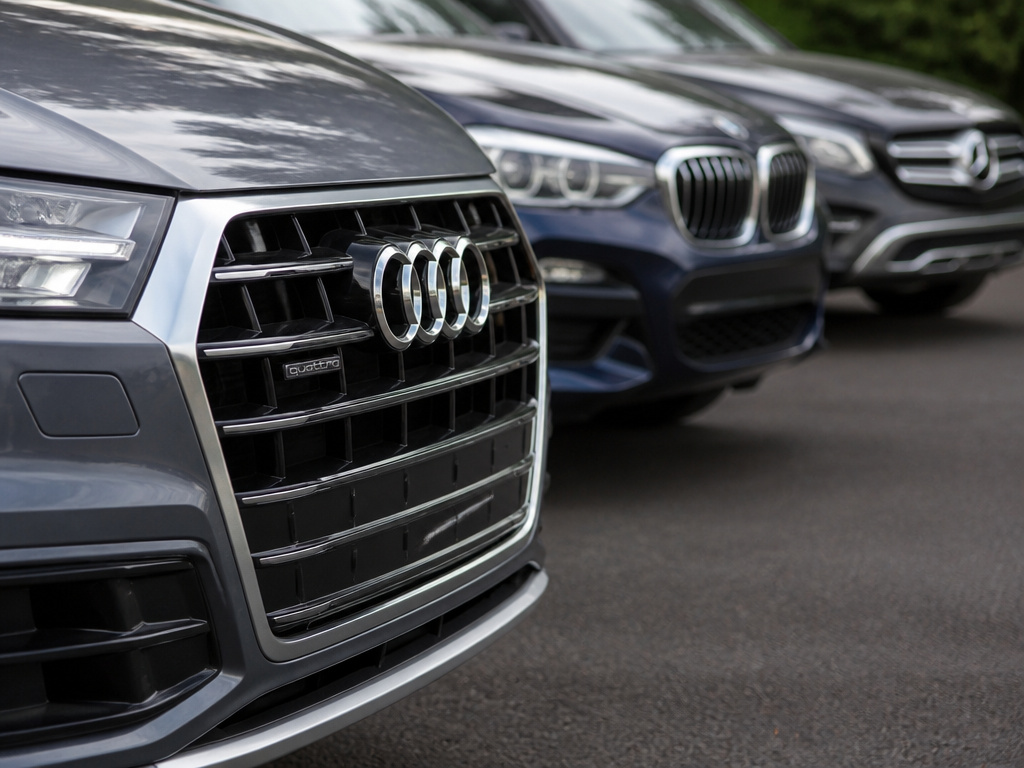 The luxury compact SUV segment is fiercely contested. The Q5 doesn’t exist in a vacuum; its character is defined by how it differs from its two German arch-rivals and popular mainstream alternatives.
Audi Q5 vs. BMW X3: This is the classic duality. The BMW X3 is the driver’s choice. Its steering is sharper, its chassis feels more responsive, and its rear-biased xDrive system feels sportier when pushed. The Q5 counters with a quieter, more relaxed cabin, slightly better ride comfort, and a tech interface (MMI) that some find more intuitive than BMW’s iDrive. The Q5 feels like a sanctuary; the X3 feels like a partner.
Audi Q5 vs. Mercedes-Benz GLC: The GLC leans further into comfort and luxury than the Q5. Its ride is often plusher, and its interior ambiance can feel more opulent. However, the GLC’s driving dynamics are the softest of the trio, bordering on dull. The Q5 offers a better balance of comfort and control. The GLC cossets; the Q5 confidently insulates.
Against Mainstream Rivals: Compared to a Volkswagen Tiguan or Hyundai Tucson, the Q5 justifies its price with superior materials, sound insulation, a more powerful standard engine, and the sophisticated quattro system. You pay for a noticeable step up in refinement and performance, not just a badge.
| Vehicle | Strengths | Weaknesses | Best For |
|---|---|---|---|
| Audi Q5 | Standard AWD, impeccable interior tech/build, secure all-weather ride | Less engaging drive than X3, rear seat space is average | Buyers who prioritize tech, comfort, and all-weather security over sportiness. |
| BMW X3 | Engaging driving dynamics, sharp steering, efficient powertrains | Firmer ride, interior can feel less special than competitors | Enthusiasts who want SUV space with sports sedan reflexes. |
| Mercedes GLC | Plush ride quality, opulent interior ambiance, strong brand cachet | Numb steering, higher cost of options, less agile handling | Luxury seekers who value comfort and style above driving involvement. |
Evolution of the Q5 Model Line
 The Q5 hasn’t stood still. Understanding its generations helps you know what you’re getting.
- First Generation (Typ 8R, 2009-2017): The original. It established the formula with a 2.0T or 3.0L supercharged V6. The interior, while high-quality, feels dated by today’s standards. This generation carries the important sunroof/airbag recall.
- Second Generation (Typ FY, 2018-2023): A complete redesign. Sharper styling, a much more advanced interior with the Virtual Cockpit, and a new platform. This gen introduced the 2.0T with a mild-hybrid system (12V) and is the one affected by the connecting rod and brake bubble recalls. The sportier SQ5 variant continued with a turbocharged V6.
- Third Generation (Typ FY facelift, 2024+): A substantial mid-cycle update. It features revised styling, more powerful mild-hybrid engines (now with a 48V system), and upgraded infotainment. This generation increasingly faces pressure from a growing electric SUV market, including Audi’s own Q4 e-tron and Q8 e-tron.
The move towards electrification is clear. While a full electric SUV replaces the drivetrain, the current Q5 uses mild-hybrid tech to boost efficiency and smooth stop-start operation. It’s a bridge between traditional and electric power.
Buying a Used Audi Q5: A Checklist
Emotion sells cars. Logic keeps you from buying a headache. Here is a mechanical checklist that goes beyond a test drive.
- Run the VIN. Use the NHTSA website and Audi’s own recall portal. Confirm 22V-753 and 17V-001 (if applicable) are closed. An open recall is a bargaining chip, but more importantly, a potential safety issue.
- Check the oil. The dipstick (if equipped) or electronic level should show full. Ask for service records. Look for consistent oil changes with VW 502 00 spec oil. Long intervals or missing records are a major red flag for the 2.0T engine.
- Inspect the panoramic sunroof. Open and close it. Then, pour a small bottle of water into the sunroof drain channels (in the corners). The water should exit quickly behind the front wheels. Slow drainage suggests clogging, which is the precursor to the serious airbag recall issue and interior water damage.
- Test all electronics thoroughly. The MMI screen, Virtual Cockpit, all speakers, and every driving aid. These systems are complex and expensive to fix. A flickering screen or faulty sensor is a warning sign.
- Get a pre-purchase inspection (PPI) from a specialist. A generic mechanic might miss Audi-specific issues. A specialist with VCDS will scan for fault codes, check the DSG transmission adaptation values, and assess the health of the quattro system. The cost of a PPI is the best money you’ll spend.
Skip this if: You’re looking for a low-maintenance, appliance-like vehicle. The Q5 rewards diligent, spec-correct maintenance. If you plan to skip oil changes or use the cheapest parts, a Toyota RAV4 or Honda CR-V will be far more forgiving.
Frequently Asked Questions
Is the Audi Q5 a reliable car?
Its reliability is conditional. When maintained strictly to Audi’s specifications—correct oil, timely fluid changes, addressed recalls—the Q5 can be dependable. However, it is less tolerant of neglect than many Japanese competitors. The 2.0T engine has known issues with carbon buildup on intake valves and, in specific model years, the connecting rod recall. Overall reliability scores are often average, reflecting the cost and complexity of repairs when things do go wrong.
What does “quattro” mean on the Q5?
On the Q5, “quattro” refers to Audi’s full-time all-wheel drive system. It uses a mechanical center differential (typically a Torsen unit on older models or an ultra technology clutch-pack system on newer ones) to continuously distribute power between the front and rear axles. This provides proactive traction and stability in all conditions, not just when slippage is detected. It’s a key differentiator from many systems offered by competitors like the Volkswagen Tiguan, which are often front-wheel-drive based and engage the rear wheels only when needed.
Is the Audi Q5 good in snow?
Yes, the standard quattro all-wheel drive system makes the Q5 very capable in snow. The full-time AWD provides confident traction for acceleration and climbing. However, remember that AWD helps you go; it doesn’t help you stop or turn. Winter tires are a critical addition for serious winter driving, as they provide the necessary grip for braking and cornering on icy roads.
What is the difference between the Audi Q5 and Q3?
The Audi Q3 is a subcompact SUV, meaning it’s significantly smaller, less powerful, and less expensive than the compact Q5. The Q3 is based on a front-wheel-drive platform (with available AWD), while the Q5 uses a more sophisticated platform designed for standard AWD. The Q5 offers more interior space, more powerful engine choices, a higher-quality interior, and a smoother, quieter ride. The Q3 is for urban buyers who want the Audi badge in a smaller package.
Does the Audi Q5 require premium gas?
Yes, Audi recommends using premium unleaded gasoline (91 octane or higher) for all Q5 gasoline engines, including the 2.0T. The engines are tuned for higher octane to achieve their advertised power and efficiency figures and to prevent engine knock (pre-ignition). Using regular fuel can result in reduced performance, lower fuel economy, and potential long-term engine damage. The onboard computer will adjust timing to protect the engine, but you’re not getting the vehicle as engineered.
The Bottom Line
The Audi Q5 is a compelling package of technology, comfort, and all-weather security. Its success is built on a great interior and the peace of mind of standard quattro. But owning one is an exercise in specifics.
You must pay attention to the VW 502 00 on the oil bottle. You must check for that 22V-753 campaign code on a 2021-2023 model. You must listen for a clogged sunroof drain on an older one. This isn’t a car for the indifferent.
For the buyer who values a polished, integrated, and solid-feeling vehicle and is willing to follow the manual to the letter, the Q5 delivers. For those who want a more engaging drive, the BMW X3 is waiting. For those who just want trouble-free transportation, the Hyundai Tucson or a sedan with all-wheel drive might be a smarter financial choice. The Q5 exists for the person in the middle, who understands that luxury comes with a detailed set of instructions.
