
Used Cars Automobiles: Follow This 3-Step Check Before You Buy
This post contains affiliate links. As an Amazon Associate, we earn from qualifying purchases.
Buying a used car requires matching three things: a verified vehicle history, a professional pre-purchase inspection, and a negotiation anchored to documented flaws. Skip any one, and a $5,000 repair can land in your driveway within six months.
The vehicle history report is the starting line, not the finish. A clean Carfax or AutoCheck only means no major incidents were reported to those services. It says nothing about deferred maintenance, impending mechanical failures, or repairs done in a backyard that will fail next winter. Your job is to connect the dots between the history, the car’s current physical state, and the manufacturer’s own record of problems.
What follows: how to read a history report for the story between the lines, what a real pre-purchase inspection covers (and what it routinely misses), and how to use open recalls and technical service bulletins as leverage in a negotiation that actually works.
Key Takeaways
- A clean vehicle history report is a minimum requirement, not a guarantee. Cross-reference the VIN with the NHTSA recall database for unrepaired safety issues.
- A pre-purchase inspection (PPI) is non-negotiable. It must include a scan for stored manufacturer-specific diagnostic trouble codes, which a generic OBD2 reader will miss.
- Negotiate based on the cost of needed repairs, not the asking price. Use estimates from the inspecting mechanic as your ceiling for a price reduction.
- Budget an immediate $1,000 for deferred maintenance, fluids, filters, belts, on any used car, regardless of mileage.
- Walk away from any seller who refuses a PPI or history verification. The car is hiding something expensive.
The 3 Non-Negotiables Before You Hand Over Cash
You found a car online. The photos look good. The price seems fair. This is where most buyers make their first and most expensive mistake: they fall in love with the idea of the car before verifying the reality of the machine.
The process has three pillars, and each one supports the other. You cannot compensate for a weak history by getting a great inspection. A clean inspection does not fix a title branded “salvage.” Treat these as sequential filters. If the car fails any one, you stop.
The part nobody mentions: A “clean” Carfax report only documents events an insurance company processed or a dealership reported. A private sale after a fender-bender, a replaced engine under an extended warranty, or a recurring electrical gremlin never fixed under recall, none of that appears. The history report is a list of public records, not a biography.
1. Decode the Vehicle History
You need two reports: a commercial one like Carfax or AutoCheck, and a free check of the National Highway Traffic Safety Administration (NHTSA) recall database using the car’s Vehicle Identification Number (VIN).
The commercial report gives you the timeline. Look for gaps in service records, which signal periods of deferred maintenance. Multiple owners in a short time is a red flag, people don’t sell a great car quickly. A reported accident isn’t always a deal-breaker, but the repair quality is everything. Look for subsequent alignment or tire wear notes; that hints at a lingering structural issue.
The NHTSA check is your safety net. It lists unfulfilled safety recalls that the seller may not even know about. A 2023-2024 Honda CR-V Hybrid, for example, could be subject to a STOP SALE order for a faulty high-pressure fuel pump, per an NHTSA service bulletin. An unrepaired recall is a bargaining chip, but it’s also a mandate, the fix must be completed for free by a franchise dealer before you can safely drive the car.
2. Verify the Mechanical Health with a Professional
A test drive tells you if the radio works. A pre-purchase inspection tells you if the subframe is rusted through. This is not a “look-over.” It’s a paid service from a qualified mechanic, preferably one specializing in that brand.
The inspection must include: * A full undercarriage examination for rust, leaks, and impact damage. * A compression test on each cylinder (for higher-mileage cars). * A scan for proprietary diagnostic codes. A generic OBD2 scanner won’t find manufacturer-specific codes that indicate looming transmission or hybrid battery issues. * A brake wear measurement and tire tread depth check.
I won’t recommend skipping the PPI to save $150. I’ve seen a car with a clean history and a smooth drive hide a transmission filled with sawdust to quiet a bearing whine. It failed 300 miles later. The $5,000 replacement bill makes the inspection fee look like a rounding error.
3. Secure the Legal Paperwork
The title is the car’s birth certificate. You need the original, signed by the seller, with no liens listed. A “title loan” lien means a bank still owns the car, and you cannot register it until that loan is paid.
Get a bill of sale. It should include the VIN, sale price, date, and signatures of both buyer and seller. This document is crucial for registration and protects both parties. Never accept a handwritten note on a napkin as a contract.
The Pre-Purchase Inspection (PPI) Deep Dive
You’ve scheduled the inspection. Now you need to know what you’re paying for, because not all PPIs are created equal. A quick lube shop will check fluid levels and tire pressure. A specialist will hunt for the known failure points of that specific model.
| Inspection Area | What a Basic Check Misses | The Specialist’s Find |
|---|---|---|
| Engine | Visual leaks, oil level. | Carbon buildup on direct injection valves, timing chain stretch, oil consumption rate (critical for some Kia and Hyundai engines). |
| Transmission | Fluid color and level. | Adaptation values showing harsh shifts, internal wear particles on a magnetic plug, clutch pack clearance. |
| Frame & Undercarriage | Major rust holes. | Corrosion at specific weld points, like the muffler on 2006-2008 Toyota RAV4 V6 models in salt states—a documented issue in a NHTSA technical service bulletin. |
| Electrical System | If the lights turn on. | Parasitic drain test, module communication errors, battery state of health (not just charge). |
The mechanic should provide a written report with photos, especially of any problem areas. This report is your single most powerful tool in the next step: negotiation.
Where this goes sideways: Using the seller’s recommended mechanic. Their loyalty is to the person who feeds them regular business, not to you. Always choose and pay your own independent inspector.
Negotiation Tactics That Actually Work
Armed with the history report and the PPI findings, you now negotiate from fact, not feeling. The goal is not to “get a good deal.” The goal is to pay a price that reflects the car’s true condition, including the cost of making it safe and reliable.
Your opening offer is the asking price, minus the full repair cost of every item on the PPI “needs” list. Email the seller the inspection report with the mechanic’s estimate attached. This isn’t being cheap; it’s being transparent. You’re showing exactly why you’re lowering your offer.
Use these findings as direct leverage:
- Open Recalls: “The car has an open fuel pump recall. I need to factor in the time and rental car cost while the dealer fixes it.”
- Needed Maintenance: “The brake pads are at 2mm and the rotors are scored. Your estimate is $600. I’ll deduct that from the price.”
- Documented Common Issues: “This model has a known issue with oil consumption. The PPI didn’t test for it, so I need to budget for a consumption test and potential engine work.”
If the seller refuses to budge, walk away. There are always other cars. The power in a negotiation comes from your willingness to leave the table.
What Your Budget Actually Buys (And What It Hides)
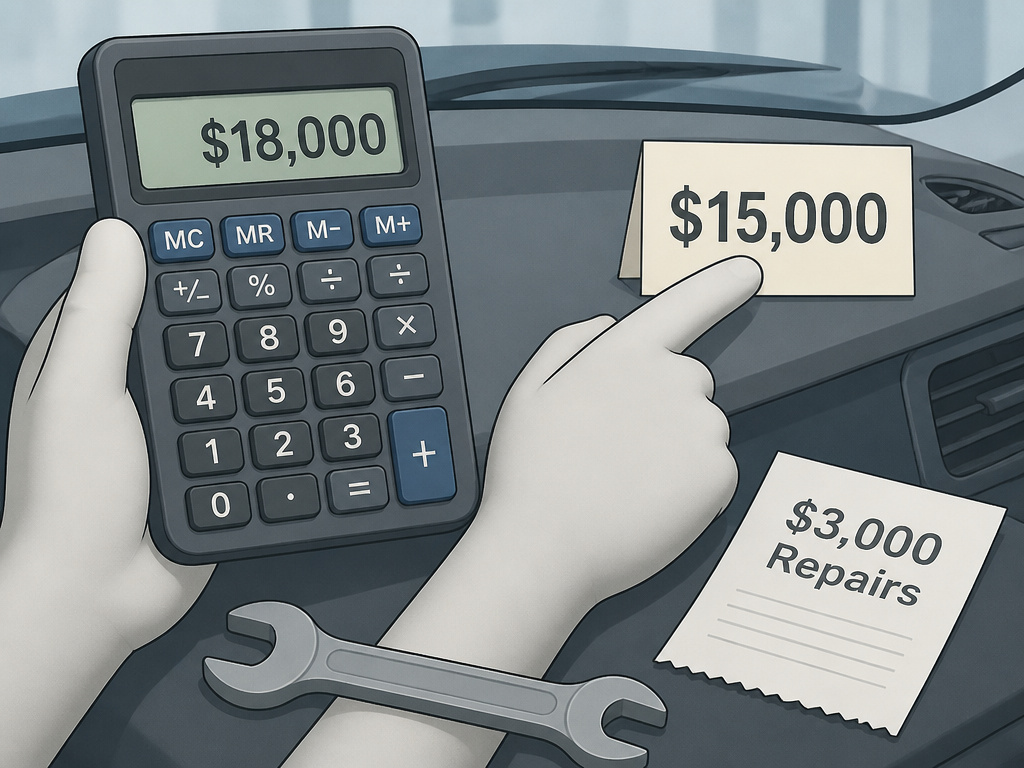
Your total cost is the sale price plus immediate repairs. A $15,000 car that needs $3,000 in work is an $18,000 car. Plan for this.
| Price Bracket | Common Finds | Immediate Budget For |
|---|---|---|
| Under $10,000 | Higher mileage, older models, worn interiors. | Timing belt/chain service, all fluids, struts, and tires. Assume $1,500-$2,000. |
| $10,000 – $20,000 | 5-8 year old mainstream sedans/SUVs, lower mileage. | Dealer-scheduled major service (e.g., 60k or 100k mile service), brake refresh, battery. |
| $20,000+ | Late-model, certified pre-owned (CPO), luxury brands. | Fewer repairs, but higher cost for brand-specific parts and maintenance. A Volvo’s 10,000-mile oil change interval is longer, but the synthetic oil and filter cost more. |
Remember, a lower purchase price often means higher running costs. An affordable sports car might need premium fuel and expensive tires, and it will absolutely carry higher sports car insurance premiums. An older used hybrid car might save on gas, but a failing battery pack is a multi-thousand-dollar repair.
The sweet spot for reliability and value is often a 3-5 year old car that’s just come off a lease. It’s had all its scheduled dealer maintenance, it’s still under the original powertrain warranty, and it’s taken the steepest part of the depreciation hit.
The Final Step: Protecting Your Investment
You bought the car. The real work starts now. You are now responsible for the maintenance the previous owner might have delayed.
First, address every item on the PPI “recommended” list. Change the oil and filter immediately, even if the seller says it was just done. Use the correct specification, consult our guide on choosing motor oil for your specific engine. Replace the cabin air filter. It’s cheap and affects your health.
Second, establish a baseline. If the car doesn’t have a complete service book, create one. Note the mileage and date of your first service. Adhere to the manufacturer’s severe service schedule if you drive in stop-and-go traffic, extreme heat, or on dusty roads, it’s more realistic for most drivers than the “normal” schedule.
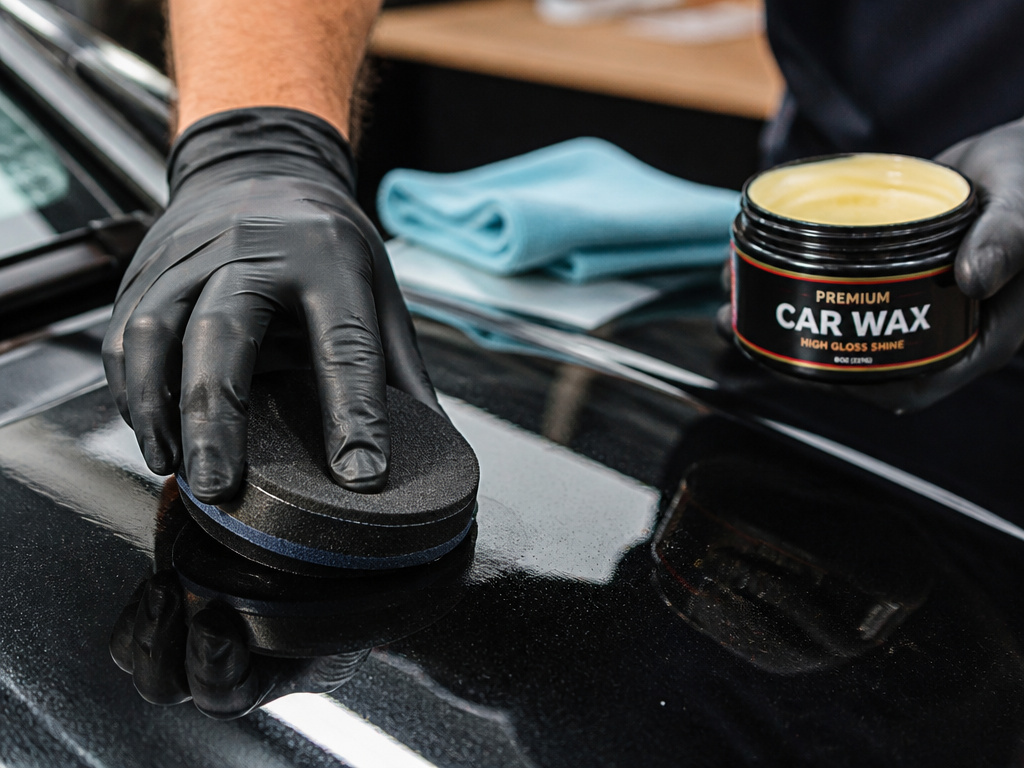
Finally, invest in protection. A good set of all-season tires is the single best safety upgrade you can make. Keep the paint protected with a quality wax for black cars or sealant, and clean it regularly with a pressure washer suitable for cleaning cars. This preserves resale value and prevents costly corrosion repairs.
Frequently Asked Questions
How many miles is too many for a used car?
It’s less about the number and more about the quality of those miles. A 150,000-mile highway commuter car with a full service history is often a better bet than a 75,000-mile city car that’s been cold-started and short-tripped its whole life. Look for consistent maintenance every 5,000-10,000 miles. For most modern engines, 120,000 miles is the point where major components like timing chains, water pumps, and suspension parts may need attention.
Is a private seller better than a dealership?
It depends. A private seller often has a lower price and knows the car’s full history. A reputable dealership offers a limited warranty, has already done a safety inspection, and handles all the paperwork. A “buy-here-pay-here” lot is the riskiest option, often selling cars with hidden problems. Always get a PPI, regardless of the seller.
Should I buy an extended warranty?
Rarely. For a reliable, modern used car, you will likely pay more in warranty premiums than you’ll ever get back in repairs. Instead, take the monthly warranty cost and put it in a dedicated savings account. That’s your “repair fund.” You keep the money if you don’t use it. The only exception is a manufacturer-backed Certified Pre-Owned (CPO) warranty, which can be valuable.
What’s the biggest red flag when looking at a used car?
Seller who is evasive about history or resistant to an inspection. Other major flags include a title branded “salvage” or “rebuilt,” evidence of flood damage (musty smell, silt under carpets, corrosion on unpainted metal under the dash), and mismatched paint or body panel gaps, which indicate past collision repair.
Are used electric cars a good buy?
They can be, but the due diligence is different. Battery health is everything. You must get a diagnostic report showing the battery’s state of health (SOH), usually a percentage of its original capacity. Also, research insurance costs for EVs, as they can be higher, and ensure you have a viable charging plan. The electric automobile landscape is evolving quickly, so older models may have limited range.
The Bottom Line
Buying a used car is a process of verification, not hope. The car that seems perfect in an ad is a collection of parts with a history. Your job is to uncover that history, assess the current state of those parts, and pay a price that leaves room for the unknowns.
Start with the VIN and don’t stop digging until you have a mechanic’s report in your hand. Negotiate with the confidence that comes from knowing more about the car’s needs than the seller does. And when you drive it home, commit to the maintenance the last owner might have ignored. That’s how a used car becomes a reliable automobile.
