
Recalls That Redefined the Acura TLX Automobile Model Year
This post contains affiliate links. As an Amazon Associate, we earn from qualifying purchases.
The Acura TLX is a mid-size luxury sports sedan offered with two turbocharged engines: a 2.0-liter four-cylinder and a 3.0-liter V6, the latter paired exclusively with the Super Handling All-Wheel Drive (SH-AWD) system. The 2025 model year is defined not by new features, but by a series of federal safety recalls addressing critical failures in the fuel system, brakes, and for earlier V6 models, the engine itself.
If you’re looking at a TLX, you’re likely weighing its sharp handling against known reliability questions. The recalls aren’t just paperwork, they’re corrections for flaws that can stop the car dead or prevent you from braking. This shifts the evaluation from pure performance to a checklist of repair history.
What follows is a breakdown of the TLX’s powertrains, the definitive list of issues tied to specific model years, and the maintenance system that, if ignored, voids your first line of defense against major repairs.
Key Takeaways
- The 3.0L turbo V6 with SH-AWD is the performance choice, but 2015-2020 models are subject to a stop-sale recall for connecting rod bearing failures that can destroy the engine.
- Two separate fuel pump recalls exist: one for 2015-2020 SH-AWD models and another for 2019-2020 front-wheel-drive models, both for impellers that swell and seize, causing stalling.
- The Maintenance Minder system isn’t a suggestion; failing to reset it after service corrupts the schedule and can lead to missed critical services like timing belt replacement.
- The 2021-2025 model years have their own recalls for improperly welded fuel tanks (fire risk) and a brake pedal pivot pin that can shift and prevent proper braking.
- For 2015-2020 V6 SH-AWD models, warranty coverage for idle-stop restart failures has been extended to 10 years with no mileage limit, covering valve adjustment and starter replacement.
The 2025 Acura TLX: What’s New, and What’s Been Recalled
For 2025, the Acura TLX carries over largely unchanged from the prior year. The news isn’t about new tech or horsepower. It’s about the fallout from issues discovered in earlier generations that now formally affect the latest models on the federal record.
The car still comes in five trims, all built on the same platform. Your choice boils down to engine and drive wheels. The 2.0L turbo four-cylinder (2.0L I4) is the base powerplant, making 272 horsepower and driving the front wheels. The 3.0L turbo V6, making 355 horsepower, is exclusive to the Type S and Technology Package trims and comes paired with the SH-AWD system.
The 2023 Acura TLX service manual specifies two engine displacements: 1996cc for the 2.0L I4 and 2997cc for the 3.0L V6. Both are double-overhead-cam, turbocharged gasoline engines, with the V6 requiring premium fuel for rated output.
The SH-AWD system is the TLX’s party trick. It doesn’t just send power front-to-back; it can overdrive the outside rear wheel in a corner, literally vectoring torque to rotate the car. On a winding road, it feels sharper than its weight suggests. Compared to the standard all-wheel drive in something like an AWD sedan, it’s more active and performance-oriented.
But the hardware is only half the story. The Acura TLX‘s recent history is documented in National Highway Traffic Safety Administration filings. These aren’t minor glitches.
Known Issues and Official Recalls
You can’t talk about the TLX without talking about recalls. They are the single most important factor in evaluating a used model or understanding the risks of a new one. The issues are specific, serious, and tied to exact production periods.
| Recall / Issue | Affected Models | Core Problem | Risk / Consequence |
|---|---|---|---|
| Connecting Rod Bearing (NHTSA 23V-751) | 2015–2020 TLX V6 | Improper crankshaft journal dimensions cause bearing friction, lack of lubrication, and excessive heat. | Complete engine failure, loss of motive power, fire risk. |
| Idle Stop Restart Failure (Warranty Extension) | 2015–2020 TLX V6 (SH-AWD) | Excessive cylinder pressure or low cranking torque prevents auto-restart after stop/start engages. | Vehicle stalls at intersections, requires manual restart. |
| Fuel Pump Motor Seizure (SH-AWD) | 2015–2020 TLX SH-AWD | Swelling impeller in fuel pump motor seizes the pump. | Engine stall or no-start condition while driving. |
| Fuel Pump Motor Seizure (FWD) | 2019–2020 TLX (non SH-AWD) | Same swelling impeller issue as SH-AWD recall. | Loss of motive power, DTC P0087 (low fuel rail pressure). |
| Fuel Tank Leak (NHTSA 24V-950) | 2021–2023 TLX | Improperly welded fuel filler neck and tank. | Fuel leak in presence of ignition source, fire risk. |
| Brake Pedal Pivot Pin (NHTSA 25V-391) | 2021–2025 TLX | Pivot pin not secured properly; pedal can shift out of position. | Inability to apply brakes as intended, crash risk. |
The Engine-Out Recall: Connecting Rod Bearings
This is the big one. In November 2023, Acura announced a stop-sale and safety recall for certain 2015–2020 TLX V6 models. The official NHTSA recall bulletin for Acura TLX states the cause: some crankshafts were built with improper connecting rod journal dimensions.
The repair isn’t a simple swap. It involves measuring the diameter of each connecting rod bolt to determine if the engine needs new bearings or a complete short-block assembly. This is a major, invasive procedure. If you’re looking at a V6 model from these years, the repair must be completed and documented. An open recall on the VIN is an instant deal-breaker.
When the Car Won’t Restart: Idle Stop Warranty Extension
For the same 2015–2020 V6 SH-AWD models, there’s a separate but critical issue covered by Service Bulletin 22-009. The idle-stop system may fail to restart the engine automatically. The fix is covered by a warranty extension to 10 years with no mileage limit and involves replacing the starter assembly (Part Number: 31200-5J2-A53) and adjusting the valve clearances.
The part nobody mentions: The valve adjustment specs for this repair are precise: intake valves at 0.20–0.24 mm, exhaust at 0.28–0.32 mm. Skipping this adjustment after the starter swap leaves the underlying compression imbalance unresolved, and the restart failure will return.
This bulletin is a warranty extension, not a recall, so it won’t show up on a standard VIN check. You must ask the seller or dealer if this specific campaign has been performed.
Dual Fuel Pump Recalls and Newer Model Risks
Two separate recalls address the same fuel pump motor defect across different drivetrains. The swelling impeller problem can strand you. The 2021-2023 models have a different worry: a potential fuel leak from bad welds on the tank and filler neck. Then there’s the brake pedal pin issue affecting 2021-2025 models. It sounds minor until you consider the consequence, a pedal that moves but doesn’t fully engage the master cylinder.
These newer recalls frame the Acura TLX‘s modern era. They’re not about long-term wear. They’re assembly line mistakes that passed quality control.
Maintenance Minder System: Your Digital Service Manual
Acura’s Maintenance Minder is an algorithm-based system that monitors driving conditions and engine operations to determine service needs. It replaces a fixed mileage schedule. When you see a code like “B1” or “A3” on the dashboard, that’s the system telling you what’s due.
The codes break into main items (A or B) and sub-items (1 through 7). Code “B7,” for example, means replace engine oil and filter, inspect brakes, and replace brake fluid.
Failure to reset the Maintenance Minder display after service results in incorrect future intervals. The system’s logic chain breaks, and it may not remind you of a critical service like the timing belt inspection at the correct time, leading to premature failure.
The system is smart, but it has blind spots. It doesn’t track everything. It won’t remind you to rotate tires if you have uneven wear from a bad alignment. It can’t smell a small coolant leak. You still need to pop the hood.
Critical Services the Minder Manages
Here are the services you must not delay when the Minder calls for them. These are based on the official NHTSA technical service bulletin framework and owner’s manual data.
- Code 3 (Transmission Fluid): On the 2.0L I4, this is for the 10-speed automatic. On the 3.0L V6 with SH-AWD, it includes the transfer fluid. Ignoring this leads to harsh shifts and eventual transmission wear.
- Code 4 (Spark Plugs & Timing Belt): For the 3.0L V6, this sub-item includes replacing the timing belt and inspecting the water pump. This is a non-negotiable, interference-engine service. A broken belt destroys the engine.
- Code 7 (Brake Fluid): The minder triggers this based on a 3-year timer if not reached by mileage. Brake fluid absorbs moisture, which lowers its boiling point and leads to a spongy pedal and corrosion in the ABS module.
Treat the Maintenance Minder as your primary guide, but use your own eyes as a backup. This hybrid approach is what keeps a modern car like this, or a complex luxury SUV like the Acura MDX, out of the shop for unexpected failures.
TLX vs. The Competition: Where It Stands
 The TLX exists in a crowded segment. Its character is distinct, but so are its challenges compared to key rivals.
The BMW M3 is a sharper, more focused sports sedan. The Dodge Charger offers more raw power for the money. The TLX’s appeal is its blend of Acura reliability (outside the recall issues) and engaging SH-AWD dynamics. It’s more daily-driver comfortable than an M3 but more athletic than a base-model Acura Integra.
Where the TLX stumbles is in the shadow of its own reliability alerts. A clean Ford Mustang or Chevrolet Tahoe might not have the same density of federal safety campaigns for critical components. Your buying process must include a rigorous VIN check and a demand for full service records, especially for any V6 model from the 2015-2020 period.
The Verdict on the Acura TLX
 The Acura TLX is a competent, handsome sports sedan with a truly clever all-wheel-drive system. The 3.0L Type S is genuinely quick. But you cannot buy one, new or used, with the same casual due diligence you might apply to a simpler car.
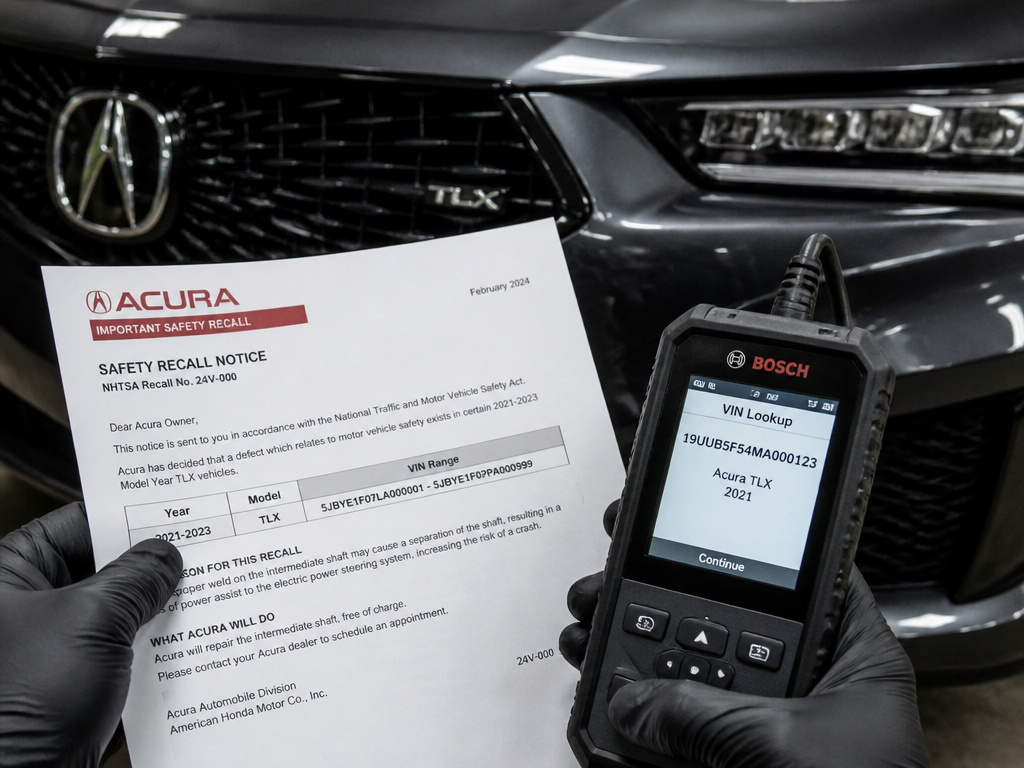
For a 2025 model, your first step is verifying the two active recalls (fuel tank, brake pedal) have been repaired. For any V6 model from 2015-2020, the connecting rod bearing recall repair is the absolute baseline. Without proof, walk away. For the four-cylinder models, the fuel pump recalls are the primary concern.
It’s a car that rewards the diligent owner and severely punishes the uninformed one. Do the paperwork, respect the Maintenance Minder, and it can be a satisfying drive. Skip those steps, and you’re buying a set of very expensive problems.
Frequently Asked Questions
Are Acura TLX cars reliable?
The TLX’s reliability is split by model year and engine. The four-cylinder models have fewer major issues than the V6. The 2015-2020 V6 models have documented, severe engine and fuel system recalls that significantly impact their reliability rating. Post-2021 models are newer but have their own recalls for fuel leaks and brake components.
What is the biggest problem with the Acura TLX?
The most severe problem is the connecting rod bearing failure in 2015-2020 V6 engines, subject to NHTSA Recall 23V-751. This is an internal engine defect that can lead to catastrophic engine failure without warning, resulting in a costly repair or replacement if the recall has not been performed.
Is the Acura TLX expensive to maintain?
Routine maintenance costs are in line with other luxury sports sedans. However, the specialized repairs related to its recalls (engine bearing service, fuel pump replacement, brake pedal assembly) are expensive if performed outside of warranty or recall coverage. Using the Maintenance Minder system diligently is the best way to control scheduled costs.
Does the Acura TLX require premium gas?
The 2.0L turbo four-cylinder can run on regular unleaded (87 octane) but will produce its rated 272 horsepower on premium (91 octane or higher). The 3.0L turbo V6, as used in the Type S, requires premium fuel to achieve its 355 horsepower rating and for optimal performance and efficiency.
Is the Acura TLX a good used car buy?
It can be, but with major caveats. A used TLX is a good buy only after you have independently verified the completion of all applicable recalls using the NHTSA VIN lookup tool and obtained a full service history. A V6 model with an open engine recall is not a good buy at any price. A well-maintained, post-recall four-cylinder model can offer strong value.
Before You Go
Your decision on an Acura TLX hinges on verification. The driving experience is there. The quality issues are documented. The difference between a great car and a financial headache is a VIN check, a sheaf of repair orders, and a commitment to the maintenance schedule. Look past the sleek body and test drive the vehicle’s history first.
