
Acura TLX Price, Performance, Engine Specs and Key Features
This post contains affiliate links. As an Amazon Associate, we earn from qualifying purchases.
The Acura TLX is a mid-size luxury sports sedan built around two turbocharged engines: a 272-hp 2.0-liter four-cylinder and a 355-hp 3.0-liter V6. Standard front-wheel drive is offered on the base model, but the defining feature is the available Super Handling All-Wheel Drive (SH-AWD) system, which can send up to 70% of torque to the rear and actively vector it side-to-side for cornering agility. Its performance, tech, and pricing position it as a compelling alternative to established German rivals.
That description covers the basics, but the real story is in the details that separate the TLX from the pack. This isn’t just about horsepower numbers or feature lists you can find on a brochure. It’s about how the engineering choices, from the specific torque curves to the rear differential’s programming, translate to the seat of your pants on a backroad or during a daily commute.
What follows is a breakdown of what the specs actually mean, where the TLX shines, where it makes compromises, and how its two distinct personalities, the efficient 2.0T and the thrilling Type S, cater to completely different buyers. By the end, you’ll know exactly which version, if any, deserves a spot on your test-drive list.
Key Takeaways
- The 2.0-liter turbo four-cylinder is the smart default, offering strong, accessible torque for daily driving and better fuel economy, but it works hardest in the heavier SH-AWD models.
- Super Handling All-Wheel Drive (SH-AWD) is the TLX’s secret weapon; it’s not just for traction, but for transforming how the car rotates through corners, making it feel more agile than its size suggests.
- The 3.0-liter turbo V6 in the Type S delivers its power lower in the rev range than the four-cylinder, providing a more effortless, muscular feel that better suits the car’s substantial curb weight.
- Rear seat and trunk space are tight for the class; the TLX prioritizes driver engagement and styling over outright passenger and cargo volume.
- Against rivals like the BMW M3 sports sedan or even its own sibling, the Acura MDX SUV, the TLX’s value proposition is its blend of sharp handling, standard features, and a lower cost of entry for performance.
The 2025 Acura TLX: Two Engines, One Clear Choice
Forget trim levels for a minute. Your first and most important decision is under the hood. The 2025 Acura TLX sedan offers two forced-induction engines that create two fundamentally different driving experiences.
The base powerplant is a 2.0-liter, 16-valve DOHC i-VTEC turbocharged 4-cylinder. Acura’s official specs list it at 272 horsepower at 6500 rpm and 280 lb-ft of torque from 1600 to 4500 rpm. Those are healthy numbers. The torque band is the key, it’s wide and flat, meaning shove is available just off idle. This engine is paired exclusively with a 10-speed automatic transmission.
The upgrade is the 3.0-liter, 24-valve DOHC turbocharged V6, reserved for the TLX Type S. It produces 355 hp at 5500 rpm and 354 lb-ft of torque from 1400 to 5000 rpm. Notice the pattern? The V6 makes more torque, earlier, and holds it even longer. The power delivery feels less strained, more authoritative.
The 2.0T’s 280 lb-ft peak torque arrives at 1600 rpm and holds to 4500 rpm. The 3.0T’s 354 lb-ft hits at 1400 rpm and doesn’t taper off until 5000 rpm. This low-end grunt is what defines the driving character more than peak horsepower.
So which one is right for you? It comes down to weight, drivetrain, and expectation.
| Engine | Best For | The Compromise |
|---|---|---|
| 2.0L Turbo I-4 (272 hp) | Front-wheel drive models, value-focused buyers, better fuel economy (up to 31 mpg highway). | Can feel busy and strained in heavier SH-AWD models when pushed. |
| 3.0L Turbo V6 (355 hp) | The full TLX experience, effortless acceleration, matching the car’s athletic chassis. | Significant cost increase, lower fuel economy (25 mpg highway), requires Type S trim. |
The four-cylinder is a good engine. But in a car that weighs over 3,900 pounds in SH-AWD A-Spec guise, it has to work. You’ll hear it more, and the transmission will hunt for gears more actively during spirited driving. The V6, with its extra displacement and two additional cylinders, moves the same mass with noticeable ease. It’s the difference between being capable and being composed.
If you want the sharp-handling Acura TLX chassis but mostly commute, the 2.0T is perfectly adequate. If you ever plan to explore a canyon road or want that silky, reserved power reserve, the V6 is the only answer. It’s not an incremental upgrade; it’s the engine this chassis deserved from the start.
Dissecting the Performance & Handling Specs
Performance is more than a dyno sheet. For the TLX, it’s a suite of systems working together to create something greater than the sum of its parts. You need to understand three core technologies to get what this car is about.
Super Handling All-Wheel Drive (SH-AWD) Explained
This isn’t your typical all-wheel-drive system. Most AWD systems are front-biased and reactive, sending power rearward only when the front wheels slip. Acura’s Super Handling All-Wheel Drive (SH-AWD) is rear-biased and proactive.
In normal driving, it can send up to 70% of the engine’s torque to the rear axle. The magic is in the rear differential. It doesn’t just split power front-to-back; it can overdrive the outside rear wheel during cornering. By making that wheel turn faster than the front wheels, the system literally helps rotate the car into the turn. It reduces understeer, the feeling of the car wanting to plow straight ahead, and makes the TLX feel surprisingly nimble.
Where this goes sideways: Assuming SH-AWD is just for snow. Its primary purpose is enhancing dry-road handling agility. Using it solely as a winter safety net misses its engineering point entirely.
The effect is tangible. You turn the steering wheel, and the car changes direction with an eagerness you don’t expect from a sedan of this size and weight. It feels planted, confident, and neutral. Compared to the standard front-wheel-drive setup, SH-AWD transforms the car’s personality. It’s the single biggest reason to upgrade from the base Technology Package.
The Integrated Dynamics System (IDS) & Agile Handling Assist
You control the TLX’s personality through the Integrated Dynamics System (IDS). It’s a dial on the center console with four modes: Snow, Comfort, Sport, and Sport+ (Type S only). Each mode adjusts throttle response, transmission shift points, steering weight, and, on Type S models, the Adaptive Damper System.
Sport is the sweet spot for backroad driving. Throttle mapping is sharper, the transmission holds gears longer, and steering weight increases for better feedback. Comfort softens everything for highway cruising. The difference is meaningful, not just a gimmick.
Working behind the scenes is Agile Handling Assist. This system uses the vehicle’s stability control brakes to lightly brake the inside wheels during cornering, further helping to rotate the car. It’s subtle but effective, another layer of technology working to make the TLX feel lighter on its feet.
Brakes, Tires, and the Unsung Heroes
Performance stops with whoa as much as go. The standard TLX uses 4-wheel disc brakes with an Electro-Servo Brake system for precise pedal feel. The TLX Type S steps up to a Brembo front 4-piston braking system with large rotors. The bite and fade resistance are in another league, perfectly matching the V6’s extra power.
Tires are the final critical contact patch. The A-Spec and Type S trims come with serious rubber. The A-Spec uses 255/40R19 all-season tires, while the Type S gets aggressive P255/35R20 97Y summer-only performance tires. That “Y” speed rating means they’re certified for over 186 mph. These tires provide the lateral grip that allows the SH-AWD and suspension systems to do their job. Swapping to less capable all-season performance tires for winter will immediately mute the car’s sharpest responses.
Interior Tech, Comfort & Practicality
Slide inside, and the TLX makes a strong first impression. The dashboard is driver-focused, with a 12.3-inch HD Precision Cockpit digital instrument cluster and a 12.3-inch HD dual-content center display. The design is clean, modern, and built with solid materials.
The Acura True Touchpad Interface
This is the most controversial element. Instead of a touchscreen, Acura uses a True Touchpad Interface. The pad is absolute, not relative, pushing the top-left corner of the pad always selects the top-left corner of the screen. It takes a few hours to build muscle memory, but it works accurately once you do. The benefit? You never smudge the screen with fingerprints, and you can operate it without taking your eyes far off the road. The downside? It’s less intuitive than simply poking a screen, especially for passengers.
ELS Studio 3D Premium Audio
One undisputed highlight is the available sound system. The ELS Studio 3D Premium Audio System, developed with Panasonic, is a 17-speaker masterpiece in the A-Spec and Type S. It’s not just loud; it’s incredibly detailed and immersive, with speakers in the ceiling to create a true surround soundstage. It’s arguably one of the best factory audio systems in any car near this price point.
The Practicality Compromise
Here’s where the TLX’s sleek, sporty silhouette demands a toll. Rear legroom is tight at just under 35 inches. Adults will find it sufficient for short trips but cramped for long journeys. The trunk offers 13.5 cubic feet of space, which is below average for the class. The rear seats do fold 60/40, providing some flexibility. If passenger and cargo space are top priorities, you’ll find more of it in the Acura MDX SUV or many German competitors.
Safety & Driver-Assist Technology Overview
The TLX comes standard with a comprehensive suite of safety tech under the AcuraWatch umbrella. These systems are designed to assist, not replace, an attentive driver. Understanding their limitations is as important as knowing their features.
The core systems include: * Collision Mitigation Braking System (CMBS): Can apply brake pressure if a frontal collision is deemed unavoidable. * Adaptive Cruise Control (ACC) with Low-Speed Follow: Maintains a set distance from the car ahead, even in stop-and-go traffic. * Lane Keeping Assist System (LKAS): Provides gentle steering torque to help keep the car centered in its lane. * Road Departure Mitigation: Can apply steering and braking if the car is about to leave the road without a turn signal.
Important note: Every one of these systems has disclaimers in the 2025 Acura TLX service manual stating they “cannot detect all objects” and that accuracy varies based on weather, speed, and road conditions. The driver is always ultimately responsible. They are aids, not autonomous systems.
Higher trims add a Surround-View Camera System (incredibly useful for parking), a Blind Spot Information System, and a Rear Cross Traffic Monitor. The tech is competitive and generally works well, though some rivals offer more advanced semi-autonomous highway driving capabilities.
TLX vs. The Competition: Where It Fits
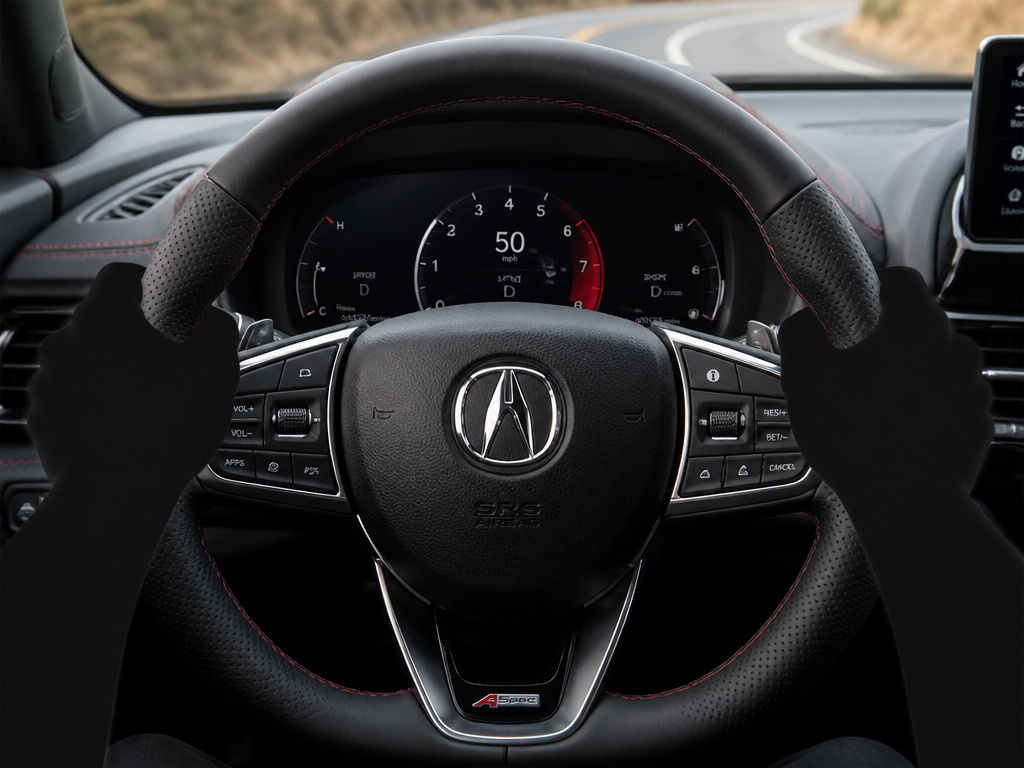 The luxury sports sedan segment is fiercely competitive. The TLX doesn’t try to beat the Germans at their own game everywhere. Instead, it carves out a specific niche.
Value & Standard Equipment: A well-equipped TLX A-Spec with SH-AWD undercuts a similarly powerful BMW 330i xDrive or Audi S4 by a significant margin. It also comes with more standard features, like the excellent audio system and advanced AWD, that are costly options on the Germans.
Driving Character: The TLX, especially with SH-AWD, offers a uniquely balanced and agile feel. It’s more engaging and less sterile than a Lexus IS, and its steering feel is often praised as more communicative than some electric-assisted German racks. It lacks the raw, track-focused edge of an iconic BMW M3 sports sedan but is far more livable daily.
Brand & Interior Space: This is where the trade-off happens. The Acura badge doesn’t carry the same cachet as BMW, Mercedes, or Audi for some buyers. And as noted, you sacrifice rear seat and trunk space for the TLX’s styling and driving dynamics. If space is non-negotiable, you look at an SUV or a different sedan.
The TLX is for the driver who prioritizes the act of driving over badge prestige or maximum interior volume. It’s a thinking person’s sport sedan that delivers 90% of the dynamic thrill at 80% of the cost.
Ownership Costs & Considerations
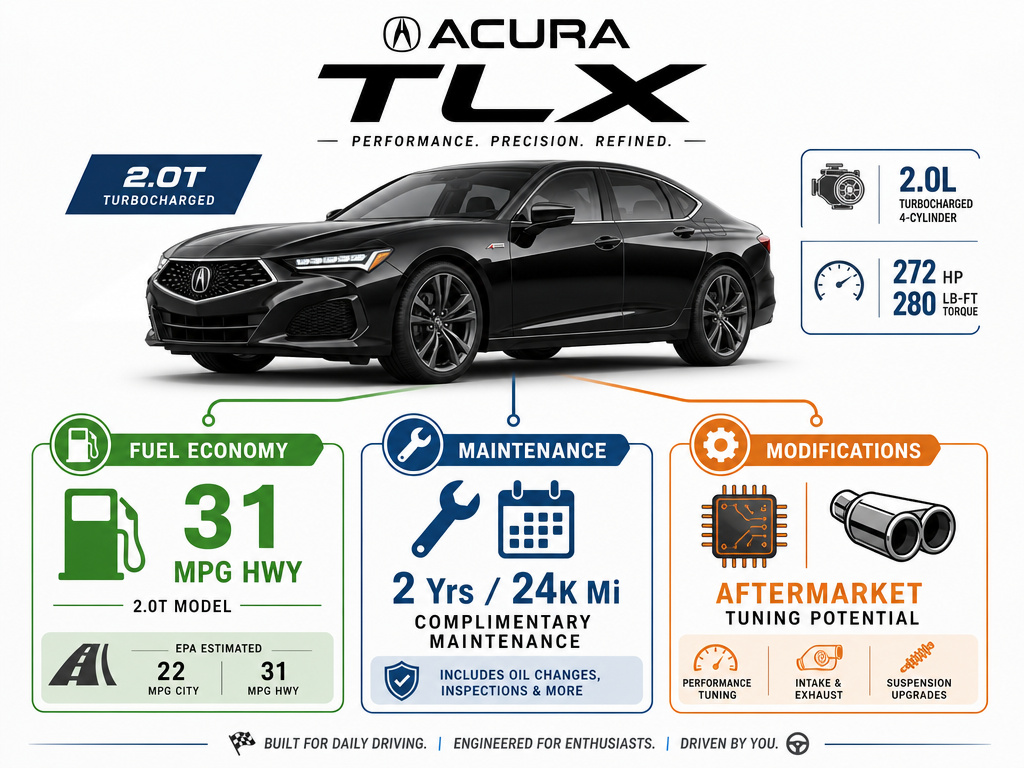 Let’s talk about what happens after you drive it off the lot. The TLX is built on Honda’s reputation for reliability, which generally translates to lower long-term ownership costs than many European rivals. It uses a proven 10-speed automatic transmission and engines derived from high-volume designs.
Fuel Economy: The 2.0T FWD model is rated for up to 31 mpg highway. The SH-AWD models drop to 29 mpg highway. The Type S V6 manages 25 mpg highway. These are reasonable for the performance offered, but not class-leading.
Maintenance: Acura includes complimentary scheduled maintenance for the first two years or 24,000 miles. Following the Maintenance Minder system is crucial. The turbocharged engines and sophisticated SH-AWD system demand high-quality synthetic oils and fluids. DIY is possible for basics, but complex systems mean dealer visits for major services. Always consult the official Acura technical specifications for procedures.
Modification Potential: The platform has a growing aftermarket. The 2.0T engine, in particular, responds well to basic engine tuning chips and intake/exhaust modifications for noticeable power gains. The Type S community focuses more on suspension, brake pad, and tire performance upgrades. As with any modern turbocharged car, pushing power too far without supporting mods risks the warranty and long-term health.
Frequently Asked Questions
Is the Acura TLX faster than the Acura Integra?
The TLX, in any form, is significantly faster than the front-wheel drive Integra. The Integra’s 1.5L turbo makes 200 hp. Even the base TLX 2.0T has 272 hp, with a heavier but much more powerful punch. The Type S is in a different universe altogether.
What is the main difference between the TLX A-Spec and Type S?
It’s almost entirely about the engine and the hardware to support it. The Type S gets the 3.0L V6, an Adaptive Damper System, bigger Brembo brakes, summer performance tires, a Sport+ driving mode, and unique interior/exterior styling cues. The A-Spec is primarily an appearance and feature package on the 2.0T.
Can you get a TLX with front-wheel drive?
Yes, but only in the base TLX with Technology Package. The A-Spec and Type S trims are exclusively offered with Super Handling All-Wheel Drive (SH-AWD).
How does the TLX’s SH-AWD compare to Audi’s Quattro?
They have different philosophies. Audi’s traditional Quattro (with a Torsen center diff) is a purely mechanical, reactive system focused on traction. Acura’s SH-AWD is an electronically controlled, proactive system focused on handling agility. SH-AWD can vector torque side-to-side at the rear axle, which most Quattro systems cannot do. For dry-road fun, SH-AWD feels more active. For all-weather confidence, both are excellent.
Is the TLX a good daily driver?
Absolutely. In Comfort mode, the ride is compliant, the cabin is quiet, and the standard safety tech is comprehensive. The tight rear seats are the main daily drawback for families. For a single person or couple, it’s a comfortable, engaging, and reliable daily commute.
The Bottom Line
The Acura TLX is a sedan with a clear point of view. It doesn’t try to be all things to all people. It sacrifices some rear-seat space and ultimate brand prestige to deliver a driving experience that is uniquely engaging and technologically interesting.
For the majority of buyers, the TLX A-Spec with the 2.0T and SH-AWD is the recommendation. It delivers the core handling magic, plenty of power for real-world driving, and a fantastic feature set at a sensible price. Only step up to the Type S if you must have that effortless V6 thrust and are willing to pay the premium for it.
It stands as a compelling alternative for the enthusiast who values the drive over the badge. Before you consider more expensive German options or less engaging luxury appliances, the TLX deserves a long, winding test drive. You might just find its specific blend of agility, tech, and value is exactly what you’ve been looking for.
