
Acura Integra: All Wheel Drive or Front Wheel Drive? Facts
This post contains affiliate links. As an Amazon Associate, we earn from qualifying purchases.
No, Acura Integras are not all-wheel drive. Every trim of the current-generation Integra, from the base model to the 320-horsepower Type S, uses a front-wheel drive (FWD) layout. The platform is engineered around this configuration, leveraging a turbocharged engine, available helical limited-slip differential, and adaptive suspension to deliver handling that makes the lack of AWD a non-issue for its intended sport-sedan role.
That front-wheel drive fact isn’t a compromise. It’s the core engineering decision that defines the Integra’s character, its relationship to the Honda Civic Si, and its position in the market. Understanding why Acura stuck with FWD, and what they did to make it work, tells you more about the car than any spec sheet.
What follows: a breakdown of the drivetrain specs that confirm the FWD layout, the performance philosophy that justifies it, a head-to-head look at what you gain and lose versus AWD rivals, and the one scenario where you might genuinely wish for all-wheel drive.
Key Takeaways
- Every 2026 Acura Integra model is front-wheel drive (FWD). There is no factory all-wheel drive (AWD) option for any trim.
- The platform prioritizes low weight, sharp steering response, and predictable handling, traits often enhanced by a well-tuned FWD layout over a heavier AWD system.
- Available performance hardware, like the helical limited-slip differential (on A-Spec Tech and Type S) and adaptive dampers, mitigates traditional FWD drawbacks like torque steer and understeer.
- Compared to AWD rivals like the Audi A3 Quattro, the Integra trades ultimate all-weather traction for a lighter, more engaging, and mechanically simpler driving experience.
- If deep-snow capability is your primary concern, you are looking at the wrong car. The Integra is a sport-oriented hatchback, not a winter warrior.
Are Any Acura Integras All-Wheel Drive?
The short answer is no, and it has always been no for the modern revival. Scouring the official Acura technical specifications for the 2023–2026 model years reveals one consistent drivetrain listing: Front-Wheel Drive. This applies across the board.
The 2026 Acura Integra Specifications and Features document lists “Drivetrain: Front-Wheel Drive” for every trim (Integra, A-Spec, A-Spec with Technology Package, Type S). The available transmissions are a Continuously Variable Transmission (CVT) or a 6-speed manual, but the driven wheels remain the front two.
This isn’t an oversight or a missing option package. The Integra is built on the same global compact platform as the Honda Civic. That architecture is designed for transverse-mounted engines driving the front wheels. Adding a rear differential, driveshaft, and related hardware for all-wheel drive would require a fundamental redesign Acura has not pursued.
Where this goes sideways: Assuming a “luxury” badge automatically means AWD. Many entry-luxury sedans offer AWD, but the Integra’s mission is different. It’s a sportback first, leveraging its shared roots with the performance-focused Honda Civic Si. That heritage is fundamentally front-wheel drive.
The Performance Reality of Front-Wheel Drive
Why would Acura, a brand with SH-AWD technology in its arsenal, choose FWD for a modern sports sedan? The rationale is about purity, not poverty.
A front-wheel drive layout is inherently lighter and mechanically simpler than an AWD system. There’s no center differential, no prop shaft running to the rear, and no rear differential. This saves weight, a critical factor for agility and fuel efficiency. That weight is also concentrated over the front axle, which, when managed correctly, can lead to exceptionally direct steering feel.
The challenge with powerful FWD cars is torque steer (the steering wheel pulling under hard acceleration) and understeer (the car wanting to plow straight in a tight corner). Acura’s countermeasures are specific and effective:
- Helical Limited-Slip Differential (LSD): Available on the A-Spec with Technology Package and standard on the Type S. This hardware sends power to the front wheel with more grip, reducing inside-wheel spin and torque steer when you accelerate out of a corner. It’s a transformative piece of kit for a FWD car.
- Adaptive Dampers: Paired with the LSD on the Tech Package and Type S, these stiffen the suspension in Sport modes to reduce body roll and keep the front tires planted.
- Strategic Engine Placement: The turbocharged 1.5L and 2.0L engines are mounted transversely and set back in the chassis for better weight distribution, moving closer to the ideal 60/40 front/rear split.
The result is a car that feels nailed to the road. The steering communicates directly, and the LSD lets you use the 200 or 320 horsepower to pull you out of bends, not just push you wide. For a winding back road, this setup is often more engaging than a passive AWD in sedans that simply adds grip without character.
Integra vs. The AWD Competition
So, you’re cross-shopping the Integra. Your list probably includes the Audi A3, the BMW 2-Series Gran Coupe, and maybe the Mercedes-Benz CLA. All offer AWD. Does the Integra’s FWD put it at a disadvantage? It depends entirely on what you value.
| Consideration | Acura Integra (FWD) | Typical AWD Rival (e.g., Audi A3 Quattro) |
|---|---|---|
| Dry/Rainy Road Handling | Lighter, more direct steering feel. Potentially more engaging. | Maximum grip off the line, stable in high-speed sweepers. |
| Deep Snow/Ice Capability | Limited. Requires quality snow tires and caution. | Superior. The default choice for severe winter climates. |
| Mechanical Complexity | Simpler. Lower long-term maintenance cost potential. | More complex. More parts (differentials, couplings) that could eventually need service. |
| Fuel Efficiency | Slight edge due to reduced drivetrain weight and friction. | Minor penalty due to added weight and mechanical drag. |
| Driving Character | “Pulls” you through corners. Rewards smooth, balanced inputs. | “Pushes” you with all-four grip. Can feel more secure but less playful. |
The Audi A3 with Quattro is the archetype here. It’s a fantastic, secure all-weather sedan. But that security comes with a different flavor. The AWD system adds weight over the nose, which can dull the steering feedback the Integra thrives on. The BMW X3 with xDrive or a Ford Escape with AWD are different propositions entirely, they’re SUVs where AWD is often about capability, not sportiness.
The part nobody mentions: For 95% of driving in moderate climates, the difference in traction between a well-equipped FWD car like the Integra and a standard AWD sedan is negligible. The legal limit on an on-ramp isn’t tire grip; it’s your common sense. The Integra’s capabilities of all-wheel drive aren’t needed for daily commuting, even in the rain.
What About the Acura Integra Type S?
The 320-horsepower Integra Type S is the most powerful car ever to wear the Integra badge. Pumping that much power through the front wheels might seem like an engineering challenge begging for AWD. Acura’s answer, again, is focused hardware, not a new drivetrain.
The Type S gets a more aggressive version of the helical LSD, a fortified 6-speed manual transmission, and a specially tuned adaptive suspension. The goal is to manage power delivery with precision, not just add more grip everywhere. This philosophy creates a driver’s car that requires skill and rewards it, separating it from the point-and-shoot nature of some turbo AWD sports sedans.
It also keeps the car true to its heritage. Historic Integra Type R models were celebrated for their high-revving, FWD balance. The new Type S follows that template, not the all-weather, all-grip template of a German competitor. If you want the raw numbers and all-weather security of something like an Audi A4 or a Chevrolet Camaro, you’re looking at a different performance doctrine.
Could There Ever Be an AWD Integra?
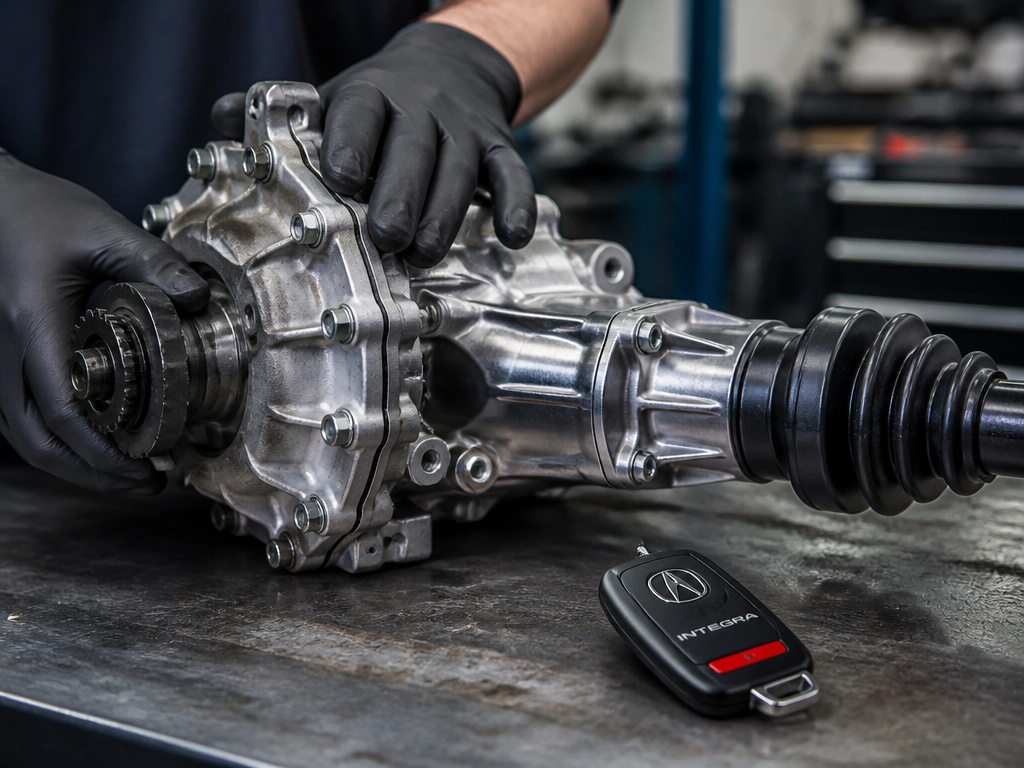
Given the current platform and corporate strategy, a factory AWD Integra is highly unlikely. The costs of engineering and certifying an AWD variant for a relatively low-volume model are prohibitive. Acura already has SH-AWD reserved for its larger, more premium models like the TLX.
Furthermore, it would alter the car’s fundamental identity. Adding AWD would increase weight, complexity, and cost, potentially diluting the sharp, affordable sportiness that defines the Integra against AWD sedans from Europe. The market niche for a compact, manual-transmission, AWD luxury sports hatchback is tiny.
For those who absolutely must have AWD in this segment, the choices are clear: the Audi A3 Quattro, the BMW 2-Series Gran Coupe with xDrive, or the Mercedes-Benz CLA. The Integra exists for those who prioritize driving engagement and mechanical purity over that specific drivetrain configuration.
The Bottom Line
The Acura Integra is not, and will likely never be, an all-wheel drive car. That’s a feature, not a bug. Its front-wheel drive layout is central to its mission as a lightweight, engaging, and affordable sportback. The available limited-slip differential and sophisticated suspension transform traditional FWD weaknesses into strengths, offering a driving experience that is often more rewarding than a basic AWD system’s secure but numb grip.
Choose the Integra if you value steering feel, mechanical simplicity, and a direct connection to the road. Look elsewhere if your primary concern is conquering unplowed mountain roads or you simply must have power sent to all four wheels. The Integra knows what it is, a brilliant front-wheel drive sports car, and it delivers on that promise without apology.
Frequently Asked Questions
Why did Acura make the Integra front-wheel drive?
Acura built the Integra on the Honda Civic platform to control costs and maintain a lightweight, agile character. Adding AWD would have significantly increased weight, complexity, and price, moving the car away from its sporty, accessible roots. The engineering focus was on enhancing FWD, not replacing it.
Is the Acura Integra good in the snow?
With a set of high-quality winter tires, the Integra is adequate for light to moderate snow. However, it is not a dedicated winter vehicle. Its low ground clearance and performance-oriented tires (in summer) make it less capable than any all-wheel-drive car or SUV with proper snow tires. For severe winter climates, a vehicle with AWD or 4WD is a better choice.
What does the limited-slip differential do on a front-wheel drive car?
Helical limited-slip differential (LSD) sends power to the front wheel with more traction. During hard cornering, it prevents the inside wheel from spinning uselessly, putting more power down to pull the car through the turn. This reduces understeer and torque steer, dramatically improving the grip and stability of a powerful FWD car like the Integra Type S.
How does the Integra’s FWD compare to Audi’s Quattro?
Audi’s Quattro is a superb AWD system designed for all-weather security and high-grip launches. The Integra’s FWD, especially with its LSD, is designed for engagement and agility. Quattro offers more confidence in snow and ice. The Integra offers more direct steering feedback and a lighter, more playful feel on a dry road. They prioritize different aspects of performance.
Are there any aftermarket AWD conversions for the Acura Integra?
No reputable aftermarket company offers an AWD conversion for the modern Acura Integra. Such a conversion would be astronomically expensive, require extensive custom fabrication, completely ruin the vehicle’s warranty and engineering balance, and likely result in an unreliable vehicle. It is not a feasible or sensible modification.
