
How Safe Are Electric Scooters for Commuting? We Have Data
This post contains affiliate links. As an Amazon Associate, we earn from qualifying purchases.
Electric scooters are safe for commuting when you treat them like a vehicle, not a toy, the safety equation has three non-negotiable layers: your protective gear, the scooter’s certified construction, and the environment you ride in. Missing any one layer multiplies the risk, as peer-reviewed data shows head injuries account for over half of all reported scooter trauma and helmet usage hovers below 3% in hospital admissions.
The “treat them like a vehicle” clause is the pivot point. Most commuter risk comes from the mismatch between scooter speed and rider mindset. People step onto a device that can hit 16 mph thinking it’s a sidewalk toy, but the physics of a 28-year-old hitting pavement at that speed don’t care.
What follows is a breakdown of the three-layer safety model, grounded in manufacturer manuals, warranty fine print, and the medical studies that track where riders actually get hurt. You’ll see why a certified scooter is only one-third of the answer, and why your local bike lane status matters more than any marketing claim.
Key Takeaways
- Head and face injuries make up 58% of e-scooter collision trauma according to a South Korean hospital study, this is the single biggest statistical risk you face.
- Manufacturer warranties often void coverage for water damage and battery capacity loss below 70%, turning a single puddle splash or a year of daily charging into a several-hundred-dollar repair bill.
- Riding on the sidewalk is statistically more dangerous for you and pedestrians; a Portland study found sidewalk riding jumped from 18% to 66% of trips when street speed limits increased, showing infrastructure dictates behavior.
- Certified scooters (ANSI/CAN/UL-2272) are tested for electrical and fire safety, but that certification says nothing about braking distance on wet pavement or stability over potholes.
- The usable temperature window for most scooters is 50–95°F (10–35°C); riding outside this range degrades battery performance and tire traction, a spec buried in the manual that changes your winter commute plan.
The Three-Layer Safety Equation
Safety depends on the interaction between you, the machine, and the road. A flaw in any one of these layers can collapse the whole system.Most guides talk about helmets and brakes. They miss the interconnectedness, the reason a certified scooter on a wet sidewalk with an unprotected rider is a known injury pattern.
The 2021 Chalmers University review of global e-scooter studies identified a “dire need for analysing interactions of e-scooters with other road users” and noted that “head and face injuries are the most common injury types.” This research underscores that safety is a systemic issue, not just a product checklist.
Your first layer is the rider. This is the only layer you have complete control over, and the data on how few people use it is startling.
The Rider: Gear, Sobriety, and the 58% Head Injury Stat
If you remember one number from this article, make it 58%. In a study of emergency department records in South Korea, head injuries accounted for 58.1% of e-scooter collision damage. A separate U.S. Hospital review found the helmet usage rate for admitted patients was 2.5%. The correlation isn’t subtle.
A helmet is non-negotiable. Use a bicycle or skateboard helmet that fits and is fastened. Elbow and knee pads are not overkill; they address the second most common injury zone: extremities.The attire prioritizes abrasion resistance over looks. A long-sleeve shirt and gloves turn a slide across asphalt from a skin-graft event into a bad scrape.
Sobriety is the other half of the rider layer. Studies repeatedly flag “riding under the influence” as a contributing factor in collisions. The Ninebot manual states it plainly: “Do not ride under the influence of alcohol or drugs.” Your reaction time and balance are the scooter’s primary safety systems. Compromise them, and you’ve switched off the airbag before a crash.
The Machine: UL Certifications and What They Don’t Cover
When you look at a scooter’s specs, the safety benchmark is ANSI/CAN/UL-2272. This standard, performed by labs like TUV Rheinland for brands like Ninebot, tests the electrical system and battery for fire and shock risk. If a scooter has this certification, it means the battery management system should prevent thermal runaway under normal conditions. It’s a crucial baseline, you should never buy a commuter scooter without it.
But here’s the gap: UL-2272 doesn’t test real-world performance. It doesn’t measure braking distance on a 10% grade hill. It doesn’t certify that the folding mechanism won’t fail after 5,000 cycles. It says nothing about water ingress beyond basic spray tests. A scooter can be UL-certified and still have a brake that fades after three hard stops, or a tire that slips on painted road lines.
This is where you move from certification to brand reputation. Companies like Segway (Ninebot) and Razor have long-term product cycles and published manuals with clear error codes (like the SoFlow SO3‘s E2 for brake error). A known brand with a downloadable service manual is a safer bet than a no-name brand with identical specs. The former has a track record; the latter has a track record of disappearing when you need a replacement motor.
Where this goes sideways: Assuming certification equals total safety. UL-2272 prevents battery fires. It does not prevent a broken wrist from a pothole impact. That’s on the mechanical design, which varies wildly between a $300 and an $800 model.
The Environment: Sidewalk vs. Street vs. Bike Lane
This is the most contentious and variable layer. Where you ride dictates your risk profile more than any scooter feature. The common assumption, sidewalks are safer, is wrong.
A study in Provo, Utah, found only 34.6% of riders complied with local law to ride exclusively on the street. The majority rode on sidewalks, and 64.7% weren’t even aware it was illegal. This matters because sidewalk riding is “overall more dangerous for users and much more likely to lead to pedestrian injuries,” as the researchers noted. You face driveways, uneven slabs, pedestrians, and blind corners at doorways.
The street introduces vehicle traffic. The ideal middle ground is the bike lane. Protected bike lanes are the single biggest infrastructure factor for rider safety. The Portland study showed that sidewalk riding dropped to 8% where a protected bike lane existed, compared to 39% with no bike facilities. Your commute route’s bike lane network is a tangible safety feature.
| Riding Surface | Primary Risk | Best For | Risk If Ignored |
|---|---|---|---|
| Sidewalk | Pedestrian collision, uneven surfaces | Last-resort, short stretches | Higher injury severity for you and others; often illegal. |
| Bike Lane | Cyclist traffic, door zones (if unprotected) | Daily commuting | Misses the safest infrastructure; forces you into car traffic. |
| Street (with traffic) | Vehicle collision, higher speed | Necessary connectors | Requires vehicular riding confidence; illegal in many urban cores. |
The takeaway is proactive route planning. Before you commit to a scooter commute, map it on a bike lane map. If your route is 80% unprotected street riding with 35 mph traffic, the scooter itself might be safe, but the environment isn’t.
The Scooter’s Own Safety Net (and Its Limits)
Manufacturers build in safety features, but they also build in limitations. Understanding both is key to using the tool without breaking it, or yourself. The manual is not a suggestion pamphlet; it’s a liability document that tells you exactly what voids your warranty and why.
Battery & Charging: The Thermal Rules
Lithium-ion batteries hate two things: temperature extremes and improper charging. The Ninebot KickScooter ZING C series manual specifies an operating range of 50–95°F (10–35°C). Store it outside that range, and you degrade the battery. Try to ride in freezing temps, and you’ll get reduced power and range because chemical reactions inside the cells slow down.
Charging has strict timers for a reason. The Ninebot SNES2 manual warns: “Never exceed 6 hours of charging for a vehicle or 2 hours for a controller.” The Razor manual states a maximum charging time of 24 hours. These limits are set to prevent overcharging, which stresses the battery management system. Use only the provided charger, indoors, in a dry place. Charging a wet scooter or using a third-party charger isn’t just risky; it instantly voids your warranty on every brand’s terms.
Easy to miss: Battery warranty is often shorter. The Walksmart/Ninebot warranty gives 12 months for the scooter but only 6 months for the battery. The fine print states the battery is only covered if it holds less than 70% capacity at 25°C, a test you can’t perform at home. Your battery’s performance will fade, and you’ll likely bear the replacement cost.
Braking Systems: Friction Meets Regeneration
Most commuter scooters use a combination of electronic (regenerative) braking and a mechanical brake (foot, drum, or disc). The manual for the Ninebot ES series is blunt: “Always use both electric brake and foot brake for emergency stopping.” Why? The electronic brake alone may not provide maximum deceleration, especially on a hill or if the battery is full and can’t accept regeneration energy.
The SoFlow SO3 manual explicitly warns of “extended braking distance on wet surfaces.” This is physics, not a defect. Your stopping distance can double on wet pavement. The rule is simple: slow down in wet conditions and increase your following distance from obstacles. Test your brakes at low speed in a safe area when the scooter is new and after any tire change.
Water Resistance: The “Damp” vs. “Submerged” Lie
No major-brand commuter scooter is waterproof. They are water-resistant to varying degrees. The SoFlow manual says to avoid “puddles of water because the water could damage the engine or the electricity.” The Ninebot manual states, “Do not ride the scooter in the rain.”
Water damage is a warranty killer. Ingress into the battery compartment or motor hub can cause short circuits and corrosion. It’s not covered. If your daily commute has a high chance of rain, you need a plan: public transit backup, a scooter with a higher IP rating (look for IP54 or higher), or a quality waterproof cover for when you’re parked. Relying on a standard model in daily rain will end in a repair bill.
The Statistical Reality: What Actually Happens to Riders
Beyond the manuals and specs, real-world data paints a clear picture of scooter risk. This isn’t scare talk; it’s pattern recognition from hospital systems and academic reviews. Knowing the patterns lets you defend against the most likely threats.
A 2023 integrative review published by Chalmers University of Technology compiled studies from emergency departments across the world. The consensus: riders involved in collisions are predominantly male, aged 20-40, and head injuries are the most frequently reported. Riding under the influence and lack of helmet use are repeatedly cited contributing factors.
The PubMed Central scooter injury study from Provo, Utah, provided granular behavioral data. It found that women were more likely to ride on sidewalks than men, citing safety perception, a reminder that infrastructure feels different depending on who you are. The study also noted that 5% of riders were under 18, despite rental policies requiring adulthood, highlighting an enforcement gap.
The stats reveal a toolkit for your own safety: 1. You are the outlier if you wear a helmet. Make that your advantage. 2. Night riding increases injury incidence. If you commute after dark, invest in bright lights and reflective gear beyond the scooter’s minimum. 3. The first few rides are high-risk. The learning curve is real. Practice in an empty parking lot for at least 30 minutes. Get a feel for the acceleration curve and the brake grab.
| Injury Pattern (from studies) | Most Likely Cause | How to Mitigate |
|---|---|---|
| Head/Face Injuries (~58%) | Fall without helmet, collision | Wear a certified helmet. Every ride. |
| Upper Extremity Fractures | Falling and bracing impact | Wear wrist guards; learn to tuck and roll. |
| Lower Extremity Abrasions/Fractures | Direct impact with curb/pothole | Wear knee pads, long pants; scan path ahead. |
| Dental/Facial Lacerations | Face-first fall | Full-face helmet if riding at higher speeds (>15 mph). |
These are predictable outcomes of kinetic energy meeting human bodies and hard surfaces. The scenario, not the scooter itself, causes them.Your job is to avoid the scenarios.
Commuter-Specific Risks and Mitigations
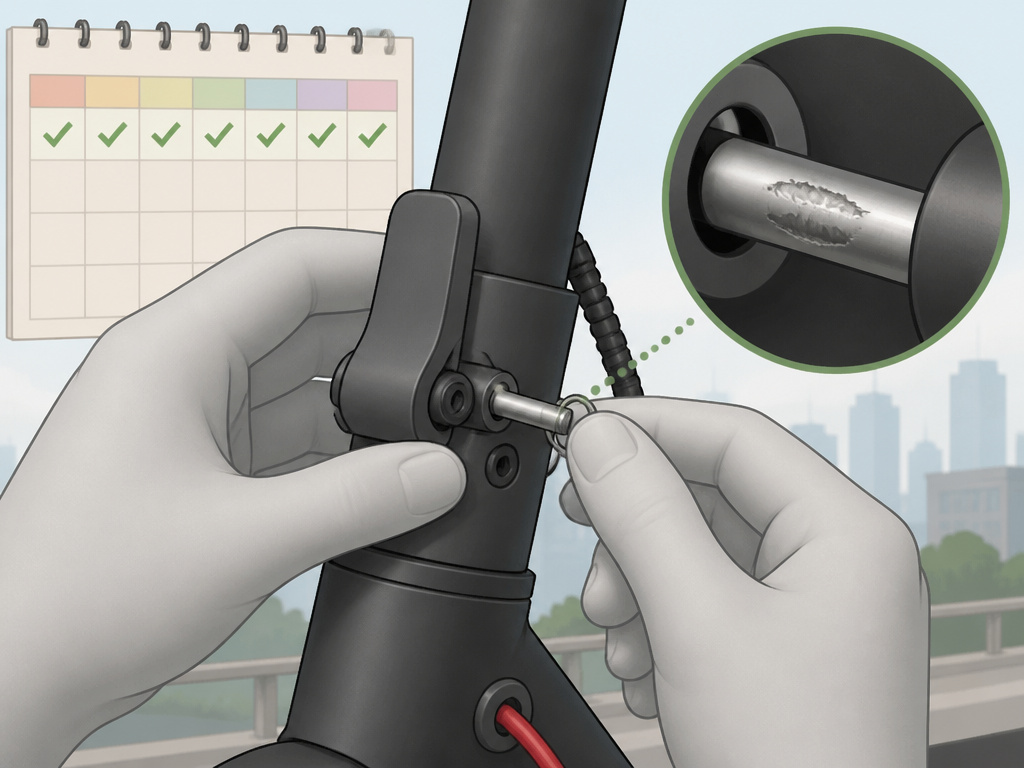
A commuter faces challenges a recreational rider doesn’t: consistent daily mileage, all-weather urgency, locking up at destinations, and mixing with urban traffic. These add layers of wear and decision-making.
Daily Wear: Tires, Brakes, and Folding Mechanisms
A scooter used five days a week will consume tires and brake pads. Solid tires wear slowly but offer a harsher ride; pneumatic tires grip better but can puncture. Check tire pressure weekly if you have air-filled tires. Listen for brake squeal and test stopping distance every few weeks. A fading brake doesn’t announce itself, you discover it when you need it.
The folding mechanism is a major point of failure on portable folding scooters. Latches and locking pins endure stress. Check for play or creaking at the fold joint before each ride. If it feels loose, don’t ride it. This is a known failure point that manufacturers often list in their “parts subject to wear” warranty exclusion.
Theft and Parking: The Urban Hassle
You can’t just lean it against a coffee shop window. A commuter scooter needs a lock strategy. Use a sturdy U-lock through the frame (not just the stem). If your office has a bike room, use it. The convenience of a scooter vanishes if you’re anxious about it for eight hours. Consider a model with a built-in alarm or GPS tracker if you regularly park in public.
Route Familiarity vs. Complacency
Your daily route becomes second nature. That’s the danger. Complacency means you stop scanning for new potholes, fresh gravel, or changed traffic patterns. Make a monthly habit of actively re-assessing your commute. Has a construction zone appeared? Has a bike lane been added? This proactive habit breaks the autopilot that leads to surprises.
Before You Go: The Commuter’s Checklist
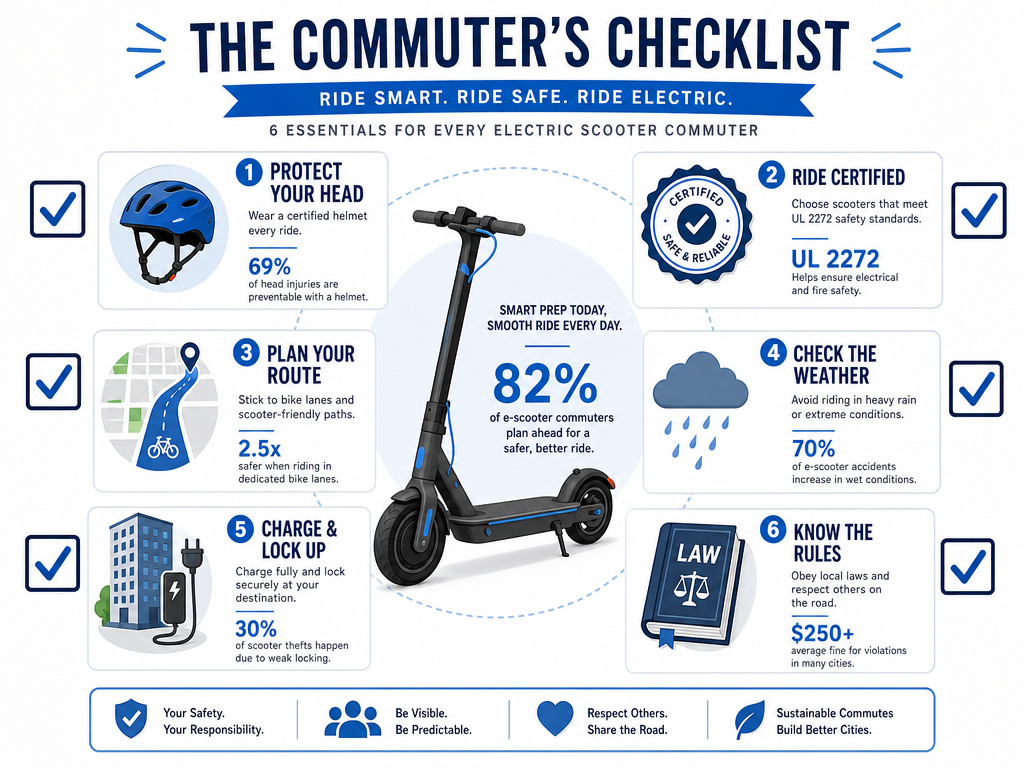
Safety is a stack of small, consistent actions. Here’s the pre-commitment checklist. If you can’t tick these boxes, reconsider your scooter commute plan.
- Helmet & Gear: Purchased, fitted, and in your backpack or at your desk.
- Scooter Certification: Confirmed ANSI/CAN/UL-2272 certification (check manufacturer website).
- Route Scouted: Mapped on a bike lane map. Dry-run on a weekend to time it and spot hazards.
- Weather Plan: Know your scooter’s water resistance limit and have a backup transit plan for rain.
- Storage & Charging: Secure indoor location at both ends of your commute. Dedicated outlet and timer for charging.
- Local Laws Understood: Checked city regulations for sidewalk legality, bike lane access, and helmet requirements.
The bottom line is this: electric scooters are a viable, fun commuting tool, but they demand respect. The data shows the injuries are predictable and largely preventable. The manuals outline the machine’s limits in stark terms. Your safety is the product of your gear, your route, and your vigilance, not just the sticker on the scooter’s deck.
Frequently Asked Questions
Are electric scooters safe for beginners?
They can be, but the first 10 hours are the most critical. The controls are simple, but balancing at speed while managing throttle and brake is a new skill. Start in a traffic-free area like an empty parking lot. Practice emergency stops, slow-speed turns, and navigating over small bumps. Most importantly, wear all your protective gear during this learning phase, that’s when you’re most likely to fall.
How often do electric scooters catch fire?
Fires in UL-2272 certified scooters are extremely rare. The certification standard is specifically designed to prevent battery thermal runaway through rigorous electrical and battery system testing. The greater risk comes from using damaged or third-party chargers, charging a wet or damaged scooter, or physically puncturing the battery pack. Stick to the manufacturer’s charging instructions and inspect your scooter regularly.
Is it safe to ride an electric scooter at night?
It is significantly less safe than daytime riding. Visibility is reduced for you and for drivers. If you must ride at night, you need more than the scooter’s built-in lights. Add a bright, rechargeable front headlight (200+ lumens), a red rear blinker, and reflective clothing or strips on your helmet and backpack. Assume drivers cannot see you.
Can I carry a passenger on my commuter scooter?
No. Every manufacturer’s manual states “one rider only.” The frame, brakes, and motor are not designed for the extra weight and shifted center of gravity. Carrying a passenger makes the scooter unstable, drastically increases stopping distance, and voids your warranty. It’s also illegal in virtually all jurisdictions.
What should I do if my scooter gets caught in the rain?
Get it dry as soon as possible. Wipe down the entire scooter, focusing on the deck, charging port, and display. Do not charge it until you are absolutely certain it is completely dry inside and out, wait 24 hours if possible. Listen for any unusual sounds on your next ride. If you notice reduced power, error codes, or brake issues, contact a service center. Remember, water damage is almost never covered under warranty.
Are more expensive electric scooters safer?
Often, yes, but not automatically. A higher price typically buys you more robust construction (e.g., a steel or aluminum frame vs. Cheaper alloys), better brakes (disc vs. Drum), a more sophisticated battery management system, and sometimes a higher water resistance rating (IP rating). However, a safe rider on a well-maintained, certified mid-range scooter is far safer than a reckless rider on a premium model. Your behavior is the largest safety variable.
The Bottom Line
Electric scooters are safe enough for commuting if you are. The machine’s certification is a starting line, not a finish line. Your helmet, your knowledge of local bike lane rules, and your refusal to ride through a puddle are what complete the safety circuit. The injury statistics point to clear, avoidable patterns, primarily head trauma from unhelmeted falls. You have the data and the manufacturer’s own warnings. The choice to stack the odds in your favor is yours. Commute smart, not just convenient.
