
Lane Splitting Legality Explained: What It Is & State Laws
This post contains affiliate links. As an Amazon Associate, we earn from qualifying purchases.
Lane splitting is riding a motorcycle between lanes of stopped or moving traffic, and its legality is dictated by state law. It is explicitly legal only in California, while a handful of other states, like Colorado, have legalized lane filtering for stopped traffic. Safety studies show the practice can be relatively safe when traffic speed is under 50 MPH and the rider doesn’t exceed surrounding traffic speed by more than 15 MPH.
That specific speed differential is not a random tip. It’s the finding from California’s Office of Traffic Safety analysis of nearly 6,000 collision reports. The 2015 study changed the conversation from pure opinion to a data-backed risk assessment, and it’s the only peer-reviewed evidence we have on US soil.
The rest of this guide walks through the mechanics, definitions, legal boundaries, and the unvarnished realities of staying alive between lanes. You’ll see the hard numbers on injury rates, the exact state statutes that matter, and the split-second judgments that separate a savvy rider from a statistic.
Key Takeaways
- Lane splitting is explicitly defined and legal only in California, while lane filtering is legal in Colorado, Utah, Montana, and Hawaii.
- A state-sponsored study found lane splitting is relatively safe only when traffic is moving at 50 MPH or less and the rider’s speed differential is under 15 MPH.
- Physical hazards like raised pavement markers (Bott’s dots), uneven lanes, and car doors are cited in official safety literature as major risks.
- Lane filtering is legally distinct and typically only permitted when traffic is fully stopped, often with a speed cap around 15 MPH.
- Rider judgment is paramount; even where legal, you can be held liable if an accident occurs and your actions are deemed unsafe.
Lane Splitting vs. Filtering: What’s the Difference?
It’s more than semantics. The legal distinction dictates where, when, and how you can move between cars, and getting it wrong can turn a legal maneuver into a citation or worse.
Lane splitting is the broader term, defined in the California lane splitting law as operating a two-wheeled motorcycle “between rows of stopped or moving vehicles in the same lane.” This includes freeway traffic crawling at 10 MPH or flowing at 45 MPH. It’s the practice most riders envision.
Lane filtering is a subset applied almost exclusively to stopped traffic. Colorado’s law, SB 24-079, permits it only when other vehicles are “stopped” and the motorcycle’s speed does not exceed 15 MPH. Once cars start moving, filtering must stop. This is a critical limitation. Understanding this state-by-state studded tire law variation is as important as knowing your local helmet safety rules. Mixing the two terms confuses the legal limits and leads to risky assumptions.
Common mistake: Assuming filtering laws let you weave between slow-moving traffic. In states like Colorado, the law is clear, traffic must be stopped. Rolling at 5 MPH doesn’t count.
| Term | Traffic Condition | Typical Speed Limit | Primary Jurisdiction |
|---|---|---|---|
| Lane Splitting | Stopped OR Moving | Varies (study suggests ≤15 MPH over traffic) | California |
| Lane Filtering | Stopped Only | Often 15 MPH or less | Colorado, Utah, Montana |
Where is Lane Splitting Legal? (The Short List)
The legal landscape is narrow and specific. Widespread public confusion about the rules, a cited problem in state reports, means you must know the letter of the law.
California stands alone. Its lane splitting statute, Vehicle Code 21658.1, explicitly authorizes the practice and empowers the California Highway Patrol (CHP) to develop safety guidelines. This legal footing is unique.
Lane filtering is the more common legal model elsewhere: * Colorado: Legal as of August 2024 under the conditions noted above. * Utah: Legal since 2021, with similar restrictions to Colorado. * Montana: Legal since 2021, permitting filtering on roads with multiple lanes in the same direction. * Hawaii: Legalized filtering in 2024.
In all other states, lane splitting or filtering is illegal. Some states, like Oregon and Texas, have seen legislative attempts fail. In these states, a rider splitting lanes isn’t just breaking a traffic rule; they’re often assumed at fault in any collision. This legal presumption makes carrying adequate insurance and wearing essential motorcycle safety equipment non-negotiable.
What Does the California Safety Study Actually Say?
Forget anecdote. The 2015 California OTS safety report analyzed 5,969 motorcycle collisions. Of those, 997 riders were lane-splitting. The data comparison between splitters and non-splitters is the closest thing to a scientific fact we have on the subject.
Lane-splitting motorcyclists were less likely to suffer head injury (9% vs 17%), torso injury (19% vs 29%), extremity injury (60% vs 66%), and fatal injury (1.2% vs 3.0%) compared to non-lane-splitting riders involved in collisions.
The study’s authors concluded the practice “appears to be a relatively safe motorcycle riding strategy” under two specific conditions: traffic moving at 50 MPH or less, and motorcyclists not exceeding the speed of other vehicles by more than 15 MPH.
When riders stayed within both parameters, injury rates were lowest. Exceeding either, especially traffic speed, saw a marked increase. This isn’t theoretical safety talk. It’s a statistical line drawn from real crash reports.
Why does the speed differential matter? A smaller gap gives drivers more time to perceive you and reduces the violence of any impact. At a 15 MPH difference, a sideswipe is a shunt. At 30 MPH, it’s a high-side ejection.
The Physical Risks Every Rider Must See
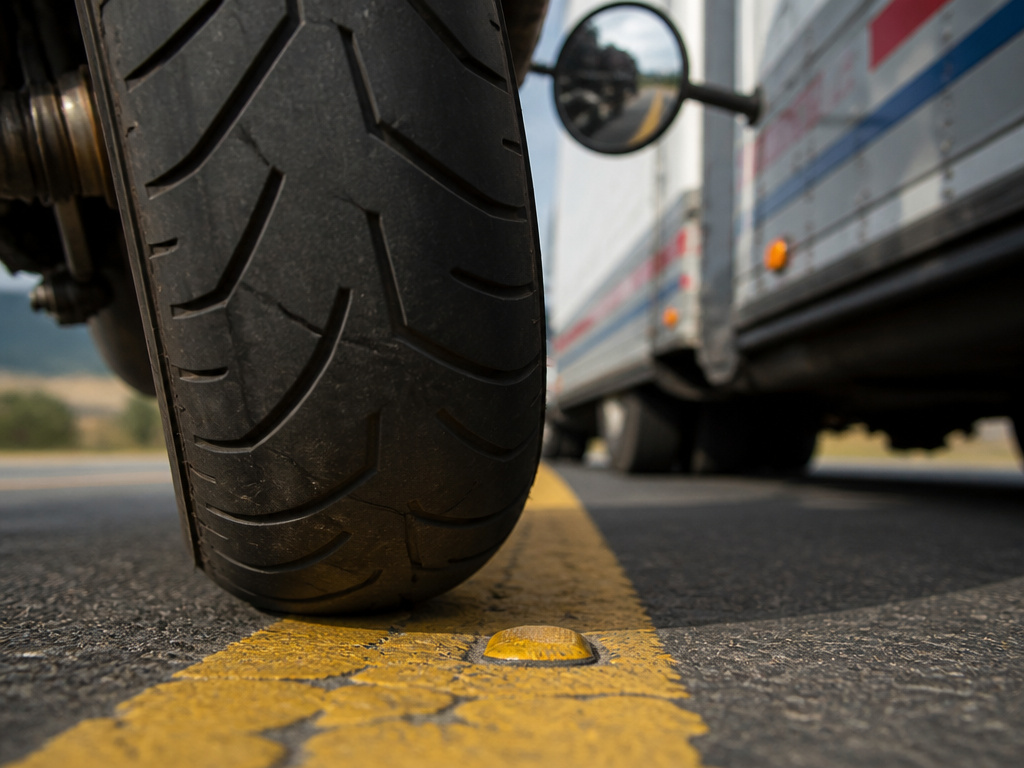 Official studies don’t just talk about cars. They name the road itself as a hazard. The California report specifically lists “uneven pavement and markings (e.g., striping or Bott’s dots)” as dangers lane-splitting riders must traverse.
Think about that. The painted line or the raised reflector you’re straddling isn’t just a marker. It’s a low-traction, often uneven surface that can upset your bike’s balance mid-maneuver. Add a roadway hazard like spilled coolant or gravel, and the margin for error disappears. The CHP motorcycle safety page also warns against splitting next to large vehicles (trucks, buses) where your visibility vanishes and crosswinds can shove you.
Other concrete dangers include: * Car doors opening when filtering next to parked cars. * Sudden lane changes by drivers who don’t shoulder-check. * Convex mirrors on trucks extending into the lane gap. * Road rage from drivers who, studies show, often disapprove of the practice.
Managing these risks requires the same focused assessment as checking your motorcycle mirrors or judging if slick tires are appropriate for the conditions. It’s a continuous scan, not a passive ride.
How to Lane Split Safely (If It’s Legal Where You Ride)
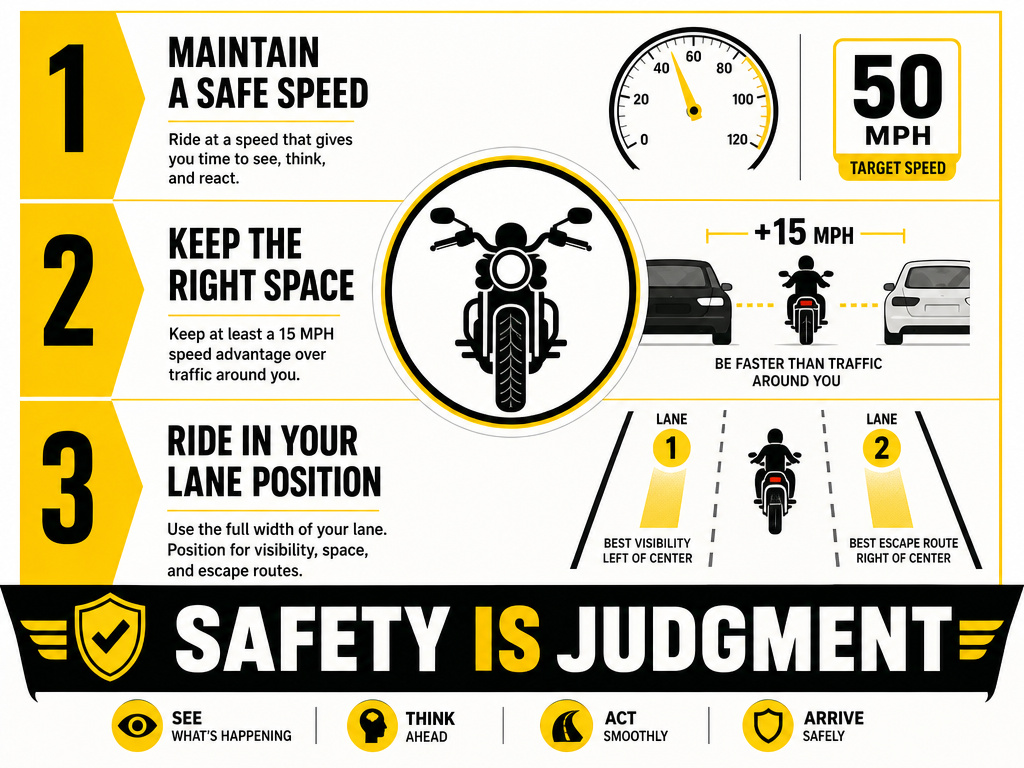 Safety hinges on judgment, not just technique. If you ride in California or filter in a legal state, these guidelines, drawn from state materials and rider consensus, form a non-negotiable baseline.
- Assess Traffic Speed. Don’t start if the flow is above 50 MPH. This is the study’s bright line. The risk curve tilts sharply after that.
- Minimize Your Speed Differential. Keep it under 15 MPH relative to surrounding cars. This is the second half of the study’s safety finding.
- Choose the Correct Lane. Split between the far-left (#1) and next-to-left (#2) lanes. Traffic is more predictable here, and you avoid merging zones.
- Be Visible and Predictable. Use your headlight, wear bright protective motorcycle gear, and ride where drivers might see you in their side mirrors. Avoid lingering in blind spots.
- Have an Escape Path. Always know where you’ll go if a car drifts, a slight acceleration or deceleration lane. Don’t box yourself in.
- Skip It in Bad Conditions. Rain, fog, or glare dramatically shrink reaction times for you and everyone else.
- Know When to Stop. If traffic speeds up, rejoin the lane. If the gap narrows, slow down. The goal is progress, not a pass at all costs.
The part nobody mentions: Your bike’s width matters. A full-dress Harley is a different proposition than a slim sportbike. If you can’t fit with a 3-foot buffer on either side, wait.
These rules aren’t just about avoiding tickets. They’re about stacking odds that are already against you. A rider obeying these guidelines is applying the risk assessment logic behind the legal definitions of mopeds and scooters to a dynamic, high-stakes environment.
The State-by-State Legal Table
This isn’t a matter of “drive safely and you’ll be fine.” The law is black and white. If you’re planning a cross-country trip or just curious, this table spells out the reality. Always verify with current state transportation department resource pages before you ride.
| State | Lane Splitting Legal? | Lane Filtering Legal? | Key Conditions / Notes |
|---|---|---|---|
| California | Yes | Yes (under splitting) | Legal per VEH 21658.1. CHP provides safety guidelines. |
| Colorado | No | Yes (as of Aug 2024) | Traffic must be stopped. Motorcycle speed ≤15 MPH. |
| Utah | No | Yes | Permitted on highways with speed limits ≤45 MPH when traffic is stopped. |
| Montana | No | Yes | Allowed on roads with ≥2 lanes in the same direction. |
| Hawaii | No | Yes (as of 2024) | Legal under specific filtering provisions. |
| All Others | No | No | Explicitly illegal. Can be cited as reckless driving. |
Frequently Asked Questions
Is lane splitting safe?
According to the 2015 California study, it can be relatively safe when done under specific conditions: traffic speed under 50 MPH and a rider speed differential under 15 MPH. Outside those parameters, injury risk increases.
Why is it only legal in California?
California is the only state with a vehicle code section explicitly defining and authorizing lane splitting. Other states treat it as an illegal lane departure. Cultural acceptance and advocacy led to its unique legal status there.
Can I be ticketed for lane splitting in a state where it’s illegal?
Yes. You will likely be cited for an illegal lane change, unsafe passing, or even reckless driving. In an accident, you will almost certainly be found at fault.
What’s the difference between lane splitting and filtering?
Lane splitting can occur in moving or stopped traffic. Lane filtering is strictly for passing stopped vehicles, often with a low speed cap (e.g., 15 MPH). Filtering is a narrower, more regulated practice.
Do other countries allow lane splitting?
Many do, particularly in Europe and Asia. In places like the United Kingdom and most of the European Union, the practice is legal and common. Regulations vary by country.
If it’s legal, can I still be at fault in an accident?
Absolutely. Legality isn’t immunity. If you were splitting unsafely, exceeding a reasonable speed differential, splitting in poor conditions, or startling a driver, you can be found liable. The legal consequences of bald tires hinge on safety, not just a checkmark; the same principle applies here.
Before You Go
Lane splitting isn’t a debate about freedom versus safety. It’s a technical riding practice with defined risks, studied thresholds, and a very short list of places where it’s legal. The California data gives us a rare evidence-based framework: keep traffic under 50 MPH and your differential under 15 MPH.
Your real-world decisions are harder. They involve judging pavement seams, predicting driver blind spots, and knowing when a gap is too tight. That judgment is the un-legislatable core of riding. Whether you’re considering aftermarket mirrors for better visibility or researching tire tread laws for your next tour, the same rule applies: know the official rules, understand the physical limits, and ride within the margin your skill and the road provide. Everything else is just noise.
