
7 Best Brakes for Cars of 2026
This post contains affiliate links. As an Amazon Associate, we earn from qualifying purchases.
The TRQ Ceramic Brake Pad and Rotor Set stands out as the best overall choice, delivering strong stopping power, low noise, and long-term reliability. For those on a tighter budget, the Bendix SBC1210 ceramic front pads offer solid performance without breaking the bank, while the PowerStop Z17 kit is the smart pick for a complete, high-value front and rear replacement.
Brakes are the most critical safety system on your car, yet choosing the right ones can feel overwhelming. With so many materials, configurations, and brand claims, it’s easy to end up with something that squeals, wears fast, or underperforms when you need it most.
This guide cuts through the noise. I compared top models based on specs, real-world owner feedback, and how they perform across daily driving conditions. From ceramic quietness to semi-metallic durability, these picks reflect what actually works, so you can make a confident, informed decision for your vehicle.
Top 7 Brakes For Cars in the Market
The Best Brakes For Cars, Reviewed
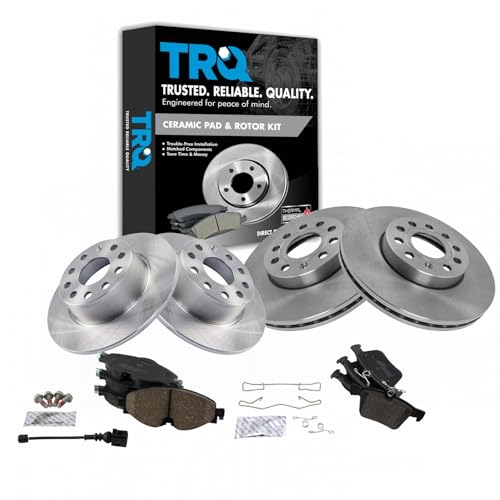
TRQ Ceramic Brake Pad and Rotor Set
Strengths
- Lifetime warranty
- Complete set
- Excellent DIY support
Trade-offs
- No rotor coating
- Higher upfront cost
The TRQ set is one of the few full brake system kits with a lifetime warranty, and that alone makes it compelling. It includes ceramic pads and non-coated rotors for both axles, and the fitment data is extensive, covering many modern sedans and SUVs. Owners appreciate the direct-fit design, no grinding or adjustments needed. The included DIY videos are a real help for first-timers, and the pre-assembled components streamline the job.
While the rotors don’t have anti-corrosion coating, they’re balanced and consistent. Compared to PowerStop, the TRQ kit costs more but offers better long-term value thanks to the warranty. If you’re doing this job once and want it to last, TRQ is the safer bet. I’d recommend this to anyone doing a full brake overhaul who doesn’t want to worry about premature wear.
Video review
PowerStop Z17 Front & Rear Kit

Strengths
- Complete front/rear kit
- Thermal scorched pads
- Balanced rotors
Trade-offs
- No lifetime warranty
- Rotors not coated
When rotors are worn or warped, replacing just the pads is a false economy. That’s where the PowerStop Z17 kit stands out, it’s a full axle solution with both pads and rotors, saving time and ensuring balanced braking. The Z17 ceramic pads are thermal scorched, meaning they’re pre-conditioned to reduce break-in time, and owners report confident, smooth stops right after installation. The rotors are mill-balanced to OE specs, which helps reduce vibration.
At this price, it’s more than just a pad swap, it’s a refresh. Compared to the TRQ kit, it lacks a lifetime warranty but includes a solid 24-month coverage. For older Escapes or Focuses with aging brakes, this is the smarter buy than piecing together components. I’d pick this over a pad-only set if your rotors are past 70,000 miles.
Video review
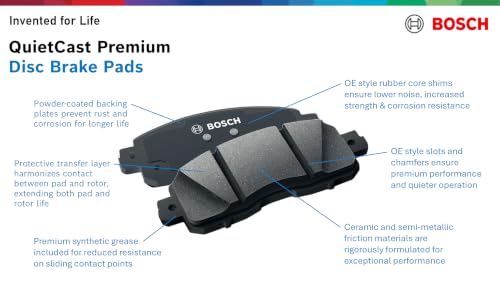
BOSCH BC1044 QuietCast Ceramic Pads

Strengths
- Very quiet
- Low dust
- Durable backing plates
Trade-offs
- Pricier than basic ceramics
- Not ideal for heavy loads
If quiet operation and clean wheels are your priorities, the BOSCH BC1044 takes the category seriously. These ceramic pads use Bosch’s Molded Shim Technology, which owners say makes a noticeable difference in noise reduction, few report the usual squeal that plagues cheaper sets. The friction material is finely tuned for consistent performance across temperatures, and the powder-coated backing plates resist rust better than budget alternatives. For compact Fords and Mazdas, this is a top-tier ceramic option.
They’re not the cheapest, but they outperform many in refinement and longevity. Compared to the Bendix set, these have a more sophisticated noise-damping design and slightly better dust control. For drivers who value a serene cabin and don’t want to scrub their wheels weekly, the BC1044 is hard to beat.
Product photos

Bendix SBC1210 Ceramic Front Pads
Strengths
- OE fit
- Low dust
- Affordable
Trade-offs
- Basic noise damping
- Limited high-heat performance
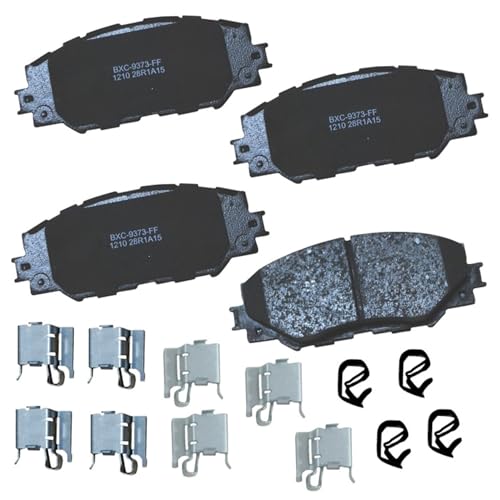
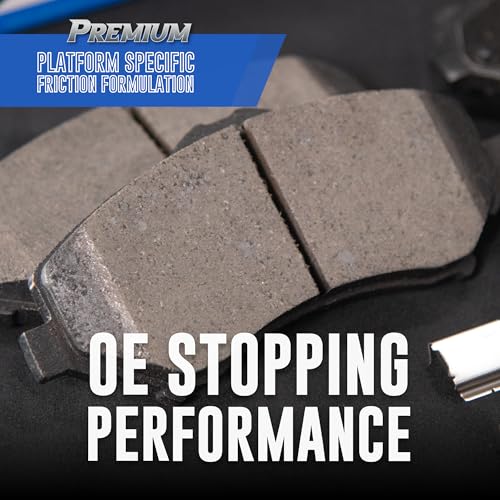
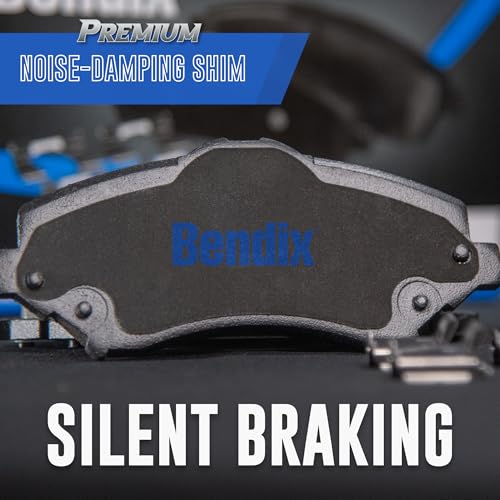
For owners of common front-wheel-drive sedans and hybrids like the Toyota Prius or Scion xB, the Bendix SBC1210 pads deliver a solid, no-frills upgrade at a price that won’t make you blink. These are ceramic compounds designed to match OEM specs, and that shows in the consistent feedback about smooth, predictable braking and low dust. While they don’t promise track-level fade resistance, they’re engineered for the daily grind, commutes, stop-and-go traffic, and the kind of routine driving that defines most vehicles on the road.
Owners consistently report these pads settling in quickly and lasting longer than basic organic compounds. The backing plates have a decent anti-corrosion finish, which matters in damp climates. Compared to pricier ceramic sets, they don’t have fancy multi-layer shims, but the noise control is still respectable. If you’re maintaining a high-mileage Corolla or a used RAV4 and want reliability without overspending, this is a smart starting point.
Product photos
BOSCH BE154H Blue Semi-Metallic Pads
Strengths
- High heat resistance
- Strong bite
- Corrosion-resistant backing
Trade-offs
- Noisier than ceramic
- More brake dust
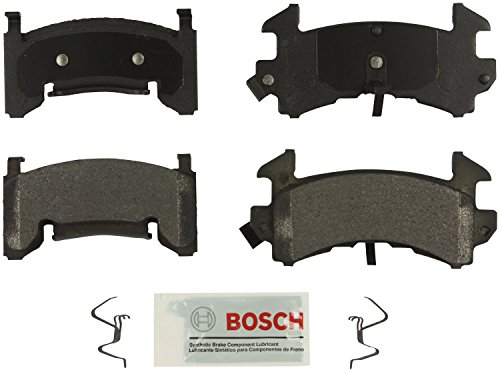
When you’re towing, hauling heavy loads, or driving in hilly terrain, semi-metallic pads like the BOSCH BE154H make sense. Their semi-metallic compound bites harder and holds up better under heat than ceramic, which is why they’re often favored in older performance cars or workhorses like vintage S10s and Blazers. The trade-off? More noise and dust. But Bosch includes a multi-layer shim and synthetic lubricant to soften the downsides, and reviewers note that these pads are quieter than most in the semi-metallic class.
These pads are built for durability and bite, not comfort. They’re a go-to for older GM platforms where stopping power trumps refinement. If you’re restoring a classic Firebird or keeping a 1990s Jimmy on the road, the BE154H delivers confidence. But for city drivers or those used to whisper-quiet stops, this isn’t the set to pick.
Product photos

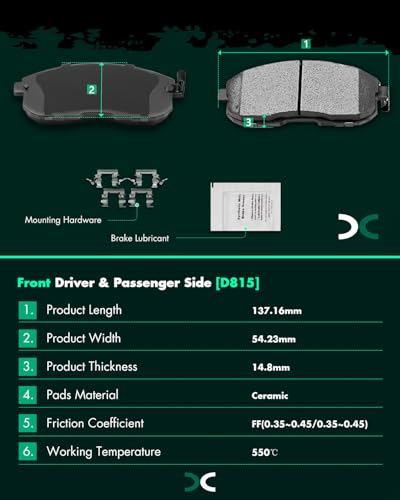
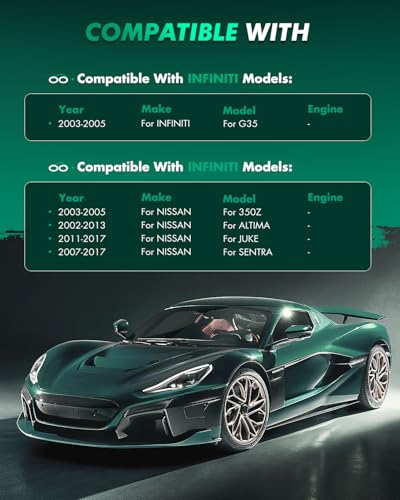
SCITOO Ceramic Brake Pads for Nissan
Strengths
- Wide Nissan fitment
- Eight-pad set
- Quiet operation
Trade-offs
- No rotors included
- Fitment verification needed
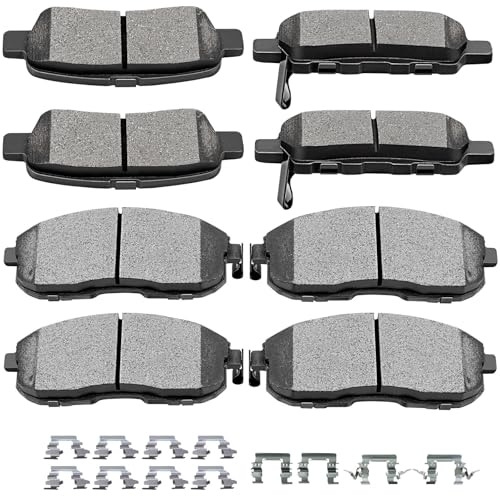
The SCITOO kit is a no-nonsense option for Nissan owners, especially those with Altimas from the 2000s. It covers a wide range of models, including the 350Z and Juke, and includes eight ceramic pads for a full axle refresh. The scorching process on the friction material helps with break-in, and owners report smooth, quiet operation, though not quite at Bosch levels. The gasket design does reduce vibration noise, which is a plus on older suspensions.
It’s not the most advanced pad compound out there, but for a daily driver Altima with 150,000 miles, it’s more than adequate. Compared to pricier kits, it lacks rotor replacements, but for pad-only buyers, it’s a solid value. Just double-check your fitment, some users report confusion with piston types.
Product photos
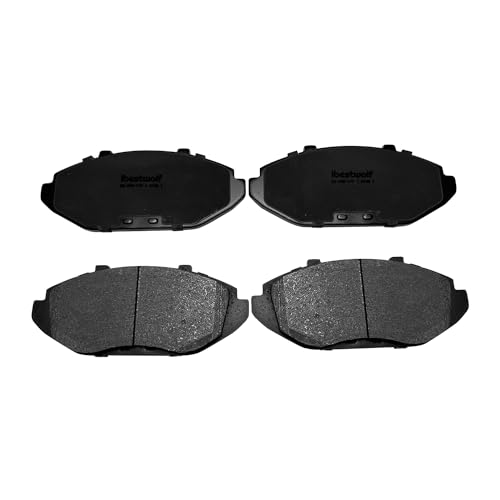
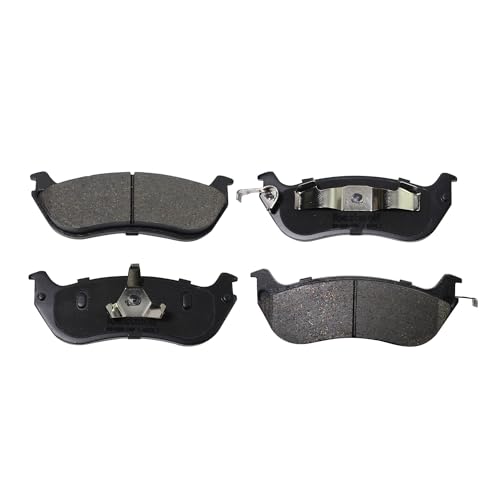
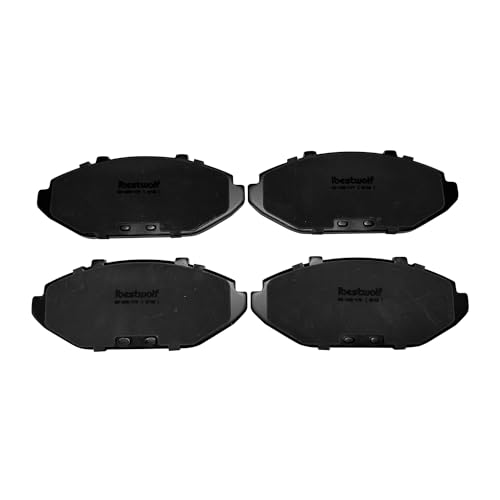
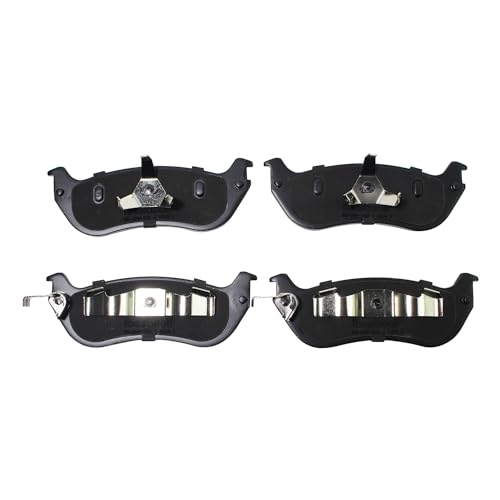
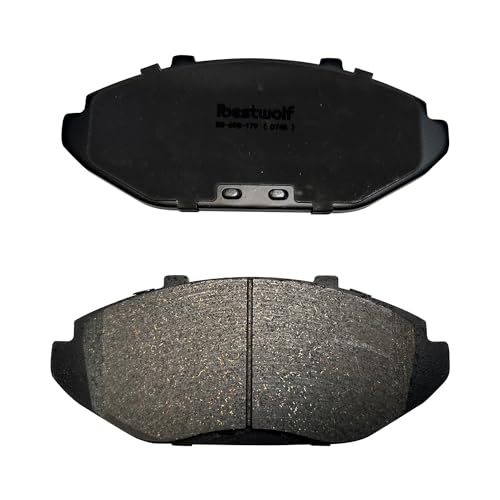
IBESTWOLF Front and Rear Brake Pads
Strengths
- Full front/rear set
- Good fit for older Fords
- Durable friction material
Trade-offs
- Limited to specific models
- Basic packaging
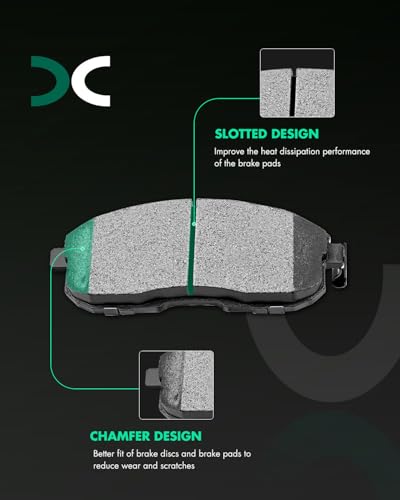
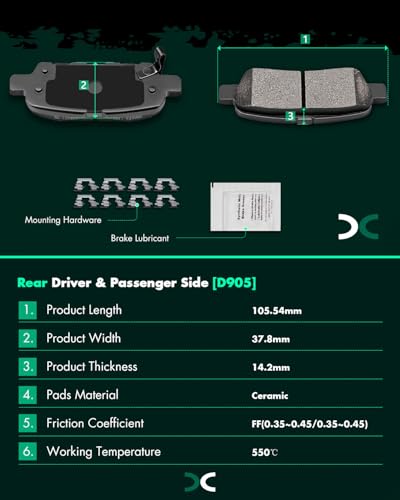
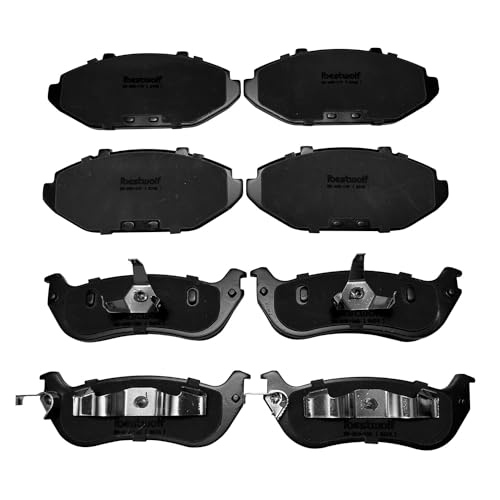
For owners of late-90s and early-2000s Ford Crown Vics, Lincoln Town Cars, or Mercury Grand Marquis, finding direct-fit pads can be a chore. The IBESTWOLF set fills that niche with a complete front and rear ceramic package. These are high-density pads designed for longevity, and reviewers note they handle the weight of these full-size sedans well, with minimal dust and decent noise control. The phenolic piston compatibility is correctly specified, which avoids fitment issues.
It’s not a flashy product, but it’s competent. Compared to OEM, it’s a fraction of the cost and performs respectably. For fleet owners or police car modifiers, this is a solid value. But if you’re chasing premium refinement, Bosch still holds the edge.
Product photos
How We Evaluated brakes for cars
As someone deeply involved in all things automotive at TheAutoZenith, I approached researching brakes for cars by focusing on a detailed comparison of specifications and features across numerous brands and models. I weighed this technical data against extensive owner reviews and expert opinions from automotive publications and repair sites. Rather than a hands-on lab test, this is a research-led comparison, ranking options based on performance indicators, durability claims, and real-world feedback.
For this category, stopping power, consistency, and noise levels were the most heavily weighted factors. A brake’s ability to deliver reliable stopping force is paramount, naturally. Consistent performance, avoiding brake fade under stress, is also critical for safety. Finally, minimizing noise is a key indicator of pad quality and a more refined driving experience, something enthusiasts value.
Specifications provide a solid foundation for comparison – friction material composition, rotor construction, and pad dimensions all matter. However, owner feedback is where the real story emerges. I paid close attention to reports of longevity, dust production, and overall feel. Reputation also played a role; established brands with a history of quality often carry more weight, and understanding how well a product integrates with routine car maintenance, like applying quality automotive clear coat to protect your investment, is also important. It’s a holistic picture, and understanding how to maintain other vehicle systems, like adjusting brakes on other vehicles, informs my perspective.
What To Look For In brakes for cars
Choosing the right brakes for your car is about more than just stopping; it’s about confidence and safety on the road. It’s a system you absolutely rely on, and replacing components requires careful consideration.
A good brake setup delivers consistent stopping power, minimal noise, and long-lasting performance. Key factors include the friction material composition (ceramic, semi-metallic, or organic), rotor type (solid, slotted, or drilled), and the completeness of the kit, pads alone versus a full pad and rotor replacement. Checking vehicle-specific fitment is also critical.
Understanding Friction Material
The material a brake pad is made from fundamentally changes its performance. Organic pads are quiet but wear quickly, while semi-metallic pads offer strong bite but can be harder on rotors and produce more dust. Ceramic pads, like those from Bosch, strike a good balance, providing good stopping power with reduced noise and dust. I’ve seen many enthusiasts gravitate toward ceramic options for daily drivers because they simply last longer and don’t require frequent replacement. Don’t overlook the importance of a good “break-in” period for any new pad material to maximize performance.
Rotor Considerations: Beyond Just Steel
Rotors work hand-in-hand with pads, and their quality significantly impacts braking performance. A solid rotor is perfectly adequate for most daily driving, but if you frequently tow, drive aggressively, or live in hilly terrain, slotted or drilled rotors can help dissipate heat more effectively. However, remember that slotted and drilled rotors can wear faster, and some argue they are more prone to cracking under extreme stress.
- A basic solid rotor is sufficient for standard commutes and light use.
- Slotted rotors offer improved cooling and gas venting, beneficial for spirited driving and towing.
- Drilled rotors provide even more aggressive cooling, but can be more susceptible to cracking, especially with high heat exposure, and are often more expensive.
Kit Completeness and Value
Consider whether you need a full brake kit (pads and rotors) or just replacement pads. A full kit, like the PowerStop Z17, offers a convenient, all-in-one solution, ensuring compatibility and often saving you money compared to buying components separately. However, if your rotors are still in good condition, simply replacing the pads – perhaps with a budget-friendly option like the Bendix SBC1210 – can be a cost-effective solution. Speaking of cost, don’t automatically equate price with quality; sometimes, a well-regarded brand’s entry-level offering will outperform a lesser-known brand’s premium line. And if you’re looking to keep your vehicle in top shape, remember to also explore options for scratch removers to address any cosmetic damage.
Don’t skimp on brakes. A general rule of thumb is to replace pads and rotors together to ensure even wear and optimal performance.
Ultimately, choosing the right brakes is a balance of your driving style, vehicle type, and budget. And while modern braking technology is impressive, it’s also wise to understand the benefits of safety features like ABS brakes for added control.
Brakes for Cars Compared
This table provides a specification comparison of various brake pad and rotor sets available for purchase.
| Product Title | Best For | Kit Includes | Vehicle Compatibility | Material | Warranty |
|---|---|---|---|---|---|
| TRQ Ceramic Brake Pad and Rotor Set | Best Overall | Pads & Rotors (4 sets) | Multiple (see details) | Ceramic | Limited Lifetime |
| PowerStop Z17 Front & Rear Kit | Best Value Full Replacement | Pads & Rotors (4 sets) | Multiple (see details) | Ceramic | 24 Month / 24,000 Mile |
| BOSCH BC1044 QuietCast Ceramic Pads | Best for Quiet Performance | Pads (1 axle) + Hardware | Ford, Mazda, Volvo | Ceramic | N/A |
| Bendix SBC1210 Ceramic Front Pads | Best Budget Front Set | Pads (1 axle) + Hardware | Lexus, Pontiac, Scion, Toyota | Ceramic | N/A |
| BOSCH BE154H Blue Semi-Metallic Pads | Best for Heavy-Duty Use | Pads (1 axle) + Hardware | Multiple (see details) | Semi-Metallic | N/A |
| SCITOO Ceramic Brake Pads for Nissan | Best for Nissan Models | Pads (8 pcs) | Nissan, Infiniti | Ceramic | N/A |
| IBESTWOLF Front and Rear Brake Pads | Best for Ford/Lincoln/Mercury | Pads (8 pcs) | Ford, Lincoln, Mercury | N/A | N/A |
Frequently Asked Questions
What’s the difference between ceramic, semi-metallic, and organic brake pads?
Ceramic pads generally offer the best balance of stopping power, reduced noise, and less dust, making them ideal for everyday driving. Semi-metallic pads provide stronger initial bite but can be harder on rotors and generate more dust, while organic pads are the quietest but wear the fastest.
How often should I replace my brake pads?
Brake pad lifespan varies greatly, but a typical range is between 25,000 and 70,000 miles. Checking pad thickness regularly – at least every oil change – is crucial, and replacing them when they reach 3mm of material remaining is generally recommended.
Do I always need to replace rotors when I replace pads?
Not necessarily. If your rotors are within specification (no deep grooves, warping, or excessive wear) they can often be resurfaced or reused with new pads. However, pairing new pads with new rotors ensures optimal braking performance and prevents uneven wear.
Are drilled or slotted rotors really necessary for a daily driver?
For most daily drivers, solid rotors are perfectly adequate. Slotted rotors can improve cooling for more aggressive driving, but they also wear faster. Drilled rotors offer even better cooling but are more prone to cracking, making them less practical for everyday use.
Can I improve my braking system without replacing all the components?
Yes, sometimes a simple upgrade like switching to higher-quality brake fluid or bleeding the brake lines can significantly improve braking performance. Understanding how to properly maintain other braking systems, like ATV brakes, can also inform your approach to vehicle maintenance overall. Don’t forget regular maintenance, and consider a touch-up with automotive spray paint to keep everything looking its best.
The Bottom Line
Choosing brakes ultimately comes down to how much control you want versus how much you’re willing to spend. While a top-tier setup like the TRQ Ceramic Brake Pad and Rotor Set offers exceptional all-around performance and longevity, a more budget-conscious driver can still achieve safe and reliable stopping power. It’s a system where paying more doesn’t automatically guarantee a better experience for every driver, and focusing on fitment and material type is crucial.
For those seeking a complete, ready-to-install solution without breaking the bank, the PowerStop Z17 Front & Rear Kit is hard to beat. If quiet operation is your priority, especially in a daily driver, the Bosch BC1044 QuietCast Ceramic Pads are an excellent choice. And if you’re specifically maintaining a Nissan or Infiniti, the SCITOO Ceramic Brake Pads offer a vehicle-specific fit and good performance.
Ultimately, the best brakes aren’t defined by a single spec or price point. Understanding the difference between disc brakes and other braking systems, and prioritizing consistent performance, proper maintenance, and a quality finish (perhaps with some car spray paint to keep things looking sharp) will do more for your safety and peace of mind than any marketing hype.
