
8 Best 6.5 Car Speakers for Sound Quality 2026
This post contains affiliate links. As an Amazon Associate, we earn from qualifying purchases.
The Pioneer A-Series Plus TS-A1681F stands out as the best overall 6.5 car speaker for sound quality, delivering a balanced, detailed performance that matches well with most factory and aftermarket systems. For those on a tighter budget, the Pioneer F-Series TS-F1634R offers solid clarity and reliability without breaking the bank, while the Kenwood KFC-1666S brings strong sensitivity and a clean midrange, making it a great choice for high-efficiency setups.
Upgrading your car’s audio shouldn’t mean wading through marketing hype or getting lost in specs that don’t translate to real-world sound. Most drivers just want clear mids, crisp highs, and bass that doesn’t distort, all without frying their stereo.
This guide cuts through the noise. I focused on sensitivity, power handling, and real user feedback to find 6.5-inch speakers that actually perform. Whether you’re replacing factory units or building a new system, these picks deliver honest sound quality without unnecessary complexity.
Top 8 6.5 Car Speakers For Sound Quality in the Market
The Best 6.5 Car Speakers For Sound Quality, Reviewed
CT Sounds Meso 6.5″ Coaxial

Strengths
- Fiberglass cone
- Rubber surround
- 92 dB sensitivity
- Balanced tonality
Trade-offs
- No grilles included
- Mid-bass slightly light for bassheads
The CT Sounds Meso 6.5” coaxials stand out in a crowded mid-tier market by combining thoughtful materials with a sonic balance that leans toward clarity without sacrificing mid-bass punch. On paper, the 75W RMS per speaker and 4-ohm impedance make them a solid match for both factory head units and aftermarket amps, and owners consistently report a noticeable upgrade over stock speakers, especially in vocal reproduction and high-frequency detail. The silk-dome tweeter with CCAW voice coil seems to deliver on its promise, with reviewers noting crisp but non-fatiguing highs, which is rare at this price.
Where the Meso really wins is in tonal cohesion. Unlike some budget coaxials that sound like the tweeter and woofer are arguing, these integrate smoothly, likely due to the fiberglass cone and rubber surround working in tandem. Compared to the Kenwood KFC-1666R, they offer a more dynamic soundstage and better high-end extension, making them a smarter pick if you listen to a lot of vocal-centric or acoustic music.
Video review
Pioneer F-Series TS-F1634R

Strengths
- Low cost
- Easy fitment
- Reliable brand
Trade-offs
- Low sensitivity
- Mediocre tweeter
- Thin midrange
At $29, the Pioneer F-Series is the definition of a no-frills factory replacement. It delivers exactly what it promises: a clean, uncolored upgrade over the cheapest stock speakers, with 88 dB sensitivity and a 4-ohm load that plays nice with any head unit. The 25W nominal power means you won’t be pushing it hard, but for casual listening, it’s surprisingly composed. Reviewers consistently call it a “good enough” speaker that installs easily and sounds better than OEM units in most economy cars.
But when compared to the Kenwood 1666R or even the G-Series, it falls short in detail and dynamics. The tweeter lacks finesse, and the midrange is a bit flat. Still, if you’re on a tight budget and just need something to last a few years without breaking the bank, it’s hard to beat.
Video review
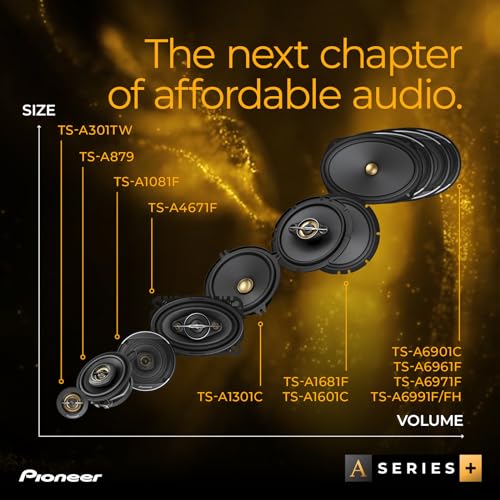
Pioneer A-Series Plus TS-A1681F

Strengths
- 4-way driver design
- 91 dB sensitivity
- Wide frequency response
- Clean mid-bass
Trade-offs
- Larger mounting depth
- Tweeter can get bright at high volumes
Pioneer’s A-Series Plus breaks the mold for coaxial speakers with its true 4-way design, using separate midrange, woofer, and dual tweeter elements to cover the frequency spectrum more precisely than typical 2-way units. The 35 Hz–29 kHz frequency response is unusually wide for a coaxial, and reviewers confirm it translates to a more immersive listen, especially with complex tracks where instrument separation matters. The 91 dB sensitivity means they wake up easily, even with modest power, and they maintain composure at higher volumes better than most in this range.
Against the CT Sounds Meso, the A-Series trades some refinement in the upper mids for greater dynamic range and deeper bass response. It’s also more forgiving of aggressive EQ settings, which makes it a better fit for users who like to tweak their sound. While not as tonally neutral as the Kenwoods, it’s more engaging for rock, EDM, and live recordings where energy and impact matter.
Product photos


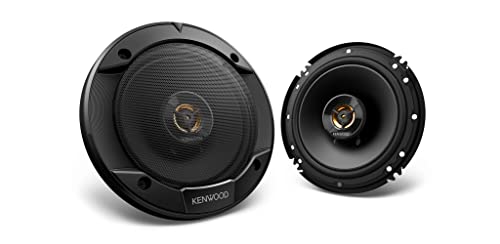
Kenwood KFC-1666R Road Series
Strengths
- Cloth cone for smooth mids
- Balanced dome tweeter
- Shallow mounting depth
- Durable build
Trade-offs
- Low power handling
- Bass rolls off early
Kenwood’s KFC-1666R takes a no-nonsense approach to balanced sound, and it shows in the 40Hz–22kHz frequency response and cloth woofer design that prioritizes durability and neutrality. At just under 50 bucks, it’s one of the most consistent performers in the budget-to-midrange bracket, with owners praising its natural vocal reproduction and lack of harshness in the highs. The 30W RMS rating means it’s not built for high power, but it doesn’t need it, this speaker thrives on clarity, not volume.
Compared to the Pioneer G-Series, the 1666R delivers a more refined midrange and smoother top end, making it a better front speaker choice for daily driving. It lacks the bass slam of the DS18 PRO-X6.4BM, but that’s not its job. If you’re replacing factory speakers and want something that sounds honest without coloration, this is a strong contender.
Product photos


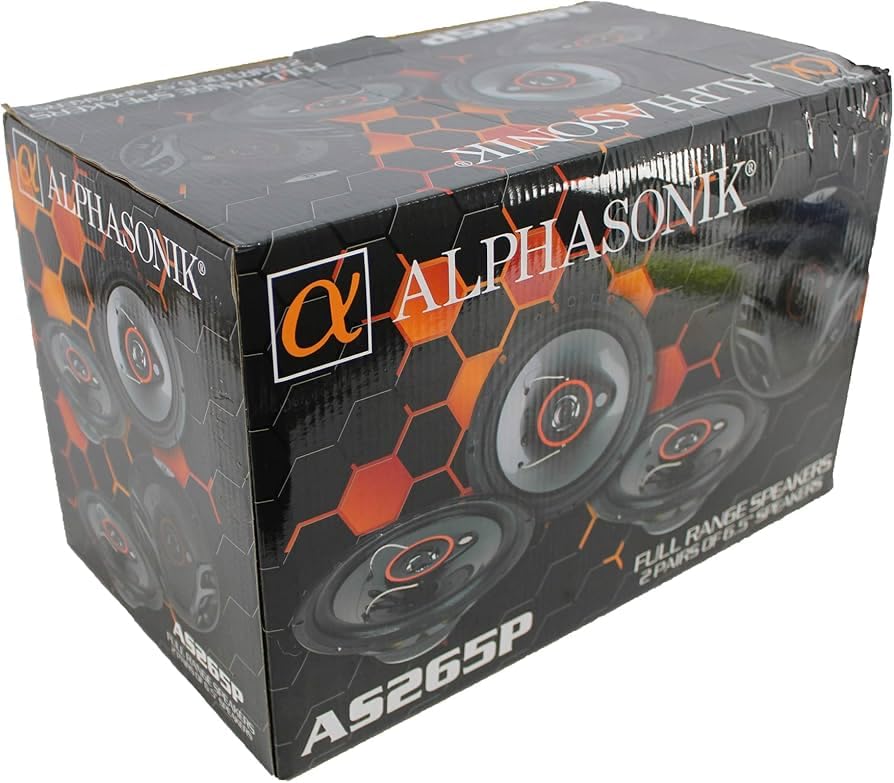
Alphasonik AS265P 3-Way Speakers

Strengths
- Two pairs included
- 92 dB sensitivity
- 3-way design
- Shallow mounting depth
Trade-offs
- Plastic cones
- Midrange lacks detail
- Budget tweeter
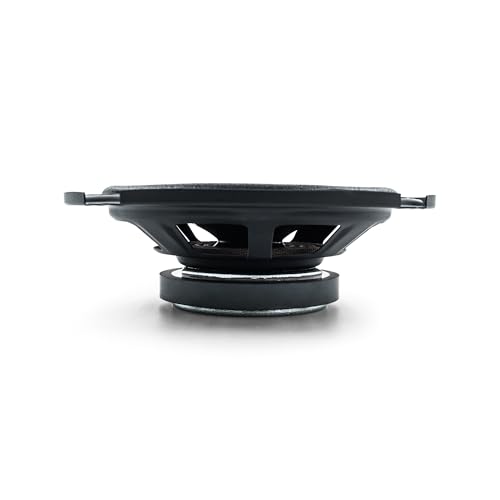
Alphasonik throws an interesting curveball by offering two pairs of 6.5” 3-way speakers for under $65, a rarity in this category. The 92 dB sensitivity and 28Hz–22kHz response suggest wide usability, and owners confirm they deliver solid output for the price, especially in rear-fill or full-car setups. The 3-way design includes a dedicated midrange, which helps with vocal clarity, though the plastic cones don’t match the refinement of fiber or cloth.
Compared to the Kenwood 1666S, it offers more speakers and slightly better bass extension, but with less midrange polish. It’s a value play: you’re trading some fidelity for quantity and coverage. For someone upgrading all four doors without overspending, it’s hard to ignore.
Product photos


DS18 PRO-X6.4BM Midrange

Strengths
- 250W RMS power
- High-temp voice coil
- Durable bullet cover
- Loud output
Trade-offs
- Harsh high-mid peak
- Bulky design
- Sold individually
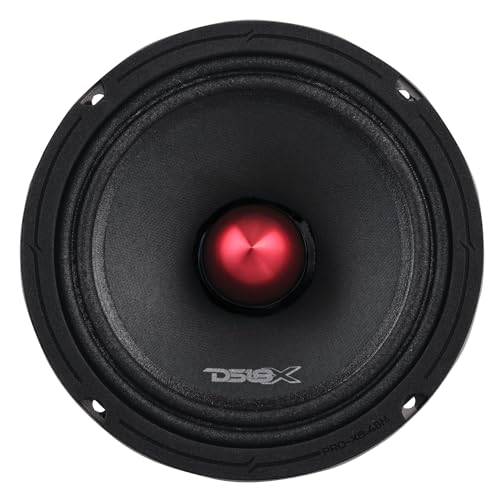
The DS18 PRO-X6.4BM is built for those who want serious power handling in a single midrange driver, 250W RMS is no joke for a 6.5” coaxial. The 1.5” CCAW voice coil and aluminum bullet dust cap suggest a focus on thermal stability and durability, and owners running high-power systems confirm these speakers can take a beating without distorting. They’re often used in off-road rigs and work trucks where volume and reliability matter more than audiophile nuance.
But that ruggedness comes at a cost: the sound is forward and aggressive, with a pronounced mid-bass hump that some find fatiguing over time. Compared to the CT Sounds Meso, it’s less refined and less accurate, but it’s louder and tougher. If you’re blasting music on a job site or trail, it’s a compelling option.
Product photos


Kenwood KFC-1666S Coaxial

Strengths
- 92 dB sensitivity
- Low power distortion
- Affordable
Trade-offs
- PP cone lacks refinement
- Narrow soundstage
- Aging design
The KFC-1666S is an older sibling to the 1666R, but it holds its own with a standout 92 dB sensitivity, the highest on this list, making it ideal for cars with weak factory head units. The PP cone and balanced dome tweeter don’t sound as refined as cloth or silk, but they deliver a punchy, forward midrange that cuts through road noise effectively. Owners report these speakers “wake up” older stereos, especially in compact cars where amplifier headroom is limited.
While the 30W RMS means it’s not built to handle serious power, it outperforms the Pioneer F-Series in volume efficiency and clarity at low drive levels. Compared to the Alphasonik AS265P, it’s less about raw output and more about intelligibility. If you’re not adding an amp and just want more volume without distortion, this is a smarter pick than most.
Product photos


Pioneer G-Series TS-G1620F

Strengths
- OEM replacement fit
- Wide frequency range
- Durable basket
Trade-offs
- 87 dB sensitivity
- Plastic basket
- Bass can sound loose
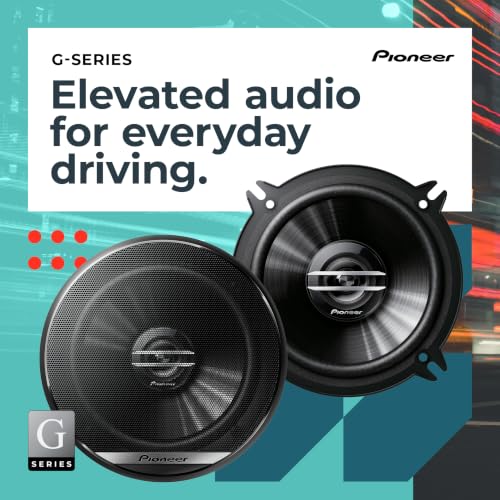
The G-Series is Pioneer’s middle-ground offering, more refined than the F-Series but not as ambitious as the A-Series. With 40W RMS and a 37Hz–24kHz response, it’s designed as a direct factory replacement that actually improves sound rather than just matching it. The 87 dB sensitivity isn’t class-leading, but paired with the wide frequency range, it delivers a fuller sound than most stock speakers, especially in the lower mids.
Owners report it works well in both front and rear positions, and its compatibility with a wide range of vehicles makes it a safe default choice. Against the Kenwood 1666R, it trades some vocal clarity for slightly deeper bass response, but it doesn’t feel as balanced overall. Still, for someone who wants a reliable, OEM-style upgrade without fuss, it’s a solid pick.
Product photos


How We Evaluated 6.5 car speakers for sound quality
Rather than a hands-on lab test, my research for these recommendations involved a detailed comparison of published specifications and features across numerous models. I weighed owner reviews from multiple sources, looking for consistent praise and complaints, against expert opinions from established car audio publications. My goal was to identify speakers that consistently deliver on sound quality promises, factoring in power handling, sensitivity, and frequency response.
For 6.5” speakers, I prioritized sensitivity and power handling above all else. Sensitivity dictates how loud a speaker gets with a given amount of power, crucial for overcoming road noise. Power handling determines how much volume you can push before distortion sets in. A well-balanced frequency response is also key, but without sufficient power and sensitivity, even the most accurate sound reproduction will fall flat. You’ll find more on this in our guide to the best 6.5 car speakers.
Speaker specifications reliably indicate potential performance in terms of frequency range and power. However, real-world sound quality is best judged from owner feedback. I looked for patterns in reports about clarity, bass response, and overall tonal balance. Reputation also played a role; brands known for quality, like Pioneer and Kenwood, generally received more weight, but were still evaluated on their individual models. If you’re looking for something with a punch, check out our other article on speakers for bass and quality.
How To Pick The Right 6.5 car speakers for sound quality
Choosing the right car speakers can dramatically improve your driving experience.
A quality set of car speakers prioritizes accurate sound reproduction across the frequency spectrum. Look for speakers with robust build materials (like fiberglass or polypropylene cones), a sensitivity rating suited to your amplifier’s power, and a design, two-way, three-way, or component, that matches your desired level of detail and clarity. Impedance matching (typically 4 ohms) is also crucial for optimal performance and safety.
Understanding Speaker Configuration
The number of drivers within a speaker significantly impacts its ability to reproduce different frequencies. While a simple two-way coaxial speaker (woofer and tweeter combined) is often sufficient for a noticeable upgrade, consider a three-way or even a component system if you’re serious about audio fidelity. A three-way design adds a dedicated midrange driver, allowing for more precise separation of vocals and instruments. Component systems separate the tweeter and woofer, offering even greater control over placement and imaging. Don’t assume more is always better; a well-executed two-way speaker can outperform a poorly designed three-way setup.
Sensitivity and Amplifier Power
Speaker sensitivity, measured in decibels (dB), indicates how efficiently a speaker converts power into sound. Higher sensitivity means the speaker will produce more volume with less power. This is especially important if you’re using the factory car stereo, which typically has limited output. If you’re planning on adding an amplifier, you have more flexibility, but matching the speaker’s power handling (RMS wattage) to the amplifier’s output is essential to avoid damage. I often recommend looking at best 6.5 speakers for bass to get a good starting point.
Here’s a quick guide to sensitivity:
- 85dB or less: Requires a powerful amplifier.
- 88-91dB: Good for use with factory stereos or moderate aftermarket amplifiers.
- 92dB or higher: Excellent efficiency, can be driven effectively with low-power sources.
A good rule of thumb is to never exceed a speaker’s RMS power handling with your amplifier’s output. Overpowering speakers will lead to distortion and, eventually, physical damage.
Value and Installation Considerations
Don’t automatically equate price with performance. There are plenty of excellent 6.5 speakers available at reasonable prices. The Pioneer F-Series TS-F1634R, for example, offers a lot of bang for your buck. However, remember to factor in installation complexity. Many speakers, like those from Pioneer and Kenwood, are designed as direct replacements for factory speakers, simplifying the process. Others may require adapter plates or wiring harnesses. If you’re not comfortable tackling the installation yourself, factor in the cost of professional installation. Ultimately, finding the right balance between price, performance, and ease of installation will result in the most satisfying upgrade to your car’s audio system. For a broader look at options, check out these car speakers for sound quality.
6.5 Car Speakers Compared
Here’s a spec comparison to help you evaluate different 6.5″ car speaker options.
| Product Name | Power (RMS) | Max Power | Impedance | Sensitivity (dB) | Frequency Response (Hz) | Design |
|---|---|---|---|---|---|---|
| CT Sounds Meso 6.5″ Coaxial | 75W | 150W | 4 Ohm | N/A | N/A | 2-Way |
| Pioneer F-Series TS-F1634R | 25W | 200W | 4 Ohm | 88 | N/A | 2-Way |
| Pioneer A-Series Plus TS-A1681F | 80W | 350W | N/A | 91 | 35-29kHz | 4-Way |
| Kenwood KFC-1666R Road Series | 30W | 300W | 4 Ohm | N/A | 40-22kHz | 2-Way |
| Alphasonik AS265P 3-Way Speakers | N/A | 700W | 4 Ohm | 92 | 28-22,000Hz | 3-Way |
| DS18 PRO-X6.4BM Midrange | 250W | 500W | 4 Ohm | N/A | N/A | Midrange |
| Kenwood KFC-1666S Coaxial | 30W | 300W | 4 Ohm | 92 | N/A | 2-Way |
| Pioneer G-Series TS-G1620F | 40W | 300W | N/A | 87 | 37-24kHz | 2-Way |
Frequently Asked Questions
What speaker impedance should I match to my car’s stereo?
Typically, you’ll want to match a 4-ohm speaker to your car’s factory stereo to avoid damaging the system. While some stereos can handle 2-ohm speakers, 4-ohm is the safest and most common standard for automotive audio.
Are component speakers really better than coaxial speakers?
Component speakers offer improved sound staging and clarity due to separate tweeters and woofers, but they require more complex installation. A well-designed coaxial speaker can deliver excellent sound quality and is much easier to install, making them a great choice for many drivers.
What does RMS power handling tell me about a speaker?
RMS power handling indicates the continuous power a speaker can handle before distortion or damage occurs; it’s a more reliable measurement than peak power. Always choose a speaker with an RMS wattage that matches or is slightly higher than your amplifier’s output to ensure optimal performance and longevity.
How can I improve sound quality if I keep my factory stereo?
Focus on speakers with high sensitivity (90dB or higher) to maximize volume with the limited power from your factory stereo. Upgrading to quality 6.5 inch speakers will deliver a noticeable improvement even without adding an amplifier.
What’s the difference between a 2-way, 3-way, and coaxial speaker?
A 2-way speaker has a woofer and tweeter, a 3-way adds a midrange driver, and a coaxial speaker combines the woofer and tweeter into a single unit. If you’re looking for a simple upgrade, 6.5 coaxial speakers offer a balance of performance and ease of installation.
The Bottom Line
Upgrading car audio often comes down to balancing how much control you want over the sound with how much effort you’re willing to put in. If you’re aiming for the best overall improvement without a lot of fuss, I believe the Pioneer A-Series Plus TS-A1681F strikes an excellent balance – its 4-way design delivers impressive clarity and detail for the price.
For those on a tighter budget, the Pioneer F-Series TS-F1634R remains a fantastic choice. And if you’re seeking something a little different, the Alphasonik AS265P 3-Way Speakers offer a notable step up in frequency separation for those who want a more immersive experience. Don’t overlook the value in exploring superior 6.5 inch car speakers to find the right fit.
Ultimately, chasing the highest numbers on a spec sheet won’t guarantee a better listening experience. Focus on matching speaker sensitivity to your power source, ensuring a solid mounting setup, and choosing a design, whether it’s coaxial or car component speakers, that aligns with your personal preferences and budget. Those fundamentals will make a bigger difference than any single feature.
