
How Much Car Insurance Do I Really Need? The Essential Guide
This post contains affiliate links. As an Amazon Associate, we earn from qualifying purchases.
You really need more than your state’s minimum liability insurance. For most drivers, that means carrying at least $100,000 per person / $300,000 per accident for bodily injury and $100,000 for property damage, known as 100/300/100. If you have a loan, you’ll also need comprehensive and collision coverage. On an older, paid-off car, drop those physical damage coverages when the annual premium equals 10% of the car’s value.
State minimums are a legal floor, not a recommendation. They were set decades ago and haven’t kept pace with medical or repair costs. Sticking to them is how you end up personally liable for a six-figure hospital bill after a serious crash.
What follows is a breakdown of the three coverage layers: the mandatory minimums that keep you legal, the recommended liability that protects your wallet, and the optional physical damage coverages that depend entirely on what you drive. By the end, you’ll know which numbers go on your policy and which ones to walk away from.
Key Takeaways
- State minimum liability limits are dangerously low. Florida’s minimum of $10,000 for property damage won’t replace a bumper on a new truck.
- The expert-recommended baseline is 100/300/100 liability coverage. This shields your savings and home from a lawsuit after a major at-fault accident.
- Drop comprehensive and collision coverage on a paid-off car when the annual premium hits 10% of the car’s book value. You’re over-insuring.
- Uninsured/Underinsured Motorist (UM/UIM) coverage is critical and cheap, often $5–$15 a month. Twenty-two states require it.
- If you have a loan or lease, your lender’s required coverage (full coverage) overrides everything. You have no choice until it’s paid off.
Your State’s Minimum is a Trap Door
The law requires a specific amount of liability-only coverage. This pays for the damage you cause to other people and their property. It does nothing for your own car.
These limits are written as three numbers: Bodily Injury per person / Bodily Injury per accident / Property Damage per accident. Florida has the lowest minimums in the country at 10/20/10. Alaska and Maine mandate the highest at 50/100/25.
Common mistake: Thinking state minimums are adequate. A 2026 report from the American Association for Justice found that outdated property damage limits mean even minor crashes can leave drivers with thousands in uncovered costs, shifting the burden to victims, hospitals, and taxpayers.
The numbers haven’t moved much since the 1970s. The average new vehicle now costs over $50,000. A single night in the hospital can eclipse a $25,000 bodily injury limit before the surgeon walks in. Relying on your state’s minimum is like wearing a bicycle helmet on a motorcycle, it meets a technical requirement but won’t save you when it matters.
The Nonresident Rule Everyone Misses
Most guides treat state minimums as a simple checklist for residents. Florida’s law has a twist that catches snowbirds and long-term visitors.
The Florida Statutes auto insurance law requires nonresident owners to maintain Florida’s minimum security if their vehicle is physically present in the state for more than 90 days in the preceding 365 days. It’s a calendar count, not a consecutive stay. Your insurer back home might not automatically comply. Check your policy’s “territory” clause.
| State | Minimum Liability (Bodily Injury/Property Damage) | Key Unique Requirement |
|---|---|---|
| Florida | $10,000 / $20,000 / $10,000 | Nonresident 90-day rule |
| Louisiana | $15,000 / $30,000 / $25,000 | “No Pay, No Play” law |
| Massachusetts (post-July 1, 2025) | $25,000 / $50,000 / $30,000 | New increased compulsory limits |
| Pennsylvania | $15,000 / $30,000 / $5,000 | Very low $5k property damage |
The takeaway is simple. Use your state’s minimum as the absolute basement for your liability-only car insurance policy. Then build upwards from there.
The 100/300/100 Rule: Why Experts Point to This Number
Consumer Reports and the Insurance Information Institute (III) land on the same figure: $100,000 per person, $300,000 per accident for bodily injury, and $100,000 for property damage.
This isn’t a random guess. It’s a buffer against real average costs. The III notes the average bodily injury liability claim was $26,501 in 2022. A multi-vehicle crash with two injured people can blow past $50,000 instantly. The 100/300/100 structure gives the insurance pool room to work before your personal assets are on the line.
Liability limits are a three-number code: injury per person / total injuries per crash / property damage per crash. The 100/300/100 standard provides a meaningful financial airbag that state minimums lack.
Why does the property damage number need to be so high? Modern cars are packed with sensors. A minor fender-bender that crumples a radar array and a backup camera housing can easily run $10,000. Hit a newer luxury SUV or a commercial vehicle, and $100,000 is a realistic repair or replacement target. Your state’s $10,000 or $25,000 minimum evaporates on contact.
How to Match Liability to Your Net Worth
If 100/300/100 is the standard, when do you go higher? The rule of thumb is to carry liability limits that equal or exceed your net worth, your assets minus your debts.
- Renters with minimal savings: 100/300/100 is likely sufficient. A plaintiff’s attorney is looking for a deep-pocketed insurance company, not your used furniture.
- Homeowners with equity and retirement accounts: Consider 250/500/250. Your home equity is a prime target in a lawsuit judgment.
- High net-worth individuals (or those with high future earnings): This is where an umbrella policy clicks in. It provides an extra $1–$5 million in liability coverage on top of your auto and home policies. It’s the final backstop.
The goal is to make the insurance company the target, not your bank account. A personal umbrella insurance policy is cheaper than you think because it only pays after your underlying auto or home liability is exhausted.
The Full Coverage Mandate (It’s Not Your Choice)
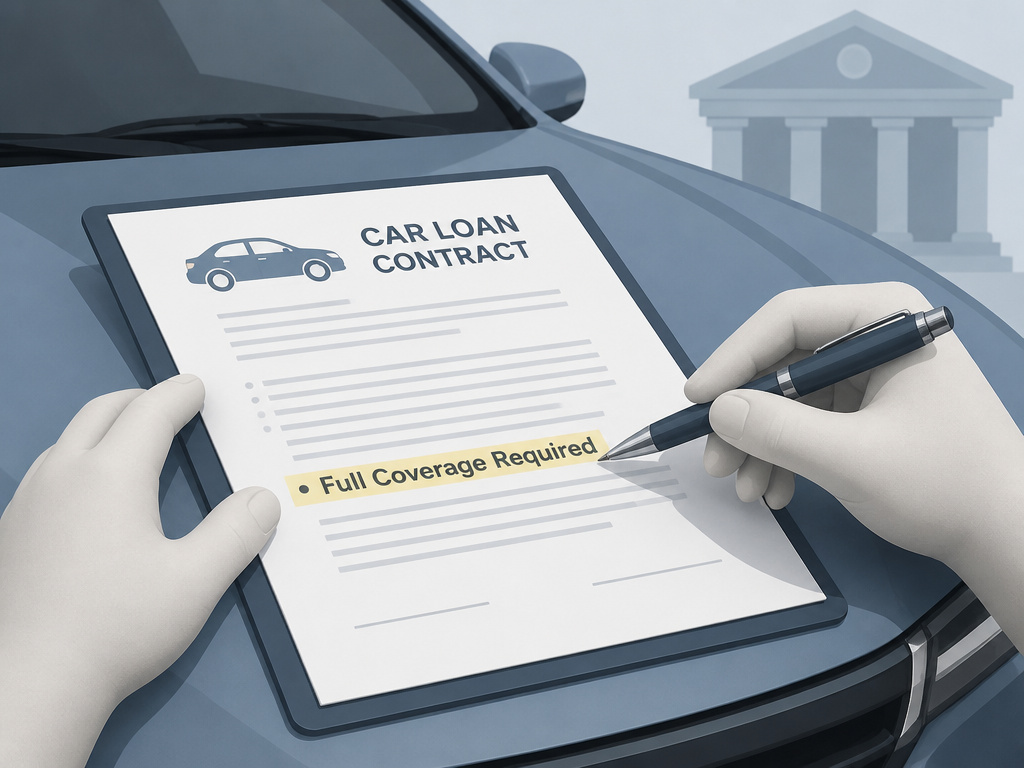 The term “full coverage” is insurance slang, not a legal category. It generally means you have liability plus comprehensive and collision coverage.
You need this combo if you have a car loan or lease. The lender owns a financial interest in the vehicle and will require you to protect it. Your contract gives them the right to force-place insurance at your expense if you lapse. It’s non-negotiable.
| Coverage Type | Pays For | You Need It If… |
|---|---|---|
| Collision | Damage to your car from a crash with another vehicle or object, regardless of fault. | You have a loan or lease. You own a newer car you couldn’t afford to replace out-of-pocket. |
| Comprehensive | Non-crash damage: theft, vandalism, fire, weather, animal strikes. | Same as collision. Also if you live in a high-theft or severe-hail area. |
| Liability | Damage you cause to others (bodily injury and property damage). | You drive a car. It’s compulsory. |
Once your loan is paid off, you regain the choice. The difference between comprehensive and collision becomes a math problem, not a contract requirement.
When Your Car Is Older and Paid Off
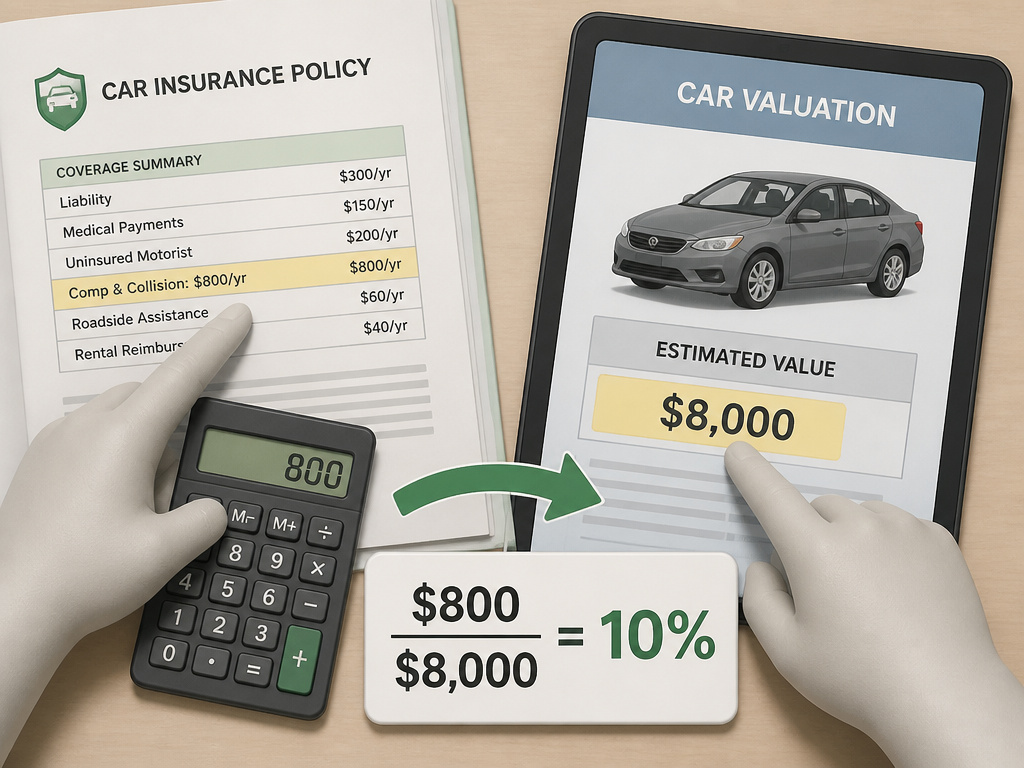 This is the single most impactful cost-saving decision you can make. The math is straightforward.
Drop comprehensive and collision coverage when the annual premium for those coverages equals or exceeds 10% of your car’s current book value (minus your deductible amount).
Here’s why that 10% rule works. You’re essentially betting the insurance company’s maximum payout (the car’s value) against your annual premium. If the premium is one-tenth of the potential payout, the odds are stacked in the insurer’s favor over time. You’re overpaying for the risk.
Where this goes sideways: Dropping coverage too early on a moderate-value car. If your 8-year-old sedan is worth $8,000 and your comp/collision premium is $600 a year, you’re at 7.5%, close, but not over the line. A single deer strike could total it, leaving you with nothing. Wait until the premium hits $800.
What about a car that’s just old? The 10-year mark is another common trigger, but value is the real driver. A pristine 15-year-old collector car might be worth keeping comprehensive on. A beater worth $1,500 probably isn’t. Use the 10% rule first.
The Critical, Cheap Add-Ons You Shouldn’t Skip
Liability and physical damage are the main course. These are the side dishes that complete the meal, and some are essential.
Uninsured/Underinsured Motorist (UM/UIM) Coverage
This protects you if you’re hit by a driver with no insurance or insufficient limits. Twenty-two states and D.C. Require it. Even if yours doesn’t, get it. * Cost: Typically $5–$15 per month. * Why-Layer: It mirrors your own liability limits. If you carry 100/300 liability, get 100/300 UM/UIM. It’s a direct hedge against the other driver’s irresponsibility.
Personal Injury Protection (PIP) or Medical Payments
PIP is required in “no-fault” states and covers medical expenses for you and your passengers regardless of fault. Medical coverage like MedPay serves a similar role in other states. * Check your health insurance: If you have robust health insurance, you may be able to lower these limits or skip MedPay. PIP often covers lost wages, which health insurance does not.
The Practical Extras
- Rental Reimbursement: Pays for a rental car while yours is in the shop after a covered claim. Worth it if you have no second vehicle.
- GAP insurance: Crucial if you financed a new car. It pays the difference between the car’s depreciated value and your loan balance if it’s totaled. Your auto policy pays actual cash value; the loan balance is often thousands higher.
- Roadside Assistance: Often redundant if you have AAA or a manufacturer’s warranty. Check before adding it.
The Louisiana Department of Insurance consumer guide makes a key point about trailers: your auto liability extends to a towed trailer, but physical damage coverage does not. You need a separate endorsement.
How a Total Loss Actually Works
This is the moment all the pieces come together. You cause an accident and your car is totaled.
- Your liability coverage pays for the other driver’s car and their medical bills, up to your limits.
- Your collision coverage pays you the actual cash value (ACV) of your car, minus your deductible.
- If the ACV is less than your loan balance, GAP insurance (if you have it) covers the difference.
- If the other driver was at fault and uninsured, your UM/UIM property damage (if you have it) pays for your car, often with a $250 deductible.
See the gaps? No collision coverage means step two disappears. No GAP insurance means you owe the bank money on a car you no longer have. This sequence is why picking the right types of car insurance matters.
Frequently Asked Questions
What does “100/300/100” mean on my insurance card?
It’s your liability coverage limits. The company will pay up to $100,000 for one person’s injuries, up to $300,000 total for all injuries in one accident, and up to $100,000 for damage to other people’s property.
I own my old car outright. Do I need any insurance beyond liability?
Legally, you only need your state’s minimum liability. Practically, you should carry UM/UIM coverage. Drop comprehensive and collision using the 10% rule. An insurance deductible of $500 or $1,000 can lower the premium if you do keep them.
Is it worth it to have a $1,000 deductible instead of $500?
Only if you can comfortably write a $1,000 check tomorrow without wrecking your finances. The premium savings is usually 10-15%. You’re betting you won’t have a claim. If you have one, you pay more out-of-pocket.
What is “full coverage”?
It usually means a policy that includes liability, comprehensive, and collision. It’s what lenders require. There’s no official definition, so always ask what specific coverages are included.
How can I lower my premium?
The biggest lever is adjusting physical damage coverages on older cars. Also, ask about discounts, increase your deductible, and shop around. For specific strategies to lower car insurance after an accident, you need a different playbook, as your risk profile has changed.
The Bottom Line
You really need more than the minimum. Start with 100/300/100 liability as your foundation. Add UM/UIM coverage, it’s too cheap to skip. If you have a loan, you’re stuck with comprehensive and collision until the title is clean. The moment you own that older car free and clear, run the 10% math and drop the physical damage coverages the second it makes financial sense.
The official Massachusetts regulator filing shows states are slowly raising archaic minimums. Don’t wait for the law to catch up to real-world costs. Your policy should bridge that gap today.
