
Why Tire Speed Ratings Matter: The Essential Explanation
This post contains affiliate links. As an Amazon Associate, we earn from qualifying purchases.
A tire’s speed rating is a certified engineering limit, not a marketing suggestion. It matters because exceeding it changes the tire’s physical load capacity, generates destructive heat, and can void warranties and insurance. The ISO 4000-1:2024 standard mandates specific load reductions for V, W, and Y-rated tires as speed increases, a tire rated for 1,400 lbs at 130 mph might only safely carry 1,190 lbs at 149 mph.
That gap between the rating on the sidewall and the real load it can carry at your actual speed is where the engineering lives. One is a static number printed at the factory; the other is a dynamic calculation of heat, pressure, and structural stress that happens on the road.
What follows: the ISO tables that dictate load reduction, the three real-world consequences of ignoring the rating, and the single exception where a lower rating is not just acceptable but recommended.
Key Takeaways
- Speed ratings (H, V, W, Y) correspond to a tire’s maximum sustained speed capability under load, verified by standardized lab testing.
- ISO 4000-1:2024 requires load capacity reductions for high-speed tires, a V-rated tire loses 9% of its load capacity between 130 mph and 149 mph.
- Using a tire with a lower speed rating than your vehicle specifies can affect handling, void the vehicle warranty, and complicate insurance claims after an incident.
- The only common exception is for winter or all-season tires marked with the Three-Peak Mountain Snowflake (3PMSF) symbol, where a lower speed rating is acceptable if you respect its lower maximum speed.
- The speed rating is part of the tire’s service description, which is a legally recognized part of the vehicle’s original equipment specification.
What Is a Tire Speed Rating?
Look at your tire’s sidewall. After the size, something like 205/55R16, you’ll see two more numbers and a letter, for example, 91V. That final letter is the speed rating. It’s not a suggestion. It’s the result of a controlled laboratory test where the tire, inflated to its specified pressure and carrying its maximum load, must survive a sustained run on a giant drum at that speed for a set period.
The common ratings for modern passenger vehicles are H (130 mph), V (149 mph), W (168 mph), and Y (186 mph). There’s also ZR, which covers anything above 149 mph and requires manufacturer consultation for exact limits. These letters are defined by global standards bodies like ISO and the USTMA (U.S. Tire Manufacturers Association). A manufacturer can’t just slap a V on a tire; it has to prove the tire can handle the heat and stress at 149 mph while carrying its rated load.
The part nobody mentions: The test assumes perfect conditions, a smooth drum, controlled temperature, new tread. Real roads with potholes, summer heat, and worn tread change the equation. The rating is a ceiling, not a daily target.
How a Speed Rating is Determined
The process is mechanical, not theoretical. A sample tire is mounted on a test wheel, inflated to its cold pressure spec, and loaded to 100% of its load index weight. It’s then run against a steel drum at the target speed in increments. The test checks for structural integrity, no belt separation, no cracking, no sudden failure. The tire must also demonstrate an ability to dissipate the heat generated at that sustained pace. If it passes, it earns the letter.
This is why a speed rating speaks to overall construction quality. A V-rated tire uses different rubber compounds, belt materials, and internal structure than a T-rated tire (118 mph). It’s built to manage higher internal temperatures without degrading. This engineering trickles down to everyday performance: a higher-rated tire often feels more planted and responsive at highway speeds, even if you never go above 70 mph.
Why the Speed Rating Actually Matters
You might drive a sedan that will never see 130 mph. So why care if it has H-rated or V-rated tires? The rating matters for three concrete reasons: heat management, vehicle dynamics, and legal liability.
First, heat. As a tire rolls, its sidewalls flex and its tread squirms. This friction generates internal heat. The faster you go, the more frequent this flex cycle becomes, and heat builds up exponentially. A tire rated for a higher speed is engineered with materials that can withstand and shed that heat. Use a lower-rated tire, and the heat can soften the rubber, weaken the bond between belts, and lead to a blister or a belt separation. This failure might not happen immediately; it could manifest as a sudden blowout weeks later on a hot summer drive.
Second, vehicle dynamics. Car manufacturers select original equipment tires as part of a tuned system. The tire’s sidewall stiffness, which correlates with speed rating, affects turn-in response, ride comfort, and even electronic stability control calibration. Switching to a significantly softer, lower-rated tire can make the car feel sloppy and less predictable. It’s not just about top speed; it’s about how the car behaves at the limit of everyday driving.
USTMA tire safety guide: The USTMA states plainly that if you install tires with a lower speed capability than the vehicle manufacturer specified, you must restrict the vehicle’s speed to the tire’s limit, and vehicle handling could be affected.
Third, liability. Your vehicle’s warranty and your insurance policy are contracts that assume you’re maintaining the vehicle to manufacturer specs. If an accident investigation reveals you were running tires with a lower speed rating than the door-jamb placard calls for, an insurer could deny a claim. A dealership could refuse a warranty repair on a suspension component, arguing the altered handling characteristics caused premature wear. It’s a loophole you don’t want to test.
The ISO Load Reduction Tables: Where the Rubber Meets the Road
This is the core non-commodity insight most articles miss. The speed rating isn’t a standalone letter. It’s part of a mathematical relationship defined in ISO 4000-1:2024. The standard specifies that for tires rated for speeds over 210 km/h (130 mph), the maximum load they can carry decreases as speed increases.
Let’s say your tire has a load index of 94, which corresponds to 1,477 lbs. That’s its capacity at its maximum rated speed. But according to ISO, if it’s a V-rated tire (149 mph), its capacity is actually reduced in stages as you approach that top speed.
| Speed Symbol | Speed Range (km/h) | Load Capacity at Max Speed |
|---|---|---|
| V | 210–240 | 91% at 240 km/h (149 mph) |
| W | 240–270 | 85% at 270 km/h (168 mph) |
| Y | 270–300 | 85% at 300 km/h (186 mph) |
Translation: A V-rated tire carrying its full rated load at 130 mph must shed 9% of that load to be safe at 149 mph. For a tire rated at 1,477 lbs, that’s a reduction of 133 lbs. If you’re driving a sports car at sustained high speed on the Autobahn with a passenger and luggage, you could easily exceed the adjusted safe load. This is why the standard exists, it’s a mandatory engineering derating.
The Honda owner’s manual directly addresses this. It includes a table for adjusting cold tire pressures upward if you plan to drive at high speeds, acknowledging that the standard operating pressure isn’t sufficient to manage the extra heat and stress. Ignoring this is how you get a sudden tire failure.
What Happens If You Use a Lower-Rated Tire?
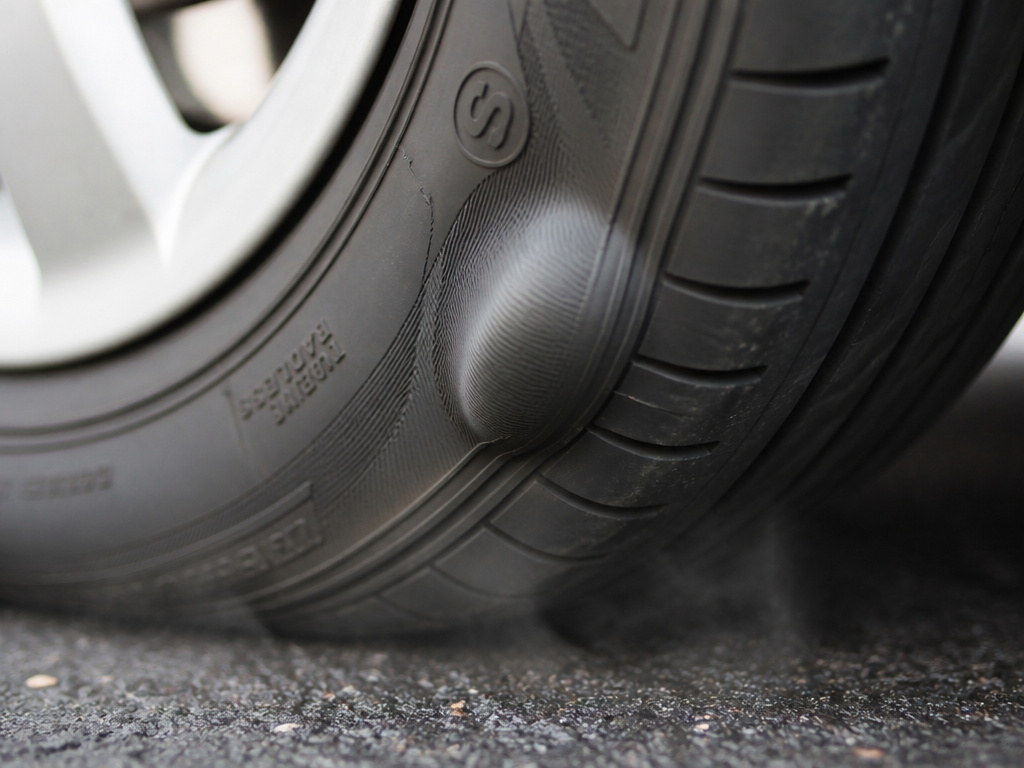
The consequences follow a timeline. First, you might notice nothing. The car feels a bit softer, maybe a little less precise on turn-in. This is the vehicle dynamics change.
Then, on a long, hot highway drive, the lower-rated tires start working harder than they were designed for. The internal temperature climbs past the point their materials can handle efficiently. You might smell a faint, hot rubber scent. The tread could start to show feathering or unusual wear on the shoulders.
Finally, the heat wins. It can separate the steel belts from the internal rubber layers. Sometimes this causes a visible bulge on the sidewall. Other times, it weakens the structure until a pothole or curb impact causes a catastrophic blowout. The Mazda manual warns that under-inflation, overload, or excessive speed “can cause heat build-up and possible tire failure.”
Common mistake: Assuming a higher load index compensates for a lower speed rating. It doesn’t. The load index and speed symbol are a married pair, the service description. A tire with a higher load index but a lower speed rating is still not rated for the higher speed’s heat management. You can’t mix and match.
Insurance and warranty concerns are the other head. An adjuster looking at your wrecked car after a high-speed spin will check the tires. If they’re S-rated (112 mph) on a car that came with V-rated tires from the factory, that’s documented evidence the vehicle was not maintained to specification. The claim denial letter writes itself.
When Can You Use a Lower Speed Rating?
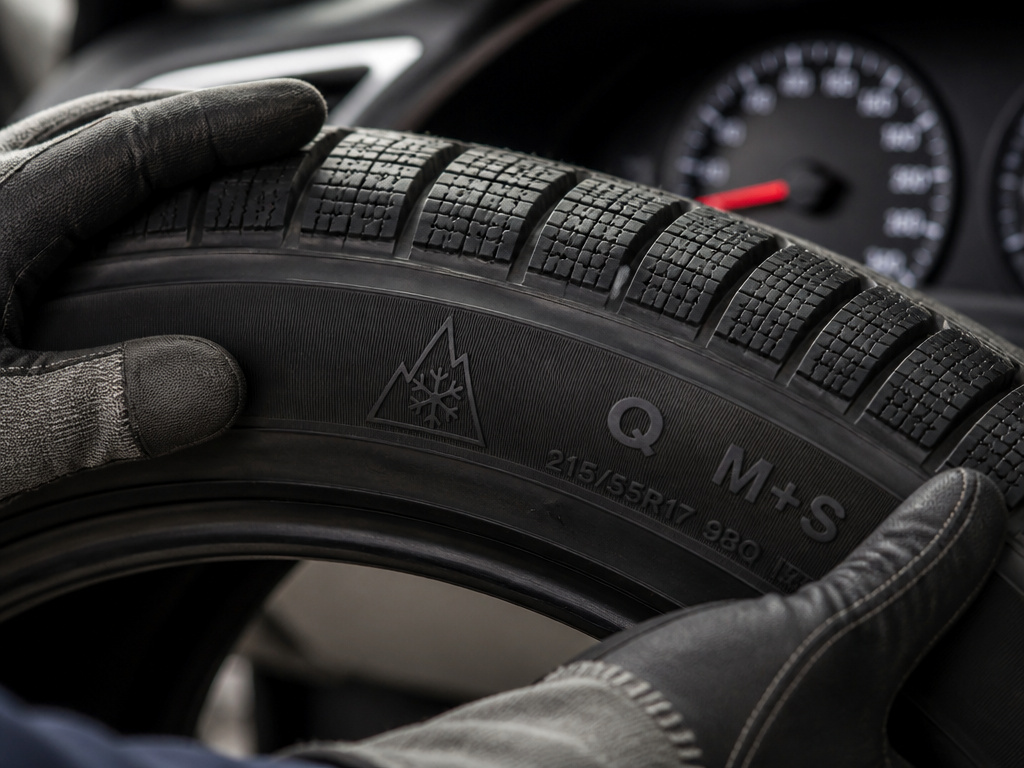
There is one well-defined exception. Michelin states that using a tire with a lower speed rating is acceptable if it’s a winter or all-season tire marked with the Three-Peak Mountain Snowflake (3PMSF) symbol. The logic is sound: winter tire compounds are inherently softer for cold-weather grip, which limits their high-speed heat resistance. A winter tire might be Q-rated (99 mph) or even lower.
If you make this swap, the rule is absolute: you must never exceed the tire’s maximum rated speed. That means watching your speedometer on clear winter highways. It also means swapping back to your higher-rated summer or all-season tires when the season changes. This is a performance trade-off for safety in snow and ice.
For RVs and trailers, the calculus is different. These vehicles are heavy and often run at sustained highway speeds for hours. The USTMA notes that RV tires can lose 1-2 psi per month normally, and more with temperature drops. Here, maintaining the correct speed rating is critical for managing heat over long distances. Downgrading is a direct risk.
How to Find and Match Your Vehicle’s Required Rating
Don’t guess. The answer is in two places, and they must agree.
- Your vehicle’s tire placard. Open the driver’s door and look at the sticker on the door jamb or pillar. It lists the original tire size, load index, and speed symbol. This is the manufacturer’s certified specification.
- Your owner’s manual. It will have a section on tires that repeats the placard info and often includes the speed rating chart, like the one in the Mazda manual that lists Q (99 mph) through W (168 mph).
When you buy replacements, the new tire’s service description, the load index and speed symbol, should meet or exceed the placard’s specification. Exceeding the speed rating (going from H to V) is generally fine, as the tire is built to a higher standard. But you must also respect the change in tire width and aspect ratio that can affect fitment and speedometer accuracy.
If you’re upgrading wheels and moving to a different tire size entirely, the calculation gets more complex. The overall diameter should stay within 3% of the original to keep the speedometer accurate, and the new tire’s load capacity must meet or exceed the vehicle’s Gross Axle Weight Rating (GAWR). A reputable tire shop will handle this math, but knowing the principles, like how a lower aspect ratio affects sidewall stiffness, helps you ask the right questions.
Speed Ratings and Different Tire Types
Not all tires in the same size have the same speed rating. The rating is tied to the tire’s intended mission.
- Grand Touring Tires: These, like many grand touring tires, typically carry H or V ratings. They’re designed for comfort and longevity on luxury sedans and coupes, with a focus on high-speed stability and noise reduction.
- Performance Summer Tires: Often V, W, or Y-rated. The focus is on maximum dry grip and cornering stiffness, with compounds and structures built to handle the heat of aggressive driving.
- All-Season Tires: Common ratings are H and V. They’re a compromise, so their speed capability reflects a balance of traits, not a peak performance focus.
- All-Terrain Tires: Found on trucks and SUVs, these often have lower speed ratings (S or T are common) because their deep, aggressive tread blocks generate more heat and aren’t designed for sustained high-speed travel.
- Winter Tires: As discussed, often Q-rated or lower due to their soft, cold-weather compounds. The 3PMSF symbol is your guide here.
This is why you can’t just buy based on size. A 265/70R17 all-terrain tire for a truck will likely have a different speed rating than a 265/70R17 crossover tire for an SUV, even though they physically fit the same wheel. The crossover tire is engineered for pavement manners and highway speed, while the all-terrain truck tire prioritizes off-road durability.
Frequently Asked Questions
Can I mix tires with different speed ratings?
Never mix them on the same axle. It’s dangerous. The tires will have different stiffness and heat characteristics, which can cause unpredictable handling, especially during emergency maneuvers. If you must mix (like using a temporary spare), limit your speed and distance as the spare instructs.
Does a higher speed rating mean a better tire?
Not necessarily “better” for your needs. A Y-rated ultra-high-performance summer tire will have stiffer sidewalls and less tread life than a touring-oriented H-rated tire. It might also ride more harshly and be noisier. The “better” tire is the one that matches your vehicle’s specifications and your typical driving style and conditions.
My car came with H-rated tires. Can I upgrade to V-rated?
Yes, you can upgrade to a higher speed rating. The tire will be built to a more stringent standard. Just ensure the other specs, load index, overall diameter, still match your vehicle’s requirements. Be aware that the V-rated tire might have a firmer ride due to its stiffer construction.
What about temporary spare tires?
Temporary spares, or “donuts,” have a very low speed rating, often 50 mph (80 km/h). This is because they are compact, have minimal tread, and are not designed for heat dissipation or long-distance travel. Exceeding their speed limit risks a catastrophic failure. Use them only to reach a repair shop.
Do I need to adjust tire pressure for high-speed driving?
Yes, and your owner’s manual will tell you by how much. The Honda manual, for example, provides a specific chart. The increase in pressure (usually a few psi) helps the tire maintain its shape better at high speed, reducing flex and heat buildup. Remember to readjust to normal pressures afterward.
The Bottom Line
Your tire’s speed rating is a non-negotiable part of its engineering identity. It’s a certified limit backed by international standards that dictate how much load the tire can safely carry as speed increases. Ignoring it risks heat-induced failure, alters your vehicle’s handling, and opens the door to warranty and insurance disputes.
Check your door-jamb placard. Match or exceed that letter when you buy replacements. The only time you deliberately go lower is for a dedicated winter tire with the 3PMSF symbol, and even then you must religiously obey its lower speed limit. For everything else, that single letter is one of the most important specs on the sidewall. Treat it that way.
