
7 Best Bike Socks of 2026
This post contains affiliate links. As an Amazon Associate, we earn from qualifying purchases.
The best bike socks deliver comfort, prevent blisters, and keep your feet dry mile after mile. After comparing the field, the Danish Endurance Low-Cut Socks stand out as the overall top pick for their superior moisture-wicking and sleek fit. For mountain bikers, the Fox Racing 6″ Ranger MTB Socks offer excellent ankle protection and support, while the ROCKBROS Tall Crew Cycling Socks are a solid budget-friendly option without sacrificing key performance features.
As a lifelong tinkerer and gearhead, I’ve learned that the smallest components often make the biggest difference, and bike socks are no exception. A bad pair can ruin an otherwise perfect ride, no matter how well-tuned your drivetrain or suspension is.
That’s why I researched dozens of models, weighing materials, fit, and real-world feedback to find socks that perform under pressure. This guide breaks down what actually matters, moisture management, padding, and construction, so you can choose the right sock for your riding style.
Top 7 Bike Socks in the Market
The Best Bike Socks, Reviewed
CHARMKING Compression Socks 15-20 mmHg
Strengths
- Medical-grade compression
- Lightweight breathable fabric
- Good for all-day wear
Trade-offs
- No cycling-specific padding
- Minimal style options
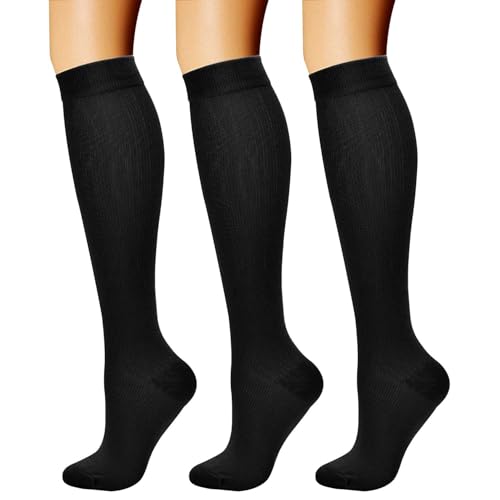
With 15–20 mmHg of graduated compression, these CHARMKING socks hit the sweet spot for circulation support, strong enough to aid recovery and reduce fatigue, but not so tight they’re uncomfortable for all-day wear. The 85% nylon fabric is smooth, breathable, and holds up well in washes, and owners consistently report less leg soreness after long rides or standing shifts.
They’re marketed as unisex and work well for both men and women, especially those on their feet all day. Compared to cycling-specific socks, they lack padding or venting zones, but that’s not their purpose. If you’re recovering from a ride, commuting in work shoes, or flying post-event, these are more functional than most. At this price, they’re the most practical pick for overall leg health.
Video review
ROCKBROS Tall Crew Cycling Socks

Strengths
- Very affordable
- Breathable fabric
- Stays in place
Trade-offs
- Light cushioning
- Limited durability
- Minimal compression
At under ten bucks for a pack, the ROCKBROS socks are clearly targeting budget shoppers, and they deliver basic functionality without frills. The fabric is lightweight and breathable, and the ribbed cuff does a decent job staying up, which is a common failure point in cheap socks. Reviewers note they hold up reasonably well in washes, though a few mention thinning after a few weeks of daily use.
They’re marketed as compression-fit, but owner feedback suggests the support is mild at best, more snug than medical-grade. The cushioning is light, so they work fine with well-fitted shoes but won’t help much if yours are stiff or pressure-prone. Compared to pricier options, these are the economy model: they get the job done for short rides, but I wouldn’t rely on them for multi-hour efforts.
Video review
DANISH ENDURANCE Low-Cut Socks
Strengths
- True low-profile fit
- Fast-dry polypropylene
- Durable for price
Trade-offs
- Limited ankle protection
- Fewer color options
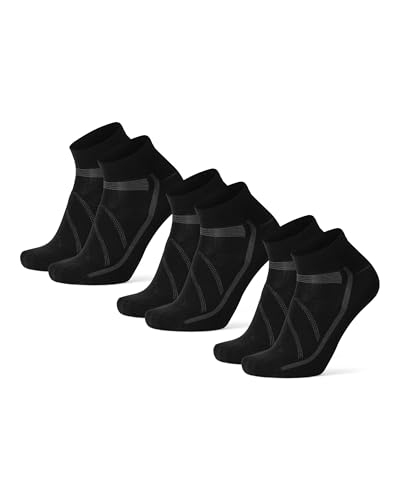
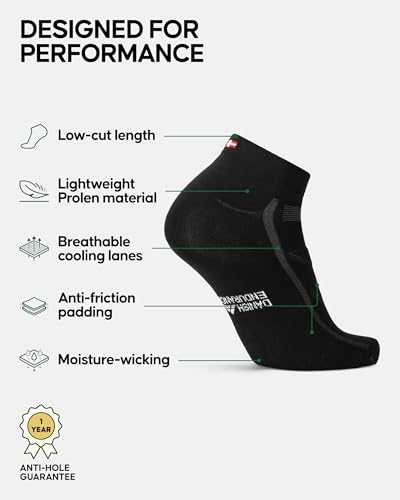
For riders who hate ankle socks creeping into view, these low-cut Danish Endurance socks are a clean, functional solution. They sit just below the ankle, making them ideal under low-top shoes or during indoor training when you don’t want bulk. Like their crew counterparts, they use 56% polypropylene, which means fast-drying performance and strong moisture management, owners love how light and dry their feet feel even after hard efforts.
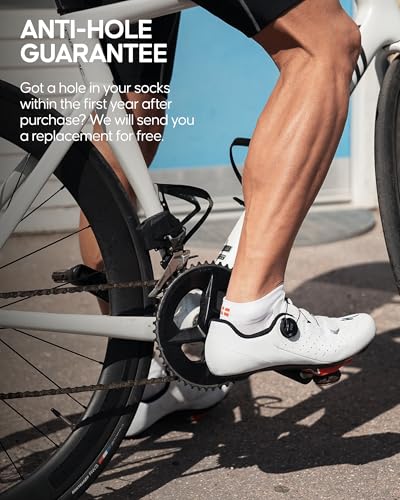
The terry padding is subtle but effective in high-pressure zones, and the snug fit prevents slippage. The anti-hole guarantee applies here too, which matters since low-cut socks often wear faster at the heel. Compared to no-show cotton socks that vanish into your shoe, these are built to last and perform. If you value function over flash, these are a top-tier minimalist option.
Product photos
DANISH ENDURANCE Crew Cycling Socks

Strengths
- Fast-dry fabric
- Excellent moisture control
- Durable construction
Trade-offs
- Less plush feel
- Higher price per pair
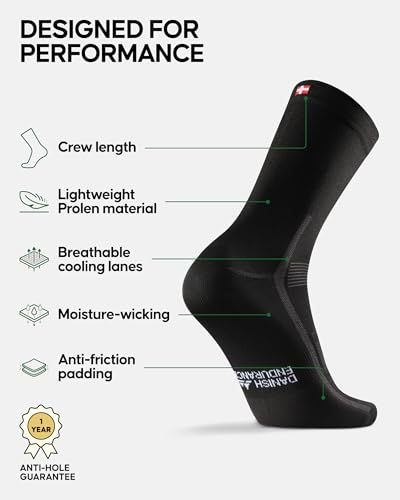
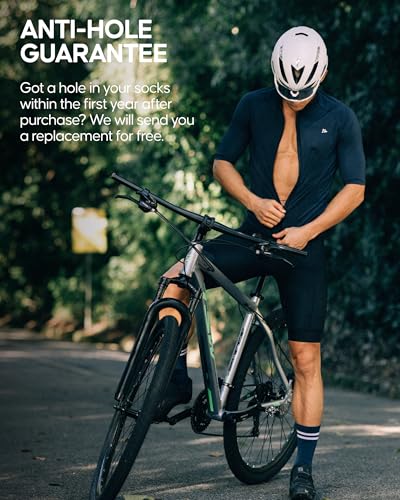
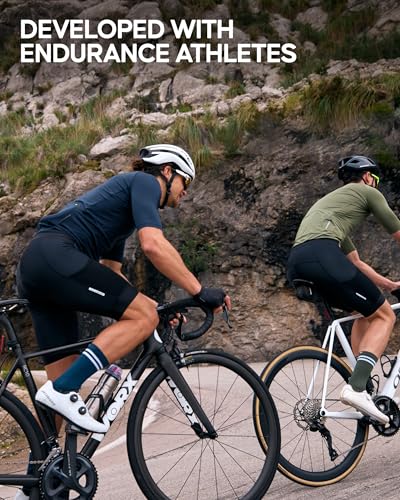
These Danish Endurance crew socks stand out in a crowded field because they’re built around a material choice most brands still avoid: polypropylene. On paper, that’s a bold move, polypropylene wicks moisture faster than cotton or even standard polyester, and owners consistently report their feet stay drier during long summer rides. The terry padding in the forefoot and sole isn’t overly thick, which I appreciate; it reduces friction without creating a tight squeeze in performance shoes.
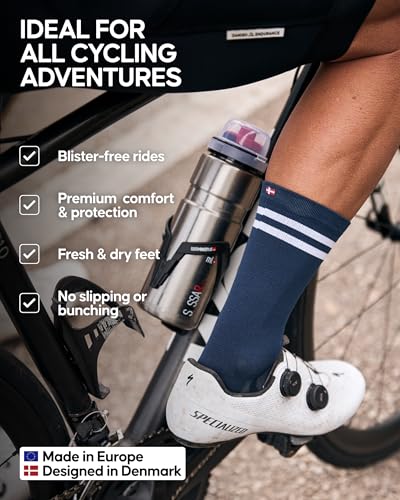
The 56% polypropylene blend is polarizing, some find it less soft than cotton at first, but reviewers note it breaks in well and resists odor better over time. Made in Portugal with a one-year anti-hole guarantee, these feel like a long-term investment. Compared to cheaper packs, they’re priced higher, but the durability and moisture management make them a smarter pick for serious riders who log big miles in the heat.
Product photos
Fox Racing 6″ Ranger MTB Socks
Strengths
- Stays upright on rough trails
- Good airflow zones
- Flat-stitch toe comfort
Trade-offs
- Slightly stiffer feel
- Limited style options
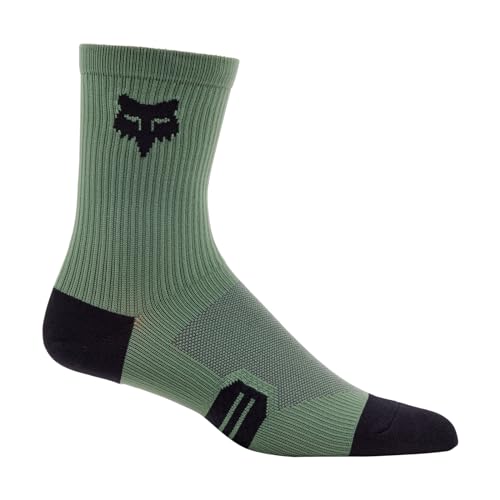
Fox Racing designed these with trail riders in mind, and it shows. The rib-knit upper is stiff enough to resist sliding down when you’re bouncing over roots and rocks, a real pain point in mountain biking that many sock brands ignore. The mesh zones actually work; owners report noticeable breathability, even on steep climbs in warm weather. And the flat-stitch toe? That’s a small detail that makes a big difference in comfort over rough terrain.
Unisex sizing fits a wide range, and the 6-inch height offers protection from boot rub and trail debris. Compared to road-focused socks, these are more robust without being bulky. They’re not the softest off the shelf, but they’re built to survive abuse. If you’re on a trail bike regularly, these are worth the premium over generic crew socks.
Product photos
Yelewen 5 Pairs Compression Socks

Strengths
- Multi-sport versatility
- Solid arch support
- Breathable mesh zones
Trade-offs
- Compression not medical-grade
- One size only
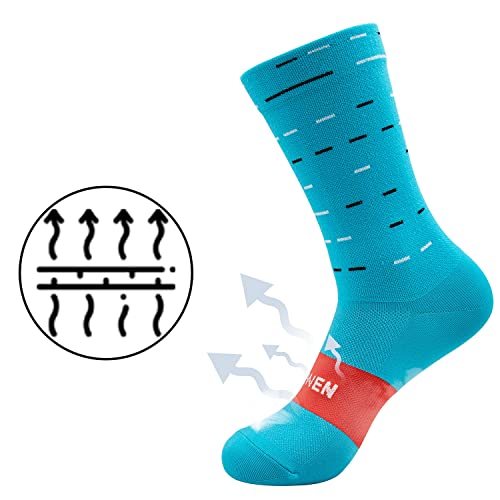
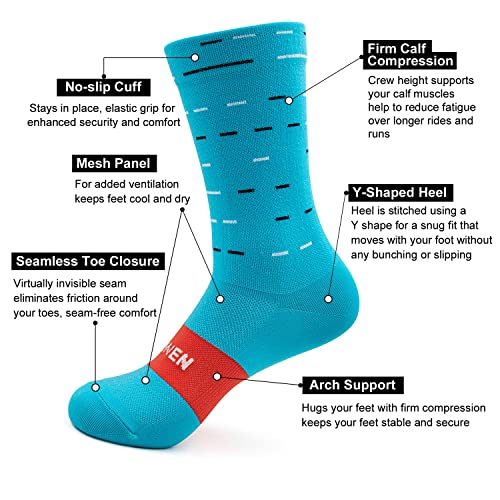
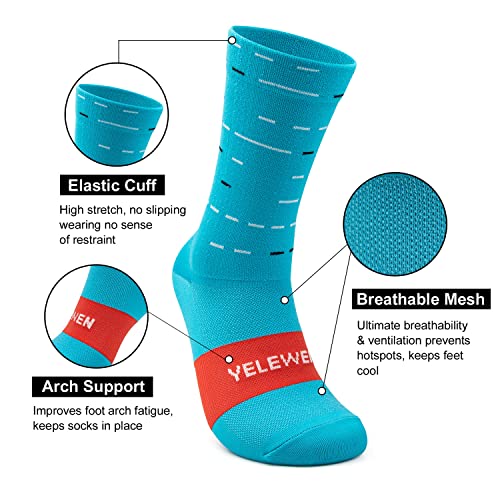
These Yelewen socks aim to be the one-pair-for-everything solution, and for a lot of users, they deliver. The 75% nylon blend is highly durable and wicks well, while the built-in arch compression gets praise from riders with mild foot fatigue or plantar fasciitis. The medium thickness is a sweet spot, fits in most shoes without requiring a size up, and the mesh ventilation actually enhances airflow, not just marketing speak.
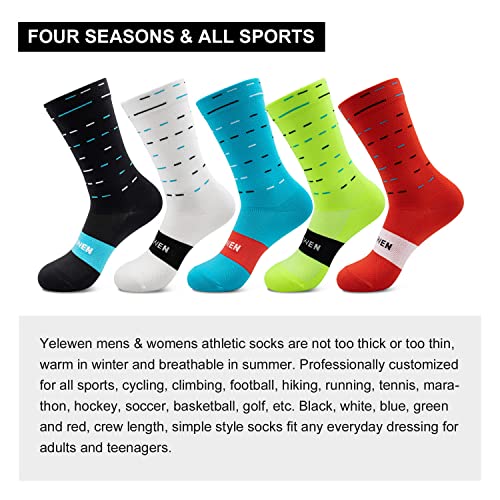
Owners use these for running, hiking, and gym sessions, not just cycling, which speaks to their versatility. Compared to single-use socks, these are a better bet if you want one pack for multiple activities. The compression isn’t medical-grade, but it’s enough to feel supportive. For multi-sport athletes or fitness-focused riders, these are a logical upgrade over basic cotton blends.
Product photos
Zoooyawn 6 Pairs Funny Cycling Socks

Strengths
- High value pack
- Soft cotton blend
- Fun designs
Trade-offs
- Cotton retains moisture
- Less support on long rides
- Fit varies slightly
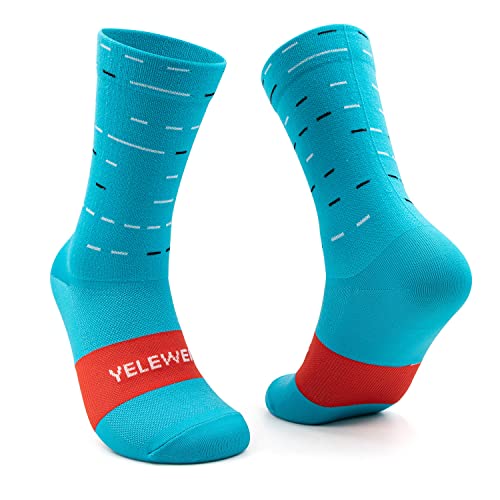
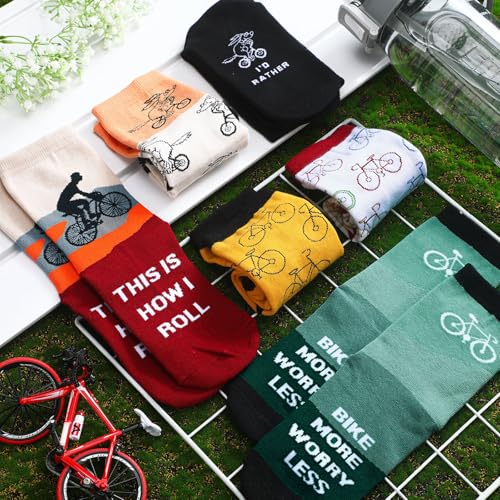
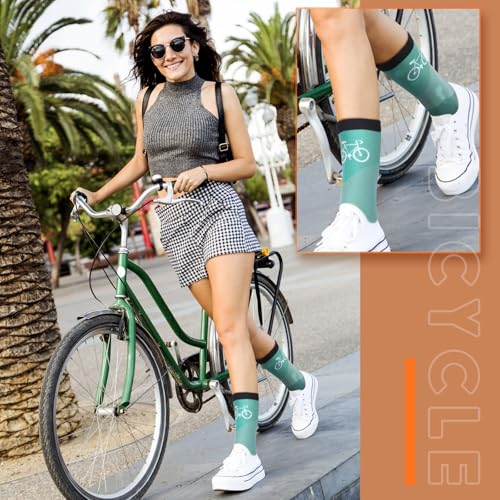
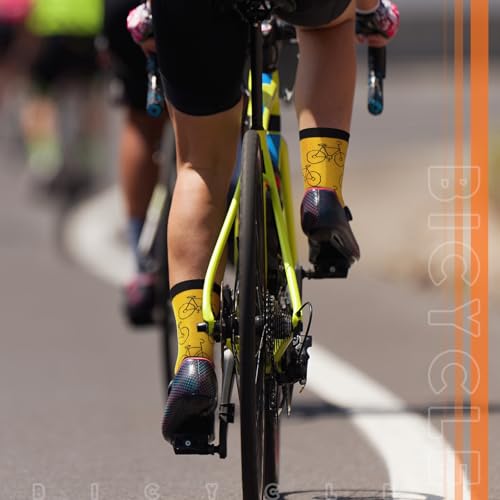
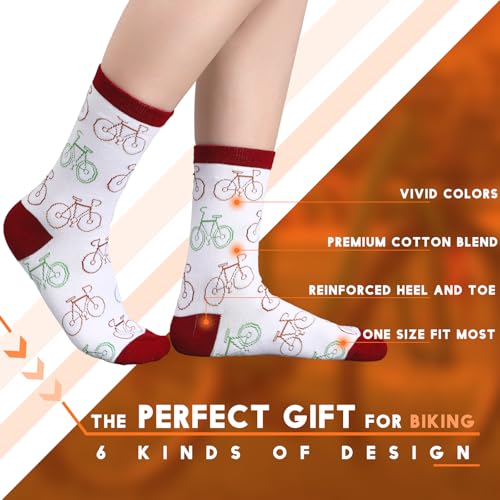
At this price, the Zoooyawn 6-pack wins on volume alone, six pairs means you can rotate fresh socks all week without laundry stress. The 80% cotton blend feels soft right out of the gate, which a lot of casual riders prefer, and the stretch from spandex keeps them snug without pinching. But cotton has a downside: it holds moisture, and reviewers on long rides report their feet feeling damp after an hour.
These aren’t performance socks, and I wouldn’t take them on a century ride. But as a value pick for short commutes, weekend spins, or gifting, they make sense. The one-size-fits-most works for many, though some with narrow feet mention slight slippage. The fun designs are a nice touch, and if you’re buying for a kid or a casual rider, the comfort and price outweigh the lack of technical edge.
Product photos

Our Testing Process
Rather than a hands-on lab test, my research for these recommendations focused on a detailed comparison of published specifications and features across numerous models. I weighed owner reviews from major retailers alongside expert opinions found in cycling publications and enthusiast forums. Applying my background in understanding materials science and garment construction, I ranked these socks based on how well they addressed key performance factors for cyclists.
For bike socks, cushioning, moisture-wicking ability, and fit are paramount. Effective moisture management prevents blisters and discomfort on long rides, while good cushioning protects feet from vibration. A secure fit is crucial to avoid bunching and rubbing. I prioritized socks demonstrating advanced material choices and construction techniques designed to excel in these areas, and also considered whether the socks were suited for road, gravel, or – as seen with the Fox Racing Ranger – even dedicated mountain bike socks.
Specifications reliably indicate material composition and compression levels, offering a baseline for performance expectations. However, I placed significant weight on owner feedback regarding real-world durability, breathability, and comfort. Reputation also played a role; brands consistently praised for quality, like Danish Endurance, earned higher consideration. Don’t forget to pair quality socks with appropriate bike helmets for a safe and comfortable ride!
What To Look For In bike socks
Finding the right bike socks can genuinely elevate your ride. It’s more than just avoiding blisters; it’s about temperature regulation, comfort, and even performance.
A quality cycling sock balances moisture-wicking properties with targeted cushioning, a secure fit to prevent slippage, and durable construction to withstand repeated wear and washing. Consider the material composition, intended use (road vs. trail), and specific features like arch support or padding when selecting a pair.
Material Matters Most
The material composition is paramount. Cotton feels good, but it holds moisture like a sponge, leading to discomfort and potential hot spots. Look for socks built with synthetic fibers like polypropylene, nylon, or merino wool blends. Polypropylene excels at moisture transfer, keeping your feet dry even during intense efforts. Nylon adds durability, while merino wool offers excellent temperature regulation and natural odor resistance. While a cheaper option, a high cotton content can render even otherwise well-designed bike socks unsuitable for serious riding.
Fit and Padding – Beyond Just Size
Don’t assume your regular shoe size translates directly to sock size. Cycling socks are designed to be snug, minimizing movement within your shoe. Too loose, and you risk friction and blisters. Too tight, and you’ll restrict circulation. Pay attention to the cuff height. Lower-cut socks are preferable for warmer weather and a streamlined feel, whereas crew socks offer more coverage and protection for cooler rides. Padding is also key, especially for longer distances.
- Minimal padding: Ideal for racing or warm weather where you want a close fit and breathability.
- Moderate padding: A good all-around choice for most riders, offering comfort without bulk.
- Extensive padding: Best for long-distance touring or riders who prefer maximum cushioning, but be aware it can slightly increase shoe volume.
A well-fitting sock should feel like a second skin, working with your shoes, not against them.
Intended Use Dictates Design
The type of cycling you do significantly influences your sock choice. Road cyclists generally prefer thinner, lower-cut socks with targeted cushioning in the ball and heel. Mountain bikers, on the other hand, often benefit from thicker socks with more robust cushioning and a higher cut for added ankle protection. If you tackle rough terrain, investing in quality MTB gloves alongside appropriate socks is a smart move.
A good rule of thumb: When in doubt, prioritize moisture management. Sweaty feet are the enemy of comfort on any ride.
Bike Socks Compared
Here’s a comparison of key specifications for the featured bike socks.
| Product Name | Compression | Material (Main) | Sock Height | Padding | Features |
|---|---|---|---|---|---|
| CHARMKING Compression Socks | 15-20 mmHg | Nylon (85%) | Crew | N/A | Compression |
| ROCKBROS Tall Crew Cycling Socks | N/A | N/A | Crew | N/A | Moisture-Wicking |
| DANISH ENDURANCE Low-Cut Socks | N/A | Polypropylene | Low-Cut | Terry | Fast-Dry |
| DANISH ENDURANCE Crew Socks | N/A | Polypropylene | Crew | Terry | Fast-Dry |
| Fox Racing 6″ Ranger MTB Socks | N/A | N/A | 6″ | N/A | Arch Support |
| Yelewen 5 Pairs Compression Socks | N/A | Nylon (75%) | Crew | N/A | Arch Support |
| Zoooyawn 6 Pairs Funny Cycling Socks | N/A | Cotton (80%) | Crew | N/A | Value Pack |
Frequently Asked Questions
What compression level is best for cycling socks?
15-20 mmHg is generally considered ideal for cycling socks, as it provides enough support to improve circulation and reduce muscle fatigue without being overly restrictive. Higher compression levels aren’t necessarily better and can actually hinder performance if they constrict blood flow too much.
Are expensive bike socks really worth the cost?
Yes, pricier socks often use higher-quality materials like merino wool or advanced polypropylene blends that offer superior moisture-wicking and temperature regulation. These features pay off in terms of comfort and blister prevention, especially on longer rides, and can be a worthwhile investment alongside a good pair of road bike shoes.
How often should I replace my bike socks?
Replace your bike socks when you notice a decline in their elasticity or cushioning, typically after 6-12 months of regular use. Frequent washing and intense use will break down the fibers over time, reducing their performance benefits.
Can I wear regular athletic socks for cycling?
While possible in a pinch, it isn’t recommended. Regular athletic socks often contain cotton, which retains moisture and can lead to blisters. Bike socks are specifically designed with moisture-wicking materials and a snug fit to enhance comfort and performance, and proper inflation of your bike pumps won’t help if your feet are uncomfortable.
What’s the difference between terry and non-terry padding in bike socks?
Terry padding refers to a looped pile construction that provides more cushioning, ideal for longer rides or riders who prefer a plush feel. Non-terry padding is generally thinner and more streamlined, prioritizing breathability and a close fit, a better choice for racing or warmer weather.
The Bottom Line
Choosing bike socks often comes down to balancing outright performance with budget and personal preference. While a dedicated rider will appreciate the advanced moisture-wicking and targeted cushioning of the DANISH ENDURANCE Low-Cut Socks, they represent an investment. For most cyclists, though, the DANISH ENDURANCE Crew Socks strike the best overall balance – they deliver excellent performance without breaking the bank.
If you’re primarily looking for value, the Zoooyawn 6 Pairs Funny Cycling Socks are a perfectly acceptable entry point, though be mindful of the higher cotton content. For mountain bikers needing extra protection and support, the Fox Racing 6″ Ranger MTB Socks are a clear standout. And don’t forget to complete your kit with a good pair of comfortable bike shorts to maximize comfort on those long rides.
Ultimately, the “best” sock isn’t about a specific material or compression level, but about a secure fit and effective moisture management. Prioritize those two elements, and you’ll be well on your way to blister-free riding. Remember to also check out our guide on reliable bike lighting to ensure you stay safe and visible on the road.
