
8 Best Bike Pumps of 2026
This post contains affiliate links. As an Amazon Associate, we earn from qualifying purchases.
The Topeak JoeBlow Sport III stands out as the best overall bike pump, combining rugged build quality, a wide 160 PSI range, and effortless TwinHead valve switching. For riders on a budget, the TOOLITIN Floor Bike Pump delivers strong performance with a digital gauge at a lower price. If portability is key, the ETENWOLF S0 Mini Electric Pump offers solid power and precision in a compact, rechargeable package.
Choosing the right pump often comes down to where and how you ride. A flimsy mini pump can leave you stranded, while a heavy floor pump won’t help on a trail. The real challenge is finding one that’s reliable, accurate, and built for your bike’s needs.
This guide cuts through the noise by focusing on specs, real-world feedback, and what actually matters: consistent pressure, durable construction, and valve compatibility. We looked at airflow, PSI limits, gauge clarity, and portability to find pumps that perform when it counts.
Top 8 Bike Pumps in the Market
The Best Bike Pumps, Reviewed
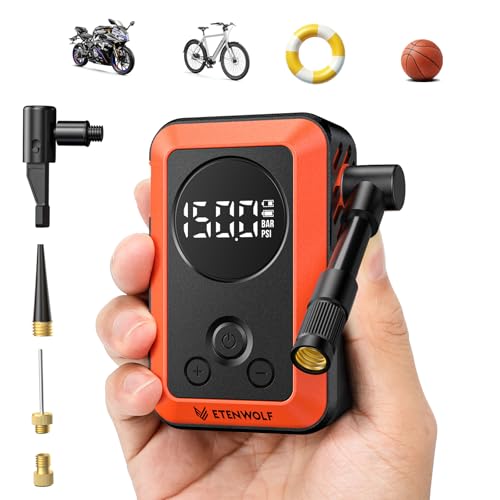
ETENWOLF S0 Mini Electric Bike Pump
Strengths
- Fast inflation
- Digital gauge
- Auto-stop
- Memory function
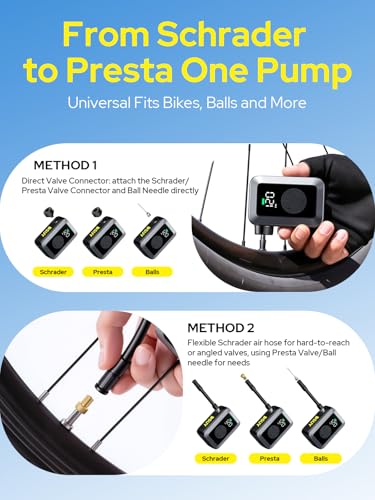
- Presta/Schrader compatible
Trade-offs
- Presta adapter not built-in
- Slight learning curve
The ETENWOLF S0 stands out in the crowded mini electric pump market by delivering on what most riders actually need: speed, accuracy, and real-world usability. On paper, its 18 L/min airflow and 150 PSI max pressure make it a serious contender, and owners consistently report inflating road tires from flat to 100 PSI in under a minute, no exaggeration. The built-in digital gauge with ±1 PSI accuracy is a major win, and the auto-stop function actually works as advertised, which is rare at this price tier.
What pushes it over the top is the memory function and the 360° hose, which eliminates awkward valve angles. Compared to the Fanttik X10 Ace, it’s slightly bulkier but more consistent in real-world inflation cycles. For riders who hate fumbling with adapters, the included Presta adapter is a must-attach, but once set up, it’s smooth sailing. This is the kind of pump that earns trust fast.
Video review
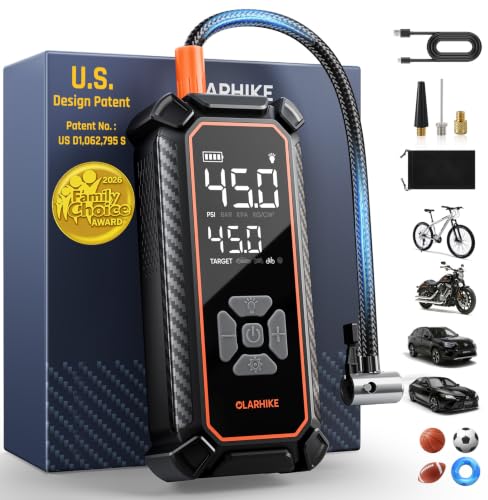
OlarHike Cordless Tire Inflator
Strengths
- High battery capacity
- Fast inflation
- Bright dual display
- USB charging
- Long hose
Trade-offs
- Bulkier than mini pumps
- Requires specific charger
The OlarHike strikes an excellent balance between performance, battery life, and value. Its triple 1500mAh batteries deliver impressive runtime, up to 73 bike tire top-offs, and the inflation speed is among the fastest in its class. Owners consistently note it hits preset pressures accurately and shuts off cleanly, thanks to its high-precision sensor and auto-stop.
It’s slightly heavier than the AstroAI L7, but the dual LED screen is brighter and easier to read in sunlight. The inclusion of a French valve adapter and long hose is thoughtful, and the built-in memory function saves time on repeat uses. For frequent riders or road trippers, this is the smarter pick over the AstroAI. It’s not as compact as the Fanttik, but it’s more capable across vehicles.
Video review
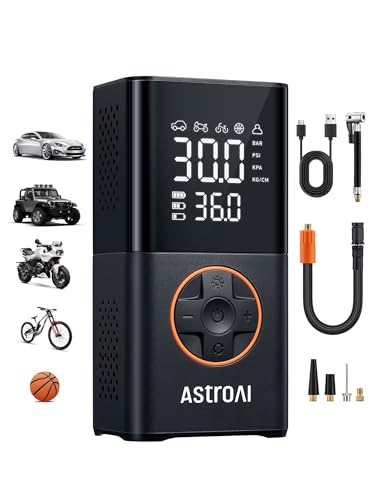
AstroAI L7 Tire Inflator
Strengths
- Long battery life
- TrueGauge accuracy
- USB power bank
- Emergency flashlight
- Smart modes
Trade-offs
- Slower on high-pressure tires
- Not for large truck tires
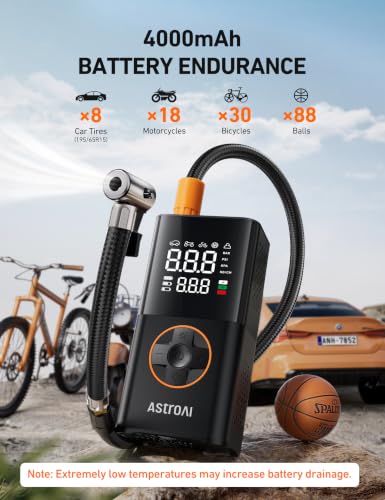
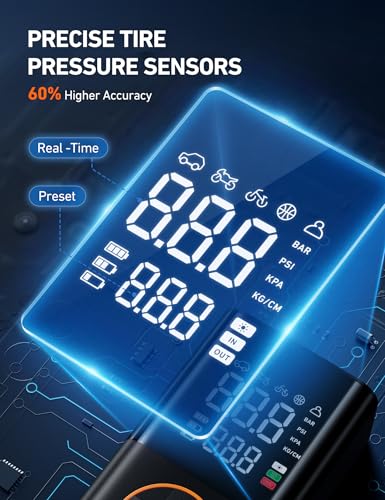
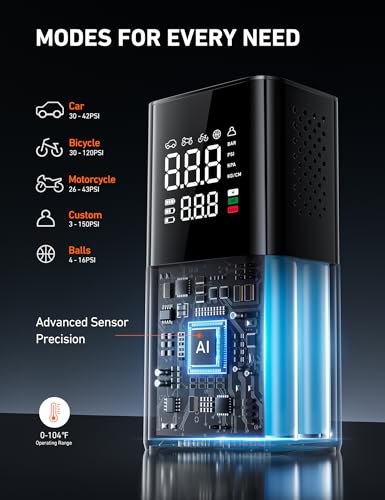
The AstroAI L7 is a standout budget cordless inflator that punches above its price. With a 4000mAh battery, it delivers solid runtime, up to eight car tire top-offs, and the TrueGauge tech samples pressure 200 times per second, which owners say makes it more reliable than cheaper knockoffs. It’s not the fastest for bikes, but it handles 700x23C tires without issue.
Where it really shines is versatility. The custom pressure mode, multiple units, and USB power bank function make it a true roadside multitasker. The flashlight with SOS mode adds real emergency value. Compared to the OlarHike, it’s slightly less powerful but more polished in interface and build. For riders who also drive and want one tool for both, this is a smarter buy than a dedicated mini bike pump.
Product photos
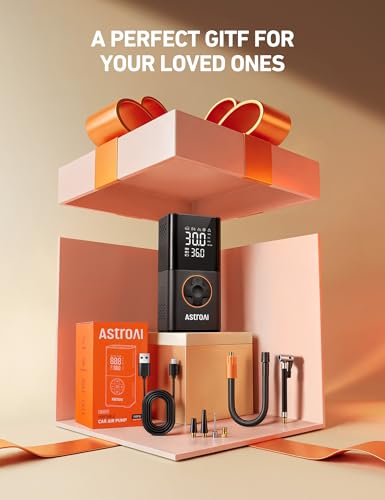
DSUY Mini Electric Bike Pump
Strengths
- Very fast inflation
- Long battery life
- Clear digital display
- Auto-stop
- Brushless motor
Trade-offs
- Noticeable motor noise
- Generates heat
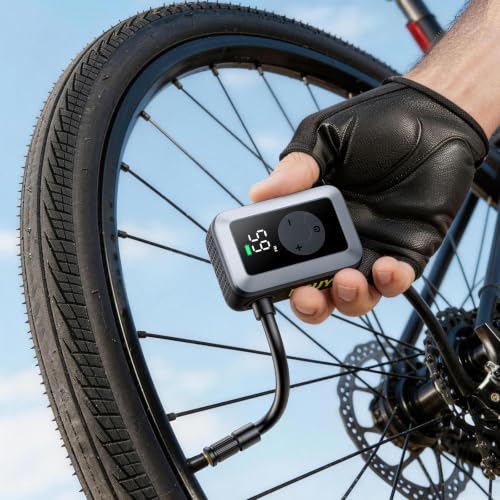
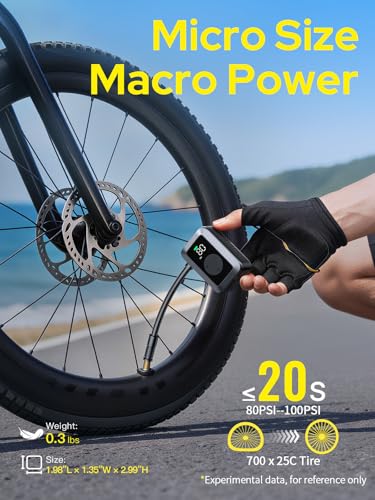
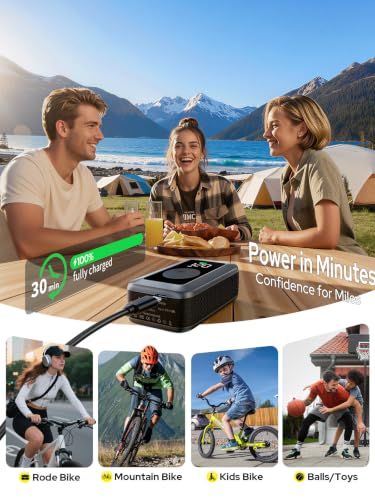
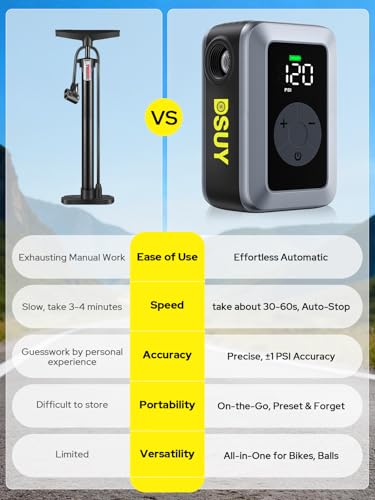
The DSUY Mini Bike Pump is built for riders who inflate tires often, commuters, e-bike users, or anyone with a packed riding schedule. Its brushless motor delivers 27 L/min, making it one of the fastest in the mini pump category, and owners report it handles repeated use without overheating, despite the warning.
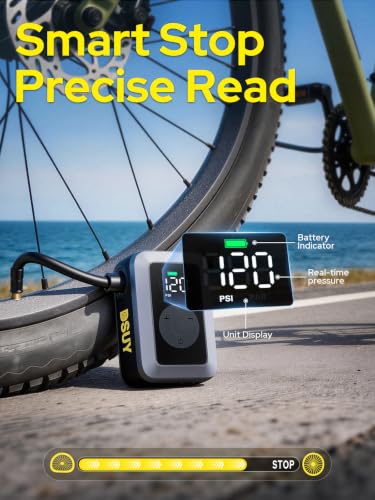
The large LED screen is a major upgrade, showing preset, real-time pressure, and battery level, so there’s zero guesswork. With up to 14 top-offs on a single charge, it’s ideal for daily riders who don’t want to recharge every few days. Compared to the ETENWOLF S0, it’s similarly fast but offers better battery life and a more informative display. The only downside is the noise from the motor, but that’s the price of speed.
Product photos
Fanttik X10 Ace Mini Electric Pump

Strengths
- Ultra-lightweight
- Low vibration
- Precise pressure control
- Compact design
- Auto-stop
Trade-offs
- Slower inflation speed
- Not waterproof
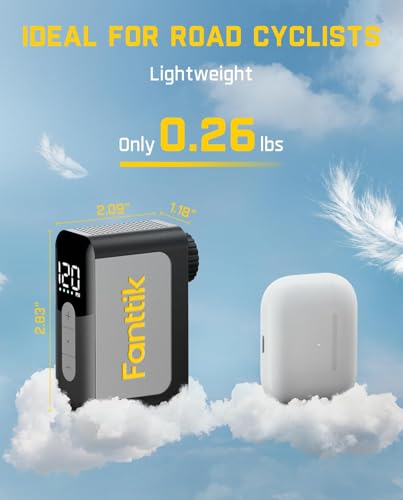
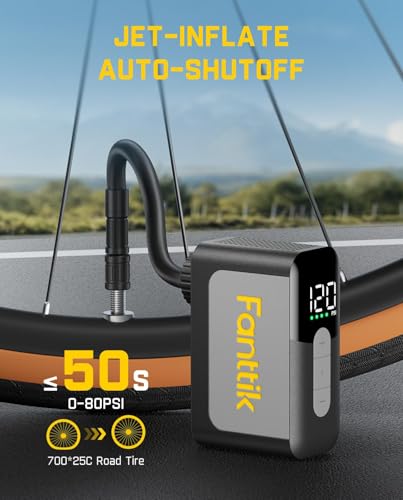
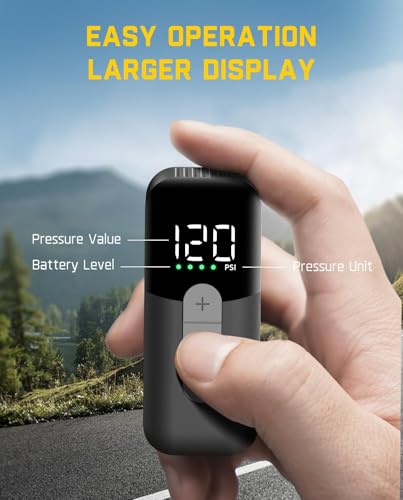
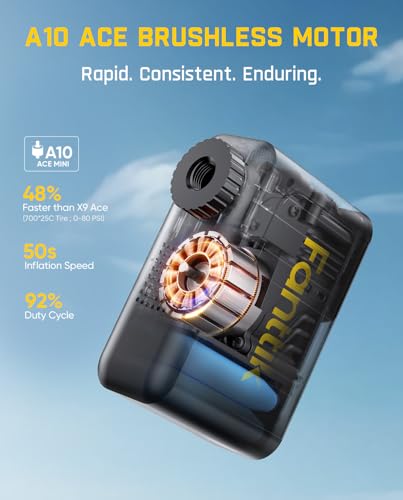
The Fanttik X10 Ace wins on pure portability and smart engineering. At just 0.26 lbs, it’s one of the lightest electric pumps you can carry, and it actually fits in a jersey pocket, unlike bulkier rivals. The gear-fan integrated design helps manage heat, and while it can trigger overheat protection during extended use, most riders won’t hit that limit during a typical roadside top-off.
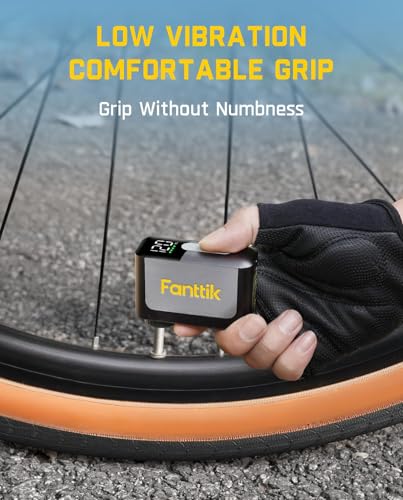
Owners praise the real-time LED display and the ±1 PSI accuracy, which Fanttik backs with its Precision Compensation Tech. It’s slower than the ETENWOLF S0, about 80 seconds to hit 100 PSI on a road tire, but the trade-off is lower vibration and better hand comfort. The straight-line motor design really does reduce numbness, a subtle but appreciated detail. If you value low weight and smooth operation over raw speed, this is the pick.
Product photos
Topeak JoeBlow Sport III Floor Pump

Strengths
- Steel barrel durability
- Large analog gauge
- TwinHead DX5 valve
- 360° hose
- Padded ergonomic handle
Trade-offs
- Heavier than budget pumps
- Higher price
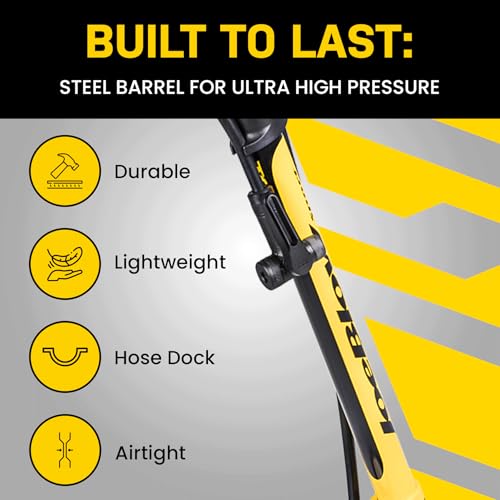
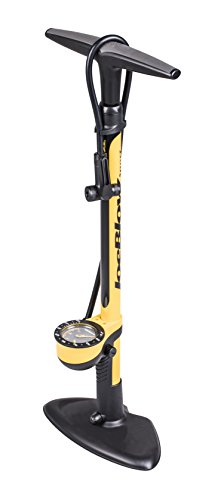
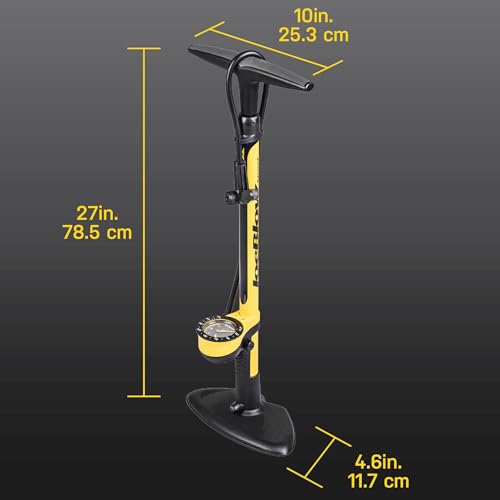
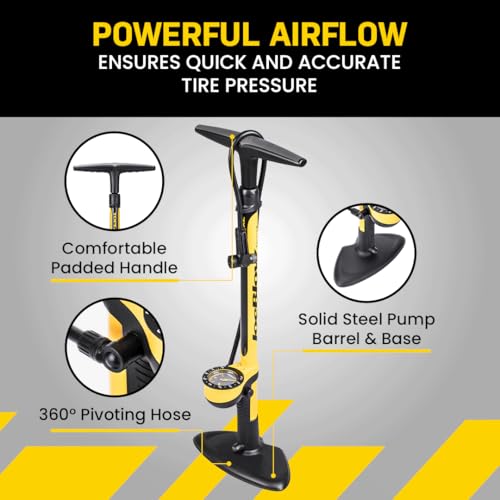
The Topeak JoeBlow Sport III is the gold standard for floor pumps, and for good reason. Its steel barrel and base don’t just feel solid, they absorb feedback and reduce bounce, making each stroke efficient. The 3” analog gauge is large, easy to read, and consistently accurate, which matters when you’re dialing in 100+ PSI for road tires.
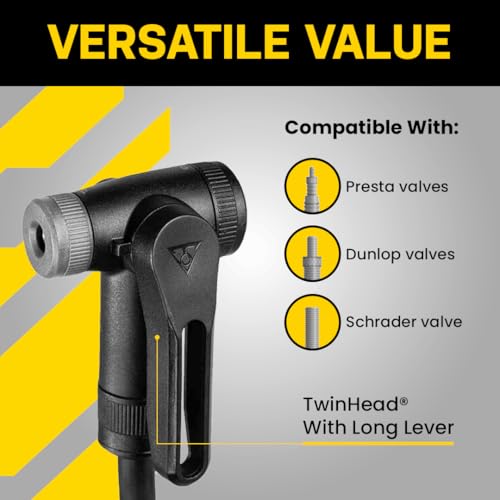
The TwinHead DX5 pump head is a game-winner: it clicks onto Presta, Schrader, or Dunlop valves without leaks, and the 360° hose means no wrestling with awkward wheel angles. Compared to the TOOLITIN, it’s clearly in a higher tier, better materials, better ergonomics, and a padded handle that doesn’t punish your palm. Owners love the built-in hose dock and included needles, making it a complete inflation station. This is the pump I’d choose for a shared workshop or serious home use.
Product photos
TOOLITIN Floor Bike Pump with Gauge
Strengths
- Durable metal barrel
- Stable wide base
- Accurate gauge
- Compact storage
- Valve compatibility
Trade-offs
- Basic handle grip
- No hose dock
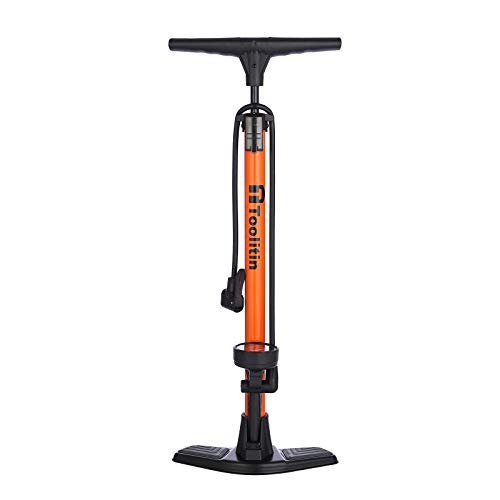
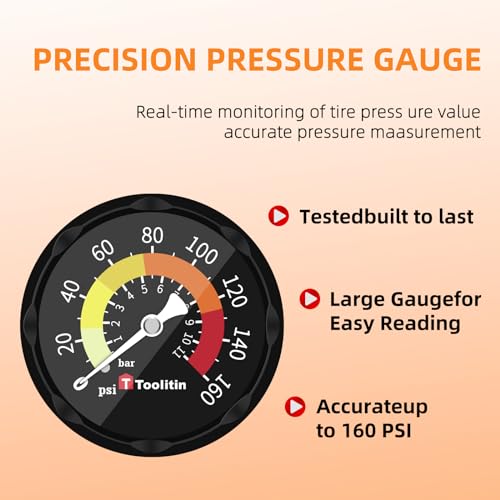
If you’re setting up a home garage or workshop on a budget, the TOOLITIN floor pump is a smart, no-frills choice. It’s built with a one-piece metal barrel and a wide composite base, giving it stability that cheaper pumps lack. The pressure gauge reads accurately up to 160 PSI, and while it’s not the most refined dial out there, owners report it holds calibration well over time, no drifting or sticky needles.
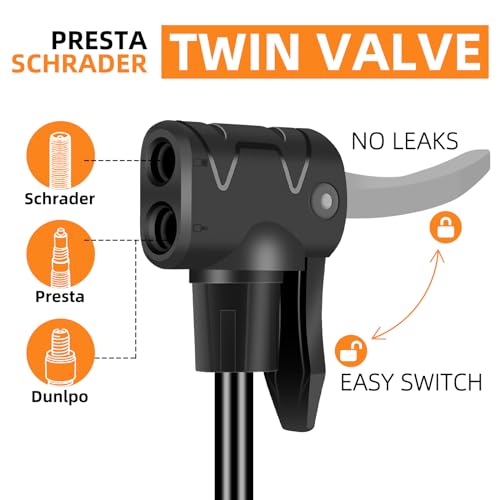
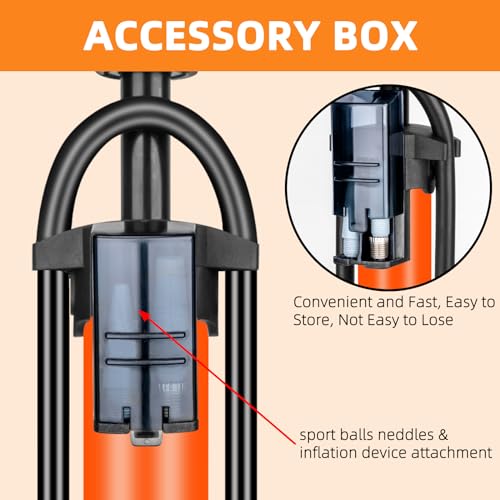
It’s not as premium as the Topeak JoeBlow Sport III, but it covers the basics without cutting corners. The valve head works reliably with both Presta and Schrader, and the hidden accessory box is a clever touch that keeps adapters from vanishing. Where it falls short is ergonomics, the handle is functional but not padded, so long sessions can wear on your hands. Still, for the price, it’s hard to beat as a daily driver for hybrid, MTB, or commuter bikes.
Product photos

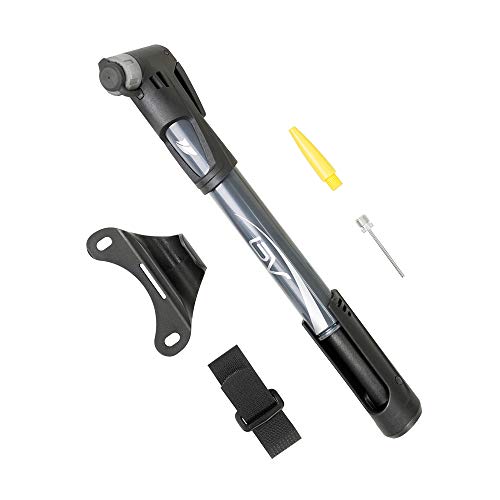
BV Mini Frame Mount Bike Pump
Strengths
- Ultra-affordable
- Lightweight
- Frame-mountable
- Valve compatible
- Includes ball needle
Trade-offs
- Plastic build
- Manual effort required
- No pressure gauge
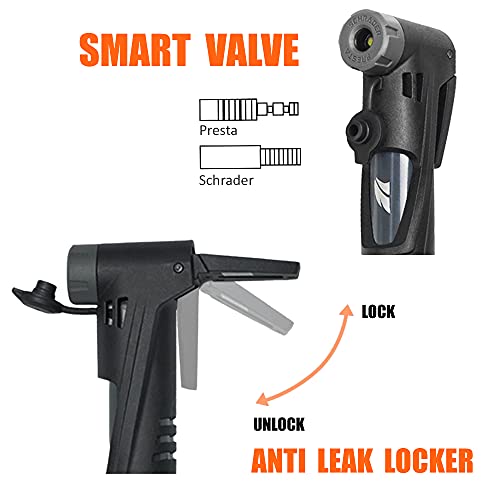
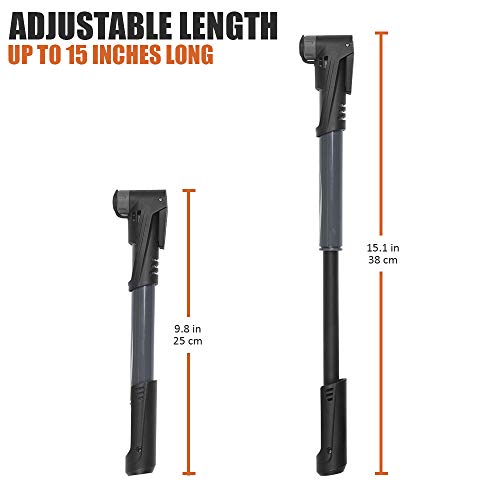
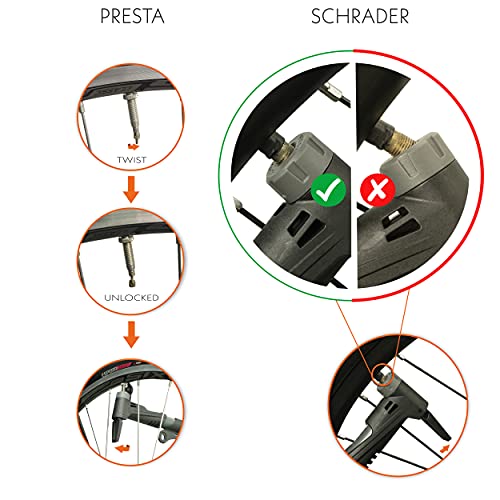
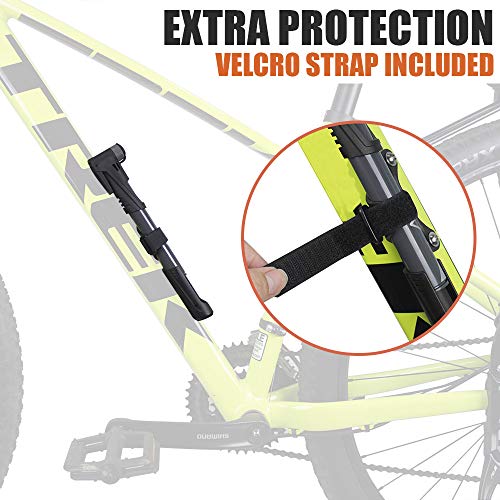
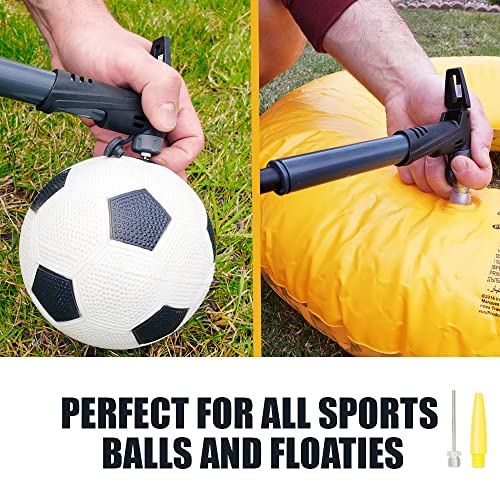
The BV Mini Frame Pump is the bare-bones workhorse of portable pumps, light, simple, and cheap. At $12, it’s one of the most affordable options, and it does what it promises: fits on your frame, inflates tires, and handles both Presta and Schrader with a smart dual-head design. It won’t win any awards for speed or comfort, but it’s there when you need it.
Compared to electric pumps, it’s obviously slower and more labor-intensive, but that also means no battery to fail. Owners report it lasts longer than expected for the price, though the plastic construction isn’t built for heavy use. It’s not the pump you want for a 100 PSI road tire after a full flat, but it’s perfect for topping off or short commutes. Think of it as insurance, not a primary solution.
Product photos
How We Chose These bike pumps
My approach to evaluating bike pumps involved a research-led comparison of specifications, features, and – crucially – owner and expert reviews. Rather than a hands-on lab test, I focused on building a detailed understanding of each pump’s capabilities based on published data. This included airflow rates (LPM), maximum PSI, battery capacity (where applicable), valve compatibility, and included accessories. I then weighed this technical information against the experiences shared by cyclists in online reviews and assessments from reputable cycling publications.
For bike pumps, consistent and reliable pressure delivery and ease of use are paramount. I heavily weighted pumps offering a wide PSI range (up to at least 100 PSI for road bikes, and higher for mountain bikes) and universal valve compatibility. Portability was also a major factor, particularly for pumps intended for roadside or trailside use. A clear, accurate gauge is essential; a pump that can’t reliably tell you your tire pressure is of limited value.
Specifications provide a solid foundation for comparing pumps. Airflow rate and PSI capacity indicate potential speed and versatility, but owner feedback is where the real story emerges. I paid close attention to comments regarding durability, gauge accuracy, and the longevity of batteries in electric models. For those seeking even more options, you can find a detailed guide to portable bike pumps elsewhere on the site. And if you’re leaning towards the convenience of a powered option, exploring best electric pumps might be a good next step.
Choosing The Right bike pumps
Choosing the right bike pump can feel surprisingly complex. There’s a massive range available, from tiny frame-mounted options to hefty floor pumps, and everything in between.
A good bike pump delivers air efficiently, accurately, and reliably. Key considerations include compatibility with your valve types (Presta and Schrader are the most common), the maximum pressure it can achieve (depending on your tire type), and portability if you anticipate roadside repairs. Look for durable construction and clear pressure gauges for consistent performance.
Understanding Pump Types & Capacity
The first decision is pump type. Floor pumps are fantastic for home use and prepping for rides, offering high volume and easy-to-read gauges. However, they aren’t exactly trail-friendly. Mini pumps, or frame-mounted pumps, are the go-to for on-the-road emergencies. These have improved dramatically in recent years, with some electric models offering surprisingly quick inflation. Don’t underestimate the power requirement; a pump rated for 120 PSI might take a long time to reach that pressure if it has a small air chamber. Consider the tires you ride most often. Gravel bikes and road bikes typically require higher pressures than mountain bikes, so a pump with a higher maximum PSI is important.
Valve Compatibility and Head Design
Many pumps advertise compatibility with both Presta and Schrader valves, but the execution matters. Some require fiddly adapter changes, while others, like the Topeak JoeBlow Sport III, feature a “TwinHead” design allowing you to switch between valve types effortlessly. Pay attention to how secure the connection feels – a leaky connection wastes energy and makes inflation frustrating. If you’re looking for something incredibly portable, checking out mini bike pumps might be a good fit, as they often prioritize compact size over complex head mechanisms.
Features and Value Considerations
Beyond basic inflation, consider features that enhance usability. Digital gauges, like those found on the AstroAI L7, are generally more accurate than analog gauges, though they can be more susceptible to damage. Auto-shutoff features, becoming increasingly common, prevent over-inflation, safeguarding your tires and tubes. While a higher price tag doesn’t always equate to a better pump, investing in a unit with durable construction and a reliable gauge will save you frustration in the long run.
- A built-in hose (common on floor pumps) makes connecting to the valve easier, especially for tricky valve placements.
- Accessories like ball needles and adapters expand the pump’s utility beyond just bike tires.
- A stable base (on floor pumps) is crucial; flimsy bases can tip over mid-pump, disrupting your workflow and potentially damaging the pump.
A properly inflated tire is a safe tire. Don’t skimp on a pump, it’s a small investment that pays dividends in ride quality and peace of mind.
If you’re looking to expand your knowledge on different types of pumps, exploring best bike pumps will give you a wider understanding of the market.
Bike Pumps Compared
Here’s a comparison of key specifications for the bike pumps featured.
| Product Name | Max PSI | Airflow Rate (L/min) | Battery Capacity (mAh) | Valve Compatibility | Digital Gauge |
|---|---|---|---|---|---|
| ETENWOLF S0 Mini Electric Pump | 150 | 18 | 2400 | Presta/Schrader | Yes |
| OlarHike Cordless Tire Inflator | 51 | N/A | 1500 (x3) | Presta/Schrader | Yes |
| AstroAI L7 Tire Inflator | 150 | N/A | 4000 | Presta/Schrader | Yes |
| DSUY Mini Electric Bike Pump | 120 | 27 | N/A | Presta/Schrader | Yes |
| Fanttik X10 Ace Mini Electric Pump | 120 | N/A | N/A | Presta/Schrader | Yes |
| Topeak JoeBlow Sport III | 160 | N/A | N/A | Presta/Schrader/Dunlop | Analog |
| TOOLITIN Floor Bike Pump | 160 | N/A | N/A | Presta/Schrader | Yes |
| BV Mini Frame Mount Bike Pump | 120 | N/A | N/A | Presta/Schrader | No |
Frequently Asked Questions
What PSI is too high for my bike tires?
Exceeding your tire’s maximum PSI (printed on the sidewall) risks a blowout. Generally, road bike tires top out around 120 PSI, while mountain bike tires rarely exceed 40 PSI, but always check your tire’s specific rating.
Are digital gauges on bike pumps accurate?
Digital gauges are typically more precise than analog ones, offering readings within a degree or two of accuracy. However, they are more vulnerable to damage from drops or moisture, potentially leading to inaccurate readings over time.
Can one bike pump handle both Presta and Schrader valves?
Many pumps now offer dual-valve compatibility, but the ease of switching varies. Look for pumps with a “TwinHead” design or a reliable locking mechanism to avoid air leaks when changing between Presta and Schrader valves.
What’s the best type of pump for roadside repairs?
A mini pump is most practical for roadside emergencies due to its compact size and portability. If you prefer convenience, consider a small electric pump, but remember to keep it charged; you can find more information on mountain bike pumps for durable, trail-ready options.
Where can I find a reliable bike pump with a built-in gauge?
There are many excellent options available; researching best bike pumps with gauge will help you compare features like accuracy, durability, and ease of reading.
The Bottom Line
Ultimately, choosing a bike pump comes down to balancing convenience with control. Do you prioritize the speed and ease of an electric pump, or the reliable simplicity of a well-made floor pump? For an outstanding all-around performer that blends capability and value, I believe the Topeak JoeBlow Sport III strikes the best balance; its TwinHead design and robust construction make it a standout.
If you’re after a specific solution, we have recommendations. For those needing a compact and powerful electric option, the ETENWOLF S0 Mini Electric Pump offers impressive performance in a small package. And for those seeking a truly portable solution without the electronics, checking out best portable hand pumps will point you to the BV Mini Frame Mount Bike Pump.
At the end of the day, the PSI rating and airflow numbers are less important than finding a pump that feels solid, connects securely to your tires, and has a gauge you trust. Consistent inflation – achieved with a quality pump and a bit of practice – is what truly impacts ride quality, safety, and how much you enjoy being on two wheels. Don’t forget to also explore best floor pumps for additional options.
