
9 Best Bike Tire Pumps of 2026
This post contains affiliate links. As an Amazon Associate, we earn from qualifying purchases.
The Topeak JoeBlow Sport III stands out as the best overall bike tire pump, delivering rock-solid build quality and reliable high-pressure performance. For a budget-friendly yet dependable option, the BV Ergonomic Floor Pump gets the job done with no frills. If you want convenience and speed, the Fanttik X9 Ace Mini Electric is the top electric pick, combining smart features with solid output.
Most cyclists don’t realize how much a bad pump can disrupt their ride, whether it’s struggling to reach pressure, failing mid-inflate, or just falling apart after a few months. A reliable pump should be accurate, durable, and suited to your bike’s needs, whether you’re on a road bike, mountain bike, or commuter.
In this guide, I break down the top performers based on specs, real-world feedback, and what actually matters when you’re pumping up a tire. These picks reflect what holds up over time and performs when you need it most.
Top 9 Bike Tire Pumps in the Market
The Best Bike Tire Pumps, Reviewed
Topeak JoeBlow Sport III Floor Pump

Strengths
- Durable steel construction
- Accurate large analog gauge
- Universal valve head
Trade-offs
- Higher price point
- Heavier than compact models
If you’re setting up a proper home workshop, the Topeak JoeBlow Sport III is the kind of floor pump you buy once and keep for years. The steel barrel and base give it serious heft and stability, and the oversized 3” analog gauge is easy to read from any angle. Owners praise its smooth stroke and consistent sealing, especially at high pressures needed for road and gravel bikes.
The TwinHead DX5 valve is a standout, it reliably fits Presta, Schrader, and Dunlop valves without switching parts, and the long, rotating hose makes rear wheel access a breeze. It’s not the cheapest, but the build quality and thoughtful details like the hose dock and padded handle justify the price. Compared to budget pumps, this one feels like a tool, not a disposable accessory.
Video review
Fanttik X9 Ace Mini Electric Pump

Strengths
- 5000 mAh high-capacity battery
- Integrated cooling system
- All-in-one rotating hose
Trade-offs
- Premium price
- Slightly bulkier than rivals
The Fanttik X9 Ace is the luxury SUV of mini electric pumps, compact, smart, and built to impress. Its 5000 mAh battery gives it serious runtime, capable of inflating eight tires on a single charge, and the integrated cooling system lets it run continuously without overheating, a rare feature at this level.
The all-in-one hose design is slick, rotating to switch between Presta and Schrader, so there are no loose parts to lose. Owners love the 32-second inflation time for 700x23c tires and the auto-shutoff that prevents overinflation. It’s pricier than most, but if you want the most polished, reliable mini pump with no compromises, this is the one to beat.
Video review
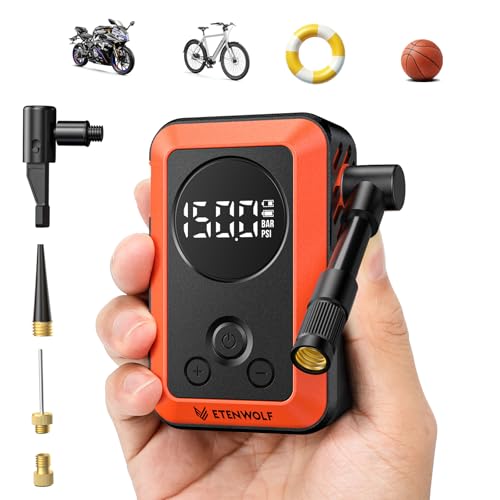
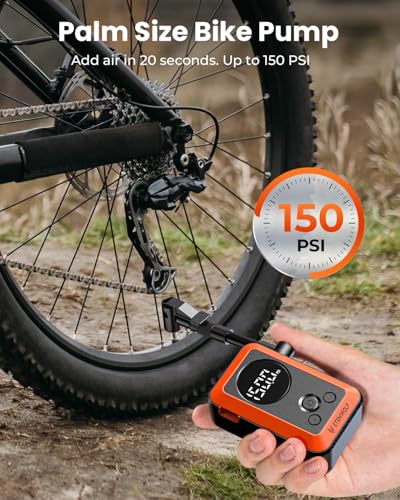
ETENWOLF S0 Mini Bike Pump
Strengths
- Ultra-fast inflation
- Precise digital gauge
- Auto-stop protection
Trade-offs
- Presta adapter not integrated
- Battery smaller than premium models
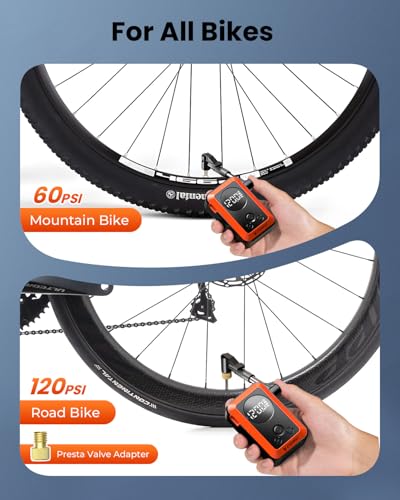
The ETENWOLF S0 stands out in the crowded mini electric pump market by delivering on its speed claims. With an 18 L/min airflow rate, it’s among the fastest in its class, inflating a road tire to 100 PSI in under a minute as owners consistently report. The digital gauge is a big win, accurate within ±1 PSI, and the auto-stop feature means you’re not guessing when to stop. That’s huge for protecting high-pressure road tires.
It’s also impressively compact, barely larger than a power bank, and the rotating hose adds real usability. The 2400 mAh battery won’t top the largest models, but eight full inflations on a charge is solid for a pump this size. Some note the Presta adapter is easy to lose, but the overall reliability and smart features make this a strong pick for riders who hate manual pumping.
Product photos


AstroAI L7 Portable Tire Inflator
Strengths
- Accurate TrueGauge screen
- USB power bank included
- Multi-mode inflation
Trade-offs
- Slower for high-pressure tires
- Not ideal for road bikes
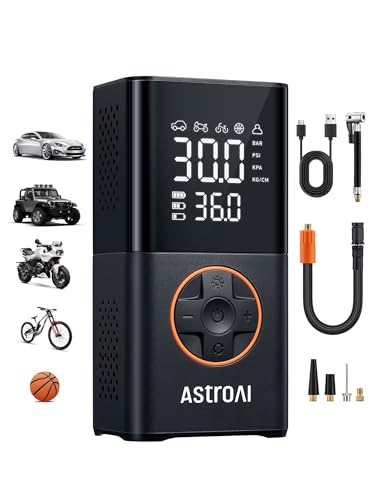
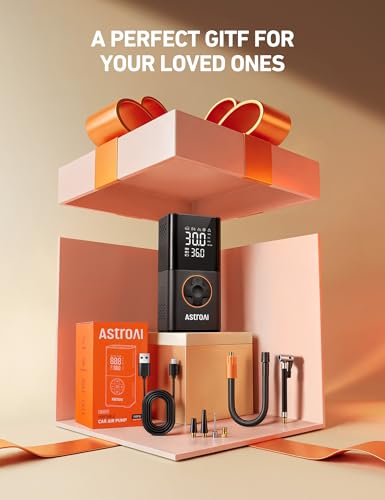
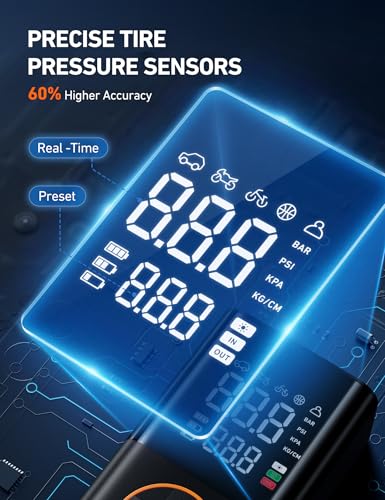
The AstroAI L7 is a budget electric pump that packs more utility than you’d expect. It’s not the fastest, but the TrueGauge screen stands out, sampling pressure 200 times per second gives it unusually reliable readings, which owners confirm matches standalone gauges. That makes it trustworthy for both bike and car tires.
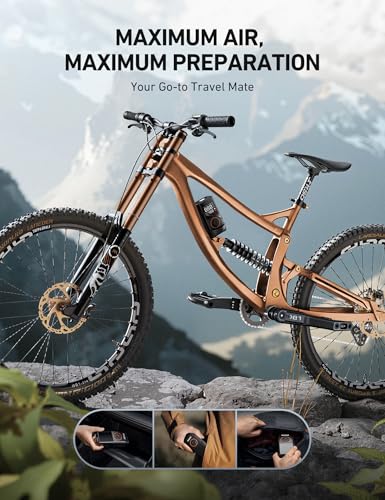
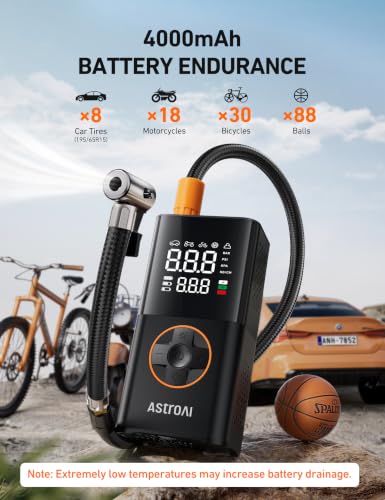
The inclusion of a flashlight, USB power bank, and multiple inflation modes adds real value. It’s compact enough for a saddle bag or glove compartment, and the 4000 mAh battery can refill eight car tires from 30 to 36 PSI. It’s not ideal for high-pressure road bikes (max 150 PSI), but for mixed use, bike, car, ball, it’s one of the most versatile budget options out there.
Product photos
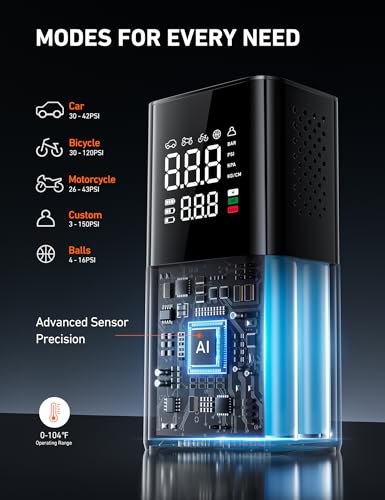
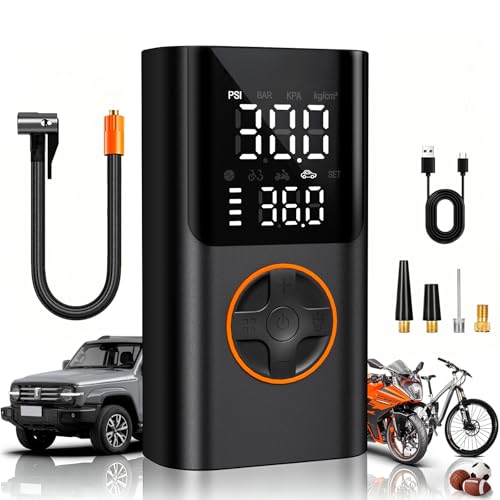
AIRSURE 150PSI Portable Tire Inflator
Strengths
- Fast inflation speed
- USB charging port
- Built-in LED light
Trade-offs
- Gauge accuracy varies slightly
- Hose could be longer
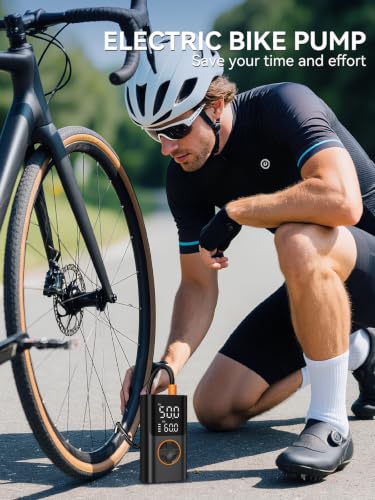
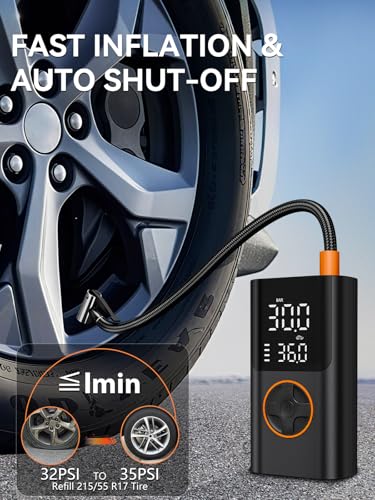
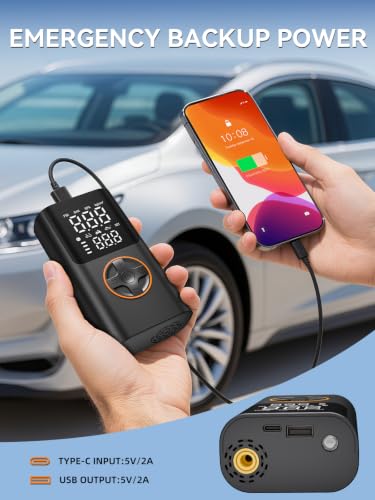
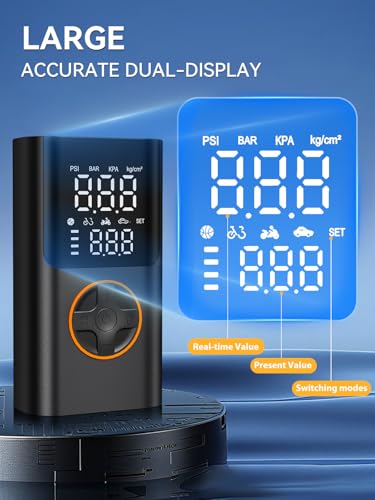
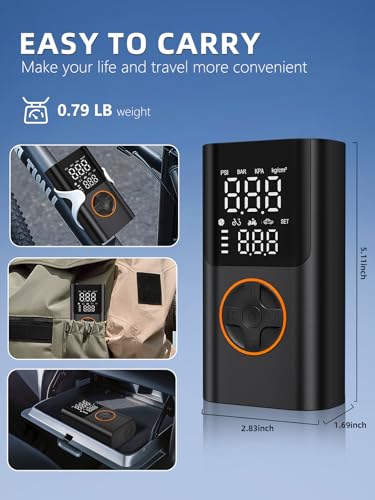
Airsure delivers a strong blend of speed, value, and emergency utility in a compact package. It claims to be 3X faster than standard pumps, and owner feedback supports that, it handles car and bike tires quickly, and the 150 PSI limit covers most needs. The memory function and auto shut-off are thoughtful touches that improve usability.
What really sets it apart is the USB output and LED light, this isn’t just a pump, it’s a roadside emergency tool. Cyclists who ride in low light or remote areas will appreciate the added safety. Build quality is solid for the price, and it fits easily in a backpack or car console. Compared to other sub-$25 options, it’s arguably the best value in the cordless category.
Product photos
BV Ergonomic Floor Pump with Gauge

Strengths
- Auto-reversible valve head
- Large easy-to-read gauge
- Comfortable handle
Trade-offs
- Gauge not as precise as high-end models
- Base slightly less stable
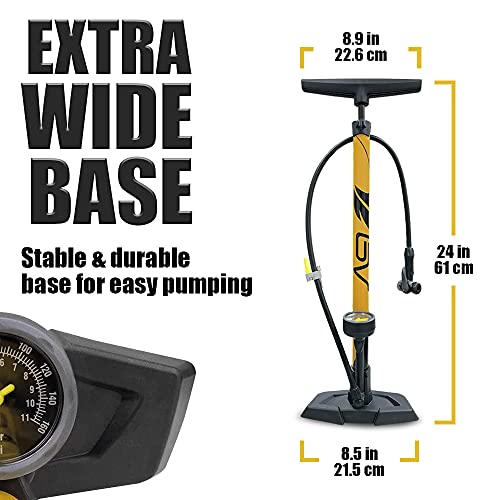
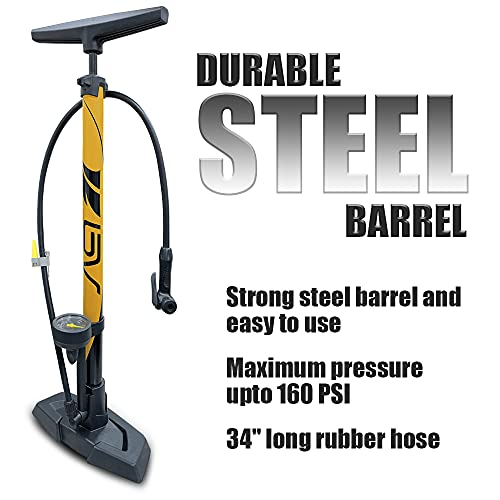
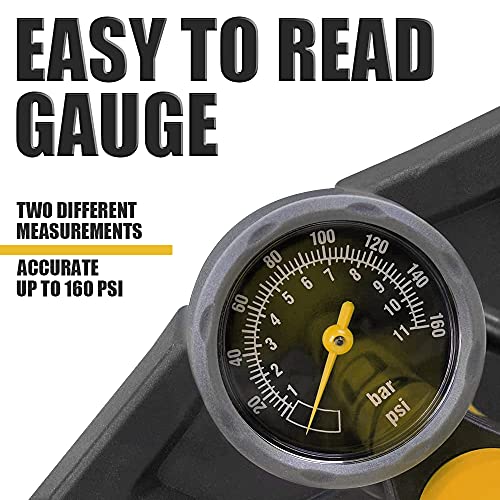
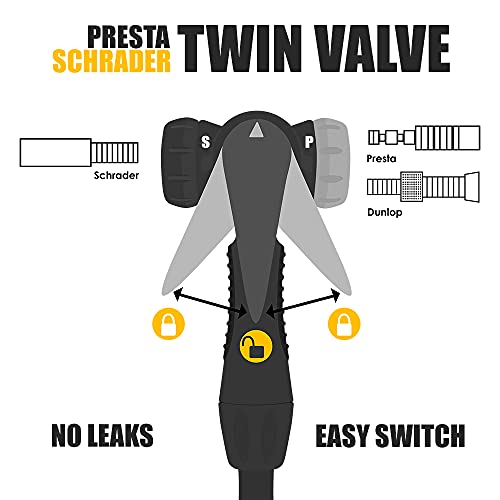
This pump hits a sweet spot in the mid-range floor pump market. The 160 PSI rating and large gauge make it suitable for road bikes, and the auto-reversible valve head is a real time-saver, no flipping or swapping parts. Owners appreciate that it rarely leaks and delivers a smooth stroke with minimal effort.
It’s not as flashy as the Topeak, but for riders who pump tires weekly, the ergonomic handle and stable base reduce fatigue. The gauge is accurate enough for most use cases, and the steel barrel suggests decent durability. At its price, it outperforms many similarly priced models that skimp on the valve mechanism or gauge quality.
Product photos
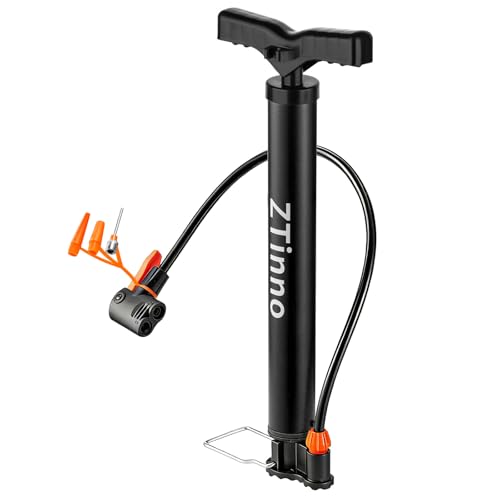
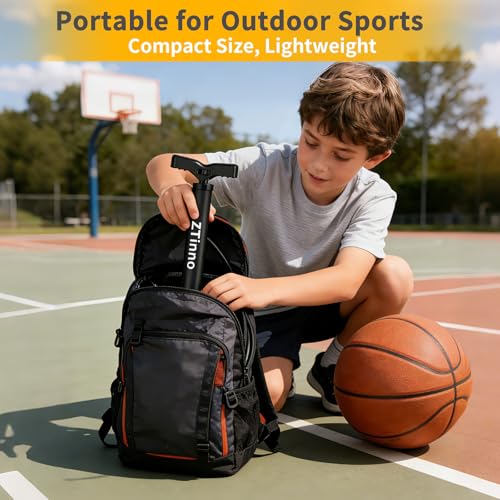
ZTinno Portable Floor Bike Pump
Strengths
- Extremely affordable
- Ultra-compact size
- Includes ball needles
Trade-offs
- Flimsy plastic construction
- Inaccurate small gauge
- Not for high pressure
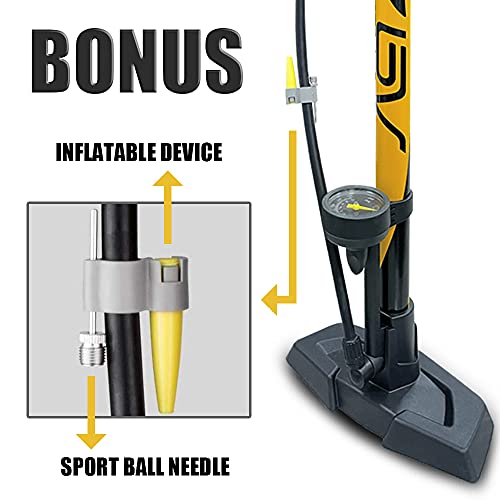
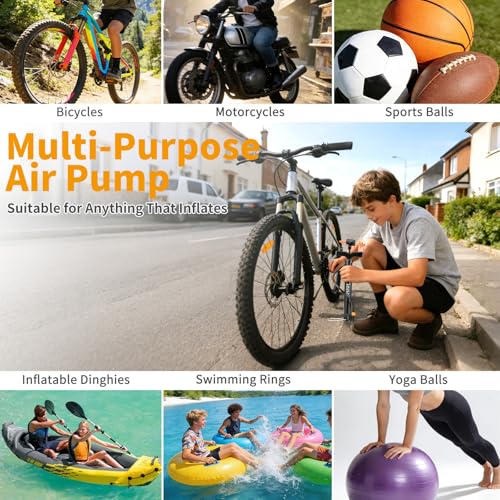
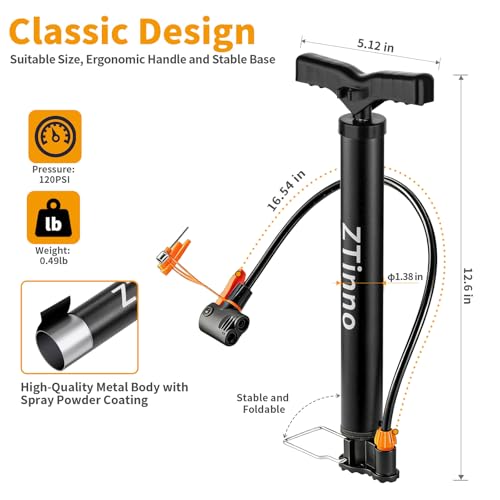
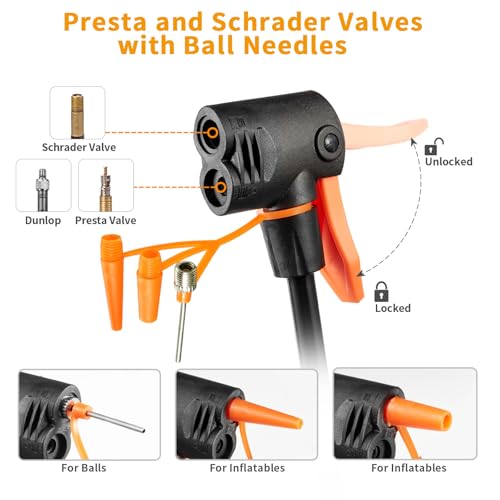
At under $7, this ZTinno pump is about as basic as it gets, but it works. It’s ultra-light and tiny, making it a decent stash option for a trunk or travel bag. The dual valve head handles Presta and Schrader without tools, and the included ball needles add versatility for sports gear.
But it’s clearly built down to a price. The gauge is small and hard to read, and the plastic parts feel fragile compared to metal-bodied pumps. It’s fine for occasional use on mountain or hybrid bikes, but don’t expect it to last through weekly pumping. Still, for the price, it’s hard to fault as a backup.
Product photos

High Pressure Bike Floor Pump
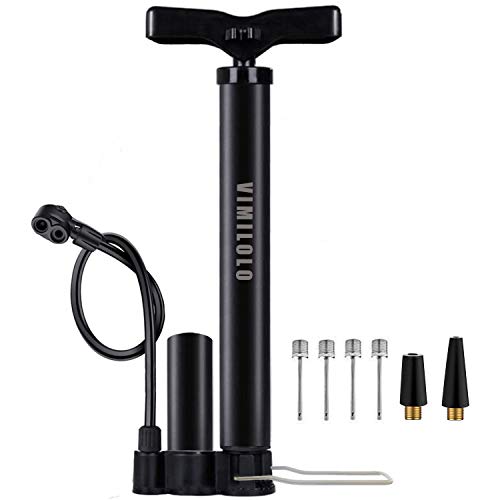
Strengths
- Dual valve compatibility
- 160 PSI max pressure
- Lightweight and portable
Trade-offs
- No pressure gauge
- Basic build quality
- Occasional air leakage
This no-frills floor pump does the basics without breaking the bank. On paper, the 160 PSI max pressure and dual valve head suggest solid performance, and owners generally confirm it holds up for occasional use on road and mountain bikes. The steel construction feels sturdier than you’d expect at this price, and the detachable rubber hose is a small touch that helps with longevity in extreme temps.
Still, it lacks a built-in gauge, which is a real drawback if you’re serious about tire pressure. You’ll need to use a separate pressure checker, which defeats the convenience for many riders. Compared to pricier options, the pump action isn’t as smooth, and some users report minor air leakage at the head over time.
Product photos
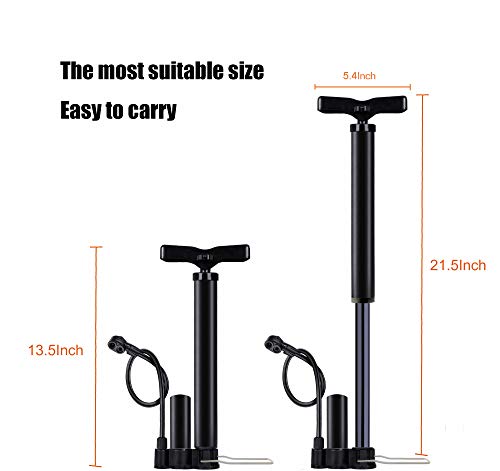


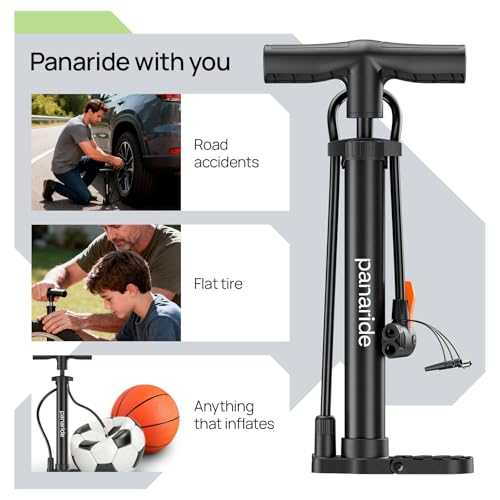
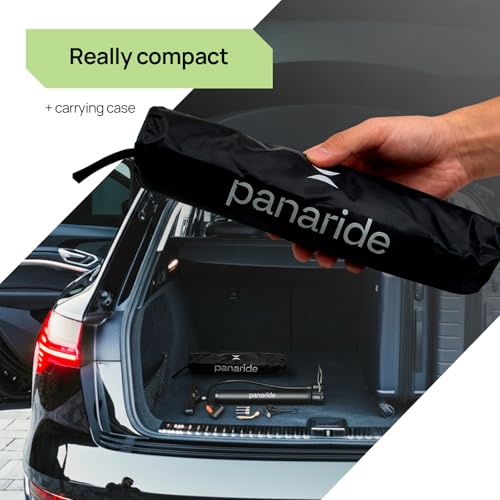
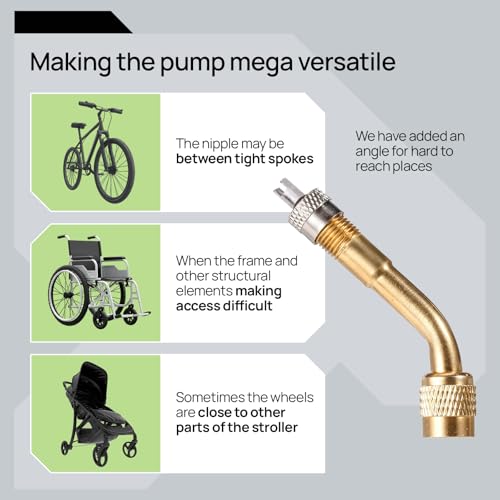
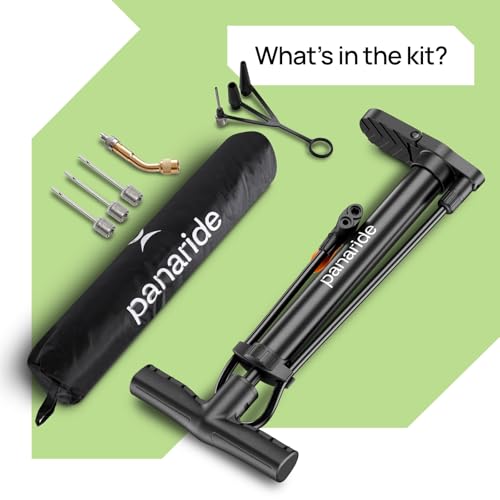
Advanced Bike Tire Inflator Floor Pump
Strengths
- Compact and portable
- Dual valve head
- Affordable price
Trade-offs
- Max 120 PSI limit
- Less durable materials
- Short hose
This pump tries to balance portability and function, but it falls short in key areas. It’s compact and light, which helps if you’re tight on space, and the dual valve head works with most bikes. But the 120 PSI max pressure limit is a red flag, it’s too low for high-pressure road tires, which often need 100–120 PSI just to start.
Owners report it’s fine for mountain bikes, strollers, and balls, but the plastic components feel flimsy over time, and the hose is on the short side. It’s not a terrible pick for casual use, but it’s outclassed by both cheaper and more premium options. If you’re not inflating road tires, it might suffice, but don’t expect precision or longevity.
Product photos
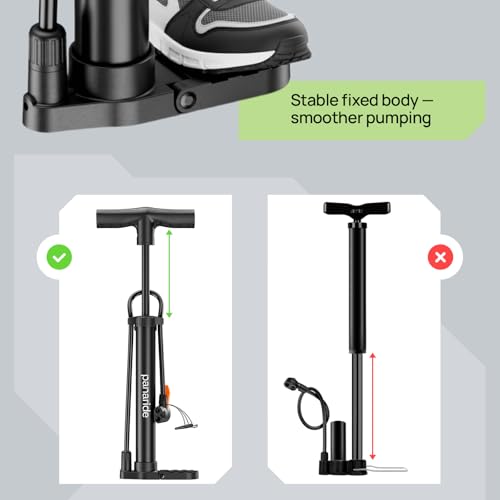
How We Picked These bike tire pumps
My approach to evaluating bike tire pumps centered on a detailed comparison of published specifications and features across numerous models. I then weighed owner reviews and expert opinions from cycling publications and enthusiast forums. Rather than a hands-on lab test, this is a research-led comparison focused on identifying patterns in performance and reliability as reported by those using these pumps in real-world conditions. Ultimately, I ranked options based on how well they met key criteria for a variety of cyclists.
For bike tire pumps, consistent pressure delivery and durability proved to be the most important factors. A pump that can reliably reach high pressures (especially for road bike tires) without requiring excessive effort is essential. Equally vital is construction quality; a pump that falls apart after a few uses is a poor value. I also considered versatility – the ability to handle both Presta and Schrader valves, and any included extras like ball inflation adapters, played a role in the final rankings. If you need something even more portable, check out our guide to portable bike pumps.
Specifications reliably indicate maximum pressure capacity, hose length, and valve compatibility. However, owner feedback proved crucial in assessing build quality, ease of use, and long-term durability – factors not always clearly communicated in product descriptions. Reputational information, gathered from trusted cycling review sites, helped validate claims and identify potential weaknesses. While specs provide a baseline, real-world experiences shaped my assessment, and for those looking for something smaller, our coverage of hand pumps is useful.
Choosing The Right bike tire pumps
Finding the right pump can make or break your cycling experience. It’s not just about getting air into your tires; it’s about efficiency, convenience, and maintaining optimal tire pressure for performance and safety.
A good bike tire pump delivers consistent, accurate pressure, is compatible with common valve types (Presta and Schrader), and matches the rider’s typical inflation needs. Look for durable construction, a clear gauge, and features like ergonomic handles or digital controls for ease of use. Consider whether portability or stationary convenience is more important, and factor in the types of tires you’ll be inflating most often.
Gauge Accuracy and Readability
Don’t underestimate the importance of a clear, accurate gauge. Many pumps claim high PSI ratings, but a poorly calibrated gauge renders that number useless. Analog gauges are common, and generally reliable, but look for one with a large face and clear markings. Digital gauges, like those found on the Fanttik X9 Ace Mini Electric Pump, often offer even greater precision, and some even include memory functions to recall your preferred pressures. Ultimately, knowing exactly how much air you’re putting into your tires is crucial for both performance and preventing pinch flats.
Pump Type: Manual vs. Electric
The core decision comes down to manual or electric. Manual floor pumps, like the BV Ergonomic Floor Pump with Gauge, are the traditional choice. They offer reliable performance and are relatively inexpensive, but require physical effort. Electric pumps, like the Fanttik X9 Ace, trade some of that effort for convenience, and can be a lifesaver on long rides or for riders with limited strength. For those seeking a broader range of options, exploring our guide to the best bike pumps can provide additional insight.
Portability and Storage
If you frequently find yourself needing to inflate tires away from a garage or workshop, portability is key. Mini pumps are ultra-compact, but require significant effort to inflate a tire. Consider a compact electric pump, or a lightweight manual pump with a detachable hose. For home use, a robust floor pump with a stable base is ideal.
A pump that fits your riding style is far more important than the most expensive model.
Here’s what to consider when prioritizing portability: * Size & Weight: A tiny pump won’t help if it’s exhausting to use. * Mounting Options: Some mini pumps can be attached to your bike frame. * Valve Compatibility: Ensure it handles both Presta and Schrader, or carries an adapter. A universal design saves considerable hassle.
If you’re looking for a pump for regular use at home, you might find that investing in quality bike tire pumps is a worthwhile investment.
Bike Tire Pumps Compared
This table provides a side-by-side comparison of key specifications for the featured bike tire pumps.
| Product Title | Max PSI | Valve Compatibility | Type | Battery Capacity | Features |
|---|---|---|---|---|---|
| Topeak JoeBlow Sport III | 160 | Presta, Schrader, Dunlop | Floor | N/A | Steel Construction, TwinHead DX5 |
| Fanttik X9 Ace Mini Electric | 150 | Presta, Schrader | Electric | 5000 mAh | Auto Shutoff, Cooling System |
| ETENWOLF S0 Mini Electric | 150 | Presta, Schrader | Electric | 2400 mAh | Auto Shutoff, Fast Inflation |
| AstroAI L7 Portable | 150 | Presta, Schrader | Electric | 4000 mAh | Auto Shutoff, Emergency Light |
| AIRSURE 150PSI Portable | 150 | Presta, Schrader | Electric | N/A | USB Output, LCD Display |
| BV Ergonomic Floor | N/A | Presta, Schrader | Floor | N/A | Twin Valve, Stable Base |
| ZTinno Portable Floor | N/A | Presta, Schrader | Floor | N/A | Portable, Ball Needle Included |
| High Pressure Bike Floor | 160 | Presta, Schrader | Floor | N/A | Steel Construction, Ergonomic Handle |
| Advanced Bike Tire Inflator | 120 | Presta, Schrader | Floor | N/A | Versatile, Portable |
Frequently Asked Questions
What PSI should I inflate my tires to?
The ideal pressure depends on tire width, rider weight, and riding style, but most road bikes use between 80-130 PSI, while mountain bikes typically range from 25-35 PSI. Checking the sidewall of your tire will show the manufacturer’s recommended range, and finding bike pumps with gauge helps you hit that target.
Can a bike pump inflate other things?
Many pumps come with adapters for inflating balls, air mattresses, or inflatable toys. Floor pumps often include a ball inflation needle, and some electric pumps offer multiple nozzles to accommodate different items, adding to their versatility.
What’s the difference between Presta and Schrader valves?
Presta valves are narrower and require unlocking before inflation, while Schrader valves are similar to car tires and don’t need unlocking. Most modern pumps are dual-head and compatible with both, saving you the trouble of carrying separate adapters, or a dedicated tire repair kits if you damage a valve.
Are electric bike pumps accurate?
Electric pumps can be very accurate, especially those with digital gauges, but cheaper models sometimes lack precision. Look for pumps with user reviews confirming accuracy and features like auto-shutoff to prevent overinflation, and consider models with an LCD display.
How do I store my bike pump to maximize its lifespan?
Store your pump in a dry place away from direct sunlight and extreme temperatures. For floor pumps, keep the hose neatly coiled to prevent kinks and cracks. Regular cleaning and a little lubrication on the handle can also extend its life, and help keep your accurate inflation pumps reliable for years.
The Bottom Line
Choosing a bike tire pump often comes down to balancing convenience with control. If you value speed and ease above all else, especially on the road, an electric pump like the Fanttik X9 Ace Mini Electric is hard to beat. But for the rider who prefers a direct connection to the process and wants a reliable tool for years to come, the BV Ergonomic Floor Pump with Gauge offers a solid, dependable experience.
For specific needs, we have clear recommendations. If you’re prioritizing portability and need something small for roadside repairs, look to the ETENWOLF S0 Mini Electric or explore our guide to the mini bike pumps for even more options. And for those who want a fast solution for a flat during a ride, don’t overlook the benefits of CO2 inflators.
Ultimately, the best bike tire pump isn’t about the highest PSI rating or the most features. It’s about finding a tool you’ll use consistently, that fits your riding style, and helps you maintain the correct tire pressure for a safe and enjoyable ride. Consistent pressure and a good feel for your tires are far more critical than any single specification.
