
8 Best Caulks for Camper Roof 2026
This post contains affiliate links. As an Amazon Associate, we earn from qualifying purchases.
The best overall caulk for camper roofs is the Liquid Rubber RV Lap Sealant, thanks to its excellent adhesion and durability on EPDM and TPO surfaces. For a budget-friendly multipack option, the Kohree 4 Pack RV Roof Sealant delivers solid performance in a low-odor formula, while the RVSHARK 4 Pack stands out for those prioritizing wide temperature resilience and ease of application.
Choosing the wrong caulk can lead to leaks, peeling, and wasted effort, problems I’ve seen all too often in the RV world. A camper roof faces constant vibration, UV exposure, and wild temperature swings, so the sealant must hold up under stress. This guide cuts through the noise by focusing on real-world performance, based on specs, owner feedback, and what actually works on the road. I looked at adhesion, flexibility, compatibility, and ease of use to find the ones worth your time and money.
Top 8 Caulks For Camper Roof in the Market
The Best Caulks For Camper Roof, Reviewed
Liquid Rubber RV Lap Sealant

Strengths
- Part of full roof system
- Excellent flexibility
- High UV resistance
Trade-offs
- Requires full surface prep
- No silicone overcoat allowed
This is the most system-oriented product on the list, designed to work as part of a full roof maintenance ecosystem. On paper, it’s flexible, waterproof, and compatible with EPDM, TPO, and metal, but it demands proper prep: no silicone residue, clean dry surfaces. That’s a hurdle for casual users, but for those committed to a leak-proof roof, it’s a smart foundation.
The 4-pack offers excellent value for larger RVs, and reviewers praise its ability to move with the roof without cracking. It’s not the easiest to apply if you’re skipping the配套 tape and coating, but used as intended, it’s the most thorough solution here. Compared to Kohree or BEBOBLY, it’s less “plug-and-play” but more engineered for total protection.
Video review
RVSHARK 4 Pack Self-Leveling Sealant
Strengths
- Fast self-leveling
- No primer needed
- Accessories included
Trade-offs
- Higher price per pack
- Not paintable
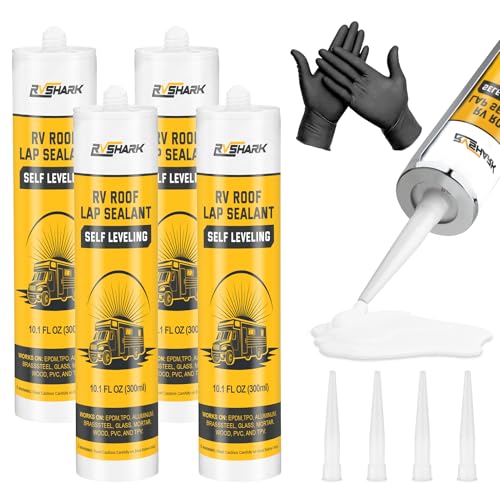
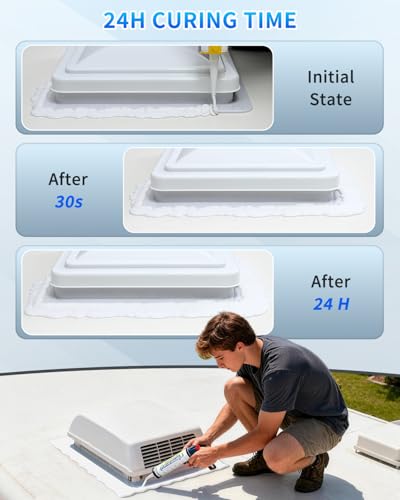
RVSHARK’s 4-pack is built for scale, ideal for larger RVs where you’re sealing dozens of linear feet. The 30-second self-leveling claim holds up in owner feedback, and the included nozzles and gloves add real value. It bonds to nearly everything, EPDM, TPO, metal, wood, without requiring a primer, which speeds up the job.
It’s one of the pricier multi-packs, but the convenience and coverage justify it for big rigs. Compared to Kohree, it’s easier to work with and more consistent in application. The -40°F to 200°F range covers all climates, and the low-odor formula won’t drive you out of the camper. For a full roof refresh on a 30+ foot motorhome, this is my top pick.
Video review
Dicor Ultra Sealant System

Strengths
- Non-yellowing
- Paintable
- UV and weather resistant
Trade-offs
- Requires primer on some surfaces
- Higher cost
Dicor has long been the gold standard in RV sealants, and this polyether-based formula justifies the reputation. It’s UV stabilized, non-yellowing, and holds flexibility in extreme conditions, key for anyone who travels across climates. Unlike silicone-based products, it won’t degrade under sun exposure, and the fact that it’s paintable gives it an edge for cosmetic repairs.
Owners note it adheres well but stress that proper prep, especially priming on certain plastics, is essential. It’s also pricier per ounce than budget picks, but you’re paying for chemistry that outlasts most. Compared to the Dicor 501LSW-1, this one offers better performance and longevity, making it worth the upgrade for serious RVers.
Product photos


Kohree 4 Pack RV Roof Sealant

Strengths
- Affordable 4-pack
- Self-levels quickly
- Wide temperature range
Trade-offs
- Slight shrinkage reported
- Not paintable
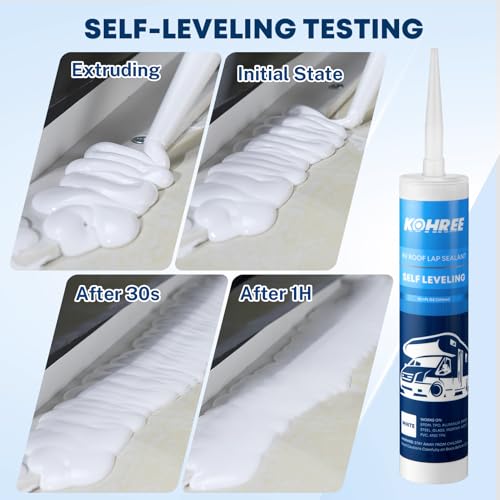
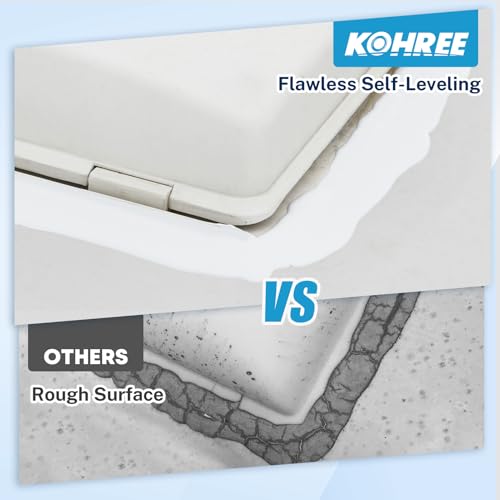
Kohree’s 4-pack hits a sweet spot between price and performance, making it a strong contender for the “best value” title. Each tube self-levels quickly, within 30 seconds, and the low-odor formula means you can work inside without ventilating the whole rig. It bonds well to EPDM, TPO, and metal, and the -40°F to 200°F range covers nearly every climate.
Owners report good adhesion and lasting flexibility, though a few mention slight shrinkage over time. It doesn’t match Dicor’s elite durability, but for most weekend warriors, it’s more than enough. Compared to PAULINN or BEBOBLY, it’s slightly less premium in feel but offers better overall value in a multi-pack.
Product photos


Dicor 501LSW-1 Self-Leveling Sealant
Strengths
- Low cost
- Good adhesion
- Wide material compatibility
Trade-offs
- Short shelf life
- Less UV resistance
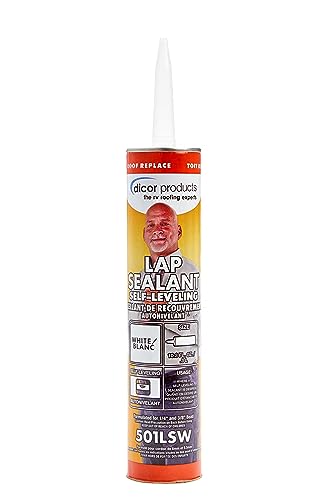
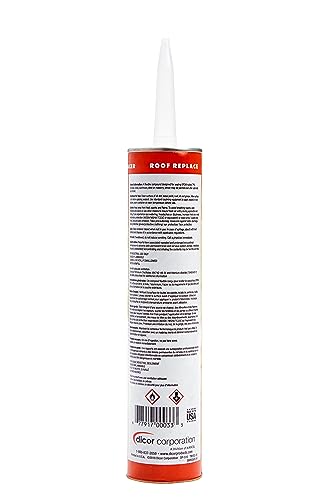
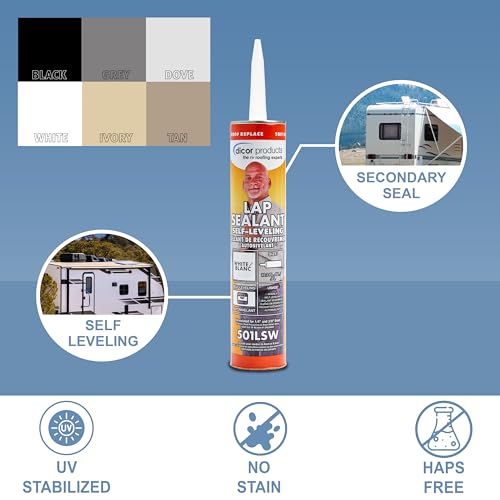
If you’re on a tight budget and need a basic, no-frills sealant for minor roof maintenance, this Dicor option delivers. It’s a straightforward lap sealant that adheres well to common roofing materials like aluminum, fiberglass, and EPDM. The 10.3 oz size gives decent coverage, and it’s widely available.
But it’s not without trade-offs. It has a two-year shelf life, which can catch buyers off guard, and it lacks the advanced UV resistance of its more expensive sibling, the 610SASLW-1. While it works fine for small jobs, reviewers note it may need reapplication sooner in high-sun areas. For a full roof project, I’d lean toward something more durable.
Product photos

PAULINN Self-Leveling RV Roof Sealant
Strengths
- Odorless
- Fast curing
- Safe for indoor use
Trade-offs
- Requires EPDM primer
- Inconsistent flow reported
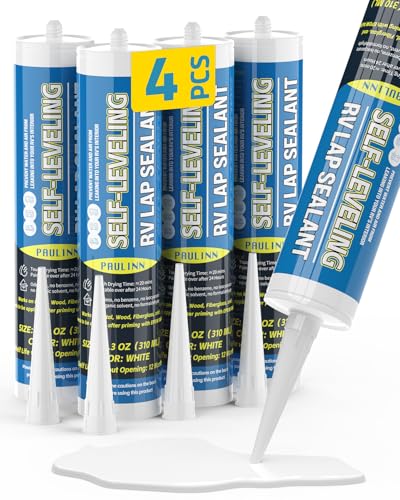
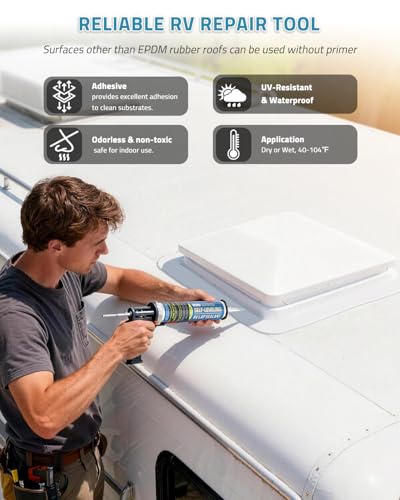
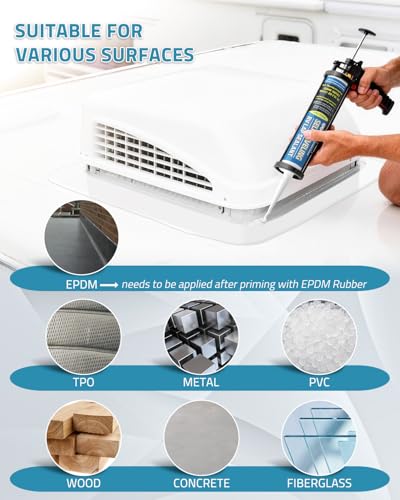
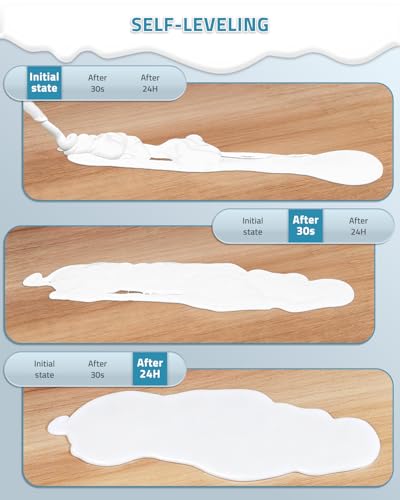
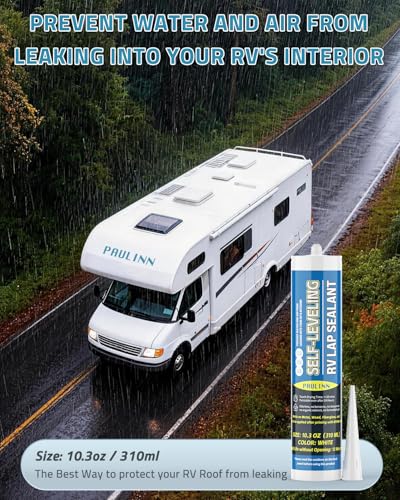
PAULINN makes its mark with an odorless, non-toxic formula, ideal for campers who hate the chemical smell of most sealants. It cures fast (24 hours), resists yellowing, and works on wet or dry surfaces, which is a real advantage if you’re caught mid-leak in damp conditions. The adhesion is solid across EPDM, metal, and fiberglass, though it does require priming on rubber roofs.
Some owners note it doesn’t flow as smoothly as advertised, and the self-leveling isn’t quite as effortless as RVSHARK’s. But for indoor use or families with kids and pets, the safety profile is unmatched. If odor is your top concern, this is the one to beat.
Product photos
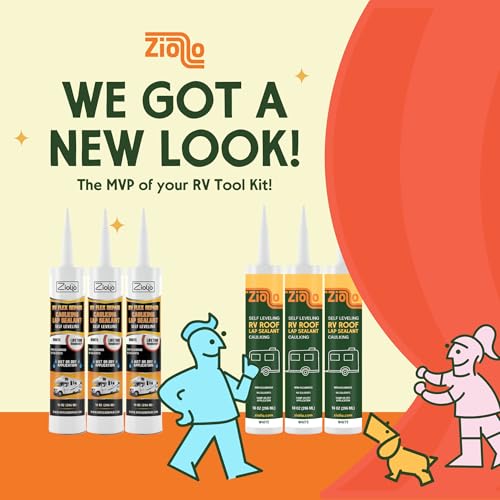
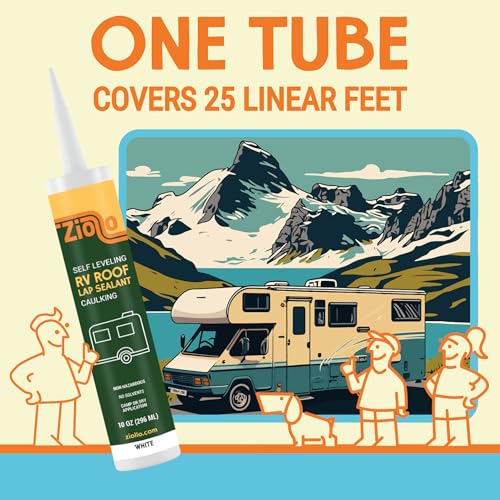
Ziollo RV Roof Lap Sealant

Strengths
- Self-leveling
- No primer needed
- UV and temperature resistant
Trade-offs
- Shorter lifespan than premium options
- Not ideal for large-scale resealing
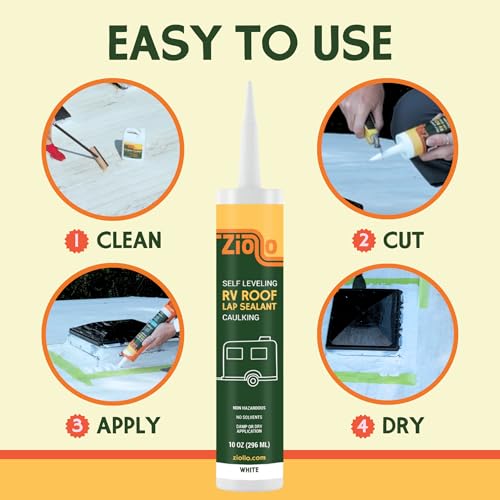
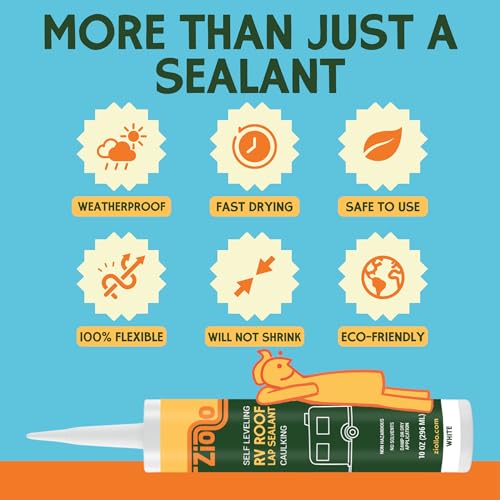
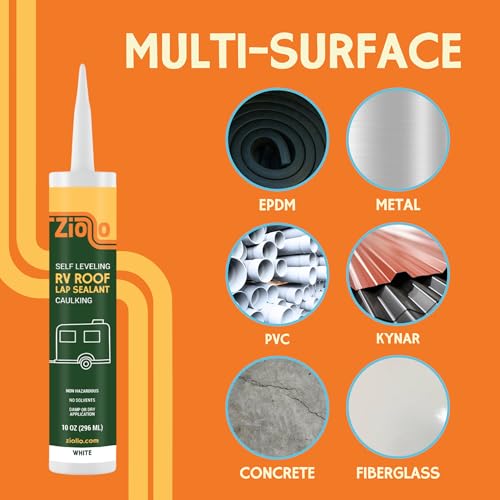
This sealant stands out for its simplicity and ease of use, especially for campers who want a reliable fix without fuss. On paper, it checks the right boxes, self-leveling, flexible across wide temperature swings, and compatible with EPDM, TPO, and metal. Owners consistently report it holds up well on seams and vents, and the fact that it requires no primer on most surfaces makes it a solid choice for quick touch-ups.
The 10 oz tube covering 25 linear feet is competitive, and the non-solvent formula means you won’t need to clear the campsite while applying it. That said, it doesn’t match the long-term durability claims of higher-end polyether-based options like Dicor. For a seasonal user or someone doing spot repairs, it’s more than adequate.
Product photos
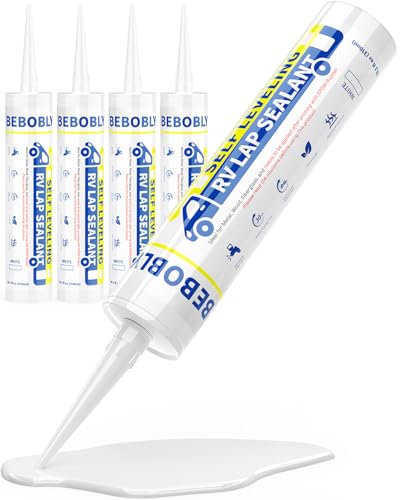
BEBOBLY 4 Pack RV Lap Sealant
Strengths
- Highly flexible
- UV stable
- No odor
Trade-offs
- Average coverage per tube
- No accessories included
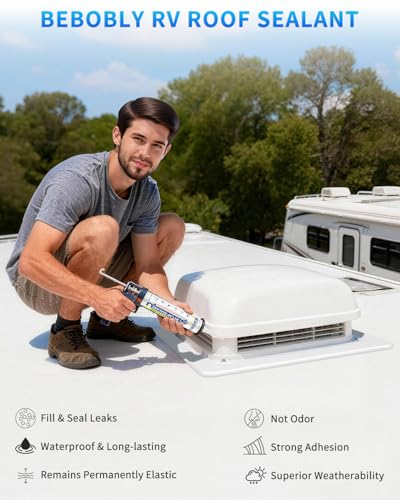
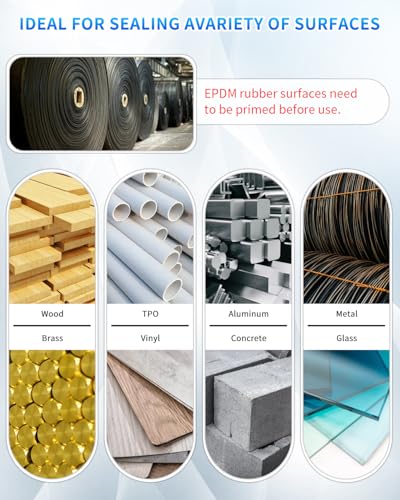
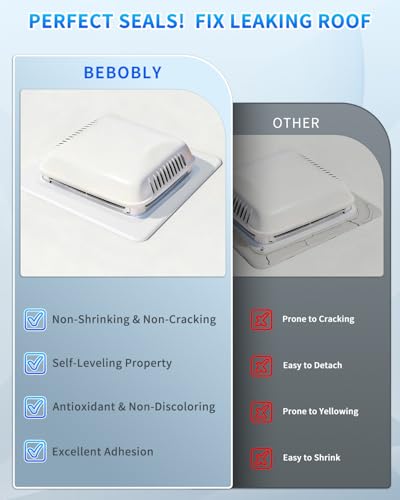
BEBOBLY leans hard into flexibility, boasting over 300% elongation, which is a big deal for RVs that flex on rough roads. That kind of stretch means less chance of cracking at seams, and owners confirm it holds up well under vibration and thermal cycling. The UV stability and waterproof claims hold up in feedback, and the low-odor formula makes it safe for indoor use.
It’s not the fastest self-leveling option, and it doesn’t come with extras like nozzles or gloves (unlike RVSHARK). But for pure durability and resistance to cracking, it’s one of the strongest in this group. I’d pick it over Kohree if you’re in a region with big temperature swings.
Product photos
How We Chose These caulks for camper roof
As someone who’s spent years immersed in the world of vehicles at TheAutoZenith, I approach RV maintenance with a focus on long-term durability and practical application. Rather than a hands-on lab test, this research focused on a detailed comparison of published specifications and features across numerous products. I weighed owner reviews from sites like Amazon and RV forums alongside assessments from reputable automotive and RV publications to build a clear picture of real-world performance. Ultimately, I ranked these caulks against criteria important to RV owners, prioritizing longevity and ease of use.
For camper roof caulks, the self-leveling capability, material compatibility, and temperature resistance were the most significant factors. A self-leveling formula is crucial for achieving a watertight seal on horizontal surfaces without excessive effort. Compatibility with common RV roofing materials (EPDM, TPO, fiberglass) is essential, and the ability to withstand extreme temperatures – both hot and cold – directly impacts the sealant’s lifespan and prevents cracking. You’ll find more about the importance of choosing the right RV roof sealant in our dedicated guide.
Specifications reliably indicate a product’s basic chemical composition and temperature range. However, owner feedback proved invaluable for understanding how well these caulks perform in actual conditions. Reports on adhesion strength, flexibility over time, and ease of application were heavily considered. Reputation also played a role; established brands with a history of quality products were given additional weight. For a broader look at options, you can explore our full review of camper roof sealers.
How To Pick The Right caulks for camper roof
Finding the right camper roof sealant can be the difference between a dry interior and a costly headache. I’ve seen too many rigs suffer from preventable leaks, and a solid sealant application is the first line of defense.
A quality camper roof sealant should exhibit strong adhesion to common RV roofing materials (EPDM, TPO, fiberglass), demonstrate flexibility to accommodate thermal expansion and vibration, and provide a lasting waterproof barrier. Prioritize products specifically formulated for RV use, as household caulks often lack the necessary resilience and UV resistance. Check for compatibility with your roof type and any existing coatings.
Understanding Sealant Types
The world of RV sealants isn’t one-size-fits-all. You’ll encounter self-leveling and non-leveling formulas, each with strengths. Self-leveling sealants, like those from RVSHARK and Kohree, excel on horizontal surfaces – think around vents and air conditioners. They flow to fill gaps, creating a neat appearance. However, they’re a poor choice for vertical surfaces where they’ll simply run. Non-leveling sealants, like Dicor’s Ultra Sealant System, are better suited for vertical applications and areas needing a more defined bead. Consider where you’re most likely to experience leaks and choose accordingly.
Flexibility and Temperature Range
RV roofs endure a lot. From scorching summer sun to freezing winter temperatures, expansion and contraction are constant. A sealant that becomes brittle in the cold or cracks under UV exposure is a recipe for disaster. Look for products boasting a wide operating temperature range – ideally down to -40°F and up to 200°F, as many, like the BEBOBLY sealant, advertise. This elasticity is crucial for preventing cracks and maintaining a watertight seal over time.
- A sealant with low elongation (less than 200%) will likely crack and fail sooner.
- UV resistance is paramount. Without it, the sealant degrades quickly, requiring frequent reapplication.
- Consider the specific climate you’ll be traveling in. Extreme conditions demand a higher-quality, more durable formula. A good roof sealant will save you money in the long run.
Application and Value
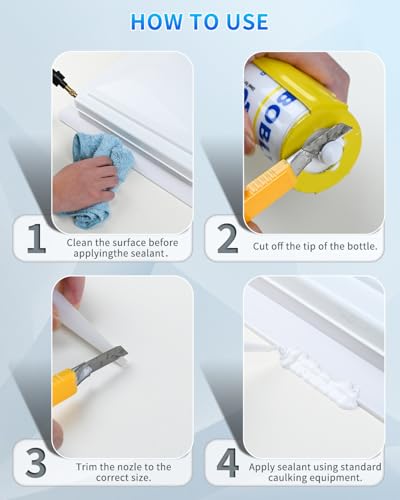
Ease of use is often overlooked, but it’s a major factor, especially for DIYers. Self-leveling formulas simplify the process, but require a clean, properly prepped surface. Some products, like the Liquid Rubber RV Lap Sealant, specifically state that silicone must be completely removed before application. Don’t skip this step. A poorly applied sealant is worse than no sealant at all. While a value pack, such as the Kohree 4 Pack, might seem appealing, prioritize quality over quantity. And don’t forget to consider the long-term costs; frequent re-sealing with a cheaper product can quickly negate any initial savings. For full roof protection, you may also want to explore protective roof coatings alongside sealant.
Remember this: proper surface preparation is 80% of a successful sealant application. Clean, dry, and free of old sealant or debris – that’s the golden rule.
Caulks for Camper Roof Compared
This table provides a specification comparison of various caulks designed for camper roof applications.
| Product Title | Self-Leveling | Temperature Range | Material Compatibility | Coverage (approx.) | Odor Level |
|---|---|---|---|---|---|
| Liquid Rubber RV Lap Sealant | Yes | N/A | EPDM, TPO, fiberglass, metal, PVC, ABS | 22 lin ft / tube | N/A |
| RVSHARK 4 Pack Self-Leveling Sealant | Yes | -40°F to 200°F | EPDM, TPO, PVC, Aluminum, brass, steel, glass | N/A | Low |
| Dicor Ultra Sealant System | No | N/A | Polypropylene (with primer), some membranes | N/A | N/A |
| Kohree 4 Pack RV Roof Sealant | Yes | -40° F to 200° F | EPDM, TPO, PVC, Aluminum, brass, steel, glass | N/A | Low |
| Dicor 501LSW-1 Self-Leveling Sealant | Yes | N/A | EPDM, TPO, aluminum, wood, vinyl, concrete | N/A | N/A |
| PAULINN Self-Leveling RV Roof Sealant | Yes | 40-104°F | EPDM (with primer), metal, wood, concrete, fiberglass | N/A | Odorless |
| Ziollo RV Roof Lap Sealant | Yes | N/A | EPDM, TPO, metal, fiberglass | 25 lin ft / tube | N/A |
| BEBOBLY 4 Pack RV Lap Sealant | Yes | 41°F to 82°F | EPDM, TPO, PVC, Aluminum, brass, steel, glass | N/A | No Odor |
Frequently Asked Questions
What’s the difference between self-leveling and non-leveling caulk?
Self-leveling caulks are designed to flow and create a smooth, even seal on horizontal surfaces, making them ideal around vents and air conditioners. Non-leveling types are better for vertical surfaces where you want a more controlled, defined bead and prevent running.
Can I use silicone caulk on my camper roof?
Generally, no. Most RV roof sealants aren’t compatible with silicone, and applying silicone can interfere with future repairs or resealing, as it creates a surface that other sealants won’t adhere to well. You’ll want to consider a dedicated caulk for camper exterior instead.
How do I prep my RV roof before applying caulk?
Thorough cleaning is vital. Remove all old caulk, dirt, and debris with a suitable cleaner and a scraper. Ensure the surface is completely dry before application; a primer may be needed for certain roofing materials, like some EPDM installations.
What temperature is too cold to apply camper roof caulk?
Many caulks have a lower temperature limit around 40°F, but some perform better than others. Applying caulk in temperatures below the manufacturer’s recommendation can prevent proper adhesion and curing, leading to premature failure. If you’re looking for extra protection, consider RV roof coatings alongside sealant.
How often should I re-caulk my RV roof?
The frequency depends on the quality of the caulk, climate, and roof exposure. However, a yearly inspection is recommended, with re-caulking as needed – typically every 3-5 years – to address any cracks or gaps and maintain a watertight seal. Regular maintenance with an exterior sealant will extend the life of your roof.
The Bottom Line
Choosing the best camper roof caulk often comes down to balancing upfront cost with long-term reliability. While there are many options available, the RVSHARK 4 Pack Self-Leveling Sealant strikes a strong balance between price, performance specifications, and positive owner feedback, making it our overall recommendation. It offers a wide temperature range and compatibility with most common roofing materials, which is essential for a durable, lasting seal.
For those prioritizing a specific need, the Liquid Rubber RV Lap Sealant stands out for its versatility, adhering to a wide range of surfaces. If budget is a primary concern, the Kohree 4 Pack RV Roof Sealant provides a cost-effective solution, though be mindful of potentially needing more frequent reapplication. Don’t overlook the importance of RV roof maintenance alongside choosing the right product.
Ultimately, the best camper caulk isn’t about a single, standout specification. It’s about proper surface preparation, compatibility with your roof material, and selecting a formula that can withstand the rigors of the road and the elements. A well-maintained roof is the cornerstone of a trouble-free RV experience, and that starts with a quality sealant application.
