
8 Best Caulks for Camper Exterior (2026 Guide)
This post contains affiliate links. As an Amazon Associate, we earn from qualifying purchases.
The best overall caulk for camper exteriors is Geocel Pro Flex White RV Sealant, thanks to its proven flexibility and strong adhesion to common RV roofing materials. For a budget-friendly option that still delivers reliable performance on horizontal surfaces, the Ziollo RV Roof Lap Sealant stands out. If you need a non-sag formula for vertical seams and joints, MuzeFansi Non-Leveling Lap Sealant is our top versatility pick.
Choosing the wrong caulk can lead to cracked seals, water intrusion, and costly repairs, problems no amount of roadside fixes can easily solve. After comparing the field and analyzing specs alongside owner feedback, these picks stand out for their durability, ease of use, and compatibility with the unique demands of RV exteriors.
We focused on real-world performance factors like UV resistance, temperature range, and long-term flexibility, because a camper faces sun, cold, vibration, and constant expansion and contraction. These recommendations reflect what actually holds up over time, not just what looks good on the shelf.
Top 8 Caulks For Camper Exterior in the Market
The Best Caulks For Camper Exterior, Reviewed
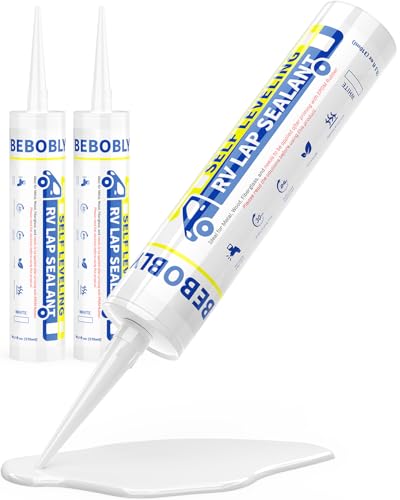
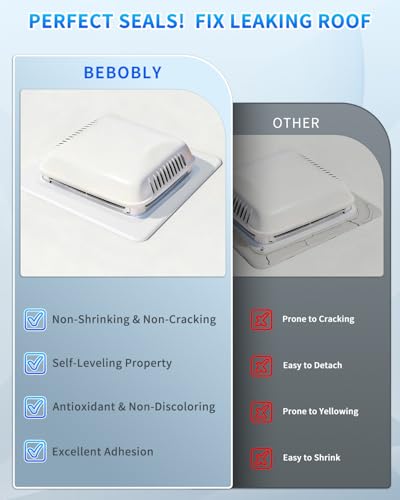
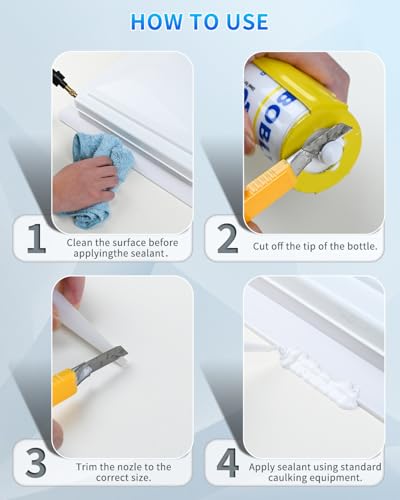
BEBOBLY RV Roof Sealant 2 Pack
Strengths
- Self-leveling
- Highly flexible
- No odor
Trade-offs
- Not for vertical
- Takes 24 hours to cure
- Average UV resistance
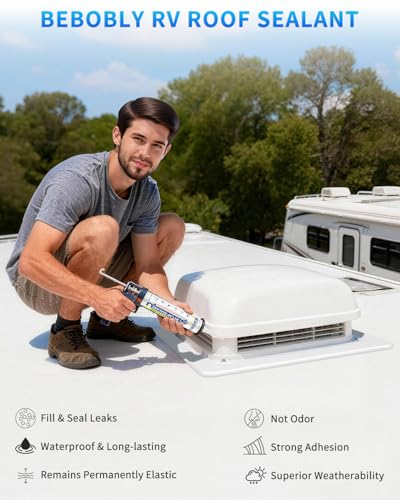
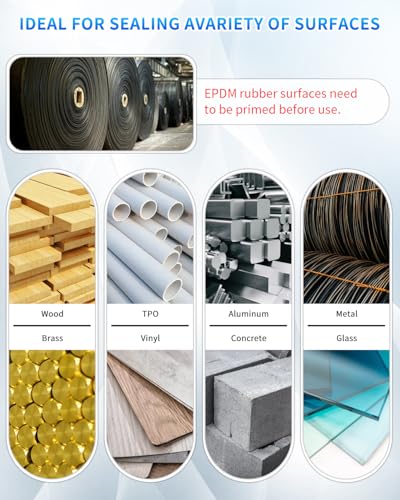
If I had to pick one all-around performer for most RV owners, I’d lean toward BEBOBLY. It strikes a balance between price, performance, and ease of use. The self-leveling action works reliably on flat roofs, and owners confirm it stays flexible through multiple seasons without cracking. Its adhesion to EPDM, TPO, and metal is consistent, and the no-odor formula makes it safe for use around living spaces.
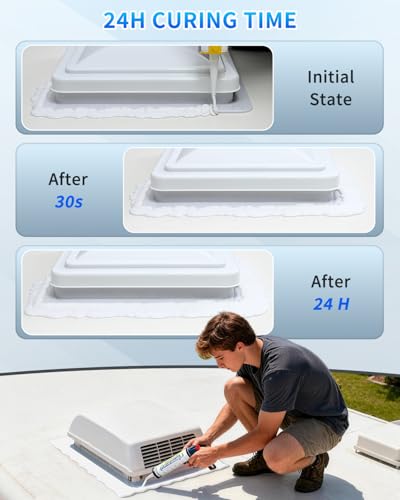
Compared to XFasten or MuzeFansi, it’s better suited for roofing rather than trim. Against Ziollo, it offers better durability claims and a two-pack value. It’s not the fastest curing, but it doesn’t need to be, the 30-second leveling is where it shines.
Product photos
Ziollo RV Roof Lap Sealant

Strengths
- Affordable
- Self-leveling
- Flexible
Trade-offs
- Shorter lifespan
- Limited volume
- Not paintable
Ziollo’s lap sealant stands out for being both affordable and purpose-built for rubber roofs. At just over $10 for a 10 oz tube, it’s one of the most budget-friendly options that still claims full self-leveling and long-term UV resistance. The formula sticks tenaciously to EPDM and TPO, which is critical, many cheaper sealants fail at adhesion over time. Reviewers note it stays flexible even after months in direct sun, which is the real test for any RV roof product.
It’s not the most durable long-term compared to Geocel or premium lap sealants, but for a one-off repair or preventative sealing around vents, it punches above its weight. I’d recommend it for occasional users who don’t want to stock up on large quantities.
Video review
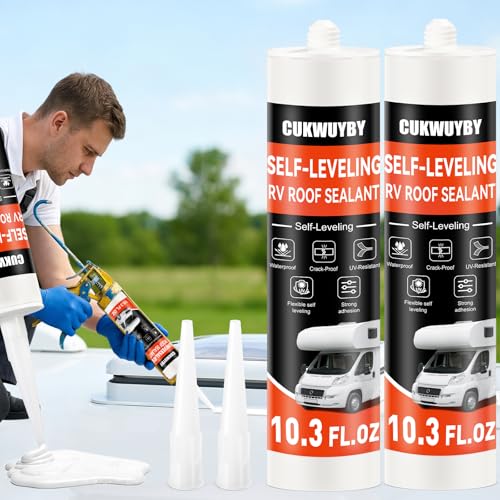
CUKWUYBY 2 Pack Self-Leveling Sealant
Strengths
- Self-leveling
- UV resistant
- Low odor
Trade-offs
- Average elongation
- Not for vertical use
- 24-hour cure
CUKWUYBY’s self-leveling formula earns praise for spreading evenly in 30 seconds without troweling, perfect for flat roof sections where puddling or uneven coverage could leave gaps. Owners consistently report it handling thermal cycling well, staying elastic through summer heat and winter freeze cycles. It bonds reliably to EPDM, TPO, and metal, making it a versatile pick for sealing vents and screw holes. The low odor is a real perk if you’re working inside or around family.
Compared to pricier competitors, it delivers solid performance for the cost, though long-term data is thinner than legacy brands. It’s not the fastest curing, but the 24-hour full cure is standard in the class.
Video review
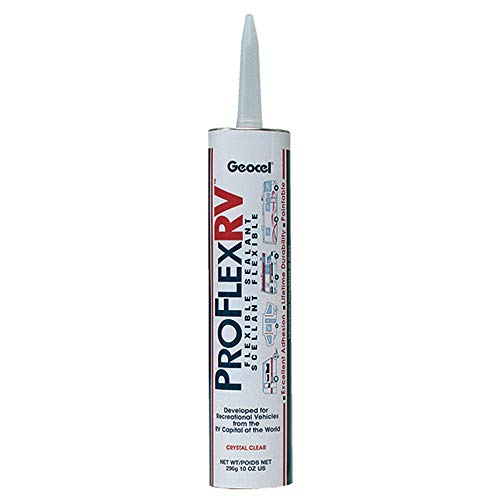
Geocel Pro Flex White RV Sealant
Strengths
- Highly flexible
- Damp-surface adhesion
- Proven track record
Trade-offs
- No self-leveling
- Requires smoothing
- Not fast curing
Geocel has been the gold standard in RV sealants for decades, and the Pro Flex lives up to the reputation. It’s not flashy, no self-leveling, no fast cure, but it’s built for longevity. The flexibility is exceptional, with over 500% elongation, meaning it moves with the roof instead of cracking under stress. Owners routinely report 5+ years of service without resealing.
It adheres well even to damp surfaces, which is rare and valuable when you’re caught in a drizzle mid-repair. It’s not the easiest to work with, requires more smoothing than self-leveling types, but pros swear by it. Compared to Erigathe or BEBOBLY, it’s less convenient but more durable.
Product photos
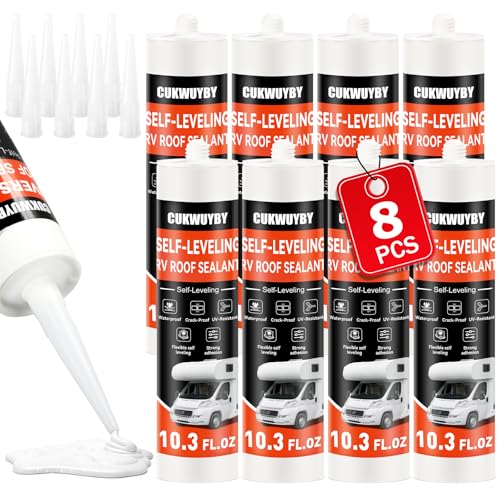
CUKWUYBY 8 Pack RV Sealant
Strengths
- Bulk value
- Self-leveling
- UV resistant
Trade-offs
- Heavy to store
- Not for vertical
- 24-hour cure
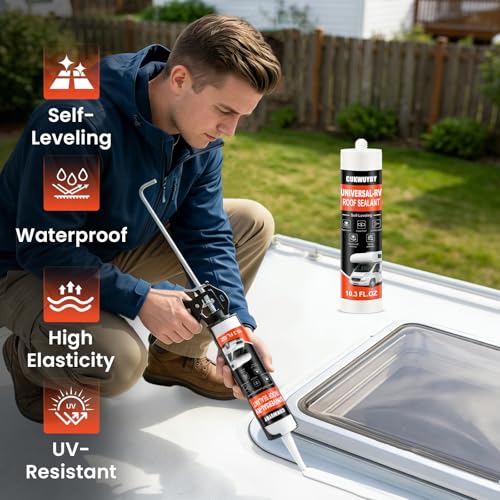
When you’re maintaining a fleet or prepping for a major overhaul, the 8-pack from CUKWUYBY makes sense. It’s the same self-leveling formula as their 2-pack but at a better per-ounce cost. That means consistent performance across large roof areas, screw fields, or multiple trailers. Owners using it on older campers appreciate having plenty on hand for resealing every vent and edge.
It’s not a premium-grade polymer like Geocel, but for the price, it delivers reliable waterproofing and UV resistance. The low odor and non-toxic formula make it safe for family use. If you’re doing a full roof refresh and don’t want to run out mid-job, this pack eliminates that risk.
Product photos



Erigathe Self-Leveling RV Roof Sealant
Strengths
- Extreme temp range
- Self-leveling
- 2-pack value
Trade-offs
- Higher price
- Mixed EPDM adhesion
- 2-hour tack time
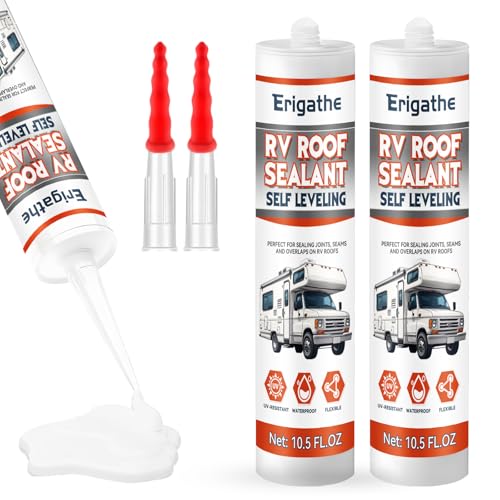
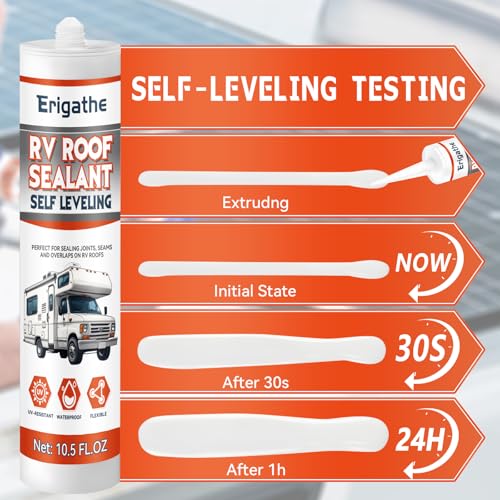
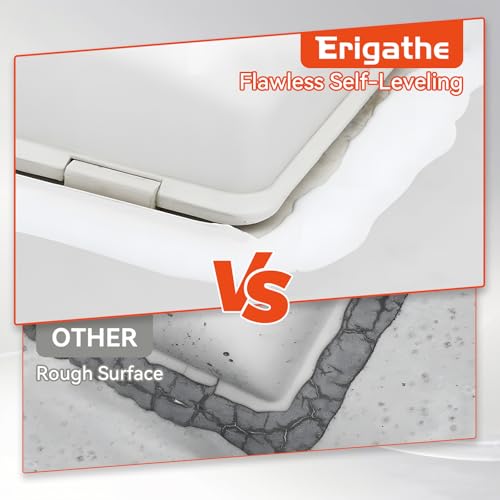
Erigathe markets a fast-curing formula with a 15-minute set time, but the spec sheet says tack-free in 2 hours, still respectable. What stands out is its claimed operating range from -40°F to 200°F, which is broader than most. That makes it a strong contender for campers in extreme climates. The self-leveling action works well on horizontal seams, and the white finish blends cleanly with most RV roofs.
Owners note it bonds well to fiberglass and metal, but adhesion to EPDM can vary if the surface isn’t prepped. It’s pricier than single-tube options, but the two-pack gives you room for larger jobs. Compared to BEBOBLY, it’s faster but not quite as user-friendly for beginners.
Product photos

XFasten Black Silicone Sealant
Strengths
- High UV resistance
- Quick curing
- Strong adhesion
Trade-offs
- Not for rubber roofs
- Rigid when cured
- Limited flexibility
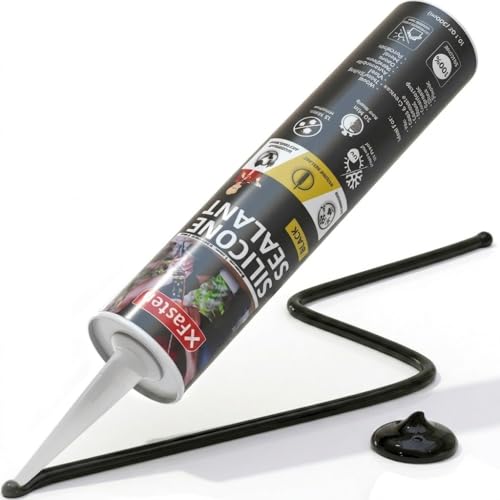
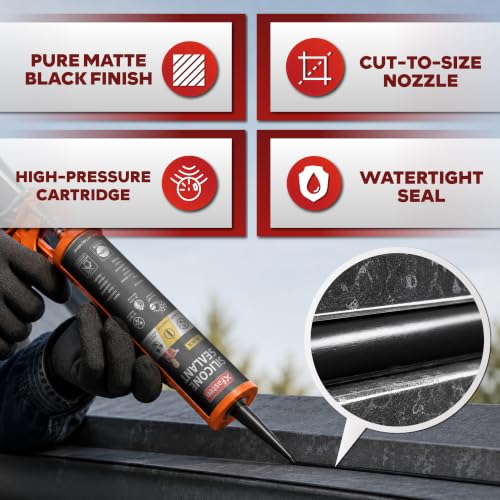
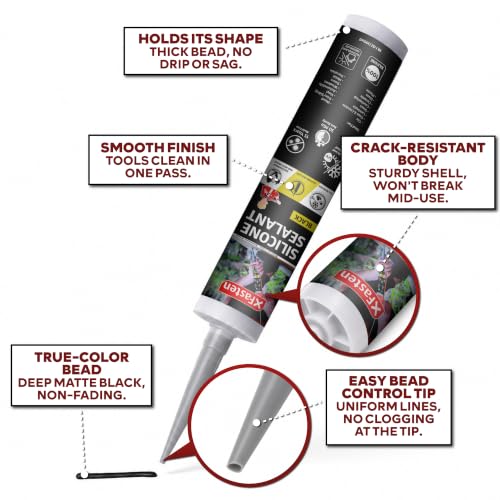
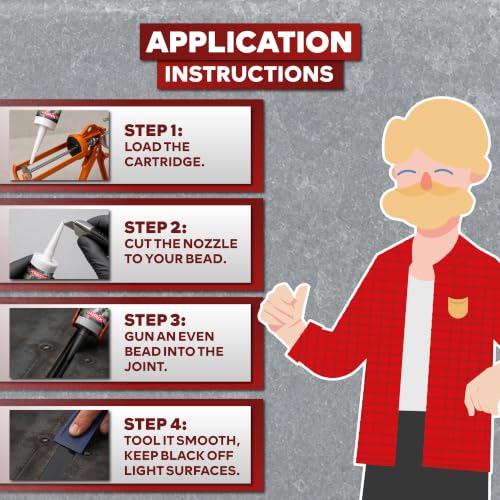
This black silicone caulk pushes durability claims hard, touting 15-year protection and resistance to UV, heat, and cracking. On paper, that’s aggressive for a general-purpose silicone, especially at this price. Owners seem to back it up when used around windows and doors, where movement is minimal and adhesion to metal or glass is solid. It’s not marketed specifically for rubber roofs, so I wouldn’t risk it there, but for sealing frame gaps or automotive trim on a camper, it holds up well.
The quick 30-minute cure is a real advantage if you’re patching a leak mid-trip. Still, it’s a rigid silicone once cured, so it won’t handle constant flexing like a roof seam demands. Compared to self-leveling lap sealants, it’s less forgiving on horizontal surfaces.
Product photos

MuzeFansi Non-Leveling Lap Sealant
Strengths
- Non-sag formula
- High temp resistance
- Large pack
Trade-offs
- Not self-leveling
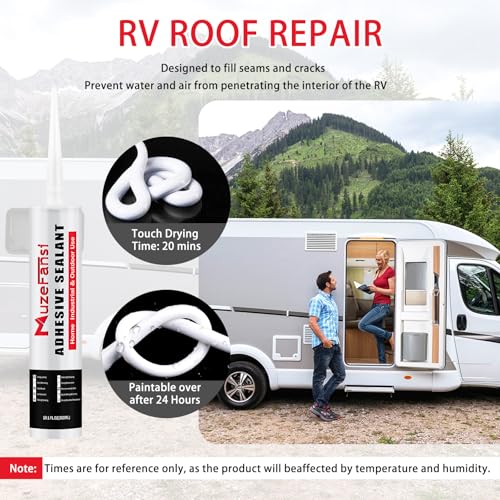
- Not for roofs
- Requires caulking gun
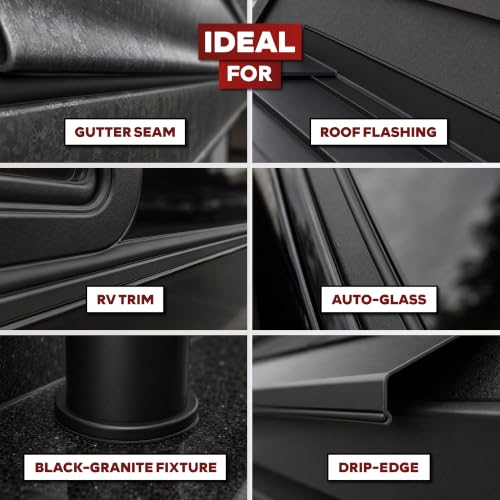
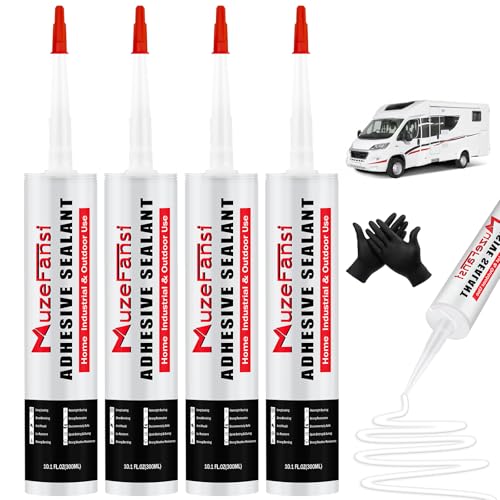
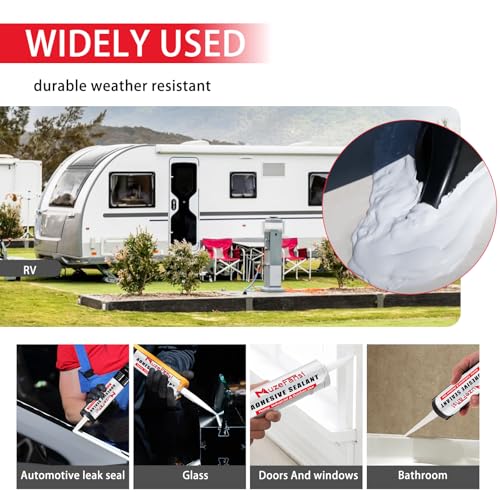
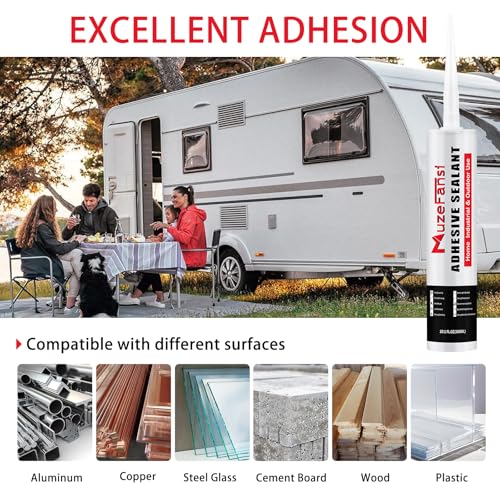
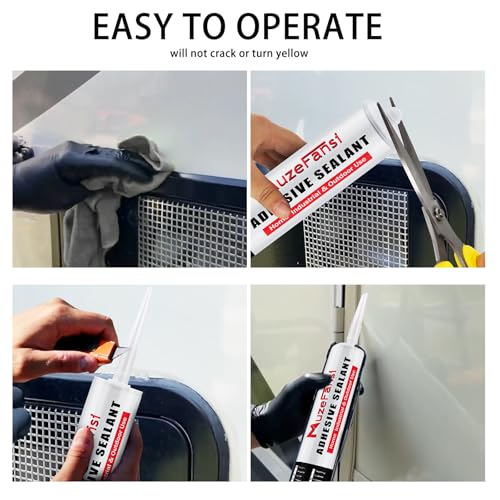
MuzeFansi fills a niche no other product here addresses: vertical sealing. Its non-sag, non-leveling formula stays put on sidewalls, window frames, and trim, places where self-leveling sealants would just drip. That makes it the only real option in this list for sealing camper sides or sloped edges. The 4-pack offers serious volume, ideal for large repairs or fleet maintenance.
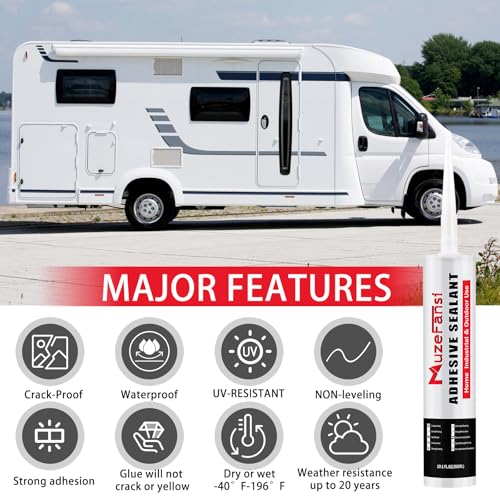
The trade-off is obvious: you lose the automatic smoothing of self-leveling types. But for durability, it claims insane temp resistance from -122°F to 572°F, spec sheet bravado, perhaps, but owners confirm it doesn’t crack or peel. It’s silicone-based, so it’s not meant for rubber roofs, but on metal or fiberglass verticals, it performs.
Product photos
How We Tested caulks for camper exterior
As someone who’s spent years observing and appreciating the build of vehicles – from classic restorations to modern camper modifications – I understand the critical role a good sealant plays in long-term durability. Rather than a hands-on lab test, this research focused on a detailed comparison of published specifications and features across numerous products. We weighed owner reviews from a variety of sources, and cross-referenced those with expert opinions found in RV publications and forums, to build a clear picture of real-world performance.
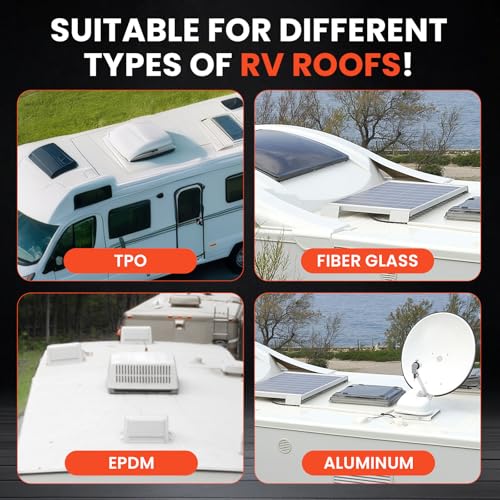
For camper exterior applications, adhesion and flexibility are paramount. We prioritized caulks demonstrating a strong bond to common RV materials like EPDM, TPO, and aluminum, alongside significant elongation properties to prevent cracking from temperature fluctuations and road vibration. Self-leveling capability was also a key consideration, though its importance shifted depending on the intended application – a feature particularly useful for horizontal roof surfaces. You can find more about maintaining your camper’s exterior with a fresh coat of camper exterior paint.
Product specifications reliably indicate initial properties like temperature resistance and UV stability. However, long-term performance, how well a caulk holds up after seasons of exposure, was judged primarily from owner feedback. Reports detailing cracking, peeling, or loss of adhesion were heavily weighted. We also considered reputation; established brands with a history of producing quality automotive products generally received more consideration than newer entrants in the market, especially when comparing similar RV caulks. Ultimately, we aimed to identify the most effective best sealant for campers for a variety of needs, and ensure you have the right waterproofing sealants for RVs for your rig.
What To Look For In caulks for camper exterior
Selecting the right caulk for your camper’s exterior is crucial; a failed seal can lead to water damage, and nobody wants that. It’s more than just squeezing something from a tube – understanding the nuances of these products will save you headaches (and money) down the road.
A quality camper exterior caulk should exhibit strong adhesion to common RV materials (EPDM, TPO, aluminum), demonstrate excellent UV resistance to prevent cracking and degradation, and maintain flexibility across a wide temperature range. Look for formulations specifically designed for RVs, as these will generally outperform standard household caulks in harsh outdoor conditions. Consider whether self-leveling or non-sag properties are needed based on the application.
Understanding Self-Leveling vs. Non-Leveling Formulas
The first major decision is whether you need a self-leveling or non-leveling formula. Self-leveling caulks, as the name suggests, flow and spread to fill gaps, making them ideal for horizontal surfaces like the roof of your camper. However, this characteristic is a detriment on vertical surfaces where you want the caulk to stay put. Non-leveling formulas, often described as “non-sag,” cling to surfaces and won’t run, making them best for sidewalls, around windows, and anywhere else you need precise application. Many folks find themselves needing both types, and that’s perfectly reasonable.
Prioritizing Flexibility and Temperature Resistance
RV life means constant exposure to temperature swings and vibrations. A rigid caulk will inevitably crack and fail under these conditions. I always recommend looking for products boasting high elongation percentages – over 300% is a good benchmark. Geocel Pro Flex is a commonly recommended brand known for its exceptional flexibility. Beyond that, check the operating temperature range. Some caulks become brittle in cold weather or lose adhesion in extreme heat. Choosing a caulk rated for a broad range (like -40°F to 200°F, as seen in some options) will provide peace of mind, especially if you plan on traveling in diverse climates.
Here’s a quick guide to what to consider: * Elongation: A low percentage means cracking. * Temperature Range: Match it to your travel habits. If you’re sticking to warm climates, a narrower range might suffice. * UV Resistance: This is especially important if you want to avoid frequent re-application.
A general rule of thumb: if you’re unsure, choose a caulk with higher flexibility and a wider temperature range. It’s better to over-prepare than to deal with a leak later.
Balancing Cost with Longevity and Application Needs
While budget-friendly options like the Ziollo RV Roof Lap Sealant can be tempting, remember that you often get what you pay for. A cheaper caulk might require more frequent reapplication, ultimately costing you more time and money in the long run. Consider the scope of your project. If you’re tackling large-scale repairs, the CUKWUYBY 8 Pack offers good value. But for smaller touch-ups, a single tube of a higher-quality product might be sufficient. Don’t forget to factor in the ease of application. A self-leveling formula can save time, but it’s useless if you need a non-sag product. Before you start any repair, be sure your camper is thoroughly cleaned with a good camper wash to ensure proper adhesion. After all, even the best sealants for RV roofs won’t stick to a dirty surface.
Caulks for Camper Exterior Compared
Here’s a comparison of key specifications for various caulks designed for camper exteriors.
| Product Title | Self-Leveling | Coverage (approx.) | Temperature Range | UV Resistant | Key Materials | Pack Size |
|---|---|---|---|---|---|---|
| BEBOBLY RV Roof Sealant 2 Pack | Yes | N/A | 41°F – 82°F | Yes | EPDM, TPO, PVC | 2 x N/A oz |
| Ziollo RV Roof Lap Sealant | Yes | 25 linear ft | N/A | Yes | EPDM, TPO, Metal | 10 oz |
| CUKWUYBY 2 Pack Self-Leveling Sealant | Yes | N/A | N/A | Yes | EPDM, TPO, Aluminum | 2 x N/A oz |
| Geocel Pro Flex White RV Sealant | N/A | N/A | N/A | Yes | N/A | N/A oz |
| CUKWUYBY 8 Pack RV Sealant | Yes | N/A | N/A | Yes | EPDM, TPO, Aluminum | 8 x N/A oz |
| Erigathe Self-Leveling RV Roof Sealant | Yes | N/A | -40°F – 200°F | Yes | Metal, Fiberglass, EPDM | 2 x 10.5 oz |
| XFasten Black Silicone Sealant | No | N/A | N/A | Yes | Metal, Granite, Wood | N/A oz |
| MuzeFansi Non-Leveling Lap Sealant | No | N/A | -122°F – 572°F | Yes | EPDM, TPO, Aluminum | 4 x 10.1 oz |
Frequently Asked Questions
What’s the typical lifespan of caulk on a camper exterior?
Generally, a well-applied, high-quality RV caulk should last between 5 and 10 years. However, lifespan heavily depends on UV exposure, climate, and the quality of surface preparation before application; regular inspection is crucial.
Can I use standard silicone caulk from a hardware store on my camper?
While you can use it in a pinch, I don’t recommend standard silicone. RV-specific caulks offer superior adhesion to camper materials and greater flexibility to withstand temperature changes and vibrations, preventing premature cracking.
How do I properly prepare the surface before applying caulk?
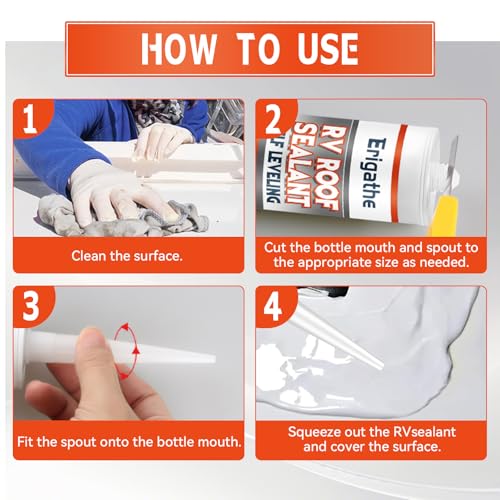
Thorough cleaning is essential. Remove all old caulk, dirt, and debris with a scraper and then use a good camper exterior cleaners to degrease the area. A clean surface ensures optimal adhesion and a long-lasting seal.
Is there a specific type of caulk best for repairing a leaky roof vent?
For roof vents, a self-leveling caulk formulated for EPDM or TPO roofing is ideal. The self-leveling action fills gaps effectively, and compatibility with the roofing material prevents the caulk from deteriorating or losing adhesion over time.
What’s the best way to clean up uncured caulk?
Mineral spirits are usually effective for removing uncured caulk. Apply it to a clean cloth and gently wipe away the excess. For stubborn residue, you might also consider specialized caulk removal solutions or, for awnings, a dedicated campers awning cleaners.
The Bottom Line
Choosing the “best” caulk really comes down to how much control you want over the process versus how much fuss you’re willing to tolerate. If you want a product that consistently delivers excellent, long-lasting performance and are willing to invest a bit more, I recommend Geocel Pro Flex White RV Sealant. Its reputation for flexibility and adhesion is well-earned, based on countless owner reports, and it provides a solid foundation for a watertight seal.
For those on a tighter budget, or tackling a large roof area, the CUKWUYBY 8 Pack RV Sealant offers a significant amount of product for the price. If you need a reliable self-leveling option for horizontal surfaces, and are prepared to reapply as needed, the Erigathe Self-Leveling RV Roof Sealant is a strong contender, offering a wide temperature range and decent UV resistance. Don’t forget to consider protective roof coatings to further protect your investment.
Ultimately, the specifications matter less than proper surface preparation and diligent application. A high-end caulk won’t fix a poorly cleaned surface, and a budget-friendly option can perform admirably with careful installation. Prioritize a clean, dry surface and choose a product formulated for the materials of your camper; that’s the foundation of a lasting repair, and a key component of good roof sealant maintenance.
