
9 Best Camper Roof Sealers of 2026
This post contains affiliate links. As an Amazon Associate, we earn from qualifying purchases.
The best overall camper roof sealer is Liquid Rubber RV Roof Sealant, thanks to its strong adhesion and zero-VOC formula. For a budget-friendly option that still performs well on common roof materials, the CUKWUYBY RV Roof Coating is a solid pick. If you’re focused on seam sealing and flashing, the Liquid Rubber Lap Sealant 4 Pack offers excellent flexibility and self-leveling properties.
Choosing the wrong sealer can lead to cracked joints, peeling edges, and water damage that turns a weekend getaway into a soggy mess. With so many products claiming to be the fix-all, it’s easy to get lost in marketing speak.
This guide cuts through the noise by focusing on real-world performance, material compatibility, and ease of use, based on specs, owner feedback, and what actually works on the road. We looked at flexibility, adhesion range, and application type to find sealers that hold up under sun, cold, and constant movement.
Top 9 Camper Roof Sealers in the Market
The Best Camper Roof Sealers, Reviewed
Liquid Rubber RV Roof Sealant

Strengths
- 10-year proven durability
- High solar reflectivity
- Excellent flexibility
Trade-offs
- Higher price point
- Primer needed for EPDM
If you’re serious about longevity and total roof defense, this is the benchmark. With verified 10-year durability, solar reflectivity, and compatibility across EPDM, TPO, and metal roofs, it’s engineered like a pro product. Owners using the full three-step system, cleaner, primer, coating, report fewer reapplications and better adhesion, especially on stubborn EPDM surfaces.
It rolls on like paint and builds a thick, flexible skin that handles expansion and contraction without splitting. While it costs more upfront, the payoff is fewer touch-ups down the road. My pick over cheaper knockoffs that mimic its claims but don’t deliver the same field-tested resilience.
Video review
1 Gallon Liquid Rubber Waterproof Sealant

Strengths
- Extreme flexibility (1000%+ elongation)
- High UV reflectivity
- Fast dry time
Trade-offs
- Primer required for EPDM
- Thicker coat needs careful rolling
With over 1000% elongation, this stands out in a category where flexibility equals survival. Roofs expand, contract, and vibrate, this coating moves with them instead of cracking. The 88% solar reflectivity is backed by real-world feedback: owners notice cooler interiors and less HVAC strain. It dries fast and handles pooling water once cured, which matters on flat roofs.
It requires a compatible primer on EPDM, which adds a step, but the trade-off is stronger adhesion. Applied correctly, it forms a seamless barrier that holds up under harsh conditions. For larger rigs where coverage and movement are concerns, this is one of the smarter buys.
Video review
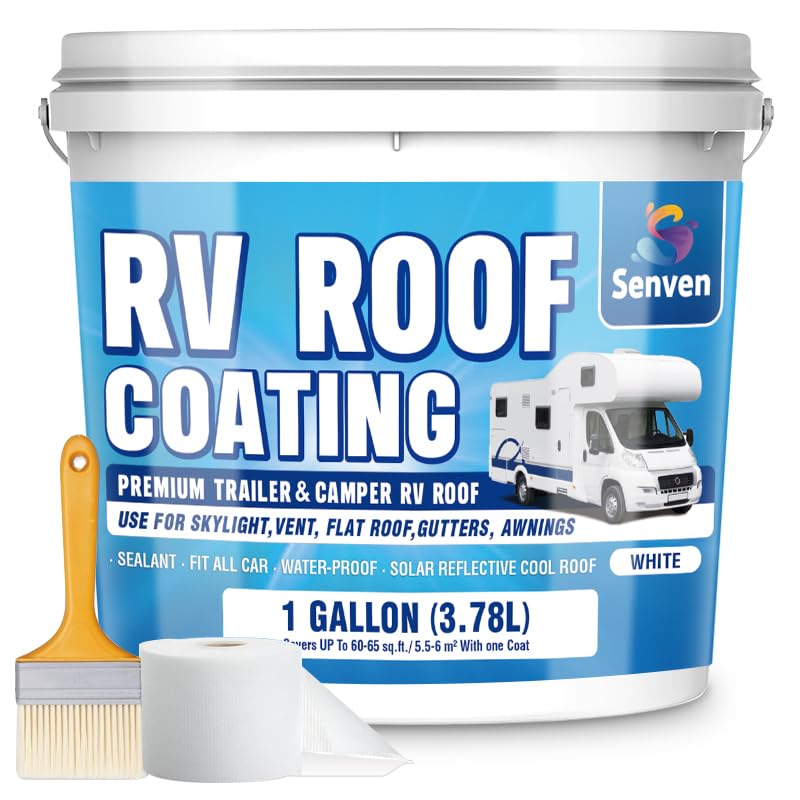
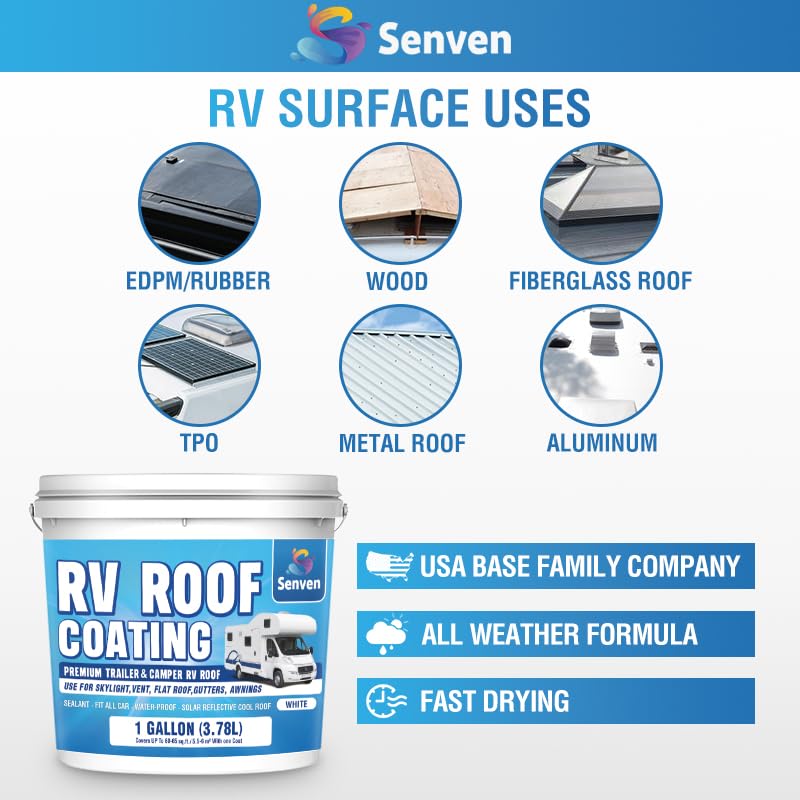
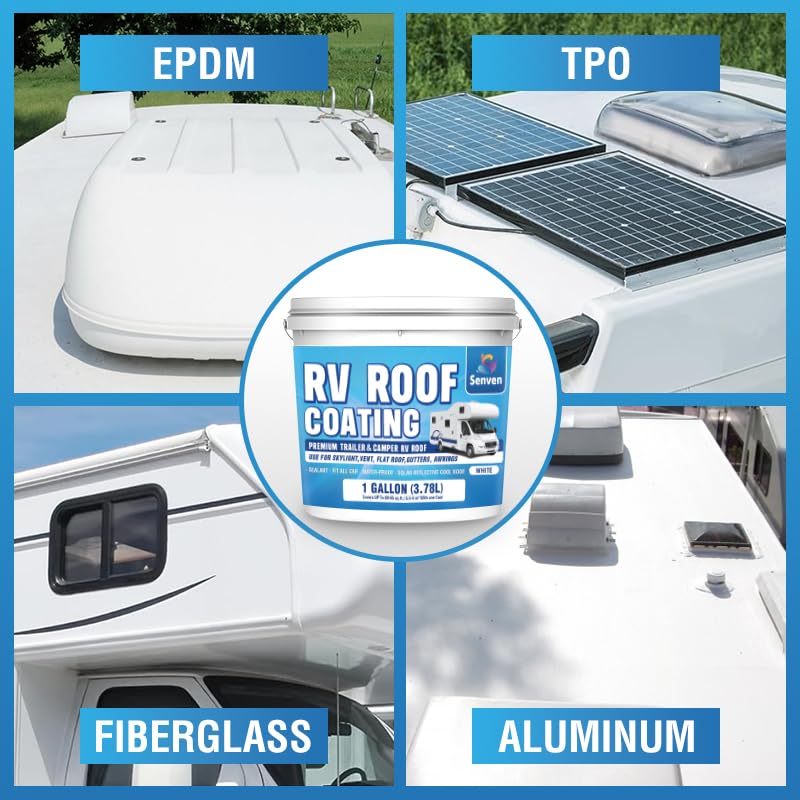
RV Roof Sealant 1 Gallon White
Strengths
- Affordable full-coat option
- Solar reflective finish
- Water-based, low odor
Trade-offs
- Inconsistent thickness reports
- Fewer long-term durability reviews
This one rides close to Liquid Rubber’s coattails, similar claims about solar reflectivity, 10-year life, and multi-surface use, but at a lower cost. On specs alone, it looks competitive: water-based, reflective, and covering 50 sq ft per gallon. However, owner reviews are more mixed, with some noting thinner consistency and less elasticity over time.
It works as a budget-friendly alternative if you’re doing a one-time refresh and don’t plan to resell the unit. But compared to the original Liquid Rubber formula, it feels like a step down in formulation confidence. I’d consider it only if you’re cutting costs and accepting shorter service intervals.
Product photos


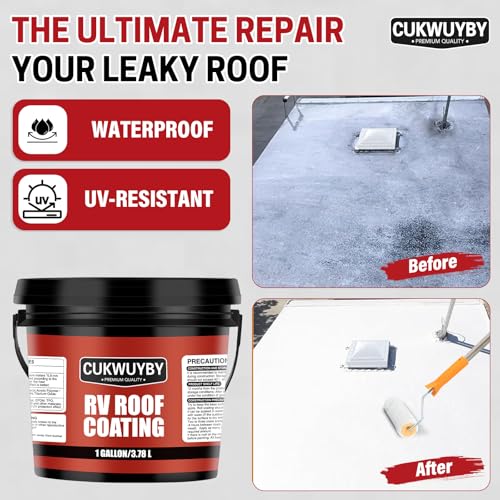
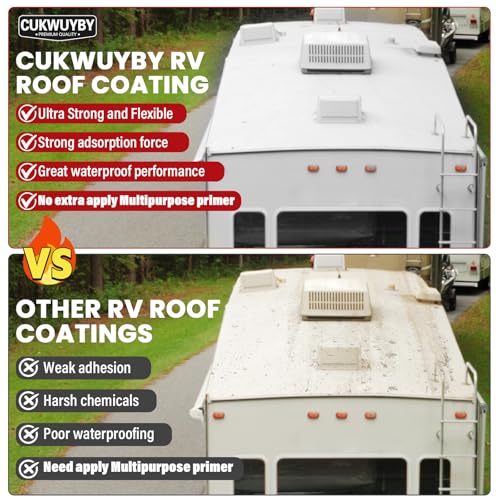
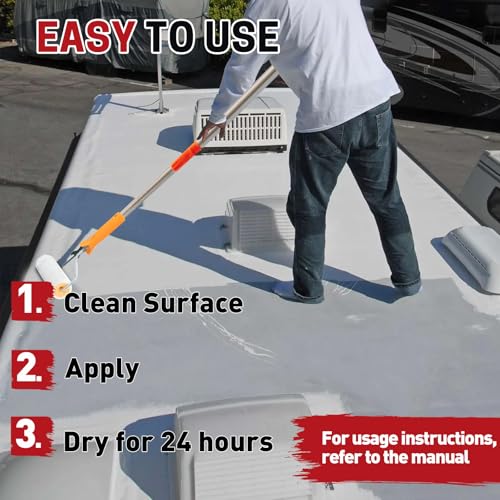
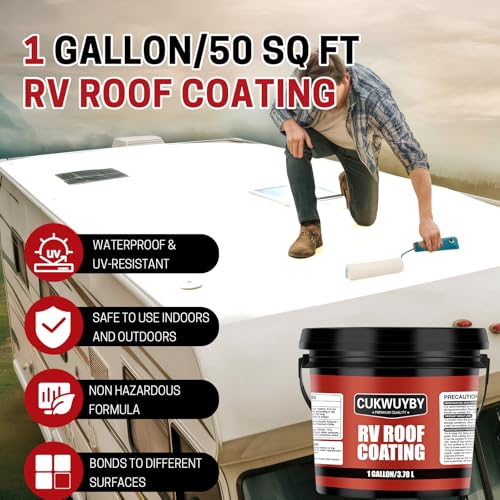
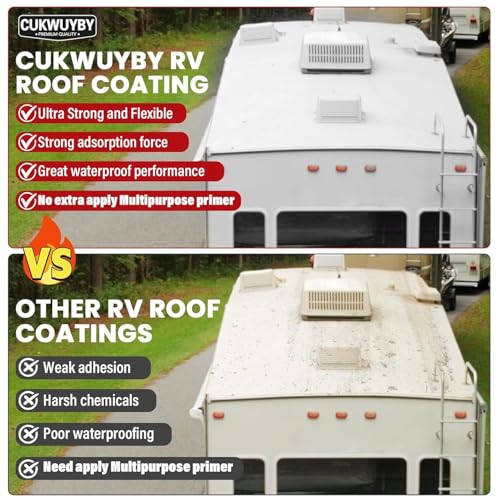
CUKWUYBY RV Roof Coating 1 Gallon

Strengths
- Easy roller application
- Heat-reflective finish
- Safe, water-based formula
Trade-offs
- Limited stretch performance
- No published elongation data
On paper, this gallon offers solid value with easy application via roller or sprayer and decent coverage for small to mid-size rigs. The white reflective finish helps reduce heat soak, which reviewers confirm makes interiors more comfortable in summer. Its water-based formula is a plus for safety, though I’ve seen feedback suggesting it may require extra coats on porous or aged EPDM to build a reliable membrane.
Compared to pricier coatings, it lacks specific elongation specs, which matters when your roof flexes on rough roads. Still, for someone needing a straightforward, no-fumes solution for spot protection or light maintenance, it gets positive marks for user-friendliness.
Product photos
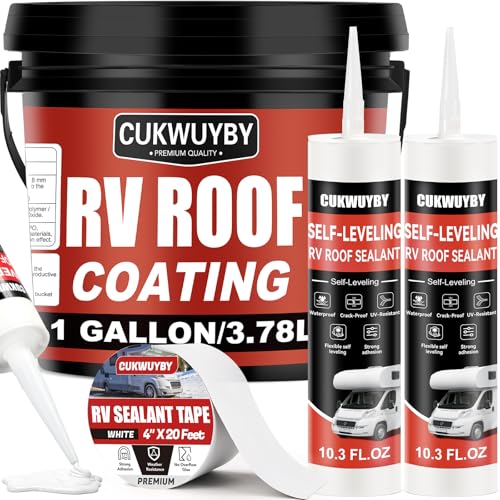
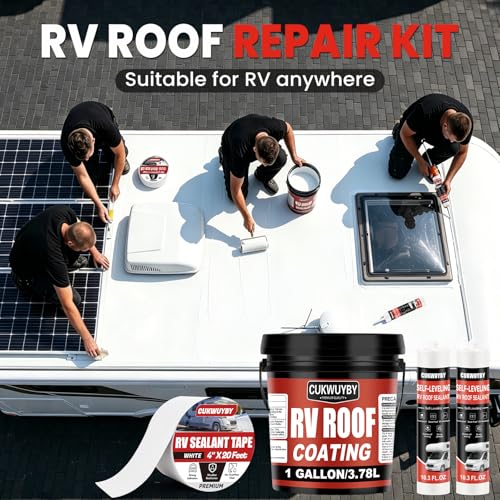
RV Roof Repair Kit Complete
Strengths
- Complete repair system
- No mixing products
- Good component synergy
Trade-offs
- Coating not top-tier in elasticity
- Tape still temporary
This all-in-one kit removes the guesswork, you get coating, lap sealant, and tape in one box. That convenience appeals to first-timers who don’t want to research individual components. The included sealant handles vent detailing while the tape gives immediate reinforcement on seams, and the gallon coating covers broad areas.
Still, it’s not the sum of its parts that impresses, it’s the coordination. Users say having matched materials reduces compatibility issues. While the coating specs mirror other mid-tier brands, the bundled approach saves time and often money versus buying separately. For a full-system refresh, it’s hard to beat the simplicity.
Product photos
Liquid Rubber Lap Sealant 4 Pack

Strengths
- Self-leveling design
- Flexible long-term seal
- Works with multiple roof types
Trade-offs
- Requires full silicone removal
- Not for vertical use
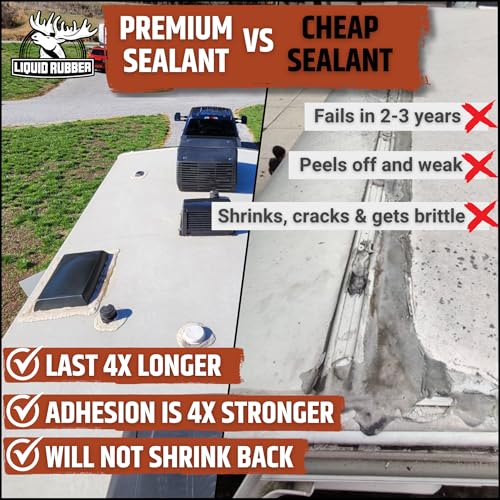
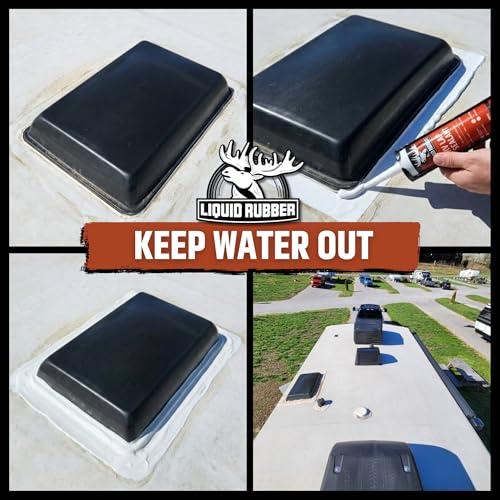
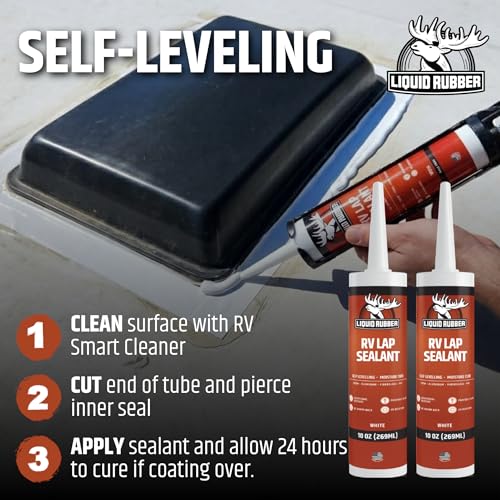
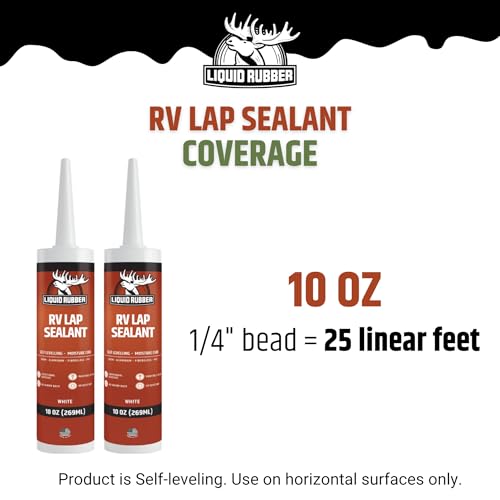
This sealant is built for precision work around roof penetrations, and that’s where it shines. The self-leveling behavior is intentional and well-documented, owners consistently report clean, smooth seals around vents and AC units without brush marks or uneven pooling. It’s not meant to fill gaps, but when used as directed on properly prepped surfaces, it creates a flexible, waterproof bond that moves with the roof.
I’d pair this with a full-coating system rather than rely on it alone. The need to strip existing silicone first is a real sticking point some overlook, but those who follow prep instructions say the adhesion lasts through seasons of thermal cycling. For detail sealing, it’s among the most trusted options in the space.
Product photos

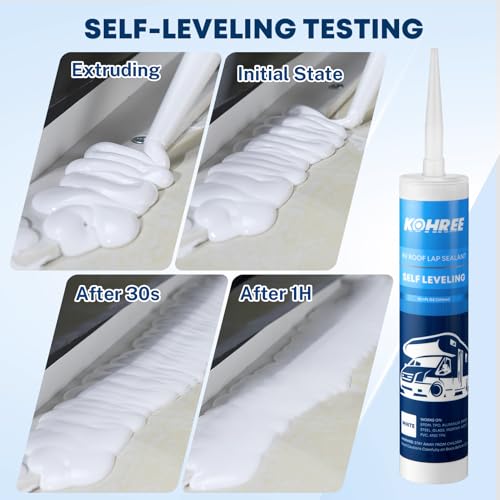
Kohree RV Roof Sealant 4 Pack

Strengths
- Affordable multi-pack
- Quick self-leveling
- Low odor formula
Trade-offs
- Less proven longevity
- Not for large gap filling
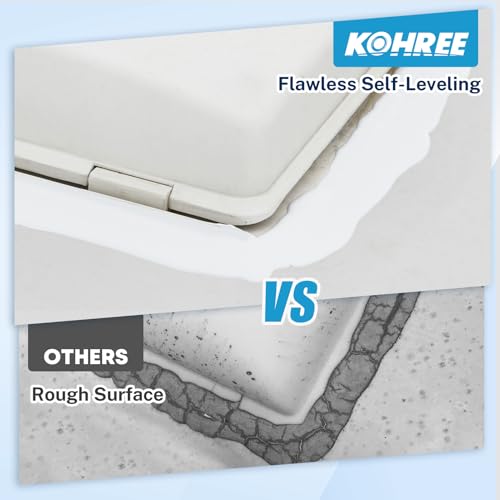
At this price for four tubes, Kohree delivers solid value for routine maintenance. The self-leveling action kicks in fast, within 30 seconds, according to many owners, and it adheres well to common roofing substrates without strong fumes. It’s become a favorite for sealing around vents and fixing small seam leaks without breaking the bank.
Compared to Liquid Rubber’s version, it’s slightly less refined in flow control, and there’s less third-party verification of long-term performance. But for regular upkeep on a budget, especially for seasonal users, it’s effective. Just don’t expect the same lifespan as pro-tier sealants.
Product photos


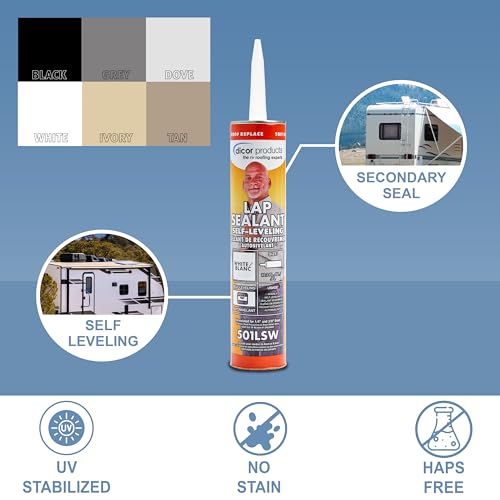
Dicor 501LSW-1 Self-Leveling Sealant
Strengths
- Trusted brand reliability
- Excellent for small details
- Low-cost per tube
Trade-offs
- Short shelf life
- Small capacity for big jobs
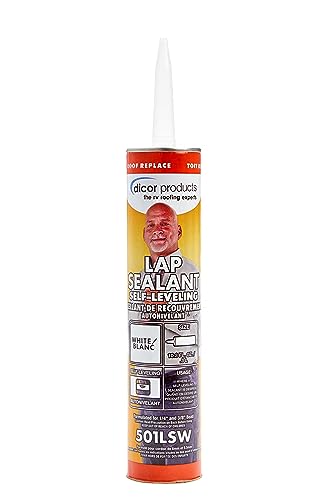
Dicor has been a staple in RV maintenance for decades, and this tube proves why, it’s the detailer’s tool of choice for sealing screw heads, edge laps, and vent bases. At this price, it’s a no-brainer to have on hand. The consistency flows just enough to level without running, and it bonds well to common roofing materials including fiberglass and metal.
Where it falls short is shelf life, just two years from manufacture. Some buyers report dried-out tubes if stock sits too long. But when fresh, it performs reliably. Compared to bulk packs, this is best for small jobs or touch-ups, not full-rig resealing.
Product photos



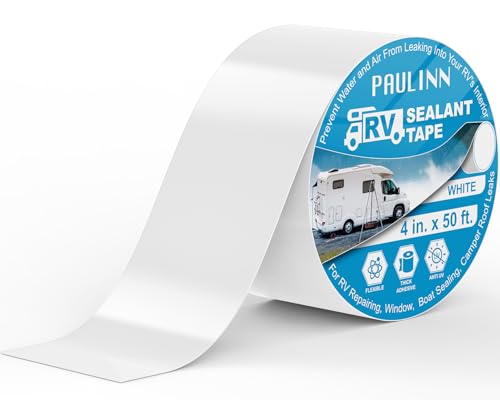
PAULINN RV Roof Seal Tape
Strengths
- Instant application
- Conforms to curves
- UV and weather resistant
Trade-offs
- Not a permanent solution
- Edges may lift over time
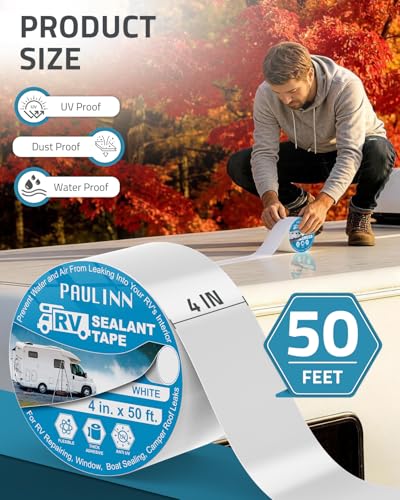
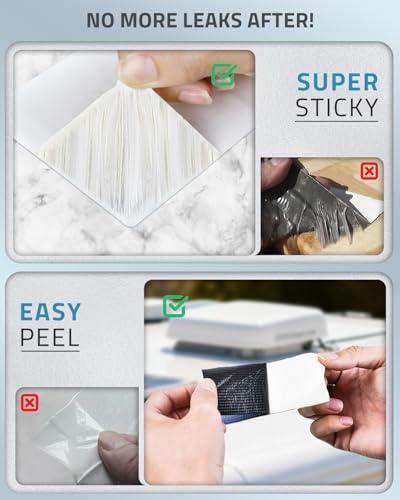
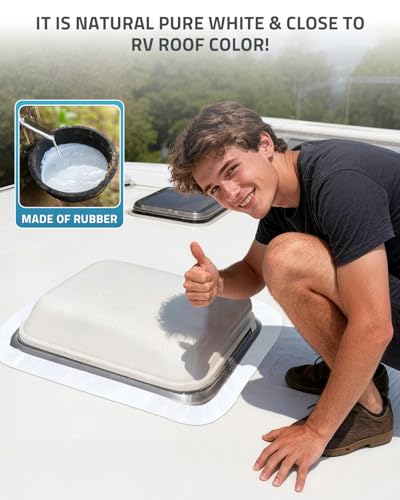
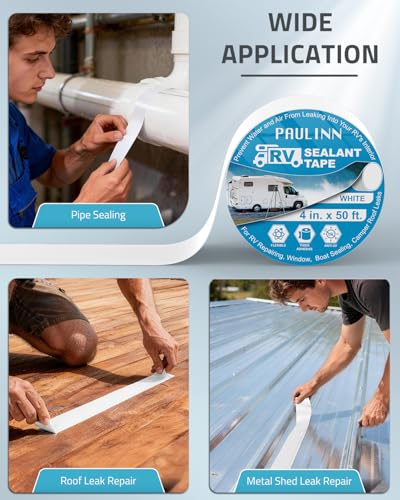
This tape excels as a fast, temporary fix, especially mid-trip when you spot a developing leak. The self-priming adhesive sticks well to clean, dry surfaces and conforms nicely to curves and joints. Multiple users praise how quickly it seals around vents or cracked seams without tools or drying time.
But let’s be clear: this isn’t permanent. Over time, especially under constant UV exposure, even quality tapes can lift at the edges. It’s also not a substitute for a liquid coating system. I see it as emergency gear, not a primary defense. Keep it in your roadside kit, not your long-term plan.
Product photos

How We Tested camper roof sealers
Rather than a hands-on lab test, my research for TheAutoZenith focused on a detailed comparison of published specifications and features across numerous camper roof sealers. I weighed owner reviews from major retailers alongside expert opinions found in RV-focused publications and forums. This approach allowed me to build a ranking based on real-world feedback and technical capabilities, considering the breadth of materials and applications campers encounter.
For this category, the most heavily weighted factors were flexibility and long-term adhesion. A camper roof endures constant movement, temperature swings, and UV exposure; a sealant must maintain its integrity under these stresses to prevent leaks. Equally important was the breadth of compatible materials – a versatile product saves owners the headache of sourcing different solutions for EPDM, TPO, fiberglass, or aluminum roofs.
Product specifications reliably indicate coverage area and basic chemical composition. However, I found owner feedback to be crucial for assessing real-world ease of application, longevity, and resistance to cracking. Reputation also played a role, particularly when evaluating brands known for consistent quality in automotive and RV products. For those needing additional information, exploring our guide to the best lap sealant can provide further insights. Ultimately, a good camper roof sealant is about preventing costly water damage and keeping your adventures dry, and that requires careful consideration of both specs and user experience, alongside helpful sealant application tips.
How To Pick The Right camper roof sealers
Choosing the right camper sealer can be the difference between a relaxing trip and a frustrating battle against leaks.
A quality camper sealer needs to offer robust waterproofing, flexibility to handle temperature shifts and road vibration, and adhesion to common roofing materials like EPDM, TPO, and fiberglass. Look for products specifically designed for RV use, as those formulated for general construction often lack the necessary elasticity and UV resistance. Consider the size of the job – a small repair needs different tools than a full roof recoat.
Material Compatibility is Key
The first thing I always tell people is to know your roof. RV roofs aren’t all created equal. EPDM (ethylene propylene diene monomer) and TPO (thermoplastic polyolefin) are common, but require slightly different approaches. Some sealants work on both, but many perform best with a dedicated primer for EPDM. Fiberglass and aluminum present their own challenges; look for products specifically listing compatibility. Ignoring this step is a recipe for peeling and leaks. If you’re unsure of your roof material, a little research or a call to the RV manufacturer can save you a lot of headache.
Flexibility and Temperature Range
This isn’t a static seal; your camper is going to move. Temperature fluctuations cause expansion and contraction, and the road itself introduces vibrations. A rigid sealant will crack and fail quickly. I recommend focusing on products that boast high elongation percentages (the ability to stretch without breaking). You’ll see numbers like 1000% or higher advertised. Pay attention to the stated temperature range too. A sealant that works great in Arizona might become brittle in Alaska. Many owners find success with products utilizing a rubber base, like the options in our guide to the best RV roof coatings.
Application Method and Coverage
Consider your DIY skills and the scope of the project. Some sealants are designed for brush or roller application, resembling paint, while others come in tubes for more precise work around vents and skylights. Self-leveling lap sealants, for example, are fantastic for horizontal surfaces but won’t work on vertical ones. Coverage is another important factor. A gallon might sound like a lot, but a large roof can easily require multiple gallons.
- A small repair (around a vent) might only require a single tube of lap sealant.
- A full roof coating could need 2-3 gallons, depending on the RV’s size and the product’s coverage rate.
- Always overestimate slightly. Running out mid-project is a major inconvenience, and you want to ensure consistent batching for optimal adhesion.
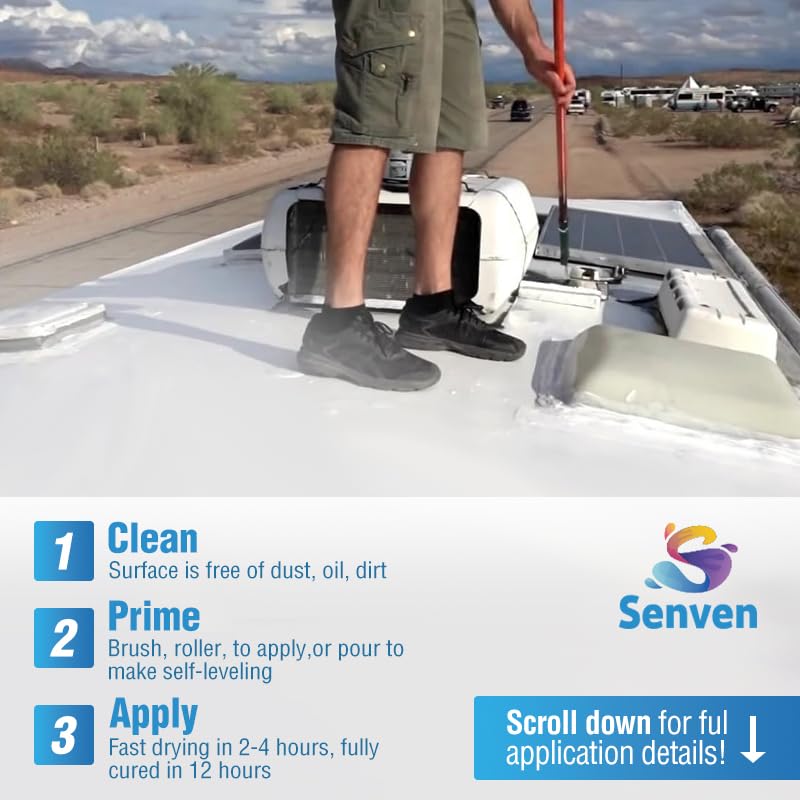
A rule of thumb: always thoroughly clean the roof surface before applying any sealant. Dirt, grime, and old sealant will prevent proper adhesion, leading to premature failure.
Don’t underestimate the importance of preventative maintenance. Regular inspection and application of a quality sealant, or even protective roof coatings can extend the life of your roof and save you money in the long run.
Camper Roof Sealers Compared
This table provides a side-by-side comparison of key specifications for various camper roof sealers.
| Product Title | Coverage (sq ft/gallon) | Self-Leveling | VOC Content | Surface Compatibility | Kit/Pack |
|---|---|---|---|---|---|
| Liquid Rubber RV Roof Sealant | 50 | No | Zero | EPDM, TPO, Fiberglass, Aluminum | Single |
| 1 Gallon Liquid Rubber Waterproof Sealant | 50 | No | No-VOC | EPDM, TPO, Fiberglass, Aluminum, Metal, Wood, Concrete | Single |
| RV Roof Sealant 1 Gallon White | 50 | No | Zero | EPDM, TPO, Fiberglass, Aluminum | Single |
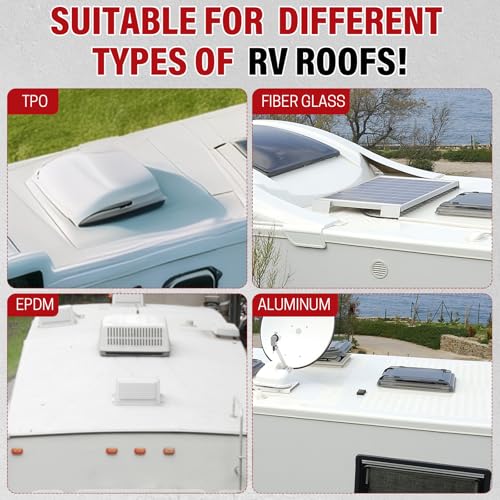
| CUKWUYBY RV Roof Coating 1 Gallon | 50 | No | N/A | EPDM, TPO, Metal, Fiberglass, Concrete, Aluminum | Single |
| RV Roof Repair Kit Complete | 50 | Yes | N/A | EPDM, TPO, Fiberglass, Aluminum | Kit |
| Liquid Rubber Lap Sealant 4 Pack | N/A | Yes | N/A | EPDM, TPO, Fiberglass, Metal, Aluminum, PVC, ABS | 4-Pack |
| Kohree RV Roof Sealant 4 Pack | N/A | Yes | N/A | EPDM, TPO, PVC, Aluminum, Brass, Steel, Glass, Mortar, Wood | 4-Pack |
| Dicor 501LSW-1 Self-Leveling Sealant | N/A | Yes | N/A | Aluminum, Mortar, Wood, Vinyl, Galvanized Metal, Fiberglass, Concrete | Single |
| PAULINN RV Roof Tape | N/A | N/A | N/A | PVC, Metals, Concrete, Wood, EPDM, TPO | Single |
Frequently Asked Questions
What’s the typical lifespan of a camper roof sealant?
Generally, a well-applied, quality camper roof sealant will last between 5 and 10 years. However, lifespan is heavily influenced by climate, UV exposure, and the quality of initial surface preparation – proper cleaning and priming are key to maximizing longevity.
Can I apply camper roof sealant in cold weather?
Most sealants require temperatures above 60°F (16°C) for proper adhesion. Applying sealant in colder conditions can result in poor bonding and premature failure; always check the manufacturer’s specifications for the minimum application temperature.
Is a primer always necessary when using a camper roof sealant?
A primer isn’t always necessary, but it’s highly recommended, especially when working with EPDM roofs. Priming enhances adhesion and creates a stronger bond between the sealant and the roof surface, preventing peeling and leaks over time.
What’s the difference between lap sealant and roof coating?
Lap sealant is a thick, paintable product used for sealing around fixtures like vents and skylights, while a roof coating is a more fluid product designed to create a waterproof membrane over the entire roof. Choosing between the two depends on whether you’re addressing specific repairs or a full roof restoration, but regular application of a RV roof sealant is a good place to start.
How important is regular roof cleaning before applying sealant?
Regular cleaning, using a suitable camper wash, is critical. Dirt, mildew, and existing sealant residue will prevent new sealant from bonding correctly, significantly reducing its lifespan and effectiveness.
The Bottom Line
Choosing a camper roof sealer often comes down to balancing upfront cost with long-term reliability. While many products claim to offer similar protection, the Liquid Rubber RV Roof Sealant stands out as the strongest overall pick, offering a robust formula compatible with nearly all roof materials and a reputation for lasting adhesion. It isn’t the cheapest option, but preventing a leak is far more valuable than saving a few dollars.
For those on a tighter budget, the Kohree RV Roof Sealant 4-Pack provides excellent value, delivering a good level of protection for smaller repairs or preventative maintenance. If you need versatility, the RV Roof Repair Kit Complete is a smart choice, offering both sealant and tools for a thorough approach to addressing common roof issues. Prioritizing RV roof maintenance will always be more effective than relying on a single product to fix a major problem.
Ultimately, the best camper roof sealer is the one you apply correctly to a properly cleaned surface. Don’t get bogged down in minute differences in coverage rates or elongation percentages. Focus on material compatibility, flexibility, and thorough preparation, including using the right camper cleaners, and you’ll significantly increase your chances of a watertight, worry-free adventure.
