
7 Best Car Window Tintings of 2026
This post contains affiliate links. As an Amazon Associate, we earn from qualifying purchases.
The RockRose 5% Nano Ceramic Tint is the best overall choice for maximum heat rejection and durability, while the TOYOCO 35% VLT Ceramic Tint is a smarter budget-friendly option for those wanting legal, all-around performance. For DIYers, the TRUE LINE DIY Tinting Kit offers the most flexibility with multiple shade options.
Every car owner knows how brutal summer sun can be, a hot cabin, faded dashboards, and squinting through glare. Window tinting isn’t just about style, it’s about real protection. I’ve spent years studying how different films perform, and after comparing specs and reading through owner feedback, I’ve pinpointed the ones that stand out. This guide covers what actually matters when choosing a tint, how we evaluated them, and which models deliver the best mix of performance, clarity, and value without breaking the law.
Top 7 Car Window Tintings in the Market
The Best Car Window Tintings, Reviewed
RockRose 5% Nano Ceramic Tint

Strengths
- Nano ceramic construction
- 99% UV protection
- Haze-free clarity
- High heat rejection
- Plotter cut compatible
Trade-offs
- Higher price point
- 5% may be too dark legally
- Not pre-cut for specific models
When it comes to raw performance and premium materials, the RockRose 5% Nano Ceramic tint stands out in a crowded field. On paper, its specs are top-tier, 99% UV rejection, 85% IRR block, and true nano-ceramic construction mean this film isn’t just about darkness, it’s about heat control and longevity. Owners consistently report noticeably cooler interiors, even during peak summer, and many highlight how well it resists fading or bubbling over time. The 2-ply, haze-free PET base also makes a difference for drivers who prioritize clarity without sacrificing privacy.
Compared to other budget ceramic options, RockRose leans into its plotter-friendly design and strong adhesive, which reviewers say translates to cleaner DIY results, especially on complex curves. While pricier than entry-level rolls, it competes directly with professional-grade films. I’d pick this over basic dyed tints any day if you want real heat rejection without signal interference.
Video review
TOYOCO 35% VLT Ceramic Tint
Strengths
- 35% VLT for legal compliance
- No signal interference
- Scratch-resistant surface
- Good heat and glare control
- Clear optical quality
Trade-offs
- Shorter length per roll
- Some report adhesive issues
- Not ideal for max privacy
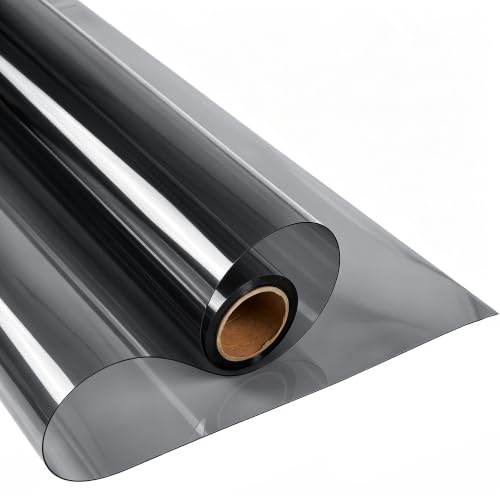
If you spend a lot of time driving during daylight hours and need legal compliance without sacrificing comfort, the TOYOCO 35% tint is one of the smarter buys. Its nano-ceramic formula delivers what matters: 99% UV protection, solid glare reduction, and meaningful heat rejection, all while keeping visibility high enough for daytime safety and state legality on front windows. Reviewers frequently mention how natural the view looks from the inside, with no color distortion or mirror-like shine that cheap metallics often have.
The 24-inch width gives decent coverage for most sedans and SUVs, though larger trucks might need more length. One underrated perk: zero signal interference. Unlike older metal-based films, this won’t mess with your GPS or phone reception. I’d choose this over darker tints if I had young passengers or did a lot of highway driving, visibility wins every time.
Video review
IAQWE 5% VLT Ceramic Film
Strengths
- Very affordable
- Shatterproof 5-layer build
- 5% for full privacy
- Easy heat shrink
- Good UV protection
Trade-offs
- Inconsistent adhesive reports
- Minor haze initially
- Not pre-cut or model-specific
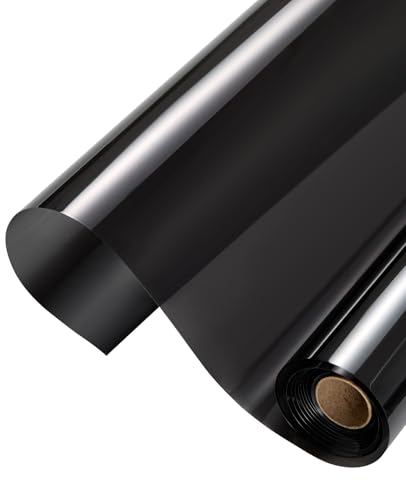
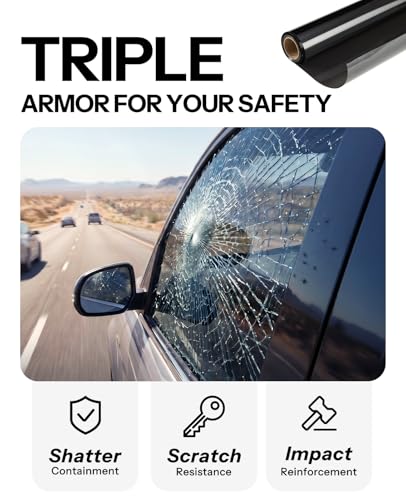
IAQWE lands at the bottom price-wise, but doesn’t skimp entirely on performance. For under $22, you get a 20-inch x 20-foot roll of 5% nano ceramic film with claimed shatterproof construction and 99% UV blocking. On paper, it matches pricier brands in core specs, and many budget-focused buyers report solid heat reduction and good clarity after install. The 5-layer safety film is a standout, owners say it adds a sense of security, holding glass together if impacted.
That said, some reviews mention inconsistent adhesion and slight haze during initial application, which clears with heat. It’s not quite as refined as RockRose or Vepagoo, but for a spare car or temporary upgrade, it works. My take? This is the smart buy if you’re testing DIY tinting for the first time or need a quick fix without breaking the bank.
Product photos
Vepagoo 5% VLT Ceramic Tint
Strengths
- True 5% privacy tint
- Excellent UV protection
- Heat and glare reduction
- Scratch-resistant coating
- Strong DIY support
Trade-offs
- Too dark for front windows legally
- May require re-stretching on curves
- Adhesive can be sticky during install
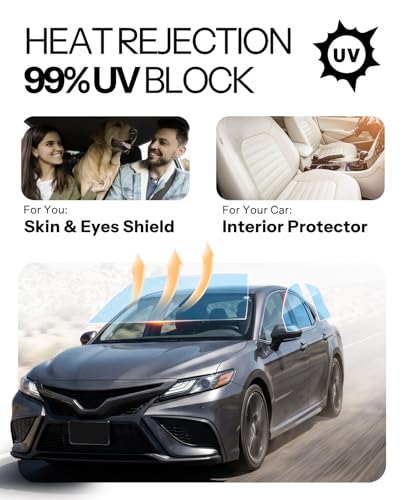
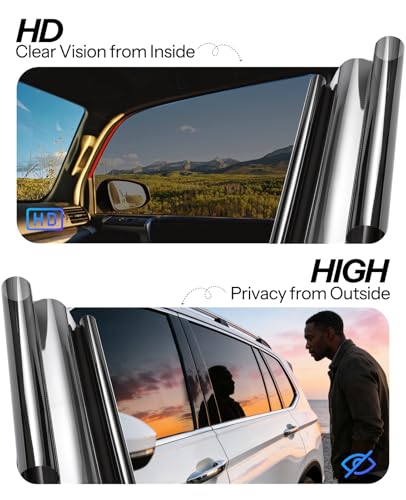
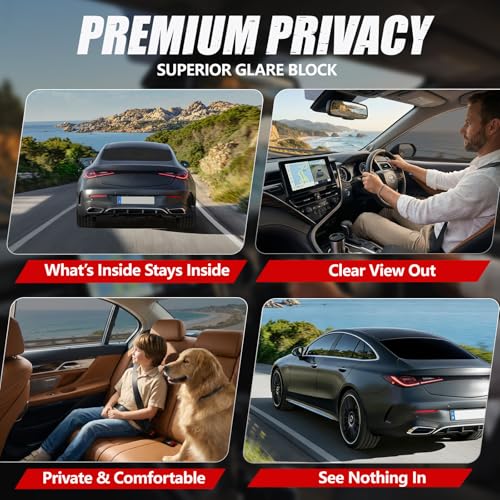
Vepagoo’s 5% ceramic film is built for one thing: maximum privacy. And it delivers. With a near-opaque exterior look during daylight, it creates a secure, discreet cabin while still allowing outward visibility, exactly what owners want from a limo-style tint. The nano-ceramic layer pulls double duty, rejecting 99% of UV rays and cutting infrared heat significantly. Multiple reviewers confirm their dashboards stayed cooler and didn’t crack prematurely, which speaks to real UV protection.
Installation feedback is mostly positive, with users appreciating the included video support and bubble-free adhesive claims. Compared to similarly priced 5% films, Vepagoo holds up well against peeling and scratching, thanks to its multi-layer build. But be aware, this level of darkness isn’t legal for front side windows in most states. I’d reserve this for rear windows unless you’re okay with potential fines.
Product photos
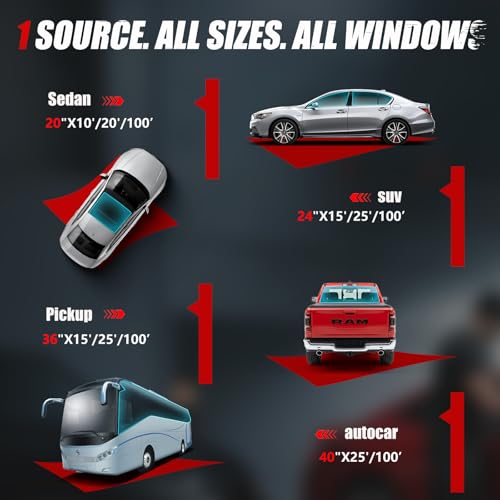
Vepagoo 35% VLT Ceramic Film
Strengths
- Legal for most front windows
- No GPS signal loss
- 18-month warranty
- Good heat and UV block
- Bubble-free installation
Trade-offs
- Slightly narrower than competitors
- Limited length for large vehicles
- Not for extreme heat climates alone
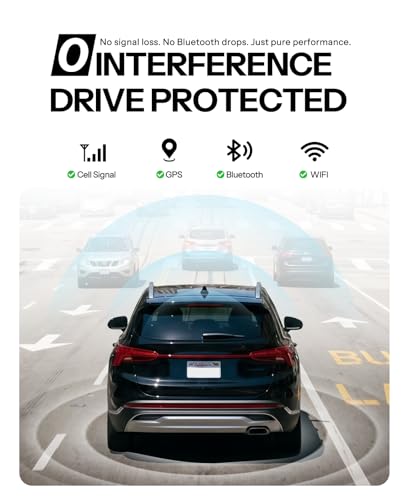
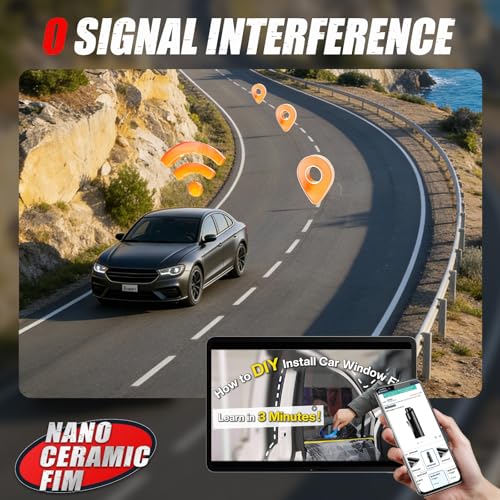
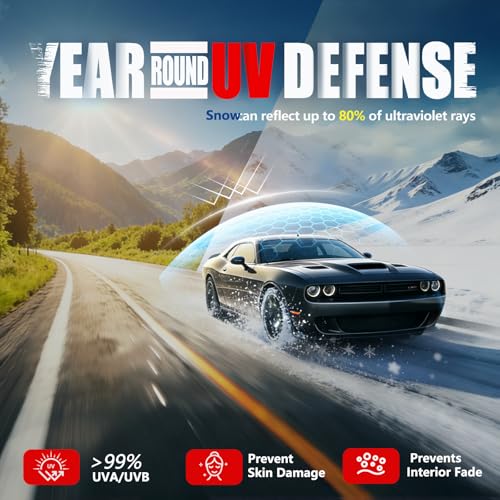
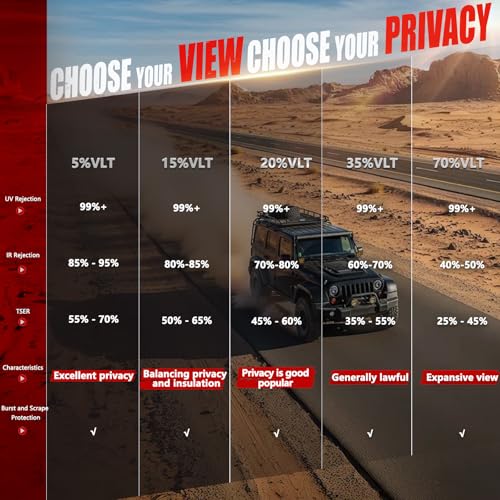
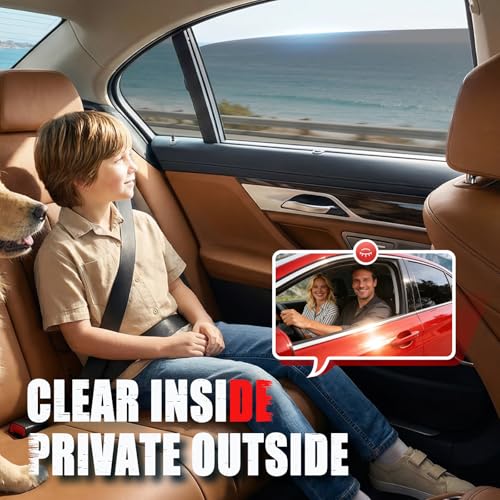
This 35% offering from Vepagoo strikes a smart middle ground, enough tint to reduce glare and heat, but light enough to stay within legal limits for most front windows. It shares the same nano-ceramic DNA as their darker version, meaning no signal interference and solid durability. Owners like that it maintains a clean, factory-like appearance while still providing noticeable interior cooling. The 20-inch x 20-foot roll gives flexibility across vehicle types, though hatchbacks may stretch it thin.
What tips the scale in its favor is the 18-month warranty and round-the-clock customer help, a rarity at this price. When compared to TOYOCO’s similar 35% model, this one edges out slightly in support and ease of use, though both perform nearly identically on heat rejection. I’d recommend this as the balanced pick for commuters who want peace of mind without drawing attention from law enforcement.
Product photos
TRUE LINE DIY Tinting Kit
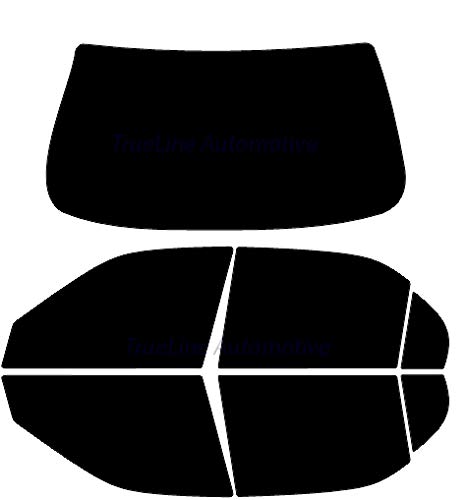
Strengths
- Pre-cut to vehicle specs
- Mix-and-match tint levels
- No trimming required
- Multiple material choices
- Includes installation aids
Trade-offs
- Most expensive option
- Longer wait for customization
- Limited to supported models
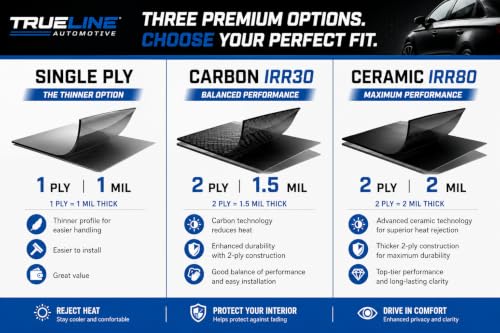
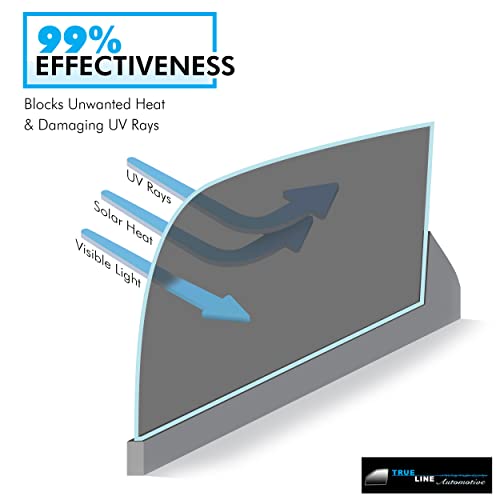
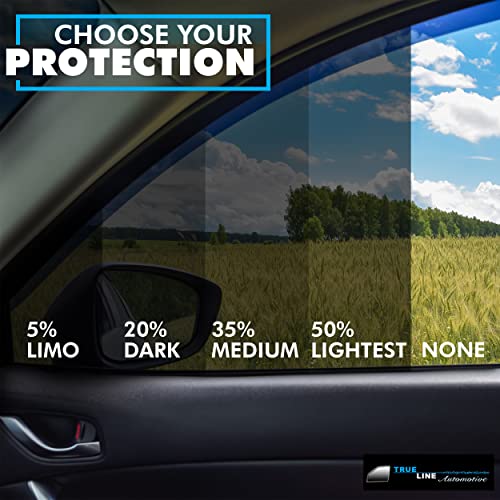
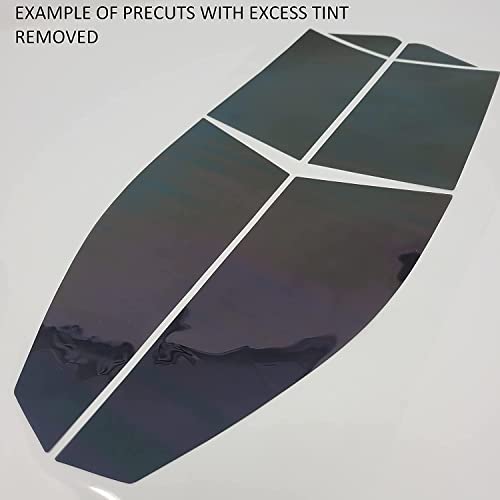
TRUE LINE takes a different approach, pre-cut, ready-to-install panels tailored to your exact make and model. That’s a standout for DIYers tired of trimming rolls by hand. You select your shades (5%, 20%, 35%, or 50%) and they send custom-cut pieces so there’s no excess to remove. No guesswork, no jagged edges. Owners rave about how cleanly these go on, especially when using the included release tapes.
Even better, you can mix ceramic, carbon, and dyed options across windows, say, 5% ceramic on the back and 35% carbon up front. That kind of customization is usually reserved for pro shops. Yes, it’s the most expensive option here, but you’re paying for precision and convenience. If you hate freehand cutting or own a less common vehicle, this is worth the premium. I’d pick this over roll kits for a first-time installer wanting shop-quality results.
Product photos

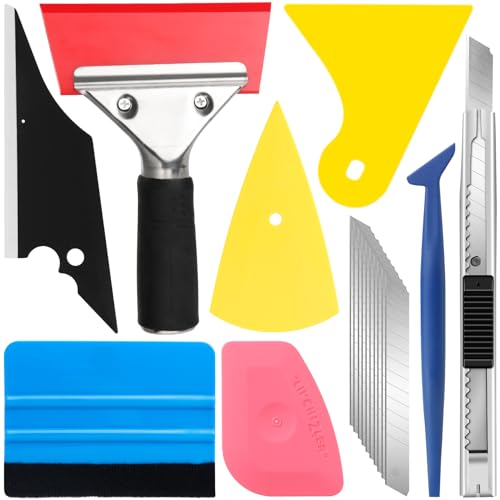
DIYSELF 18 Pcs Tint Tool Kit
Strengths
- Complete tool variety
- Durable metal scraper
- Sharp utility knife
- Felt and rubber squeegees
- Multi-surface use
Trade-offs
- No tint film included
- Blades may dull on thick films
- Plastic handle not ergonomic
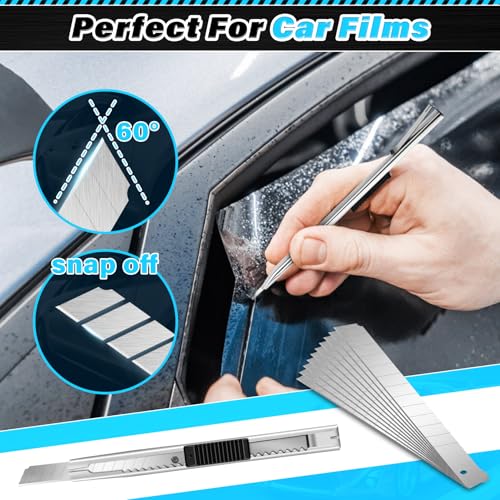
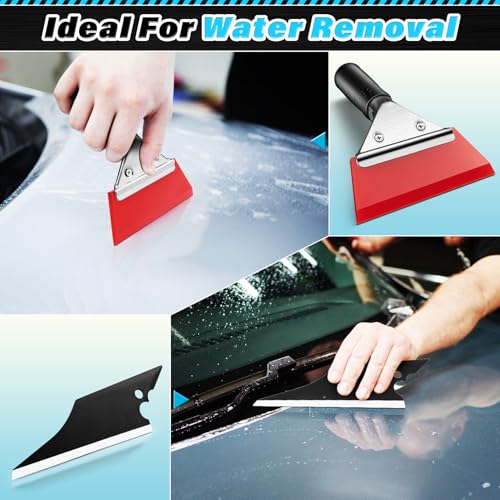
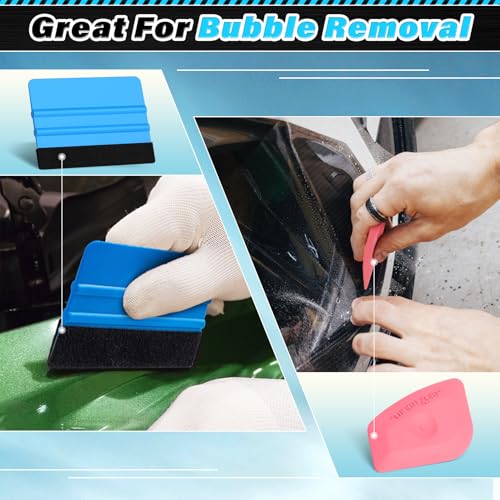
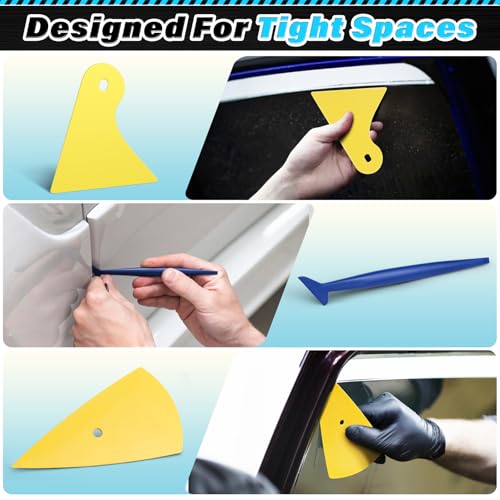
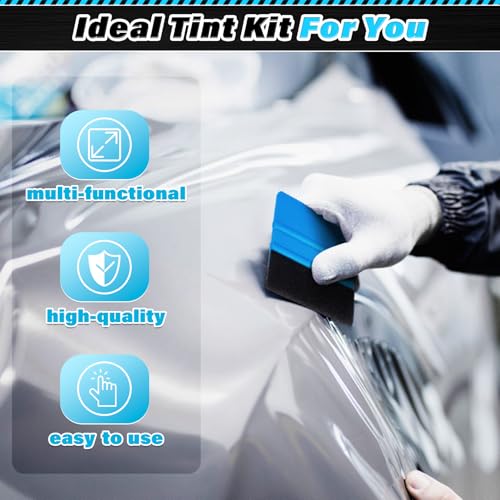
You can have the best window film in the world, but without the right tools, your install will look amateurish fast. That’s where the DIYSELF kit earns its keep. This isn’t a tint film, it’s the missing piece for anyone tackling a roll or pre-cut job themselves. The inclusion of multiple squeegees, including a long corner tool and felt-edged blade, means you can handle everything from large rear windows to tight door curves without switching gear. The SK-5 carbon steel utility knife gets sharp praise in owner feedback for holding its edge through multiple cuts.
What sets this apart is versatility. It’s not just for cars, reviewers note using it for home glass films, wrap projects, even decals. At this price, it’s a no-brainer add-on. My recommendation? Even if you’re buying pre-cut tint, grab this kit. A poor tool set is the most common reason for bubbles, scratches, and frustration.
Product photos
How We Picked These car window tintings
As someone who’s spent years around vehicles, I approach car accessories with a focus on both performance and practicality. Rather than a hands-on lab test, this was a research-led comparison of published specifications and owner feedback across numerous brands and models of car window tint. I weighed the features listed by manufacturers against what real users are saying about ease of installation, durability, and actual performance in terms of heat and glare rejection. My aim was to identify the tintings that consistently deliver on their promises.
For car window tintings, the most critical factors are heat rejection capability – specifically infrared and UV blocking – and optical clarity. A tint that drastically reduces cabin temperature and protects occupants from harmful UV rays is paramount. Equally important is avoiding interference with radio or GPS signals, something older metallic tints were notorious for. Finally, a balance between privacy and legal compliance (VLT percentages) is key; a super-dark tint isn’t helpful if it’s not street legal in your area.
Specifications reliably tell you about VLT percentages and the claimed heat rejection rates. However, owner feedback is where the truth lies regarding real-world performance, longevity, and how well a tint holds its color. I paid close attention to reports of bubbling, peeling, or signal interference, and also considered the availability of different shades. If you’re also considering alternatives for sun protection, exploring options like car sun shades can be a useful comparison. Finding a tint that excels in both specs and reputation was the ultimate goal, and why I also reviewed guides on heat reduction tint.
What To Look For In car window tintings
Choosing the right car window tinting can dramatically improve your driving experience, and it’s a decision that goes beyond just picking a shade.
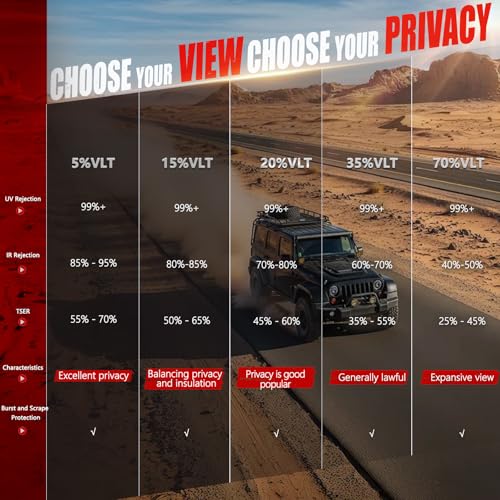
A quality window tint balances heat rejection, UV protection, visibility, and legal compliance. Key specs to consider include Visible Light Transmission (VLT), Infrared Rejection (IRR), and Total Solar Energy Rejected (TSER). Ceramic films generally outperform dyed films in heat and UV blocking, but come at a higher cost. Signal interference (or lack thereof) is also crucial in the digital age.
Understanding VLT and Legal Limits
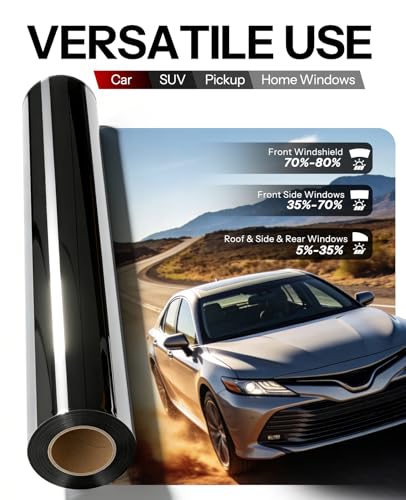
The most immediately noticeable aspect of window tint is its darkness, measured by Visible Light Transmission (VLT). Lower percentages mean darker tint. However, laws governing VLT vary significantly by location, so researching your local regulations before you buy is essential to avoid a ticket. I’ve seen far too many enthusiasts learn this the hard way. Don’t assume a 5% tint is universally legal; it often isn’t. Beyond legality, consider how dark you actually want to go. A very dark tint, while offering maximum privacy, can severely restrict visibility at night. For a good balance, especially if you frequently drive at dusk or dawn, a 35% VLT film like the TOYOCO offers a good compromise.
Ceramic vs. Dyed Film: What’s the Difference?
While dyed films are the most affordable option, ceramic window tinting is where you’ll find the best performance. Ceramic films use ceramic particles to block infrared and ultraviolet radiation far more effectively than dyed films. This translates to a cooler cabin, reduced AC load, and protection for your car’s interior from fading and cracking. The IAQWE 5% VLT Ceramic Film is a good example of a budget-friendly ceramic option, but be aware that even ceramic films come in varying quality levels.
Here’s what to consider when comparing ceramic films:
- IRR: A higher IRR percentage means more heat rejection.
- TSER: Total Solar Energy Rejected is the most holistic metric, accounting for all forms of solar energy blocked.
- Layer Construction: 2-ply films (like the RockRose) are generally more durable and offer better performance than single-ply options.
Installation: DIY or Professional?
Applying window tint isn’t inherently difficult, but achieving a flawless, bubble-free finish requires patience, practice, and the right tools. Many kits, like the TRUE LINE pre-cut kit, aim to simplify the process, but even with pre-cut films, proper preparation is key. If you’re not confident in your abilities, or if you have a vehicle with complex window shapes, professional installation is the way to go. It’s easy to damage a film during installation, costing you time and money. And don’t forget to properly prep the glass; a thorough cleaning with a quality interior glass cleaner is the first step to a bubble-free application.
A poorly installed tint is worse than no tint at all. Bubbles, peeling edges, and distorted vision will quickly negate any benefits.
Ultimately, selecting the right window tinting depends on your individual needs and priorities. Do you prioritize maximum privacy, heat rejection, or budget? Understanding these factors will help you make an informed decision and enjoy a more comfortable and protected driving experience.
Car Window Tintings Compared
Here’s a comparison of key specifications for the car window tintings featured.
| Product Name | VLT (%) | Material | Heat Rejection | Scratch Resistant | Signal Interference | Pre-Cut |
|---|---|---|---|---|---|---|
| RockRose 5% Nano Ceramic Tint | 5 | Nano Ceramic | 90% | N/A | N/A | No |
| TOYOCO 35% VLT Ceramic Tint | 35 | Ceramic | N/A | Yes | No | No |
| IAQWE 5% VLT Ceramic Film | 5 | Nano Ceramic | Reduces Heat | Yes | N/A | No |
| Vepagoo 5% VLT Ceramic Tint | 5 | Nano Ceramic | N/A | Yes | No | No |
| Vepagoo 35% VLT Ceramic Film | 35 | Nano Ceramic | N/A | Yes | No | No |
| TRUE LINE DIY Tinting Kit | 5, 20, 35, 50 | Dyed/Carbon/Ceramic | Varies | N/A | N/A | Yes |
| DIYSELF 18 Pcs Tint Tool Kit | N/A | N/A | N/A | N/A | N/A | N/A |
Frequently Asked Questions
What VLT percentage should I choose for my car windows?
The ideal VLT percentage depends on your priorities and local laws. A 35% VLT film offers a good balance of privacy and visibility, but you must check your state and local regulations to confirm it’s legal where you live.
Will car window tinting interfere with my GPS or radio signal?
Modern ceramic films are designed to minimize signal interference, unlike older metallic tints. However, some cheaper or lower-quality films can still cause issues, so opting for a reputable brand with advertised signal compatibility is wise.
Is it really worth paying more for ceramic tint over dyed film?
Yes, ceramic tint offers significantly better heat and UV rejection compared to dyed film, providing a more comfortable interior and protecting your car’s upholstery. While more expensive upfront, the long-term benefits often outweigh the cost difference.
How long does car window tinting typically last?
With proper care and a quality film, car window tinting can last between 5 and 10 years. Factors like film quality, climate exposure, and installation quality all impact longevity, so selecting a durable film and professional installation are key.
What tools do I really need if I attempt a DIY tint installation?
Beyond the tint film itself, you’ll absolutely need a spray bottle with application solution, a hard card or squeegee – many recommend a window squeegees for a smoother finish – and a sharp blade for trimming. A quality interior glass cleaners is also essential for prepping the glass properly.
The Bottom Line
Choosing a car window tinting often comes down to balancing what you’re willing to spend with the level of performance you need. While a darker tint might seem appealing for privacy, a well-rounded option like the RockRose 5% Nano Ceramic Tint strikes an excellent balance, offering significant heat rejection and UV protection without necessarily breaking the bank. It’s a solid pick for most drivers looking for a noticeable upgrade in comfort and interior protection.
If you’re on a tighter budget or prefer a lighter shade, the TOYOCO 35% VLT Ceramic Tint provides a good level of heat reduction and is legally compliant in many areas. For those tackling a DIY installation, the TRUE LINE DIY Tinting Kit offers a convenient, pre-cut solution – though remember that a flawless application requires patience and skill. And for maximum sun protection, don’t forget to consider complementary options like window shades for added coverage.
Ultimately, the “best” tint isn’t about a single number or feature. It’s about finding a film that meets your needs, your local laws, and your budget. Prioritize films with high IRR and TSER values for effective heat management, and if you’re concerned about sun damage, look for a tint offering excellent best tint for UV protection. A quality window tinting is an investment in your vehicle’s longevity and your driving comfort.
