
9 Best Car Security Alarms of 2026
This post contains affiliate links. As an Amazon Associate, we earn from qualifying purchases.
The Viper 3100V stands out as the best overall car security alarm for its proven reliability and strong deterrent features, while the Electop 120dB Car Alarm System offers a solid budget-friendly option with smart sensing, and the BANVIE Car Alarm with Keyless Entry adds versatility for those wanting integrated keyless functions.
Most drivers just want peace of mind that their vehicle won’t be tampered with overnight or while parked in an unfamiliar area. Too many alarms either go off at the wrong time or fail when it matters most. After comparing the field using specs, owner feedback, and years of experience with vehicle electronics, I focused on systems that balance real-world effectiveness with smart design. This guide cuts through the noise to highlight the best car security alarms based on actual performance, ease of use, and value, not just loud claims.
Top 8 Car Security Alarms in the Market
The Best Car Security Alarms, Reviewed
Ring Car Tracker and Alarm

Strengths
- GPS location tracking
- No subscription fee
- OBD-II powered
Trade-offs
- No built-in siren
- Relies on network coverage
- Sidewalk dependency
This isn’t just an alarm, it’s a tracker with smarts. Plugging into the OBD-II port, it draws power from the car and uses Amazon Sidewalk to maintain connection even when far from Wi-Fi. The real-time impact alerts and GPS tracking change the game: if your car gets moved or broken into, you’ll know exactly where it is. No monthly fee is rare in this category, and it makes the Ring stand out against subscription-based competitors.
Owners love the simplicity, no drilling, no wiring, and the app interface is intuitive. It won’t blare a 120dB siren, but the ability to see your car’s location and get instant alerts makes it more proactive than reactive. Compared to loud-but-dumb alarms, this is the smarter buy for city dwellers or anyone whose vehicle spends time unattended. My top overall pick because prevention beats reaction.
Video review
Viper 3100V 1-Way Security System

Strengths
- Hardwired security
- Engine immobilizer
- Thorough zone coverage
Trade-offs
- Requires professional install
- No remote notifications
- Older 1-way remote
Viper has long been the standard in wired car security, and the 3100V shows why. This isn’t a stick-on gadget, it’s a hardwired system with door, hood, and trunk monitoring, plus a two-stage shock sensor that distinguishes tap testing from forced entry. The engine immobilization works silently, preventing hot-wiring attempts, and the parking light flash confirms arm/disarm status visibly.
It lacks two-way feedback or app control, but for pure mechanical reliability, it’s trusted by installers and enthusiasts alike. Unlike plug-in alarms that can be unplugged in seconds, this one integrates deeply with the vehicle. Reviewers note it’s often chosen for classic cars or daily drivers in high-theft areas. While pricier and requiring professional setup, it’s the kind of system you install once and forget, until it saves your car.
Video review
Electop 120dB Car Alarm System
Strengths
- 120dB siren
- 360° ring strobe
- Long battery life
Trade-offs
- Cat shape not for everyone
- No immobilization
- Limited smart features
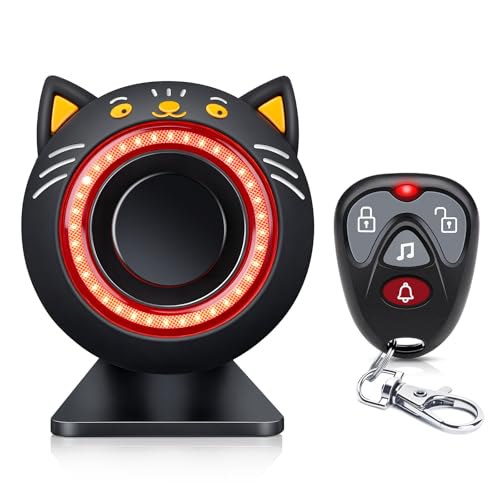
If raw presence is your goal, this Electop unit brings the drama. At 120dB, it’s among the loudest portable alarms available, and the ring-shaped strobe casts light in every direction, much more visible than single-point LEDs. The AI algorithm helps keep false alarms in check, and the three-volume settings let you adapt to different environments. Reviewers note it’s especially effective on SUVs and trucks parked in open areas where sound carries.
But what really stands out is the design: it’s shaped like a cat. That might sound gimmicky, but many owners say it adds a touch of personality while still being compact and discreet. Battery life is solid, over three months on a charge, and the remote lasts years. While it doesn’t cut the engine like higher-end systems, its dual-alert intensity makes it a top choice for maximum deterrence in a wireless package.
Product photos


Upgraded 115dB Car Alarm System
Strengths
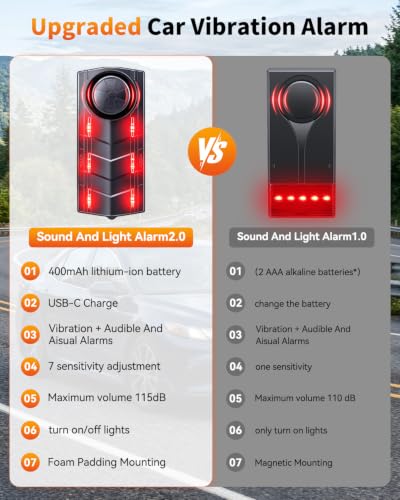
- 115dB alarm + strobe
- Rechargeable battery
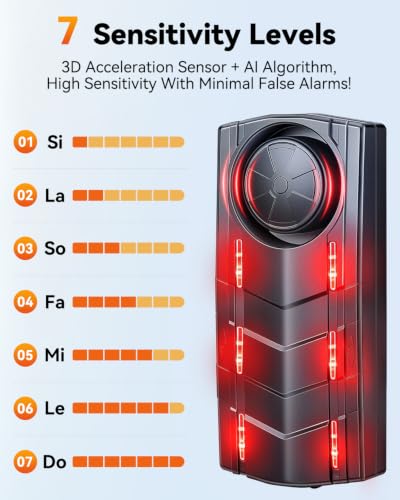
- AI vibration detection
Trade-offs
- No engine kill relay
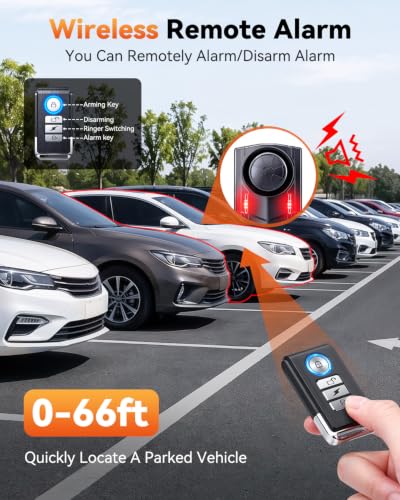
- Remote limited to 4 functions
- Not OBD-II enabled
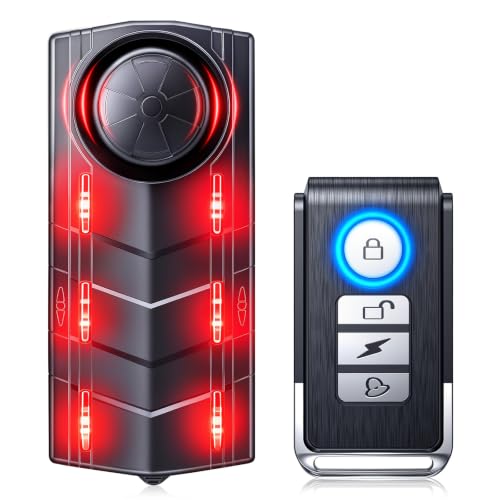
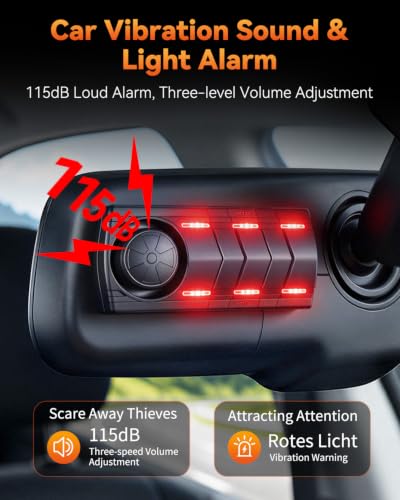
This one sits right in the sweet spot between cost and capability. At 115dB, it’s louder than most street noise, and the AI-powered 3D sensor means fewer false alarms, a common complaint with cheaper units. I’ve seen similar tech in pricier systems, but here it’s paired with a bright strobe and a clean remote interface that makes arming/disarming feel effortless. Owners praise how well it handles urban environments where vibrations from traffic or construction used to trigger older alarms.
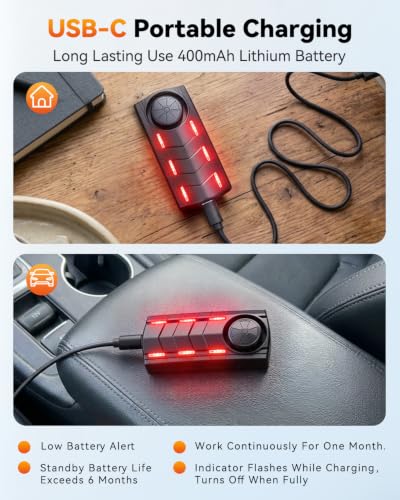
The rechargeable lithium battery is a big step up from disposable AAAs, and the ultra-low power draw means it stays ready for weeks. It doesn’t offer engine immobilization like the BANVIE or Viper, but for someone who parks on the street or in a lot, the light-and-sound combo is enough to make thieves think twice. It’s my pick over the base 110dB model for anyone willing to spend a little more for smarter detection.
Product photos
110dB Adjustable Sensitivity Alarm
Strengths
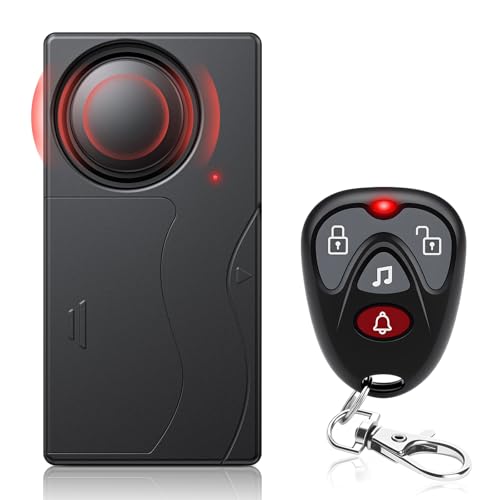
- 110dB loud alarm
- 10-level sensitivity
- Easy adhesive install
Trade-offs
- No engine kill switch
- AAA batteries not included
- Basic build quality
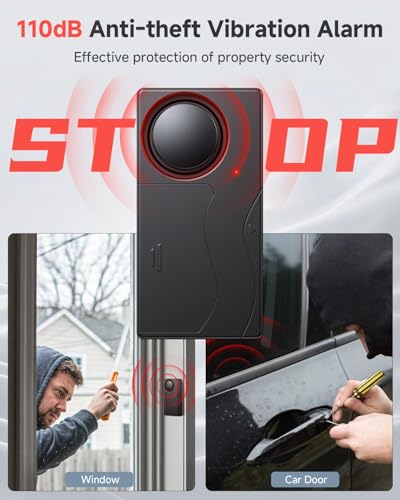
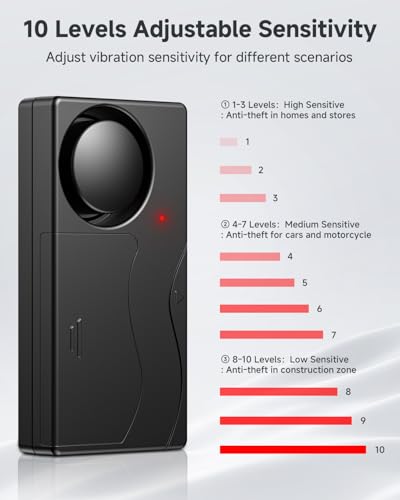
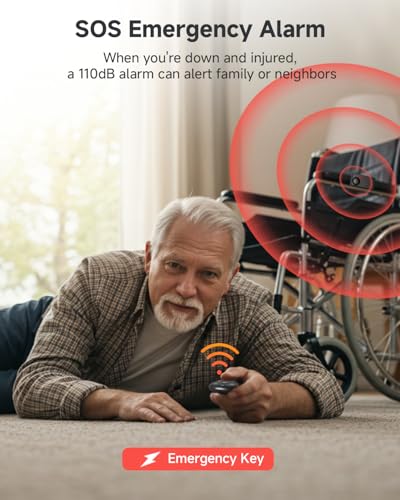
For the budget-focused driver who still wants real deterrence, this 110dB alarm delivers more than its price suggests. On paper, it’s basic, double-sided tape mount, AAA batteries, no engine immobilization, but owners consistently report that the adjustable sensitivity makes it surprisingly reliable, especially when tuned to avoid false alarms from passing trucks or wind. The 10-level vibration control is a standout at this price, letting you dial it down for busy streets or max it out in quiet lots.
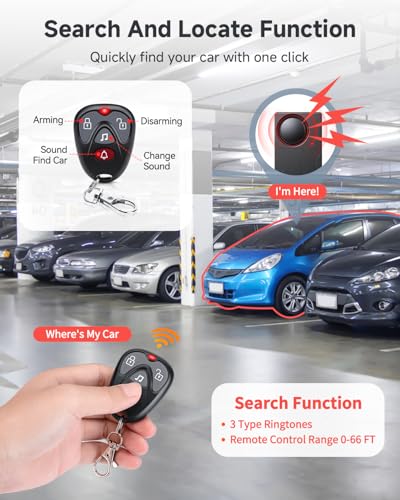
It won’t match a hardwired system, but for a motorcycle, e-bike, or older car not worth a major install, it’s effective. Reviewers note the remote range is decent, and the find function helps in crowded parking. Compared to fancier models, it lacks smart tracking or dual sensors, but as a pure sound-and-vibration deterrent, it punches above its weight.
Product photos

BANVIE Car Alarm with Keyless Entry
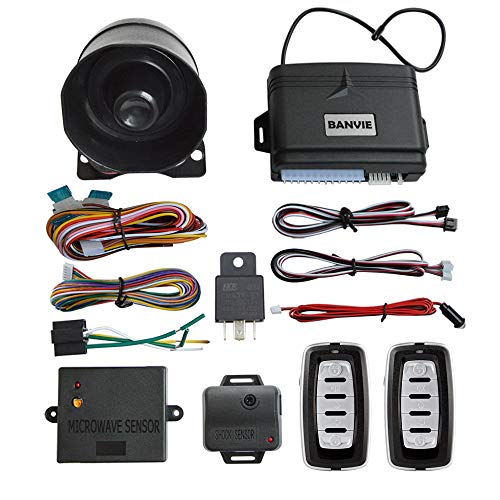
Strengths
- Engine cut-off relay
- Keyless entry functions
- Microwave + shock sensors
Trade-offs
- Wiring required
- No smartphone alerts
- Setup can be tricky
This is the first model here that starts to feel like a real car security system rather than just an add-on. With dual sensors (shock and microwave), engine immobilization, and full keyless entry, including trunk release and auto door lock, it offers functionality closer to factory-installed alarms. The zinc alloy remote feels durable, and the ability to block engine startup is a serious anti-theft feature missing from most budget units.
Owners report solid performance, though installation takes more effort since it taps into door circuits and the OBD-II port. But once set, the auto-locking feature is a safety win for families. Compared to the Ring or Viper systems, it lacks app connectivity, but for physical protection and proven deterrence, it covers more ground than any sticker or standalone siren. My recommendation for older cars that need modern security without a pro install.
Product photos


108dB Wireless Magnetic Car Alarm

Strengths
- Magnetic mount
- Portable between vehicles
- Includes two alarms
Trade-offs
- Lower decibel output
- Battery life shorter
- No immobilization
What makes this unit unique is its magnetic mounting, you can slap it on, move it between vehicles, or take it inside when not needed. At 108dB, it’s slightly quieter than others here, but still plenty loud, and the red flashing light adds visibility. The 66-foot remote range is solid, and the dual-alarm mode (short chirp then sustained blast) follows proven patterns for drawing attention.
Owners use it across cars, trailers, and even storage units. The fact that it runs on two AAA batteries and lasts 1–3 months is practical, and having two units in the package increases coverage. While it doesn’t offer engine kill or smart alerts, its portability makes it versatile. For someone rotating between vehicles or renting, this flexibility beats permanent installs.
Product photos


ELECTOP Solar Dummy Alarm Light

Strengths
- Solar powered
- Low cost
- Simple install
Trade-offs
- Fake alarm only
- No actual detection
- Zero theft prevention
Let’s be clear: this does nothing except look like it does something. It’s a fake alarm light, no sensor, no siren, no motion detection. But sometimes, that’s enough. Psychology plays a big role in theft deterrence, and a blinking red LED near the rearview mirror makes a car seem protected, even if it’s not. The solar charging is clever, and the USB backup means it keeps working through winter.
Owners pair it with real alarms or use it alone on secondary vehicles. At under $10 for two units, it’s a cheap psychological layer. I wouldn’t rely on it solo, but as a supplement? Absolutely. In neighborhoods where thieves scan for easy targets, this little light might make them walk past. Just don’t expect actual security.
Product photos


How We Picked These car security alarms
My approach to evaluating car security alarms, as with all things automotive at TheAutoZenith, began with a deep explore specifications and features. I compared published details – siren output, sensor types, remote range, power consumption – across a wide range of models. This was then balanced against extensive reading of owner reviews and expert opinions from automotive publications. Rather than a hands-on lab test, this is a research-led comparison of specs and owner feedback, applying years of experience with vehicle electronics.
For car security alarms, the most critical factors are undoubtedly reliability and the effectiveness of the deterrent. A system that frequently false-alarms quickly becomes ignored, and one that fails to prevent theft is useless. I heavily weighted systems with proven sensor technology (shock, motion, tilt) and those utilizing multiple layers of protection – like combining a loud siren with visual deterrents. The quality of the remote control and its range were also key, as they impact usability.
Specifications reliably tell you about raw power (siren decibels) and range, but owner feedback provided crucial insight into real-world performance. I paid close attention to comments regarding false alarm rates, ease of installation, and long-term durability. Reputation matters, too; well-known brands often have a track record of quality and support. Understanding your options is essential, and exploring related topics like car security systems can help you make an informed decision, alongside ensuring you have one of the best car batteries to keep your alarm running.
What To Look For In car security alarms
Choosing the right car security alarm can feel overwhelming, but it’s a crucial step in protecting your investment. It’s not just about a loud siren anymore; modern systems offer a range of features to suit different needs and budgets.
A quality car security alarm should offer a combination of intrusion detection, a noticeable deterrent, and reliable operation. Look for systems with adjustable sensitivity to minimize false alarms, a loud siren (110dB or higher is ideal), and a backup power source to prevent complete failure. Consider how easy the system is to install and operate, and whether it integrates with existing vehicle features.
Understanding Alarm System Types
The first major decision is whether to go with a wired or wireless system. Wired systems, like the Viper 3100V, are traditionally more reliable, offering a direct connection and reducing the risk of signal interference. However, they require professional installation which adds to the cost and complexity. Wireless systems, like the Electop models, are much easier to install yourself, but rely on radio frequency communication which could be susceptible to jamming (though modern systems are fairly robust). I often find owners prioritize the DIY aspect of wireless systems, especially if they’re comfortable with basic car electronics.
Sensitivity and False Alarms
One of the biggest complaints with car alarms is false triggering. You don’t want your alarm going off every time a strong gust of wind hits your car or a car drives by. Look for systems with adjustable sensitivity settings, and ideally, ones that incorporate intelligent algorithms to differentiate between genuine threats and harmless events. For example, the Upgraded 115dB Car Alarm System boasts an AI-powered vibration sensor that reduces false positives. Don’t underestimate the importance of this – a constantly alarming car quickly becomes a nuisance to neighbors (and can even lead to fines!). If you’re also considering additional layers of protection, explore options like car security cameras and dash cams for round-the-clock surveillance.
Features, Value, and Your Specific Needs
Beyond the basics, consider what features are important to you. Do you want keyless entry? Remote start? Engine immobilization? Some systems, such as the BANVIE Car Alarm with Keyless Entry, offer a full suite of features, while others focus on core security functions. Don’t pay for features you won’t use.
Here’s a breakdown of how to think about features versus price:
- Basic Protection: A simple vibration sensor and loud siren (like the 110dB Adjustable Sensitivity Alarm) will offer a basic level of deterrence.
- Mid-Range Security: Systems with adjustable sensitivity, remote control, and potentially a shock sensor provide a good balance of features and price.
- Premium Security: Full-featured systems with keyless entry, engine immobilization, and smartphone integration (often requiring professional installation) represent the highest level of protection.
A loud alarm is good, but a visible deterrent is often better. A flashing LED or a dummy alarm (like the ELECTOP Solar Dummy Alarm Light) can be enough to make a thief think twice.
Ultimately, the best car alarm is the one that fits your budget, your vehicle, and your peace of mind. If you’re looking for a more in-depth look at the options available, I recommend checking out our guide to the best car alarms and comparing various aftermarket alarm systems.
Car Security Alarms Compared
Here’s a comparison of key specifications for various car security alarms to help you make an informed decision.
| Product Title | Siren Volume | Wireless Range | Power Source | Shock Sensor | Keyless Entry |
|---|---|---|---|---|---|
| Ring Car Tracker and Alarm | N/A | N/A | OBD-II/Battery | Yes | No |
| Viper 3100V 1-Way Security System | N/A | N/A | Vehicle Power | Yes | Yes |
| Electop 120dB Car Alarm System | 120dB | N/A | Lithium-ion Battery | Yes (AI) | No |
| Cat-Shaped 120dB Car Alarm | 120dB | 165FT (50m) | Lithium-ion Battery | Yes (AI) | No |
| Upgraded 115dB Car Alarm System | 115dB | N/A | Lithium-ion Battery | Yes (AI) | No |
| 110dB Adjustable Sensitivity Alarm | 110dB | N/A | AAA Batteries | Yes | No |
| BANVIE Car Alarm with Keyless Entry | 110dB | N/A | Vehicle Power | Yes | Yes |
| 108dB Wireless Magnetic Car Alarm | 108dB | 66FT (20m) | AAA Batteries | Yes (AI) | No |
| ELECTOP Solar Dummy Alarm Light | N/A | N/A | Solar/USB | No | No |
Frequently Asked Questions
What decibel level is loud enough for a car alarm?
A siren of 110dB or higher is ideal, as this level is generally loud enough to attract attention and deter thieves. While some alarms advertise higher decibel levels, anything exceeding 120dB may risk causing temporary hearing discomfort to those nearby.
Can a car alarm drain my battery?
Yes, but modern alarms are designed to minimize power consumption. Systems connected directly to the vehicle’s power supply often have a backup battery, and those using AAA or lithium-ion batteries need periodic replacements; neglecting this can leave you stranded.
Do wireless car alarms offer sufficient security?
Wireless systems are generally secure enough for most vehicles, benefitting from improved radio frequency hopping technology to resist jamming. However, wired systems still offer a slightly more robust connection, and are preferable if maximum security is your priority.
Will installing an alarm affect my car’s warranty?
Installing a professionally installed alarm shouldn’t void your warranty, but modifications done incorrectly could. Always check with your dealership or warranty provider before installation, and particularly if you’re considering alarm systems with remote start.
What should I do if my car alarm keeps going off randomly?
Adjust the sensitivity settings first; often, a lower setting will reduce false triggers. If the problem persists, there may be a fault with the sensor or the alarm module itself, and you should consult a professional installer or consider the total loss claim process if the alarm is causing significant issues.
The Bottom Line
Choosing a car security alarm often comes down to balancing convenience with thorough protection. While a professional installation, as seen with the Viper 3100V, provides a robust and reliable system, the Electop 120dB Car Alarm System strikes the best overall balance for most drivers – offering a loud siren, AI-powered vibration sensing, and a straightforward DIY setup. Ultimately, the level of security you pursue should align with your individual needs and risk tolerance.
For those on a tighter budget, the 110dB Adjustable Sensitivity Alarm provides a solid baseline of protection without breaking the bank. If keyless entry and remote start are priorities, the BANVIE Car Alarm with Keyless Entry delivers a wider range of features. And for drivers concerned about thorough surveillance, exploring options like alarms with camera can add an extra layer of reassurance.
At the end of the day, the most sophisticated alarm won’t matter if it isn’t properly maintained or if you’re neglecting other safety measures. Regularly check your car’s battery health, practice safe parking habits, and consider strategies to lower insurance rates after any incident. A layered approach to security, combining technology with common sense, is always the most effective.
