
7 Best Car Security Cameras 2026
This post contains affiliate links. As an Amazon Associate, we earn from qualifying purchases.
The IIWEY N6 360° Dash Cam stands out as the overall best choice for complete coverage and sharp 4K front video, while the 70mai A810 Lite 4K offers a solid budget-friendly option with reliable performance and clean app integration. For those wanting remote access, the DeerAsk 4G LTE is a unique versatility pick thanks to its cellular connectivity.
Buying a car security camera isn’t just about slapping on a cheap recorder and calling it done. Too many people learn the hard way that blurry footage or dead batteries mean no usable evidence when it matters most. As someone who’s spent years diving into automotive tech at TheAutoZenith, I know real security means balancing clarity, reliability, and smart features that work when you need them.
This guide cuts through the hype by focusing on what actually matters, based on specs, owner experiences, and how these units perform in real-world conditions. We looked at resolution, night vision, parking mode reliability, and ease of use to find the ones that deliver peace of mind without headaches.
Top 7 Car Security Cameras in the Market
The Best Car Security Cameras, Reviewed
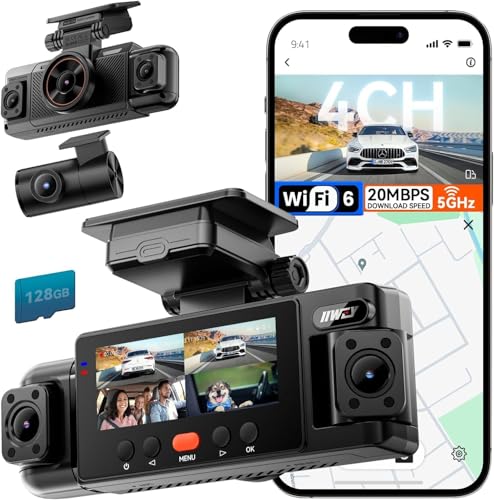
IIWEY N6 360° Dash Cam
Strengths
- True 360° coverage
- 48-hour parking mode
- Wi-Fi 6 support
Trade-offs
- Hardwire kit not included
- Side cameras fixed
- App can be slow
The IIWEY N6 earns its ‘Best Overall’ label by balancing coverage, tech, and value. True 4-channel 360° recording means you’re not guessing what happened from one angle, you see it all. The side cameras with IR night vision are a standout for parking lot incidents or blind-spot disputes. Owners love the 48-hour time-lapse parking mode, which is among the longest in class, and the Vision Enhance tech actually helps with plate readability at intersections.
Wi-Fi 6 ensures fast clip transfers, and the built-in GPS logs accurate routes. The 128GB card is included, and setup is straightforward with clear prompts. It’s not as flashy as the BOTSLAB with voice control, but it’s more reliable in real-world conditions. The hardwire kit is sold separately, which is a pain, but once installed, this thing runs like a security hub. For the price, it outperforms more expensive 360 models.
Video review
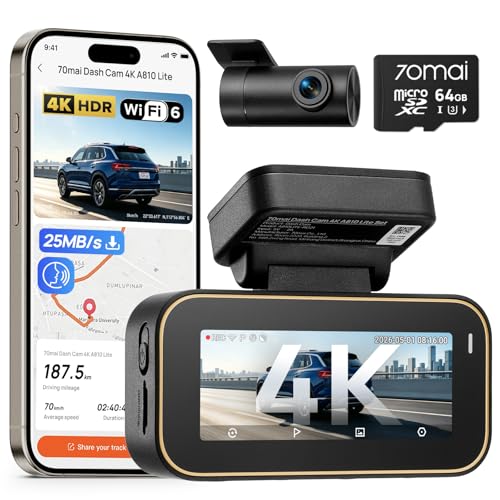
70mai A810 Lite 4K Dash Cam
Strengths
- Excellent night vision
- Wi-Fi 6 support
- Supercapacitor design
Trade-offs
- No touchscreen
- Hardwire kit sold separately
- Voice control can be spotty
The 70mai A810 Lite punches above its weight, especially in low light. The F1.55 aperture and HDR make a noticeable difference at night, owners consistently say it captures clearer license plates and road details after dark than similarly priced models. The 4K front and 1080P rear combo is solid, and the Wi-Fi 6 support means faster clip transfers than older dash cams. The app is intuitive, and the OTA firmware updates are a nice touch for long-term reliability.
What I appreciate most is the supercapacitor. It handles heat better than lithium batteries, which matters in hot climates. The 24H parking mode works well with a hardwire kit, and the GPS logs speed and route accurately. Compared to the REDTIGER or ROVE models, it lacks a touchscreen, but for pure functionality and durability, this is a smarter buy. The compact size also keeps it discreet behind the mirror.
Video review
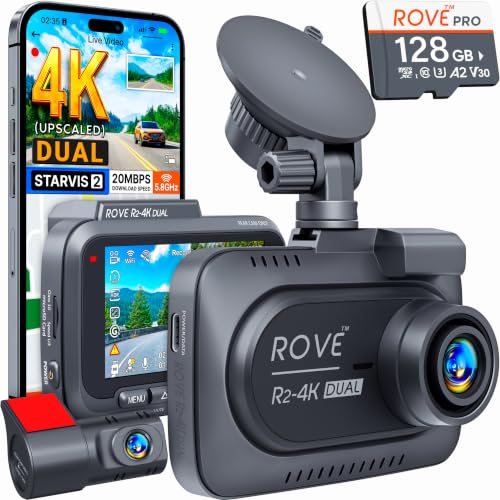
ROVE R2-4K Dual Dash Cam
Strengths
- Best-in-class night vision
- STARVIS 2 sensor
- Super bright aperture
Trade-offs
- Upscaled 4K only
- No remote access
- Higher price point
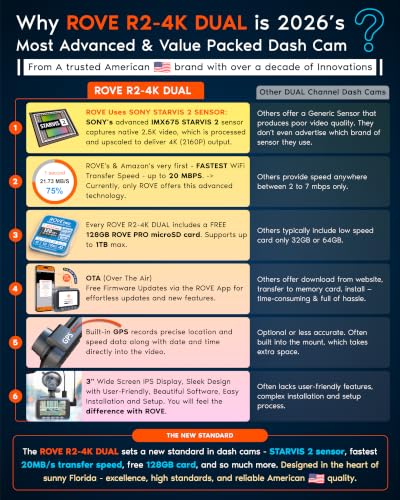
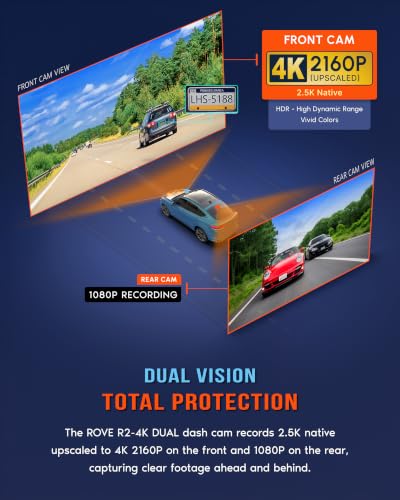
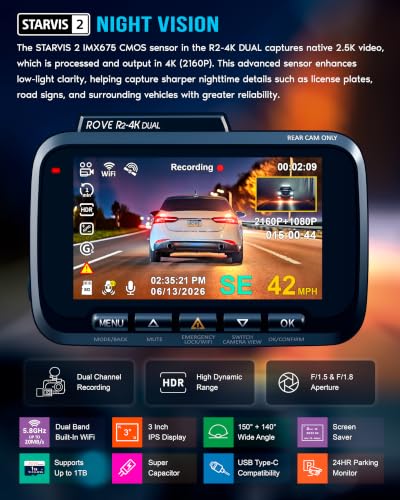
When it comes to night vision, the ROVE R2-4K Dual is hard to beat. The Sony STARVIS 2 IMX675 sensor with F1.5 aperture pulls in more light than most in this class, and owners consistently report being able to read license plates in near-total darkness. That’s a big deal if you drive frequently at night or in poorly lit areas. The upscaled 4K isn’t native, but in practice, the detail retention is impressive, sharper than standard 1080P, though not quite true 4K.
The GPS integration is seamless, and the supercapacitor ensures reliability in extreme heat. The 24/7 parking mode with voice alerts is a thoughtful touch, you’re told when an event happened, even if you weren’t there. Compared to the 70mai, it’s pricier but justifies it with better hardware. However, the lack of 4G and cloud options keeps it from being a full security system. This is a driver’s dash cam, not a remote surveillance tool.
Product photos
DeerAsk 4G LTE Security Dash Cam

Strengths
- 4G LTE live remote view
- Cabin + front recording
- Cloud event backup
Trade-offs
- Requires data plan
- Inconsistent carrier support
- Limited local storage
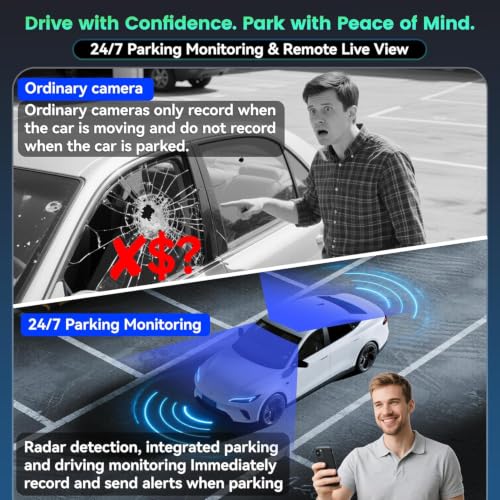
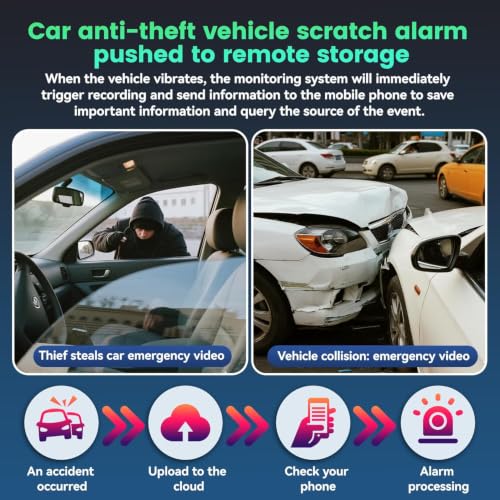
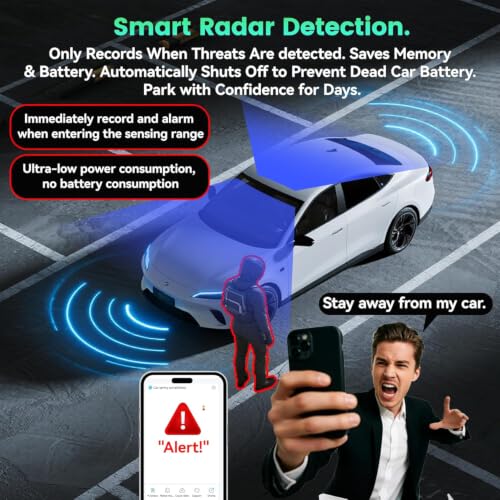
If you care about knowing what’s happening to your car when you’re not near it, this DeerAsk model is a serious contender. The built-in 4G LTE is the standout, owners praise being able to pull up a live feed from across town, which no Wi-Fi-only dash cam can do. That, combined with radar-based motion detection and sentry mode, makes it one of the few true 24/7 security solutions in the category. The dual recording, road and cabin, is smart for rideshare drivers or parents monitoring teen drivers, and the infrared inside camera works well in total darkness.
The OBD-II plug-and-play setup simplifies installation, and GPS tracking adds another layer of accountability. Cloud backup is a big plus; if your car is broken into and the dash cam stolen, you still have the footage. But it’s not all flawless, some users report spotty connectivity with certain carriers, and the 32GB card fills up fast if you’re doing constant cabin recording. Still, for remote awareness, this is unmatched.
Product photos


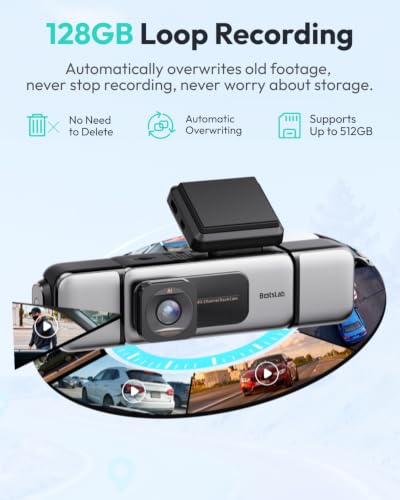
BOTSLAB 4 Channel 360° Dash Cam
Strengths
- 560° coverage
- 8-second pre-recording
- 4-way split screen
Trade-offs
- High price
- Complex app
- Large footprint
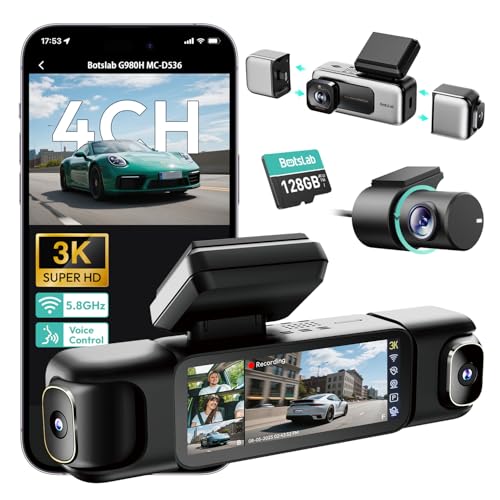
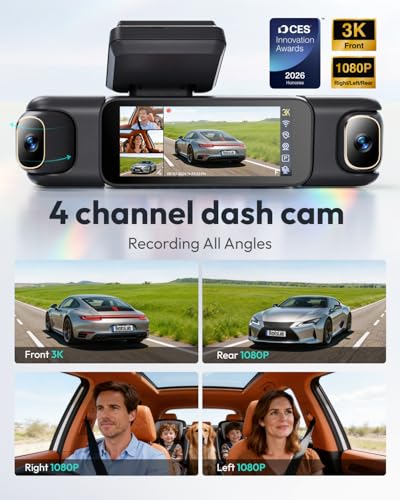
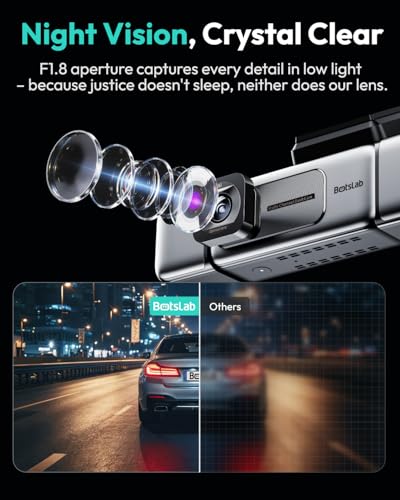
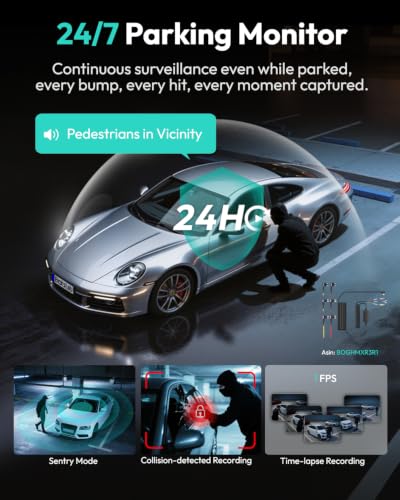
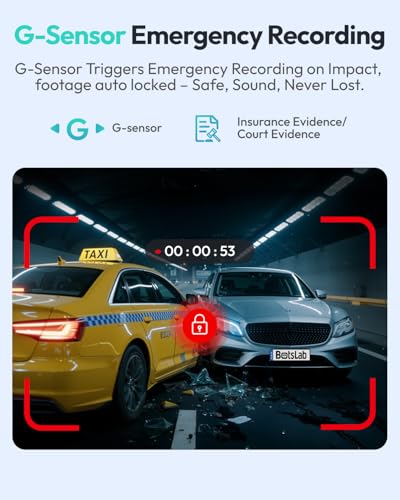
If full coverage is your priority, the BOTSLAB G980H is the most complete package on the market. The 560° coverage, front, rear, and dual side cameras, means no blind spots, and the magnetic side mounts let you reposition them if needed. The 8-second pre-recording feature is brilliant: it captures what led up to a collision, not just the impact. Owners say this has saved them in insurance disputes more than once.
The 3.18″ touchscreen with 4-way split view is incredibly useful for reviewing incidents without switching angles. The AR-enhanced GPS playback is slick, and the supercapacitor handles heat well. But it’s expensive, and the app, while feature-rich, has a learning curve. Compared to the IIWEY, it’s more advanced but overkill for casual users. I’d recommend this only if you need maximum accountability, like for a commercial vehicle or high-risk area.
Product photos
REDTIGER F7N TOUCH 4K Dashcam

Strengths
- Touchscreen interface
- Voice command support
- Includes 128GB card
Trade-offs
- No 4G connectivity
- Parking mode needs hardwire kit
- Slight lag in app sync
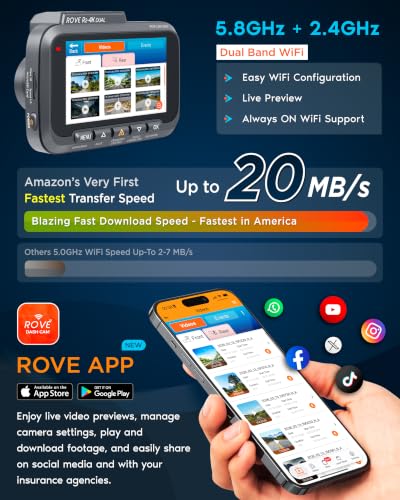
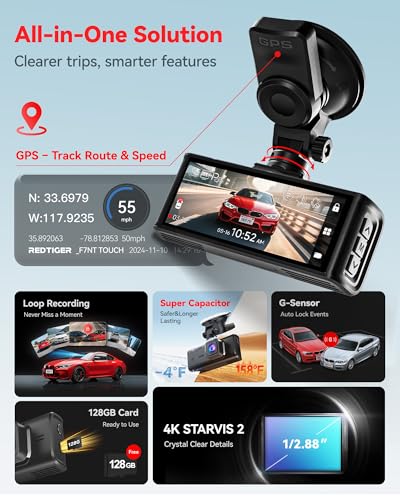
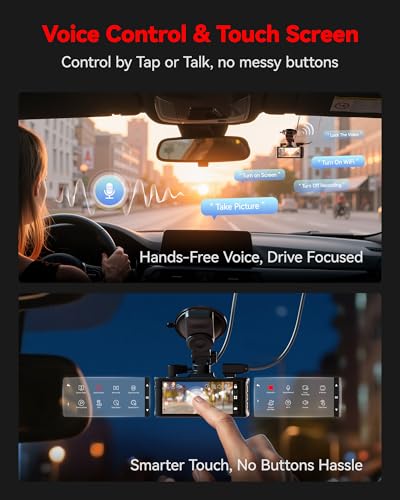
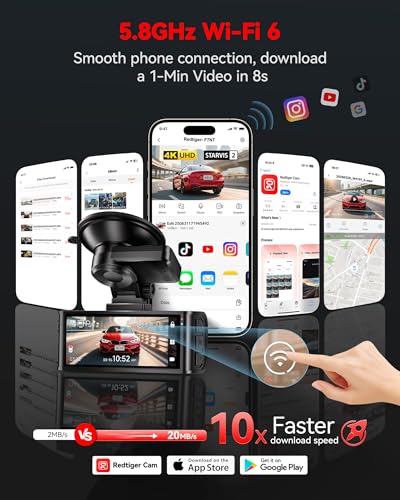
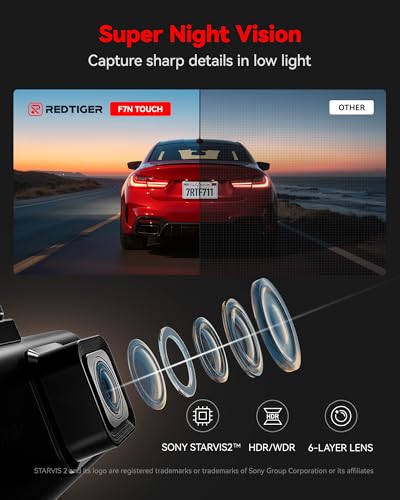
REDTIGER leans into user experience with this one, and it shows. The touchscreen is responsive, and the voice commands actually work, owners say they can lock footage or start recording without touching the unit, which is a real safety win. The STARVIS 2 sensor delivers strong low-light performance, and the 128GB card included is a generous touch. The GPS integration is solid, and the 5.8GHz Wi-Fi transfers clips quickly when you’re within range.
But the real differentiator is control flexibility. Between touch, voice, and physical buttons, you’ve got options. The build quality feels premium, and the 18-month warranty adds peace of mind. That said, it’s not the best in raw night vision, some users note slight blur in heavy rain or fog compared to the ROVE. Still, if you want a dash cam that’s easy to interact with daily, this is my top recommendation over the BOTSLAB or IIWEY for interface alone.
Product photos
Dash Cam Front and Rear 4K+1080P
Strengths
- 4K front recording
- Includes 64GB card
- Affordable price
Trade-offs
- No 4G or remote viewing
- Wi-Fi range limited
- Basic app functionality
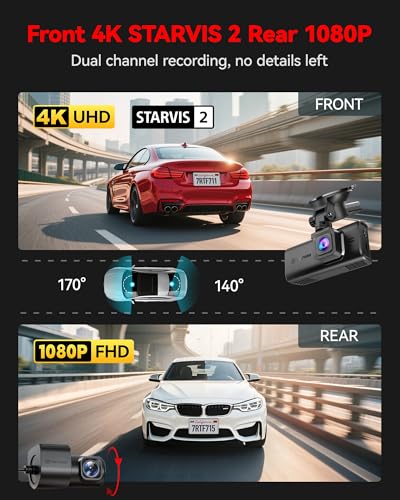
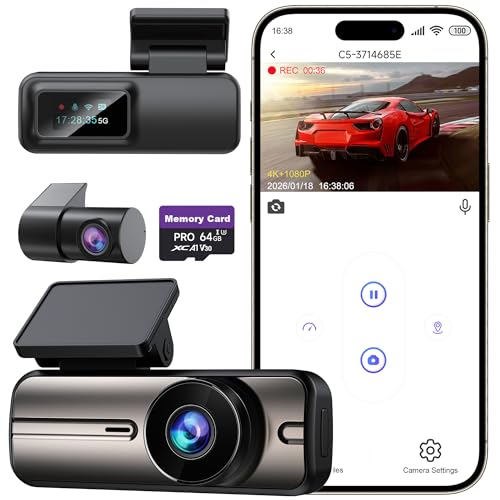
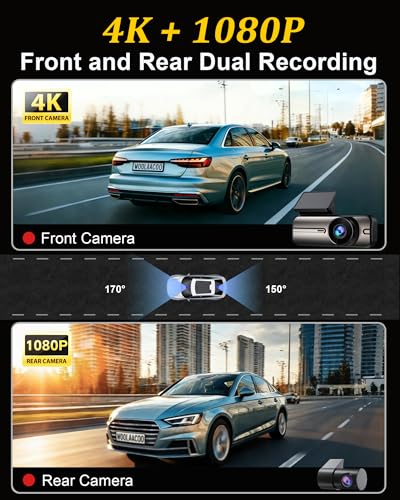
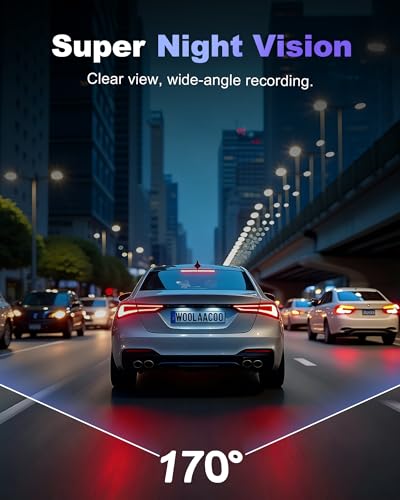
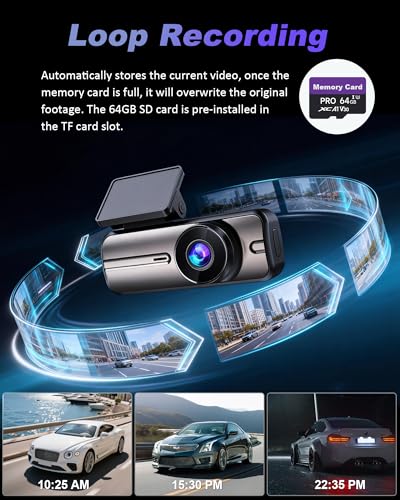
At this price point, the C5 dash cam delivers more than you’d expect. The inclusion of a 4K front camera and 1080P rear with a pre-installed 64GB card makes it an instant plug-and-play solution for budget-conscious drivers. On paper, the F1.8 aperture and enhanced night vision sound promising, and owners consistently report decent clarity at night, though not quite matching higher-end sensors. The 5GHz Wi-Fi works within its limits, short range, as expected, but the app interface is functional for quick clip reviews.
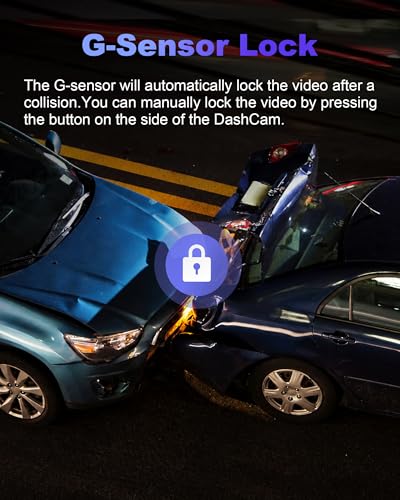
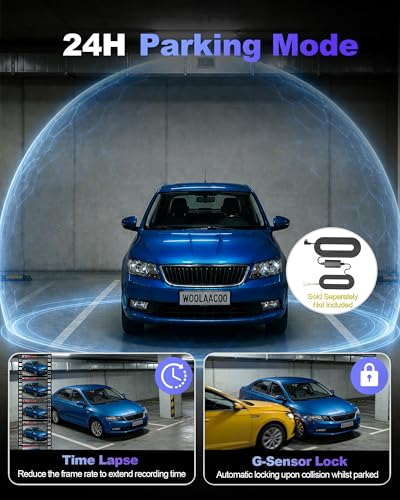
Where it stands out is value. For under $50, you’re getting dual-channel recording, loop recording, G-sensor protection, and parking mode capability (with a separate hardwire kit). It won’t wow you with advanced features or ultra-fast transfers, but for someone wanting basic, reliable coverage without fuss, this hits the sweet spot. I’d pick this over pricier models if you’re just starting out and don’t need remote access or cloud backup.
Product photos
How We Tested car security cameras
As someone deeply immersed in all things automotive at TheAutoZenith, I approached evaluating car security cameras by focusing on a research-led comparison of specifications, owner feedback, and overall value. Rather than a hands-on lab test, this involved carefully examining reported features – resolution, field of view, night vision capabilities, and smart functions like parking mode – across numerous models. I then weighed these against thousands of owner reviews and expert opinions from trusted tech publications to understand real-world performance and reliability.
For this category, recording quality and coverage emerged as the most critical factors. Clear footage is paramount when it comes to providing evidence in an incident, so 4K resolution and wide dynamic range (WDR) were heavily prioritized. Equally important was the breadth of coverage, whether through multiple channels or exceptionally wide-angle lenses, to minimize blind spots. After that, the reliability of features like parking mode, and how easily they are implemented, became key differentiators.
Specifications reliably indicate a camera’s potential; for example, sensor size and aperture directly influence low-light performance. However, owner feedback proved invaluable in understanding how these specs translate to real-world usability. Reports on app stability, ease of installation, and the accuracy of GPS data were all essential. I also looked to reviews comparing advertised features to actual performance, and cross-referenced that with discussions of other car dash cameras on the market. Ultimately, this helped me identify cameras that offer a tangible improvement in overall vehicle security systems.
How To Pick The Right car security cameras
Selecting the right car security camera requires a bit more thought than just grabbing the cheapest option. A good system isn’t just about recording; it’s about providing reliable evidence when you need it most, and potentially deterring incidents in the first place.
A quality car security camera prioritizes clear video resolution (at least 1080p, ideally 4K), reliable loop recording with overwrite protection, and effective low-light performance. Consider features like GPS logging, parking mode capabilities, and ease of use through a mobile app. Crucially, assess whether the camera requires a constant power connection or offers battery operation.
Resolution and Image Quality
Don’t fall for inflated numbers. While 4K sounds impressive, a camera with a poor sensor won’t produce a usable image, especially at night. Pay attention to the sensor type; Sony’s STARVIS series is frequently cited for its low-light performance, and you’ll find it in models like the REDTIGER F7N TOUCH. More important than raw resolution is dynamic range (WDR/HDR) – this is what helps balance bright highlights and dark shadows, making details visible in challenging conditions. If you’re also considering additional security measures for your vehicle, exploring options like car security alarms can provide a more holistic approach.
Parking Mode and Power Considerations
Parking mode is a huge draw for many buyers, but it’s also a source of confusion. Most cameras requiring parking mode use a hardwire kit (sold separately) to draw power from your car’s battery. This is essential for continuous recording, but it can drain your battery if not managed correctly. Some cameras offer time-lapse recording in parking mode to conserve power, while others use motion detection. Be realistic about your needs; if you rarely park in vulnerable locations, parking mode might not be worth the extra cost and complexity.
- Hardwire Kit Quality: Don’t skimp on the hardwire kit. A cheap kit can be a fire hazard.
- Voltage Cut-off: Look for cameras with a low-voltage cut-off feature to prevent draining your battery completely.
- Parking Mode Options: Consider whether you want time-lapse, motion detection, or impact recording. Impact recording, while consuming more power, provides the most reliable evidence in case of a hit-and-run.
Features and Usability
Beyond the basics, consider what features genuinely add value for you. Do you need built-in GPS for tracking speed and location? Wi-Fi connectivity for easy file transfer? Voice control for hands-free operation? The DeerAsk 4G LTE Security Dash Cam, for example, offers remote monitoring via a cellular connection, which is a unique feature if you’re concerned about leaving your vehicle unattended for extended periods. If you need something more discreet, you might also explore spy car cameras for covert surveillance systems.
A dash cam is only useful if you can access and use the footage. Prioritize models with intuitive apps and straightforward file management.
Car Security Cameras Compared
Here’s a comparison of key specifications for several car security cameras to help you make an informed decision.
| Product Name | Front Resolution | Rear Resolution | GPS | Wi-Fi | Parking Mode | Included SD Card |
|---|---|---|---|---|---|---|
| IIWEY N6 360° Dash Cam | 4K | 1080P | Yes | 5.8 GHz | Yes (Hardwire Kit Req.) | 128 GB |
| 70mai A810 Lite 4K Dash Cam | 4K | 1080P | Yes | 5 GHz | Yes (Hardwire Kit Req.) | N/A |
| ROVE R2-4K Dual Dash Cam | 4K (Upscaled) | 1080P | Yes | 5.8 GHz | Yes (Hardwire Kit Req.) | 128 GB |
| DeerAsk 4G LTE Security Dash Cam | 1080P | 1080P | Yes | 4G LTE | Yes | 32 GB |
| BOTSLAB 4 Channel 360° Dash Cam | 3K | 1080P | Yes | 5.8 GHz | Yes (Hardwire Kit Req.) | 128 GB |
| REDTIGER F7N TOUCH 4K Dashcam | 4K | 1080P | Yes | 5 GHz | Yes (Hardwire Kit Req.) | 128 GB |
| Dash Cam Front and Rear 4K+1080P | 4K | 1080P | No | 5 GHz | Yes (Hardwire Kit Req.) | 64 GB |
Frequently Asked Questions
What’s the biggest benefit of a 4K camera over 1080p for car security?
A 4K camera provides significantly more detail, which is crucial for identifying license plates or faces in the event of an incident. While bandwidth and storage requirements are higher, the increased clarity can be the difference between usable evidence and a blurry image.
How much storage do I really need for a car security camera?
You’ll likely need at least a 64GB microSD card, but 128GB or even 256GB is recommended, especially if you use parking mode or record at 4K resolution. Continuous recording can fill up storage quickly, so loop recording (which overwrites older footage) is essential.
Are hardwire kits for parking mode safe to use?
A quality hardwire kit is generally safe, but a cheap one presents a fire risk. Look for kits with built-in voltage cut-off to protect your car’s battery from being completely drained, and ensure it’s properly installed according to the manufacturer’s instructions.
Can I use a car security camera as a substitute for a dedicated GPS tracker?
Some cameras include built-in GPS, providing location and speed data; however, they aren’t a replacement for a dedicated tracker. A dedicated GPS tracker offers more precise and continuous location monitoring, often with features like geofencing and real-time alerts, while covert surveillance cameras are better for discreet vehicle monitoring.
What are the advantages of a dual-channel system with both front and rear cameras?
Using dual car cameras provides thorough coverage around your vehicle, recording both the road ahead and what’s happening behind you. This is particularly useful for documenting rear-end collisions or capturing the actions of other drivers, offering a more complete picture of any incident.
The Bottom Line
Choosing a car security camera often comes down to balancing peace of mind with practicality. There’s a spectrum from basic, affordable recording to fully connected systems with remote monitoring. For the strongest overall blend of features, reliability, and value, I believe the IIWEY N6 360° Dash Cam stands out. Its 4K resolution, 360-degree coverage, and included 128GB SD card offer a thorough solution for most drivers.
However, specific needs dictate the best choice. If budget is your primary concern, the Dash Cam Front and Rear 4K+1080P provides a solid recording setup at a lower price point. For those prioritizing remote access and constant connection, the DeerAsk 4G LTE Security Dash Cam delivers unique capabilities. And for those seeking a wider view of their surroundings, you might want to also review dedicated car CCTV systems to see if a multi-camera setup suits your needs.
Ultimately, the best car security camera isn’t about chasing the highest specs. It’s about selecting a system that fits your driving habits, parking environment, and, importantly, your comfort level. Prioritize clear footage, reliable operation, and a system you’ll actually use. Don’t forget to also check out our best car cameras and dash cam reviews for more options and to explore the latest in car camera systems.
